
Stats
- Episodes featuring their films
- 8
- Movies in this archive
- 7
Rewatchables episodes featuring Demi Moore’s films
Mentioned in discussions


Casting What-Ifs
Burt Reynolds, Al Pacino, John Travolta, Albert Brooks and Sylvester Stallone as Edward; Molly Ringwald, Diane Lane and Meg Ryan as Vivian
In the discussion (11)
- Called the all-time record list: "Bert" Reynolds declined Edward and in 2012 said he made a mistake after seeing the love-making scenes. — Bill Simmons
- Al Pacino turned down Edward after a screen test with Roberts; that movie does not work. — Bill Simmons
- John Travolta auditioned, and had turned down American Gigolo, which made Gere a star. — Bill Simmons
- Read as half-assed internet research: Gere was about to turn the part down when Roberts slid him a "please say yes" Post-it; the hosts doubt it. — Bill Simmons
- Gere turned down Gordon Gecko in Wall Street; Michael Douglas is floated for this movie, and Robert "Radford," who did a similar role in Indecent Proposal five years later.
- Albert Brooks and Stallone also turned Edward down; a Jewish Edward Levin remake is joked about. — Juliet Litman
- Demi Moore turned down Kit, the right choice given her St. Elmo's Fire role.
- For Vivian: Uma Thurman and "Brookshield's" auditioned, Winona Ryder was deemed too young, and Marshall wanted Karen Allen or Meg Ryan, who declined; Meg Ryan would not work. — Bill Simmons
- Vivian needs to be early 20s, and her height towering over Jason Alexander matters. — Bill Simmons
- Molly Ringwald turned it down and regrets it; Diane Lane nearly played Vivian but pulled out over scheduling; "Michelle Fife" turned it down. — Bill Simmons
- Several other actresses allegedly turned it down, which the hosts do not believe. — Bill Simmons


What’s Aged the Best?
The real mustaches; the loaded cast; Dana Delaney; the 1880s Wild West world-building; the closing credits; the Val Kilmer era; what the film shows of tuberculosis; Joanna Pacula; Billy Bob Thornton
In the discussion (15)
- The mustaches, all real and magnificent: an hour and a half in, one host wonders why nobody wears hats and mustaches now and says producer Craig should have one right now; another cannot grow one, Kurt Russell can grow incredible facial hair, and a Christmas challenge is set to grow a Tombstone mustache or goatee for the fans.
- Powers Booth and Val Kilmer actually have a soul patch with a mustache rather than goatees; the challenged host is in, even though a mustache makes him look like a dirtbag cop from 1974, which is when the challenger feels most like his friend, like being friends with Gene Hackman.
- The crazy loaded cast, already discussed, and Dana Delaney, whose good career felt like it could have been better; a China Beach fan likens her to Carla Gugino, first said as 'Carlo Gugino' and mocked as a Fellini actor and the Godfather toll-booth gunman, as a why-aren't-you-a-bigger-star actress, asking why Demi Moore was so much bigger.
- Delaney had a bigger career than Gugino, whom everyone loves, but should have been an A list star; this was the one time a big movie made her the female lead, Exit to Eden being the joke about where it went wrong, and she remains one host's second-favorite actress in the film.
- The 1880s Wild Wild West world-building: liquor, brothels, gambling, hats and mustaches; the Godfather tone Russell talked about shows in Wyatt moving in, taking over the faro game (transcribed 'Pharaoh') at the Oriental and winning the deeds to mines, a man who stands for law and order screwing people out of things because fame left the Earps with nothing to show for it.
- The film is called the bridge from John Ford Westerns to Deadwood, one of the first Westerns full of people cursing each other out and then shooting somebody in the head; the blood in the Bill Paxton scene and Sam Elliott being told he will never use his arm again were new and intense for a Western.
- The closing credits, four solid minutes of the cast walking in their outfits for no reason like a Vanity Fair photo shoot, are unintentionally funny but cool, compared to a Countdown segment one host once shot with Jalen.
- That era of Val Kilmer, all the way through Heat, is savored like old Fab Five tapes from Michigan: it did not totally work out, but if you could bottle this there was something special, and he really should have been a bigger star.
- Why the film is special: you can watch the other actors recognize what Kilmer is doing and change their performances to elevate his, making themselves more buttoned-down and austere, solid American oak, while he is free jazz, a coughing, sweating, feverish, green Byron or Shelley figure; the Kansas Earps versus Georgia Doc contrast is credited, with colleague Amanda Dobbins invoked as the poetic Georgian, and tuberculosis explaining the rest.
- Kurt Russell's Wyatt is looking for a wife who gets him and stokes his soul, but the real partner is Holliday, from the first 'how the hell are you' line; the friendship is the love story at the center of the movie, an amazing portrayal of it.
- Revisiting the 1993 Best Supporting Actor field (Tommy Lee Jones, DiCaprio, Ralph Fiennes, Malkovich, Pete Postlewaite), it is amazing Kilmer was not nominated, though the category was stacked; Malkovich is good in In the Line of Fire but not as memorable, and with the wished-for five-year Oscar delay Kilmer gets nominated.
- The film was a modest hit that took on a new life: one host is not sure he saw it in theaters despite seeing everything then, another definitely did over Christmas break when movies were the only thing to do, and another watched it maybe 25 times in a friend's basement because it was always on TV.
- The tuberculosis vaccine has aged best, in the sense that the film shows how much having tuberculosis sucked: Doc turns green, coughs blood, is insulted as a 'lunger' by everyone, and keeps smoking and drinking whiskey around the clock until the doctor orders no more whiskey, cigarettes, sex or gambling.
- Joanna Pacula, whose name nobody can pronounce, is the last pick: she was around for a while as a why-not-bigger actress and then just never made it, her credits being Marked for Death (transcribed 'Mark for Death') with Steven Seagal, Tombstone and My Giant; while her credits are looked up, Kilmer's 'I have not even begun to defile myself' is performed, his accent likened to Yosemite Sam reading Oscar Wilde, ridiculous but perfect.
- Asked again later, Billy Bob Thornton is one host's answer; another sticks with the mustaches.

Half-Assed Internet Research
The ventilation-shaft fall reportedly used footage of a stunt error, and Bruce Willis shot Moonlighting by day and Die Hard at night while marrying Demi Moore during production.
In the discussion (2)
- The stunt performer reportedly fell unexpectedly in the ventilation shaft, recovered, and the production used the shot. — Bill Simmons
- Bruce Willis reportedly filmed Moonlighting during the day and Die Hard at night and married Demi Moore during the shoot. — Bill Simmons
Casting What-Ifs
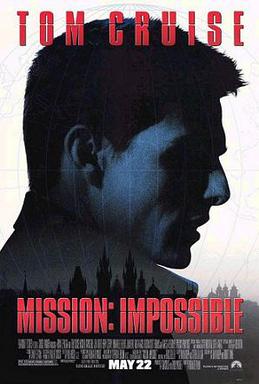
Juliette Binoche turned down Claire; Peter Graves and Martin Landau turned down roles after reading the script; Demi Moore floated as Claire
In the discussion (4)
- There are not many casting what-ifs because the movie was put together by Cruise and Wagner; Juliette Binoche turned down Claire because she did not want to be known for blockbusters, which worked out for her, and it would have been a funny coincidence with Kristen Scott Thomas in two well-seen 1996 movies in the year of The English Patient.
- Peter Graves and Martin Landau from the original series turned down roles after reading the script; Graves did not care for Jim Phelps being the villain and Landau thought it got away from what made the show good, though the hosts wonder whether the roles were smaller than they wanted and joke about Landau feeling himself after his 1994 Oscar.
- Since Claire did not have to be European, Demi Moore is floated as a reunion with Cruise after A Few Good Men; sex scenes between Claire and Ethan were written and cut, a kiss appears in the trailer that is not in the film, and despite the grabbing and handsiness and an implied night together there is not much chemistry.
- 1996 was the year of Striptease for Demi Moore, so it would have been a left turn; Claire is called an underwritten part and one of the weakest aspects, a Russian doll for Jim's motivations in a Hitchcockian way; Susan Sarandon is also mentioned, but the objection is that Moore is too visceral and signals a fight scene is coming, whereas Claire's sphinx-like quality serves the narrative, so maybe Emmanuel Bayer (as transcribed) is right for it after all.

Casting What-Ifs
Harry Anderson was Zemeckis's first choice for Forrest; Bill Murray, John Travolta and Chevy Chase turned it down; David Alan Greer (as transcribed), Dave Chappelle and Ice Cube turned down Bubba and Tupac auditioned; Jodie Foster, Nicole Kidman and Demi Moore turned down Jenny; Terry Gilliam and Barry Sonnenfield (as transcribed) turned down directing
In the discussion (6)
- Robert Zemeckis's first choice for the title role was Harry Anderson, who was unavailable because of a commitment to Dave's World on CBS. — Sean Fennessey
- The late Harry Anderson as Forrest Gump is dumbfounding; it might have been good but a different, smaller movie, and Anderson was not that famous even then.
- Bill Murray, John Travolta and Chevy Chase turned down Forrest; Travolta has called it one of the biggest regrets of his career. The hosts think Travolta would have been terrible, that he kind of played Forrest Gump in Phenomenon, which one still rides for, and that Michael was him trying to get back to that moment.
- David Alan Greer (as transcribed), Dave Chappelle and Ice Cube turned down Bubba. Ice Cube refused to play an idiot and is literally too smart for the part; Chappelle thought the movie would bomb, regretted it and worked with Hanks four years later on You Got Mail (as transcribed); Tupac auditioned for Bubba, which would not have worked. Bubba's name is Buford Blue.
- Jodie Foster and Nicole Kidman turned down Jenny and both could have been good; Demi Moore also turned it down and would have been too old to pull off the high school and college stretch that Robin Wright managed, with a tangent on when Striptease came out.
- Terry Gilliam and Barry Sonnenfield (as transcribed) turned down directing; Gilliam's version would have been amazing and a lot different. Hanks was probably not the first choice because he was unavailable. Bill Murray would not work: he only played dumb as Carl in Caddyshack, for comedy, and What About Bob is the craziest he has gone.
Picking Nits
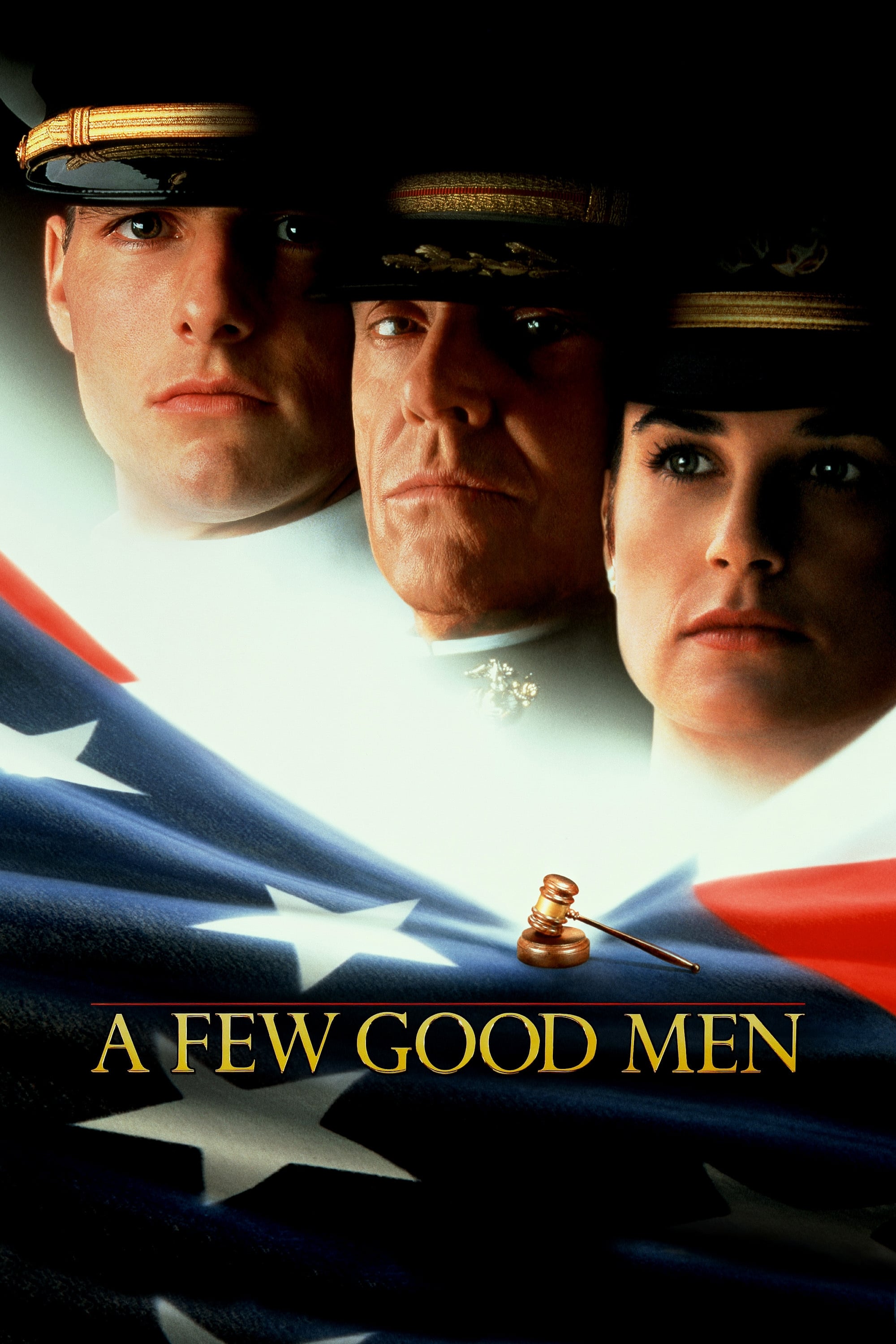
Putting Jessup on the stand; Caffey calling Jessup a son of a bitch in court; whether Joe Galloway was a terrible lawyer; who should have played Joe Galloway
In the discussion (13)
- Putting Jessup on the stand was insane: they gamble six months and their careers on a fake-out with the two airmen whom Sam almost fails to get to court in time, a huge bluff that, like Rounders, is fun to rewatch even knowing how it ends.
- Cruise's 'Don't call me son. I'm a lawyer and an officer in the United States Navy, and you're under arrest, you son of a bitch' would not really happen in court, though another notes the formality had already gone once Nicholson was screaming his own threats.
- Was Joe Galloway a terrible lawyer? A prepared list argues she is good: she knows what a code red is, a quote from her advisors calls her a hell of an investigator, and she memorizes extensive biographical details.
- The list continues: she believes in due process, unlike Caffey's '12 years and out in six' deals, and at the Gitmo lunch she angers Jessup into admitting off the record that he condones code reds and will take any bait, which becomes the winning strategy.
- Further points: being a lawyer is client services, she is not friends with the prosecution, she has the idea to put Jessup on the stand, and she is never held in contempt; she is not a litigator in a film about litigation as performance, so she gets no credit, but he would not win without her and she motivates him.
- Non-legal points in her favor: her jeans are back in style, she has great taste in bar-and-grills such as the crab shack, her hair, the business suit she wears off duty on the first night with the tower logs and Chinese food, and Malcolm X glasses worn in one scene.
- The 'twice as hard as you' dynamic is called a good foil for Cruise's character and an honest picture of a woman in that workplace, making her one of the best Sorkin female characters despite the disrespect; 'I strenuously object' is bad, but she earns credit for the 'exceptional lawyer' speech that pumps Cruise up, and a host wishes Ringer colleagues gave speeches like that.
- The case against her: she is blamed for Downey, having befriended Aunt Ginny without learning Downey was not in the room; the reply is that Weinberg did witness prep, Caffey was lead counsel, and the defendants never volunteered anything they were not asked, which is when Cruise freaks out.
- 'Strenuously object' is her scarlet letter, before she was in The Scarlet Letter, along with saying 'we're going to win'; one panelist calls it a bad performance with Demi Moore miscast.
- Julia Roberts is floated as better, though she could not have been cast for the same reason as Bacon's haircut; Roberts and Cruise never made a movie together; asked to split the blame 65 to 35 between Demi Moore and Sorkin or blame 1991, the answer is that it is majority Demi Moore's fault.
- In a 2017 version the character could not just be stuck in middle-management paperwork; one suggestion flips it, making Caffey a woman and Joe Galloway a man.
- Jodie Foster was also up for the role, with one other name forgotten; Foster with Cruise is mocked as having no chemistry, measured against McConaughey and Foster in Contact and Helen Hunt with Nicholson in As Good as It Gets.
- The Galloway question is left unsolved but seeds are planted; with Julia Roberts getting every part back then, Linda Hamilton in Terminator 2 shape is suggested as a good alternative.
Probably Unanswerable Questions
Bigger impact in fewest minutes, Jessup or Lecter? What position did Caffey play? Did Sam Weinberg mail it in? Who is treated more like a subordinate? Can you make a flight disappear? Did Caffey and Galloway end up together? Which on-the-rise actor should have played Harold? What if Jessup never admits it? Was the code red scene Cruise's career highlight? Did Santiago kind of deserve to die?
In the discussion (17)
- Bigger impact in the fewest minutes, Nicholson's Jessup or Anthony Hopkins's Lecter: Jessup, since Hopkins is in jail most of that movie while Jessup has three scenes (the letter, the lunch, the ending); Lecter is put at about 18 minutes and Jessup at 11 or 12.
- The usage-rate joke gives Nicholson a 12-for-13 line with eight threes, ten rebounds and nine assists in 12 minutes, very Iguodala game six.
- Caffey's softball position: as player-coach probably shortstop, or second base, a middle infielder either way, while Herby (as transcribed) wants shortstop and the others grumble.
- Did Sam Weinberg mail it in? Yes: nobody found out Downey was not there to hear the order, and while a spouse watching blamed Joe Galloway, preparing witnesses was Weinberg's one job.
- That is a big hole in the movie; Sam is also dunked on hardest when, after Joe storms out and Daniel trashes the apartment, he starts tidying and is told to stop, like a houseboy.
- A speech shortly after about Caffey's father, meant to be motivational, backfires, since the father is recalled as an attorney general who did Brown v. Board: with a life on the line one would pick the father over the son who settles every case; Cruise is weirdly casual in a military court, as in his 'just ain't so' opening statement.
- The panel agrees Weinberg mailed it in: uncommitted until late in the trial, thinking the defendants were bullies, useful as a middle position that tempers Sorkin's ideology but useless as a lawyer.
- Asked who gets sent for legal pads, pens and lamps and who is treated more like a subordinate, Sam or Joe, the answer is Joe; whether an entire flight can be erased from the logs without the internet never sits right.
- Did Caffey and Galloway end up together or ever hook up? No; a third draft of Sorkin's script had him ask her on a date with a matching-socks callback, which one panelist prefers to 'The End' in big script letters.
- The objection is that they have less than zero chemistry, which leads to asking who Cruise has chemistry with at all, even Nicole Kidman in Days of Thunders (as transcribed), before a joke that they hooked up once after a softball game.
- Caffey's love life is floated and the answer offered is that he is asexual or too busy with work.
- Which on-the-rise Black actor of 1991 would have been better as Harold: the role has about ten big scenes, Cuba Gooding could have done it, the actor had to be big because Dawson leads the troop, and Morris Chestnut would make little difference and was not known then.
- What if Jessup never admits the code red: Caffey (transcribed as Kathy) goes to jail or is court-martialed and ends up coaching softball; in a real-life version the marshals come in, Bacon's character would not allow it, and it is game over once contempt is called.
- Caffey almost does not go for it until Jessup taunts him about phone records and toiletries; the realization that Santiago did not pack, prompted by seeing his own shirts in the closet, is praised against the usual bird-across-the-sky light-bulb moments.
- Was the code red scene the highlight of Cruise's career? He goes toe to toe with a multiple Oscar winner, Sean's view that Cruise beats Nicholson is held for later, and no single Cruise scene is better, not 'You complete me', Top Gun, the barman's poet in Cocktail or the Risky Business dance; it is called his career highlight.
- Whether Joe Galloway set back the women's movement by one, three or five years is answered with 'Demi Moore might have' and pushed to Picking Nits.
- Did Santiago (transcribed as San Diego) kind of deserve to die? Answers range from no to just a tiny bit; one panelist inches closer each viewing to thinking Jessup has a point, since the private could not keep up, ratted on his troop and broke the chain of command, and another goes that far but not to deserving to die.

Apex Mountain
JT Walsh; Wolfgang Bodison; Tom Cruise; Kevin Bacon; Jack Nicholson (late career)
In the discussion (10)
- JT Walsh gets an 'Apex for me for sure' and a second yes calling it his most infamous role, prompting a joke about how seriously the question was taken.
- Aaron Sorkin is close but not the apex, a nice view but not the top; the first season of The West Wing and The Social Network are his apex, this film is likened to his 63-point Michael Jordan game with not a bad scene in it, and Moneyball is set aside because he rewrote somebody else's script.
- Kevin Pollack is a no because of The Usual Suspects, which another agrees with.
- Kevin Bacon is a no from one panelist, who calls him great and underrated here but notes how many films he has made, with The River Wild mentioned; another says no too, theorizing his bad haircut was deliberate so he would not distract from Cruise, like Kiefer's haircut, and puts his apex at Footloose, also liking him in Mystic River.
- A third panelist disagrees with both and says this is Bacon's apex: not a meaty part but memorable, likable, with a dash of unintentional comedy, and hard to imagine anyone from that era, such as Matt Dillon, playing it without competing with Cruise.
- Bacon was taking smaller parts in bigger movies then, as in JFK; though he is on the prosecuting side backing Jessup, he has some morality, saying he does not think the guys deserve jail but does not make that call; after an aside that his leaving the pickup game is unforgivable, a 'yes' for him is restated, possibly by the same panelist.
- Wolfgang Bodesen (as transcribed) is a yes: 'that's the Apex for Wolfgang. I wish him well.'
- Jack Nicholson's career overall draws four 'No' answers; then 'Late Jack Nicholson. Yes.' is offered, with one voice naming As Good as It Gets, and challenged over The Departed the late-career yes holds, because the Departed performance with its accent as a Whitey Bulger figure is called out of control and the weak link of that film.
- Tom Cruise gets two yeses, with this chosen over Cocktail and a 'this or The Firm' aside; no one else in 30 years could bring this mix of unintentional comedy, good acting, sarcasm and bravado, Leo DiCaprio could not, though Matt Damon ten years later might have.
- A TV version is planned for next year with Alec Baldwin, who is called amazing, but Caffey has not been cast; James Franco was rumored, a terrible idea, since the part needs an airhead who is really smart, a lawyer who plays softball, attractive but not a romantic lead; Demi Moore is left off the list as the nadir of her career.
What’s Aged the Best?
Cruise's 'why the two orders' brainstorm; the mess hall cross-examination; Harold and Caffey at the end
In the discussion (9)
- Nominees: the ending, the 'galactically stupid' tirade when a drunk Cruise loses it on Demi Moore, the mess hall cross-examination that Bacon later praises as a great redirect, Cruise's Nicholson impersonation, Harold's 'ten hut' with Cruise, the 'why the two orders' brainstorm in the Jessup cross, and Jack Ross's face at Jessup's code red admission.
- Like a decanted wine, the subtler moments should age best, which rules out Cruise doing Nicholson, since people their age have spent their lives watching others imitate Nicholson.
- 'Why the two orders' always gets one panelist, and another answers 'me too'.
- Picks the mess hall cross-examination: rewatched it last night, it is subtle and lands every time, and the way Cruise grabs the notebook back from Kevin Bacon is peak Cruise swagger. — Amanda Dobbins
- The scene has an early Noah Wiley (as transcribed), later important on ER, and shows the cleverness of the script solving problems without being showy or straining plausibility.
- Another pick is Harold and Cruise's character finding common ground at the end, which still gives chills on the 557th viewing: 'Harold, you don't have to have a badge to have honor' and the 'Ten Hut'; Harold is never seen again.
- The actor playing Harold appeared in a couple of nineties action movies and is believed to have been Rob Reiner's assistant before being thrown into the film.
- The ending leaves the film dying for a coda: it is unclear how much trouble Jessup is in, unlike the court-martial that follows the submarine battle in Crimson Tide, and the two Marines are still dishonorably discharged.
- A small flaw: after the code red admission Bacon's character later says he has to go arrest Kendrick, prompting the question of why he waited a week.

Most Rewatchable Scene
The ending; the Guantanamo Bay lunch; Jack and Caffey's beer
In the discussion (9)
- Offered the ending, the lunch in Guantanamo Bay, or Cruise and Bacon meeting for a beer, one panelist calls the last scene the best last scene of a movie ever but, despite hating to be too cute about these answers, goes with the Guantanamo Bay lunch as the sneaky choice.
- Another likens the question to picking the home run scene in The Natural, then, getting cute, names the favorite interaction as Jack and Caffey getting a beer that ends with 'you're a lousy fucking softball player'.
- In the bar, Cruise orders simply 'a beer' and makes a big show of refusing the frosted glass, which suggests he had never really done bar interactions on screen; the Vin Diesel beer tilt from the Fast and Furious films is the comparison.
- One panelist agrees the ending is the best and the most rewatchable, but says you cannot sleep on the Guantanamo Bay scene.
- The lunch makes them want the deleted small talk; Kendrick, whom Sean Phenasy (as transcribed) called 25 years early for what the alt-right looked like in 2016, is played by Kiefer Sutherland, hard to believe as the future Jack Bauer and the guy from The Vanishing, in a supporting part he was probably too big for.
- Kiefer slummed it, and Bacon a little too; the hosts recall the Flatliners period and the collapse of the wedding with Julia Roberts, 'the all time greatest getting left at the altar story'.
- Kendrick never cracks a smile, and when they ask to see the room where Santiago died he says the private died because he had no honor, no code.
- A fourth alternative is Jessup reading Santiago's letter, asking who PFC William Santiago is and sarcastically proposing they surrender their position in Cuba; Josh Malina is in that scene too.
- At the lunch Kendrick laughs only once, at Jessup's crude joke to Demi Moore's character about a superior officer, which TV prints cut; the hosts think it belongs because it shows how vicious Jessup is, and joke about a milder substitute word.
Films in the archive
About Last Night
1986


A Few Good Men
1992

Disclosure
1994

Ghost
1990
Indecent Proposal
1993
Margin Call
2011
St. Elmo's Fire
1985