
Stats
- Episodes featuring their films
- 8
- Movies in this archive
- 7
Rewatchables episodes featuring Demi Moore’s films
Mentioned in discussions

The Stephen A. Smith Hottest Take Award
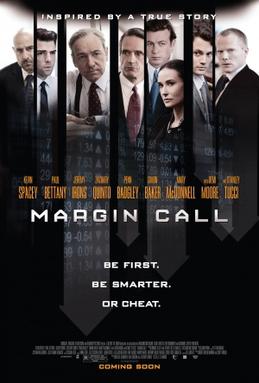
Better than The Big Short; top ten of fifteen years; Moore as leader in a 2022 version (disputed)
In the discussion (3)
- Margin Call is preferred to The Big Short as more satisfying and rewatchable, with explicit agreement. — Bill Simmons
- The film is called one of the ten best movies of the preceding fifteen years, without a ranked list of other films. — Brian Koppelman
- A 2022 version might make Moore the leader instead of the lone female scapegoat; that prediction is challenged on period accuracy and changing contemporary expectations.

The Great Shot Gordo Award for Most Cinematic Shot
Sam digging by car light; Moore at the window
Flex pick · Brian Koppelman
In the discussion (2)
- Sam digging by car light at the end is the selected cinematic image, opening up the film’s visual space despite the limited shoot. — Brian Koppelman
- Moore looking through a high-rise window during a crisis is an alternative shot choice. — Bill Simmons

Casting What-Ifs
Kingsley; unavailable Robbins and Crudup; Gugino replaced; Gummer deleted scene
In the discussion (5)
- The Irons role was reportedly offered to Ben Kingsley, who was unavailable. — Bill Simmons
- Tim Robbins reportedly declined because of other obligations; his intended role is explicitly unknown. — Bill Simmons
- Billy Crudup reportedly declined because of other obligations; his intended role is explicitly unknown. — Bill Simmons
- Carla Gugino was meant to play Moore’s role but an overrun on another project forced a late replacement. — Bill Simmons
- Grace Gummer played Quinto’s ex-girlfriend in a deleted scene; Chandor reportedly blamed poor direction rather than her acting, and the scene is available on DVD. — Bill Simmons

What’s Aged the Best?
Ensemble; cyclical crises; fast dialogue; moral complexity; overnight setting; custodian; Moore; Quinto; cigarette acting
In the discussion (20)
- The film makes smart, attractive people’s conscious moral abandonment legible while remaining funny; its psychological portrait is preferred to The Big Short’s film version. — Brian Koppelman
- Bettany’s Will is charismatic, funny and unusually honest about the game he is playing; the performance is called career-best. — Brian Koppelman
- The ensemble has no weak performance, including Moore’s understated, experienced corporate operator; replacing an actor seems difficult. — Bill Simmons
- John’s list of recurring crises captures finance’s cyclical nature, compared with new NBA owners making predictable splashy trades. — Bill Simmons
- The script refuses to talk down to viewers, allowing its speed and unexplained detail to require a second viewing; that confidence is described as inspiring for Billions. — Brian Koppelman
- The film plays as a crime thriller without a prosecutable crime or visible assault, murder or drug use, distinguishing its moral criminality from its legal conduct. — Brian Koppelman
- Quinto makes intelligence, conflict and loyalty visible; repeatedly crediting Dale’s work complicates his role as the person whose discovery triggers the destruction. — Brian Koppelman
- Shutting off Dale’s phone is a small, realistic mechanism that lets him disappear without a contrived plot device.
- Moore’s effective supporting work is welcomed as a former major star delivering a restrained late-career appearance. — Bill Simmons
- John’s child-or-golden-retriever request remains a sharp illustration of powerful people pretending they lack brains. — Bill Simmons
- The sad financial-district strip-club atmosphere feels accurate to the disappointment of such places. — Bill Simmons
- The crisis produced an impressive body of books, films, articles and documentaries, even though the event itself was disastrous. — Bill Simmons
- The overnight setting makes enormous decisions while everyone else sleeps into a metaphor for an unaware public about to be harmed. — Brian Koppelman
- The custodian trapped between Baker and Moore in the elevator makes class separation visible through his effort to remain unnoticed. — Brian Koppelman
- Moore’s character gains nuance through her prior warning to John and the humane final exchange with Dale; she tried to intervene but would be crushed too. — Brian Koppelman
- Goldman’s share-price recovery is offered as an ironic aged-best choice, with the bank’s legal defenses and the discussion’s own limited expertise acknowledged. — Ryen Russillo
- Badgley’s later success in You makes his presence notable, though its creepy role can be difficult to separate from the actor.
- Quinto gains credibility beyond Heroes and Spock through an intelligent performance that makes him an appealing potential collaborator. — Brian Koppelman
- Irons’s accent, physical manner and distinctive presence confer authority, compared with the deference given English television judges. — Bill Simmons
- Spacey’s character-specific cigarette handling is admired, contrasting Sam’s ritual with Verbal Kint’s unusual grip. — Brian Koppelman

In the discussion (4)
- Demi Moore was reportedly considered before pregnancy made her unavailable. — Bill Simmons
- Debra Winger left after Madonna was cast and later maintained that objection; the discussion considers Geena Davis the clearly superior Dottie. — Bill Simmons
- It is reported that Tom Hanks sought the role because some recent movies had not done well. — Bill Simmons
- Garry Marshall replaced the unaffordable Christopher Walken as Walter Harvey; the final casting is preferred. — Bill Simmons

Casting What-Ifs
Steve Martin was attached before the screenplay; Phoebe Cates was offered Annie, and Disney initially resisted Diane Keaton after The Good Mother.
This discussion recalls a choice from an earlier episode.
In the discussion (5)
- Steve Martin was cast before the screenplay was written. — Bill Simmons
- Phoebe Cates was offered Annie Banks but was pregnant. — Bill Simmons
- The panel imagines that Cates could have competed for some roles later associated with Demi Moore. — Bill Simmons
- The actor eventually cast as the mother said Disney did not want her after The Good Mother failed. — Bill Simmons
- The filmmakers reportedly had to press Disney to cast her. — Bill Simmons

Recasting Couch
Christopher Lloyd, Dennis Hopper or Al Pacino as the Area 51 doctor; Demi Moore or Sharon Stone for Mary McDonnell's role; Martin Lawrence for Connick
In the discussion (6)
- Option two: the wacky Area 51 doctor should be a real famous person, such as Christopher Lloyd as a Doc Brown wink or Dennis Hopper. — Bill Simmons
- Pacino is suggested for two scenes at $10 million, with an impression.
- Option one: never having been a Mary McDonnell person (after an Amy Adams comparison), Demi Moore is wanted for four scenes, and her death would be more shocking. — Bill Simmons
- A defense: McDonnell is good in John Sails movies. — Bill Simmons
- For a three-day role, go big; Sharon Stone is suggested and would have been an unexpected death. — Bill Simmons
- Returning to recasting, Connick could be swapped for Martin Lawrence if the seat just needs a funny guy. — Bill Simmons

Recasting Couch
Early-career Demi Moore as Ginger
In the discussion (1)
- The panel prefers Moore from her General Hospital/Blame It on Rio period to the credited performer, whose name is rendered uncertainly by the transcript. — Bill Simmons
Recasting Couch
Michelle Pfeiffer or Diane Lane as Darien
In the discussion (5)
- Michelle Pfeiffer in the "Dary and" (Darien) part takes the movie up a notch because the character should be older and has been around the block. — Brian Koppelman
- The Pfeiffer obsession prompts a push to get her on the podcast. — Brian Koppelman
- Demi Moore is asked about and Melanie Griffith suggested, then doubted as lacking a Greenwich Academy background and having the wrong energy; Pfeiffer looks like a New York prep-school kid. — Brian Koppelman
- A Pfeiffer story: at a party she brushed off Don Henley while Nicholson watched, and Henley wrote The Last Worthless Evening about her. — Brian Koppelman
- Diane Lane is added, liked even more than Pfeiffer. — Brian Koppelman

In the discussion (8)
- The hosts report that Robert Redford came up with the premise "the President elopes," selected Sorkin's treatment and was to star, then dropped out for unclear reasons. — Bill Simmons
- Redford would be too cool for the goofy, sentimental material and the speech, and The President Elopes would have been a more solemn marriage story.
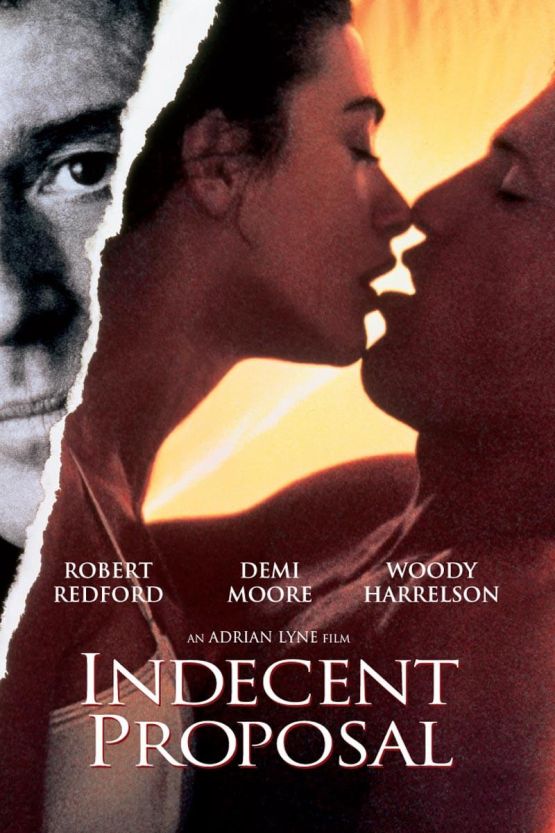
- An Indecent Proposal digression: nobody leaves Redford, and a 2020 version would star Brad Pitt. — Bill Simmons
- The hosts report Redford wanted Emma Thompson; after he left, Susan Sarandon and Michelle Pfeiffer are mentioned, and Pfeiffer could have pulled off the part. — Bill Simmons
- Michelle Pfeiffer is a favorite, caught at a nice point in her career. — Bill Simmons
- Another participant also had Pfeiffer on their list.
- Meg Ryan is too on the nose and too rom-com at that point. — Van Lathan
- The hosts report that the Sidney actress and Douglas were to star in Disclosure until her pregnancy gave the part to Demi Moore; the casting should be kept as it is. — Bill Simmons

Picking Nits
Pfeiffer as a Marine; no friends or dates; fancy French restaurant choice; Durrell left without leftovers
In the discussion (4)
- One participant does not buy Pfeiffer as a Marine, contrasting Demi Moore in G.I. Jane and Linda Hamilton as Sarah Connor; another buys it because she does not back down.
- Why she has no friends or dates is answered in-film: a recent divorce from an abusive husband, and a fellow teacher as her only friend. — Bill Simmons
- Why she chose the fussiest French restaurant is questioned; one reading says it reflects treating whiteness as the center of everything, another that it pushes the kids out of their comfort zone, as in The Wire.
- The third dinner invitee misses the dinner and gets no leftovers while Callie does; it is noted Callie told her ahead and Raul told her he could not make it. — Shea Serrano


Sequel, Prequel, Limited Series, or All-Black Remake
Conditional interest despite hoping it does not happen.
In the discussion (3)
- A modern continuation with Molly secretly pregnant and Moore returning is floated, without claiming an existing project. — Bill Simmons
- A midseason Carl reveal, more people for Sam to visit and expanded or improved shadow-world effects could sustain episodes.
- A third season with Sam gathering NBA scoops for Woj is a joke. — Bill Simmons
Films in the archive
About Last Night
1986


A Few Good Men
1992

Disclosure
1994
Ghost
1990
Indecent Proposal
1993
Margin Call
2011
St. Elmo's Fire
1985