
Film credit
Val Kilmer
Also referred to as Kilmer, Valcomer, Val Comer, Falcomer, Val Coomer, Valkeem Kilmer, valkeem kilmer
Stats
- Episodes featuring their films
- 9
- Movies in this archive
- 7
Rewatchables episodes featuring Val Kilmer’s films
Mentioned in discussions


Most Rewatchable Scene
The 'hell's coming with me' scene followed by the killing montage; Wyatt Earp confronting Billy Bob Thornton at the card table; or the stretch from Wyatt Earp, on his horse after Bill Paxton's death, seeing Powers Booth through to the creek
In the discussion (10)
- The nominated choices open with Wyatt Earp confronting a heavier Billy Bob Thornton near the beginning, the 'skin that smoke wagon' exchange played as a clip; Earp completely emasculates him and then tells the bartender he is taking 25% of the house; Thornton's grumbling just before, about playing cards with his brother's kids, is also loved and called a good heat check.
- More nominees: the first OK Corral shootout and Kurt Russell's 'hell's coming with me' speech, played as a clip and followed by a montage of them killing people; the creek shootout, Russell's version of Larry Bird walking on water in the 1987 playoffs; and Kilmer versus Michael Biehn, one-on-one at the end.
- Also proposed, the 'turn your head into a canoe' scene: after the character the hosts call Ben Johnson is killed, Kurt Russell comes out and pistol-whips the shooter, Thomas Hayden Church and the others surround Russell, and Val Kilmer shows up with 'you music lover' and 'I got two guns, one for each of you'.
- The first 'I'm your Huckleberry' is nominated with a clip: Michael Biehn is drunk, some of his buddies already killed, and is trying to challenge Earp when Doc comes from the shadows of the saloon and delivers the famous line; beyond Kilmer, Biehn is called really good, against type, a great villain and a great Johnny Ringo, the real-life figure.
- Biehn is so good that one host went online to research why his career was not bigger: The Terminator, this, Aliens and The Abyss, where he plays one of the crazy Navy SEALs, and then not much, partly because he stopped working with James Cameron, who makes few movies; it is argued he and Michael Rooker have switched parts, since 99 times out of 100 Rooker would play Ringo and Biehn the good guy you are not sure you trust, Rooker playing a lunatic in every movie.
- One favorite is the 'hell's coming with me' scene and the killing montage that follows.
- Asked whether anything else belongs in the pool, the answer is no, those are the big five. — Sean Fennessey
- Another host does add one: the scene at the very beginning when the brothers and their three women get off the train and look at each other in the mirror; nobody goes for the twelve-minute theater sequence, which they would have told George to cut.
- From a channel-flipping standpoint, if the film is on after Bill Paxton dies, with Kurt Russell on his horse pretending to leave and then seeing Powers Booth, one host watches from that point on, knowing he is going to stay and kill everybody and end it in the creek; that is called that host's favorite part.
- Another host's favorite is the Billy Bob scene, and Thornton reportedly improvised all his dialogue, as Kurt Russell told the hosts, though with Thornton that is hard to verify.
In the discussion (4)
- Ebert gave it three stars and really liked it, singling out Val Kilmer's (transcribed 'Valcomer') portrayal as the definitive saloon cowboy of our time; years later he felt a little agonized that he had not fought harder for Tombstone, and Siskel gave it a thumbs down.
- In his review of Kurt Russell's Dark Blue, Ebert wrote that every time he sees Russell or Val Kilmer in a role he is reminded of Tombstone, which got lost in the year-end holiday shuffle and never got the recognition it deserved.
- Ebert is declared to be making a big comeback on the show, lights out over the last eight movies and the greatest pop movie critic in the history of the medium; another voice objects that he was never an underdog and that this framing of him is unfair and weird.
- A further remark concedes Ebert had some bad takes.


Casting What-Ifs
Vince Vaughn was runner-up for both Affleck's and Cole Hauser's parts; Renee Zellweger auditioned for Parker Posey's part; Claire Danes did not get Sabrina; Ashley Judd did not get Jodie
In the discussion (2)
- Affleck and Hauser were cast over Vince Vaughn, the runner-up for both parts: he lost to Affleck first and was going to get the Hauser part until Linklater worried he looked too much like Affleck and the two would be confused.
- Renee Zellweger auditioned for Parker Posey's part and did not get it; Claire Danes did not get Sabrina because she looked too young, though she is a better actor than the woman who got the role; Ashley Judd did not get Jodie and two years later played Val Kilmer's wife in Heat.

What’s Aged the Worst?
Mitch Kramer's performance; his pitching, which needed a cutaway; Wooderson's interest in high school girls; the hazing and bullying; the lack of accent work beyond McConaughey
In the discussion (13)
- Number one is Mitch Kramer, the biggest flaw in the movie: a bad, miscast performance, which leads to his pitching, where a cutaway was needed and makes Freddie Prinze in Summer Catch look like 1999 Pedro Martinez; even in the cutaway he releases the ball beside his neck as if he had a herniated disc.
- Texas baseball could not have him as its innings eater; Everybody Wants Some (transcribed as Everybody Wants Him) is read as Linklater's reaction to botching the Mitch Kramer casting, since its players looked like real ballplayers, maybe the most credible baseball movie ever, including the mustached one, Tyler Hetchling (as transcribed) from Teen Wolf, who looks like Mike Trout.
- A counterpoint: 70s and 80s ballplayers were not athletes like Bryce Harper or Mike Trout, and Houston pitcher Mike Scott, a Cy Young winner, looked like a science teacher; the reply is that Scott was a cheater who tried to cheat the Mets out of the 1986 World Series.
- The counter to the counterpoint: Criterion making-of footage of Wiley Wiggins having a catch with Richard Linklater is one of the saddest things, since he cannot catch from three feet away; research says he claimed he had played baseball, could not, and they edited around it, which raises what Mitch Kramer brought to the movie versus a 12- or 13-year-old River Phoenix or another good child actor of 1993.
- The defense: even as a bad actor he has something, since eighth grade is awkward and his lack of confidence and signature nose-and-face touching read as nervousness, so the bad acting works in his favor; the rebuttal is that River Phoenix could have done that, and the what-if game is mocked with James Dean and the Doors Val Kilmer as Mitch Kramer.
- Kristen Hinojosa (as transcribed), who plays Sabrina, the other eighth-grade girl, is liked for playing it low-key in a movie full of big performances; Mitch needed to be cooler and to be seen pitching, since he is set up as the Randy Pink Floyd of four years later, and Pink at least carried himself like a quarterback.
- A tangent assigns football positions: Don a defensive end, linebacker or maybe safety, Cole Hauser clearly the best player and a left tackle or defensive end captain, Mel on defense, O'Banion the best player on the defense and a good blocker, Wooderson a tailback or, given his key-catching skills, a Jerry Rice wideout in a pre-West Coast ground-and-pound offense, and Pink a scrambling quarterback like Manziel, a young Jim Zorin (as transcribed) or Tarkenton rather than Stabler.
- The disagreement over Mitch Kramer is left standing: one side calls the defense the wrong opinion, the other says it is okay that he is a bad actor, something they would say in almost no other case.
- Wooderson's interest in high school girls, including the implied statutory issue, has not aged well and he may be a predator; the clip of him asking a freshman about this year's crop of girls and his line about getting older while they stay the same age is played.
- The hazing and bullying have also not aged well.
- Not a lot has aged badly: in the version of the country we live in now none of this is acceptable and society has changed, but as a period piece the costumes, music and performances hold up, it is full of stars and not riddled with problems. — Sean Fennessey
- When Mitch Kramer is raised again, Kramer's pitching is conceded as bad, and the Wiggins catch footage is now wanted; a side trip into the 1986 World Series box set, which includes the Astros-Mets NLCS games six and seven and Scott's chicanery, follows.
- Cole Hauser is not a convincing Texan, few in the cast were and it did not matter, but there is little accent work besides McConaughey, which may be what has aged worst.

In the discussion (11)
- There are individually probably five Dion Waiters winners, like an Oscar category where every nominee could win; Val Kilmer cannot crack the top five and sits sixth; his Elvis is fine, and his 1993 of The Real McCoy, Tombstone with the all-time Doc Holliday, and this is incredible; a Doors episode is offered to Chris Iron (as transcribed) whenever he is ready.
- The field: Gary Oldman's Drexel, the white pimp who thinks he is black; Brad Pitt's Floyd, so great it spawned Pineapple Express; Christopher Walken pulling off a Sicilian; Gandolfini as the most evil hitman; Hopper counts with only two scenes; and a surprise entry, Saul Rubinek; Pinchot is left out for having too big a part, and Kilmer (as transcribed: 'Kim') and Rappaport are in too many scenes.
- A Pinchot tangent: he got the script finishing Perfect Strangers, was Serge in both Beverly Hills Cop films, the roller coaster scene was shot over two days with the cast throwing up or sedated, and his run from Risky Business through Perfect Strangers to this is not bad; he became a punching bag unfairly, like Andrew McCarthy, light comic actors who could star in 1989 but not 1999; the elevator scene with Sizemore and Penn bluffing Elliot is great.
- A Walken question: his only two Tarantino scenes are the watch speech in Pulp Fiction and this one, which is nuts; a Pulp Fiction episode would spend thirty minutes on the watch speech.
- Rubinek is shouted out for a Joel Silver impersonation at the height of Joel Silver on cocaine, doing the most with the least while Oldman, Gandolfini and Pitt had a lot to work with in their parts, smoking and driving on the PCH asking Elliot why he is calling on a Sunday.
- Cannot really decide for the first time; it is something between Pitt, Rubinek or Walken, and Oldman is loved too. — Chris Ryan
- Oldman is in three scenes and out of control and might have the line of the movie with white boy day; one host has Saul Rubinek in a walk because he has never done anything else, which is where another wanted to go; all the other characters' actors went on to Oscars and Emmys, while Rubinek's highlight reel starts here.
- Rubinek did not know he was doing Joel Silver; the character is written as just a producer and Tony Scott, who hated Silver, made him Silver, so Scott gets a lot of credit for molding the performance; it probably hurt Rubinek's career.
- Rubinek is the eleventh man who should not be able to score twenty points in seven minutes, the definition of the award; favorite moments are the taunt about knowing Elliot's name, the Body Bags 2 taste line and the 357,000 dollars someone is stealing; he was 20 to 1 heading in with Oldman applauding in the stands, Twitter expected Floyd or Drexel, but watched closely Rubinek is the correct winner.
- Earlier the cast is called the best Dion Waiters field the show has had, better than Heat, with Sam Jackson, Val Kilmer, Gary Oldman and Saul Rubinek in five-minutes-or-less performances; it is self-aware, actors knowing they have six pages and lighting them on fire, which Craig the producer, seeing it for the first time, noticed.
- During aged best, the Lee Donowitz discussion is saved for a fascinating Dion Waiters argument.
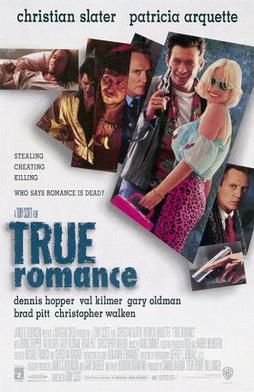
Casting What-Ifs
Tarantino wanted Joan Cusack as Alabama; Tony Scott wanted Drew Barrymore; Jack Black (as transcribed: 'Jack Plack') was cut as a theater usher; Val Kilmer wanted Clarence; Tom Sizemore was first cast in Gandolfini's role and recommended Gandolfini
In the discussion (6)
- Tarantino wanted Joan Cusack for Alabama in the late-eighties script, which one host calls genius from the man who put John Travolta in Pulp Fiction; another doubts she has the sex appeal for the character, though she is sexy in The Addams Family, reviving a sixty-episode argument over whether she could pull off a sexy role.
- Tony Scott, misnamed Ridley at first, wanted Drew Barrymore; a year before Mad Love she could have pulled off Alabama, had career baggage from drug and alcohol trouble, and might have become a star of the A list from it, whereas the film, which only made twelve million (as transcribed: '$12 billion'), did not propel Arquette, who is iconic in it and had a host's high school girlfriend curling her hair the same way.
- Alabama is totally fake, a creation like the manic pixie dream girls discussed a few episodes ago; on the commentary Tarantino is unembarrassed about not having a girlfriend until 25 and inventing his dream girl, one who watches kung fu movies, eats chicken, drinks beer, smokes and is funny; Arquette was the perfect actress to embody it.
- Jack Black (as transcribed: 'Jack Plack') was cut as an usher in the kung fu theater; Val Kilmer desperately wanted Clarence, but Tarantino originally saw the role as a David Carradine type, an older loser, so a Kilmer version would have been a man approaching middle age rather than a cool guy at a Detroit comic book store.
- Tom Sizemore was initially cast in Gandolfini's role, was not comfortable with the scene beating up Arquette, asked to play the cop instead and recommended Gandolfini because they had been in a play together, giving him his big break.
- A riff on Sizemore's heat check against De Niro in Heat, 'for me, the action is the juice', with the long dramatic pause, an ISO Michael Mann keeps giving him, Sizemore as Michael Mann's Joe Akeem Noah (as transcribed); what does not add up is that a year later he played the disgusting warden in Natural Born Killers, so perhaps domestic violence in his past, dating Heidi Fleiss and substance abuse made the scene hit too close.

Half-Assed Internet Research
Hanks took percentage points instead of a salary and made over $40 million; Jim Hanks doubled in the running scenes; Eric Roth's 2001 sequel script from Gump and Company was dropped after 9/11; what Forrest says when the rally microphone cuts out; Jenny's tombstone birthday is the day of the Trinity test; the run was inspired by Louis Michael Figueroa's 1982 run; the Savannah bench went to the Smithsonian; Bubba Gump has 33 locations; Kurt Russell voiced Elvis; Warner Brothers traded the rights for Executive Decision; a cut scene of Forrest distracting dogs attacking Martin Luther King; Jenny's gift shoes were 1974 Nike Cortez; six Doors songs
In the discussion (10)
- Tom Hanks was not paid for the film but took percentage points and made over 40 million dollars; the film is based on the 1986 novel; Hanks's younger brother Jim Hanks doubled for him in the running scenes, and nobody has heard of Jim Hanks, prompting a joke about parents giving every son a three-letter name.
- Eric Roth wrote a sequel screenplay in 2001 based on Winston Groom's follow-up novel Gump and Company, opening with Forrest on a bench waiting for his son to return from school; after the September 11 attacks, Roth, Zemeckis and Hanks decided the story was no longer relevant. The hosts are glad there is no extended universe and agree a Forrest Gump 2 would have been a big mistake.
- When the microphone cuts out at the Vietnam rally, the lost lines are that sometimes people who go to Vietnam go home to their mamas without any legs, sometimes they don't go home at all, that's a bad thing, and that's all there is to say about that.
- Jenny's birthday on her tombstone, July 16, 1945, is the same day as the Trinity test, the first atomic bomb detonation; whether it was purposeful is left uncertain, someone is working hard on connections, and joke that Jenny was the atomic bomb of Forrest's life.
- The running was inspired by a real event: in 1982 Louis Michael Figueroa, aged sixteen, ran from New Jersey to San Francisco for the American Cancer Society, somehow stretched into three and a half years. The park bench was in Savannah's Chippewa Square and was sent to the Smithsonian; Bubba Gump now has 33 locations including the Santa Monica pier, where one host has never eaten and the other says he is not missing much; Kurt Russell voiced Elvis and famously played Elvis in a John Carpenter movie, and Val Kilmer was the Elvis in True Romance.
- In 1988 Warner Brothers gave up the rights to the film in exchange for the rights to Executive Decision, released in 1996, because the studio felt the project had lost commercial promise after Rain Man; the hosts call it the Harden trade for movies and joke that Steven Adams was thrown in.
- A planned effects shot had Forrest running into Martin Luther King and his supporters and distracting the dogs attacking them by playing fetch; cutting it was a strong edit that probably saved the movie. The hosts also note that Forrest is literally a descendant of the Ku Klux Klan, with the sheet-pulling scene, which would not make a 2018 version, and agree nobody wants Woke Gump.
- The shoes Jenny gives Forrest were Nike's 1974 Cortez running shoes.
- Is wearing replicas of the Cortez shoes right now. — Bill Simmons
- The six Doors songs are Soul Kitchen, Hello I Love You, People Are Strange, Break On Through, Peace Frog and Love Her Madly; Soul Kitchen is liked but the use is obvious, especially in Vietnam. One host is accused of destroying Zemeckis for obvious musical taste while giving Scorsese a pass for Gimme Shelter in seven movies; the reply is that Scorsese's reuse of the same nine Stones songs is annoying but not literal, whereas the songs chosen by Zemeckis are literally about the feeling being conveyed.


Sequel, Prequel, Limited Series, or All-Black Remake
12-episode Netflix remake with Michael Mann; Heat 2 with Natalie Portman's character as a Los Angeles homicide detective; Downey and Denzel as a modern pairing; Heat 2 preferred over the Netflix series
In the discussion (6)
- Asked whether a 12-episode Netflix remake with Michael Mann involved, or one on Amazon Prime, Hulu or HBO, would be exciting, the answer is that parts would be interesting in the modern world, but surveillance stories are better without the internet: Heat's cops follow the crew with night-vision cameras rather than reading emails and texts, which would feel like cheating, and even this season of Homeland is boring for watching people do stuff on computers.
- A remake set in the internet world could be part of the charm, but the preference is for it to stick to the streets and get off the net.
- Earlier the film is called what would have been the greatest 10-episode Netflix series ever: scenes of Val Kilmer's character losing big at Foxwoods or stopping at Morongo on the way back from Arizona, and more on the cook, Natalie Portman's character at school, Van Zandt and Jon Voight.
- Heat 2 is floated: De Niro's character only passed out, and Natalie Portman's character returns as a Los Angeles homicide detective under Michael Mann, chasing Val Kilmer's character or another bank robber, perhaps falling for Neil's son from another marriage; 'I would see Heat 2.'
- Asked who could square off as a modern version of the diner scene, no pair is thought to mean what De Niro and Pacino did; Downey and Denzel are proposed as movie stars with acting chops, Downey and Leo are offered instead, Denzel is defended as still having moves as in Flight, and Daniel Day Lewis is ruled out because it has to be guys you'd see on Wilshire or Figaro, prompting an impression of him vowing to work at an old Blockbuster on Fairfax.
- Choosing between Heat 2 and a 12-episode Netflix modern Heat, the answer is Heat 2, for the big-screen experience, with Heat 2 starring Natalie Portman imagined in theaters in 2019.
Probably Unanswerable Questions
Who is Pacino's stunt double in the Henry Rollins tackle; has anyone ever stopped a pickup basketball game to ask where to get bread
In the discussion (2)
- Offered as questions rather than lessons: where is the stunt man who doubled Pacino running through the door to tackle Henry Rollins, who looks like Joe Jarevicius (as transcribed) running slant patterns and jumps an ottoman before the film cuts away to Pacino holding Rollins.
- Has anyone in the history of pickup basketball interrupted a game to ask where to get a loaf of bread, as Val Kilmer's character does after Charlene signals that the cops are there? The players treat it as a normal question, and amid a massive manhunt by police who know he is coming and what he looks like, he is let go though he has only had a haircut and is limping from a shattered clavicle.

The Coach Finstock Award for Best Life Lesson
Never fall for a guy who courts you by asking why you care what he reads and does; never fall for a guy with no furniture; don't call anyone slick during an armored-truck robbery; never leave a living witness; don't sell stolen bearer bonds back to the criminal you took them from; 'the bank is worth the risk' and 'the action is the juice' are not reasons to rob a bank; don't wait in the car when your criminal boyfriend disappears into a hotel that police then surround; don't let word get out that it's okay to steal your stuff; if it rains, you get wet; a life that revolves around barbecue and ballgames sucks; have nothing you can't walk away from in 30 seconds if you spot the heat around the corner
In the discussion (13)
- The lessons segment opens with a minor lesson: never fall for a guy who starts courting you by asking why you are so interested in what he reads and does; walk away, since he is not making himself emotionally available. Edie, lonely as a graphic designer from Kentucky working in Santa Monica, still hits it off with Neil, who answers 'I am alone. I am not lonely' and talks about going to Tahiti.
- Major lesson number one, which the speaker hopes a daughter will remember someday: never fall for a guy with no furniture. Asked whether that is worse than falling for a man with a debilitating gambling habit like Val Kilmer's character, the answer is that gambling is at least something, while a man with no furniture could be gone tomorrow; the hosts then imagine Ashley Judd's character hearing the robbery money went to debts and a Super Bowl loss.
- Lesson: when robbing an armored truck, don't call anyone slick; if nobody says it, the crew is never caught. The one unbelievable thing is how the case hangs on the word: running it through the database should return the phone book, yet it is said again later and catches Sizemore's character, the kind of reach these movies always have.
- Lesson: never leave a living witness, rather than taking out most of them; the witness problem is what gets Wingro (as transcribed) in trouble, since he kills a guy and De Niro reads it as him making a move.
- Lesson: after stealing bearer bonds from a criminal, don't try to sell them back to him; the footnote added is not to do the resale in an abandoned drive-in parking lot on Sentinella (as transcribed) but somewhere more public, MacArthur Park perhaps, though that may be dangerous.
- Lesson: when one crew member says the bank is worth the risk and another says 'for me, the action is the juice,' those are not good reasons to rob a bank. Val Kilmer's character also has gamblers to pay off and Charlene to win back, Neil oddly knows all about Sizemore's character's bonds and real estate, and Sizemore's ten-second beat and blinking before the line is called the greatest moment of his acting career, the clip for his obit reel.
- Minor lesson that almost made the major list: don't wait patiently in the car for a criminal boyfriend who mysteriously walked into a massive hotel without warning when, ten minutes later, everyone pours out and police cars and fire engines arrive; just drive away, especially on the way to the airport.
- A friend, Juliet, loves movies about women with terrible choices in men; nobody has ever had a worse choice in a man than Amy Brenneman's character, unlike Diane Venora and Al Pacino's, who fully know where they are in their lives; she watches news of the biggest bank robbery disaster, he strolls home, and she should have run.
- The major lessons are then listed: never fall for a guy with no furniture; don't let word get out on the street that it's okay to steal your stuff; you know the risk, and if it rains you get wet, called a great high school senior yearbook quote and a good fortune cookie; and if you have a regular life that revolves around barbecue and ballgames, your life sucks.
- The last and most famous lesson, good for anything in life: have no attachments, nothing you can't walk away from in 30 seconds if you spot the heat around the corner. It works the title into the signature quote subtly, unlike films that shoehorn it in, a Corolla (as transcribed) bit, with Face Off and Travolta cited; the film is about loyalty, and Neil should have left but stays for Val Kilmer's character when he gets shot.
- The 30-second vanishing act is another reason the film could not be remade now: only the greatest criminals could pull it off, a digital footprint such as emails or a plane ticket to Phoenix would give anyone away where back then people paid in checks and cash, yet the film feels timeless rather than dated.
- At the end Neil has 30 seconds to decide whether to take Brenneman's character and, unlike with Val Kilmer's, leaves her behind; asked whether he does it to keep her safe, the answer is that he decides she is a loser for still being there amid the chaos at the hotel.
- Later the lesson is turned on Neil as hypocrisy: with the heat around the corner he still went back for Val Kilmer's character and his shattered clavicle instead of running with a bag of money.
Films in the archive
Heat
1995



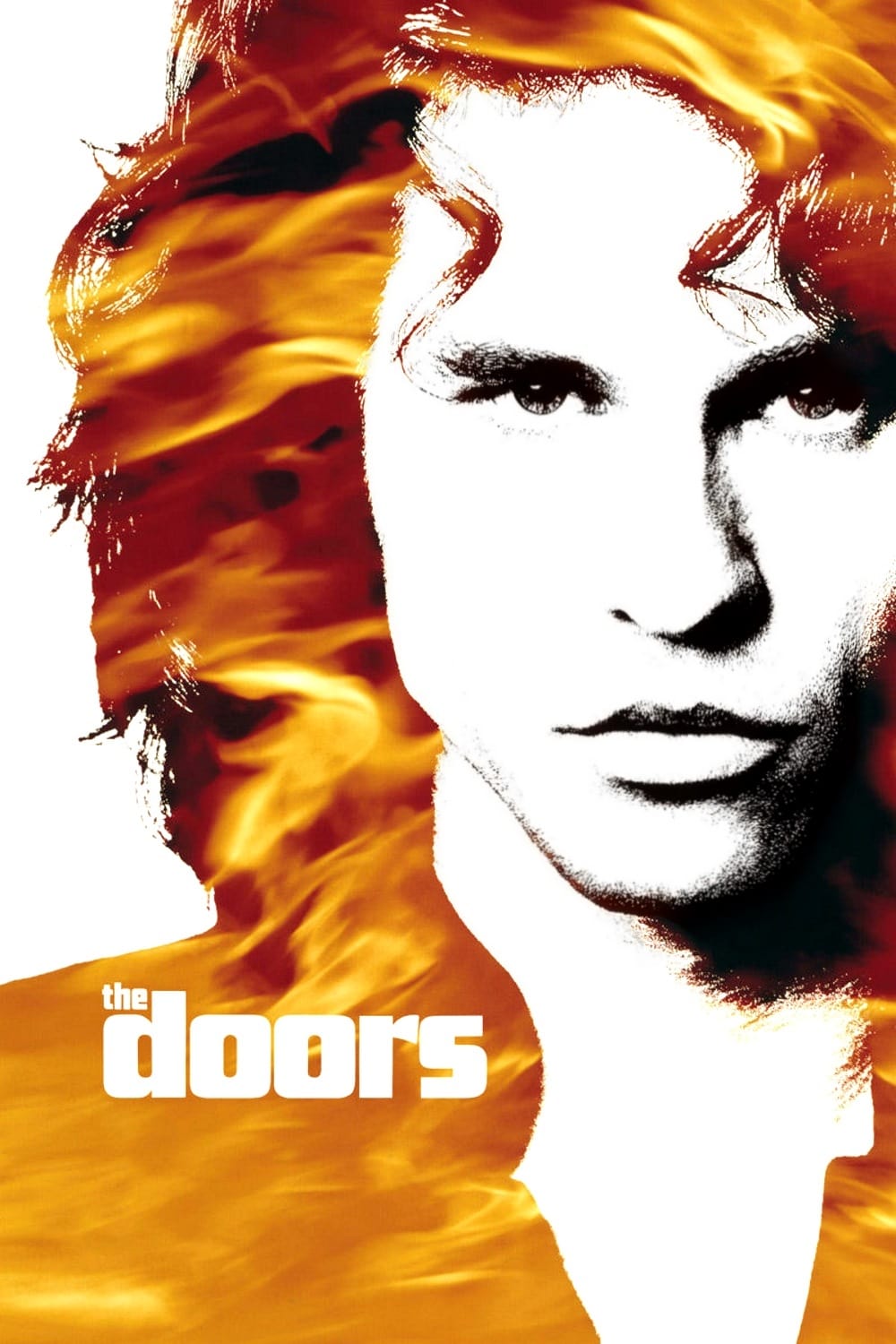
The Doors
1991

The Saint
1997
Tombstone
1993

Top Gun
1986

Top Gun: Maverick
2022
True Romance
1993