
Film credit
Tom Berenger
Also referred to as Tom Berringer, Beringer, Berenger, Tom Barringer
Stats
- Episodes featuring their films
- 5
- Movies in this archive
- 6
Rewatchables episodes featuring Tom Berenger’s films
Mentioned in discussions

Half-Assed Internet Research
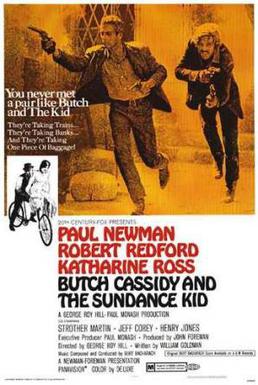
Body count of 30; a 1979 prequel with Tom Berenger and William Catt; Catherine Ross clashed with George Roy Hill and later married Conrad Hall; Montezuma's revenge in Mexico except for the stars; Redford did his own train-top stunt; Bob Dylan was asked to sing Raindrops; Redford hated the bicycle interlude; the film motivated David Fincher; Newman and Hill fought over the Bledsoe scene
In the discussion (8)
- Guessing the body count: the five Bolivian payroll robbers are counted, the army at the end is debated since the frame freezes and only gunfire is heard, and the shootout before it may be covering fire; the answer is 30, more than expected.
- A 1979 prequel, Butch and Sundance: The Early Days, starred Tom Berenger as Butch and William Catt (as transcribed) of Greatest American Hero as Sundance; Goldman produced but did not write it, and people did not like it.
- Catherine Ross did not get along with George Roy Hill, saying any day away from him was a good one; she was scolded and banned from the set for a day for operating a camera, which Conrad Hall had allowed, and Hall and Ross married shortly after; she liked the silent bicycle sequence most because the second unit, not Hill, shot it.
- The Bolivia scenes were shot in Mexico, where everyone got Montezuma's revenge except Redford, Newman and Ross, who drank only soda and beer; Newman called it the most fun he ever had making a film, and he and Redford became legitimately close, which shows on screen in this and The Sting.
- Redford wanted to do his own stunts and ran along the tops of the train cars himself despite Newman objecting that he did not want to lose a co-star.
- The filmmakers tried to get Bob Dylan to sing Raindrops Keep Falling on My Head and he declined; one participant sees the attempt as reaching across the century divide to feel contemporary, and 1969 was a nice year to get Dylan; Scorsese's Rolling Thunder documentary is called inspiring in an aside.
- Redford was honest that he thought the bicycle musical interlude killed the movie the first time he saw it and that the whole sequence was terrible, and the sequence was scotched; one host can picture an early screening feeling that way and beseeching Hill to cut it; now it is classic, perhaps the most iconic scene for broad audiences while fans pick the waterfall, the song was the year's biggest hit and the most parodied, and BJ Thomas's people thought it ruined his career.
- The film motivated David Fincher to become a director and the guest to become a screenwriter, so without it The Social Network does not happen; the only major Newman and Hill conflict was the Bledsoe scene, which Newman wanted at the end of the chase as the catalyst for Bolivia, and they argued about it daily on set.

Picking Nits
Jake Taylor’s supposed catching greatness, his healthy-enough-to-bunt knees, player finances and roommates, his abrupt lack of sexual interest, bullpen-car travel, Tom Berenger’s intended appeal, Roger Dorn missing a TV camera, Vaughn’s accessibility to Dorn’s wife, and lineup continuity in the final game
In the discussion (9)
- Jake Taylor is called a great catcher even though the movie offers little evidence of elite catching. — Bill Simmons
- Jake’s bad knees are emphasized, yet he can execute and run out the decisive bunt. — Bill Simmons
- The players’ salaries, housing, and roommate arrangements do not consistently fit their major-league status. — Rembert Browne
- Despite Jake Taylor’s stewardess and paternity-suit backstory, the hosts call him asexual because he never tries to hook up with anyone in the movie. — Bill Simmons
- The bullpen car’s slow road travel makes Jake’s arrival at Lynn’s house implausible. — Bill Simmons
- Tom Berenger is described as probably an ’80s rugged, handsome type. — Bill Simmons
- Roger Dorn somehow fails to notice the television camera crew filming him leave a hotel with another woman. — Bill Simmons
- The hosts cannot explain how Dorn’s wife finds Ricky Vaughn alone at an empty bar when he is famous and the team is about to play a playoff game. — Bill Simmons
- The final-game batting order and lineup continuity raise questions about who bats where and when. — Bill Simmons

In the discussion (4)
- Charlie Sheen’s movie peak is weighed against the much larger commercial run of Two and a Half Men. — Rembert Browne
- Tom Berenger’s Major League performance is weighed against Platoon and his broader 1980s run. — Bill Simmons
- Margaret Whitton and James Gammon are treated as definite Apex Mountain winners for this movie. — Bill Simmons
- Dennis Hayesbert's later President Palmer role keeps Serrano from being an uncontested apex. — Bill Simmons
Half-Assed Internet Research
Rejected roles, alternate endings, Milwaukee production logistics, baseball-player casting, injuries and stunts, Wild Thing history, sequel tensions, cast friendships, and Margaret Whitton’s dispute with Ron Shelton
In the discussion (23)
- Wesley Snipes reportedly turned down Do the Right Thing, although the role is not identified in the discussion. — Bill Simmons
- Tom Berringer reportedly turned down the Crockett role on Miami Vice. — Bill Simmons
- An alternate ending exposed Rachel Phelps as secretly supporting the team, but test audiences preferred her as a straightforward villain. — Bill Simmons
- Milwaukee stood in for Cleveland during filming, including County Stadium and local crowd scenes. — Bill Simmons
- About 20,000 extras were recruited for the Yankee-game crowd scenes. — Bill Simmons
- Dennis Haysbert recalled being emotionally overwhelmed when the team ran onto the field as the crowd roared. — Bill Simmons
- Former player Steve Yeager was the technical adviser, played the third-base coach, and doubled for Tom Berenger at catcher. — Bill Simmons
- Former major-league player Willie Mueller played Yankees pitcher Duke Simpson. — Bill Simmons
- The discussion says Chelcie Ross had pitched in college, although twenty years had passed since he had thrown a ball. — Bill Simmons
- Steroid use reportedly helped raise Charlie Sheen's fastball for the movie. — Bill Simmons
- A filming shoulder injury led Charlie Sheen to stop for cortisone shots and anti-inflammatories on the way to work. — Bill Simmons
- Mitch Williams adopted Wild Thing with the Cubs, and the movie sequence is credited with creating the closer-entrance-music tradition. — Bill Simmons
- Wesley Snipes complained about repeated sliding after getting strawberries, and Steve Yeager answered that he had done it for twenty years. — Bill Simmons
- The fictional owner plans to move the team to Miami, and the discussion connects that premise to later Cleveland and Florida baseball history. — Bill Simmons
- The hosts find Willie Mays Hayes’s wall of dirty black gloves creepy when imagining him bringing a date home. — Rembert Browne
- A Jake-and-Lynn marriage scene intended to follow the Yankee game was filmed and deleted. — Bill Simmons
- Dennis Haysbert's Yankee-game home run reportedly traveled 315 feet down the left-field line and hit the top of the wall. — Bill Simmons
- In Dennis Haysbert's account, the close cast went to bars together and joined James Gammon’s poker games. — Bill Simmons
- Charlie Sheen recalled James Gammon arriving badly hungover and called him an absolute warlock. — Bill Simmons
- The oral history says Sheen coordinated women flying into Milwaukee, and Sheen compared it with women passing each other on the road during Young Guns. — Bill Simmons
- Burnson mistakenly punched Charlie Sheen while filming the ending and left a welt. — Bill Simmons
- Stacey Carroll's limited acting career and departure from the business are discussed in connection with Dorn's wife. — Rembert Browne
- Margaret Whitton’s work on Major League and a settlement involving Ron Shelton and Bull Durham are discussed at the end of the research block. — Bill Simmons

Casting What-Ifs
Bruce Willis was chosen after an extraordinary list of stars; Sam Neill was considered for Hans Gruber, while Tom Berenger and Don Johnson are the panel’s plausible McClane alternatives.
In the discussion (6)
- Stallone, Harrison Ford, Robert De Niro, Charles Bronson, Nick Nolte, Mel Gibson, Richard Gere, Don Johnson, Burt Reynolds, and Richard Dean Anderson are reported as McClane possibilities. — Chris Ryan
- Because the source novel followed an earlier Roderick Thorp book adapted with Frank Sinatra, Sinatra reportedly held a contractual right of refusal.
- Tom Berenger and Don Johnson are proposed as alternatives who could have worked, though the released film would have been less iconic.
- Nick Nolte is rejected as physically and tonally wrong for the required action.
- Sam Neill is reported as considered for Hans Gruber, but Alan Rickman is treated as impossible to replace after seeing the performance. — Chris Ryan
- The panel wonders whether Chris Rock or a Wayans brother was considered for Argyle and asks what the final Argyle shortlist looked like; the transcript does not resolve it. — Bill Simmons

In the discussion (7)
- Nominees are Snoop Dogg in a wheelchair, Eva Mendes in a rookie performance and Tom Berenger, with Smiley and Bone added as the other two heat check performances.
- Tom Berenger looks exactly like this host's father, which is disorienting, so Berenger from Training Day to Inception is like watching that father in a movie; Berenger also plays a narcotics cop here, which the father is. — Sean Fennessey
- Berenger was a massive star for about six years after The Big Chill and Platoon, shows up as the Marine recruiting Cruise in Born on the Fourth of July, and Someone to Watch Over Me, with Mimi Rogers, is slated for year seven of the show.
- Scott Glenn is ruled out as a Dion Waiters candidate because he is coming up in a different category and one host is not allowed to talk about him yet, though when asked for a heat check a voice still answers Scott Glenn.
- Snoop, by all accounts, should have been bad and Snoop in a wheelchair should have been one of the biggest movie disasters, but his crack-corner lines are recited admiringly as really good Snoop stuff; a nomination for Harris Ewan (as transcribed) is held for another new category.
- Bone was played by Klee Shahid Sloan (as transcribed), an activist and documentary director who worked to reform gang culture from inside the Athens Park Bloods, part of how much Fuqua worked within L.A. gang culture to make the movie authentic.
- One host gives it to Cliff Curtis for Smiley, now on Fear the Walking Dead and great in Danny Boyle's Sunshine: Smiley did not have to be so interesting, making you feel it will be okay with menace underneath and the tattoos; another concedes Smiley is great but gives it to Snoop Dogg because it was so unexpected.

Casting What-Ifs
Kate Winslet was approached for Mal before Marion Cotillard; Evan Rachel Wood, Emily Blunt, Rachel McAdams, Emma Roberts, Jesse Schramm (as transcribed), Taylor Swift and Terry Mulligan (as transcribed) were considered for Ariadne; James Franco was offered Arthur; Don Johnson was considered for Peter Browning
In the discussion (5)
- Kate Winslet was approached for Mal before the part went to Marion Cotillard; the hosts think Cotillard, who often plays a stormy femme fatale, is a very different actress, and that a French rather than English woman is what the crazed dream wife needed, since Winslet would not have been as frightening.
- Nolan's films are said to keep returning to a dead woman who lets the leading man discover his emotional vulnerability; the casting is seen as letting him pretend something more complex was going on with the character, and a joke in a producer voice notes that Kate with Leo would have added twenty million.
- For Ariadne the considered names were Evan Rachel Wood, Emily Blunt, Rachel McAdams, Emma Roberts, Jesse Schramm (as transcribed), Taylor Swift and Terry Mulligan (as transcribed), to disbelief around the table; Ellen Page is judged perfect for combining intense intelligence with wide-eyed vulnerability, something clinical and nurse-like, where Evan Rachel Wood would be too tall, beautiful and imperious.
- Joseph Gordon-Levitt's Arthur was also offered to James Franco, who turned it down over scheduling; JGL's blankness and deadpan are liked for the part.
- Don Johnson was considered for Peter Browning, the part Tom Berenger took; Johnson's ruined-man quality might have worked, Berenger was a shock to recognize, and Browning is not an essential character so Johnson would have been fine.
Films in the archive

Eddie and the Cruisers
1983


Major League
1989

Platoon
1986


Someone to Watch Over Me
1987

The Big Chill
1983

Training Day
2001