‹ All movies
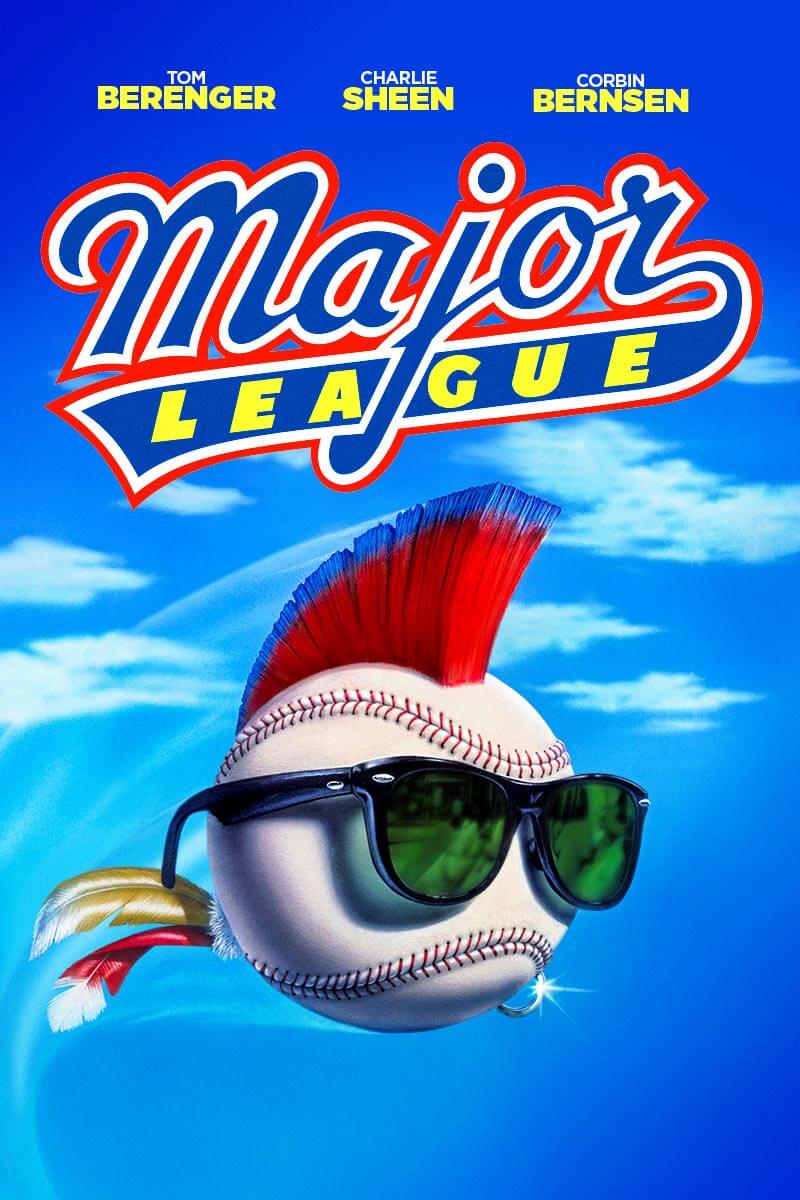
Major League poster

Major League

102 minutes

Cast

Selected cast credits · Film reference

Tom Berenger Jake Taylor
Charlie Sheen Ricky Vaughn
Corbin Bernsen Roger Dorn
Margaret Whitton Rachel Phelps
James Gammon Lou Brown
Rene Russo Lynn Wells
Wesley Snipes Willie Mays Hays
Charles Cyphers Charlie Donovan
Chelcie Ross Eddie Harris
Dennis Haysbert Pedro Cerrano

Major League | The Rewatchables

Explore episodeClose episode

Producer credits not yet identified.

Most Rewatchable Scene

The final-game run is the preferred stretch, especially Pedro Cerrano’s home run through Rick Vaughn’s strikeout of Clu Haywood; the training-camp introductions, Jobu scenes, Wild Thing entrance, and the American Express commercial are alternatives.

In the discussion (8)
Approx. transcript time · 00:22:25Read transcript
  • The first spring-training arrival, the red-tag reveal, and Serrano's first Jobu scene are nominated early.
  • The 'screw the owner, let's do this' scene where the manager gathers the team is another nominee.
  • Serrano's home run in the Yankees game is treated as one of the strongest choices.
  • Rick Vaughn’s Wild Thing entrance and walk from the bullpen are nominated separately from his final strikeout.
  • Vaughn striking out Haywood, including the pitch selection and Haywood's reaction, is a central finalist.
  • The running bunt, Willie Mays Hayes scoring, and the team celebration are praised as well-filmed final-game moments.
  • Rembert Browne adds the team’s American Express commercial as an alternative rewatchable scene. Rembert Browne
  • The discussion settles on the whole final-game run, with the home run through the strikeout singled out as the peak.

What’s Aged the Best?

Bob Uecker’s Harry Doyle broadcasts win. The alternatives are Jake Taylor’s bunt; the film’s slow motion; the Cleveland opening; credible baseball-player casting and Charlie Sheen’s physicality; the season-long structure and specialized roster; Lou Brown; baseball texture; Yankees villainy; the manager’s hunch; worst-to-first baseball magic; closer entrance music; and the profane R-rated tone.

In the discussion (15)
Approx. transcript time · 00:30:27Read transcript
  • Having Jake Taylor win with a surprise bunt instead of a home run is introduced as an Aged Best answer.
  • The movie’s slow motion, especially Willie Mays Hayes running in pajamas during the opening, is offered as another Aged Best answer.
  • The opening credits’ documentary-like Cleveland images are praised for establishing the city and stakes.
  • Casting performers who look and move like baseball players helps the games feel credible.
  • Charlie Sheen’s youth and physical credibility as a pitcher hold up especially well.
  • Bob Euker as the lifelong local radio hack is praised throughout and is ultimately chosen as the winner.
  • The movie captures the day-to-day aspect, ebb and flow, and checkpoints of a baseball season.
  • The roster’s pre-Moneyball specialization, including speed, defense, and relief pitching, feels ahead of its time.
  • James Gammon’s Lou Brown is praised as a funny, credible manager rather than a sentimental caricature.
  • The film captures baseball's rule-bending, dugout drama, rituals, and superstitions.
  • Using the Yankees as the final villain restores their evil-empire role after a weaker decade.
  • The worst-to-first pennant story delivers the kind of baseball-movie magic the hosts want from the genre.
  • The grizzled manager's absurd hunch succeeds even though putting in Charlie Sheen should not work.
  • The Wild Thing sequence is credited with creating the closer-entrance-music tradition that followed.
  • The R rating, swearing, and adult jokes give the sports comedy an edge missing from safer versions.

What’s Aged the Worst?

Charlie Sheen’s later baggage is the named vote, with Jake Taylor’s stalking and Wesley Snipes’s running called honorable runners-up, before the hosts qualify the result as a nine-way tie for first. The almost entirely white setting, later Bob Uecker imitators, Snipes’s throwing and sequel distance, the Lynn-centered freeze-frame, the ‘off the reservation’ phrase, and Pedro Cerrano’s stereotyped characterization are also among the criticized elements.

In the discussion (11)
Approx. transcript time · 00:43:11Read transcript
  • Charlie Sheen’s off-screen history changes how his performance and Wild Thing persona play now.
  • The team and stadium crowd are overwhelmingly white apart from Willie Mays Hayes and Serrano.
  • The future sports-movie imitators of Bob Euker never reproduce this unique success.
  • The movie uses conspicuous slow motion and editing to sell Willie Mays Hayes as exceptionally fast.
  • The writer-director says Wesley Snipes was such an unskilled baseball thrower that the movie omitted scenes of him throwing.
  • Wesley Snipes’s later distance from the movie and refusal to return for the sequel complicate the affection for Hayes.
  • Jake Taylor’s pursuit of Lynn repeatedly ignores her boundaries and reads as stalking.
  • The final freeze-frame centers Lynn in the pennant celebration even though the team barely knows her.
  • Serrano's shifting Haitian or Dominican identity, voodoo practice, tribal music, and speech pattern are criticized as a racial stereotype.
  • The home-run phrase 'off the reservation' is separately criticized as poorly aged.
  • The final call names Charlie Sheen, gives honorable-runner-up mentions to Jake’s stalking and Snipes’s running, then qualifies everything as a nine-way tie for first.

Casting What-Ifs

Dyan Cannon was wanted for Rachel Phelps before the studio chose Margaret Whitton; Jeremy Piven filmed a bench-jockey role that was deleted.

In the discussion (3)
Approx. transcript time · 00:55:51Read transcript
  • The filmmakers wanted Diane Cannon as owner Rachel Phelps, while the studio wanted Margaret Whitton, who got the role.
  • Jeremy Piven played a bench jockey whose material was deleted from the finished movie.
  • Rene Russo’s appearance is noted as her first movie role, although it is biographical context rather than an alternate casting.

The Dion Waiters Award for Best Heat Check Performance

Clu Haywood, played by Pete Vuckovich, wins. Rachel Phelps, Bob Uecker, and Uecker’s unnamed broadcast partner are also accepted as candidates.

In the discussion (3)
Approx. transcript time · 00:56:53Read transcript
  • The owner and Bob Uker are proposed as candidates based on their limited time and impact.
  • Clu Haywood is proposed and accepted as the winner.
  • Bob Euker's unnamed broadcast partner is accepted as another candidate because of his weird facial reactions.

Half-Assed Internet Research

The research covers rejected roles, alternate endings, Milwaukee production logistics, baseball-player casting, injuries and stunts, Wild Thing history, sequel tensions, cast friendships, and Margaret Whitton’s dispute with Ron Shelton.

In the discussion (23)
Approx. transcript time · 00:57:38Read transcript
  • Wesley Snipes reportedly turned down Do the Right Thing, although the role is not identified in the discussion.
  • Tom Berringer reportedly turned down the Crockett role on Miami Vice.
  • An alternate ending exposed Rachel Phelps as secretly supporting the team, but test audiences preferred her as a straightforward villain.
  • Milwaukee stood in for Cleveland during filming, including County Stadium and local crowd scenes.
  • About 20,000 extras were recruited for the Yankee-game crowd scenes.
  • Dennis Haysbert recalled being emotionally overwhelmed when the team ran onto the field as the crowd roared.
  • Former player Steve Yeager was the technical adviser, played the third-base coach, and doubled for Tom Berenger at catcher.
  • Former major-league player Willie Mueller played Yankees pitcher Duke Simpson.
  • The discussion says Chelcie Ross had pitched in college, although twenty years had passed since he had thrown a ball.
  • Steroid use reportedly helped raise Charlie Sheen's fastball for the movie.
  • A filming shoulder injury led Charlie Sheen to stop for cortisone shots and anti-inflammatories on the way to work.
  • Mitch Williams adopted Wild Thing with the Cubs, and the movie sequence is credited with creating the closer-entrance-music tradition.
  • Wesley Snipes complained about repeated sliding after getting strawberries, and Steve Yeager answered that he had done it for twenty years.
  • The fictional owner plans to move the team to Miami, and the discussion connects that premise to later Cleveland and Florida baseball history.
  • The hosts find Willie Mays Hayes’s wall of dirty black gloves creepy when imagining him bringing a date home.
  • A Jake-and-Lynn marriage scene intended to follow the Yankee game was filmed and deleted.
  • Dennis Haysbert's Yankee-game home run reportedly traveled 315 feet down the left-field line and hit the top of the wall.
  • In Dennis Haysbert's account, the close cast went to bars together and joined James Gammon’s poker games.
  • Charlie Sheen recalled James Gammon arriving badly hungover and called him an absolute warlock.
  • The oral history says Sheen coordinated women flying into Milwaukee, and Sheen compared it with women passing each other on the road during Young Guns.
  • Burnson mistakenly punched Charlie Sheen while filming the ending and left a welt.
  • Stacey Carroll's limited acting career and departure from the business are discussed in connection with Dorn's wife.
  • Margaret Whitton’s work on Major League and a settlement involving Ron Shelton and Bull Durham are discussed at the end of the research block.

Apex Mountain

Margaret Whitton and James Gammon receive clear Apex Mountain calls; Charlie Sheen, Tom Berenger, and Dennis Haysbert are debated against later or larger roles.

In the discussion (4)
Approx. transcript time · 01:06:38Read transcript
  • Charlie Sheen’s movie peak is weighed against the much larger commercial run of Two and a Half Men.
  • Tom Berenger’s Major League performance is weighed against Platoon and his broader 1980s run.
  • Margaret Whitton and James Gammon are treated as definite Apex Mountain winners for this movie.
  • Dennis Hayesbert's later President Palmer role keeps Serrano from being an uncontested apex.

Picking Nits

The hosts question Jake Taylor’s supposed catching greatness, his healthy-enough-to-bunt knees, player finances and roommates, his abrupt lack of sexual interest, bullpen-car travel, Tom Berenger’s intended appeal, Roger Dorn missing a TV camera, Vaughn’s accessibility to Dorn’s wife, and lineup continuity in the final game.

In the discussion (9)
Approx. transcript time · 01:08:59Read transcript
  • Jake Taylor is called a great catcher even though the movie offers little evidence of elite catching.
  • Jake’s bad knees are emphasized, yet he can execute and run out the decisive bunt.
  • The players’ salaries, housing, and roommate arrangements do not consistently fit their major-league status.
  • Despite Jake Taylor’s stewardess and paternity-suit backstory, the hosts call him asexual because he never tries to hook up with anyone in the movie.
  • The bullpen car’s slow road travel makes Jake’s arrival at Lynn’s house implausible.
  • Tom Berenger is described as probably an ’80s rugged, handsome type.
  • Roger Dorn somehow fails to notice the television camera crew filming him leave a hotel with another woman.
  • The hosts cannot explain how Dorn’s wife finds Ricky Vaughn alone at an empty bar when he is famous and the team is about to play a playoff game.
  • The final-game batting order and lineup continuity raise questions about who bats where and when.

The Neil McCauley “A Book about Metals” Award for Best Line from the Movie

Bill Simmons chooses Lou Brown’s ‘win the whole fucking thing,’ while Rembert Browne chooses Pedro Cerrano’s ‘I do it myself’ Jobu line; ‘hats for bats’ and Bob Uecker’s calls are leading alternatives.

In the discussion (8)
Approx. transcript time · 01:15:26Read transcript
  • Candidates include ‘This guy is dead. Cross him off,’ ‘hats for bats,’ ‘just a bit outside,’ and ‘How’s your wife and my kids?’
  • The declaration 'fuck you, Joe Boo, I do it myself' is a finalist.
  • Jake Taylor's library question about the whale section in Moby Dick is nominated.
  • Willie Mays Hayes saying they should have gotten a live chicken is nominated.
  • Willie Mays Hayes calling his first steal a step toward the Hall of Fame is nominated.
  • The owner's 'I hate this fucking song' reaction to Wild Thing is nominated.
  • Bill Simmons chooses Lou Brown's 'win the whole fucking thing' line. Bill Simmons
  • Rembert Browne says he loves 'hats for bats' but selects the Jobu line as his favorite. Rembert Browne

Sequel, Prequel, Limited Series, or All-Black Remake

Both hosts enthusiastically support remaking Major League as a ten-to-thirteen-episode Netflix series, potentially centered on a different struggling franchise such as Seattle.

In the discussion (3)
Approx. transcript time · 01:18:30Read transcript
  • The movie’s season-long structure is proposed as a ten-episode Netflix series.
  • The hosts say the same premise could move to another city and use the Seattle Mariners as an example.
  • They remain enthusiastic when the imagined order expands to a 13-episode Netflix series.

Probably Unanswerable Questions

The hosts question Willie Mays Hayes’s stolen-base total, Pedro Cerrano’s strikeout and home-run balance, pitcher-win logic, and whether Bull Durham would improve if Charlie Sheen played Nuke LaLoosh.

In the discussion (4)
Approx. transcript time · 01:19:36Read transcript
  • Willie Mays Hayes’s batting average and stolen-base totals prompt questions about how often he reached base.
  • Serrano's strikeouts and home runs and the staff's credited wins are compared with the team's record.
  • The hosts debate whether Charlie Sheen in the New Lerush role would make Bull Durham better enough to justify replacing him in Major League.
  • One host initially favors the Bull Durham substitution, while the other wants both movies preserved; the question remains unresolved.

Who Won the Movie?

Rembert Browne votes for Wesley Snipes, while Bill Simmons votes for Charlie Sheen; the episode records two distinct ballots rather than a consensus winner.

In the discussion (2)
Approx. transcript time · 01:22:27Read transcript
Podcast choices

More from the conversation

The episode marks the film’s thirtieth anniversary during its release week.
Approx. transcript time · 00:03:14Read transcript
The opening traces Wesley Snipes’s 1989–95 run across sports, crime, action, and drama roles and compares his range with Denzel Washington and John David Washington.
Approx. transcript time · 00:03:36Read transcript
Charlie Sheen’s 1986–89 run through Lucas, Ferris Bueller’s Day Off, Platoon, Wall Street, Young Guns, Eight Men Out, and Major League is praised.
Approx. transcript time · 00:12:25Read transcript
The movie’s strongest stretch begins once the players learn of the owner’s plan and decide to win the pennant.
Approx. transcript time · 00:13:47Read transcript
Tom Berenger’s seven-year 1980s run is compared with Sidney Moncrief’s underappreciated basketball career.
Approx. transcript time · 00:15:30Read transcript
Writer-director David Ward’s Minnesota Twins relocation story is cited as inspiration for the owner’s tank-and-move plot.
Approx. transcript time · 00:17:52Read transcript
Roger Ebert’s one-and-a-half-star rating is stated for Major League II; Bill Simmons says he could not locate an Ebert review of the first Major League. No rating is assigned to the episode film.
Approx. transcript time · 00:20:05Read transcript
A reference to ESPN’s Not Top Ten describes a sports-highlight feature rather than an episode ranked-list segment.
Approx. transcript time · 00:41:29Read transcript
The apparent Craig mention occurs inside a Black Tux advertisement and does not qualify as spoken-body producer evidence.
Approx. transcript time · 00:55:41Read transcript
The opening and closing contain no named theme-month cue; the Field of Dreams teaser identifies only the next episode.
Approx. transcript time · 01:24:28Read transcript