Cruise and Coughlin bartending; Uncle Pat's never-buy-a-drink rule; Addicted to Love; Elisabeth Shue; the passed-out friend diagnosis; Roger Donaldson's late-80s run; Cruise playing basketball; the soundtrack
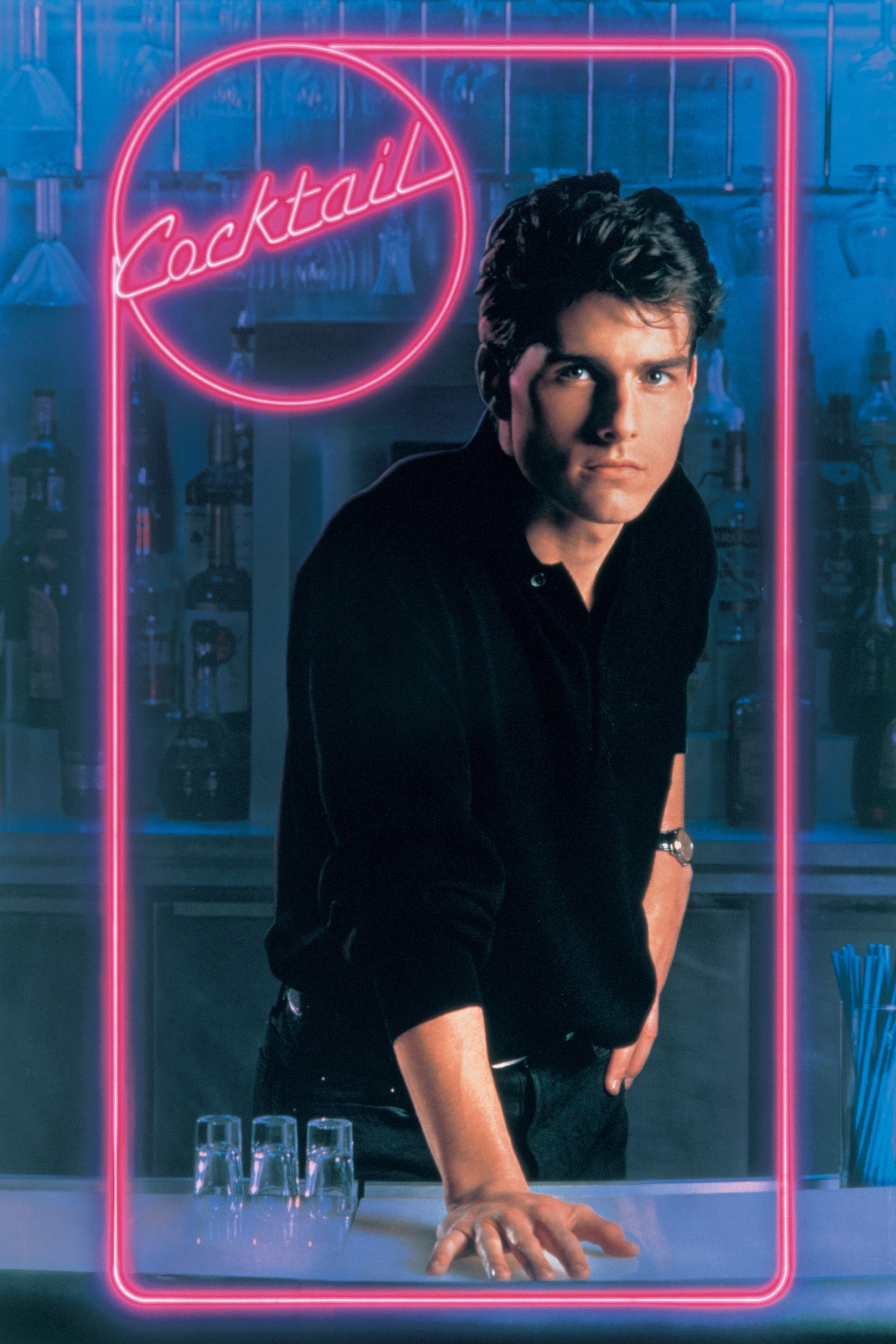
Cruise and Coughlin bartending comes first: nothing beats Cruise fired up in a quirky role, and nobody else would have taken bottle flipping so seriously. — Bill Simmons
Of all Cruise's mastered skills, this participant would most want to see him play nine ball. — Chris Ryan
Cruise approaches roles by asking what skill he can acquire, unlike Daniel Day Lewis asking who he can become. — Sean Fennessey
Brian and Coughlin are called really bad, slow bartenders who make drinks for no one while 80 people wait. — Chris Ryan
A nit pulled forward: the claim that bartenders make money for bars by pouring less, but they spill liquor everywhere while flipping bottles. — Bill Simmons
Uncle Pat's rule never to buy anyone a drink has aged well and is a smart business strategy.
New York buybacks are common; as a former bartender, topping up drinks for bigger tips steals from the bar, which is why an owner like Pat would not do it. — Bill Simmons
Pat had no real growth plan: he accepts free labor from Brian and takes a dollar or two off the bar as tips. — Bill Simmons
Addicted to Love and Shue, an 80s goddess, are listed, with Cocktail as a more adult Shue after The Karate Kid and Adventures in Babysitting. — Bill Simmons
Cruise leaving 40 paying customers to glance at Shue's passed-out friend and declare her fine always gets a laugh. — Bill Simmons
Funnier still, Shue abandons that friend for days, and the friend turns out to have gone home to New York. — Chris Ryan
Roger Donaldson's late 80s, No Way Out and Cocktail, is listed; No Way Out is called perhaps the most rewatchable 80s action thriller.
Cruise playing basketball is listed, part of a tour of his screen athletics from All the Right Moves to The Firm's running and tumbling. — Bill Simmons
Cruise is judged undeniably a good athlete but the fit, uncoordinated crew-type rather than a varsity basketball player, compared with a high-school swimmer. — Sean Fennessey
The basketball scene has Cruise going perfect from the field; the Philip Seymour Hoffman scene is called a direct parody, and "Ryan's Law" is proposed as never going five for five in a movie basketball scene.
The soundtrack did very well and made the Bobby McFerrin song a thing; it pairs 1950s rock callbacks with 80s songs like Kokomo. — Sean Fennessey
Asked for a final aged-best answer, the music is chosen. — Bill Simmons
Christian Slater gets a yes, with two agreeing voices; the next level was expected via Young Guns and Robin Hood but never happened, though True Romance briefly revived the belief.
Heathers and this film convinced everyone he was a leading man, given how many monologues he gets. — Andy Greenwald
Samantha Mathis is at her Apex, with a joke to rename it Nora De Niro Mountain or put her face on it. — Bill Simmons
Pirate radio movies are at their Apex; the 2009 Pirate Radio with Philip Seymour Hoffman is called worse, and the agreement is "This was its best."
The Pixies are raised for Apex: one voice says this is a bigger Pixies drop than Where Is My Mind in Fight Club "just because it's so perfect", the counterargument that Fight Club can still be watched is called fair, and the case ends only with "I can see that argument." — Andy Greenwald
Flipping switches is proposed because the switch sound design is so satisfying; the reply is "Great point."
Asked whether this is Apex Mountain for PO boxes, the answer is yes, adding the claim that the Unabomber killed PO boxes. — Bill Simmons
The last Apex is the pre-Nevermind alternative college-radio era, with 1990 called the peak before grunge; another voice agrees such a soundtrack could not be made a few years later. — Bill Simmons
The real Dion Waiters is said to be struggling, suspended twice in Miami for conduct detrimental to the team. — Bill Simmons
Renaming it the Freddie Miles Award is floated, calling this one of the all-time heat checks on the podcast. — Bill Simmons
A plan is described: after the 100th episode, with the 101st a reheat with Chris Ryan, listeners would pick a new name from four choices on Twitter. — Bill Simmons
An objection says the name cannot change yet because Dion Waiters was on the Oklahoma City Thunder comparison team and Hoffman's character is kind of the Dion Waiters.
William Hurt's dad, whose name nobody knows, is a candidate; it is Prosky time: Bob Prosky, one of the great mammoth actors, best in Thief, who moved from sinister in the late 70s and early 80s, basically Wilford Brimley in The Firm for a decade, to good grandpa here, with two great moments, taking Aaron out to tell him he will be laid off and answering 'I need to be alone' with 'okay, I'll join you', and telling Jane she is not as good as he is but must take the job.
An Evil Brimley reading of the layoff speech is done as a joke; the control-room man who loves William Hurt's compliments looks so much like Philip Seymour Hoffman and is identified as Christian Clementson (as transcribed) from Bad Influence with James Spader.
Joan Cusack is called undersold: SNL in 85-86, Broadcast News in 87, Married to the Mob and Working Girl in 88, Say Anything in 89, Men Don't Leave and My Blue Heaven in 90, a great five-year run; the award goes to Prosky.
Kurt Russell first, with the reminder that the question is the highest point of his career, not the favorite: one case is The Thing in 1982, after Escape from New York and with Silkwood, Swing Shift and Big Trouble in Little China coming; a no is cast because Escape from New York was only later a cult hit, raising whether apex is judged at the time or on reflection.
Reading about Tombstone makes it sound like Russell was able to finance the movie coming off Backdraft, a relatively big hit he starred in, likened to LeBron in the 2018 Finals; a controversial case is made for Tango and Cash, when after the well-liked Tequila Sunrise with Michelle Pfeiffer a hit with Stallone, an absolutely ridiculous movie only those two could pull off, left him looking like an A plus list star.
Tango and Cash was not a huge hit, costing $55 million and making $66 million, though $55 million in 1988 is like $160 million today, and it is not that good; the counter is that it opened up Backdraft and his ability to finance Tombstone; the actual answer may be that there was no apex at all, a range of rolling hills, which is what is cool about his career.
Russell was nominated for Best Supporting Actor for Silkwood, which is why his Apex Mountain is around The Thing in 1982 or 1983, when Escape from New York was becoming a cult movie. — Sean Fennessey
Whether Russell was ever Oscar-nominated is disputed, Miracle floated and rejected, until the Silkwood nomination is recalled; the host who forgot it concedes, a 180 the others tease.
Russell could have had a different career as a serious dramatic actor rather than leaning into the masculine hero; he and Harrison Ford are cut from the same cloth, smart throwbacks to Paul Newman charisma, but Ford got two franchises while Russell alternates three good films and three bad; he is also just a good-looking dude, at his most handsome here, a man who should be on a poster.
Val Kilmer: a no, with Top Gun imagined as his apex, since coming out of it people saw him neck and neck with the star, though another calls that the star's movie and goes Heat, where as De Niro's wingman in the biggest mid-90s movie he is the next wave; his pre-Batman run is traced through True Romance, Tombstone, The Real McCoy, Thunderheart and The Doors.
1987 right after Top Gun is floated, when Willow was hopefully going to be his Han Solo and did not work out; one host's personal apex for him is The Doors, where he was out of control, and a Doors rewatchable is wanted, though JFK would have to come first among the Oliver Stone movies.
Jason Priestley is a thousand-percent yes: 90210 was never bigger, he is in a movie with Kurt Russell and Val Kilmer and has a couple of heat-check scenes, the steepest mountain of all time, very high with a precipitous drop on either side; a caution that a later show (transcribed 'Natuna') was big for three and a half years does not change the view that this literally was his Apex Mountain and his first dabbling in movies.
Dana Delaney's apex has to be China Beach, which was probably already gone by this point, so she is not a yes; nobody else is proposed except George Cosmatos as ghost director, already covered, with the joke of a Ringer video secretly directed by someone else.
The late Bill Paxton: this is not a Mount Rushmore Paxton performance next to Aliens, Near Dark, One False Move, Weird Science, True Lies and Twister, though it may be his sweetest spot while figuring out how to be Bill Paxton; in Aliens Sigourney Weaver is the hero but Paxton and Biehn would in any other world have been the stars, and One False Move is incredible though arguably Billy Bob's movie too.
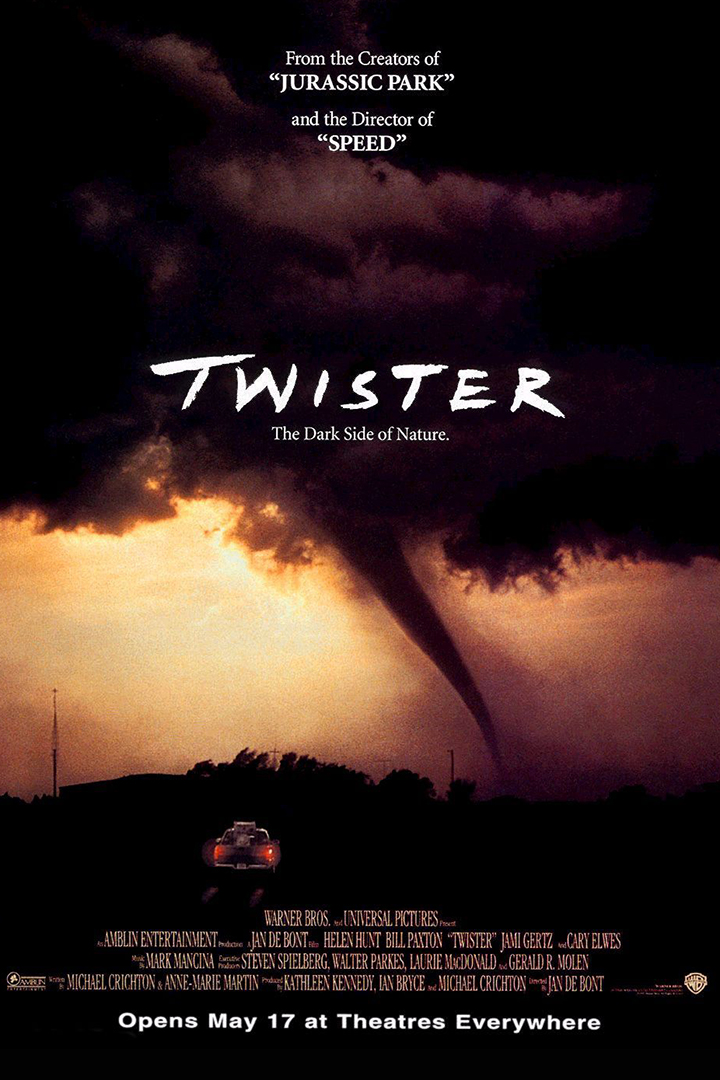
Twister was Hollywood's first concerted effort to make Paxton a major star, marketed with Helen Hunt and Philip Seymour Hoffman as people who were going to be stars rather than actual stars; the shift from needing a movie star to needing a tornado, meteor or alien invasion is traced to Speed, where Keanu was the guy and Sandra Bullock turned out to be one of the biggest stars of the next twenty years.
Paxton is one of the all-time great number two or three guys: here he sets picks and makes a couple of corner threes, telling Wyatt he is the one, spits a lot, works the scorer's-table handshakes at the start, and gets the 'hey' when Doc responds to Wyatt's description of his new wife with 'pure as the driven snow'.
Hoffman, Reid, Stormare, Knox Harrington’s actor and Gilmore open a particularly deep candidate field. — Chris Ryan
The limo driver’s brief, forceful entrance earns a nomination and a comparison with Spinal Tap.
Flea and the musician transcribed as Amy Man are mentioned; Flea is criticized as too cartoonish, while Huddleston is praised as funny. — Sean Fennessey
Hoffman is selected for playing an unusually different comic register in each scene.
Brandt’s thigh-slapping response to Bunny and repeated wonderful-woman description are praised.
Brandt’s anxious protection of the plaques differs from his palpable tension in the limousine.
Stormare’s reputation from this film and Fargo is acknowledged, but Hoffman is preferred. — Chris Ryan
Turturro and Knox Harrington’s actor fit one participant’s heat-check definition without being that participant’s favorite performances.
Jesus feels more continuously present than his few scenes because of the bowling introduction’s lasting imagery.
Gazzara quickly communicates Treehorn’s slick, sinister Malibu wealth; the sheriff’s Chinatown-like speech also receives praise.
Hoffman is the final declared selection, with numerous honorable mentions.