

‹ All movies
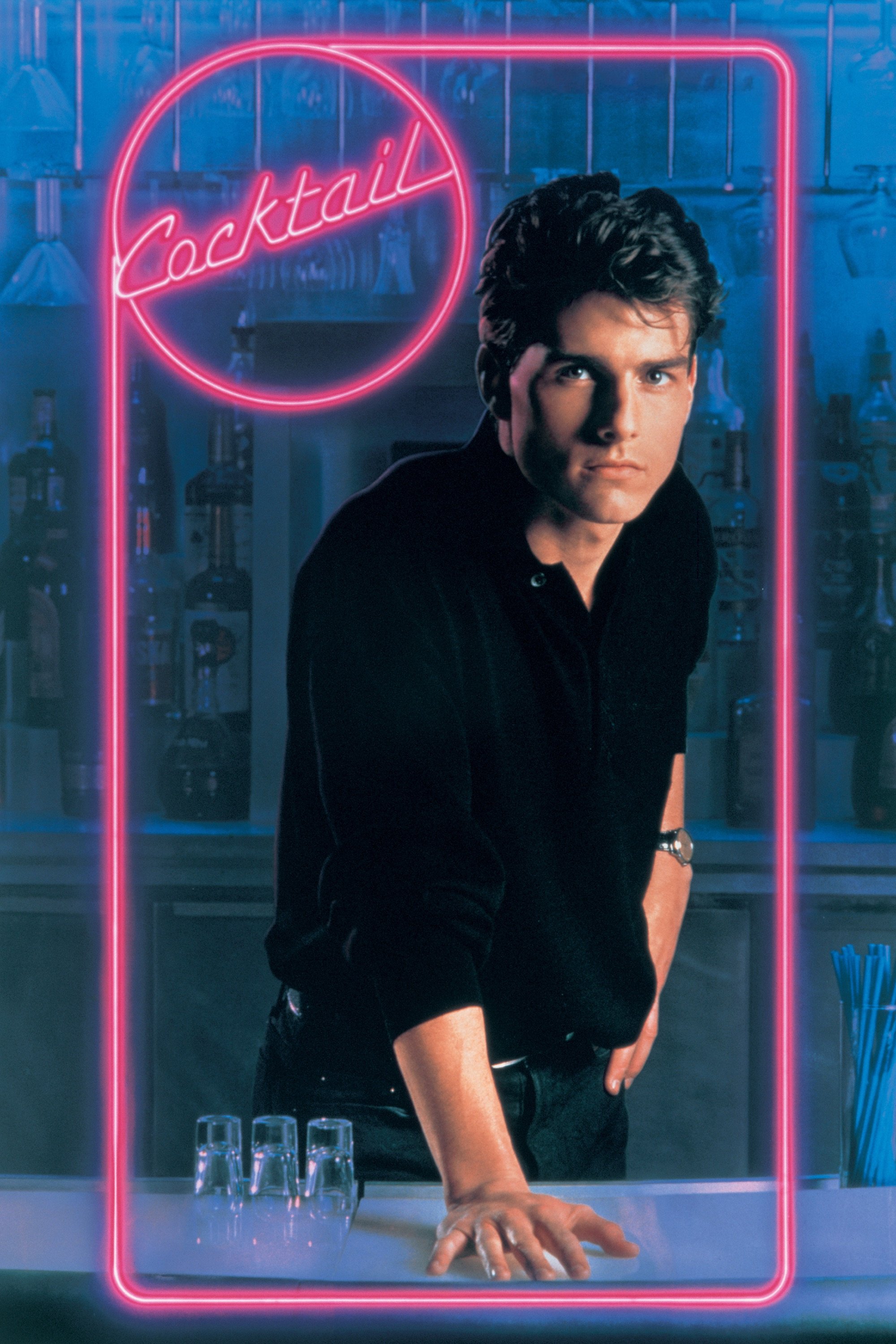
Cocktail poster

Cocktail

103 minutes

Cast

Selected cast credits · Film reference

Tom Cruise Brian Flanagan
Bryan Brown Doug Coughlin
Elisabeth Shue Jordan Mooney
Lisa Banes Bonnie
Laurence Luckinbill Richard Mooney
Kelly Lynch Kerry Coughlin
Gina Gershon Coral
Ron Dean Uncle Pat
Paul Benedict Finance Teacher
Gerry Bamman Tourist
James Eckhouse Tourist

Cocktail | The Rewatchables

Explore episodeClose episode

Producer credits not yet identified.

Top Five List

5. Sylvester Stallone arm-wrestling movie; 4. Congo; 3. Showgirls; 2. Anaconda; 1. Cocktail

In the discussion (6)
Approx. transcript time · 00:02:10Read transcript
  • Asked whether Cocktail is the greatest bad movie ever, this participant offers a top five: No. 5 the Sylvester Stallone arm-wrestling movie, rewatched as much as any 1980s movie as a kid because it was always on WPIX. — Sean Fennessey
  • Amid agreeing interjections, the Stallone arm-wrestling movie is joked about as a stealth divorce movie.
  • No. 4 is Congo, praised as an adaptation of the novel with an incredible Laura Linney performance; No. 3 is Showgirls, said to be Chris's number one. — Sean Fennessey
  • No. 2 is Anaconda and No. 1 has to be Cocktail. — Sean Fennessey
  • A reply argues Showgirls and Anaconda may be ineligible because their makers knew or winked at the badness, with Snakes on a Plane as the ultimate intentionally bad movie.
  • The hosts say Cocktail went through 40 versions of the script, is based on a book, tried to say something about 80s wealth, turned into dudes flipping bottles, and made a lot of money.

Roger Ebert's review

In the discussion (2)
Approx. transcript time · 00:27:27Read transcript
  • Ebert gave the film two stars; one host had guessed he might go one and a half.
  • Ebert wrote that the more you think about what really happens in Cocktail, the more you realize how empty and fabricated it is; the hosts concede he is right.

Most Rewatchable Scene

Coughlin giving Flanagan tips; Addicted to Love bottle flipping; late-night Coughlin's laws stair fall; Cell Block barman poet; Jamaica bar reunion with Coughlin; first Bonnie scene; last Flanagan-Coughlin scene; showdown with Jordan's dad

In the discussion (28)
Approx. transcript time · 00:29:29Read transcript
  • The first entry lumps together Coughlin giving Flanagan tips, and possibly Uncle Pat giving Flanagan advice before he starts bartending.
  • Uncle Pat is a very familiar figure; Monty's father in 25th Hour is compared as another Uncle Pat who runs a New York bar and is cheap. — Sean Fennessey
  • Uncle Pat being cheap is the opposite of how to run a bar, answered by the point that he only has six people in his bar.
  • Coughlin's law "Anything else is always something better" is followed by Flanagan's first good night clicking with the waitresses, which is when the movie starts cooking.
  • Director Roger Donaldson is imagined asking Cruise whether he can dial it up another level.
  • A movie set entirely at TGI Fridays is floated; that stretch is called the best part, but a whole movie of it would be a good YouTube video rather than a movie.
  • TGI Fridays is praised as a realistic New York bar compared with movie bars like Cell Block; bartending there suggests Coughlin is not a life winner.
  • Coughlin may have just served time or been in a money-laundering scheme and is trying to regroup; "Coughlin's Law" is joked about as a prison movie.
  • Cruise bartending to Addicted to Love is called one of the five most 80s moments captured on film.
  • Cruise looks like he is hearing Addicted to Love, or music, for the first time, cheering it like a game; Robert Palmer's reaction is imagined.
  • The late night where Coughlin falls down the steps while streaming Coughlin laws and they do the Hippy Hippy Shake is really funny; Coughlin writes the laws around his own behavior.
  • Cell Block is called the greatest bar set ever built, a three-story prison cell like the set of Oz; Rembrandt reacted to it in real time on a Grantland video.
  • Cell Block is compared to the multi-level Terminal 5 concert venue in New York.
  • Nobody at Cell Block drinks; they wait for poems, and Flanagan delivers the world's last barman poet speech ending with the bar being open.
  • Gina Gershon ordering an orgasm and the Coughlin-Flanagan routine to All Shook Up complete an unassailable five minutes; the Cell Block scene is called hysterical.
  • The barman poet may have invented Steve Austin's "that's the bottom line" gimmick.
  • In Jamaica, Cruise keeps giving Shue the Rock Bottom by throwing her into the ocean. — Sean Fennessey
  • Cruise's two romantic interactions, the ocean throws and tickle-attacking Gina Gershon among feathers, suggest he had never done these things before.
  • The Jamaica bar scene with Shue, Eckhouse hovering and Coughlin showing up is magic, ending with the success-manual bet and the revelation that he married a rich girl.
  • Whether Coughlin sought out where Flanagan was is questioned; maybe he guessed from Flanagan talking about Jamaica and the poster.
  • Coughlin convincing Flanagan to open a bar should have been in the list too.
  • The Jamaica bar is a bummer full of lonely regulars rather than sunburned tourists.
  • Coughlin's "there's my wife" cuts to Kelly Lynch clearly shot in another location, which is very funny.
  • The first Bonnie scene is great, and Flanagan then screws up things with Shue because he is a dirtbag.
  • The last Flanagan-Coughlin scene is the final pick, since the first half is much better than the second.
  • A self-described first-half guy calls Brian's showdown with Elizabeth's dad the funniest scene in the movie by far; another voice adds that the showdowns with the dad and with the sculptor are both excellent.
  • Another personal pick is the entire Cell Block scene, plus the electrifying Addicted to Love sequence.
  • The accountant-looking guy at the bar who owns the hottest spot in New York raises the question of why he is at a TGI Fridays.

What’s Aged the Best?

Cruise and Coughlin bartending; Uncle Pat's never-buy-a-drink rule; Addicted to Love; Elisabeth Shue; the passed-out friend diagnosis; Roger Donaldson's late-80s run; Cruise playing basketball; the soundtrack

In the discussion (17)
Approx. transcript time · 00:44:20Read transcript
  • Cruise and Coughlin bartending comes first: nothing beats Cruise fired up in a quirky role, and nobody else would have taken bottle flipping so seriously.
  • Of all Cruise's mastered skills, this participant would most want to see him play nine ball. — Chris Ryan
  • Cruise approaches roles by asking what skill he can acquire, unlike Daniel Day Lewis asking who he can become.
  • Brian and Coughlin are called really bad, slow bartenders who make drinks for no one while 80 people wait.
  • A nit pulled forward: the claim that bartenders make money for bars by pouring less, but they spill liquor everywhere while flipping bottles.
  • Uncle Pat's rule never to buy anyone a drink has aged well and is a smart business strategy.
  • New York buybacks are common; as a former bartender, topping up drinks for bigger tips steals from the bar, which is why an owner like Pat would not do it.
  • Pat had no real growth plan: he accepts free labor from Brian and takes a dollar or two off the bar as tips.
  • Addicted to Love and Shue, an 80s goddess, are listed, with Cocktail as a more adult Shue after The Karate Kid and Adventures in Babysitting.
  • Cruise leaving 40 paying customers to glance at Shue's passed-out friend and declare her fine always gets a laugh.
  • Funnier still, Shue abandons that friend for days, and the friend turns out to have gone home to New York.
  • Roger Donaldson's late 80s, No Way Out and Cocktail, is listed; No Way Out is called perhaps the most rewatchable 80s action thriller.
  • Cruise playing basketball is listed, part of a tour of his screen athletics from All the Right Moves to The Firm's running and tumbling.
  • Cruise is judged undeniably a good athlete but the fit, uncoordinated crew-type rather than a varsity basketball player, compared with a high-school swimmer.
  • The basketball scene has Cruise going perfect from the field; the Philip Seymour Hoffman scene is called a direct parody, and "Ryan's Law" is proposed as never going five for five in a movie basketball scene.
  • The soundtrack did very well and made the Bobby McFerrin song a thing; it pairs 1950s rock callbacks with 80s songs like Kokomo.
  • Asked for a final aged-best answer, the music is chosen.

What’s Aged the Worst?

A young man obsessed with being rich; Coughlin's bet on an old Foreman-Norton fight; Bonnie's aerobics; Uncle Pat's walk-away advice; the violent doorman; the penthouse climax; blousy shirts; two rich-girl love interests

In the discussion (8)
Approx. transcript time · 00:57:09Read transcript
  • A young person obsessed with being rich is a theme that feels weird now.
  • Coughlin loses $50 on a George Foreman-Ken Norton fight said to have happened in 1973, 15 years earlier.
  • Bonnie doing aerobics in a leotard in front of a tiny TV reflects an 83-to-88 movie trope.
  • Uncle Pat's advice, after Cruise learns his Jamaica fling is pregnant, to walk away from the whole thing has Neil McCauley vibes.
  • The unfriendly, violent doorman in Jordan's building has weird energy for a Park Avenue building.
  • The penthouse climax, punching out the doorman and butler and the "it didn't have to be this way" line, is ridiculous but loved.
  • The big, baggy blousy shirts, especially in Jamaica, are an 80s thing.
  • Both female leads being rich girls with disapproving dads is called a flaw; they basically have the same story.

The Coach Finstock Award for Best Life Lesson

"Never trust a chick named after an inanimate object"

In the discussion (8)
Approx. transcript time · 00:59:46Read transcript
  • A new category is announced for this episode only: Best Coughlin lessons, with the laws run through one by one.
  • "Anything else is always something better" gets a no.
  • Nobody follows these laws and they are all bad; the waitress-crabs and aristocrat-of-the-working-class laws each get a no.
  • "Never trust a chick named after an inanimate object", advice about Coral, is liked.
  • Remaining laws include never showing surprise, the workers versus the hustlers, and burying the dead.
  • Asked which law Craig should live by for ten years, the crabs one is suggested, and the inanimate-object rule is backed as strong.
  • A Coughlin's Laws podcast is joked about; the laws are ridiculous but delivered with Confucius-like conviction.
  • A participant plans to adopt Coughlin as a Slack persona with laws like never asking a podcaster if he is available before 11 a.m.
In the discussion (5)
Approx. transcript time · 01:02:48Read transcript
  • The hosts say Charlie Sheen was considered for Brian Flanagan, which makes sense, and that Robin Williams also was, perhaps when the character was older.
  • IMDb suggests every white actor of the late 80s was considered; only Charlie Sheen is believed.
  • The hosts say Heather Graham was offered Jordan Mooney but declined because she was committed to License to Drive with Corey Haim.
  • Asked whether the movie is better with Shue or a young Heather Graham, the answer is that it is great with Shue, and another agrees.
  • The hosts say Molly Ringwald apparently turned down Jordan Mooney as well.

The Joey Pants “That Guy” Award

No affirmative selection

In the discussion (3)
Approx. transcript time · 01:03:35Read transcript
  • The field is narrowed to Uncle Pat, played by Ron Dean, or Jordan's dad, played by Laurence Luckinbill, who goes for it in every scene.
  • Gerry Bamman, who gets a long tracking shot asking for a free drink, is added and recognized as Kevin McCallister's uncle in Home Alone.
  • James Eckhouse is ruled not on the board; seeing the Yuppie Poet on screen is called validating.

Recasting Couch

Casting left intact

In the discussion (3)
Approx. transcript time · 01:05:05Read transcript
  • The movie is called perfect and not to be touched.
  • Mel Gibson instead of Brown is floated, with an aside that he is not supposed to be talked about anymore.
  • The reply loves Brown here, calls it a favorite Brown movie, and says Gibson in a bar with Cruise would get Cruise glassed.

Half-Assed Internet Research

Bottle tossing added at Cruise's request; Kokomo nominations; flare bartending; Andrew Shue cameo; Scientology timing; brandy bet value; plastic bottles; cut darker yacht scene

In the discussion (8)
Approx. transcript time · 01:05:21Read transcript
  • The hosts say bottle tossing was added at Cruise's request.
  • The hosts say Kokomo was nominated for a Grammy and a Golden Globe.
  • The hosts say the bartending in the movie is called flare bartending, a real thing.
  • The hosts say there is an Andrew Shue cameo in the wedding scene at the end.
  • The hosts say that during filming Cruise was with Mimi Rogers, who was getting him into Scientology, and call this the movie that officially made him a Scientologist.
  • The hosts estimate the brandy bottle from the $500 bet at about $3,600 in 2020.
  • The hosts say plastic bottles were apparently given to Cruise because things kept breaking.
  • The hosts say the trailer shows part of an extended, darker final yacht meeting that has Doug claiming a move on Jordan; it was cut, which may explain Brian's revenge with Kelly Lynch.

Apex Mountain

Bartending

In the discussion (11)
Approx. transcript time · 01:07:19Read transcript
  • The case for Cruise: Rain Man and Cocktail as huge hits with Born on the Fourth of July coming, making him the top star under 40.
  • Cruise's apex is instead 1996: Jerry Maguire and Mission: Impossible. — Sean Fennessey
  • That placement is said to match what was agreed on the Jerry Maguire episode.
  • Bryan Brown would say please no; his apex is F/X, or arguably marrying Rachel Ward.
  • Elisabeth Shue gets a no, since she won an Oscar.
  • Jamaica gets a no; its cinematic apex is Belly, perhaps with a Bob Marley connection.
  • Bartending: with Cheers still a hit, the film adds athletic achievement to bartending, so the answer is yes for bartending.
  • Coughlin's Law is called maybe the apex of people saying weird things and calling them laws, hedged as "the answer might be yes".
  • How many Coughlin's laws one would tolerate from a stranger in a bar is asked; some bad ones probably hit the cutting room floor.
  • Kelly Lynch's apex is placed at Three of Hearts, around 92, rather than this movie.
  • American greed's apex is Wall Street, not this movie.

Picking Nits

Coughlin at TGI Fridays; sleeping with Coral over a $50 bet; missing Jamaica savings; Cruise's Jamaica makeup; Jordan's deli job; the father's buyout amount; Coughlin's lucid suicide note

In the discussion (9)
Approx. transcript time · 01:11:00Read transcript
  • Why Coughlin worked at TGI Fridays: he was hiding, just out of jail, or pushed out of a bar venture; the last is favored.
  • Coughlin sleeping with Coral and having her make out with him to win a $50 bet is monstrous; the two keep chasing each other's partners.
  • After about three years in Jamaica, Flanagan should have had about $70,000; a reply says Jamaica was seductive but not the money machine he expected.
  • Cruise appears to wear heavy makeup in Jamaica, perhaps covering a sunburn, with a Couples Retreat comparison.
  • Why Jordan worked in a deli when she was only cut off later, and why her apartment is so nice, go unanswered.
  • The father's $10,000 buyout is too low; $75,000, the bar money, would have been the right number and a better ending.
  • Flanagan is called a scumbag in answer to whether he would take $25,000. — Bill Simmons
  • The number one nitpick is Coughlin, barely conscious, leaving a lucid, thoughtful suicide note within about an hour.
  • Answers include that it is a bad movie with chopped-up New York scenes, that Coughlin might have been murdered, and that he had pre-written the note after already deciding.

Probably Unanswerable Questions

Cell Block as a business; elapsed time; why Coughlin was killed off instead of spun off

In the discussion (7)
Approx. transcript time · 01:18:51Read transcript
  • Did Cell Block work as a business? It would get hot and be out of business in about nine months.
  • Cell Block needed a tiger cage to become one of Stefon's bars. — Sean Fennessey
  • How much time passes is unclear; guessed at five years, though Uncle Pat's regulars look unchanged.
  • Why kill off Coughlin rather than spin him into a sitcom? Titles include Cocktails and Dreams, Coughlin's Law, Coughlin and Grace, Coughlin's Corner, and the favored "Coughlin!" with an exclamation point.
  • The Coughlin sitcom would be set back home in Perth, Australia. — Chris Ryan
  • Earlier possibly-unanswerable question: was that the first time Cruise heard Addicted to Love?
  • Earlier question flagged for this segment: how did Coughlin know where Flanagan was for his honeymoon?

More from the conversation

A cold open of film clips precedes the introduction.
Approx. transcript time · 00:00:49Read transcript
Cocktail is introduced as a very rewatchable movie and the greatest bad movie of all time; Road House is distinguished as a good movie with bad elements.
Approx. transcript time · 00:01:29Read transcript
The hosts say the film was poorly reviewed and that Cruise kind of disowned it four years later; it has had a 32-year cable and streaming run and is called a favorite Tom Cruise movie and the go-to bartending movie.
Approx. transcript time · 00:02:10Read transcript
The hosts say Kelly Lynch, in both Road House and Cocktail, described the film as a probing portrait of 80s excess, which is not what is on screen; the best scenes are Cruise and Coughlin bartending together.
Approx. transcript time · 00:04:14Read transcript
The second half has little bartending, and the last 18 minutes feel wrapped up to meet the shooting schedule.
Approx. transcript time · 00:05:04Read transcript
Past Rewatchables Cruise episodes are listed: Jerry Maguire, Top Gun, Collateral, Mission: Impossible, The Firm.
Approx. transcript time · 00:05:54Read transcript
Cruise is best when he goes overboard; 1988 is one of the most fascinating IMDb years, and he throws himself completely into the bartending and poetry.
Approx. transcript time · 00:06:21Read transcript
This era of Cruise still plays a real person probing his vulnerabilities; he is only as good as the script, and without a good one his mania becomes unnerving.
Approx. transcript time · 00:07:41Read transcript
Flanagan is driven purely by ambition, a trait sometimes applied to Cruise the actor, whose feats impress more than they engage.
Approx. transcript time · 00:08:59Read transcript
Cruise carrying the film is compared to Larry Bird in the 1987 playoffs; no other actor could have carried this script; Pacino's version is Cruising.
Approx. transcript time · 00:10:02Read transcript
A Page 2 column is quoted arguing the Addicted to Love bottle-flipping scene shows Cruise was bonkers back in 1988, just like the 2005 Oprah couch moment.
Approx. transcript time · 00:11:06Read transcript
Cruise shows edge-of-sanity moments across his movies, such as A Few Good Men and Jerry Maguire, and knowing how to go to the edge entertainingly is a superpower.
Approx. transcript time · 00:11:43Read transcript
Unintentional comedy from 80s stars like Stallone and Schwarzenegger is harder to find now that everyone is self-aware; Cocktail backed into the bottle flipping and was meant as a character study.
Approx. transcript time · 00:12:42Read transcript
Cruise's magnetism in the Cocktails & Dreams pitch scene is overwhelming as they negotiate the split.
Approx. transcript time · 00:13:28Read transcript
The hosts relay Bryan Brown saying Heywood Gould's original script was one of the best he had read, darker about the cult of celebrity, and the studio lightened it to protect the star.
Approx. transcript time · 00:14:15Read transcript
Flanagan is called one of the biggest dirtbags Cruise has played.
Approx. transcript time · 00:15:32Read transcript
The hosts say the film is based on Heywood Gould's semi-autobiographical 1984 novel drawn from his years bartending; a host who bartended in the mid-90s relates to people stuck with unrealized ambitions.
Approx. transcript time · 00:16:02Read transcript
No one has cracked the service-industry story; Party Down came closest.
Approx. transcript time · 00:17:23Read transcript
Released in 1988 after Wall Street, the film reflects a get-rich era; wealth is a bigger theme than people realize, and the 80s sold the idea of a fast lane to wealth.
Approx. transcript time · 00:18:03Read transcript
Flanagan is compared to Bud Fox; opening a bar is a slow, hard way to make money, unlike Milken-style fast money, and it is tied to Reagan-era belief in the American dream.
Approx. transcript time · 00:19:17Read transcript
The Color of Money is proposed as a companion movie with a similar mentor-protege setup but much smaller stakes.
Approx. transcript time · 00:20:41Read transcript
Chris's Coughlin impression is anticipated, imagined as Coughlin coaching the Sixers.
Approx. transcript time · 00:21:46Read transcript
The hosts relay that Kelly Lynch said the re-edit lost her character's backstory; her character seems to exist only in a bikini.
Approx. transcript time · 00:22:10Read transcript
The hosts say Cruise in 1992 called the film "not a crowning jewel", and that it won the Razzie for Worst Picture, making him the first star of a Razzie Worst Picture and an Oscar-nominated film in the same year, with Rain Man.
Approx. transcript time · 00:23:01Read transcript
Favorite Cruise performances: one host ranks Rain Man second and Jerry Maguire third; another leans early 90s (The Firm, A Few Good Men, The Color of Money); another prefers let-the-chef-cook mania in more serious films.
Approx. transcript time · 00:23:41Read transcript
Cruise is called the most rewatchable actor as the show heads toward 150 episodes, and Collateral the most rewatchable movie of the Rewatchables.
Approx. transcript time · 00:24:45Read transcript
The hosts say the film had a $20 million budget, much of it to Cruise, and made $170 million; one host saw it in a New York theater with his friend Jim Grady.
Approx. transcript time · 00:25:19Read transcript
By 1988 moviegoers had Cruise "season tickets" from The Outsiders and Risky Business through Top Gun; Will Smith is the rare comparable star.
Approx. transcript time · 00:26:29Read transcript
The opening bus scene with army buddies faking a police stop is baffling; the song is Starship, alongside a Big Bopper track.
Approx. transcript time · 00:56:32Read transcript
A moment descending on the boat is called a big moment for any man who watches the movie.
Approx. transcript time · 01:05:05Read transcript
Additional quotes are read: "Champagne, perfume going in, sewage coming out", "Talk is overrated as a means of settling disputes", "Proctologist's dream, wall-to-wall assholes", and Uncle Pat's advice lines.
Approx. transcript time · 01:16:56Read transcript
Flanagan's "when a guy lays down a dare, you got to take it" is joked about as a get-out-of-jail-free card, and Kelly Lynch's "intense dance vibes" line is called the weirdest moment.
Approx. transcript time · 01:17:26Read transcript
Roger Donaldson's filmography is praised: Cadillac Man, Species, Thirteen Days, The Recruit, The Bank Job, Dante's Peak, No Way Out.
Approx. transcript time · 01:21:11Read transcript
Species is explained to Craig; a No Way Out and Species double feature is joked about and Species is floated as a future episode.
Approx. transcript time · 01:21:46Read transcript
The episode closes calling Cocktail a really enjoyable rewatch; the next episode is Dangerous Minds.
Approx. transcript time · 01:23:18Read transcript