‹ All people

Film credit

Matt Damon

Also referred to as Damon, Matt David

Stats

Episodes featuring their films
13
Movies in this archive
10

Rewatchables episodes featuring Matt Damon’s films

Good Will Hunting

1997 film

Bill Simmons · Ryen Russillo · Chris Ryan · Sean Fennessey

Aired April 1, 2025

Rounders

1998 film

Bill Simmons · Chris Ryan · Sean Fennessey · Van Lathan

Aired February 27, 2024

Saving Private Ryan

1998 film

Bill Simmons · Chris Ryan · Sean Fennessey

Aired September 6, 2022

School Ties

1992 film

Bill Simmons · Juliet Litman · Mallory Rubin

Aired August 8, 2022

The Departed

2006 film

Bill Simmons · Chris Ryan · Sean Fennessey

Aired October 5, 2021

The Martian

2015 film

Bill Simmons · Sean Fennessey · Chris Ryan · Van Lathan

Aired October 13, 2020

Contagion

2011 film

Bill Simmons · Sean Fennessey · Chris Ryan

Aired March 8, 2020

Ocean's Twelve

2004 film

Chris Ryan · Sean Fennessey · Amanda Dobbins

Aired March 5, 2020

Rounders

1998 film

Bill Simmons · Sean Fennessey

Aired September 11, 2018

Good Will Hunting

1997 film

Bill Simmons · Shea Serrano · Chris Ryan · Sean Fennessey

Aired January 25, 2018

Displaying episodes 1 - 12 of 13 in total

Mentioned in discussions

The Town The Rewatchables
The Town

Blake Lively Story Time

Two research anecdotes cover Lively’s month with Charlestown locals and her surprise that Affleck knew Matt Damon.

The panel proposes a new category here.
In the discussion (4)
Approx. transcript time · 01:10:03Read transcript
  • The panel explicitly proposes Blake Lively Story Time as a new category for this episode. — Bill Simmons
  • Lively reportedly spent a month with Charlestown locals in apartments and bars. — Bill Simmons
  • Affleck recalled Lively asking how he knew “Jason Bourne” after seeing Damon’s childhood home. — Bill Simmons
  • The anecdote is interpreted as a generational break from the Matt-and-Ben publicity era. — Bill Simmons
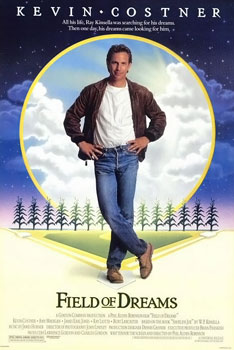
Field of Dreams

Half-Assed Internet Research

Original title Shoeless Joe, book working title Dreamfield, changed after test audiences; the voice's identity unknown, rumored Ed Harris; Damon and Affleck as Fenway extras; filming sped up for Costner's Revenge; the corn outgrew Costner; the Lansing and Ameskamp farms, 65,000 annual visitors, sold in 2011 for about $5.4 million; 1,500 volunteers' headlights in the final shot; Moonlight Graham's real game was June 1905; the line-drive reaction was genuine; James Earl Jones hates baseball; deleted scenes; George W. Bush's favorite film; AFI quote number 39; W.P. Kinsella bored on set; Ray Kinsella named for Salinger characters; Don Buford and USC coaches as advisers
In the discussion (6)
Approx. transcript time · 01:01:29Read transcript
  • Behind on time, the research is zipped through: the original title was Shoeless Joe, the book's working title Dreamfield, and test audiences thought Shoeless Joe was about a homeless person; nobody knows who the voice was, the rumor is Ed Harris, one host is in the Liotta camp, but Liotta hasn't even seen the movie.
  • Matt Damon and Ben Affleck were legendarily extras at Fenway; filming began in 88 and was sped up because Costner had to shoot Revenge; the corn grew taller than Costner so they put boxes out for him to stand on.
  • Scenes were shot on Don Lansing's property and the baseball scenes on neighbor Al Amiskamp (as transcribed), who replanted corn while Lansing kept the field as a tourist destination without charging admission, only souvenirs; 65,000 visitors a year by the 20th anniversary; sold in 2011 for a believed $5.4 million, so Don Lansing's checkbook won.
  • The final shot used 1,500 volunteers flashing high beams; the real Moonlight Graham played one game in June 1905, not 1922; Shoeless Joe and Ty Cobb really were friends; the line drive knocking over the bag of balls was real and unplanned, Costner's reaction genuine and in character; James Earl Jones hates baseball yet did this and The Sandlot; deleted scenes include Ray's hearing test, buying equipment, getting lost on the way to Fenway, and watching batting practice with Terrence.
  • George W. Bush named it his favorite film; if you build it, he will come was voted the number 39 movie quote by AFI; W.P. Kinsella was on set a lot and found it incredibly boring, though his daughter had a romance with Ray Liotta.
  • Ray Kinsella is not named for the author but for two Salinger characters, Richard Kinsella in Catcher in the Rye and a Ray Kinsella in a 1941 story; Don Buford, the Oriole and father of Damon, coached the actors, and USC coaches were brought in to advise.
Rounders The Rewatchables
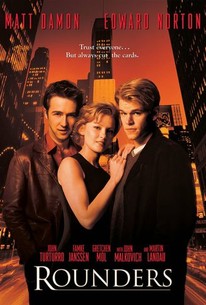
Rounders

Who Won the Movie?

John Malkovich; Matt Damon; Koppelman and Levine (as transcribed)

In the discussion (4)
Approx. transcript time · 01:28:16Read transcript
  • The first pick is Malkovich, to the other's surprise: his character is the most memorable and most quoted, still the phrasing used at tables today; this is not Damon's or Norton's biggest movie, not what John Dahl is best remembered for, Famke Jansen (as transcribed) was about to be in a superhero franchise and Turturro has bigger films, but for men of a couple of generations this is where Malkovich went for it.
  • The counter-pick is Damon: an old-school Tom Cruise role that just needs a star, since Mike McD is a mediocre law student with the wrong friend who likes poker and yet makes you care; Affleck, Leo, Brad Pitt and Clooney would not pull it off, with Norton ironically the only other choice.
  • The reply is that Damon was going to be fine regardless and a movie-star part is inherently blank, never too far or too good; another candidate is Koppelman and Levine, since few TV or movie writers are known to normal people, Steve Zalian (as transcribed) aside, and even Succession's Jesse Armstrong or Veep's David Mandel lack public profile.
  • Koppelman and Levine positioned themselves well in the guys' pop culture world of the late nineties and probably won, since they have thriving careers and made something people love; Damon loses initially but retroactively the Good Will Hunting, Ripley, Rounders run is an all-timer, and the best rewatchables are movies where the major players are in their sweet spot, as Damon and Norton were.
Podcast choices
Speaker not identified
John Malkovich
Speaker not identified
Matt Damon
Rounders The Rewatchables
Rounders

Probably Unanswerable Questions

Was Knish the smartest of them and the hero? Where does Johnny Chan's cameo rank among sports cameos? Is this the best gambling movie ever made? Does 'women are the rake' hold up? Where did Worm go after Binghamton? Did Joe give Petrovsky the 10 grand? What was the perfect release year? Could Damon and Norton have switched parts?

In the discussion (9)
Approx. transcript time · 01:12:21Read transcript
  • Was Knish the smartest of all these people and the hero? He owned his own business, grinded out the rent money, was smart enough not to lend Mike McD 10 grand he would never see again, stayed away from Worm, and gives the Turkish bath speech that it is about making a living, not the World Series; he seems to live okay with his truck business despite alimony and child support.
  • The ending at the World Series of Poker, which nobody watched then because you could not see the cards, became everyone's dream within five years; Positively Fifth Street by James McManus, about the World Series and Binion's, is recommended as one of the great crime and sports books, and Grantland tried to hire him.
  • Where does Johnny Chan's cameo rank among sports-related cameos? The bar is Hulk Hogan in Rocky III; also Kareem in Airplane, Xavier McDaniel in Singles, Larry Bird in Blue Chips, though Koozie (as transcribed) with the left-handed free throws is the real Blue Chips flex and is acting rather than a cameo, and Bob Watson and Cesar Cedeno in the Bad News Bears sequel; Chan is up there even though he only mouths words.
  • Is this the best gambling movie ever made? It is a host's favorite poker movie but not favorite gambling movie, which is Robert Altman's California Split with George Segal and Elliot Gould, about how befriending a gambler is bad for you; Koppelman and Levine are surely California Split guys, but as poker movies go Rounders is head and shoulders above everything.
  • Where do we stand on 'in the poker game of life, women are the rake'? Iconic twenty years ago, it now reads as misogynist in the woke era, but the hosts still like it: it is Worm's line, this is a movie about card-playing, prison-dwelling dirtbags and that is how they talk, not a movie about the president or the Navy.
  • Where did Worm go after Binghamton? In a 2013 Grantland mailbag Koppelman and Levine answered that he meant 'highway time' but needed road money, found a Bronx backroom game far from KGB's territory, and was chased across town by the man he had fleeced for cigarettes in the prison hearts game, a scene they shot, edited, screened and cut; they imagine he later scammed his way through the Moneymaker online boom, where Rounders 2 would pick up.
  • Are we sure Joe gave Petrovsky the 10 grand? Why would she, and how would he know; and why did Petrovsky lend it in the first place to a bad student with a gambling problem, since nobody would give 10 grand to an untrusted, failing Ringer employee; Joe's look through the window pane suggests they will go another round, but nothing is certain.
  • What year would have been perfect for release? It would have to be about two weeks before Moneymaker so the movie was still in theaters during the rush of interest, but Damon and Norton would be too old by then; a year later, after Fight Club and Ripley, is floated, yet both like how it played out and doubt a later release would have led to this podcast.
  • An early question saved from this category: could Damon and Norton have switched parts? Norton 100 percent, since at the time he seemed the new Marlon Brando and the most important actor in a decade; Damon no, and Norton as the embodiment of filth and dishonesty is probably the more irreplaceable of the two.
Rounders The Rewatchables
In the discussion (5)
Approx. transcript time · 00:54:29Read transcript
  • Matt Damon is a no because the movie was not a hit; his real apex is probably the first movie of his franchise that made a shitload of money (the transcript has 'that first born movie'), unless it was covered in the Good Will Hunting episode; Ed Norton is a no, with Fight Club his apex given his body of work, though he was on his way up; Gretchen Maul (as transcribed) is definitely a no, with The Notorious Betty Page (as transcribed) her comeback.
  • Johnny Chan is put forward as a 100 percent yes; the other reacts 'No way!' and the proposer repeats 100 percent yes, since Chan won two World Series of Poker in a row, this was effectively his third title, and he is immortalized pulling the greatest poker move, waiting out his man; the hosts wonder whether it is the same wheel hand Mike uses to beat Teddy KGB.
  • John Turturro is a no: this and Jesus in The Big Lebowski the same year are a great one-two, but Barton Fink is probably his apex, even though one host is not a Coen Brothers guy.
  • For Malkovich, Dangerous Liaisons is argued as his apex, coming off Killing Fields, with an underrated over-the-top performance opposite Glenn Close; then the other realizes it must be Being John Malkovich, since they named a movie after him, which is conceded as the cherry on the sundae.
  • For Koppelman and Levine, Billions is their apex mountain right now; their dream is Kevin Durant telling them at a party that he loves their show.
Rounders The Rewatchables
Rounders

Half-Assed Internet Research

Joe was in only three scenes in the original draft; the law school scenes were shot at Rutgers; Malkovich built his accent from a Russian woman reading his lines; the original script had Mike move on Phil Hellmuth, not Johnny Chan; the closing Counting Crows song is on no album; Damon and Norton played the 1998 World Series of Poker main event, where Doyle Brunson's aces knocked out Damon's kings; the book in the opening is Brunson's Super System

In the discussion (7)
Approx. transcript time · 00:48:53Read transcript
  • Joe was in only three scenes in the original draft; all law school scenes were filmed at Rutgers, though one host assumed John Jay, as the film calls it something like City Law School; Malkovich got his accent by having a Russian woman read his lines and mimicking her, which prompts the question of whether it is convincing.
  • In the original script Mike McDermott was to make his move on Phil Hellmuth in the Atlantic City big-money game rather than Johnny Chan; relief is voiced that it was changed; Hellmuth is discussed as polarizing, Skip Bayless crossed with poker, one of the great figures in sports history whose existence makes the game more interesting, still stirring drama at this year's World Series, and also as annoying.
  • Johnny Chan is one of the biggest winners of the movie, top four for Who Won the Movie: he won the World Series of Poker twice when nobody cared, has the perfect poker name, and stands alone like the Muhammad Ali of boxing because of this film; made ten years later the spot goes to Phil Ivey.
  • Eric Seidel, who loses the famous hand to Chan, is one of the greatest players ever and still makes a fortune in cash games, but looks like a yokel in the movie and must hate it.
  • The Counting Crows song at the end, 'Baby, I'm a Big Star Now', is on no album and hard to find, though one host locates it on Spotify under Saturday Nights and Sunday Mornings; it is called one of their best twenty songs, with a double meaning, and a host wants Adam Duritz on his podcast as the band nears 25 years.
  • Matt Damon and Edward Norton played the $10,000 Texas Hold'em championship at the 1998 World Series of Poker in Vegas, where Damon's pocket kings were knocked out by Doyle Brunson's pocket aces; Brunson is the Bill Russell of poker and has the 10-2 hand named after him.
  • In the opening shots Mike McD pulls money out of a copy of Doyle Brunson's Super System, a book one host devoured at 18, dated as strategy but a cool way in; having something named after you means you did something well, and Brunson won the World Series with 10-2, not a favorite hand.
Rounders The Rewatchables
Rounders

Casting What-Ifs

Neve Campbell turned down the role of Joe

In the discussion (2)
Approx. transcript time · 00:43:49Read transcript
  • The only item: Neve Campbell turned down Joe; the film seems to have been locked in on Damon and Norton throughout, with little almost-happened history.
  • Both hosts think the movie would have worked better with Neve Campbell: a better actress at a nice point in her career, Party Five (as transcribed) still running and post-Scream, inherently sympathetic, which Joe needs so you believe she is trying to get Mike McD to go straight.
Rounders The Rewatchables
Rounders

What’s Aged the Worst?

Gretchen Maul's (as transcribed) wet-blanket girlfriend Joe and her performance; the judges' instant hand-reading scene; Mike McD not hooking up with Famke Janssen's character

In the discussion (11)
Approx. transcript time · 00:35:49Read transcript
  • Gretchen Mala (as transcribed) plays the stereotypical wet-blanket girlfriend, a staple of 80s and 90s sports movies for undermining the hero: a girlfriend or wife who does not believe in what he is doing.
  • A Mount Rushmore of wet-blanket girlfriends: Adrian Balboa in Rocky IV, who quits on Rocky and shows up belatedly in Russia, leaving one host still in go-fuck-yourself-Adrian mode; Myra Fleener in Hoosiers, the number one, subject of an old ESPN magazine column, with no idea why Gene Hackman liked her.
  • A theory: many men do not know how to write female characters, so they pour their own relationship anxieties into a figure who is holding the hero back, which is why so many movies have a woman you cannot place; the last Rushmore member is Ned Braden's wife in Slapshot (as transcribed), a tough hang who even throws it at Paul Newman.
  • The defense from Koppelman and Levine, given in a back-and-forth with one host: Damon's girlfriend was originally in only three scenes, and a law-school best friend named Atkinson, a counterpoint to Worm, was in the script until the studio made them merge Joe and Atkinson and boost Joe, leaving her inessential and simply in Worm's way.
  • Not a great performance either, though she rallied in the 2000s; she is flat-out bad and unlikable here, around the time of the Vanity Fair cover anointing her the next ingenue when she had made little more than Donnie Brasco, and hers is the only stretch where the movie loses its rhythm.
  • The judges' card scene, which both like, has aged worst: Mike McD standing for eight to fourteen seconds and reading everyone's hand is not believable, even if Koppelman and Levine claim to have seen it happen; the clip is played; such reads take hours of study.
  • The judges' game is not Texas Hold'em, perhaps a seven-card stud variant with many cards showing, which makes the reads more plausible, and the judges' cards are never shown, so he might have missed some; it sets him up as a savant, a reach one host is fine with.
  • Martin Lando's (as transcribed) character is described as a cross between a law professor, Confucius, the fairy godmother and Red Arbeck (as transcribed); not a great character but essential, and the bar scene where he pours gin and tells the yeshiva story is loved; movies like this need an old guy, as Charlie Pierce was for Grantland.
  • Mike McD not hooking up with Famke Jansen (as transcribed) is called the biggest flaw of the movie and maybe of a host's life, raised with Koppelman and Levine multiple times: his girlfriend has moved out, he is home alone watching an old World Series of Poker, she comes over about Worm's tab and makes a hard pass, and he says now is not the time, which is called inexplicable and indefensible.
  • Her character is the manic poker dream girl, after the manic pixie dream girl of Penny Lane and the Zooey Deschanel movies: beautiful, a Bond girl three years earlier, works at the Chesterfield and recounts World Series hands; the case against is that he loves Joe, is trying to go straight, and Petra represents the old version of him.
  • On rewatch the hosts think the two should simply have gotten together; Koppelman and Levine admit it is their biggest mistake, prompting a joke about adding a scene for the 25th anniversary; for one host it is the what's aged the worst, and the explanation offered does not convince him.
Rounders The Rewatchables
Rounders

What’s Aged the Best?

The 'spot the sucker' opening line; the Billions DNA; the Mike McD face; the throwaway poker lingo; Damon and Norton at fun points of their careers; the look and the New York setting; Russians as villains; Teddy KGB's accent; the World Series of Poker ending

In the discussion (14)
Approx. transcript time · 00:25:53Read transcript
  • The first line, 'if you can't spot the sucker in your first half hour at the table then you are the sucker', may not be the greatest opening line in movie history but is one of the most memorable; the hosts want to see that list, which must exist on the internet, and float it as a vacation column.
  • There is Billions DNA in the film: watching Rounders is like watching Tracy McGrady on the Raptors, and the pop culture throwaways such as Buckner going into Shea became signatures of Billions, which also brought in Malkovich in season three.
  • The face Mike McD makes after losing the 30K is one of the best acting moments of Damon's career: the face everyone makes when destroyed in poker or blackjack, the life sinking out of your body; the sports-fan equivalent is the Marco Bellinelli corner three or the Case Keenum pass.
  • Having a big hand cracked while deluded with euphoria is called the most crushing unimportant thing that can happen in life; all the throwaway poker lines have aged beautifully and one host understands the lingo partly because of this movie.
  • Damon and Norton at fun points in their careers: Norton arrives with Primal Fiction (as transcribed), American History X, one of the most interesting performances of the last 25 years, then Rounders and Fight Club; 25th Hour mixes that guy with Worm; also Everyone Says I Love You, a terrible Woody Allen musical, and The People vs. Larry Flint, which has not aged well.
  • The Larry Flint writers, Larry Krasuski and Scott Alexander (as transcribed), also wrote the OJ Ryan Murphy show and Ed Wood and set the template for the clever, controversial biopic, like Man in the Moon, a style that now lives on TV in 13-episode runs.
  • The late-nineties talent cluster: in a fantasy draft Leo, Damon and Norton are the top three or in the top five, with Brad Pitt, Affleck gravitating to popcorn movies, feeder films like School Ties and Dazed and Confused, and Vince Vaughn; weirdly no black actors went to the stratosphere, Halle Berry aside.
  • Clooney, Matthew Perry twenty years ago, Wahlberg after Boogie Nights, Will Smith and Jim Carrey round out one of the best clusters, all 35 and under, compared with the Godfather generation around Brando; these people get credit as movie stars rather than actors, in the era when the Entertainment Weekly cover mattered and Carrey got $20 million a movie.
  • Norton took a left turn after the mid-nineties string: directing Keeping the Faith, which Juliette Littman likes, The Score with De Niro, Death to Smoochie, then 25th Hour, probably his best of the 2000s, and The Illusionist; he never had the Pacino or Gene Hackman career one host wanted, though he may still.
  • Worm is a character unique to Norton, out of the John Cazale 1970s: the lovable scumbag you root for without knowing why, with a little Fredo in him.
  • The movie looks surprisingly cool and undated for 1998 and is a good New York movie that still looks like the New York the hosts remember; the Chesterfield is based on a club called the Mayfair, and one host once played in a private room like it, the film's room being a slightly nicer red leather version of his, with that seedy but exciting feeling.
  • Russians as villains has aged the best: in 1998 the Cold War had ended eight years earlier and Russia was in free fall, but twenty years on Roman, Maurice, Teddy KGB and the underground network are far more believable villains.
  • Forgotten from aged best: Teddy KGB's accent, ridiculous in 1998 and loved in 2018 largely from familiarity; in the theater it was the movie's biggest flaw, a completely unnatural choice in a natural film, but twenty years later it works, is distinct, fun to imitate and almost a parody of bad Russian accents.
  • The ending of Mike McD heading to Vegas and the World Series of Poker makes far more sense now, since within five years that became the dream of basically everyone who played; it could have been aged best too.
Forrest Gump

Recasting Couch

Matt Damon, too smart; Brad Pitt, who has played the part in seven movies but may be too handsome; Ryan Reynolds, too handsome; a non-jacked Chris Pratt

In the discussion (2)
Approx. transcript time · 01:05:39Read transcript
  • Matt Damon would go for it but is too smart and it would not work. Brad Pitt has basically done this part in seven movies and is Forrest Gump, which one host kind of likes, though he might be too handsome and would need a bad haircut; crew-cut Brad Pitt is not as handsome as blonde-haired Brad Pitt.
  • Who is the ordinary-guy movie star of the 2000s, since Hanks is the embodiment of the everyman and easier to relate to? Ryan Reynolds is too handsome; Hanks is a regular guy rather than ugly and knows his regular-guy appeal; Chris Pratt has it but is jacked, so a non-jacked Chris Pratt would work. Hanks got skinny for Philadelphia, a good career move.
Ocean's Eleven

Picking Nits

How the heist works, walked through; the rebuilt vault sits within sight of the Bellagio fountains; the bouncer pounds on Clooney for 30 to 40 minutes; the casinos would never allow filming inside, so vaults cannot work this way; casino cash disperses quickly; no casino would call a SWAT team or trust one British consultant; only about three security guards; Lyman Zerga's access to Benedict is debated; the heist still stands up under the stress test

In the discussion (8)
Approx. transcript time · 00:48:34Read transcript
  • One host never completely understood how the heist worked and paid closer attention the night before than in thirty other viewings; the walkthrough begins: they rebuild what they presume is the Bellagio vault in a warehouse from captured footage and the blueprints.
  • First nitpick: the rebuilt vault appears to be no more than 300 feet from the actual Bellagio, with the fountains visible behind it, which Vegas surveillance would catch; the counter is that this is pre-boom real estate, the Strip is less than two miles with open land everywhere, and in any case it is a movie and movie logic is accepted.
  • The rebuilt vault is a misdirection, since the audience thinks they are practicing; they stage their own heist on film, carrying bags marked with an X, the technician cuts that loop into the security system during the blackout on fight night, Terry Benedict presumes it is live, a SWAT team is called, the call is intercepted and the eleven arrive as the SWAT team and rob the vault while Benedict believes the robbers are still inside.
  • The blackout exists to change the footage the security team sees, hence the Ella Fitzgerald, and to kill the lasers while Clooney and Damon go down the real elevator shaft with the guy in the cart; Basher needs the electromagnetic pulse machine underground; a favorite rediscovery is Pitt talking to Terry Benedict while wearing a SWAT uniform.
  • The entire heist depends on Matt Damon pickpocketing Terry Benedict in the interrogation room and on the specific bouncer selling a beating on George Clooney for what seems like 30 to 40 minutes without anyone asking how he is not dead; if any of it goes differently the whole thing is off.
  • The ultimate nitpick: the movie only exists because casinos agreed to let it film inside, so this cannot be how casino vaults work; nobody knows what is inside one, and the money is dispersed quickly to many locations; no casino would entrust its security to one cool British guy, none would call a SWAT team rather than its own people, and there are essentially three security guys, the same one manning cameras, watching the vault and calling the doctor who turns out to be Brad Pitt.
  • In Vegas now you have to show a room key to reach the elevator bank at night; sneaking through doors like Scott Kahn and Casey Affleck, or hacking a casino's computer system, would probably end your life.
  • The Lyman Zerga part is confusing, and someone with no credentials or known identity getting that much time with a casino owner is doubted; the counter is that Vegas is vapid enough that pretending to have money gets you where you want, but Terry Benedict is established as handling every matter himself and knowing every whale, so would he delegate an unknown object entering his vault from a possible arms dealer, and Google existed in 2001; still, the heist stands up under the stress test, its confusing nature helps it, and it never gets too deep in the weeds.
In the discussion (9)
Approx. transcript time · 00:38:54Read transcript
  • Brad Pitt is a 100 percent yes: never loved more than as Rusty Ryan, not close, met with a wow and a to-each-their-own aside, and a third voice agrees with both.
  • This is the closest anyone will get to hanging out with Brad Pitt, the hoped-for good version, a shrimp cocktail chewing joke machine, as opposed to a man at a party talking about his architecture and a fancy table; one host likes a few performances more but calls this his most charming and least actory; he is scaling the mountain.
  • Clooney draws a no and a yes; one case is for ER and The Perfect Storm, which catapulted him to movie stardom while he filmed an ER episode; another says this is who he is supposed to be, Clooney at his essential, with Clayton and Out of Sight heard but not preferred.
  • He is better at this than capital-A acting; he channels Nick Clooney and essentially hosts a TV show in the how-we're-going-to-do-the-job monologue; per the director's commentary the monologue was shot about a hundred times over two nights for coverage of nine people, timed to the blueprint video, with his close-ups last; his athletic side fits, since good athletes nail repetition, and he was drafted by the Reds and plays basketball.
  • Another yes for Clooney: when he goes serious like Siriana (as transcribed) he grits his teeth and overdoes it, and in comedy he goes wide-eyed and hammy like Buster Keaton, even in the jokey Out of Sight with Steve Zahn; this is one of the only movies where preternatural cool is the whole point; another is torn between Out of Sight, more honest about a career criminal and schlubby, and this, so the vote is split.
  • Matt Damon is not: no chance; candidates are The Martian, Good Will Hunting (incredible despite being so early), Bourne (not enough talking) and Ripley, a great movie but Paltrow's apex and Jude's rather than his.
  • Soderbergh gets a nope, with Behind the Candelabra guessed; the case for this film is that it is the last time he was concerned with relevance, forgoing experimentation to work inside a studio system he has openly said he hates, which he did three times, underwriting his liqueur business; another loves his small movies, would watch The Limey every day, and thinks Out of Sight is his best; there is adoration for the Nick (as transcribed), provocative and beautifully shot, canceled because no one else cared.
  • Ocean's Eleven is chosen as Soderbergh's apex and seconded, against the earlier nope and the preference for Out of Sight, so that vote is split too.
  • Ocean's Twelve belongs to the experimental side of Soderbergh, commenting on the idea of a sequel better than anyone could; he is an accomplished technical filmmaker who, unlike most auteurs, understands the enjoyment of going to a movie, visible in his year-end culture diaries watching Social Network twenty times; she is here to have fun, and this film is the thesis statement for that attitude. — Amanda Dobbins
Displaying discussions 85 - 96 of 118 in total

Films in the archive