
Stats
- Episodes featuring their films
- 8
- Movies in this archive
- 9
Rewatchables episodes featuring Jon Voight’s films
Mentioned in discussions


Casting What-Ifs
Walter Hill directing; Keanu Reeves as Chris; Michael Madsen as Michael; Don Johnson as Michael; Ted Levine as Waingro; Voight declining Nate; the Thief star as Nate
In the discussion (10)
- The hosts say Mann shopped the script to Walter Hill in the 1980s and Hill turned it down; a Hill-Mann bank movie would have been huge news, perhaps starring Nick Nolte and Don Johnson. — Bill Simmons
- The hosts say Keanu Reeves was originally set to play Chris and lost the part when Kilmer fit it around Batman Forever; one host would totally go for Keanu. — Bill Simmons
- The hosts say Michael Madsen was originally cast as Michael and replaced by Sizemore, and Don Johnson was considered for Michael and as a backup for De Niro and Pacino. — Bill Simmons
- After rewatching every Michael scene with Don Johnson in mind, one host says no; the other thinks he could have worked, better as Nate. — Bill Simmons
- William Petersen allegedly turned down Michael, which one host doubts. — Chris Ryan
- The hosts say Ted Levine was offered Waingro and turned it down to avoid typecasting after Buffalo Bill; one host can't fathom it, the other thinks he would like that movie more. — Bill Simmons
- The hosts say Voight initially turned down Nate, saying others could do it better, until Mann insisted. — Bill Simmons
- An internet claim that the actress later in Mann's Miami Vice refused Justine unless the script was translated into Mandarin is called half-fast and fishy. — Bill Simmons
- The Thief star lamented on a 1998 Thief DVD commentary with Mann that he had no role in Heat; the hosts say he should have played Nate. — Bill Simmons
- Offered the Thief star as Nate plus Keanu as Chris, one host would rather keep Kilmer, whose unpredictable performance he loves. — Bill Simmons

Best Overly Aggressive Facial Hair or Hairstyle
Jon Voight's everything; Tom Noonan's wheelchair
In the discussion (3)
- Introduced as a new category with nominees: everything Voight is doing, Haysbert's Fu Manchu, Pacino's blow-dry look, De Niro's Van Dyke and Val Kilmer's bad-guy hair, a look only possible in the mid-90s. — Bill Simmons
- Asked for a favorite, the answer is Voight's everything, with a joke that Voight's makeup artist should get the heat-check award. — Chris Ryan
- A follow-up head-to-head between Voight's everything and Tom Noonan inexplicably in a wheelchair is answered with the wheelchair, though Noonan can walk; the hosts joke he lost the ability after inventing the internet. — Bill Simmons

Casting What-Ifs
Matthew Modine, Linda Fiorentino and other reported alternatives
In the discussion (8)
- Modine is said to have declined Maverick because of the military politics
- Travolta’s asking price is reported as a barrier, with uncertainty around the wider internet list
- Fiorentino is reported to have declined Charlie because of the glorification of war
- Ally Sheedy is reported to have doubted demand for a fighter-pilot movie
- Julianne Phillips is mentioned for Charlie and Jon Voight for Viper
- Modine is considered a plausible alternative Maverick
- Robert Downey Jr. as Maverick, or as Iceman opposite Kilmer, is imagined
- Judd Nelson and Charlie Sheen are discussed as very different possibilities

Who Won the Movie?
Tom Cruise or the chaotic collaborative Hollywood process that made the film
In the discussion (3)
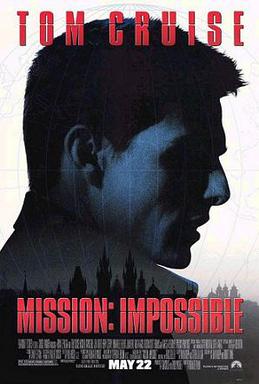
- Cruise and De Palma are named first, then a wrinkle: Hollywood, the studio system putting people at the top of their craft in position to succeed, with the money to build an aquarium that did not exist and blow it up, the tanks being Tom Cruise's idea; the chaotic, almost old Hollywood way the film came together is now heard of only as a cautionary tale, like the fired Star Wars director or Fantastic Four, so the victor may be that improvisatory collaborative filmmaking.
- The case cuts both ways: the manic nature of Hollywood creation showed this can work, but the film is also end times for movies, signaling a new path for the greatest movie star of the last 30 years who realizes he must keep falling off things to stay relevant into his 50s, the end of Brian De Palma, the least celebrated yet maybe most talented movie brat, the start of the powerful Wagner-Cruise partnership that ended badly at United Artists, and the end of Jon Voight's good movies after Heat; it feels like a win for nobody but Mission Impossible.
- The counter-pick is Cruise, the engine of the whole thing, since nobody else could play Ethan Hunt and the attempt to try failed; the what-ifs of a different director or Cruise continuing to make films like A Few Good Men are unknowable, and the recent films have leveled out and gotten better.
Podcast choices
- Speaker not identified
- Tom Cruise

Apex Mountain
No affirmative selection
In the discussion (4)
- Apex Mountain and who won the movie are bundled because they are complicated; Tom Cruise, Brian De Palma and Ving Rhames all get no, with Baby Boy preferred to Pulp Fiction for Rhames.
- Jon Voight is not close, with Anaconda as the joke; Kristen Scott Thomas is a no, joked to be Only God Forgives; Jean Reno is a no, so this is Apex Mountain for nobody.
- Henry Zerny (as transcribed) is floated hesitantly as the one possible apex, immediately answered that he is better in Clear and Present Danger, with the two self-described only Henry Zerny experts in the world saluting each other.
- Danny Elfman is a no, with Beetlejuice and Batman as his peak and a plug for the Midnight Run soundtrack; cinematographer Stephen Burham (as transcribed) has The Outsiders, Rumblefish, St. Elmo's Fire, Eight Million Ways to Die, The Untouchables and Hoffa, and The Untouchables is chosen as his peak instead.
Probably Unanswerable Questions
Is the McLaughlin Group senator the real Senator Walter or Ethan Hunt in the mask? Why not make a mask of William Donloe and steal the disc? Was Jon Voight in shape to run across a high-speed train?
In the discussion (5)
- Rolled over from unintentional comedy: is the Senator John Walter on the McLaughlin Group the real senator or Ethan Hunt in the mask; one theory is that Walter is real but secretly an IMF agent whose skepticism of the intelligence community is a simulation of dissent, letting the IMF use his identity.
- Three potentialities for Senator Walter are laid out: an elected human man who likes fishing and does not know about his Prague gala attendance, a blue dog Democrat from Virginia not on alt.fish, alt.bible or alt.arms; a co-opted intelligence officer serving Virginia while working for the IMF; or a wholly constructed 65-year-old citizen played entirely by Tom Cruise when needed, all for 60 grand a year.
- Follow-ups: would you watch a 1996 movie about an old senator played by Tom Cruise now, why is Cruise not returning to the Walzer IP (as transcribed), and why was his Tropic Thunder transformation praised over his work as John Walter.
- If Ethan can make a mask of anyone's face, why not make a mask of William Donlow (as transcribed), who worked inside the vault, and steal the disc; the question was asked before and nobody has a satisfactory answer.
- Was Jon Voight in any shape to traipse across a high-speed train; he looks fitter than ever in the parachute suit and black SWAT outfit, possibly with a stunt double, so when he pretends to be hurt in the coffee shop he is lying, and when he strikes Ethan there is a weird intense physical energy, a bit of old man strength.

In the discussion (7)
- The award is defined as supporting character actors who make the most of their time; Vanessa Redgrave, born in 1937 and about 59 or 60, one of the great actresses of the 20th century, plays an arms dealer named Max who communicates via Usenet group, and is argued to have more sexual chemistry with Cruise than anyone in his movies except Kelly McGillis.
- Redgrave looks at him like he is a steak, chews over every line, calls him dear boy, seems to have been taking nitrous hits, and smiles like a shark when he comes in; the shroud scene is recalled, with Ethan hooded in a knit hat and warned he will wear the shroud indefinitely if Max does not like what he has to say, and the clip of her asking who he is and his demand for $150,000 is played.
- Whether it is a flaw or a nitpick, the villains' goals in the whole series are elusive: this film has Phelps and Max, and what they have going on, beyond shifting money around, is unclear; the explanation offered is Phelps's bitterness, voiced to Ethan as a tool for a war that is no longer going on, farmed out on $60,000 a year, the same line Ed Harris has at the end of The Rock the same year, read as the post-Desert Storm, Fukuyama end-of-history mood.
- Other nominees: Henry Zerny (as transcribed), who did not pop off after this, whose performance once seemed over the top and is now excellent, including his interplay with Barnes played by Dale Dye, bullying him throughout, and dressing like a G man from the 1930s in overcoat and fedora once the pursuit of Hunt begins; he built a career on the dick bureaucrat after Clear and Present Danger, called his iconic performance.
- Emilio Estevez, coming off Young Guns, seemed to be doing a fun cameo and never showed up in a blockbuster ensemble again, with The Outsiders and The Mighty Ducks debated; Kristen Scott Thomas was remarkable; Jon Voight has too many minutes played for the award but is unrecognizable from the iconic 1970s actor of Coming Home and Midnight Cowboy.
- Ving Rhames gets respect: Luther becomes Ethan's conscience across the series, and casting the burly Marcellus Wallace figure as the smartest hacker in the room was a smart choice that holds, even after Simon Pegg is introduced; one host then goes with Redgrave.
- Jean Reno is shouted out for a volcanic hot streak from The Professional through this to Ronin, where he plays nearly the same role more gregariously, with Sean Bean as the Jean Reno of Ronin; French Kiss with Kevin Kline and Meg Ryan is cited as his erased earlier appearance, and Redgrave is confirmed.

What’s Aged the Best?
De Palma's visual style
In the discussion (5)
- The movie is in a race against time as digital life changes; it was weirdly prescient about wireless streaming video, while things like Netscape no longer make sense; the first nominees are the Hitchcockian vibe of drawing on 1950s and 1960s Hitchcock for an espionage movie, especially in the Prague sequence, the cat-and-mouse format of the set pieces built on ducking into rooms, masks, disguises and hanging from places rather than buildings falling, and Cruise's performance.
- Casting great actors in supporting roles is argued to hold up: Voight at the right stage of his career to be Phelps, a character from the television series; Manuel Bear (as transcribed), an actress few American filmgoers had seen; Jean Reno coming off Leon the Professional with his dickishness; Ving Rhames, who becomes the only other connecting figure in the series along with Monaghan; Kristen Scott Thomas, Vanessa Redgrave, Emilio Estevez and Henry Zerny (as transcribed), later of Sharp Objects, all lived in and knowing what movie they are in.
- The Prague sequence is bittersweet because two or three movies of the Estevez, Kristen Scott Thomas and Cruise team would be welcome; it is set up like Alien with people who know each other, down to the wife's coffee and the barn in Kiev, and the scene where Cruise and Kristen Scott Thomas make out while tracking the arms dealer shows legitimately good chemistry, if less than Cruise's with Vanessa Redgrave; killing off those movie stars 35 minutes in is called a Hitchcockian twist like Janet Leigh in Psycho.
- Estevez's line about lasagna while showing Cruise the chewing gum explosive is a favorite; red light green light and 'you've never seen me very upset' show Robert Towne style dialogue sprinkled throughout, and the hosts assign roles: Koepp the genius of action plotting, Zalian (as transcribed) the dramatic storyteller, Towne the king of memorable lines, with Tom Cruise movie starring on top.
- De Palma's visual flair under control is the final nominee: the deep-focus shot where Don Lowe (as transcribed) is dressed down by Henry Zirny's (as transcribed) CIA character before being sent to Siberia, a charismatic look unlike same-looking modern blockbusters, stylish and fun where a Villeneuve film never makes you laugh; De Palma's playful visual style is named the pick.

Most Rewatchable Scene
The Langley heist
In the discussion (6)
- Nominees run through the Prague sequence as a whole (a 32-minute opening act that even fades to black after Tom Cruise jumps through the Aquarium and escapes from Kittredge), Ethan and Max's negotiation, the Langley heist, and the Phelps versus Hunt coffee scene where Hunt sees what Phelps has done while Phelps lies to him, the scene that confused a generation of filmgoers.
- One host admits not understanding the coffee scene until rewatching it yesterday after roughly 20 viewings; the Langley break-in is called the most iconic, incredibly staged, ripped off numerous times, and the precedent for Tom Cruise attempting something that seems impossible, even though Wu takes it to another level.
- The scene one host rewound four times is Ethan on the horn with Kittredge after the team is killed, shouting that his team is dead, that they knew we were coming, that the disc is gone and the list is in the open; the clip is played, and Cruise is said to go Ruffalo before Ruffalo and to resemble Bill Paxton in Aliens.
- The Kittredge call is a bookend to the Aquarium restaurant scene: before it Cruise is loud and brash, cracking jokes while Jon Voight's Phelps lays out the plan, and in the restaurant he turns cerebral, seeing the other team, the waiters and the lovers on the river bank; the Langley heist is then named the pick, iconic and almost all in silence, with the tension of Don Lowe (as transcribed) about to come back, and compared to the silent drilling heist in Rafifi (as transcribed), the host's favorite heist movie.
- Further Langley favorites: the digital sound meter, the rat in the air duct likened to the final shot of The Departed, the Top Copy (as transcribed) reference to the same filmmaker Jules Dassen (as transcribed), the trope of explaining the heist on the train before doing it with Jean Reno, Ving Rhames and Emmanuel Bayard (as transcribed), Cruise's Cheshire Cat grin saying it is even worse than you think, and the first encounter with the idea of an air-gapped computer; Langley is confirmed as the most rewatchable scene.
- Asked for memories earlier, the Langley drop of Cruise hanging is named the iconic image inside the movie, one the later Mission Impossible films call back to every time, and the film is called De Palma's last great movie. — Sean Fennessey

Biggest Oscar Travesty
Ethan Hawke losing Best Supporting Actor to Jim Broadbent in Iris
In the discussion (10)
- The new category is introduced as something these podcasts have circled before; it is expected to be really funny for a Roadhouse episode, with a case that Ben Gazzara was robbed in 1989 and for the Jeff Healy Band (as transcribed) for Best Original Song.
- 2001 was a dark Oscars: A Beautiful Mind won Best Picture over Gosford Park, In the Bedroom, Lord of the Rings and Moulin Rouge with no Training Day, and Ron Howard won Best Director over Ridley Scott for Black Hawk Down, Robert Altman for Gosford Park, Peter Jackson and David Lynch for Mulholland Drive, with no Antoine Fuqua.
- Several of those nominees are liked, In the Bedroom a lot and Gosford Park pretty good, but Fuqua and Training Day should have been nominated; Lord of the Rings was a tough hang that soaked up nominations for years in a way Star Wars never could, even though one host would take Star Wars a hundred times.
- Early validation from a nomination might have set Fuqua on a different course, since the movies he made after this resemble Training Day; Denzel's Best Actor win over Russell Crowe, Sean Penn in I Am Sam, Will Smith in Ali and Tom Wilkinson in In the Bedroom is fine, and Halle Berry won for Monsters Ball (as transcribed).
- Best Supporting Actor is the travesty that keeps one host up at night: the field was Ethan Hawke, Ben Kingsley in Sexy Beast, Ian McKellen in Lord of the Rings, Jon Voight in Ali for about three minutes, and Jim Broadbent in Iris, and Broadbent won.
- As in Rain Man, where Tom Cruise is the best person in the movie but Dustin Hoffman won, the performer who blows everyone away obscures how good the other one was; Hawke had to avoid being blown away by Denzel, be on PCP for half an hour and be believable in the fight scenes, which is likened to Chris Paul playing on a hamstring.
- Nobody here would pick Kingsley in Sexy Beast over Hawke, though he is good in it; two-hander movies like Butch and Sundance, The Sting, The Color of Money and Rain Man raise the question of how filmmakers present the straight man, and Redford is seen as more important than Hoffman in All the President's Men.
- Hawke is in more scenes and the movie starts in his house, so he could be argued as the lead with Denzel supporting, but really both were best actors, and doing it otherwise is like making Geena Davis supporting in Thelma and Louise.
- Later, on the phone, the Hawke loss to Jim Broadbent is called terrible and one of the few times an actor was right there with Denzel, alongside Viola in Fences, Morgan Freeman in Glory and Hanks in Philadelphia; he should have gotten that award.
- Earlier, the hosts note Denzel had only a supporting Oscar before this, having been passed over for Malcolm X, He Got Game, The Hurricane and Remember the Titans.

What’s Aged the Best?
The football scenes, including the hurry-up, no-huddle spread offense
In the discussion (11)
- The football scenes are shockingly good, and football is called the best sport to film.
- Asked why she is skeptical, offers a take that is a football thing and an indictment of how the movie handles football: the hurry-up, no-huddle spread offense has aged best, but the film implies Jonathan Moxon invents the spread, when his one passing reference to Mississippi Valley State putting up points covers Archie Cooley's late-80s spread innovation, so acting as if Lance and Mox invented it is ludicrous. — Mallory Rubin
- The film acts as if Mox is Gus Malzahn; a favorite scene is Paul Walker as the new coach diagramming the play while Mox jumps in with the idea and Billy Bob is baffled; the clip is played, five wide receivers, no tight ends, no huddles, and someone asks whether this is how the Patriots beat the Falcons.
- The question of why no assistant coach is coaching the game is raised and parked for nitpicks.
- The football is pre-concussion-era, helmet to helmet; a case is made that the concussions aged best, since Billy Bob is concussed in the first five minutes and forced to play by Jon Voight, Lance gets hurt, and the film teaches care with concussions, whereas the NFL took ten more years to acknowledge them and only by 2012, thirteen years later, barred players from returning in the same game; someone should have brought the commissioner a DVD.
- Objects that the argument sounds like saying concussions are not bad until the quarterback gets hurt. — Shea Serrano
- The late-90s soundtrack is the last nominee, a post-Lithium era with Foo Fighters, Fastball, Collective Soul, Third Eye Blind, Loudmouth and The Offspring.
- Asked what aged best, goes with the football scenes for the reasons just outlined. — Jason Concepcion
- Picks the spread offense: despite the problems with how it is introduced and who gets credit, going with five receivers and winning the game holds up. — Mallory Rubin
- Goes along with the same answer. — Shea Serrano
- Not a lot aged well, which is why everyone gives the same answer; football is better to film than basketball, which rarely works and cannot hide a bad dribbler, or baseball, which is too boring.

Casting What-Ifs
Alec Baldwin, Michael Douglas, Kevin Costner or Andy Garcia as Kimble; Jon Voight or Gene Hackman as Gerard; Walter Hill directing Nick Nolte
In the discussion (7)
- Alec Baldwin was the first choice to play Richard Kimble; he had also been first offered Ford's Patriot Games role, which suggests Baldwin had more juice than Ford in 1992-93.
- Baldwin reportedly wanted control of his career and too much money and did not want to be a franchise pawn; Patriot Games is contrasted with Hunt for Red October.
- A correction: this was not the end of Ford's heyday because Air Force One was still ahead; Six Days, Seven Nights, overshadowed by a controversy around its co-star, is called the real end.
- Michael Douglas, Kevin Costner and Andy Garcia were also considered for Kimble; only Costner is found believable because Kimble needs something wholesome, while Douglas and Baldwin seem like they might have done it.
- Jon Voight and Gene Hackman were both offered Sam Gerard, prompting a riff that Voight gets attached to many projects; Varsity Blues is teased for Zach Mack. — Chris Ryan
- Walter Hill wanted to direct with Nick Nolte, who thought he was too old; one participant would have loved a Walter Hill version but thinks it worked out.
- Ford is better the less he says; his doctor-talk scene with Julianne Moore almost pulls you out of the movie. — Andy Greenwald
Films in the archive

Ali
2001


Anaconda
1997


Deliverance
1972

Enemy of the State
1998
Heat
1995
Mission: Impossible
1996
Runaway Train
1985

Transformers
2007

Tropic Thunder
2008