
‹ All movies
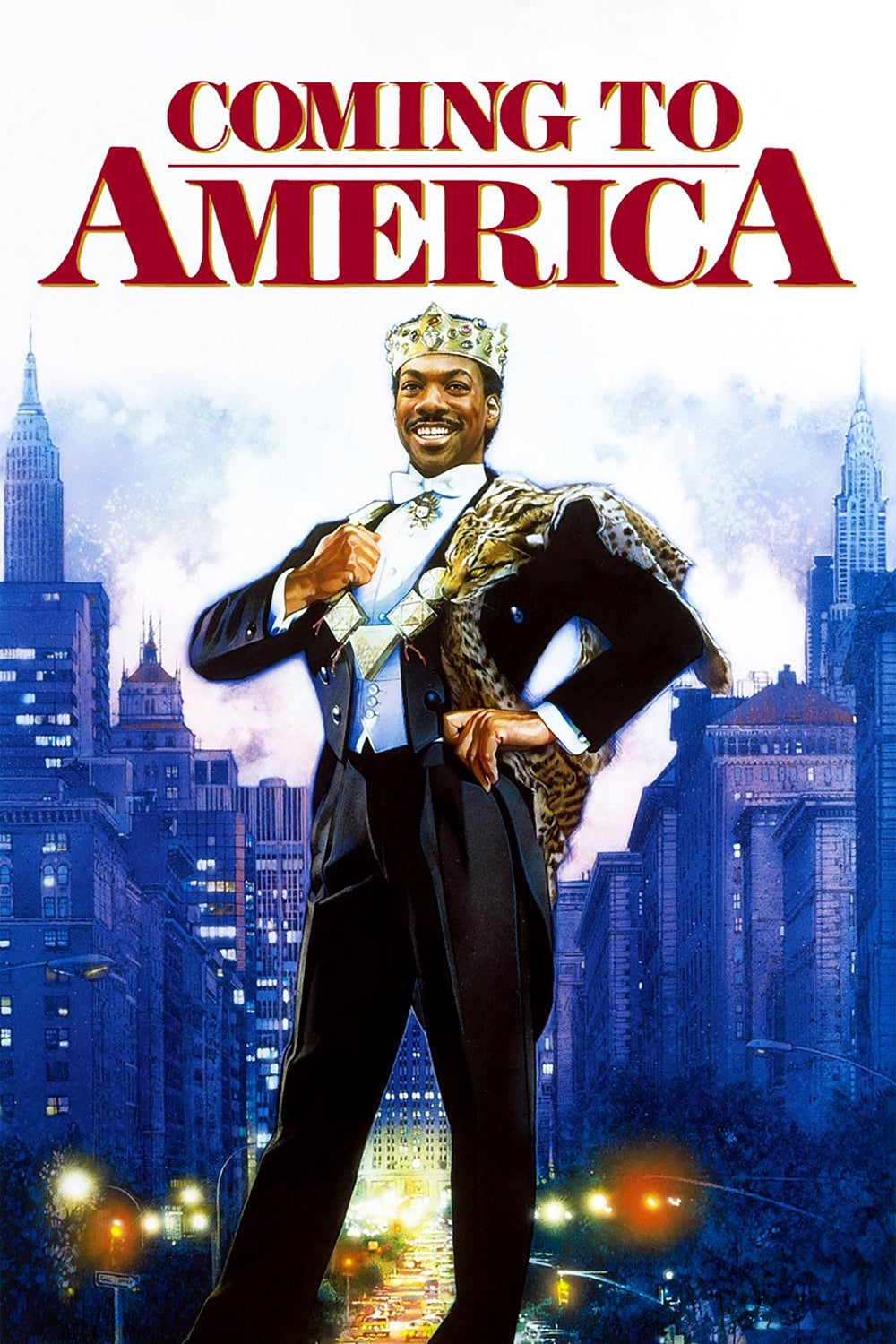
Coming to America poster

Coming to America

117 minutes

Cast

Selected cast credits · Film reference

Eddie Murphy Prince Akeem Joffer / Randy Watson / Saul / Clarence
Arsenio Hall Semmi / Reverend Brown / Morris / Extremely Ugly Girl
James Earl Jones King Jaffe Joffer
John Amos Cleo McDowell
Madge Sinclair Queen Aoleon Joffer
Shari Headley Lisa McDowell
Allison Dean Patrice McDowell
Eriq La Salle Darryl Jenks
Clint Smith Sweets
Frankie Faison Landlord
Louie Anderson Maurice
Calvin Lockhart Colonel Izzi
Samuel L. Jackson Hold-Up Man
Vondie Curtis-Hall Basketball vendor
Garcelle Beauvais Royal rose bearer
Victoria Dillard Royal personal bather
Cuba Gooding Jr. Boy getting haircut

Coming to America | The Rewatchables

Explore episodeClose episode

Producer credits not yet identified.

Most Rewatchable Scene

Black Awareness Week with Randy Watson; St. John's game bathroom recognition; plot-resolution party scene; barbershop scenes

In the discussion (21)
Approx. transcript time · 00:41:33Read transcript
  • The opening with Akeem waking up is floated as a pick; it is rewatchable but too long, since he barely reaches America 40 minutes in.
  • First pick: the presentation of the future queen, lavish and well executed, with James Earl Jones's line about having sex with the bathers.
  • The Zamunda sequence uses the old Hollywood trick of a lavish set piece, with elephants wandering past windows and 400 costumed people, compared with Cabin in the Sky.
  • The first nightclub scene is cleverly edited, with a string of women and ending with Arsenio in drag.
  • Invited to make a veiled joke, the reply notes this is the fourth Eddie Murphy conversation and riffs "Eddie, you talking to us." — Wesley Morris
  • The nightclub scene is blocked as shot-reverse-shot, but for Arsenio's turn Eddie sits beside him, so Arsenio is essentially reacting to himself.
  • The nightclub premise of judging which woman is good enough may belong in What's Aged the Worst; some moments are "definitely 1988".
  • Black Awareness Week, called "probably going to be my winner", features Arsenio's reverend and Randy Watson with Sexual Chocolate to tepid applause; the makeup hides Eddie for about 40 seconds, in six great minutes.
  • The scene rings true to community events in Baton Rouge, at the Leo Butler Community Center, where a tired local celebrity always performs.
  • Another had a version at Fairmont Park; the name Black Awareness Week is the canned-peas version, and the crowd's reaction to Randy Watson is captured perfectly.
  • Randy Watson sings The Greatest Love of All rather than Super Freak, a song sung at every graduation; without Whitney Houston you hear how mediocre it is.
  • The St. John's game brings back the 80s Big East; the bathroom recognition is called one participant's favorite scene and another's second favorite.
  • The bathroom scene is moving: a Black man seeing a Black person who means something deep to him in a common space; truly touching rather than funny.
  • Akeem's first date with Lisa brings the cross-movie cameo of Mortimer and Randolph from Trading Places as homeless men, a huge theater surprise.
  • A dad expected the Dukes to take the money and come back; a movie of that was expected but never came.
  • The dad-versus-dad clash between John Amos and James Earl Jones, with "I'm going to put my foot in your royal ass", is really good.
  • The barbershop scenes are held for What's Aged the Best because they are short.
  • The scene where all the characters come together to straighten out the plot is fine but a little long. — Bill Simmons
  • That plot-resolution scene is called a favorite: a party sequence with deep depth of field and stakes, plus a living-room farce where misunderstandings get ironed out like a Three's Company ending, with Amos, Madge Sinclair and James Earl Jones on different sides.
  • The barbershop scenes are the pick: so short that they're so rewatchable, arguing over the same things people argue about in the barbershop. — Van Lathan
  • In reply, the barbershop scenes, earlier held for What's Aged the Best, are accepted as collectively the most rewatchable scene; a YouTube clip strings them all together like its own movie.

What’s Aged the Best?

Mortimer and Randolph crossover; barbershop Joe Louis bit; Darryl and Soul Glo; "The royal penis is clean"; McDowell's versus McDonald's; Louie Anderson's cameo; Eddie's Jewish comedian makeup; engagement-announcement trope; the women in the cast; the Waldorf Astoria; Queens and New York as themselves

In the discussion (14)
Approx. transcript time · 00:57:14Read transcript
  • Mortimer and Randolph crossing over is mentioned again, along with the barbershop bit about Joe Louis's age and Frank Sinatra saying he was 137.
  • A barbershop take starts with Kobe being better than Jordan and escalates; the lines are sneaky funny and well written.
  • As personal trauma, avoiding barbershops where the average age is 75 after bad shape-ups.
  • Darryl and Soul Glo helped end the Jheri curl, making it mainstream to mock; West Coast rap briefly kept curls and N.W.A was the last gasp.
  • The Soul Glo commercial is a tour de force that feels like real TV, one of the funniest, most devastating Black culture jokes.
  • "The royal penis is clean, your highness" always kills.
  • John Amos explaining the difference between McDowell's and McDonald's is enjoyed.
  • Louie Anderson's McDowell's monologue gained a second life through Kanye West's Gold Digger.
  • It was reportedly Landis's idea for Eddie to play the Jewish comedian, and visiting Paramount executives didn't recognize him in the makeup.
  • The 80s-90s trope of a father announcing his daughter's engagement to an annoying boyfriend without her knowing is a favorite gimmick.
  • Every Black woman in the movie has aged well, including Vanessa Bell Calloway, Garcelle Beauvais, Shari Headley and Madge Sinclair.
  • Jody Watley's sister, who went by Midori, plays one of the rose bearers.
  • The Waldorf Astoria became the benchmark for an amazing hotel; the Plaza plays that role through Home Alone.
  • Queens and New York look like themselves, without the snow plowed for the king's arrival.

What’s Aged the Worst?

117-minute runtime; John Amos's once-major presence; Darryl bragging about St. John's tickets; the name Semmi; John Landis's next films; missing hit soundtrack

In the discussion (15)
Approx. transcript time · 01:05:47Read transcript
  • At 117 minutes it is too long; about 105 would be ideal, cutting the first 20 minutes to get to New York.
  • John Amos being in the movie was a big deal in 1988 that is hard to explain 33 years later, like other TV dads such as Robert Reed.
  • Darryl being excited and bragging about four tickets to a St. John's game has aged poorly.
  • Arsenio's character is named Semmi, like a Celtic (ASR "shemiochile") blamed for the team being 13-13 as they tape.
  • Soul Glo hurt Eric LaSalle's career until ER; a counterpoint says he made good there, and Shari Headley didn't get enough work afterward.
  • LaSalle is outrageously handsome even under the curl, unlike Eddie, whose stardom never relied on looks.
  • The bearded O.J. Simpson in Buffalo around 1975 as the most handsome man who ever lived is reaffirmed.
  • John Landis's next films after this: Oscar, Innocent Blood and Beverly Hills Cop 3, which is called terrible.
  • Beverly Hills Cop 3 was the first movie one participant ever walked out of.
  • Eddie doing a third Beverly Hills Cop felt sad; it became almost a Disney film.
  • Rewatching Cop 3 on cable confirmed it was bad; after it Landis made The Stupids, Blues Brothers 2000 and Susan's Plan.
  • The System's end-credits theme song is called aged worst; others object, calling it a jam played on BET.
  • The song wasn't a hit because it wasn't that good. — Bill Simmons
  • The soundtrack is a missed opportunity: the only song heard in full is The Greatest Love of All, with no Janet Jackson or Paula Abdul, while other movies had big soundtracks like the Pointer Sisters.
  • Nile Rodgers did the music and Michael Jackson, his friend, is nowhere on it; "It's a miss."

Casting What-Ifs

Vanessa Williams as Lisa McDowell; Sidney Poitier as King Jaffe Joffer; Paul Gleason as Clarence Beeks

In the discussion (5)
Approx. transcript time · 01:13:54Read transcript
  • Vanessa Williams was originally considered for Lisa McDowell; her first album came out that year and she was staggeringly beautiful.
  • The most desired woman is the lightest-skinned woman in the movie, an eternal problem; casting Williams would make that scream louder.
  • Shari Headley sounds like she is from New York, and her sweetness makes her falling for a janitor believable.
  • Sidney Poitier was originally sought for King Jaffe Joffer and turned it down, doing Shoot to Kill instead; he would have pushed the movie up a level, though James Earl Jones is regal.
  • Paul Gleason was asked to reprise Clarence Beeks from Trading Places in the Duke brothers scene but was filming Die Hard.
In the discussion (3)
Approx. transcript time · 01:17:44Read transcript
  • Nominees include Frankie Faison, Louie Anderson, and Sam Jackson, then in a rut of playing guys with drug issues or robbing places.
  • Patrice, played by Allison Dean, gives a great Dion Waiters performance, including her line about earrings.
  • She is super likable, hot and sexually assertive and owns it, matching the late-80s R&B attitude of songs like Ain't Nothing Going On but the Rent and What Have You Done for Me Lately.
In the discussion (3)
Approx. transcript time · 01:20:24Read transcript
  • A new conditional award, from an idea Bill Lawrence raised on the Out of Sight podcast, honors people famous figures bring along into their movies, such as a director casting Eric Stoltz.
  • Clint Smith wins: he was in 48 Hours in the jail cell, in Trading Places, on SNL with Eddie, and here the third barbershop guy under hours of Rick Baker makeup.
  • It could be the Clint Smith or the Clint Howard Award, so it becomes the Clint Award.

Recasting Couch

No recast; Shari Headley kept

In the discussion (5)
Approx. transcript time · 01:21:49Read transcript
  • The movie is well cast, but Robin Givens and Angela Bassett are floated as alternatives to Shari Headley.
  • Bassett was 28 during filming, raising whether a white casting agent in 1987 would know to find her; she had done a lot of TV.
  • Either one in 1988 is claimed to make a better movie.
  • The objection: Robin Givens must be saved for Boomerang.
  • The exchange ends with "I buy Sherry Headley in this" and agreement; the proposer only wanted to have the conversation.

Half-Assed Internet Research

Wendy's location for McDowell's; Murphy and Landis pay; Landis-Murphy feud; Twilight Zone accident; Armond White review; Buchwald lawsuit; CBS pilot; Zamunda origin; Return of the Jedi homage

In the discussion (14)
Approx. transcript time · 01:22:57Read transcript
  • McDowell's was a Wendy's on Queens Boulevard that was about to close.
  • Murphy got $8 million plus 15% of film rentals, with weekly spending on a motorhome, trainer, valet and living allowance; Landis got $600,000 and 10% of gross.
  • Landis and Murphy feuded: Landis called the Coming to America-era star arrogant with an entourage, yet wonderful in the movie; Eddie's response was that Landis treated him like a kid and that he hired Landis when his career hung by a thread.
  • Murphy's appraisal of Landis's career is judged correct; a shot swooping into the dancing scene prompted a lookup of who directed it.
  • The Twilight Zone accident: a helicopter crash killed Vic Morrow and child actors, Landis was blamed and tried, and it reshaped rules for child actors.
  • Landis later directed Beverly Hills Cop 3, and Murphy crushed him in a 1999 Playboy interview.
  • Armond White called the movie a betrayal full of ethnic self-loathing; Murphy responded with a paid advertisement in the paper.
  • Armond White went down with the ship when Eddie was in the toilet; he meant that review, but he also liked Pluto Nash and killed Moonlight.
  • Agreeing, the reply adds that White then found value in the worst Eddie Murphy movies, perhaps after the ad, and is a real crapshoot. — Wesley Morris
  • Art Buchwald's 1982 treatment about a rich visitor to America was optioned by Paramount with Landis and Murphy attached, abandoned in 1985, then remade; Buchwald won the breach-of-contract case and was paid off on appeal with undisclosed terms.
  • A round-number guess for the Buchwald payout is about $5 million. — Bill Simmons
  • A CBS sitcom pilot with Tommy Davidson as the prince was not picked up.
  • Zamunda came from a Richard Pryor routine.
  • The king's line "I shall deal with him myself" is identified as a Return of the Jedi homage. — Van Lathan
In the discussion (13)
Approx. transcript time · 01:30:43Read transcript
  • Eddie Murphy is not at Apex here.
  • Arsenio Hall is proposed as at Apex, but the objection is that the Arsenio Hall Show is his apex, with 1989 preferred.
  • James Earl Jones's apex is debated: this film and Field of Dreams, the 70s, the voice of Darth Vader, the Yellow Pages ads, possibly no apex, or Sandlot as a belated apex.
  • Best of the Best is jokingly named as an apex and a future Rewatchables pick.
  • Shari Headley and the other sister are "definitely Apex for both".
  • St. John's is no, because the 1985 team with Chris Mullin, Walter Berry and Mark Jackson was better.
  • Clint Smith is a yes.
  • Hot tubs are raised; the Coming to America hot tub is admired, but others point to Julia Roberts and Eddie's James Brown sketch.
  • For Jheri curls, Soul Glo is both the nadir and the apex, at least in film.
  • Queens isn't treated well enough to be at Apex, and classy New York hotels peak with Home Alone.
  • Barbershop conversations were copied for 33 years, but the movie Barbershop is judged the apex for barbershops.
  • The category should be specific to Black barbershops because Mississippi Burning has a barbershop scene the same year. — Wesley Morris
  • It's got to be Barbershop.

Picking Nits

No bodyguards; cash supply; McDonald's lawsuit; unexamined class tension

In the discussion (8)
Approx. transcript time · 01:37:01Read transcript
  • The King of Zamunda wouldn't send his son to New York without bodyguards; outsmarting two bodyguards would have been a great wrinkle.
  • Where did they keep getting cash, given the money clips and stolen suitcases, before bank cards?
  • McDonald's would have sued McDowell's out of business quickly.
  • Not a nit but a larger concern, implicit in Ebert's complaint and explicit in Armond White's: class and caste within Black life go unexamined, with Darryl xenophobic toward Akeem.
  • The movie glosses over the problem: poverty is the joke, as with the landlord and tenant, and no jokes are aimed at higher-class people.
  • A reply calls it a symptom of the times; movies were made for poor audiences who felt in on the joke, and the rich get jokes too, like Akeem not knowing how to use a mop.
  • The social-climbing fathers are the closest thing to villains, while Darryl is the official bad guy and is rich.
  • A dinner or repast scene with the Black Awareness Week community would have eased the class discrepancy.
In the discussion (3)
Approx. transcript time · 01:44:19Read transcript
  • The answer to a Netflix series is "Please, no."
  • Instead of a movie, the sequel could have been a season of TV; not recommended, but conceivable. — Bill Simmons
  • The sequel is about Akeem 30 years later discovering an illegitimate son in New York; who the mother is remains a tease.

Probably Unanswerable Questions

Waldorf plus an apartment; the jeans hand job; Arsenio's thin film career; Hakeem Olajuwon's name change; the St. John's game result; Wakanda and Zamunda; the graffiti train

In the discussion (7)
Approx. transcript time · 01:45:04Read transcript
  • Why not stay at the Waldorf and also get an apartment?
  • The logistics of the hand job through tight 80s jeans are debated.
  • Why didn't Arsenio do more movies? Chunky A and being seen as a talk-show host and Eddie's buddy pigeonholed him.
  • Did Hakeem Olajuwon add the H because of Prince Akeem?
  • The St. John's game was St. John's 66, Marist 59, with Marist's Rik Smits (ASR "Rick Smith") in foul trouble.
  • Did Zamunda rip off Wakanda, given Black Panther's 1960s debut? Realizing the kingdom on screen still counts.
  • Was the heavily graffitied train painted for the movie? It should have been an Apex Mountain pick, which is rejected.

What Piece of Memorabilia Would You Want From This Movie?

McDowell's cheeseburger phone; gold hair dryer; toothbrush suitcase; Eric LaSalle's sunglasses; Akeem's necklace

In the discussion (3)
Approx. transcript time · 01:50:14Read transcript
  • The McDowell's cheeseburger phone John Amos uses would be bought on eBay right away.
  • The gold hair dryer and the suitcase full of toothbrushes are wanted.
  • Eric LaSalle's sunglasses and Akeem's necklace with red threads between the blocks are also named.

More from the conversation

A Ringer network promo and the Adobe Firefly read precede a trailer cold open; Wesley Morris and Van Lathan are introduced.
Approx. transcript time · 00:00:31Read transcript
The sequel is coming soon; none of the Premiere magazine issues from 1987-92 covered the film, despite it being one of 1988's biggest movies.
Approx. transcript time · 00:01:30Read transcript
Asked about the all-Black cast, the reply says it was anomalous in 1988, the second-biggest film of a year with almost no Black actors in big films beyond Alfre Woodard in Scrooged and Reginald VelJohnson in Die Hard.
Approx. transcript time · 00:02:22Read transcript
The Cosby Show and A Different World were on TV; the film was both behind the curve and making up for lost time, with distinctive class issues.
Approx. transcript time · 00:03:35Read transcript
It feels seen in utero; eight years old at release, it was the biggest thing, a preview of Eddie playing all the characters, with a wholesome community message that Tyler Perry might make today.
Approx. transcript time · 00:04:01Read transcript
Reviews weren't great; Eddie's arc is traced like an athlete's: 48 Hours, Trading Places, Beverly Hills Cop and SNL, then a Golden Child letdown before Beverly Hills Cop and this film back to back.
Approx. transcript time · 00:06:04Read transcript
1982-88 is one of the great runs, and this is a farewell; Eddie is restrained as Akeem while the real Eddie comes out in the other characters.
Approx. transcript time · 00:07:18Read transcript
The film was quoted and reenacted at boarding school; Eddie balances a Richard Pryor project against a Bill Cosby respectability project, with African royalty as a proxy for upper-class Black people.
Approx. transcript time · 00:07:53Read transcript
Spike Lee criticized Eddie for not using more Black people, and the movie felt like a response.
Approx. transcript time · 00:11:53Read transcript
The Toy, shot in Baton Rouge, is a South Louisiana classic; pre-cocaine Pryor was Eddie's biggest influence.
Approx. transcript time · 00:12:21Read transcript
The film tackles the kings-and-queens lineage idea; Eddie, Michael Jackson and Prince were Black stars embraced by the mainstream, and Akeem is repressed by privilege.
Approx. transcript time · 00:13:38Read transcript
It is a Jane Austen fairy tale: two rich suitors compete for a principled woman; another film might have used a poor suitor, perhaps played by Wesley Snipes or Denzel.
Approx. transcript time · 00:16:03Read transcript
1987-88 context: Bad, Sign o' the Times, Jordan, Cosby, Whitney Houston and Oprah, plus Arsenio guest-hosting after Joan Rivers.
Approx. transcript time · 00:18:33Read transcript
It marks the beginning of the megastar era, when Black stars were familiar cultural brands.
Approx. transcript time · 00:20:55Read transcript
Bit players like Garcelle Beauvais, Vondie Curtis-Hall and Samuel L. Jackson got careers, as if Eddie were the Sean McVay of movie stars.
Approx. transcript time · 00:23:00Read transcript
The 1988 box office top 20 is read out; this is the only Black-led film there.
Approx. transcript time · 00:23:50Read transcript
Many of those white movies, like Beetlejuice and Twins, were hood classics.
Approx. transcript time · 00:25:10Read transcript
In 1988 only Eddie, Cruise, Stallone and Schwarzenegger, maybe Harrison Ford, could make any movie they wanted.
Approx. transcript time · 00:26:30Read transcript
Peter Sellers is the precedent for playing many characters; Rick Baker did the makeup, with uncertainty whether he or Stan Winston did Cicely Tyson's Jane Pittman makeup.
Approx. transcript time · 00:28:19Read transcript
Mike Myers follows the mold; Arsenio plays multiple roles and Eddie's childhood friend Clint Smith is in the barbershop.
Approx. transcript time · 00:30:39Read transcript
Rewatching prompted big laughs, including rewinding "sexual chocolate" five times.
Approx. transcript time · 00:31:27Read transcript
Rick Baker was famous via the Thriller making-of; John Landis's Thriller and comedy pedigree made him exciting despite controversy.
Approx. transcript time · 00:32:10Read transcript
James Evans is definitely one of his favorite TV dads.
Approx. transcript time · 00:34:22Read transcript
John Amos's career after Good Times is a mystery.
Approx. transcript time · 00:34:56Read transcript
Writers Barry Blaustein and David Sheffield came with Eddie from SNL; two Oscar nominations for costume design and Rick Baker's makeup.
Approx. transcript time · 00:35:50Read transcript
A plea to Hollywood for an all-Black remake of The Big Chill.
Approx. transcript time · 00:39:25Read transcript
This is Eddie 2.0, less wisecracking; Trading Places is coming on The Rewatchables.
Approx. transcript time · 00:39:47Read transcript
A grandmother's photo with Calvin Lockhart from the mid-70s and her lookaway moment; Lockhart has a small part here.
Approx. transcript time · 01:18:58Read transcript
Closing: the sequel comes out next month; Wesley and Van are thanked; Neighbors is next Monday.
Approx. transcript time · 01:53:06Read transcript