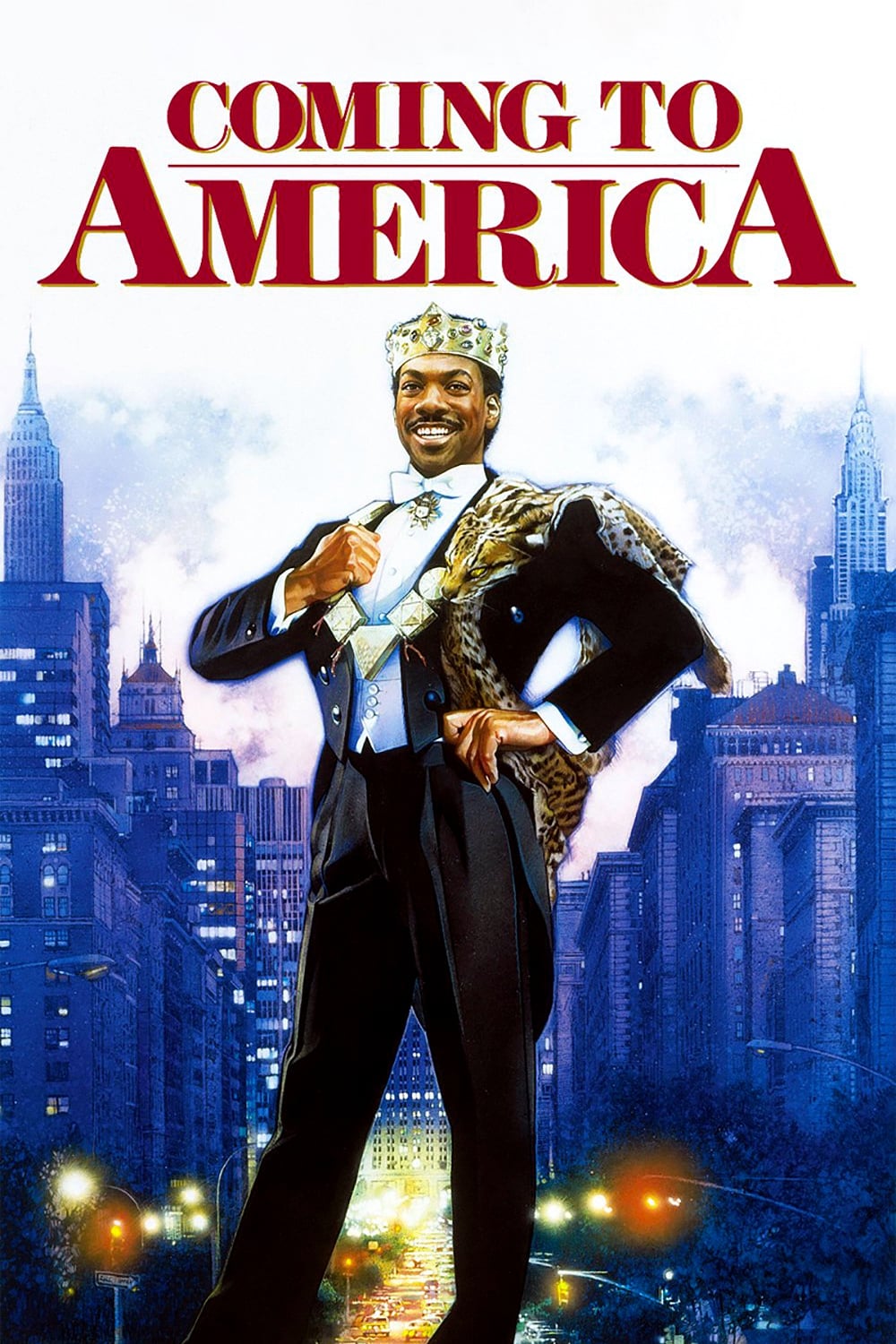
Mortimer and Randolph crossover; barbershop Joe Louis bit; Darryl and Soul Glo; "The royal penis is clean"; McDowell's versus McDonald's; Louie Anderson's cameo; Eddie's Jewish comedian makeup; engagement-announcement trope; the women in the cast; the Waldorf Astoria; Queens and New York as themselves
It was reportedly Landis's idea for Eddie to play the Jewish comedian, and visiting Paramount executives didn't recognize him in the makeup. — Bill Simmons
The 80s-90s trope of a father announcing his daughter's engagement to an annoying boyfriend without her knowing is a favorite gimmick. — Bill Simmons
The opening with Akeem waking up is floated as a pick; it is rewatchable but too long, since he barely reaches America 40 minutes in.
First pick: the presentation of the future queen, lavish and well executed, with James Earl Jones's line about having sex with the bathers. — Bill Simmons
The Zamunda sequence uses the old Hollywood trick of a lavish set piece, with elephants wandering past windows and 400 costumed people, compared with Cabin in the Sky. — Wesley Morris
The first nightclub scene is cleverly edited, with a string of women and ending with Arsenio in drag. — Bill Simmons
Invited to make a veiled joke, the reply notes this is the fourth Eddie Murphy conversation and riffs "Eddie, you talking to us." — Wesley Morris
The nightclub scene is blocked as shot-reverse-shot, but for Arsenio's turn Eddie sits beside him, so Arsenio is essentially reacting to himself. — Wesley Morris
The nightclub premise of judging which woman is good enough may belong in What's Aged the Worst; some moments are "definitely 1988". — Van Lathan
Black Awareness Week, called "probably going to be my winner", features Arsenio's reverend and Randy Watson with Sexual Chocolate to tepid applause; the makeup hides Eddie for about 40 seconds, in six great minutes. — Bill Simmons
The scene rings true to community events in Baton Rouge, at the Leo Butler Community Center, where a tired local celebrity always performs. — Van Lathan
Another had a version at Fairmont Park; the name Black Awareness Week is the canned-peas version, and the crowd's reaction to Randy Watson is captured perfectly.
Randy Watson sings The Greatest Love of All rather than Super Freak, a song sung at every graduation; without Whitney Houston you hear how mediocre it is.
The St. John's game brings back the 80s Big East; the bathroom recognition is called one participant's favorite scene and another's second favorite.
The bathroom scene is moving: a Black man seeing a Black person who means something deep to him in a common space; truly touching rather than funny. — Wesley Morris
Akeem's first date with Lisa brings the cross-movie cameo of Mortimer and Randolph from Trading Places as homeless men, a huge theater surprise. — Bill Simmons
A dad expected the Dukes to take the money and come back; a movie of that was expected but never came. — Van Lathan
The barbershop scenes are held for What's Aged the Best because they are short. — Bill Simmons
The scene where all the characters come together to straighten out the plot is fine but a little long. — Bill Simmons
That plot-resolution scene is called a favorite: a party sequence with deep depth of field and stakes, plus a living-room farce where misunderstandings get ironed out like a Three's Company ending, with Amos, Madge Sinclair and James Earl Jones on different sides. — Wesley Morris
The barbershop scenes are the pick: so short that they're so rewatchable, arguing over the same things people argue about in the barbershop. — Van Lathan
In reply, the barbershop scenes, earlier held for What's Aged the Best, are accepted as collectively the most rewatchable scene; a YouTube clip strings them all together like its own movie. — Bill Simmons