
Stats
- Episodes featuring their films
- 5
- Movies in this archive
- 5
Rewatchables episodes featuring Ridley Scott’s films


The Martian
2015 film
Bill Simmons · Sean Fennessey · Chris Ryan · Van Lathan
Aired October 13, 2020
Mentioned in discussions


Probably Unanswerable Questions
Preferred arena masks; whether Gladiator is a sports movie; Commodus’s predation; the analogous WWE plot
In the discussion (5)
- Which of the available gladiator masks would each host choose?
- Does Gladiator qualify as a sports movie?
- Is Commodus primarily motivated by incest or by pedophilia? — Bill Simmons
- The actor playing Maximus’s wife, Giannina Facio, married Ridley Scott in 2015. — Bill Simmons
- Which WWE plot does Maximus versus Commodus resemble? — Bill Simmons
Casting What-Ifs
Reported Maximus possibilities: Mel Gibson, Antonio Banderas, Ben Mendelsohn, and Hugh Jackman; Christopher Plummer as Marcus Aurelius (Crowe’s unsuccessful preference)
In the discussion (3)
- Mel Gibson, Antonio Banderas, Ben Mendelsohn, and Hugh Jackman are mentioned as reported possibilities, with the hosts unsure of the sourcing. — Bill Simmons
- Russell Crowe reportedly pushed for his Insider costar Christopher Plummer as Marcus Aurelius. — Bill Simmons
- Ridley Scott chose Richard Harris after reported back-and-forth. — Bill Simmons
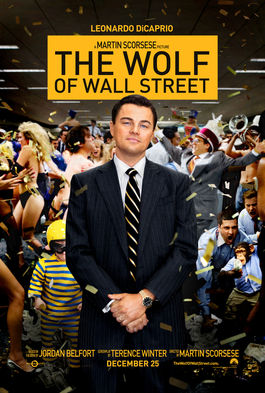
Casting What-Ifs
Brad Pitt and Paramount lost the 2007 rights bidding war to DiCaprio and Warner Brothers; Chris Evans and Joseph Gordon-Levitt auditioned; Jonah Hill took $60,000; Blake Lively, Rosie Huntington-Whitley, Teresa Palmer, Amber Heard and Olivia Wilde were in the mix for Naomi; Julie Andrews was considered for Aunt Emma; Ridley Scott was wanted to direct
In the discussion (9)
- In 2007 Leonardo DiCaprio and Warner Brothers won a bidding war against Brad Pitt and Paramount for the rights to Belfort's memoir, and Belfort made a million dollars on the rights.
- Does it work with Pitt: absolutely for some, since Pitt is better at the darker thing and a less attractive, rougher guy might let you hate Jordan more, there being moments when DiCaprio looks too great on screen; the counter is that DiCaprio uses his handsomeness as a tool to push further, as in Django, while Damon plays relatable, and Jordan's looks explain why anyone would let him sell them anything; the telephone-terrorists speech, banging the microphone on his head, is a place Pitt may not be able to go.
- Many Pitt and DiCaprio roles would be interchangeable, though The Aviator is hard to see with Pitt for one host while another could see Pitt there more than in this; both were circling The Departed at the same time; Pitt in California, twenty years earlier, and Fight Club show a weird dark gear.
- Chris Evans and Joseph Gordon-Levitt auditioned for an unspecified role, presumably Donnie, which does not seem right for Evans; Jonah took about sixty grand per his Howard Stern interview, while Leo had box-office points; he was already Moneyball-nominated and in Superbad, flew to see DiCaprio, joked that Leo should kill anyone else cast, and practiced with the capped teeth and phone calls.
- Moneyball was essentially playing Paul De Podesta (as transcribed), so it is hard to believe he was nominated for that and did not win for this, strong, unique and weird even if some scenes are too much; the cousin exchange, she grew up hot and if anyone is going to fuck my cousin it's going to be me out of respect, and the 'you're free' scene are things only Jonah could have done.
- Asked for his Blake Lively thoughts, the addressed host would have been fine with her as Naomi. — Ryen Russillo
- Blake Lively and Rosie Huntington-Whitley were considered and Teresa Palmer and Amber Heard auditioned for Naomi before Robbie; her being unknown helped, and Lively at the height of her post-Town moment could have nailed it but could not have reached the Robbie phenomenon; Robbie is doing Marissa Tomei in My Cousin Vinny, the voice and Buick Skylock (as transcribed), and the daughter is even named Skylar.
- Olivia Wilde auditioned for Naomi but was deemed too old to play DiCaprio's wife even though he is ten years older, a tough beat; Julie Andrews was considered for Aunt Emma before Joanna Lumley but was convalescing from a titanium ankle implant, probably for the best given the Mary Poppins crowd; the Emma scene is sneaky extra evidence that Belfort is a bad guy.
- People wanted Ridley Scott to direct for a time: his version is forty minutes shorter with a four-and-a-half-hour director's cut and less chaotic; Scorsese related to the addiction and throwing-your-life-away-for-cocaine material, which he discussed on the promo circuit, whereas Scott would bring less dialogue, longer driving scenes and a lude scene more like Kingdom of Heaven.


Biggest Oscar Travesty
Ethan Hawke losing Best Supporting Actor to Jim Broadbent in Iris
In the discussion (10)
- The new category is introduced as something these podcasts have circled before; it is expected to be really funny for a Roadhouse episode, with a case that Ben Gazzara was robbed in 1989 and for the Jeff Healy Band (as transcribed) for Best Original Song.
- 2001 was a dark Oscars: A Beautiful Mind won Best Picture over Gosford Park, In the Bedroom, Lord of the Rings and Moulin Rouge with no Training Day, and Ron Howard won Best Director over Ridley Scott for Black Hawk Down, Robert Altman for Gosford Park, Peter Jackson and David Lynch for Mulholland Drive, with no Antoine Fuqua.
- Several of those nominees are liked, In the Bedroom a lot and Gosford Park pretty good, but Fuqua and Training Day should have been nominated; Lord of the Rings was a tough hang that soaked up nominations for years in a way Star Wars never could, even though one host would take Star Wars a hundred times.
- Early validation from a nomination might have set Fuqua on a different course, since the movies he made after this resemble Training Day; Denzel's Best Actor win over Russell Crowe, Sean Penn in I Am Sam, Will Smith in Ali and Tom Wilkinson in In the Bedroom is fine, and Halle Berry won for Monsters Ball (as transcribed).
- Best Supporting Actor is the travesty that keeps one host up at night: the field was Ethan Hawke, Ben Kingsley in Sexy Beast, Ian McKellen in Lord of the Rings, Jon Voight in Ali for about three minutes, and Jim Broadbent in Iris, and Broadbent won.
- As in Rain Man, where Tom Cruise is the best person in the movie but Dustin Hoffman won, the performer who blows everyone away obscures how good the other one was; Hawke had to avoid being blown away by Denzel, be on PCP for half an hour and be believable in the fight scenes, which is likened to Chris Paul playing on a hamstring.
- Nobody here would pick Kingsley in Sexy Beast over Hawke, though he is good in it; two-hander movies like Butch and Sundance, The Sting, The Color of Money and Rain Man raise the question of how filmmakers present the straight man, and Redford is seen as more important than Hoffman in All the President's Men.
- Hawke is in more scenes and the movie starts in his house, so he could be argued as the lead with Denzel supporting, but really both were best actors, and doing it otherwise is like making Geena Davis supporting in Thelma and Louise.
- Later, on the phone, the Hawke loss to Jim Broadbent is called terrible and one of the few times an actor was right there with Denzel, alongside Viola in Fences, Morgan Freeman in Glory and Hanks in Philadelphia; he should have gotten that award.
- Earlier, the hosts note Denzel had only a supporting Oscar before this, having been passed over for Malcolm X, He Got Game, The Hurricane and Remember the Titans.


What’s Aged the Worst?
That a $65 million studio film this uncommercial got made at all; its complete shutout from the 2007 Oscar nominations
In the discussion (5)
- Asked whether the emotionally unsatisfying ending has aged worst, the answer is that the ending is gutsy: it leaves you feeling Arthur Lee Allen is the Zodiac, which drew criticism in 2007 because that is not the commonly held belief, but the film deserves credit for saying who James Vanderbilt and Fincher think it was; the making of the film was Fincher, Vanderbilt and others investigating the crime from Graysmith's text, with Graysmith involved and doing press runs with Gyllenhaal, and Fincher, who grew up in Marin County, has called the Zodiac the ultimate boogeyman of his childhood.
- On whether it is a personal film: Fincher is said to have a perverted sense of the personal, so anything sick and any compulsion to solve things is personal to him; his anecdote about the school threat, a police escort for his bus home and his father knowing yet not picking the children up is reflected later in the film's line to a father who works from home.
- Fincher's rumored next project, World War Z II, is seen as the kind of thing artists of his stature now do to remain artists of his stature, though he started with Alien 3 and has always interacted with the mainstream; it is nice to have this oddball film in the middle of his catalog, about the frustrations of an obsessive creative mind, the madness of chasing something you care about and the inability to predict success, with a cartoonist who ends up at a gun range as an analogy for wanting to make movies and working in Hollywood.
- The two things that aged worst have nothing to do with quality: that this film, a $65 million movie supposedly made as an Oscar movie, got made at all, and that it was not nominated for a single Oscar in a historic year full of downer films, when No Country won Best Picture.
- Recording around Thanksgiving while Ridley Scott is reshooting a swath of All the Money in the World to replace a major performance five weeks before release, a thought experiment puts Scott in the editing room on Zodiac for the 2006 Oscar push: he would have cut it around one of the three main characters and made the date, where Fincher's obsessiveness is why it came out in 2007 and not 2006.

Casting What-Ifs
Ridley Scott was set to make it in 1986 with Matthew Broderick as Johnny Utah and Charlie Sheen as Bodhi; after four years in turnaround the producers wanted Charlie Sheen or Johnny Depp in the Keanu role; Catherine Bigelow insisted on Keanu Reeves; Keanu over Depp
In the discussion (7)
- In 1986 Ridley Scott was supposed to make Point Break with Matthew Broderick in the Keanu Reeves role and Charlie Sheen as Bodhi, which the hosts call a very bad look.
- Broderick as Johnny Utah does not work: picture him in the beach football scene, or playing basketball in The Cable Guy; Ferris Bueller cannot be a former football superstar, so the whole script would have to change.
- Ridley Scott moved on and the film sat in turnaround for four years; when it was made in 1991 the producers wanted Charlie Sheen or Johnny Depp in the Keanu role, but Catherine Bigelow (as transcribed) said Keanu Reeves was her guy because she saw him as an action star.
- Asked Johnny Depp or Keanu Reeves for the lead, the answer is Keanu: the role needs the doofus surfer voice and airheadedness played completely seriously without blending the two, which only Keanu can do, whereas Depp would have done it well and accidentally turned into a surfer for real.
- Another agrees with everything said: Depp would have taken it a little too seriously, while Keanu had the unintentional comedy part of it; Depp as a football quarterback might have been its own unintentional comedy.
- Nobody can picture Depp running, much less chasing Swayze sixty yards down the longest football field of all time, shedding nine blockers; the joke is that a quarterback who can tackle like that must have thrown a lot of picks, capped with 'Ohio State, baby.'
- Early on, while setting up who Keanu was in 1991, a host mentions reading that Matthew Roderick (as transcribed) was considered for the Keanu role and is told this steps on the half-assed internet research corner.


