
Film credit
Bill Murray
Stats
- Episodes featuring their films
- 9
- Movies in this archive
- 10
Rewatchables episodes featuring Bill Murray’s films
The Grand Budapest Hotel
2014 film
Chris Ryan · Sean Fennessey · Andy Greenwald
Aired August 13, 2024
Mentioned in discussions


Half-Assed Internet Research
Locations, literary and film influences, announcer voices, cast scheduling, Hackman's behavior, Bill Murray, the real house, period products, and Margot's cigarettes
In the discussion (17)
- The address 111 Archer is a real Harlem location near 144th Street. — Chris Ryan
- Royal's unnamed hotel is represented by the Waldorf Astoria. — Chris Ryan
- The film presents itself as an adaptation of a book that never existed, including visible page turns. — Chris Ryan
- The discussion cites Louis Malle, the French New Wave, and Orson Wells among the film's influences; other names in the segment are sensitive to transcription errors. — Chris Ryan
- The Magnificent Ambersons is identified as an especially strong influence on The Royal Tenenbaums. — Chris Ryan
- Wes Anderson and Andrew Wilson voiced the announcers during Richie's tennis collapse. — Chris Ryan
- An internet claim says Danny Glover, Luke Wilson, and Owen Wilson declined Ocean's Eleven roles to appear in this film; the speaker explicitly labels the claim uncertain. — Chris Ryan
- The shoot was arranged around the cast's limited availability. — Chris Ryan
- Gene Hackman was reportedly combative on set, with a possibly apocryphal story that Bill Murray confronted him. — Chris Ryan
- Bill Murray's small performance is praised for understanding Anderson's tone and elevating limited screen time. — Andy Greenwald
- Murray is described as difficult to contact because he works without a conventional agent. — Andy Greenwald
- The production found the real house after foreclosure and rented it before the buyer renovated it. — Andy Greenwald
- The reported rent equaled what the buyer had paid for the house. — Andy Greenwald
- Recognizable New York places and real products remain visible even inside the film's carefully designed world. — Andy Greenwald
- Chas's office uses real iMacs, and Royal shoplifts gummy bears rather than genericized products. — Andy Greenwald
- Margot's cigarette brand is reported as an Irish brand discontinued in the late 1970s or 1980s. — Andy Greenwald
- The participants joke that Margot's brief smoking style anticipates vaping. — Chris Ryan

In the discussion (5)
- Bill Murray and Stephen Lee Shepard as Dudley are the first two candidates. — Andy Greenwald
- Owen Wilson is excluded because his role is too large for the category. — Andy Greenwald
- Larry Pine's brief turn as the Charlie Rose-like interviewer is an additional candidate. — Andy Greenwald
- Kumar Palana as Bogota is selected as the winner and called the participant's favorite of his Wes Anderson performances. — Andy Greenwald
- His walk to the window and quiet response during the drug intervention supply the decisive moment. — Andy Greenwald

Most Rewatchable Scene
Margot’s background-file montage (one participant’s final choice)
In the discussion (17)
- The pre-credit character introductions establish the family through a stylized montage before the plot begins. — Chris Ryan
- Royal's blunt response to Margot's childhood play is funny because he refuses to soften his criticism for a child.
- Margot meeting Richie at the pier is elevated by Nico's version of These Days and the slow-motion entrance. — Chris Ryan
- Royal's first secret meeting with Ari and Uzi is praised for his awkward introduction and inappropriate compliment about their mother. — Chris Ryan
- Richie's tennis collapse uses the announcers and seventy-two unforced errors to make his emotional breakdown visible. — Chris Ryan
- Every Eli Cash scene is considered rewatchable, including the mescaline introduction and his affected novelist persona. — Chris Ryan
- The montage of Royal and his grandsons scrapping, yelling, and mixing it up is a principal repeat-watch choice. — Chris Ryan
- Henry exposing Royal's fake cancer through tic tacks and cheeseburgers is singled out. — Chris Ryan
- Richie confronting Royal outside the house leads to the exchange that Royal was never dying but is going to live. — Chris Ryan
- Royal's confession to Etheline changes rapidly from a false death claim to a request for time, making the scene uncomfortably funny. — Andy Greenwald
- Hackman and Angelica Houston play the confession in a wide shot without relying on close-ups. — Andy Greenwald
- The Margot background-file montage is praised for combining exposition, visual detail, the private investigator, and Bill Murray's deadpan response. — Chris Ryan
- Richie's suicide attempt is called the most affecting scene Wes Anderson had shot, even though one participant does not find it casually rewatchable. — Andy Greenwald
- Elliott Smith's Needle in the Hay makes the suicide sequence especially difficult and powerful. — Andy Greenwald
- Margot and Richie's tent conversation is selected as an exceptionally tender moment. — Andy Greenwald
- The opening montage is praised for introducing a large unfamiliar world without the drag associated with long television introductions. — Andy Greenwald
- Margot's background-file montage becomes one participant's final choice because of its effortless style, detail, exposition, and Ramones song. — Chris Ryan
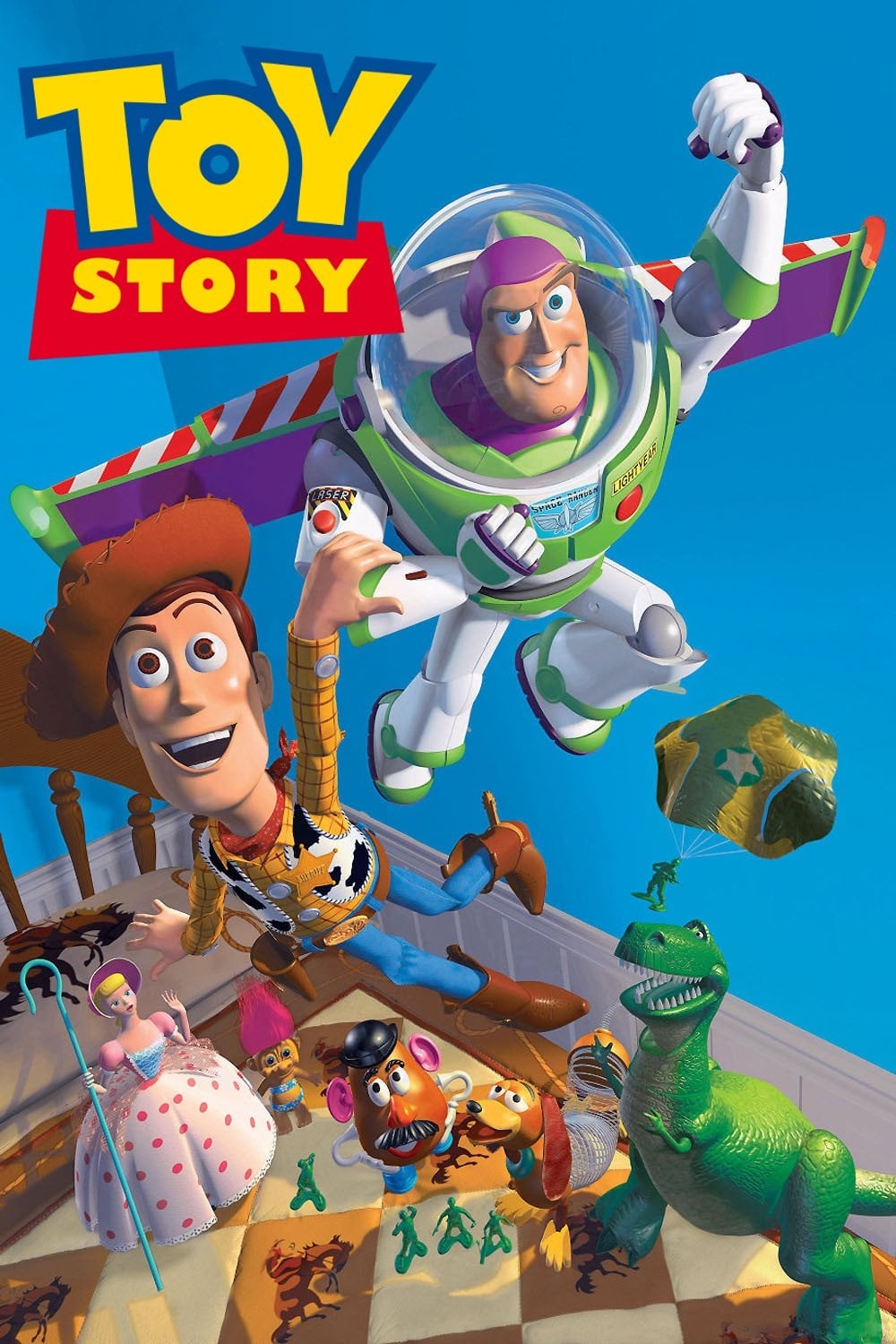
Casting What-Ifs
Billy Crystal, Chevy Chase, Bill Murray, Mel Gibson or Bruce Willis as Buzz; Jim Carrey as Buzz with Paul Newman as Woody; Rick Moranis as Rex
In the discussion (12)
- Billy Crystal declined Buzz, later called it the biggest mistake of his career, and was then offered Mike Wazowski in Monsters, Inc. — Sean Fennessey
- Crystal is judged not rigid enough for Buzz, unlike Tim Allen's chin-out delivery. — Sean Fennessey
- Chevy Chase turned down Buzz; he is judged unable to pull it off because his corners are a little too rounded. — Shea Serrano
- Bill Murray is rejected as too snarky to deliver the "sad, strange little man" line seriously. — Shea Serrano
- A 1995 Mel Gibson is judged capable of the role. — Shea Serrano
- Bruce Willis gets a thumbs up with doubts, and his Look Who's Talking voice work is praised. — Shea Serrano
- Tim Allen has said Pixar wanted Jim Carrey for Buzz and Paul Newman for Woody but could not afford them, meant to reflect new Hollywood taking over old; Newman later voiced Doc Hudson in Cars. — Sean Fennessey
- One should never say no to Paul Newman, but Tom Hanks's Woody is too ingrained to imagine anyone else. — Mallory Rubin
- Hanks and Allen as generational peers, a movie pillar and a TV star, is preferred; Newman fits better as Doc. — Sean Fennessey
- Newman is the only name that could have replaced Hanks, because Woody needs a peach-soft voice; several actors, such as Robert Redford or Denzel Washington, could have played Buzz. — Shea Serrano
- Rick Moranis was reportedly approached for Rex, which would have been great. — Shea Serrano
- An online claim of Jeremy Irons as Mr. Potato Head is raised but unconfirmed. — Sean Fennessey

Recasting Couch
Diane Lane in Deborah Kara Unger’s role; Denzel Washington as Nicholas
In the discussion (6)
- Diane Lane is proposed over Deborah Kara Unger as a more involving version of the same role. — Bill Simmons
- Denzel Washington is proposed as Nicholas because he can hold attention while playing a flawed or unlikeable man. — Sean Fennessey
- Bill Murray is the joking fallback because he had already played a Scrooge figure.
- Robert De Niro’s Heat persona is imagined as another severe Nicholas alternative.
- The De Niro version resumes with an imagined CRS interview. — Chris Ryan
- Al Pacino is proposed for Conrad opposite the De Niro version. — Chris Ryan

In the discussion (8)
- The first pick is Bill Murray, a personal choice that may not be objectively defensible, based on his performance and cultural influence. — Sean Fennessey
- The second pick is Ted Knight, who had the hardest part while the others played their one character; if his villain is not funny the movie falls apart, and he still gets the biggest laughs. — Bill Simmons
- Bill Murray is acknowledged as the one who got the most out of the movie, including Pebble Beach and 40 years of mileage. — Bill Simmons
- Cases are raised for Ramis, whose first directed movie led to more classics, and for Chevy's iconic Ty Webb, though Chevy forfeits for returning in Caddyshack II. — Sean Fennessey
- Caddyshack II is debated: Jackie Mason replacing Rodney is reprehensible, Dangerfield reportedly could not agree to a contract, and Robert Stack is a bright spot. — Bill Simmons
- Ted Knight is restated; a Rewatchables Twitter poll among Knight, Dangerfield, Chase and Murray is proposed. — Bill Simmons
- Craig, called in, says he independently chose Ted Knight, thinking of "well, we're waiting", and is teased for brown-nosing. — Bill Simmons
- The poll will be posted on the Rewatchables Twitter feed. — Bill Simmons
Podcast choices
- Speaker not identified
- Ted Knight
- Speaker not identified
- Ted Knight

In the discussion (8)
- Michael O'Keefe is at Apex, coming off The Great Santini into the funniest movie of the year; with Tim Hutton he was a young actor to watch before Sean Penn's class eclipsed them. — Bill Simmons
- Dangerfield's Apex is placed in the mid-80s with Back to School, when he became a draw, plus HBO specials breaking Sam Kinnison and Bill Maher; both participants agree. — Bill Simmons
- Ted Knight: career-wise no, since Mary Tyler Moore is his Apex, but retroactively this became his legacy; Too Close for Comfort gets love. — Bill Simmons
- Chevy Chase: no, he got it for Fletch; Bill Murray: no, though his six days of work are pure and golden. — Sean Fennessey
- Cindy Morgan: sadly, yes. — Bill Simmons
- Cocaine is argued as at Apex, before its damage was widely known and while it fueled the film's disjointed creativity; the other participant is uncomfortable placing it on the mountain. — Bill Simmons
- Baby Ruth bars peak with Goonies instead. — Sean Fennessey
- Golf is argued for 1980, citing Jack Nicholas winning two majors, Tom Watson the British and a rising star taking the Masters; the Tiger Woods Mike Douglas appearance is checked; the reply is a hesitant "yes, I guess." — Bill Simmons
In the discussion (1)
- Bill Murray, 100%, in the pivotal role of the back half of his career. — Bill Simmons
Podcast choices

Half-Assed Internet Research
Groundhog bites and rabies shots; the groundhog-lair idea; good Phil or bad Phil; stopped diner clocks; Woodstock, Illinois filming; script origins; 25 takes of the ending; religious readings
In the discussion (13)
- Bill Murray was reportedly bitten by the groundhog two or three times and needed anti-rabies injections after a bad bite right after the groundhog-stealing scene. — Bill Simmons
- Bill Murray and groundhogs are called the greatest actor-animal connection, across two iconic groundhog movies; Turner and Hooch is offered as a rebuttal. — Bill Simmons
- Research is cited that, either in the movie shoot or the original script, the kidnapping went further, with him entering the groundhog's lair to blow it up, which was realized to be too close to the earlier Murray groundhog material. — Bill Simmons
- According to Ramis, Murray would ask only "good Phil or bad Phil"; the research also says the diner clocks are all stopped and the film was shot in Woodstock, Illinois, about 50 miles from Murray's hometown, with plaques for the puddle curb and Ned's corner. — Bill Simmons
- The hosts say the original script opened with Phil already mid-loop and that Ramis changed it, which is judged the right call. — Bill Simmons
- The hosts say writer Danny Rubin's big break came from reading Interview with the Vampire and thinking about living forever. — Bill Simmons
- Tobolowsky is quoted that it was a mediocre Bill Murray movie until shooting turned it into a classic. — Bill Simmons
- The hosts say they shot 25 takes of the closing wake-up and Ramis polled cast and crew, who voted to keep them in their clothes; one host would rather have implied sex, calling the movie chaste apart from the Nancy Taylor love scene. — Bill Simmons
- The woman dressed as a maid at the movies with the man-with-no-name costume is questioned as a possible call girl who is simply dropped. — Sean Fennessey
- The hosts say Buddhists, Hindus, Jews and Christians all found significance: mitzvahs before returning to earth, and purgatory with winning Andy McDowell's character's love as heaven. — Bill Simmons
- Such interpretation is rare for a popular comedy; the filmmakers likely did not expect religions to claim it, similar to The Big Lebowski. — Bill Simmons
- Ramis's earlier films were direct comedies, while Multiplicity reflects a man in crisis; the film may have tripped a wire for its makers. — Sean Fennessey
- Multiplicity is called polarizing: a mid-90s roommate named Ricky loved it, and it resembles the mediocre Bill Murray movie Tobolowski described, starring Michael Keaton. — Bill Simmons

What’s Aged the Best?
Ned Ryerson; the $1,000 piano lesson; Phil trying to save the homeless man; the premise and redemption arc
In the discussion (9)
- Andy McDowell's performance is offered as aged best: she cannot overpower Bill Murray and has to be sweet, almost a prop. — Bill Simmons
- Strong disagreement: the character felt too pristine, toasting world peace, not a prize and annoying, though it is no reflection on Andy McDowell herself. — Issa Rae
- One remark says it felt like a female character written by a man; another view is that the character was intentionally pristine, and "I think you're both right". — Issa Rae
- One voice finds her hot; the reply "Is she, though?" cites her 80s hair.
- The Ned Ryerson introduction is quoted; "needle-nosed Ned, Ned the head" is among the most memorized words, and the actor is called a that guy. — Bill Simmons
- The $1,000 first piano lesson, with the teacher shoving the kid out the door and the slow walk, is a favorite. — Bill Simmons
- Phil trying to save the homeless man day after day is loved; Michael Shannon's first-movie cameo is noticed as overacting and deferred to a later category. — Bill Simmons
- The entire premise of waking up to the same day, timely now as the Atlantic noted, and the redemption arc are called the best part. — Issa Rae
- After the break, the criticism of Andy McDowell is revisited: a pristine, boring love interest suits a bored Phil who talks himself into her, but a smarmy Pittsburgh weatherman falling for such a dull lady is doubted; whether she is intentionally uninteresting is left at possibly. — Bill Simmons
Casting What-Ifs
Tom Hanks and Michael Keaton as Phil; Tori Amos as Rita
In the discussion (10)
- The hosts say Ramis originally wanted Tom Hanks rather than Bill Murray but decided Hanks was too nice; Eddie Murphy is guessed first, and Hanks would have been great. — Bill Simmons
- Michael Keaton is said to have turned it down as too confusing, regretted it, and ended up in Multiplicity with Ramis and Andy McDowell. — Bill Simmons
- Eddie Murphy would have wanted the part in the mid-to-late 80s but not by 1993 after Boomerang; a circa-1990 Murphy would have been really good, Keaton also would have been good, but Bill Murray ended up perfect. — Bill Simmons
- The hosts say Andy McDowell almost did not get the role because it was going to Tori Amos, amid a groundswell, before they played it safe; Sex, Lies, and Videotape is named as her breakthrough. — Bill Simmons
- Asked who instead, the answer is not Tori Amos but Susan Sarandon. — Sean Fennessey
- The Sarandon case: more mustard on the fastball playing off Bill Murray, the right age, and believable as an ambitious TV producer. — Sean Fennessey
- The Sarandon idea draws pushback that she always feels older and was probably too old in 1993. — Sean Fennessey
- Meg Ryan is floated and described as very sweet and so blonde. — Issa Rae
- If Eddie Murphy were the lead, Whitney Houston is floated; the early 90s are called a tough era for actresses, Sandra Bullock too young though great, and Julia too big a star; the role is called a prop. — Bill Simmons
- After the break, the guest's Eddie Murphy idea is revisited as an awesome 80s Eddie Murphy, with doubt he pulls it off in the 90s. — Bill Simmons
In the discussion (6)
- The Roger Ebert segment states he gave the film three stars initially, then circled back 12 years later and upgraded it to four stars. — Bill Simmons
- The quoted later review says tomorrow will come whether or not it is always February 2nd, that we can learn to be better people, and that the point is not that Phil has come to love Rita but that he has learned to see the angel. — Bill Simmons
- The do-over is called forgivable because rewatching is the premise of the movie and the film seems deeper with each viewing; many first treated it as a silly Bill Murray romantic comedy. — Sean Fennessey
- Comedies are said to be unfairly dismissed as unserious; early reactions saw Bill Murray being funny rather than the writing and directing. — Sean Fennessey
- William Goldman is cited as complaining that comedies get the shaft, arguing There's Something About Mary deserved a best film nomination. — Bill Simmons
- Seeing it in a Massachusetts theater, one host thought it really good but did not expect it to be discussed 27 years later; comedies reveal their rhythm over repeat viewings while dramas hit hardest the first time. — Bill Simmons
Films in the archive
Caddyshack
1980




Ghostbusters
1984
Groundhog Day
1993
Lost in Translation
2003

Meatballs
1979

Stripes
1981

The Grand Budapest Hotel
2014
The Royal Tenenbaums
2001

What About Bob?
1991

Wild Things
1998