Nitpick: Scottish Gerard Butler as a South Torrance football star is questioned, though his accent concealment and Bill Romanowski-like presence are defended. — Chris Ryan
The fourteen-mile Hawthorne-to-Wilmington ride raises a Los Angeles traffic and distance objection. — Chris Ryan
Donnie's failure to request a lawyer after waking in the hotel is questioned; One participant compares real interrogation videos in which suspects similarly fail to ask for counsel.
Merrimen’s access to so much Federal Reserve information is questioned.
The Chinese-food courier’s freedom to enter the Fed and roam the cafeteria is questioned; a front-desk handoff would make more sense. — Bill Simmons
One participant objects to Donnie silently accepting Nick's insult about his penis size, proposing embarrassed or defensive replies rather than allowing the conversation to move on. — Van Lathan
The hosts calculate the weight of thirty million dollars in hundred-dollar bills at roughly 661.5 pounds and question Donnie moving it so quickly in small bags; this is their cited internet calculation. — Chris Ryan
Donnie reconstructing ventilation plans from bar information requires accepting his exceptional intelligence.
A defense imagines far more accumulated conversations and incidental information over time than the brief scenes show; no duration in years is specified.
The Chinese food stored above the bathroom for days prompts questions about spoilage, temperature, smell, and what dishes the women could plausibly accept. — Chris Ryan
Merrimen's running looks too slow for his football reputation to one participant; others propose past injuries, military wounds, and heavy protective gear as possible explanations. — Chris Ryan
The long escape route and traffic are questioned; a closed lane is defended as quintessential Los Angeles, and the robbers expected to leave undetected. — Chris Ryan
Merrimen's objection to Nick's behavior is called hypocritical because he sends his girlfriend to sleep with Nick as a distraction. — Bill Simmons
Ebert’s criticism of Madden and Summerall is rejected as an aged-worst take. — Bill Simmons
The earlier review calling Favreau’s performance career-ending is retracted; his later success and this performance are now appreciated. — Bill Simmons
The Gary Glitter song is an aged-worst choice because of the performer’s history. — Bill Simmons
The hosts discuss Michael Jace’s murder conviction as a disturbing contrast with his character’s fear of returning to prison. — Van Lathan
A host recalls recognizing Jace while he was serving as an usher at an Oasis church on Wilshire. — Van Lathan
The host recalls having spoken with Jace and then learning of his arrest while working at TMZ. The segment’s proposed fun-fact title is rejected as inappropriate to its subject. — Van Lathan
Coaches wearing suits is added as an aged-worst observation, with Mike Nolan's unsuccessful revival blamed for ending the look. — Van Lathan
Stallone later distanced himself, saying he would use an urban setting, omit pop music and make the Vegas finale more ominous. — Bill Simmons
Stallone reportedly accepted a record $12 million after his agent’s attempted rejection of a $10 million offer backfired into a higher bid. — Bill Simmons
The reported budget is about $25 million including Stallone’s fee, against $16 million earned; Mannequin beat it on opening weekend. — Bill Simmons
The elbow injury reportedly occurred unexpectedly to a real German champion during tournament filming; his transcript name is uncertain. — Bill Simmons
Loggia can be seen in the distant final shot, suggesting reconciliation despite little explanatory dialogue. — Bill Simmons
John Wetton reportedly originally recorded Winner Takes It All before Hagar replaced him to provide more aggression. — Bill Simmons
Zumwalt reportedly received $10,000 to shave his head and kept the look. — Bill Simmons
The grandfather’s mansion reportedly also served as the Clampett home in The Beverly Hillbillies. — Bill Simmons
Mendenhall won Razzies for supporting actor and new star; Stallone lost worst actor to Bill Cosby in Leonard Part 6. — Bill Simmons
Zumwalt reportedly achieved sobriety, helped people with substance problems and died of a heart attack in 2003. — Bill Simmons
A real international tournament was staged for the film, culminating in an 18-hour Vegas competition; Stallone filmed his material afterward. — Bill Simmons
Randy Raney played Mad Dog Madison and later fought Stallone in Rambo III. — Bill Simmons
The real truckers-class champion won a truck and trailer worth roughly $250,000 and reportedly inspired Lincoln; the transcript’s name is uncertain. — Bill Simmons
The most-rewatchable-scene discussion proposes eight selections and suggests almost the entire film qualifies except roughly twenty minutes. — Bill Simmons
The opening diner robbery and transition into the credits are praised. The discussion considers the switch between two songs and debates whether the typography still feels timeless; younger viewers may associate it with Stranger Things.
Misirlou prompts an association with the Black Eyed Peas song Pump It for a younger listener. — Craig Horlbeck
Vincent and Jules discussing Amsterdam and the Royale with Cheese is praised as exceptionally influential screenwriting. The conversation connects its everyday observations to the film's recurring contrasts between Europe and America.
The foot-massage argument, Mia's television pilot, and Antoine Tony Rocky Horror story are praised for combining casual conversation with the unexplained armed approach to an apartment. Vincent catches Jules with the offer to give him a foot massage. — Craig Horlbeck
The foot-massage debate leads to agreement that the gesture is intimate; professional massage is distinguished from a personal offer.
The apartment confrontation is introduced as another scene contender, with Samuel L. Jackson's performance prompting an early Rick Dalton Award mention. The Big Kahuna Burger and tasty-beverage dialogue, Frank Whaley's frightened performance, and the big-brain-on-Brett line receive praise.
Jackson's interaction with Burr Steers on the couch is singled out, while Travolta's quieter background performance also draws attention. — Chris Ryan
Travolta's relaxed background behavior contrasts with Jackson's commanding, repeatedly quotable performance in the apartment.
Jackson's extended biblical monologue is praised as an extraordinary sustained performance, prompting curiosity about how many takes the scene required. — Bill Simmons
Low angles, close-ups, and a camera move following Jackson's head turn establish him as a movie star, shifting attention away from Travolta. — Chris Ryan
The burger and the film's food generally are praised for looking appetizing.
Marsellus lecturing Butch about pride and his declining prime is selected as another scene; its advice is compared with Pacino's speech to DiCaprio in Once Upon a Time in Hollywood. — Bill Simmons
The speech's warning about aging inspires contemporary jokes about Joe Biden and Paul George's late-career contract.
Butch's confrontation with Vincent is discussed as the possible trigger for keying his car and deciding to betray Marsellus; a reported Tarantino answer supports the decision forming during that encounter.
Obscuring Marsellus's face during his speech is praised for building anticipation and making the crime boss seem mythical, with Mia's delayed reveal cited as a parallel.
Vincent buying heroin from Lance is selected for its elaborate product descriptions and sales pitch, including the more expensive Choco. — Chris Ryan
Lance remaining visible in a mirror is singled out as an easily missed visual detail. Mirrors and reflections recur with Mia, Fabienne, and Vincent. — Bill Simmons
Vincent confusing Trudi with Jody and describing the piercings on Jody's face is praised as an enduringly funny exchange; Stoltz's robe, sandals, and hair contribute to the performance.
The drug purchase captures obligatory small talk, with Lance echoing Vincent's complaints about his keyed car and using a salesman's suggestion that stock might run out. — Chris Ryan
Stoltz's appeal across different kinds of films is discussed. A festival encounter and his enthusiasm for Reservoir Dogs are offered as the background to his casting, alongside his other connections to Tarantino and Roger Avary. — Sean Fennessey
The discussion corrects Kicking and Screaming to 1995 and describes Stoltz's early-1990s mixture of indie leading roles and smaller appearances. — Bill Simmons
Vincent and Mia's date at Jack Rabbit Slim's is selected, including his arrival at her house. The restaurant's immersive design and automobile booths are praised; conflicting construction-budget recollections are discussed.
A reported Disney proposal to reproduce Jack Rabbit Slim's in a park was declined; the restaurant is compared with an unnamed real Los Angeles establishment. — Sean Fennessey
Characters repeatedly expressing pleasure in their food is suggested as part of why the meals look so appealing. Steve Buscemi's Buddy Holly waiter is highlighted. — Sean Fennessey
Fox Force Five's detailed character lineup inspires enthusiasm for an actual pilot and a comparison with Kill Bill; whether Tarantino wrote such a pilot is speculation.
The five-dollar milkshake exchange and its specific menu terminology are singled out as memorable date dialogue.
The date resolves the foot-massage rumor while Travolta's bashful, low-key delivery contrasts with Thurman's more animated cocaine-influenced behavior.
The twist contest and Chuck Berry song are praised. The discussion wonders how the dance would look to sober observers and reports that Travolta introduced additional period dances instead of only performing the twist.
A first-time viewer expects Vincent and Mia to have sex and face Marsellus's anger; the overdose instead provides an effective narrative swerve. The baggie rather than a balloon helps explain Mia mistaking heroin for cocaine. — Bill Simmons
Mia abandoning her lip-sync routine midway through the song is praised as a behavioral detail. Lance's quiet evening with cartoons, cereal, and a recliner makes Vincent's emergency arrival especially funny. — Chris Ryan
The injection effect reportedly used a needle pulled away from Thurman's chest with the footage reversed, after a fake chest was rejected. — Bill Simmons
Vincent pressuring Lance by explaining that Mia belongs to Marsellus adds another comic threat to the rescue; the rough handling of Mia on the lawn is noticed. — Chris Ryan
Thurman's ability to look glamorous and convincingly devastated, especially on the drive home, is praised. — Bill Simmons
Christopher Walken's watch monologue is selected as another scene. Its placement immediately after the overdose supplies another escalating surprise when a quieter flashback seems likely.
Walken's uninterrupted watch speech is praised, and the watch's Knoxville origin is connected to Butch's destination and Tarantino's biography.
Butch returning for the watch and killing Vincent is selected. One objection says Butch seems insufficiently frightened; the long approach through backyards is defended as an effective real-time buildup. Stopping for a toaster pastry is questioned.
Vincent's abrupt death is compared with Psycho's shocking removal of its apparent lead. Whether earlier politeness toward Butch would have saved him is raised, with survival offered as the reason Butch would shoot regardless.
The pawnshop basement and Gimp reveal are selected for their shocking narrative turn. Deliverance is a comparison, while the setting is read as a surreal personal hell for a powerful crime boss.
The Gimp emerging from the trunk is called a top-five shocking movie moment, without an enumerated ranking. The discussion debates deliberate provocation versus making the basement as strange as possible. — Bill Simmons
The Gimp laughing at Butch is compared to premature athletic taunting; the offscreen sounds prompt jokes about recording the scene.
The discussion debates returning to rescue an enemy versus escaping. Butch staying with Fabienne after she forgot the watch is also questioned.
The scene illustrates how Tarantino strategically withholds the sight of violence despite its strong effect. — Sean Fennessey
Vincent accidentally shooting Marvin and the ensuing trip to Jimmy's house are selected, highlighting Vincent's casual admission and the argument over whether a bump caused the gun to fire. — Craig Horlbeck
Jules and Vincent washing their hands and arguing about soap is praised, as is Vincent's impatient expectation that an apology should settle the accidental killing. — Bill Simmons
The Wolf's rapid arrival, appreciation of Jimmy's coffee, response to Vincent requesting politeness, and refusal to celebrate prematurely are highlighted alongside the argument over cleaning Marvin's remains. — Bill Simmons
The final breakfast and robbery confrontation is selected for Jules's transformation and the film's deepest thematic statement. Jackson's apartment performance remains a competing personal favorite.
The final diner confrontation is selected as the current favorite scene. — Sean Fennessey
Mia’s overdose through the injection and revival is selected as the most rewatchable scene.
The stretch from Marvin’s shooting through the Wolf leaving for the diner is separately identified as a favorite chapter.
The opening chapter is defended because it contains both the hitmen and Vincent’s date with Mia.
Jack Rabbit Slim’s through Mia’s revival is selected as an expanded scene choice. — Craig Horlbeck
The invited top-five flex ranks Joe Clark confronting Sams on the Lean on Me roof fifth, with the dangerous method questioned.
Fourth is Rocky beating Tommy Gunn, whose provocation is said to justify the confrontation. — Van Lathan
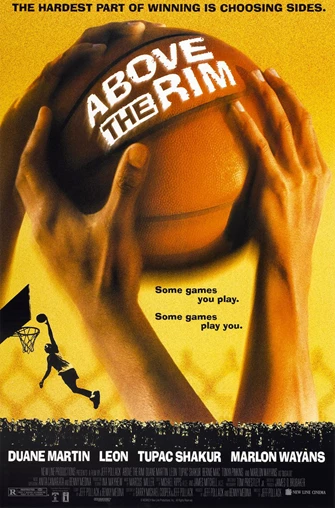
Third is Shep beating Kyle Watson one-on-one in Above the Rim; the deceased-friend subplot prompts a tangent. — Van Lathan
Second is a tie between Yoda teaching Luke at Dagobah and Obi-Wan defeating Anakin in Revenge of the Sith. — Van Lathan
After the rank is clarified as second rather than first, the top slot goes to the park-bench speech in Good Will Hunting, contrasting experience with intelligence. — Van Lathan
An invited flex asks for the best Philip K. Dick adaptations: Minority Report, Total Recall, A Scanner Darkly, Blade Runner and The Adjustment Bureau are nominated. One ordering begins Blade Runner and Total Recall; another specifies Blade Runner, Minority Report and Total Recall, while Scanner is especially faithful in spirit. — Bill Simmons
The Adjustment Bureau is defended by its proposer but rejected by two responses. Blade Runner is agreed to be best, whereas Total Recall is preferred for desert-island entertainment and rewatchability.
Craig’s flex compares Pete berating the team at halftime to San Diego State’s coach against UNC; the ensuing discussion says SDSU lost by 27 after trailing by about 38. — Bill Simmons
The flex asks for the best starting five from the actual basketball players appearing in the film, clarifying that the players rather than their fictional characters are eligible. — Bill Simmons
An initial lineup includes Shaq, Penny, Bobby Hurley and Calbert Cheaney; Allan Houston joins the core. Pre-accident Hurley is praised, but wanting Penny to handle the ball pushes Hurley out.
The final proposed five is George Lynch, Allan Houston, Penny, Shaq and Calbert Cheaney, with Hurley as sixth man. The lack of a conventional power forward is defended because Shaq anchors the team. — Van Lathan
Ricky is suggested as a floor-spacing reserve; the lineup is criticized for insufficient shooting without Hurley, and Ricky is jokingly called a locker-room liability.
Steven Seagal Hard to Kill Award for needing better intimacy coordinator: first kiss feels mauling, Adrian trapped, phone request refused; saying going to kiss not sufficient freedom to decline.
Zane’s World is reported as an existing parody, featuring Biff Malibu, Tom Byron, Madison and Trixie Tyler. — Bill Simmons
A fourteen-minute plot-only edit with the sex removed is described as unexpectedly entertaining; the Peter North casting question is a joke rather than a reported credit. — Bill Simmons