
Film credit
Sigourney Weaver
Also referred to as Weaver, Sigourney
Stats
- Episodes featuring their films
- 6
- Movies in this archive
- 6
Rewatchables episodes featuring Sigourney Weaver’s films


Mentioned in discussions


Apex Mountain
Hawaiian shirts in space
In the discussion (11)
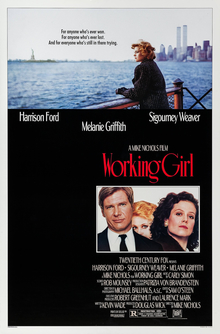
- Weaver's Apex is placed later around Ghostbusters, Aliens and Working Girl. — Bill Simmons
- Hurt's Apex is placed at The Elephant Man following Alien. — Bill Simmons
- Stanton's Apex alternatives include Paris, Texas as an iconic rather than commercially dominant role and his busy 1980s run through Red Dawn, Pretty in Pink and Escape from New York; his long association with Nicholson is jokingly proposed. — Bill Simmons
- Skerritt's Apex is Top Gun. — Bill Simmons
- Kotto's Apex alternatives are Homicide, Midnight Run and Live and Let Die, with debate about the Bond role's subsequent effect on his opportunities.
- Scott's Apex is assigned to Gladiator rather than Alien; Blade Runner is rejected on financial-success grounds.
- Alien movies as a category are rejected for Apex here.
- Dripping and secreting are proposed as an Apex with joking pushback. — Sean Fennessey
- Movie cats are disputed against the Godfather cat.
- Hawaiian shirts in space receive affirmative Apex discussion, praising Stanton's timeless thermal-shirt, Hawaiian-shirt and trucker-hat look. — Bill Simmons
- Stealth Joseph Conrad references are proposed for Apex alongside Apocalypse Now, leaving a shared alternative rather than an unqualified sole choice. — Bill Simmons

Half-Assed Internet Research
Salary; acid blood; lasers; slap; cast tactics; creature effects; spacesuits; cats; deleted footage; casting discovery
In the discussion (14)
- The production reportedly built planetary terrain in a warehouse and sourced bomber scrap for the designs. — Chris Ryan
- Unusual organic materials and children beside oversized landing gear reportedly enhanced the design and perceived scale. — Chris Ryan
- Weaver's Alien Resurrection salary reportedly exceeded the entire budget of Alien.
- The egg chamber's blue lasers reportedly came from the Who rehearsing nearby at Shepperton; the panel discusses the timing around Keith Moon's death.
- For the director's-cut slap, Cartwright reportedly switched hands at Scott's instruction after Weaver kept ducking, producing a visibly surprising hit. — Bill Simmons
- Scott reportedly instructed Kotto to annoy Weaver off camera; the panel questions this directing tactic and jokes about method acting.
- A German shepherd hidden behind a screen reportedly frightened the cat for its reaction to the descending alien.
- Ash's artificial head reportedly contained milk, caviar, pasta and glass marbles. — Chris Ryan
- Hurt's head and arms projected through the table into a mechanical torso filled with animal guts; the smell and effect reportedly distressed the cast, including Kotto. — Chris Ryan
- Actors reportedly fainted in inadequately ventilated spacesuits; Scott reconsidered the problem when his own children fainted during shots using them for scale. — Bill Simmons
- The dead facehugger reportedly used oysters, sheep kidney and fresh shellfish. — Bill Simmons
- Four different cats reportedly played Jones. — Bill Simmons
- The director's cut reportedly followed discovery of one hundred boxes of footage in a London vault in the early 2000s. — Bill Simmons
- Walter Hill reportedly noticed Weaver and Michael Beck in a film transcribed as Mad Men, leading to Weaver's Alien opportunity and Beck's Warriors casting; the title remains uncertain in this ASR.
Casting What-Ifs
Streep as Ripley; Ford as Dallas; Cartwright casting confusion
In the discussion (6)
- The screenplay reportedly wrote the crew as men while explicitly making all roles interchangeable; Ripley was not originally specified as female.
- Meryl Streep reportedly competed with Yale classmate Sigourney Weaver for Ripley but was mourning John Cazale; the panel believes Streep could have played the part.
- Weaver's imposing physical presence distinguishes her from the imagined Streep casting, though Streep's acting ability is not doubted. — Bill Simmons
- Harrison Ford reportedly declined Dallas; a speaker believes Ford would improve the acting and chemistry with Weaver, anticipating their Working Girl pairing. — Bill Simmons
- Veronica Cartwright reportedly arrived in England believing she would play Ripley and learned during wardrobe fitting that she was Lambert; the panel expresses disbelief at the miscommunication. — Bill Simmons
- An anecdote says John Hurt lost another film after being mistaken in South Africa for a similarly named apartheid opponent, then became available for Alien after the replacement actor developed diabetes; the transcript does not reliably distinguish the two names.

What’s Aged the Best?
Trailer; tactile future; Weaver; burial; collaborative craft; restraint; humor; company; Cartwright; franchise
In the discussion (15)
- The trailer is praised as a model for later thriller and horror advertising, using cutting and sound to generate urgency despite a cast without major stars.
- Spacesuited exploration and the concise opening information card have aged well, establishing mission and crew without an explanatory scene.
- The tactile, worn spaceship and visibly tired crew make the future feel used and believable, contrasting with cleaner, brighter science-fiction settings. — Bill Simmons
- Young Weaver is an aged-best selection. — Chris Ryan
- The body's space burial is an aged-best selection. — Chris Ryan
- Walter Hill’s contribution is praised alongside the indispensable work of Giger, O’Bannon, Weaver and Scott; the film’s success is collaborative rather than attributable to one person.
- Scott’s principle of showing little of the monster and letting viewers’ imagination work is praised as enduring advice. — Chris Ryan
- Scott’s later technology-heavy Alien films are said to violate that restraint, while some awkward staging of Lambert and Parker’s deaths exposes the original’s practical limitations. — Sean Fennessey
- The first-hour humor, Kane’s opening remark about feeling dead and biblical or creation imagery gain resonance through later films. — Chris Ryan
- Ash’s corporate function recalls HAL, while the minimally explained company becomes a lasting theme; facehugger and chestburster are production terms adopted by audiences despite not being spoken in the film. — Chris Ryan
- Cartwright's terrified reactions are an aged-best choice. — Sean Fennessey
- An unranked five-film list groups Alien, The Birds, Invasion of the Body Snatchers, The Witches of Eastwick and Inserts as Cartwright in an auteur's nightmare. — Bill Simmons
- Inserts is corrected as involving Jessica Harper and Richard Dreyfuss rather than Margot Kidder; a Cartwright SVU appearance is also recalled.
- The franchise and especially Aliens are enduring benefits; Aliens is considered more fun but sometimes too long, while Alien is scarier. — Sean Fennessey
- Concept artist Ron Cobb reportedly originated the alien's acid blood; the panel praises both the idea and the shot of acid burning through the ship. — Bill Simmons


Sequel, Prequel, Limited Series, or All-Black Remake
Untouchable versus expanded series
In the discussion (3)
- Untouchable is one preference; another favors a six-hour series in 1980 or the present to explore psychological transformation more deeply. — Chris Ryan
- Remaking is resisted because the unresolved meanings and period context give the film lasting force, and using an openly gay cop could remove the original ambiguity. — Wesley Morris
- A mainstream gay cop unfamiliar with leather culture could still have a journey; provocative star choices include Chris Pratt, a female version with Sigourney Weaver, and Bradley Cooper. — Wesley Morris

Apex Mountain
Joan Allen; key parties
In the discussion (10)
- Kline is not at Apex; Weaver is also a no, her peak being around Ghostbusters, Aliens, and Working Girl. — Bill Simmons
- Ang Lee is a no, with Brokeback Mountain cited among his two directing Oscars. — Sean Fennessey
- Joan Allen’s Apex is opened as this film versus her first spy-franchise role. — Chris Ryan
- Counter-alternatives are her Pamela Landy role, Face/Off and Pleasantville, or The Contender, which earned an Oscar nomination.
- Her filmography is recapped, from Manhunter and a chess-prodigy film through The Crucible and The Contender. — Bill Simmons
- This is declared her Apex for the podcast’s purposes while still admiring her Pamela Landy. — Chris Ryan
- The Upside of Anger is praised, and Allen is called one of the most believable movie moms. — Bill Simmons
- Maguire and Holmes are no; key parties are an emphatic yes. — Bill Simmons
- Whether key parties peaked elsewhere is questioned, perhaps with Elizabeth Taylor and Richard Burton, at the Playboy Mansion, in John Updike’s fiction, or in Thy Neighbor’s Wife. — Sean Fennessey
- Forrest Gump remains the peak for premature-ejaculation scenes, so this film is not.
Recasting Couch
Sharon Stone for Weaver; Harrison Ford for Kline; a Culkin for Elijah Wood or Sandy; Philip Seymour Hoffman anywhere; a bigger name for Jim Carver
In the discussion (9)
- Sharon Stone for Sigourney Weaver is posed as a thought exercise.
- Weaver is judged better because she is believable as a suburban housewife while Stone would read as there to tear up the suburbs. — Chris Ryan
- Agreement that Weaver is more believable. — Sean Fennessey
- Harrison Ford as Ben is floated; objections say horny Ford is awkward and his sex scenes tend to be under duress.
- Swapping Elijah Wood for a Culkin is suggested. — Sean Fennessey
- A Good Son flip with any Culkin, including Kieran as Sandy, is added. — Bill Simmons
- Wood is knocked as a one-move bulging-eyes actor, then defended for Lord of the Rings and The Faculty. — Bill Simmons
- Philip Seymour Hoffman in any role, such as the Reverend, Jim Carver, or Paul, would elevate the film. — Bill Simmons
- The Jim Carver role is the one to upgrade to a Jeff Bridges or Nick Nolte, though top stars would not want to play a premature ejaculator.
In the discussion (12)
- Ben’s awkward self-abuse advice to his son is the first pick.
- Key parties as a pop-culture gimmick age well; CBS’s Swingtown tried and failed, and Mad Men had adultery but no key party. — Bill Simmons
- The 1970s house with a single step up between rooms is a style never seen again, recalling the sunken living room in Help! — Bill Simmons
- The Nixon and Watergate shadow is cited again. — Chris Ryan
- Kline and Weaver, who played a president and first lady four years earlier, reuniting as adulterers is enjoyed. — Bill Simmons
- Bong scenes and the Amaretto-and-brandy combination are enjoyed. — Bill Simmons
- This was the Paul actor’s breakout before Pleasantville and Katie Holmes’s first film, before Dawson’s Creek and Disturbing Behavior; admiration for Holmes and a sneaky-tall anecdote follow. — Bill Simmons
- Paul’s boarding-school posters, including Planet of the Apes, the Doors, and Nixon, reward set-dressing attention. — Bill Simmons
- Francis and Paul’s roommate banter, including their reading-recommendation exchange, is a welcome change of gear. — Chris Ryan
- Sigourney Weaver is picked out of simple love for her. — Chris Ryan
- Asked who should have been Oscar-nominated since the film had no acting nominations, the hosts agree on Joan Allen, citing her tearing up when the Reverend hits on her. — Chris Ryan
- Reviewing that year’s supporting-actress field, the Titanic nomination is called an abomination that took Allen’s spot, and Heather Graham in Boogie Nights is also raised. — Bill Simmons

Most Rewatchable Scene
Key party
In the discussion (15)
- Nominations are framed as good scenes rather than truly rewatchable ones. — Bill Simmons
- The first dinner party, from the spilled wine to the couples sitting beside spouses they seem not to like, sets the tone. — Bill Simmons
- Ben’s affair reveal with Weaver’s character is nominated, including his golf babbling and her reply that she already has a husband and needs no other. — Bill Simmons
- Kline left alone in Weaver’s house then discovering Wendy and Mikey with the Nixon mask is nominated and called one of the most unnerving scenes in a non-horror film. — Bill Simmons
- The film handles Christina Ricci’s character without feeling exploitative; carrying her home because her feet are cold captures a child longing to be older.
- Paul’s homecoming exchange with his sister shows the kids know their parents are odd. — Sean Fennessey
- The car ride to the key party, where Ben and Joan Allen’s character debate what will happen, is where tensions come to a simmer. — Bill Simmons
- The Elton John needle drop is loved even though the party it scores lacks a payoff; the song is called a top-five Elton John song. — Bill Simmons
- The key party itself is nominated, returned to in pieces until one key remains and Ben is passed out in the bathroom. — Bill Simmons
- The electrocution is not fun to rewatch but is called brilliant and horror-like, with impressive ice effects for 1997. — Bill Simmons
- The final 30 minutes cross-cut three storylines in a novelistic way, making it hard to isolate scenes; the key party spans about 30 minutes. — Sean Fennessey
- Under the Fucked Up Family February “most gripping” framing, the final 15 minutes would win, though a channel-flipper would start at the key party. — Sean Fennessey
- Joan Allen at the book sale meeting the Reverend and seeing Wendy on her bike is nominated by two hosts. — Bill Simmons
- Ben driving Paul home from the train and discussing self-abuse is held for Aged Best.
- The key party is settled on as the scene. — Chris Ryan

Casting What-Ifs
Debra Winger was cast as Jane and dropped out when she became pregnant; Sigourney Weaver, Judy Davis, Elizabeth McGovern, Christine Lottie (as transcribed) and Elizabeth Perkins were also considered
In the discussion (3)
- Also considered for the Holly Hunter part were Sigourney Weaver, Judy Davis, Elizabeth McGovern, whom one host always kind of liked, Christine Lottie (as transcribed) and Elizabeth Perkins; Lottie would have been good.
- Debra Winger was cast and got pregnant, forcing the production to remove her and scramble for replacements; one host doubts the movie works with Winger because he had too much history with her from too many 80s movies, whereas Holly Hunter was unknown to him, tiny, seemingly crazy and passionate, unlike any actress he had seen; Harrison Ford could be seen in the William Hurt role, and Luke Wilson is floated as a joke.
- Brooks's search for a female heroine brought him to Debra Winger, who probably wishes she had waited nine months, since she would have been nominated again and the hosts would be talking about the Winger decade after Urban Cowboy, An Officer and a Gentleman and Terms of Endearment; Winger and William Hurt are two sides of the same coin, huge 80s stars a moderately interested 2019 moviegoer would struggle to place.
Picking Nits
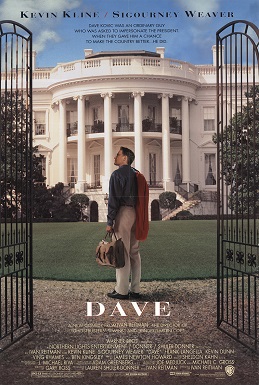
A body double hired just to cover the president's affair; whether body doubles have ever really happened; Dave's temp agency during the five months; the confusing fall-to-fall timeline; the stroke never leaking; the hush payouts are far too low; the balcony security risk; the president and First Lady getting back into the White House; the everyone-gets-a-job program; why Bob didn't just let the VP take over; the First Lady turning around too quickly
In the discussion (10)
- A counterpoint argues there is no hole, the movie is perfect and the second best ever made; nit number one is that they found a body double so the president could carry on with a staffer when he could have done that anyway, since he comes in and out of her office multiple times.
- On body doubles generally: a host thinks it has definitely happened in American history, before the internet or even the cable news era, recalling the Melania body double theory; others accept it may have happened for a diversion when someone was sick but never to this extent, and even Nixon's distinctive face would be hard to replicate.
- What happened to Dave's temp agency during the five months he was president? Faith Prince was crushing it on the phones, and he had called to say he met a Polynesian gal and was going to Hawaii to get married, with 'she was amnesian' one of the stickiest lines in the movie; a host asks at what point anyone would wonder if they disappeared from the Ringer for five months, with a joke that Chris Connelly replaced Dave at the agency.
- The timeline is confusing: it is fall when the movie starts and fall when it ends, yet the closing voiceover says the real president was in a coma for five months before he passed away, left intentionally ambiguous; and a lot of people knew about Mitchell's stroke coma, yet it never leaked and there were no rumors.
- The payouts are extremely low, 50K, 50K, 100K and one doctor asking to head the CDC, as learned in the Alan and Bob Alexander conversation; the president having a stroke on top of his secretary would be a 5 million dollar National Enquirer scoop and the biggest story in the history of American politics, so you always need to ask for more.
- Dave wandering the balcony as President Mitchell, looking out at the monuments, seems like a security concern with a sniper a mile away in some hotel; another host counters that roof and air rights around the White House are locked down and that on the factual television show Scandal the Truman Balcony is used constantly; the nit is waved off as not the biggest concern in a movie where a lookalike becomes president, and listeners are told to email.
- The president and First Lady leave the White House and are simply let back in at the front gate, which is more unrealistic than leaving, since the guard can't know it's really them, and it certainly isn't him; bad security.
- President Mitchell's jobs program, everyone who wants one gets a job, the Oprah plan with a direct comparison to FTR (as transcribed), is probably the most unrealistic part, since a real president saying that would be destroyed; the press laughs and is then won over by the 'look on somebody's face the day they finally get a job' speech, which is played, but Dave runs a temp agency and nobody sings from the rafters about a temp job, though the speech is moving and good acting.
- Why wouldn't Bob just let the VP take over and bulldoze him? Because the boy scout might not keep him on as chief of staff; the random-temp-agency-stooge plan isn't really thought out, Bob just sees an opportunity after an unforeseen stroke, it's a bad plan, and Vice President Nance is a good and decent public servant who wouldn't suffer a devious fool like Bob Alexander in his administration.
- Parked for nitpicks during the research block: the Sigourney Weaver character still turns around pretty quickly, one sandwich and she wants to keep the coup going, though a host defends it as falling for the sweet, decent version of the person you first loved who looks exactly like him; the real objection is less the attraction than her signing on to the illegal operation and pushing major legislation, while others point to the balanced budget, Ted Bundy's death-row romance, the shower, and how weird it would be to see a spouse of 30 years suddenly do a magic trick.
Apex Mountain
No affirmative selection
In the discussion (5)
- Kevin Kline is debated: apex is meant to be objective, when he had the most power or success, so A Fish Called Wanda is possible but he arguably has more power coming off this; another host puts it at Grand Canyon, five years after the Oscar and not so far removed from it; one host votes yes for Kline and tells the other two they vote no.
- Grand Canyon tangent: a movie about somebody who made a wrong turn leaving a Laker game, which is a host's life every day driving home on the 101 and plays on every fear of a detour leaving the Staples Center.
- Frank Langella, one host's actorly god, has been a lot of different guys: a hit Dracula in the 70s, the star of Mel Brooks' first movie The Twelve Chairs, really good on the Showtime show Kidding, and his falling for Whoopi Goldberg is in the running for weirdest celebrity couple of the last 30 years, with Eddie called a great movie.
- A host goes yes for Langella as his signature performance because he dials it up, having asked Ivan Reitman whether to scale back and been told to go for it, bulging his eyes at the window like a maniac while Dave balances the budget; another agrees it's his most fun performance but doubts it's his apex, and the group settles that Dracula was probably his apex.
- Nobody else in the movie qualifies: Sigourney had peaked, and Kevin Dunn is a maybe who is coming up next.


