
Stats
- Episodes featuring their films
- 12
- Movies in this archive
- 16
Rewatchables episodes featuring Tom Hanks’s films
Forrest Gump
1994 film
Bill Simmons · Chris Ryan · Sean Fennessey · Mallory Rubin
Aired February 13, 2024
Sleepless in Seattle
1993 film
Bill Simmons · Juliet Litman · Amanda Dobbins
Aired February 14, 2023


Mentioned in discussions
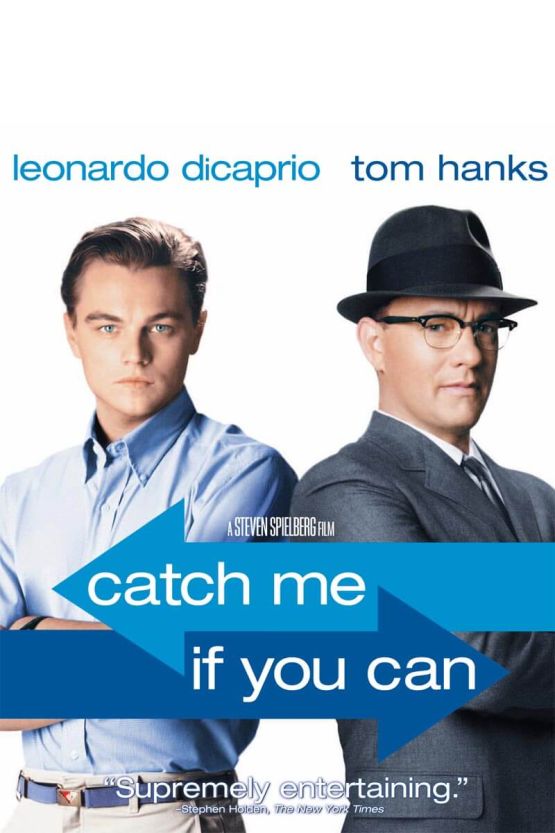

Probably Unanswerable Questions
Bar exam; airplane-toilet escape; piloting; check forgery; accent
In the discussion (2)
- The bar-exam story and airplane-toilet escape are questioned, with the latter reportedly disproved by research; whether Frank ever piloted a plane also prompts inquiry. — Bill Simmons
- The apparent ease of check forgery raises the question of why more people did it, answered partly by the stigma of being caught; Hanks's accent remains unexplained.

Is This Movie Better With…?
Kathryn Hahn as Brenda; Wayne Jenkins as pilot or Carl
In the discussion (2)
- One or two seasons of prestige television is the preferred remake format. — Bill Simmons
- Kathryn Hahn replacing Adams and Wayne Jenkins as the first pilot are better-with choices, while another speaker imagines Jenkins as Hanks at the French arrest.

Apex Mountain
No definite affirmative choice
In the discussion (10)
- Spielberg, DiCaprio and Hanks are rejected for Apex here. — Bill Simmons
- Titanic's enormous freedom and leverage make it DiCaprio's accepted peak, despite a Django preference. — Bill Simmons
- The Father of the Bride house retains its peak in Father of the Bride. — Bill Simmons
- Con-man movies peak with The Sting rather than Catch Me. — Bill Simmons
- Walken is rejected for Apex here; The Deer Hunter, more-cowbell fame and the 1993–94 SNL/True Romance/Pulp Fiction period are alternatives, with Annie Hall also a favorite performance. — Bill Simmons
- Walken's Pulp Fiction and True Romance scenes continue the favorite-performance discussion. — Bill Simmons
- Joe Garagiola's peak is placed at playing or broadcasting a World Series rather than here. — Chris Ryan
- Pan Am receives tentative favorable Apex discussion but no firm resolution. — Bill Simmons
- Goldfinger is preferred as the Aston Martin's peak. — Bill Simmons
- The Aston Martin reportedly came from a Huntington Station dealership and a private owner because the specific car was difficult to find; its very high value is discussed as a reported estimate. — Bill Simmons
Recasting Couch
Chalamet as Frank; DiCaprio or Sterling K. Brown as Carl
In the discussion (1)
- Modern recasting favors Chalamet as Frank and DiCaprio as Carl; Zendaya is joked about as Hanks before the DiCaprio suggestion, and Sterling K. Brown is another Carl option. — Bill Simmons
Casting What-Ifs
Gandolfini as Carl; Depp or Hoffman as Frank; Harris and Sevigny; alternative directors
In the discussion (8)
- James Gandolfini, reportedly once locked in as Hanratty, is preferred to Hanks; production delays and Sopranos scheduling lost the casting window. — Chris Ryan
- Fincher reportedly departed the project for Panic Room. — Bill Simmons
- Verbinski was reportedly attached with Ed Harris as the father and Chloë Sevigny as Brenda. — Bill Simmons
- Verbinski reportedly left after Gangs of New York ran long.
- Cameron Crowe reportedly considered directing; the panel imagines a different but potentially workable film.
- Gandolfini's menace, fractured vulnerability and believable exhaustion would improve Carl; regret over this lost role and The Night Of accompanies praise for Killing Them Softly, The Mexican and Crimson Tide. — Chris Ryan
- Spielberg reportedly considered Depp as Frank, with uncertainty about the report; the panel imagines a dashing performance unlike much of Depp's stranger work. — Bill Simmons
- Hoffman's brief involvement in early development is doubted as casting, though fast-talking con artistry could fit; the real Frank's reportedly older appearance is discussed with a caveat about disputed history.

In the discussion (22)
- The first-great-DiCaprio-performance hot take argues that this film depends more fully on him than Titanic or Romeo + Juliet; This Boy's Life is offered as an earlier exception. — Sean Fennessey
- Hanks's greatest-actor claim is questioned through weak accents, while his extraordinary movie-star run, popularity and success are defended; Cruise and Denzel are personal alternatives. — Bill Simmons
- Accent objections name Elvis, Charlie Wilson's War, The Post, Captain Phillips, The Terminal and Cloud Atlas, with disagreement over Captain Phillips. — Bill Simmons
- Carl's composite identity makes the accent unnecessary; the performance is placed low in Hanks's career despite affection for his presence. — Bill Simmons
- Hanks's two Oscars and serious films are weighed against Cruise's cultural force and comeback; Forrest Gump's standing draws disagreement. — Sean Fennessey
- Hanks's likability and storytelling are distinguished from greatest-actor status; Cruise's potential in Big or Cast Away is debated, while Greyhound illustrates a sturdy role Hanks handles well. — Sean Fennessey
- Cruise's consistent charismatic action lane is contrasted with Hanks's risky character work; hypothetical swaps include Philadelphia, Forrest Gump, Big, Mission: Impossible, Days of Thunder, Edge of Tomorrow, Minority Report, Taken, Eyes Wide Shut and A Few Good Men, with disagreement over equivalence.
- Hanks is defended as the more accomplished actor while Cruise's longevity and Denzel's comparable stature complicate the comparison. — Bill Simmons
- Hanks's post-Catch Me filmography is enumerated: The Ladykillers, The Terminal, The Polar Express, The Da Vinci Code, Charlie Wilson's War, Angels & Demons, Larry Crowne, Extremely Loud & Incredibly Close, Cloud Atlas, Captain Phillips, Saving Mr. Banks, Bridge of Spies, A Hologram for the King, Sully, Inferno, The Circle, The Post, Greyhound, A Beautiful Day in the Neighborhood, News of the World, Finch and Elvis. Cloud Atlas and the later dad-film run draw qualified defense. — Sean Fennessey
- A Man Called Otto is acknowledged as a hit and praised by a family member, while another speaker calls it only okay and a close Scandinavian remake. — Sean Fennessey
- Cruise's commercially bigger career is distinguished from Hanks's better career; comparing their 1988–2001 peaks prompts suggested Oscars for Hanks in Cast Away and Cruise in Jerry Maguire and Magnolia.
- Denzel's paycheck films, including The Equalizer, Déjà Vu and The Taking of Pelham 123, are considered more entertaining; Hanks's self-imposed Jimmy Stewart image may constrain his roles.
- Cruise losing for Magnolia to Caine in The Cider House Rules and for Jerry Maguire to Rush in Shine is challenged; Jude Law's Ripley performance is admired but placed below Cruise's Magnolia work. — Bill Simmons
- Hanks's consecutive Philadelphia and Forrest Gump Oscars strengthen his case; Denzel's Glory and Training Day wins are recalled with Malcolm X considered another deserved award. — Sean Fennessey
- Cruise's 2005-onward filmography is enumerated: War of the Worlds, Mission: Impossible III, Lions for Lambs, Tropic Thunder, Valkyrie, Knight and Day, Ghost Protocol, Rock of Ages, Jack Reacher, Oblivion, Edge of Tomorrow, Rogue Nation, Never Go Back, The Mummy, American Made, Fallout and Maverick; several weak films temper the franchise-success defense. — Bill Simmons
- Hanks's willingness to experiment is defended against Cruise's safe action lane, while Cruise's ongoing audience appeal and perceived rescue of theatrical movies are counterarguments; longevity versus peak quality is compared with basketball greatness. — Bill Simmons
- Cruise's 1990s-to-Minority Report run is compared with Hanks's peak, with The Others explicitly corrected as only an executive-producing credit; Toy Story is considered a decisive Hanks asset. — Chris Ryan
- Cruise's film library is the preferred desert-island entertainment choice for one speaker, while De Niro is called the best actor of that speaker's lifetime; Daniel Day-Lewis's great performances are distinguished from rewatchability. — Bill Simmons
- Weak later films and Hanks's lack of a Michael Mann collaboration enter the debate; both stars may be trapped by personas, but Cruise's stunts are considered more entertaining than Hanks's accents. — Bill Simmons
- The proposed top tier includes Cruise, Hanks and Denzel, before Harrison Ford's placement is debated. — Bill Simmons
- Ford's capacity for morally compromised sexuality is contrasted with Cruise's usual innocence; Hanks is urged to try a direct villain role without hiding behind makeup and accents. — Bill Simmons
- The industry's shift away from movie stars is offered as context for older stars' weaker later work; DiCaprio's future is compared with Nicholson's transition, including disagreement over Wolf and Hoffa. — Sean Fennessey

The Butch’s Girlfriend Award for the Weakest Link in the Film
Hanks’s accent and broad comedy
In the discussion (1)
- Hanks's accent and broad comic behavior are the weak link; a possible Dragnet homage explains but does not necessarily justify the performance.

The Great Shot Gordo Award for Most Cinematic Shot
French arrest setting; first Christmas Eve phone call
In the discussion (2)
- The French arrest setting is also one cinematic-shot choice. — Bill Simmons
- Hanks's first Christmas Eve call is another shot choice, contrasting cold blue-gray surroundings with a warm lamp to express how much the case means to him. — Chris Ryan

In the discussion (1)
- The final winner discussion explicitly reports two Ryan choices and affirms them; the dissent weighs Hanks or Ephron, then argues Ephron's directing success established her genre-defining public stature. Ryan's three-film run remains the majority case. — Bill Simmons
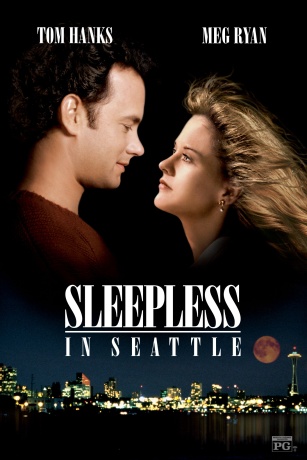
Apex Mountain
Seattle; Meg Ryan; Nora Ephron (director); Rosie O’Donnell (film career); houseboats
In the discussion (11)
- Hanks is judged one year short of his Apex, with Forrest Gump the choice and this film helping establish it. — Bill Simmons
- Seattle in 1993 receives an affirmative Apex choice for its cultural prominence. — Bill Simmons
- Ryan receives unanimous affirmative Apex support, cementing her bankability and first-choice status. — Bill Simmons
- Ephron receives a qualified affirmative Apex choice as a director, with When Harry Met Sally the breakthrough and this film enabling subsequent work. — Bill Simmons
- Radio-advice shows are rejected as an Apex choice. — Bill Simmons
- Brooks Robinson is debated between baseball achievements and this film's cultural recognition; no clear final Apex selection emerges. — Bill Simmons
- O'Donnell receives an affirmative film-career Apex; her talk show is an alternative broader career peak, with the movie career seen as enabling it. — Bill Simmons
- The Empire State Building is rejected as a specific film Apex because its enduring existence is the achievement.
- Tiramisu is rejected as an Apex choice, with a food-category joke offered instead. — Amanda Dobbins
- Houseboats receive qualified affirmative Apex support because this is the houseboat people immediately picture.
- Characters named Clarice are rejected as an Apex choice despite a current run of the name.
Half-Assed Internet Research
Drafts; casting changes; soundtrack; box office; Oscars; radio caller; cut Posey; shared door
In the discussion (12)
- An assertion that Ephron divorced three times is corrected to three marriages, with the last marriage lasting until her death. — Bill Simmons
- Jeff Arch reportedly developed a modern An Affair to Remember premise; subsequent drafts involved Ephron, and Delia Ephron reportedly supplied Hoffmann's abbreviations. — Bill Simmons
- Reported research gives two Oscar nominations, original screenplay and original song, a $21 million budget and $127.8 million gross; an initial $27.8 million figure is explicitly corrected. — Bill Simmons
- Hanks reportedly insisted Jonah initiate the call so Sam would not seem too pathetic; the change is endorsed as a strong story judgment. — Bill Simmons
- The unusually extensive Jeff Arch Wikipedia and IMDb material prompts speculation about self-promotion, explicitly not proof that he edited it. — Bill Simmons
- Quoted Arch comments dispute how much Ephron improved or saved the script and claim several scenes survived close to his first draft. — Bill Simmons
- Arch reportedly placed Sam in a houseboat after seeing a Seattle home on This Old House. — Bill Simmons
- Ephron reportedly wanted O'Donnell to supply the scene-stealing comic relief Goldberg provided in Ghost, judged successful. — Bill Simmons
- Previously covered research includes rejected drafts, Ephron's precise dialogue and Hanks shaping Sam; Ephron reportedly voiced the disappointed-in-Denver caller. — Bill Simmons
- Posey was reportedly cut, later appearing in You've Got Mail; she is imagined as the babysitter but considered too cool for this film's tone.
- Ephron reportedly shipped the same door between Baltimore and Seattle to visually connect the destined couple. — Bill Simmons
- Wilson reportedly auditioned for the lead and improvised the An Affair to Remember monologue, an unusual exception to Ephron’s precise scripting.

Sequel, Prequel, Limited Series, or All-Black Remake
Inspired-by update; British gender swap with Waller-Bridge
In the discussion (2)
- A direct remake is rejected without Ephron, Hanks and Ryan; an inspired-by version could explore overnight virality and internet research, with You've Got Mail noted as an existing internet-era variation.
- A British remake is proposed with Waller-Bridge writing/directing, then playing a gender-swapped Sam opposite Teller as Annie; the stalking and Seattle trip would need revision.
Films in the archive

A League of Their Own
1992



Apollo 13
1995

Bachelor Party
1984


Big
1988
Captain Phillips
2013

Cast Away
2000
Catch Me If You Can
2002

Forrest Gump
1994
Philadelphia
1993
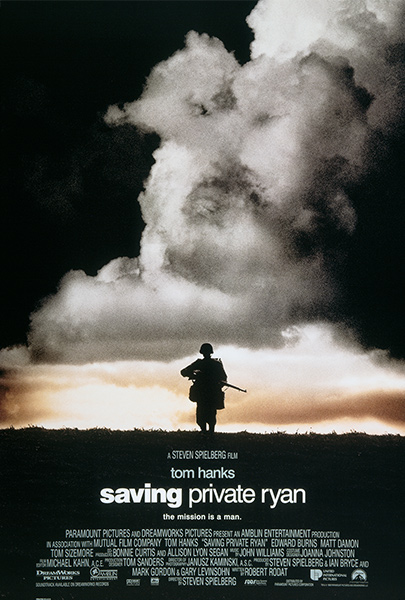
Saving Private Ryan
1998
Sleepless in Seattle
1993

Splash
1984