
Stats
- Episodes featuring their films
- 8
- Movies in this archive
- 7
Rewatchables episodes featuring David Fincher’s films
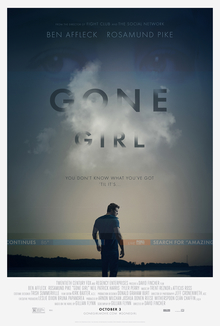
Gone Girl
2014 film
Bill Simmons · Shea Serrano · Mallory Rubin · Sean Fennessey
Aired August 13, 2019
Mentioned in discussions

Who Won the Movie?
David Fincher, shared with Rosamund Pike
In the discussion (3)
- The initial answers are Rosamund, Fincher, as one host always answers for Fincher movies, and Bleaker the Cat (as transcribed); the Fincher case is that this is his most successful movie ever, in 2014 when movies were no longer successful at the box office, after which he dropped the mic, went to television and got all the money in the world from Netflix.
- Fincher is obsessed with Alfred Hitchcock, speaking at length about studying his films in the documentary about the Hitchcock book (transcribed 'Hitchcock True Foe'), and this is a Hitchcock movie with more blood, sex and dick: a striking blonde, a scurrilous tall handsome movie actor and a changing sense of whom to trust, his ode to those films.
- The Hitchcock argument convinces another voice; the Rosamund holdout thinks the part was so incredible that four or five actresses would have scored at least fifty points with it, but she is exceptional, so maybe it is a fair win for them and for Bleaker the Cat.
Podcast choices
- Speaker not identified
- Rosamund Pike
- Speaker not identified
- David Fincher
- Speaker not identified
- David Fincher

Sequel, Prequel, Limited Series, or All-Black Remake
A ten-episode Netflix series, structured as two five-episode seasons
In the discussion (1)
- Could this be a ten-episode Netflix show: yes, but it would have to be two five-episode seasons; asked whether they would rather Fincher made this or Mindhunter (transcribed 'Manhunter'), the view is that Mindhunter is the better idea for a series while Gone Girl is the better idea for a movie and works great as one.

Apex Mountain
Rosamund Pike; Cape Girardeau, Missouri
In the discussion (3)
- Rosamund Pike is the definition of Apex Mountain here.
- Fincher's own apex was decided to be Social Network, the best movie of the decade for one host though the answer changes with every rewatch, which another disputes, with Benjamin Button the one nobody understands because it is not perverted; this was emphatically not Neil Patrick Harris's apex because he sucked in it.
- Mountain Dew might be at its apex: amid the junk food of the makeover montage, mini donuts, a hamburger, Coke, Cheetos and Fritos, the camera lingers on the Dew poured into a glass so the spit is visible with the bottle still in frame, and Amy's satisfied sip signals she will let no slight go unpunished; Cape Girardeau (transcribed 'Cape Gerardo'), Missouri, is definitely at its apex.

Half-Assed Internet Research
Affleck studied men accused of killing their wives, especially Scott Peterson; Affleck lost a bet that Fincher would not notice a tiny lens change; the bar is now a real restaurant in Cape Girardeau, Missouri; Affleck's first on-screen full frontal, really a side view; 500 hours shot over a 100-day shoot; Pike and Neil Patrick Harris rehearsed the sex scene alone for two hours; Pike gained and lost 13 pounds three times; take 18 of the head-against-the-wall scene left Pike seeing stars; Gillian Flynn felt she had 'killed feminism' after the gender criticism; Reese Witherspoon held the rights before Fincher moved on
In the discussion (7)
- Affleck researched several men accused and convicted of killing their wives, paying particular attention to Scott Peterson, awkward reading for anyone married to him; on set he changed a camera lens setting an almost indiscernible amount and bet a crew member that Fincher would not notice, and lost when Fincher brought it up.
- Asked whom Fincher identifies with more, the answer is Amy; asked about Gillian Flynn, the answer is Nick, offered as exactly why the movie works: there is a Nick and there is an Amy.
- The bar is now a real restaurant exactly where it was filmed in Cape Girardeau (transcribed 'Cape Gerardale'), Missouri; this was Affleck's first full frontal on screen, which Fincher wanted to feel like a European movie, warts and all, though the hosts quibble that it is side-frontal or side-back, compare it to a Batman comic given his Batman prep, and recall Sidedick.com as one of five finalist names for the Ringer.
- Fincher shot an allegedly incredible 500 hours of material over the 100-day shoot, five hours a day; by Rosamund Pike's account she and Neil Patrick Harris spent two hours alone on set rehearsing their sex scene at Fincher's request, with an unverified report that she practiced with a children's doll (transcribed 'Adora the Explorer'); she gained and lost 13 pounds three times, hamburgers and malts to gain it, four hours a day with a boxer and five miles of running to lose it.
- Around take 18 of Nick bashing her head against the wall, Pike literally saw stars and felt she had a minor concussion; the hosts were 100 percent shocked by that late moment and read it as purposeful: Nick is not off the hook, he is a bad guy rather than a good one, they will stay together forever with something toxic between them, and you should not feel pure sympathy for him.
- Flynn reportedly admitted the gender-related critical response affected her: she hovered under her covers saying she had killed feminism and had not meant to, then got over it.
- Flagged early as half-assed internet research: Reese Witherspoon obtained the film rights, decided to produce and play Amy, then after meeting Fincher somehow let him talk her out of the part rather than insisting on it.

What’s Aged the Worst?
The shock value of the big twist, which cannot be recaptured on rewatch; the internet outrage reaction to the movie; the brutality of the Desi murder; Neil Patrick Harris's performance; Wesley Morris's negative review; Bill Simmons saying Neil Patrick Harris was bad
In the discussion (8)
- The big twist has aged worst in one sense: in the theater, where a guy audibly went 'oh, shit', it was the best part if you had not read the book, and that shock cannot be recaptured on a tenth viewing, though you appreciate the details in a new way, like rereading Goblet of Fire knowing Voldemort rises from the cauldron, which is the whole point of the podcast; it belongs in both categories.
- The internet reacting to the movie has aged badly: one of the first cases of people pulling other things into a piece of art and arguing outrage over it, as now with the new Tarantino movie, when to one host it is a movie about a crazy lady who framed her husband and came back; another counters that using criticism to understand society through art is reasonable and happens on this podcast, and it was the 'how dare you, this is irresponsible' tone that grated.
- Gillian Flynn has engaged the criticism of the story's sexual politics and of Amy, as she did when the book came out; her boiled-down response is that women can be murderous and violent too, anyone can be a psycho, an inversion the hosts find compelling; neither Nick nor Amy is a good person, and Nick's cheating does not entitle her to frame him, kill Desi and frame him for rape, or bring a child into that household, the baby being perhaps the most fucked-up thing she does.
- The Desi murder is brutal and has aged worst for one host from a rewatchability standpoint; in the book she drugs him with sleeping pills and kills him off the page with a knife grabbed in the kitchen rather than a box cutter, less premeditated and violent, and Patrick Fugit's line asking how she got her hands on a box cutter is relished.
- Neil Patrick Harris sucks, capital S, for one host: a sitcom actor with no chemistry, out-acted in his scenes and not a Fincher actor, with the other How I Met Your Mother guy Josh Radner (as transcribed), Zach Braff or Tobey Maguire suggested instead; others argue the lack of chemistry is the point, that he evinces weak, privileged, waspy cornball well, and that Amy is supposed to outclass him.
- Wesley Morris's Grantland review is nominated, with one host eager to make fun of him: brilliant, sophisticated criticism nominated for a National Magazine Award, with a bad opinion inside it, that the movie is not good; another plans to argue with him for an hour at Rembrandt's wedding after three drinks.
- A late addition, written in two sets of notes: what has aged worst is Bill Simmons saying that Neil Patrick Harris was bad.
- Earlier, during the scenes, the Desi murder was already called too unpleasant to enjoy, grotesque despite being exceptionally well done.

What’s Aged the Best?
Nick's unshaven video-game swoon; Carrie Coon as the twin sister; the vigil selfie turning on Nick; the Nancy Grace character Ellen Abbott; the detective team of Kim Dickens and Patrick Fugit; the Mastermind board game and the other games; the Reznor and Ross spa-dread score; the meticulousness of Amy's plan; the side dick; Rosamund Pike's performance; the Twincest; Affleck's Mets hat; every small role perfectly cast; the twist
In the discussion (11)
- Affleck's unshaven video-game swoon has aged best for one host, a true-to-life moment that probably happened to him around 2006, bummed out in his living room with a laptop; Carrie Coon, in her first role, is believable as his twin, though ten years younger, and went on to star in The Leftovers.
- The first gathering where the lady takes a selfie with them and then turns on them is really well done and has surely happened to Ben Affleck in real life; the Nancy Grace character Ellen Abbott and the detective team of Kim Dickens and grown-up Almost Famous star Patrick Fugit also hold up.
- Fincher reportedly told press that the Mastermind board game Nick gives his sister was a red herring thrown in for his own amusement at critics scribbling it down; one host does not believe that for a second, arguing the games shown, Let's Make a Deal as they make their deal, Life with its meta line and a Ouija board as her talking from the dead, are all on purpose, and Mastermind is a game about entrapment and being smarter than your opponent; a confession of cheating at board games follows.
- Fincher briefed Trent Reznor and Atticus Ross (transcribed 'Tannicus') after a spa visit where music meant to relax him felt creepy, wanting passive music that instills dread, and the result feels like a spa where you might get stabbed in the aorta mid-massage; with Social Network it is an all-time two-for-two, Reznor's scores are argued to rival Nine Inch Nails in his legacy, with the ER episode that used Closer floated as his origin, and the Desi murder cue feels like it emanates from inside your chest, the hardest left turn the film takes.
- The meticulousness of the plan has aged well, pouring wine on herself, untucking his shirt and knowing where every security camera is.
- She disputes that: Amy's meticulous nature governs everything with Nick, plotted since she saw him with Andy in the snow replicating the lip wipe and sugar cloud from their own origin story, down to the 'kill self?' calendar entry, whereas the Desi material is purely reactive and instinctual, which is why she thinks the end of the movie does not work; Amy thought Desi would be another puppet, realized she was the prisoner in the dollhouse he built, and her way out is sloppy. — Mallory Rubin
- The counter: she either went to Desi's knowing what she would do or decided once she lost her money, parked as an unanswerable question; Nick's woodshed line in the interview shows her he can keep up with her; anyone with eight weeks could fake a death, but she devised an instant exit without implicating herself, though she had already lost weight, cut and dyed her hair and built up rope marks on her wrists, so twenty-something days had passed.
- One side holds that she got away with it only because the FBI agents should be jailed, not because she did a good job; the other sees an acid-dipped commentary from a female writer on believing women and survivors and the FBI's historical approach to trauma, something fraught and complicated inside an otherwise whirling thriller.
- The side dick has aged best for one host, and nobody mentions that Desi's is visible too when she slides off him; Rosamund Pike's performance as Amy Dunn (as transcribed), which will live forever, is another host's answer to every category; the Twincest reference was followed by years of Twincest on Game of Thrones.
- Affleck putting on a Mets hat in the airport, refusing the Yankees hat Fincher had in his head, has aged fantastically and the fight between them is great; the nitpick is that he should have worn a Cardinals hat given his Cardinals shirt, unless he bought it at the airport.
- Also the musical score, awe-inspiring when it kicks in at Desi's murder; every single small role is perfectly cast, which everyone agrees has aged well; and the twist itself.
Casting What-Ifs
Jon Hamm, slated for Nick until Mad Men's Matthew Weiner would not release him; Tom Cruise and George Clooney weighed for Nick; Reese Witherspoon, who held the rights to play Amy before Fincher talked her out of it; Charlize, Natalie Portman, Emily Blunt, Rooney Mara, Olivia Wilde and Julianne Hough considered for Amy; Emily Ratajkowski cast on Ben Affleck's recommendation
In the discussion (11)
- In the formal casting what-ifs, most having been covered already, the one new item is that Fincher cast Emily Ratajkowski on a recommendation from Ben Affleck, which the hosts find the funniest thing they have heard and worth a shout-out, joking about hiring her as a football writer to cover the NFC.
- Jon Hamm was going to play Nick but Matthew Weiner would not let him out of his contract for the last season of Mad Men, the way The Office accommodated Ed Helms filming The Hangover at night; the part could have ignited Hamm's career as Don Draper in a bad marriage, though whether Hamm would have done the side dick is called the only question that matters.
- The case against Hamm is that the role needs innate likability, and nobody ever simply liked Don Draper even if Hamm is loved in The Town and Baby Driver; the counter is that Nick is supposed to seem rationally likable yet somehow repellent, which Hamm could swing.
- The relationship we have with Hamm is with Don Draper, while with Affleck it is with Affleck the public person; a Hamm version would still have been a good movie, because the film is about marriage, what women and men say they want, stardom and the media, bigger than Fincher's narcissism explanation; another voice thinks Hamm would have been good but loves that Affleck did this at the point of his completed comeback.
- Tom Cruise as Nick Dunn is floated, with one voice calling the idea amazing, and rejected by the rest: he is too short and lacks Affleck's bulk and wide shoulders, you need to believe Nick can keep up with Amy, you need to see his belly exposed when he rolls over, and nobody can picture Cruise sitting down for Battlefield 3; Clooney fifteen years earlier is possible but a little too skinny.
- Reese Witherspoon obtained the film rights intending to produce and play Amy, met Fincher and somehow gave the part up; the hosts cannot picture her riding Neil Patrick Harris covered in blood, finding her too earnest, open and likable to go dead-eyed the way Amy requires.
- Other names reported for Amy: Charlize and Natalie Portman, both of whom would have been interesting though Charlize carries baggage as an actress, Emily Blunt, Rooney Mara whom Fincher had just worked with, Olivia Wilde, and strangest of all Dancing with the Stars' Julianne Hough, who got far down the road before her bid at a serious acting career stalled.
- Fincher wanted an actress with a Faye Dunaway in Chinatown persona, someone who has experienced avenues of pain no one can articulate; he settled on Rosamund Pike because at 35 she could pass for 29 or 40, she was an only child like Amy, and after four or five of her movies he had never got a beat on her, an opacity he found interesting, when the natural move would have been Charlize.
- Fincher has always had an eye for unproven, on-the-cusp talent, Pitt in Seven, Eisenberg and Rooney Mara in The Social Network, Mahershala Ali and Taraji Henson in Benjamin Button; the hosts expected Pike's career to go somewhere else after her Oscar nomination, and before this her notable role was Jack Reacher, an embarrassing part two years earlier.
- Asked whether baggage with a real celebrity hurts a part like this, the answer is that for Amy you need to be totally confused about the person, the opposite of the Affleck character whom you must root for implicitly, so somebody you have never seen before makes it scarier. — Shea Serrano
- Pike's biggest role until then was Jane Bennett in Pride and Prejudice, the book that turns up in the bookshop where they have sex.
In the discussion (6)
- Fincher, Sorkin, Eisenberg, Garfield and Timberlake are the opening nominees. — Chris Ryan
- The dialogue is described as the hero and architecture of the film, with conversations mirroring its interwoven depositions. — Chris Ryan
- Exposition and quotability sustain rewatchability throughout, leading to the first Sorkin choice. — Chris Ryan
- The screenplay, editing and score work together, supporting a second explicit Sorkin choice. — Sean Fennessey
- A third speaker also chooses Sorkin, while emphasizing how essential Eisenberg is to the movie.
- Eisenberg makes a difficult, unlikable character compelling without resorting to cartoon villainy.
Podcast choices
- Speaker not identified
- Aaron Sorkin
- Speaker not identified
- Aaron Sorkin
- Speaker not identified
- Aaron Sorkin

Sequel, Prequel, Limited Series, or All-Black Remake
The contained film preferred over a modern Netflix or HBO series
In the discussion (3)
- The movie is used as an example of a studio drama that might now become a streaming series.
- The panel prefers the contained movie form. — Chris Ryan
- Fincher’s move toward television is discussed. — Sean Fennessey
Apex Mountain
Jesse Eisenberg: yes; Zuckerberg’s likability: around this film or 2015
In the discussion (9)
- Jesse Eisenberg is judged at his apex. — Bill Simmons
- Fincher is rejected by two speakers, who suggest a future peak or prefer Seven; another makes the case for this movie. — Bill Simmons
- Aaron Sorkin is judged below his West Wing apex despite winning an Oscar here.
- Andrew Garfield’s apex remains unresolved.
- Justin Timberlake’s musical and comedy peaks are favored over this film. — Bill Simmons
- Zuckerberg’s likability apex is placed around the film or 2015. — Bill Simmons
- Armie Hammer’s Call Me by Your Name period is proposed as his apex. — Sean Fennessey
- Zodiac is called Fincher’s masterpiece, while Gone Girl is also admired and the difficulty of locating a career dip is discussed. — Chris Ryan
- Fincher reportedly insisted on a forty-one-million-dollar budget despite lower studio counteroffers. — Chris Ryan
Casting What-Ifs
Shia LaBeouf declined Zuckerberg; Jonathan Groff nearly played Sean Parker; Aziz Ansari also auditioned; Eisenberg and Timberlake preferred
In the discussion (6)
- Shia LaBeouf turned down Zuckerberg. — Bill Simmons
- The panel believes Fincher’s take-heavy method would have made LaBeouf a poor fit. — Bill Simmons
- Jonathan Groff nearly played Sean Parker. — Bill Simmons
- Groff’s later Fincher work on Mindhunter is connected to the audition history. — Bill Simmons
- Timberlake’s existing stardom is credited with helping the movie reach a wider audience. — Bill Simmons
- Ansari reportedly auditioned unsuccessfully for the role played by Minghella; the response is that he was not ready at that stage. — Bill Simmons
In the discussion (6)
- The field is framed as basically Downey, Fincher and Gyllenhaal, though Sean's case for Ruffalo is called pretty convincing; a hedge is offered as suitable for a film that gives no easy answer, and artistically Fincher is expected to be remembered for this as his most interesting film to date.
- The case for Downey: he comes into the film and leaves two-thirds of the way through with perhaps one last glimpse, gets no hero moment or coda where filmmakers less concerned with ambiguity would have given him one, goes from liking a tipple or two to being taken over by it, and still has the majority of the quoted lines; the award is given to Downey.
- A dissent is less mesmerized by the Downey performance and goes with Ruffalo, pointing to how the case degraded the people involved, Avery a hotshot at the top and clutching an oxygen tank by the end, and to the scene where Graysmith reintroduces himself to Inspector Toski (as transcribed) after they met at the movie premiere and gets, after a beat, 'I'm sure it was magical', a very dry, unimpressed cop moment.
- Ruffalo never has the 50-home-run seasons of a Downey and never goes for it, which is the hallmark of what makes him mesmerizing and rewards rewatching; Downey's shtick has to some degree aged badly when seen through the filter of Tony Stark, The Judge and Due Date, though there is more gravity and weight here, so recency bias may make it harder for some to slide into the performance.
- Fincher is also named as the winner, for the level of scholarship and depth of understanding of the world on display: despite scenes feeling samey, the narrative geography always locates you relative to the paper; his films are read as wars between filmmaker and actor, less successful when the actors gave up, and it is fascinating to watch him do battle with Affleck in Gone Girl or Eisenberg in Social Network, with Downey and Eisenberg seeming born for these films; Gyllenhaal is paraphrased as saying Downey has fifty ideas in a scene where most actors have five, so take 88 has a new idea just like take three, the 'Jesus Christ on crutches' line was probably improvised, and without Downey the film would be a little flat.
- A joke names Kevin Feige as one more big winner for getting to see two-sevenths of the Avengers on screen together, so the film invents modern television, the MCU and, thanks to Chloe Sevigny, Bloodline.
Podcast choices
- Speaker not identified
- Robert Downey Jr.
- Speaker not identified
- Mark Ruffalo
Films in the archive

Fight Club
1999


Gone Girl
2014
Panic Room
2002

Se7en
1995

The Game
1997
The Social Network
2010

Zodiac
2007