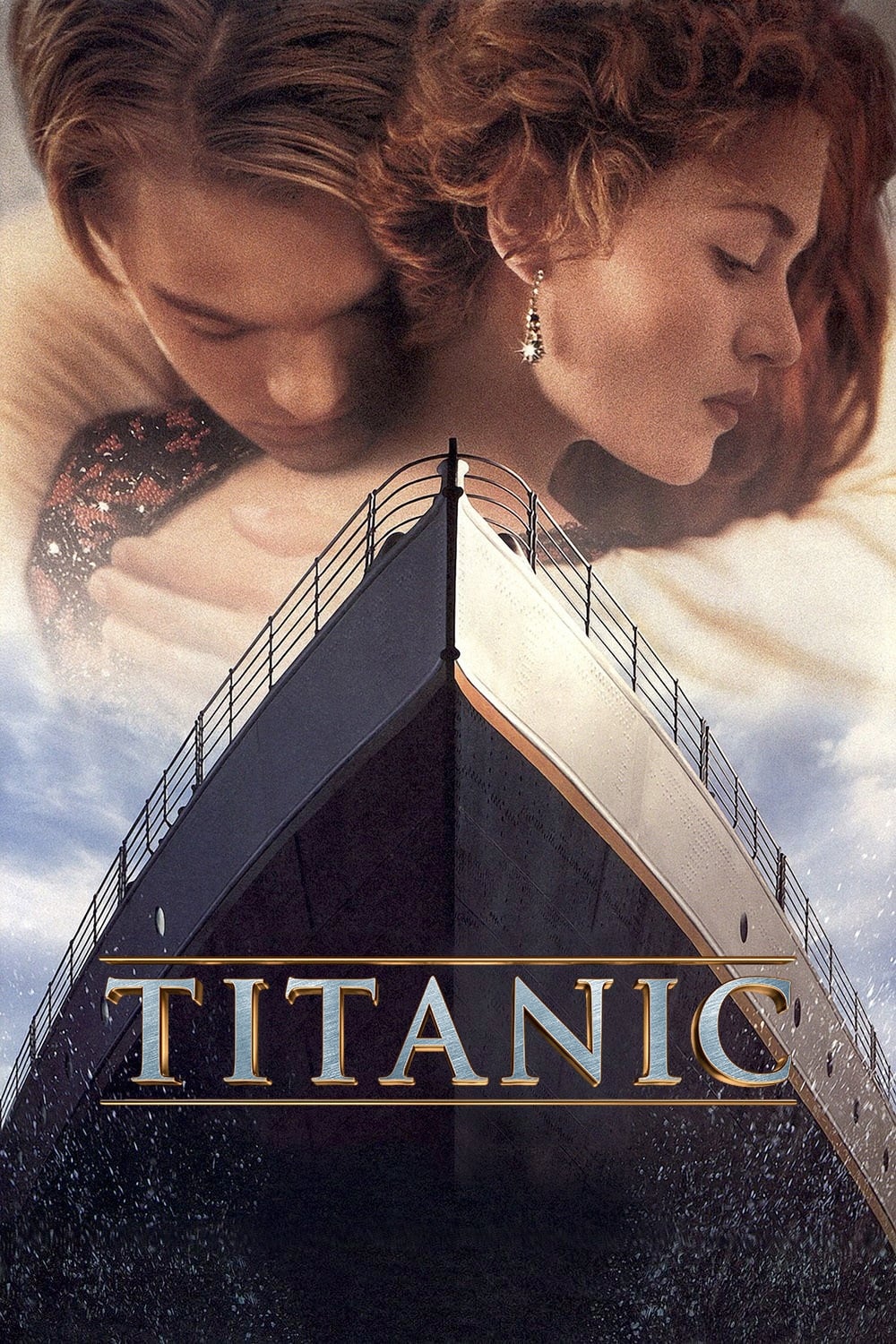
Did Holly Hunter die alone in this movie? She says there's a guy, which one host thinks she made up and others put at two or three dates, since a woman who will not show a man tying his shoes unless he is really tying them would not lie about a relationship; she is successful, beautiful and smart, and the whole institution of marriage is driven by crazy people; leaving the correspondents' dinner is called crazy behavior by one host while the others disagree and say many people are drawn to that energy.
One host holds that she is a little too crazy, cannot sign up for the correspondents'-dinner exit, and would have been really mad if his date left the biggest night of the year in DC before they even went in. — Bill Simmons
The holdout is told this is a weird run after also disliking Troy from Reality Bites, and answers that he liked Troy as a character but would not have liked him or Holly Hunter's character in reality; he is teased as threatened by her and told to put on his suit of armor.
The best movie of the 80s splits into two strands, Die Hard, Aliens, Raiders of the Lost Ark and E.T. versus Broadcast News, Raging Bull and The Color of Money; this movie exemplifies the best of 80s movies with its zippy Bill Conti score, great performances, pitch-perfect writing, a solid two hours and five minutes and stakes that are high without anyone diving off a skyscraper; one host would answer Bull Durham or Aliens on other days but, forced to pick one, says Raiders of the Lost Ark.
Broadcast News is called a better movie than Raiders, but personal taste cannot drive the answer, and media people are as biased toward it as archaeologists would be toward Raiders; the 80s was the video-store decade of watching fifteen movies a hundred times each, Goonies, Ferris Bueller, Aliens, Predator, Lethal Weapon, Die Hard; the decade was weird, with Oscar winners that baffle now, and the first half of Full Metal Jacket is the best movie of the 80s but the second half is not.
The framework used for The Social Network is reapplied: how well made, acted and original the film is, what it meant culturally and whether its meaning changed, and how it aged, all of which Broadcast News passes; the 80s are called the weakest film decade of the last thirty years of the century, behind the 70s and the 90s with its independent boom, full of sequels and canonical films like Tootsie and Gandhi that seem bad now, so a top ten of the 80s is hard to fill with anything but personal favorites or films that dated immediately, because producers took over and sanded off the edges.
Empire's best of the 80s list is read: Raiders, The Empire Strikes Back, Raging Bull, Blade Runner, Back to the Future, Die Hard, Aliens, E.T., Spinal Tap, Evil Dead and The Shining, all big popular movies; Back to the Future is a good candidate that aged nicely and mattered; When Harry Met Sally is a specifically 80s mass-screen sitcom; Broadcast News was cribbed from every year after, in its love triangle, its distinct characters and its dramedy mix; Do the Right Thing is the most culturally significant film of the decade, left out of the conversation.
Hollywood runs a thirty-year cycle of down periods: the 50s studio musicals and melodramas, the 70s boom that producers then monetized, the 80s with Gandhi, Out of Africa and Chariots of Fire winning Best Picture, and now franchises and comic-book movies with The Shape of Water and Green Book winning while Black Panther or Get Out will be remembered; the purpose of the Oscars may be to be wrong in the present tense, since Citizen Kane losing is still meaningful and the right calls, like Gump, are forgotten.
The case for Broadcast News as best of the 80s gains support because every imitation since has gone down in flames, including James L. Brooks's own, each piece having to work like Jenga; Airplane is a dark-horse candidate, though 1980 films like The Shining, Raging Bull and Airplane feel like 70s movies, while Fatal Attraction and Die Hard define the 80s movie; decades start late, the 80s in music running 1983 to 1991 and the 80s in film from Fast Times to Reservoir Dogs, which is why The Silence of the Lambs feels less 90s than The Matrix.
Asked whether it could be a ten-episode Netflix series, the answer is that it has already been made as The Newsroom, a Sorkin show about what if the news were the most important thing in the world; it was heavy-handed, though Broadcast News is heavy-handed too, and Olivia Munn's high-strung producer was hilarious.
The Newsroom is called one of the funniest shows of the last ten years, unintentionally, every episode funnier than the last until it got good at the end, which made it worse; Sorkin, on one host's podcast, said he had a pebble in his shoe writing it and never got an episode right, a line his own characters would say; the reason it should not be a show is that Broadcast News is three people in a room while Newsroom had ten with ABC plots, checking in on Alison Pill and Sam Watterson (as transcribed).
Death Patel (as transcribed) and Chris Messina get laughs just by being named in a wild cast; one host would still watch it every Sunday for twenty years without claiming it taught him anything about being human, the distinction between enjoying and good; it crammed Holly Hunter's character into nine or eleven minutes of Emily Mortimer, and the mistake was making Jeff Daniels, the William Hurt figure, the star rather than the Hunter figure.
The hosts wish more shows were that polarizing, recalling that two of them died on Vinyl Island; Sports Night is the show closest to Broadcast News, more modest with more space; Goodnight Beantown, a Boston show with Bill Bixby and the woman from The Incredible Hulk, did not work.
Albert Brooks phoned James L. Brooks at 3 a.m. after seeing a CNN reporter sweat, creating the sweating scene; Nicholson went unpaid at his own request; the sweating scene took 24 takes; Switching Channels (1988) flopped as a competitor; Brooks and Hurt ambushed Holly Hunter with an ad-libbed cab-ride alternate ending that was spoiled by a crew member
Albert Brooks was watching CNN when a reporter he had never seen before or since began sweating badly; he phoned James L. Brooks at three in the morning to say Aaron had to start sweating, which became the sweating scene, with the makeup lady's 'Jesus' a highlight; Jack Nicholson was not paid for his role at his own request.
James Brooks made them do 24 takes of that scene, which he does not usually do, because he thought it was the key part of the movie and wanted it perfect; Switching Channels, made in 1988 with Kathleen Turner and Burt Reynolds, was almost a competitor, a critical and box-office failure that started a Kathleen Turner slide.
The alternate ending is on YouTube; Brooks told Premiere he was open to who Jane ends up with, and during the cab scene he and William Hurt planned to surprise Holly Hunter by having Hurt jump in and ad-lib for two minutes, trusting she would not break character, but a crew member gave it away by saying 'Bill' just before the roll; Hurt and Hunter later felt the movie should have ended that way, while Brooks himself felt it was not right.
Flagged earlier as stepping on internet research: the Holly Hunter character is based on a woman Brooks met in 1984 at the conventions who was dating two men who worked in TV at the same time; he never said who, and the hosts imagine a Deep Throat reveal after they die.
The theme of an unkillable media institution starting to die; Aaron as a proxy for the internet and his devil theory; Albert Brooks's heart-clutch on the correspondents' dinner balcony; Nicholson's reaction to the salary line; Joan Cusack's 'except for socially' line; the Holly Hunter character and the too-smart/not-smart dynamic of all three leads; the news as a daily appointment rather than a constant presence; Albert Brooks's lookalike son; the kaleidoscope gift; Lois Childs's arc (as transcribed)
The theme of an unkillable media institution starting to die has held up, lived through twice since; it is called the central problem of working in media, and it surprises one host that Brooks wanted to write a romance but also to grapple with a problem that still exists; Aaron is read as a proxy for whatever the internet would become ten years later, angry and clever.
Aaron's devil theory, the devil as someone we would not recognize who lowers our standards piece by piece, is a solid theory; Brooks's acting when he looks up at Jane waiting on the balcony at the correspondents' dinner and does the mock fall-back and heart clutch; Nicholson stopping and turning when told he could knock a million off his salary; and Joan Cusack's 'except for socially, you're my role model', played as a clip.
The Holly Hunter character in general has held up because anyone who has worked in media has met that person, from either sex, the one you want to tell to calm down and have a drink; all three characters hold up through the idea of the guy who is too smart to succeed and the guy who succeeds because he is not that smart, which happens over and over in life.
The sudden instability of media institutions is both what aged best and what aged worst; the real change is the centrality of news in life as a daily rather than constant presence: the staff gathered around the television for the Rockwell soldier-coming-home segment recalls a family oriented around the national news, local news then Dan Rather or Peter Jennings at 6:30, even as the movie treats Entertainment Tonight as something ominous; the news was something you waited for, which set the day's agenda, not a constant nattering in your ear. — Chris Ryan
The Libya special report, where everyone has to be pulled in from a dinner party, feels quaint now that network news always has someone ready; the hosts compare family news habits, Peter Jennings and ABC for one, Dan Rather for another, and Live at Five with Sue Simmons and Chuck Scarborough in Connecticut, a polished show from which one host learned a lot, better than the Boston versions.
Smaller items: how much Albert Brooks's son at the end looks like him; a kaleidoscope as the gift for a kid you no longer know; and Lois Childs (as transcribed), the anchor Hurt has the affair with and the lead woman in Moonraker, whose arc has her hook up with him and turn up in Alaska the next time we see her, after the great conversation asking Jane whether they are together.
Asked whether the film captures the 80s popularization of therapy, people articulating what they want in a way unlike the whiskey-soaked, cutthroat world of Network, the answer is that Brooks's humanizing writing makes you forget these are successful, erudite, upper-class people at the height of their industry, for whom Portland is a huge step down from Washington; they communicate in sophisticated ways because they are sophisticated people, which is easy to lose sight of when they seem like basket cases inside the workplace.
In eight years at newspapers and magazines, one participant found a large share of the married people in the office were married to each other, because when your identity is tied to your job there are things you can only talk about with people who do what you do; the scene where a third person asks whether anything is happening before asking someone out rings true, though now you are not really supposed to date anyone you work with.
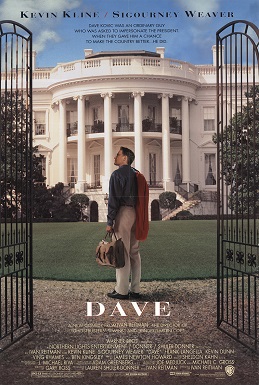
Posed as a new category, could this be remade as a 10-episode Netflix series: one host is 1,000% yes and would be in on the series, but the question is how similar a 2019-20 version would be, an optimistic comedy or the story of a coup and a cover-up.
Now you would make it as Trump replaced by a body double who becomes a much better president, which could be pretty interesting, though that might inadvertently humanize him and his policies; the underlying issue with the movie, if you think too hard, is the idea that all you need is a nice guy and the country will be fine, which one host still believes.
The Frank Capra comparison is defended: the movie is about ideas, about using public office for good and decency once ego, money, vanity and sex are disentangled, the kind of show Aaron Sorkin tried to make with The West Wing as a true believer whose dad went to school on the GI Bill; but Sorkin's president is a Nobel-winning economist accused of being an elitist, and the implication here that anyone can be president hits the wrong way today and may already have led down rocky paths, though Dave would disagree.
Polled yes or no: one host says no, having answered no virtually every time on this category because we got Dave the movie and a series would just be very different and a bummer; another says it can be done and is ready for another president series in general, making it two in favor against one.
The Oval Office set was reused more than 25 times; Bill Clinton gave Gary Ross an autographed script and a photo with a Dave mug; Barack Obama told Kevin Kline he loves Dave; a musical opened in 2018; Nelson Rockefeller's 1979 death with his assistant; Woodrow Wilson's 1919 stroke and his wife running the presidency; the impersonator scene was added late in the shoot; Ivan Reitman's wife and son Jason play Vice President Nance's family
The film's Oval Office set was reused more than 25 times, including for The Pelican Brief, Hot Shots Part Deux and Absolute Power in the 90s, which makes sense since everyone has seen a million pictures of the Oval Office; a nerdy aside notes the residence here is like no other White House residence on film, with a president's bedroom totally different from the identical Sorkin bedroom in The American President and The West Wing, this one quite large and full of red velvet with the bed really far from the other furniture; Hot Shots Part Deux will never get a Rewatchables.
Bill Clinton surely approved of a film that gives hope and optimism to the presidency: he gave Ross a framed autographed script calling it a funny, often accurate lampooning of politics, plus a picture of himself holding a Dave mug, though a host adds you can't really trust Clinton saying he likes something.
Barack Obama once told Kline he loves Dave and watches it when depressed because it makes the job look fun and easy; the hosts debate whether the line about the current president rooting for Mitchell was Obama's or Kline's, a punctuation issue, and find it weird for Obama, who did that job for eight years, to care what a movie says about it.
A musical based on the movie opened in 2018, and President Mitchell's stroke apparently really happened: Nelson Rockefeller, the former vice president and New York governor, died in 1979 at 70 during an encounter with his 22-year-old assistant, though the hosts think he probably wasn't in office at the time and nobody found a Rockefeller lookalike to bring out in front of the people of New York.
Woodrow Wilson, two years into his second term in 1919, had a stroke that left him semi-paralyzed, partially blind and mentally incapacitated, and since the 25th Amendment had not been ratified his wife took the presidency for the last two years; a century later it is still not known how bad it was, and a host feels like being in history class with Dr. Bill.
The Wilson story is pitched as the greatest hundred-years-ago Hulu series, the First Lady in 1919 taking things over, with a joke about ending the pod to open Final Draft.
The scene where Dave and the First Lady are presidential impersonators was added late in the shoot because Reitman didn't buy that those two would click and felt they needed something leading to that scene; the hosts agree you can't go from 'I hate you' to 'you're a stranger' to 'hey'.
Ivan Reitman's wife and son play the wife and son of Vice President Nance as he is sworn in at the end; the son is Jason Reitman, who became a famous director, so look for him in the Nance scene.
One host calls it a no-brainer: Ted Levine, Brian's boss, who played Buffalo Bill in Silence of the Lambs and was in Heat; the other had never recognized him and is incredulous, so a Buffalo Bill line is imitated to prove it, with the explanation that he simply carries more weight here.
The other host votes Hector, whose actor's real name is given as Noel (as transcribed) with the surname garbled; the actor looks and acts exactly the same in every role, all of them Training Day type parts set in the same area, so it is probably the same guy; the joke is that Michael Pena plays Hector, Vince and anyone else you ask about in 2019.
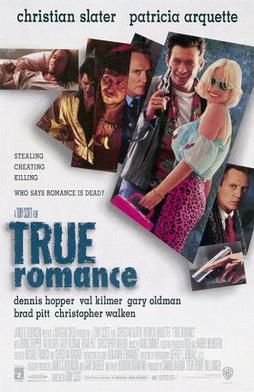
Smoking in movie theaters and at the payphone is the first offering; for the most part the film could come out right now, but Gandolfini beating Patricia Arquette for ten minutes probably would not, and Drexel probably could not be done today.
Whether the Sicilian speech could be done today: Tarantino is still doing that stuff and people get bent out of shape in 2018's outrage society, a cycle that will repeat with Once Upon a Time in Hollywood; he grew up around Black friends and feels he has access to that experience, always has Sam Jackson in his movies, and Jackson is quoted every time saying Quentin is not a racist.
The Sicilian speech was based on a story a Black friend told Tarantino, put in a white guy's mouth to be more offensive; it also fits a true-to-life lonely guy who reads history books; the hosts worry we are losing the ability to distinguish creator from creation, and that characters with reprehensible values are still worthwhile to watch.
Tarantino comes from a tradition of pulp crime about gritty, bad people; nobody in this film is good, Clarence and Alabama included; a host who is a white man has never been the target of the material; the eggplant speech is put down but has not aged badly, the country has changed; Hopper's character knows he is going to die and needles Walken's with the worst thing he can think of, which movies should still be able to do.
The Gandolfini-Arquette scene is defended as something that could still happen in 2018: everybody is bad so the behavior has to be over the top, she is the hero, she wins the scene and kills him after surviving the pounding, no different from Uma Thurman in Kill Bill, and it is not read as a domestic violence scene.
The scene gives the film tremendous gravity and ends the fantasy: Alabama is a pinup dream with an invented name, the Cadillac and the snap drive to the desert are a dream, and this is the consequence; it happens away from Clarence, who has been seeing Elvis in the bathroom, and shows who these men really are, changing the stakes.
Gandolfini sets it up almost like a masochist, letting her get a shot at him and stab him, almost flirting before he hits her, then the speech about the first time you kill somebody shows he is a psycho she has to defeat; the one thing that might get legislated is that Tony Scott shoots the violence beautifully, slow motion through the shower, the mirror, art-film touches, which could be read as glamorization.
It is basically three scenes cut together, a lot of time watching her get beaten before she kills him in thirty seconds; today it would be reversed, him knocking her around for thirty seconds and her beating him for three minutes; it smashes into Bronson Pinchot's arrest right after, caught in a car with a woman and his cocaine spilled, and it is the most important scene because afterward anything is possible and the two leads really could be killed.
The actual answer is the anecdote that Tony Scott used what he called a 'persuader', occasionally slapping Arquette before shooting to get her where she needed to be emotionally, until she approached him asking for it before heavy scenes, which he joked was the English School of Directing; indefensible and weird, from the Maxim oral history, a 1957 story rather than a 1993 one, likened to sixties and seventies directors brawling with actors like Charlton Heston and the Belushi SNL sketch about it.
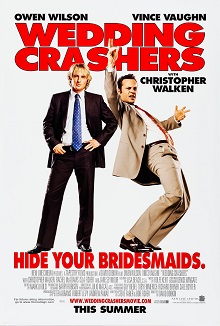
Keir O'Donnell won Todd, but Vince Vaughn really pushed for Justin Long, whose interpretation of the character was Buffalo Bill from Silence of the Lambs and who thought he had the job; the hosts call it a phenomenal what-if that would have made the character more acceptable by being so ridiculous, instead of a gay art school kid who is also a psycho and is mocked homophobically by his grandmother.
The black sheep character can be awesome, with Spalding in Caddyshack (as transcribed) the greatest example, and Christopher Walken himself played one as the brother in the Minnesota scene of Annie Hall.
Asked whether he would rather have had Raquel Welch, the answer is that it is hard to see anybody but Jane Seymour in the role now, and he loves her. — Chris Ryan
Seymour was great stunt casting after Dr. Quinn Medicine Woman; Nicolas Cage was the next call after Ferrell's no, which the hosts would like to see, though Cage reportedly gets called for parts like this and it never quite comes off, as in a Seth Rogen story, because he still thinks it is 1999 and must be the star, with tax liens against his Scottish castles.
The title; Julia Roberts' and Cameron Diaz's looks; Chicago as a character; the White Sox setting; Cameron Diaz's BMW convertible; Julia sharing the screen with Diaz; the ending; Julia's crop tops and two pairs of sunglasses; someone telling you not to smoke; the backup pact
The title has aged best: rom-coms from about 1988 to 1998 had fantastic four-word titles that explained the movie, like When Harry Met Sally, Sleepless in Seattle and While You Were Sleeping.
Julia Roberts and Cameron Diaz have aged fantastically; Julia has never looked better in a movie and Cameron Diaz probably hasn't either, both at the peak of their powers, though one host found Diaz's hairstyle too frumpy and the shift dresses too many.
Chicago is used nicely as a character: a great summer city that is minus nine with a wind chill in December, telegenic with big buildings and cool suburban spaces; it is also a White Sox movie rather than a Cubs movie, which was ahead of its time in picking the cool team, perhaps because the Cubs would not allow it or for money.
Cameron Diaz's BMW convertible, seen when she picks Julia up at the airport, is an iconic mid-90s car; the driving scenes are funny, she is a terrible driver, and it is the only point where the movie puts you in Julia Roberts' perspective.
Julia being okay battling for screen time with Cameron Diaz has aged really nicely, since most top-tier list actresses would not have been cool with that; the ending where she does not end up with him also holds up.
How beautiful Julia Roberts looks, in a style that is current again, is one host's hands-down choice: the half shirt or crop top, the two pairs of sunglasses, outfits ZoeSimmons tries to wear now, and the small sunglasses Kanye told Kim are in; smoking is not in, but having someone tell you not to smoke still is.
The concept of the backup pact, if we're not married by a certain age, really started with this movie and is now seen everywhere, having taken on a life of its own. — Amanda Dobbins
The pact's age limit of 28 is far too low and seems very early now; if someone did this today it would be more like 38, a point that had been planned for what's aged the worst.
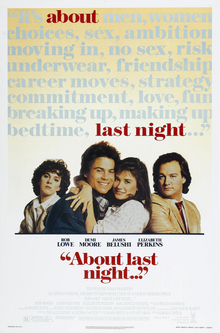
For Rob Lowe, this movie is rejected because of the 1980s hair; older appearances in The West Wing or Parks and Recreation are preferred. — Bill Simmons
For Demi Moore, G.I. Jane, The Substance, and Indecent Proposal are proposed. — Mallory Rubin
Indecent Proposal receives the strongest support. — Bill Simmons
The flex selection praises the dinner scene’s real romantic chemistry and imagines Reitman being delighted by unexpectedly strong acting. — Kyle Brandt
The selection receives agreement and a proud reaction. — Kyle Brandt
The clean air protest question about which one drew the cock and balls is chosen as best quote, with jokes about saying it in the Ringer bullpen. — Chris Ryan
An additional craziest-quote flex selects Time to meet God, with Just lay back and let it happen, baby as another candidate. A pre-recording joke about the first line is recalled.
A flex quote nomination singles out the exchange about the mother’s friend cheering Rick up after his father died, followed immediately by a change of subject. — Bill Simmons
The best-quote flex is recalled as the exchange about sex with the mother’s friend. — Bill Simmons