‹ All movies
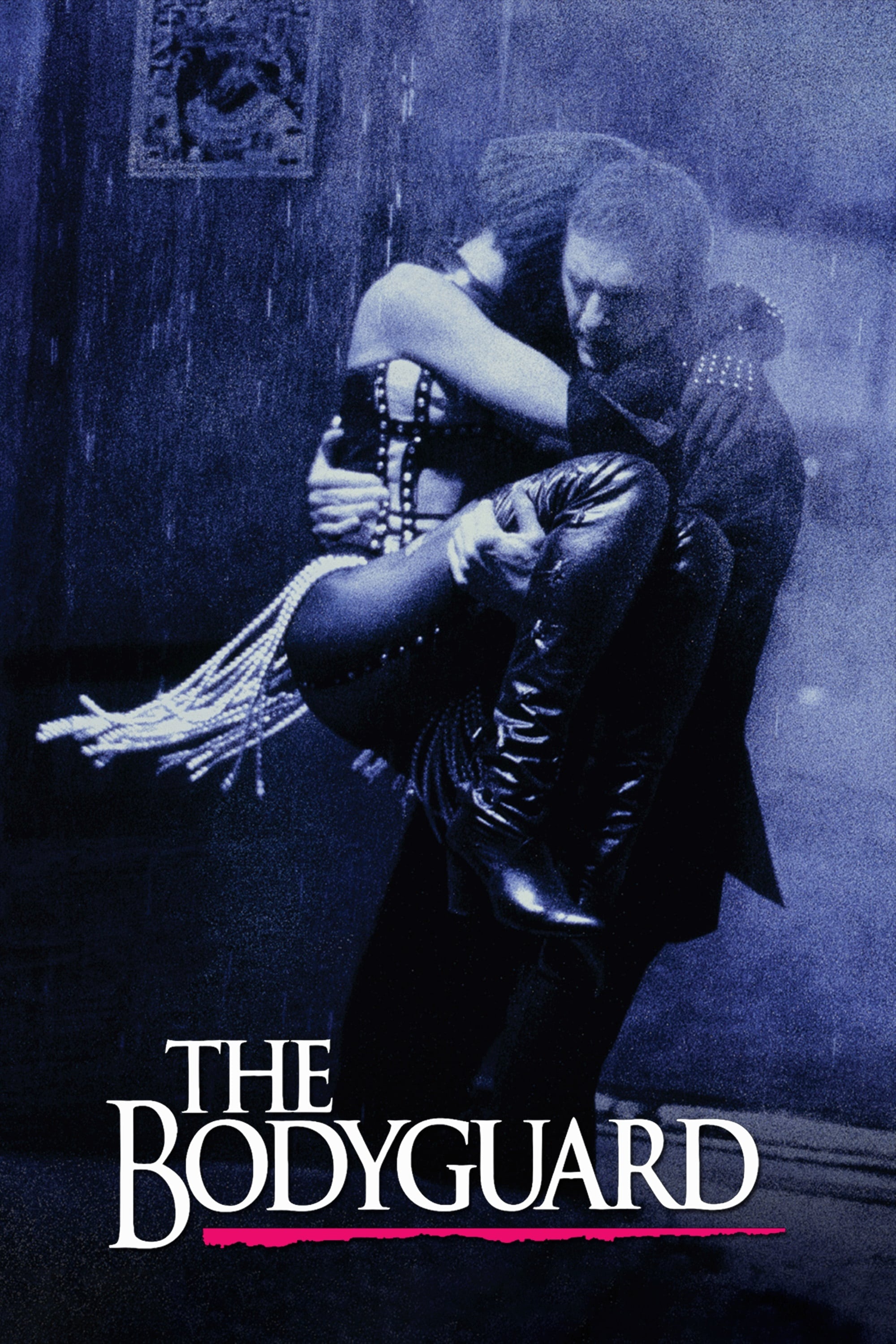
The Bodyguard poster

The Bodyguard

129 minutes

Cast

Selected cast credits · Film reference

Kevin Costner Frank Farmer
Whitney Houston Rachel Marron
Gary Kemp Sy Spector
Bill Cobbs Bill Devaney
Ralph Waite Herb Farmer
Tomas Arana Greg Portman
Michele Lamar Richards Nicki Marron
Mike Starr Tony Scipelli
Christopher Birt Henry Adams
DeVaughn Nixon Fletcher Marron
Robert Wuhl Oscars Host
Debbie Reynolds Herself
Chris Connelly Himself

The Bodyguard | The Rewatchables

Explore episodeClose episode

Roger Ebert's review

In the discussion (1)
Approx. transcript time · 00:21:06Read transcript
  • Ebert gave the film three stars, writing that it contains a love story of the guarded kind of passion that grows between two people who keep their priorities straight.
Most Rewatchable Scene

Frank and Rachel's date; the last 15 minutes from the Oscars to the airport ending

In the discussion (13)
Approx. transcript time · 00:28:34Read transcript
  • The last 15 minutes are predicted to win before the runners-up are reviewed.
  • Frank meeting Rachel at the full-production video rehearsal at her house ("you don't look like a bodyguard" / "This is my disguise") establishes her fame and diva attitude within five minutes.
  • In the club sequence Rachel performs the dance song and Frank fights Mike Starr; the collapse into a mosh pit that endangers a famous star is called a little pushing it, but compelling.
  • The club scene is where she must surrender control after repeatedly refusing his intervention, reflecting the theme of protecting someone too proud to admit needing protection; he must find connection and she vulnerability, and they start to build trust.
  • The club song is an unusual Whitney choice aimed at Janet Jackson territory; one participant likes it, the other never liked that Jody Watley/Janet Jackson era, citing Black Cat versus Miss You Much and liking Cold Hearted Snake.
  • The roughly seven-minute date is picked over the ending: it sets up the dead-client confession cliche from Lethal Weapon 2 and bails out with the joke "She didn't love me anymore," and she calls I Will Always Love You depressing, setting up a later callback.
  • The date ends back at the apartment with the samurai sword and the falling silk, showing her how dangerous he is; it is called one of the best date-connection scenes in movies, and agreed.
  • The film should have had two or three more connection scenes like the date instead of Frank calling it a mistake the next morning.
  • The Run to You performance is mentioned; the film is way too long, and any re-edit would stay on Whitney singing rather than cutting to the banquet.
  • The last 15 minutes include Robert Will (as transcribed) hosting the Oscars, her presenting and winning, a voice double singing her song, Frank in slow motion, the camera rifle, and a random Debbie Reynolds appearance with no other famous people.
  • The ending, with Frank seeming about to die, the airport, her stopping the plane and the a cappella song that was reportedly Costner's suggestion, is one of the great endings and is named as a choice.
  • The other pick is the Frank-Rachel date, called adorable and very important to the plot and the connection between the characters.
  • Later, the kitchen fight between Frank and Mike Starr is flagged as missed in the scene discussion.

What’s Aged the Best?

Whitney and Costner at their peaks; bodyguard-romance premise; soundtrack; Dolly Parton connection; resentful-sister concept; 'permanent position' quote; widescreen; Costner's haircut; a cappella opening; song-swap story; Costner's eulogy; Secret Service guys

In the discussion (17)
Approx. transcript time · 00:37:49Read transcript
  • Whitney in her late prime and Costner at his peak head the list.
  • Professional bodyguard romances are loved, including Ridley Scott's late-80s Someone to Watch Over Me with Mimi Rogers, which has a similar premise.
  • A British terrorism series possibly called Bodyguard, with a Game of Thrones actor named Richard is liked.
  • Protectors crossing lines are compelling because the job is so intimate: a rigid, disciplined guy whose gooey center someone reaches.
  • The Sentinel with Michael Douglas as a framed Secret Service agent is recommended as a rewatchable mid-2000s entry.
  • The soundtrack is loaded and called the best of all time; I Will Always Love You was a Dolly Parton song that finally found the right voice.
  • One participant learned only about four years earlier, from a Dolly Parton fan at TMZ, that the song was a cover, at 37 years old.
  • The original singer owned and loved the cover, pulled over the first time she heard it, and showed no bitterness.
  • The resentful older sister-assistant concept is an untapped idea for movies and TV.
  • A favorite quote: "I'm no good in a permanent position, Monty, my feet go to sleep."
  • The widescreen framing was hard to follow on square TVs for 15 years and now plays better.
  • Costner's crew-cut, Steve McQueen-style hair became a thing that Clooney took further on ER and Jake tried on Melrose Place, sparking a Grant Show tangent.
  • Costner's idea to open I Will Always Love You a cappella was great.
  • What Becomes of the Brokenhearted was meant to be the cover until Fried Green Tomatoes used it to end that film in 1991.
  • A piece of Costner's eulogy is read: Whitney lacked confidence during filming, sang the whole song without a band, and was the only one who could have played Rachel at that time.
  • Costner's feelings for Houston deserve their own discussion; a Grantland party anecdote says Costner, brought by Kimmel five or six years earlier, still had it.
  • Secret Service guys have aged well: The Last Boy Scout is defended, later entries include the Channing Tatum White House movie and the Fallen films, and Ving Rhames in Dave is a shared favorite.

What’s Aged the Worst?

Sister's confession and motive; working-class crazy-stalker trope; Frank and Rachel apart in the third section; Whitney smoking; cocky chauffeur line; Robert Wuhl as Oscars host; the bathroom scene with the assassin

In the discussion (10)
Approx. transcript time · 00:47:23Read transcript
  • The sister's confession and motive are the answer: paying a hitman she cannot call off and saying she never would have killed Fletcher is confusing, a surprising loophole from Kasdan.
  • The twist tries to come from someone unexpected; one participant was strangely attracted to the sister on the rewatch, the other was not.
  • The film never shows Rachel mistreating her sister beyond a few stink faces, leaving a chasm between an entitled-star annoyance and a hit; the drunken confession is bad.
  • Why hire a hitman when she could spike her sister's drink?
  • The blond crazy guy reflects an 80s-90s tendency to make janitors and working-class people the crazies, a "minimum wage people bias," with Buffalo Bill as another example.
  • In the film's third section Frank and Rachel go about 30 minutes without a scene together.
  • Seeing Whitney smoke on the balcony prompts worry about her voice.
  • Costner's line that the cocky Black chauffeur always dies is a little jarring.
  • Robert Will (as transcribed) as an Oscars host is odd in an era of Johnny Carson, Billy Crystal and Whoopi Goldberg.
  • The bathroom scene where the guy who ends up trying to kill her seems about to choke her makes little sense, and going back to the room to make Frank jealous feels contrived.

Casting What-Ifs

Ryan O'Neal and Diana Ross in a 1970s version; Princess Diana in a sequel

In the discussion (6)
Approx. transcript time · 00:54:22Read transcript
  • Kasdan's script nearly got made in the 70s with Ryan O'Neill (as transcribed) and Diana Ross; Ross pulled out, supposedly after a relationship and breakup with him, flagged as internet hearsay.
  • O'Neill had the best 70s: Lee Majors asked his best friend O'Neill to look after Farrah Fawcett while he was away, and she and O'Neill fell in love and stayed together a long time, pitched as an impossible documentary.
  • A joke imagines asking Michael B. Jordan to hang out with one's fiancee for six months.
  • Rachel's race is not written into the script, yet the 70s version was also an interracial pairing, likely because the goal was a gigantic star such as Streisand or Ross.
  • Princess Diana and Costner reportedly had real dialogue about a sequel in which Frank protects a princess loosely based on her life, before she died; a video of her sprinting suggests she was competitive enough.
  • David Foster, after Fried Green Tomatoes took the planned song, got Kevin's suggestion of I Will Always Love You, bought the Linda Ronstadt version in Malibu, resisted the a cappella idea, and, standing beside Whitney's brother, was told "you're witnessing greatness."
In the discussion (4)
Approx. transcript time · 00:59:18Read transcript
  • Mike Starr has won before; Frank's dad (transcribed Frank Ralph Wade) is also nominated.
  • Young Fletcher, now grown, plays Norm Nixon in Adam McKay's Lakers series; Mike Starr is named the winner.
  • Bill Cobbs (transcribed Cops/Cubs) is debated as too established to be a That Guy despite popping up in Demolition Man and New Jack City; he seemed the same age for 25 years like Wilford Brimley.
  • Later, the actor who played Fletcher is identified as Norm Nixon's son, with Debbie Allen as his stepmom; shout-out to Devon Nixon.
In the discussion (3)
Approx. transcript time · 01:00:29Read transcript
  • The sister is nominated as obviously part of the overacting conversation, and the letters are raised; no winner is declared.
  • A special shout-out (a nomination, not a declared pick) goes to Chris Connolly (as transcribed) as the Oscars pre-show host, so over the top it looks like 10 pounds of cocaine.
  • The PR guy is questioned as overacting or just bad; he annoyed one participant every time on screen.
In the discussion (2)
Approx. transcript time · 01:01:20Read transcript
  • The PR guy was one participant's pick for the Judd Nelson award for a guy in a different movie, and it is agreed he fits: he has nothing in the film and it is unclear whether he is good or bad.
  • His late scene taking the Best Actress card, smudging the blood and pocketing it is weird and its meaning unclear.
In the discussion (2)
Approx. transcript time · 01:02:01Read transcript
  • The chauffeur hit a couple threes and grabbed some rebounds before vanishing in the second half; his "You want me to do a 180?" exchange is cool.
  • Portman is floated as good too, but the pick is the chauffeur.

Recasting Couch

Val Kilmer as the assassin

In the discussion (4)
Approx. transcript time · 01:02:33Read transcript
  • Rachel's sister should be recast because she does not look like she could be Whitney Houston's sister, but finding a candidate is hard.
  • Victoria Dillard from Deep Cover and Spin City is proposed; the objection is that Whitney had to be more beautiful than the sister.
  • Ricky's mom from Boys in the Hood, also in White Men Can't Jump, is proposed as better for the drunken confession, without a settled answer.
  • Spending on Val Kilmer as the assassin is proposed because he may have looked better than Costner then, making the park scene make sense; it is agreed that works.

Half-Assed Internet Research

Beverly House mansion; singing and acting lesson swap; miscarriage shutdown; Kurosawa samurai motif

In the discussion (4)
Approx. transcript time · 01:04:55Read transcript
  • Rachel's mansion is the Jack Walts (as transcribed) mansion from The Godfather, the Beverly House compound on North Beverly Drive, also Victor Maitland's house in Beverly Hills Cop.
  • Houston gave Costner singing lessons in return for acting lessons; she said he taught her to listen and communicate through her eyes.
  • Houston suffered a miscarriage during production, shutting it down for a couple of weeks.
  • Kasdan was a big fan of Akira Karasawa (as transcribed), explaining the samurai bodyguard motif and the film they see; Jaimbo (as transcribed) means bodyguard in Japanese.

Apex Mountain

Camera rifles

In the discussion (7)
Approx. transcript time · 01:06:35Read transcript
  • Not Costner's Apex Mountain; his apex had already come and let him make this movie.
  • Not Whitney's; her Star-Spangled Banner is her apex and maybe everyone's.
  • Robert Wohl (as transcribed) is either hosting the Oscars in the film or seven seasons of Arliss, which one participant loves.
  • Mike Starr's apex is still Dumb and Dumber, choking on the pepper.
  • Costner's knife throwing is underrated, especially the final throw, though better has been seen.
  • Jealous sisters have probably been done better, though deep, ugly sister conflict is enjoyed.
  • Camera rifles are "no question" at Apex Mountain: the best camera rifle usage ever.

Picking Nits

Camera rifle past Oscars security; too few handlers around Rachel; Fletcher's absent dad; Rachel never learning of her sister's plot; Frank's morning-after exit; unacknowledged race angle at the Oscars; Rachel playing her own music

In the discussion (9)
Approx. transcript time · 01:08:50Read transcript
  • Getting a camera rifle into the Oscars is impossible; living near the Oscars in Hollywood brought a robot dog bomb check and underground sweeps at Oscars time.
  • Working for Kimmel, Oscars-week shutdowns lasted about eight days; some of that is probably post-9/11.
  • Rachel should be more of a narcissist diva, never alone with just one assistant.
  • Costner pulling a gun on stage should get him shot, but the counterpoint that hysteria might let him get it out ends with "Okay. I don't know," leaving the nit unresolved.
  • Fletcher's dad is never mentioned or contacted, when the boy could have been sent to him or his grandparents; a Kevin Federline joke follows.
  • We never learn if Rachel found out her sister tried to kill her; a scene of Costner and Bill Cobbs agreeing not to tell her is joked about.
  • Frank waking up and leaving after one night with Whitney Houston is fuck-boy behavior; he should have cut contact methodically, and anyone would ride it out for weeks.
  • The film should have consulted a Black person on the Academy Awards angle: with Singleton's nomination and an earlier Black actor's win in the 60s but no Black actress winner, Rachel could have said she was making history; the Oscars felt like an afterthought.
  • Rachel sitting by her pool listening to her own music is questioned; a rapper friend does exactly that, and one host admits listening to The Rewatchables.

Probably Unanswerable Questions

Bed culprit; assassin's persistence; Mike Starr's competence; Rachel's next years; most messed-up Oscars moment

In the discussion (6)
Approx. transcript time · 01:15:46Read transcript
  • Who masturbated on Rachel's bed: the blond locker-room guy, the assassin, or the sister staging it; the sister would not because it tightens security, so the locker-room guy is just a creepy bed masturbator.
  • Celebrity home invasions have aged well given people finding where Kylie Jenner lives.
  • Why didn't the assassin quit after the sister died? She said she did not know him, and before he shoots she says she paid and he says "you're dead"; the point is conceded.
  • Mike Starr was a terrible bodyguard: beaten by Costner, mishandled the club, and poked in the eye by the camera rifle guy.
  • Rachel's next couple of years look like the wheels coming off; the airport run misled one viewer into thinking they end together, but the film obeys the song.
  • Most messed-up Oscars moment: Rachel's near-assassination is chosen over the La La Land-Moonlight mix-up, which is called hysterical and a great Kimmel moment.

More from the conversation

The Ringer's Music Box documentary series' first film, Woodstock 99: Peace Love and Rage, is plugged as running on HBO and HBO Max.
Approx. transcript time · 00:01:44Read transcript
A trailer cold open introduces the episode with Van Lathan on The Bodyguard; the episode is taped on a Friday afternoon, and the pick was pitched by text to have the Whitney Houston conversation.
Approx. transcript time · 00:02:05Read transcript
The Bodyguard is framed as Whitney Houston's last peak after an incredible eight-year run; the movie was a massive hit that she never approached again as an actress.
Approx. transcript time · 00:03:00Read transcript
Houston has six songs on the soundtrack, including a cover of I'm Every Woman and I Will Always Love You; the film almost feels like an excuse to release the soundtrack.
Approx. transcript time · 00:03:31Read transcript
The movie was meant to push Houston toward the movie-star relevance of a singer who turned serious actress with Moonstruck, with Diana Ross and Barbara Streisand parallels.
Approx. transcript time · 00:03:47Read transcript
A 2009 column is quoted: young Whitney scored 50 of 50 as a singer, and she, Michael Jackson, Mike Tyson, Dwight Gooden and Eddie Murphy all peaked young; she should have been the Black Streisand but it was over in eight years.
Approx. transcript time · 00:04:22Read transcript
A counterargument: Houston checked every box (Sissy Houston's daughter, Dionne Warwick relation, model, church-revered voice), still sold over 200 million records, and belongs in any short list of the greatest voices.
Approx. transcript time · 00:05:20Read transcript
The later struggles with Bobby did not subtract from her in the speaker's community; they humanized her into a folk hero people rooted for until she died, and the outpouring at her death measured her impact.
Approx. transcript time · 00:06:56Read transcript
Costner gave the best eulogy at Houston's funeral, revealing a depth of affection people had not realized.
Approx. transcript time · 00:07:59Read transcript
Flying close to the sun is hard to sustain: LeBron kept it going, Tiger lost the steering wheel, and Whitney is called the most gifted performer of the speaker's lifetime alongside Streisand.
Approx. transcript time · 00:08:19Read transcript
A Streisand-versus-Whitney voice debate: The Way We Were and Evergreen are offered, the other side insists Whitney is number one and challenges listeners to compare The Way We Were with How Will I Know; Yentel gets a shout-out.
Approx. transcript time · 00:09:02Read transcript
Houston's first Letterman appearance singing Saving All My Love for You, at about 21, was like watching a UFO land, and Letterman was leaping out of his skin.
Approx. transcript time · 00:10:13Read transcript
She carries The Bodyguard with charisma and warmth, especially in the date scene, and could have made many more movies had she kept her life together.
Approx. transcript time · 00:10:48Read transcript
Childhood memories of The Greatest Love of All and her Star-Spangled Banner illustrate her ability to take listeners to another level.
Approx. transcript time · 00:11:31Read transcript
Costner's character spends the movie trying not to react the way Letterman did to the real Houston, creating a push-pull between them.
Approx. transcript time · 00:12:02Read transcript
A parenting joke: kids who sing Whitney or Adele at school shows are embarrassing everyone.
Approx. transcript time · 00:12:42Read transcript
Costner's run from 1987 to 1992 is listed: The Untouchables, No Way Out, Bull Durham, Field of Dreams, Revenge, Dances With Wolves, Robin Hood, JFK and The Bodyguard.
Approx. transcript time · 00:13:19Read transcript
Costner produced the film, wanted only Houston, and they waited a year for her schedule to clear.
Approx. transcript time · 00:13:51Read transcript
Reviews were split and doubted the chemistry, but in hindsight the chemistry works; the film came after Pretty Woman and before Basic Instinct in a chemistry era, and nobody makes films like it now.
Approx. transcript time · 00:14:06Read transcript
The movie preserves better than it presented on release; Costner's understated performance threw people off.
Approx. transcript time · 00:15:43Read transcript
Costner played the role as Steve McQueen would, a quiet, hard-to-read guy, down to a McQueen haircut; after Field of Dreams and Bull Durham audiences missed the exuberant Costner.
Approx. transcript time · 00:16:01Read transcript
The audience begrudgingly falls in love with Frank Farmer because he is so disciplined and heroic; Costner played the same straighter guy in Wyatt Earp and A Perfect World before Waterworld-era struggles, and got his mojo back with Tin Cup, called a perfect film.
Approx. transcript time · 00:16:50Read transcript
It was Houston's first movie; Lawrence Kasdan wrote it as his first script in 1975, it took his agent two years to sell, and it languished in development while Kasdan wrote Body Heat and The Big Chill.
Approx. transcript time · 00:17:31Read transcript
Kasdan gave Costner the script on Silverado; Costner was not yet a big enough star until The Untouchables, No Way Out and Bull Durham, then insisted on Houston despite executive doubts about her plateau and dating Bobby Brown.
Approx. transcript time · 00:18:05Read transcript
The soundtrack is called the best-selling soundtrack album of all time at 45 million copies worldwide.
Approx. transcript time · 00:19:17Read transcript
A note for nerds that Kasdan also wrote Raiders of the Lost Ark and The Empire Strikes Back; he is ranked among the five best writer-directors of the last 40 years.
Approx. transcript time · 00:19:32Read transcript
The album won the Grammy; I Have Nothing and Run to You got Best Original Song Oscar nominations, while I Will Always Love You did not qualify as a cover, prompting a call to change the rule; the single sold 20 million units.
Approx. transcript time · 00:20:03Read transcript
The film got seven Golden Raspberry nominations, including worst picture, actor and actress, drawing contempt for the Razzies.
Approx. transcript time · 00:20:48Read transcript
A $25 million budget made $411 million, second in 1992 behind Aladdin.
Approx. transcript time · 00:20:48Read transcript
The film never mentions race in its interracial romance, unlike Jungle Fever, and even a hypothetical Oscar win for Rachel as the first Black actress goes unremarked, compared with Halle Berry's Monster's Ball win.
Approx. transcript time · 00:21:06Read transcript
It felt like a non-issue at the time; Love Field's role was reportedly first meant for Denzel Washington, who worried about his brand.
Approx. transcript time · 00:22:18Read transcript
The race question faded because of Houston's place in pop culture and the era's idea that Black megastars transcended race, illustrated by the Do the Right Thing exchange between Tuturo's and Lee's characters; today Twitter would eat a star alive for that.
Approx. transcript time · 00:23:22Read transcript
The poster hid Houston's face while Costner carried her; in a 1993 Rolling Stone interview she said people know who she is and that she is Black.
Approx. transcript time · 00:25:27Read transcript
The Pelican Brief cut the Denzel and Julia love scene from the book, making the Costner-Houston film's willingness to go for it unusual and admirable.
Approx. transcript time · 00:25:57Read transcript
They go together on screen; Costner called Houston his one true love after she died, and it is believed.
Approx. transcript time · 00:26:46Read transcript
A host states Costner is from Compton and the Linwood area, followed by a shout-out calling him "C."
Approx. transcript time · 00:27:16Read transcript
Answering the Oscars question, one host says that if he were doing the movie now he would cast Ryan Gosling and Rihanna, with a question whether Rihanna could film for four months.
Approx. transcript time · 01:19:57Read transcript
An unconfirmed internet item has Tessa Thompson and a Hemsworth (maybe Liam) floating a Bodyguard remake; she is judged not famous enough, Beyonce at 39 is called too old for a young rising singer, and the choice is narrowed to Beyonce or Rihanna, with Adele ruled out.
Approx. transcript time · 01:20:27Read transcript
YouTube clips of young Whitney on talk shows in 1985-86 and a live I Will Always Love You at an awards show around 1993-94 are recommended, with a tribute to her unimaginable sound.
Approx. transcript time · 01:23:09Read transcript
On a mid-80s college visit to Tufts, a father kept the car running to hear Whitney finish belting out a song.
Approx. transcript time · 01:24:02Read transcript
The Bodyguard is available on Showtime on demand.
Approx. transcript time · 01:24:54Read transcript
Van Lathan is thanked and plugs Higher Learning with Rachel Lindsay and the Ringer's nerd-culture coverage, with Marvel's What If and other releases coming.
Approx. transcript time · 01:24:54Read transcript
The closing credits Craig Horlebeck (as transcribed) as producer and says episode 199 comes next week.
Approx. transcript time · 01:25:25Read transcript