Henchmen firing point blank and missing, including Aries's crew while Wick holds up his coat; Jordan Hoffman's Guardian 'gun pornography' review; nobody saying Wick never could have outfought Santino
Not a lot: the point-blank shooting at John Wick in the cave, and the scene where Ruby Rose's Aries (as transcribed) and five people shoot at him while he holds his coat up as if it will stop bullets, which it theoretically does since it is bulletproof, but the part is not great.
The other pick is Jordan Hoffman of The Guardian calling the film a shameful example of Hollywood gun pornography with a video-game aesthetic and only trace elements of a plot, wondering where the line of decency is; one voice agrees with everything except 'shameful', tells him to fuck right off, calls it a terrible take and the thing that has aged worst, and says not to go to John Wick 2 if you cannot handle violence.
In the run-up the hosts had talked about approaching the film cautiously given the state of the world, but it turned out to be really fun; it is the 2019 Predator or Rambo 2, and taking it seriously is your own problem.
One more small one: a missed opportunity for someone to say he never could have outfought Santino, since Santino dies undefeated; the lack of a love interest is fine because he is still mourning his wife with the Bridget Moynihan callback, Halle Berry may be something in three, and he pulls the knife out of Ruby Rose while leaving it in with Cassian.
John Wick loves his wife, his dog and his car; add two kids and that is one host, who likes two of his three dogs and is told to free Olivia; it is called super weird that weirdos secretly relate to the most evil assassin in history, and another host relates too, since Wick has a dog, a car and principles but a lonely life.
Why Common is so loyal to Gianna is questioned, since he seems out for revenge rather than the seven million; he was down in the nightclub because she told him to go upstairs and greet the guests, a poor choice on her part, and he is blamed the way Brett Brown is blamed for the Sixers loss.
The two rules that cannot be broken, no blood on Continental grounds and every marker must be honored, are a pick: out-there rules that people stick to, with an almost childlike tag or capture-the-flag logic where arcane expansions get added; the whole construction of the Continental and its mythology with its cool figures is called genius.
The gearing-up sequence has aged well: the tailor in the back of the Chinese laundromat, the weapon sommelier in Italy asking how his tasting is, even the bank, the whole secret alternate universe.
The Continental drink scene with Common is loved because the two men are trying to kill each other and then have a cocktail, with Common made to drink gin from a tall glass and looking like a dork; the Gianna scene is creepy but great, with a weird vibe, and it took a couple of viewings to understand that he shoots her to save her from hell, with a great overhead shot of the blood pooling.
Chad Stahelski directed all three films and the first was co-directed with David Leitch, who went on to Deadpool 2, Atomic Blonde and the forthcoming Hobbs and Shaw; both were Keanu's stuntmen for years, Chad on The Matrix, and the cinematographer made Danish genre movies before becoming the key cinematographer for the director of The Shape of Water, so a pulpy, bloody movie is made by brilliant artisans, which is the sweet spot; the joke is John Wick 2 is Shape of Water except entertaining.
The honor of the contract killers and the markers ties it to a Western or samurai movie, a classical action setup where a promise must be kept and even the killing has to be done a certain way; caring about Gianna not going to hell shows a moral guy, and honor and codes are called classic Long Island.
Putting a contract out like buying a stock or calling an operator has aged well; if the world were real one host would bet on it, Common at plus 700, though bookies would never take bets on the undefeated Wick, the Kevin Durant or the Mountain of assassins.
The Continental is picked as a world to live in, Soho House for assassins and a rich-guy hangout, though at 800 dollars a night nobody needs a Labrador in the lobby, like a Kempton (as transcribed); Lance Reddick from The Wire as the concierge has a shaky accent; the red leather bar is one of the favorite movie bars, with hotel bars around Columbus Circle the closest New York equivalents; a boutique hotel renaming itself the Continental would be ballsy, a promo stay has been done, and the Intercontinental chain makes the name confusing.
No movie ever set up a sequel better than the end of John Wick 2, the best version of wanting the next one now.
Ian McShane as Winston is the best use of his late-period speechifying, a great guy to hand three pages of dialogue; he would have won the Dion Waiters for John Wick 1, which the show never covered; here he shows up in three key sequences and explains the mythology, making rather than giving the rules.
Compared with over-plotted Marvel, Game of Thrones and J.J. Abrams movies stitched together, the simplicity has aged best: an understandable story with time to embellish, no comic-book or Wikipedia homework, and an exception to the fear of telling simple stories that cannot spawn five sequels.
McShane calling him Jonathan is both condescending and respectful, like someone calling you Christopher; everything McShane says is a rhetorical question.
Shea Serrano calls the speaker Seanathan, which he thinks started after John Wick came out (transcribed as 'won'), and it is in his face all the time. — Sean Fennessey
The final agreement is the whole concept of the Continental, the markers and this world, with the coins as part of it: how much they are worth, how many he has, how heavy they are and why they never fall out when he rolls around.
The document could have been written without rewatching because the movie is so clearly centered around six scenes; the first is the chop-shop opener where John Wick gets his car back, one of the most intense openings for an action movie, including shooting the giant guy in the kneecaps instead of fighting him, and garages are liked in general; it is called essentially a four-way tie between action scenes.
After he kills Gianna he goes down to the nightclub and finds Common, with the 'you working?' exchange and the stare-down, then runs off the stage shooting people at close range, an action scene unlike any seen before; it is the first real gunplay since the garage was mostly beatings, the house music runs throughout, and the venue is a Roman ruin or outdoor palladium with hundreds of extras.
The cave shootout is liked for one film-nerdy reason: it is clearly an allusion to the sewer chase in The Third Man, one host's favorite movie of all time, though without 900 henchmen shot in the face; he leaves guns around and has thousands of bullets, with the asterisk that henchmen shoot at him point blank from nine or ten feet and miss.
Common versus Wick is made its own scene: hit by the car, the whole fight, and the drink at the Continental; the seven-million-dollar contract going out with attacks everywhere, two people killed with a pencil, the stealth silencer shooting while walking along, the subway concourse into the train and the knife fight; knife fights are underrated, and a bystander would have gotten off the subway after watching ten seconds.
Wick crashing Santino's art gallery is another rewatchable, as is Santino eating duck fat fries at the Continental before being blown away, still shocking after ten viewings; the ending with the hour's head start, everybody stopping in Central Park and the music starting is the last of the six.
Two other nominees: the lead-up to Gianna's death, where she goes into the bathtub saying she lived her life her way, beautifully shot, with the actress identified as Claudia Garini (as transcribed), mostly in Italian work and in Passion of the Christ, which sets off a Peter Gabriel Last Temptation versus Passion mix-up; and the whole Bowery King sequence with Fishburne, the negotiation for a gun, seven bullets for seven million, and the 'somebody, please' line.
Asked for favorites, one host takes the nightclub fight, which took the movie to another level; another goes subway concourse for the hyper, slightly futuristic underworld version of New York, boarding at Lincoln Center and heading south through Tokyo-like concourses, the musician attacking, the silencer fight with Common and the knife left in the aorta as a courtesy; a second voice says that is their pick too, noting the movie calms down after its big set pieces and then dials up again.
The knife fight is great and Common is loved, so a further vote goes to that scene as well.
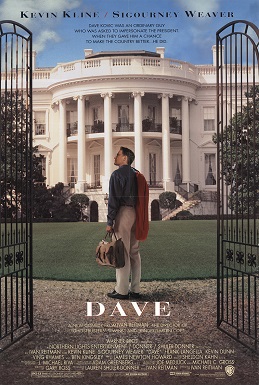
Who would divorce Dave? Would Dave ever come clean that he had been president for five months? What did the First Lady's reaction to Dave in the shower mean?
Dave was divorced in this movie: who would divorce such a good guy and why did the marriage fall apart? Theories: he is a magic-trick-spewing charlatan who forces his friend to hire people to sustain his business, flighty and impressionable about stumbling into the arrangement, and based on his Oklahoma rendition he may sing too much at home; is Dave a great hang or a tough hang after three years?
Would Dave, running for office later, ever come clean that he was actually the president for five months? Should he? No, he would be arrested, maybe not for treason but impersonating a government official is a crime and this is literally a coup d'etat, so even though Dave did a great job, don't go around admitting it.
The shower scene: based on the First Lady's reaction, was Dave more or less healthy than President Mitchell? A host has been preparing this since the episode was announced; the reaction is coy and unclear, the common male reaction to the movie is that she should have recognized the difference, but after not seeing each other naked in a long time that is hard; the lean is that she was genuinely impressed, with shower conditions an X factor.
Spielberg reportedly paid for the additional floating-head scare himself, filming a model in a pool clouded with powdered milk. — Bill Simmons
Spielberg reportedly tried to leave Jaws for Lucky Lady but was blocked. The discussion names its director as Stanley Donnan in the transcript and its cast as Liza Minnelli, Burt Reynolds and Gene Hackman, calls it a hit that has become obscure, and says Lucas recruited its British crew for Star Wars. — Sean Fennessey
Shallow ocean depth allowed recovery of the mechanical shark, which required continuous maintenance. — Chris Ryan
Spielberg reportedly regretted not using a tank, while the speakers defend the real ocean as essential to the movie. — Bill Simmons
Unwanted boats, soaked equipment and a sinking vessel contributed to a shoot expanding far beyond its schedule. — Bill Simmons
A reported anticipated crew prank prompted Spielberg to leave before the final shot. — Bill Simmons
The Making of Jaws is strongly recommended for its extensive interviews and production history. — Sean Fennessey
Visions of Light is cited for Michael Chapman’s account of rejecting fixed tripod shots because tilting boat horizons would make audiences sick, leading to fluid handheld work. The speaker is uncertain whether Chapman was Jaws’s camera operator and connects him with later Raging Bull cinematography. — Chris Ryan
Shaw’s drinking and antagonism toward Dreyfuss are described through production accounts and documentary recollections. — Bill Simmons
A reported escalating cash dare to jump from the mast ended when Spielberg intervened to protect the actor needed for filming. — Bill Simmons
The mechanical shark was reportedly named Bruce after Spielberg’s lawyer. — Bill Simmons
The tracking-and-zoom shot is admired as iconic, with concern that repeating it now would feel clichéd.
Mythbusters reportedly found that shooting the tank would not cause the film’s explosion.
A writer whose surname is uncertain in the transcript, heard as Gabbler or Gables, is credited with interpreting Dreyfuss as science, Quint as spiritualism and Brody as the common man. The speakers find the spiritualism label amusing and call the interpretation overthinking while enjoying the idea that the common man succeeds. — Bill Simmons
The Taylors reportedly used a smaller diver and cage to make real shark footage look proportionally larger. — Bill Simmons
Footage of an empty cage attack reportedly led to Hooper surviving; the shark’s accidental snag also entered the rewritten scene. — Sean Fennessey
Mrs. Kintner’s performer reportedly struck the actor for real across seventeen takes because a fake slap was difficult. — Bill Simmons
Benchley reportedly objected to the tank climax and was removed from the set; he also appears as a reporter. — Bill Simmons
A proposed Quint introduction mocking Moby Dick was abandoned when Peck reportedly withheld permission because he disliked his performance. — Bill Simmons
The extra head scare reportedly weakened the later shark scare, prompting a single-major-scare lesson; the speakers question whether that holds in the trailer-heavy present. — Bill Simmons
The reshoot reportedly cost Spielberg three thousand dollars; a tarp helped cover the milk-clouded pool. — Bill Simmons
The filming schedule went from 52 days to 155 days. — Bill Simmons
Shaw reportedly kept fleeing back to Canada because staying in the United States too long would mean paying taxes. — Bill Simmons
The film came out in 1999; according to IMDb, Larissa Olenek (as transcribed) wanted to play Kat and Julia Stiles wanted to play Bianca, and a casting director swapped them, with the caveat that IMDb's sourcing is looser than Wikipedia's and the 'I wanted that role but got this one' story is a common film narrative.
Patrick Verona, Heath Ledger's first American movie role, was also desired by Ashton Kutcher and Josh Hartnett; Hartnett is dark enough to have done it, while Kutcher would have made it a different movie.
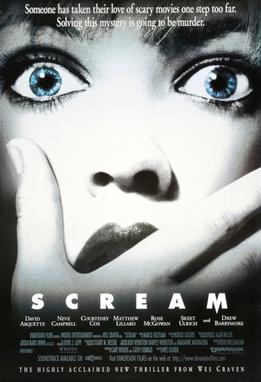
The twelve-minute scene at the top is proposed as the most rewatchable scene and its clip is played; the ending and the Rose McGowan garage door death are arguable alternatives, but as a pure, well-done piece of art the first twelve minutes are called way up there for a horror movie.
Calls the opening fantastic and recalls that this was a first horror movie. — K. Austin Collins
The actor who played the boyfriend Steve was found in research to have been up for the Skeet Ulrich part; he took the wordless role instead, a performance joked to be all in the eyes.
The movie taught a host what Jiffy Pop was, and the popcorn timing what is going on is called genius; Drew Barrymore being dragged to her death while moaning into the phone as her parents hear is a nightmare-inducing touch.
The movie had to display a mastery of the form in its first twelve minutes for the self-referential rest to work; the killer's phone quiz, in which Drew Barrymore's character wrongly names Jason as the Friday the 13th killer, is a common mistake that makes the audience feel in on it together.
The opening is called a slam dunk, yet Jamie Kennedy's character laying out the rules while the party watches Halloween is offered as one more candidate and is never formally ruled out, and the clip is played: no sex, no drinking or drugs, never say 'I'll be right back'.
The rules monologue is a crazy meta moment and the format of one host's articles; one has always held it against the franchise that the character does not die until the second movie, though he would have been a prime suspect; the rules as stated are recited, including everyone is a suspect, with Halloween's never-be-curious rule as an addition, and the rules had legs, since people discussed them at scary movies afterwards.
The last twenty minutes are lights out: from the moment Sidney gets the gun, Matthew Lillard and Jamie Kennedy's characters stumbling toward her and blaming each other, and the killers stabbing each other in the kitchen, make a phenomenal six minutes.
Had no clue how the movie would end, watching it on a high school date with a girl who had already seen it; thought Billy was dead when he was stabbed, and the two-killer twist was the first surprise twist to really shake this viewer. — Shea Serrano
Earlier, the opening is timed at twelve minutes and called spectacular, in the conversation for the great best first scenes, with the death kept secret in 1996.
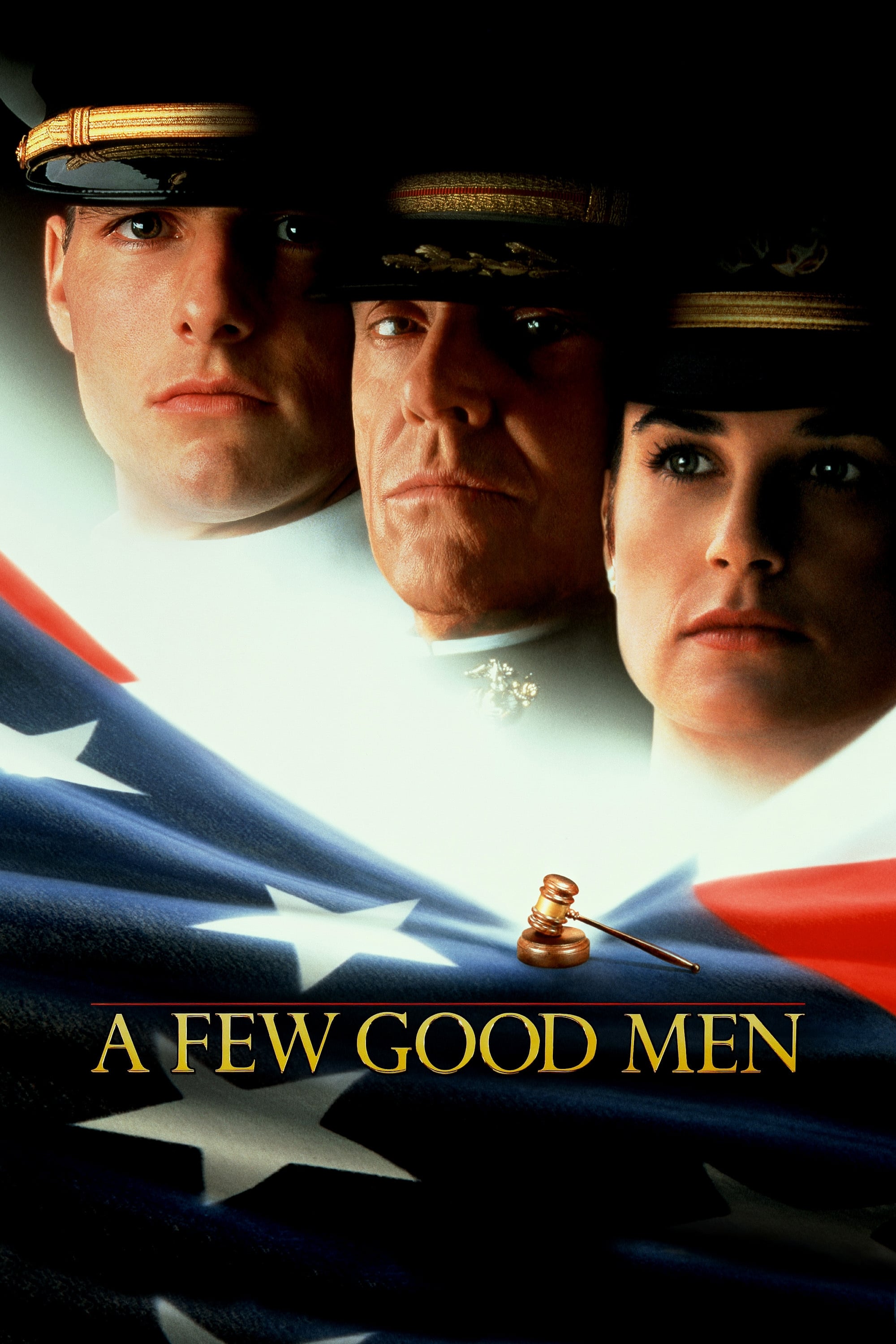
Nominees: the ending, the 'galactically stupid' tirade when a drunk Cruise loses it on Demi Moore, the mess hall cross-examination that Bacon later praises as a great redirect, Cruise's Nicholson impersonation, Harold's 'ten hut' with Cruise, the 'why the two orders' brainstorm in the Jessup cross, and Jack Ross's face at Jessup's code red admission.
Like a decanted wine, the subtler moments should age best, which rules out Cruise doing Nicholson, since people their age have spent their lives watching others imitate Nicholson.
'Why the two orders' always gets one panelist, and another answers 'me too'.
Picks the mess hall cross-examination: rewatched it last night, it is subtle and lands every time, and the way Cruise grabs the notebook back from Kevin Bacon is peak Cruise swagger. — Amanda Dobbins
The scene has an early Noah Wiley (as transcribed), later important on ER, and shows the cleverness of the script solving problems without being showy or straining plausibility.
Another pick is Harold and Cruise's character finding common ground at the end, which still gives chills on the 557th viewing: 'Harold, you don't have to have a badge to have honor' and the 'Ten Hut'; Harold is never seen again.
The actor playing Harold appeared in a couple of nineties action movies and is believed to have been Rob Reiner's assistant before being thrown into the film.
The ending leaves the film dying for a coda: it is unclear how much trouble Jessup is in, unlike the court-martial that follows the submarine battle in Crimson Tide, and the two Marines are still dishonorably discharged.
A small flaw: after the code red admission Bacon's character later says he has to go arrest Kendrick, prompting the question of why he waited a week.