
‹ All movies

The opening twelve minutes with Drew Barrymore

The twelve-minute scene at the top is proposed as the most rewatchable scene and its clip is played; the ending and the Rose McGowan garage door death are arguable alternatives, but as a pure, well-done piece of art the first twelve minutes are called way up there for a horror movie.

K. Austin Collins: Calls the opening fantastic and recalls that this was a first horror movie.

"Hello, Sidney"

'Hello, Sidney' is proposed as the number one quote; 'I'm dying here, man', 'I'm feeling a little woozy', Lillard's proud 'liver alone', his intoning of 'I'll be right back' after the rule against saying it, and Skeet's 'rated R on the way to an NC‑17' line are also liked, though his character is clearly a sociopath who brings her dead mother into every conversation about sex and is weird in every scene.

The film

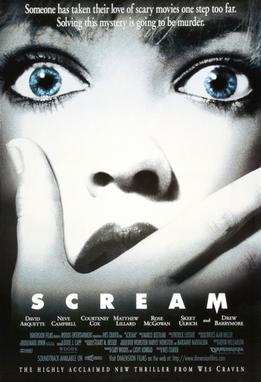
Scream (1996)

Directed by Wes Craven · Drama

111 minutes

Cast

Selected cast credits · Film reference

Cast credits have not been imported yet.

Everything from the episode

In the order the hosts got to it. Open a row for the discussion.

11:18

Most Rewatchable Scene

The opening twelve minutes with Drew Barrymore

The opening twelve minutes with Drew Barrymore

In the discussion (10)
Approx. transcript time · 00:11:18Read transcript
  • The twelve-minute scene at the top is proposed as the most rewatchable scene and its clip is played; the ending and the Rose McGowan garage door death are arguable alternatives, but as a pure, well-done piece of art the first twelve minutes are called way up there for a horror movie.
  • Calls the opening fantastic and recalls that this was a first horror movie. — K. Austin Collins
  • The actor who played the boyfriend Steve was found in research to have been up for the Skeet Ulrich part; he took the wordless role instead, a performance joked to be all in the eyes.
  • The movie taught a host what Jiffy Pop was, and the popcorn timing what is going on is called genius; Drew Barrymore being dragged to her death while moaning into the phone as her parents hear is a nightmare-inducing touch.
  • The movie had to display a mastery of the form in its first twelve minutes for the self-referential rest to work; the killer's phone quiz, in which Drew Barrymore's character wrongly names Jason as the Friday the 13th killer, is a common mistake that makes the audience feel in on it together.
  • The opening is called a slam dunk, yet Jamie Kennedy's character laying out the rules while the party watches Halloween is offered as one more candidate and is never formally ruled out, and the clip is played: no sex, no drinking or drugs, never say 'I'll be right back'.
  • The rules monologue is a crazy meta moment and the format of one host's articles; one has always held it against the franchise that the character does not die until the second movie, though he would have been a prime suspect; the rules as stated are recited, including everyone is a suspect, with Halloween's never-be-curious rule as an addition, and the rules had legs, since people discussed them at scary movies afterwards.
  • The last twenty minutes are lights out: from the moment Sidney gets the gun, Matthew Lillard and Jamie Kennedy's characters stumbling toward her and blaming each other, and the killers stabbing each other in the kitchen, make a phenomenal six minutes.
  • Had no clue how the movie would end, watching it on a high school date with a girl who had already seen it; thought Billy was dead when he was stabbed, and the two-killer twist was the first surprise twist to really shake this viewer. — Shea Serrano
  • Earlier, the opening is timed at twelve minutes and called spectacular, in the conversation for the great best first scenes, with the death kept secret in 1996.
20:51

Casting What-Ifs

Drew Barrymore was cast as Sidney before commitments cut her to four days; Molly Ringwald was Williamson's first choi...

Drew Barrymore was cast as Sidney before commitments cut her to four days; Molly Ringwald was Williamson's first choice for Sidney; Brooke Shields for the Courtney Cox reporter; Ben Affleck considered for the Skeet Ulrich part; Breckin Meyer for the Jamie Kennedy part; Reese Witherspoon declined to audition for Sidney; Rebecca Gayhart (as transcribed) for the Rose McGowan part; Freddie Prinze (as transcribed) up for a role

In the discussion (12)
Approx. transcript time · 00:20:51Read transcript
  • Drew Barrymore was supposed to be Sidney and was locked in, the first to buy in and give the script credibility, but commitments left them four days with her, so she played the opening scene, which is thought to have helped the movie.
  • It is hard to name another 1996 actress who could have carried the first murder with the same weight; Jennifer Aniston pretending to be eighteen is rejected, while Barrymore was famous yet young, a zeitgeist star.
  • Neve Campbell was caught at a nice point in Party of Five; in a fantasy draft of 1996 actresses including Aniston, Courtney Cox, Reese Witherspoon and Sarah Michelle Gellar one host would take her top five for a 25-year career, while another never really got it.
  • Party of Five trained her to do the sad emotions better than anybody, and she is formidable enough that you believe she would win a straight-up fist fight, which is why Drew Barrymore would not have worked as well in the lead.
  • Gail Weathers getting punched in the face is another good scene for a host who hated Friends as a kid and still counts Ross as the least favorite character, which draws the remark that this is a hot-takey podcast.
  • Neve Campbell never found a second stage after starring in a hundred-million-dollar movie; she is thought to have gone artsy and precious with the dance movie The Company, and her House of Cards appearance was greeted as a comeback.
  • Molly Ringwald was the first choice Williamson wrote the movie for; she turned it down as too old at 27, which would have been a disaster as a high school senior, though an aged-up, harder-edged Gail Weathers might have suited her.
  • Brooke Shields was in the mix for the Courtney Cox reporter role and Ben Affleck was supposedly considered for the Skeet Ulrich part, but this is one of the few movies where no name could be plugged into any role to improve it.
  • Jamie Kennedy's part is the one that might have been stepped up, yet Breckin Meyer, who was up for it, would not have worked, because the character has to be annoying in the right way.
  • Reese Witherspoon was wanted to audition for Sidney and wanted no part of it; she would have been good in anything, even Predator, and instead made the roller-coaster movie with Mark Wahlberg and the gnarly Freeway that year, with Cruel Intentions flagged for a future episode.
  • Rebecca Gayhart (as transcribed) was up for Rose McGowan's part, though nothing like her, and was then put in Scream 2; after 90210 and the Noxzema ads she looked destined to be a massive star, but like Felicity she was hair dependent in a way that fit only 1996.
  • Freddie Prinze (as transcribed) was remembered from the research as up for one of these roles; he was neck and neck for everything for three years, and gets away with his acting only in high school movies, so Summer Catch and She's All That cut around his throwing and kicking.
27:42

What’s Aged the Best?

The Ghostface mask; the opening scene; the Halloween homages; two high school kids as the killers; the fame-seeking C...

The Ghostface mask; the opening scene; the Halloween homages; two high school kids as the killers; the fame-seeking Courtney Cox reporter as a nineties artifact; the video store; the cell phone

In the discussion (9)
Approx. transcript time · 00:27:42Read transcript
  • The mask is amazing and still kind of scary, the droopy ghost that turns up every Halloween among the trick-or-treaters; whoever looked at all the candidate masks and chose it deserves an Oscar.
  • The mask resembles Munch's painting The Scream, yet the movie was called Scary Movie through production until months before release, so the match between title and mask is a strange coincidence.
  • The opening scene has aged stupendously and all still works, though its dependence on a landline stuck out and is deferred to the worst list; the Halloween references have aged nicely, Billy Loomis as a homage to Dr. Loomis and the line about running to the McKenzies, and the last forty minutes play the whole Halloween movie.
  • Two high school kids rather than an adult turning out to be the serial killers was something nobody was thinking about in 1996; their confession to killing Sidney's mother and calling her a whore got dark.
  • Reportedly the makers could not settle the killers' motive, split between something personal involving Billy's father and Sidney's mother and the idea that no motive is scarier, so they did both, which leaves Matthew Lillard's character joining out of peer pressure.
  • The killers get mock respect for killing the mother and waiting a whole year, incredible dedication for seventeen-year-olds in a plot that makes no sense.
  • The Courtney Cox reporter trying to turn the murders into a book and fame is dated but has aged nicely because that was how you became famous in the nineties, before sex tapes and YouTube; she seems a collage of people involved in crimes rather than based on anyone.
  • Loved that a video store employee is a key part of the movie; video stores were an important part of the moviegoing experience and of movies themselves from 1993 to 1997. — Sean Fennessey
  • The Quentin Tarantino video store stories are recalled, video stores are nostalgic now, and the town's curfew sending everybody to the video store at four is a fun idea; the cell phone itself is thought to have aged well because hardly anyone had one in 1996.
32:18

What’s Aged the Worst?

Cell phone reception as a murder prop; the Arquette and Cox courtship given their later divorce; David Arquette's Dew...

Cell phone reception as a murder prop; the Arquette and Cox courtship given their later divorce; David Arquette's Dewey; the Henry Winkler scenes

In the discussion (10)
Approx. transcript time · 00:32:18Read transcript
  • Landlines lead into what aged worst: after twenty-one years one host is not convinced any 1996 cell phone was good enough to be a murder prop in wine country around Sonoma, with trees and driveways and nobody near anybody.
  • A secret favorite part: Drew Barrymore's character says she will call the cops, the killer says they are too far away, and she accepts it even though her boyfriend is bleeding.
  • A counterpoint cites Michael Douglas's gigantic cell phone on the beach in Wall Street: phones then were for doctors and rich people and may have worked better for that elite group; the hosts wonder whether Wall Street had the first cell phone in a major movie, followed by Zach Morris.
  • Asked how the movie would be received in the outrage culture era, the hosts expect outrage at two guys killing the mother and calling her a whore before people swung around to its tongue-in-cheek intent; one does not find the movie problematic at all and calls everything problematic about it hilarious.
  • The sexualized staging of Rose McGowan's death is read as a deliberate joke on the bimbo-who-dies trope; per IMDb trivia she could have fit through the opening and escaped, and she flips the killer like a pro wrestler, part of a slapstick way of fighting the villain that exposes the killers as high school kids getting beaten by teenage girls and makes Ghostface very vulnerable.
  • The seeds of David Arquette and Courtney Cox falling in love, knowing it ended badly and she went on to date Will Arnett, make their marriage what aged worst, though it is pure in the movie.
  • Part two is that David Arquette is really terrible, playing Dewey as if brain damaged, and it is unclear why he became a phenomenon afterwards; a defender says Dewey is supposed to be extra dumb and is charming, though his 'I was 24 for a whole year' line is too good for such a character.
  • The Henry Winkler scenes had more impact at the time because of his fame; the principal putting two fingers on Sidney's chin would be a real problem today, and together with his scissors threat to the two kids in masks suggests a background worth checking.
  • If Scream were made now, the Winkler equivalent would have to be one of the five biggest TV stars: George Clooney is proposed, Zach Morris rejected as not famous enough, and Kelsey Grammer, David Schwimmer and Don Johnson floated.
  • A Ross tangent: People vs. OJ helped one host like David Schwimmer, but Ross is blamed for turning Friends from a great first season into a rom-com, and another protests that Ross was just a character, a human being sometimes.
39:48

Half-Assed Internet Research

Santa Rosa High School refused to host the shoot and got a 'no thanks' credit; eight ratings submissions to avoid NC‑...

Santa Rosa High School refused to host the shoot and got a 'no thanks' credit; eight ratings submissions to avoid NC‑17; the Gainesville Ripper inspiration; Romero and Raimi almost directed; Craven's phone-hit cameo; the mask found while location scouting; Linda Blair's reporter cameo; a 21-day final scene with 50 gallons of fake blood; Craven told Drew Barrymore animal-torture stories; Williamson wrote it in three days as Scary Movie

In the discussion (9)
Approx. transcript time · 00:39:48Read transcript
  • Santa Rosa High School was to host the high school scenes and refused, so they shot at a community college, and the credits include a pointed 'no thanks' to Santa Rosa.
  • The movie was almost NC‑17 for violence and went back eight times; Williamson's script was reportedly extremely specific about organs dripping down legs, so the disemboweling was originally even more disgusting.
  • Williamson was obviously inspired by the Gainesville Ripper, who murdered students in Florida and was executed after the movie's release, one of the grisliest American crimes of the period; it was a ripped-from-the-headlines idea for a young screenwriter looking for anything to get a script sold.
  • George Romero and Sam Raimi almost directed; Raimi's version would probably have been a lot funnier, Romero never made a movie like this, and Scream is not thought improvable, only different; this was Craven's second act after peaking in the eighties.
  • Craven's one cameo is being hit by Drew Barrymore with the phone while wearing the Ghostface costume; the mask was found at a house during location scouting; Linda Blair cameos as a reporter who bumps into Sidney outside the school after the attack.
  • The final scene took 21 days of a roughly 60-day shoot for a $15 million movie and used 50 gallons of fake blood.
  • A return to research corner: to keep Drew Barrymore upset through the opening, Wes Craven told her real stories of animal torture, since she was an animal activist, and then turned the camera on.
  • Earlier, Kevin Williamson is said to have written the script in three days in Palm Springs under the title Scary Movie, after failing to sell Teaching Mrs. Tingle, and pitched it as a trilogy package.
  • Earlier, the opening death was reportedly worse originally, with the guts coming out, and had to be fixed to avoid an NC‑17.
43:59

The Dion Waiters Award for Best Heat Check Performance

Matthew Lillard

Matthew Lillard

In the discussion (4)
Approx. transcript time · 00:43:59Read transcript
  • The award is treated as a wrap that needs only the charade of walking through it; Henry Winkler is joked to have had his heat check at the premiere telling everyone he was uncredited, and Jamie Kennedy is named.
  • Whether Matthew Lillard is a role player or the star is asked; on reflection he is the most exciting thing in the movie, not the best performance but really going for it and hilarious, and his 'your daddy's the chief suspect' clip is played.
  • His interview on The Watch with Chris and Andy, where he said he thought he was hot and then his career fizzled after Scooby-Doo, makes the performance elegiac; his face does things, as on Twin Peaks, like a kid in a Norman Rockwell painting, with eye bulges, frowns and finger pointing making him a really weird performer.
  • He is declared the winner of the award; he counts as a role player, in maybe a third to forty percent of the movie; the award should be renamed the Henry Winkler Award, or a separate award for unplaceable arrogance, the Kobe Award.
47:10

Apex Mountain

Skeet Ulrich; Matthew Lillard; David Arquette

Skeet Ulrich; Matthew Lillard; David Arquette

In the discussion (19)
Approx. transcript time · 00:47:10Read transcript
  • Wes Craven could be argued but Elm Street is still his Apex Mountain; his amazing career spans the three stages of late-century horror, from Hills Have Eyes and Last House on the Left to creating Freddy and reinventing the genre in the nineties, and he is underrated, on a Mount Rushmore with Tobey Hooper (as transcribed), George Romero and John Carpenter; the movie still moves today.
  • Completely agrees, finds the thought sad, and wonders what to do when John Carpenter dies. — K. Austin Collins
  • The coming Halloween remake with Jamie Lee Curtis is asking audiences to forget some sequels, like Rocky Balboa waving off Rocky V, which is what 48 Hours should have done.
  • A confession that Nightmare on Elm Street was a shitty movie meets a fan of the first two and Dream Warriors; Heather Langenkamp is dismissed, and Wes Craven's New Nightmare, the meta Freddy movie, failed just before this, leaving Scream as a bit of a last gasp for his career.
  • Neve Campbell's nominees are this or the intervention scene with Bailey in Party of Five.
  • Asked to decide, goes with the Party of Five intervention over Scream. — K. Austin Collins
  • Another feels the same way about the intervention, called the saddest hour in television history with Bailey as the rock of the family, and it stands even against Scream's $290 million.
  • Skeet Ulrich is clearly at his Apex, with nothing else competing; he was in As Good as It Gets, went a couple of rounds with Jericho, and is now known to kids as Riverdale's Skeet Ulrich.
  • A tangent on Skeet Ulrich's first name becoming slang, popularized by Dave Chappelle, and whether his stage name was a bad choice slides into a crude callback to the Silence of the Lambs episode's Migs discussion.
  • Reader Howard from Calgary writes that Stuart Rudin, who played Migs, was in Sticky Fingers and has an IMDb of homeless men, winos and patients; Migs was his Apex Mountain, and listeners are invited to the mailbag.
  • Matthew Lillard: it has got to be, with SLC Punk raised; considering how good he is in Scream, this is his Apex.
  • Jamie Kennedy was forced on the culture with an MTV show after this and never took; his Apex Mountain is definitively dating Jennifer Love Hewitt, an achievement rather than a performance, which leads to a tangent on why women disliked her.
  • For David Arquette the reminder is that he held the WCW heavyweight title, a movie tie-in, the belt once held by Ric Flair.
  • Asked to decide, calls this absolutely David Arquette's Apex. — Shea Serrano
  • Eight Legged Freaks is also raised for Arquette; Rose McGowan is a no, her later weirdness and dating Marilyn Manson jokingly called her apex, though she had a cool indie career, the Rodriguez Grindhouse movie with the gun leg, and is now a filmmaker and activist.
  • Courtney Cox is first a no, since it has got to be Friends and you cannot get higher; one voice later counters, unresolved, that the combination is her apex, since this came out during Friends season three when Monica was dismissed as having no personality and showed she could be the bitch too; her later characters are more Gail Weathers than Monica.
  • She reportedly pursued the role to play someone not traditionally nice and to get punched in the face; her later sitcoms were Dirt and the Bill Lawrence show about people in LA drinking wine, whose title nobody can remember.
  • Henry Winkler is joked to have been the mountain itself.
  • Earlier, while praising the cast, Drew Barrymore is followed by the garbled phrase 'I'd heard, like, Mad Love Apex' (as transcribed).
57:23

Unintentional Comedy Award

The Henry Winkler scenes; David Arquette's off-kilter Dewey; Skeet Ulrich's unknowingly satirical performance; the Li...

The Henry Winkler scenes; David Arquette's off-kilter Dewey; Skeet Ulrich's unknowingly satirical performance; the Liev Schreiber cameo

In the discussion (3)
Approx. transcript time · 00:57:23Read transcript
  • There is not a lot of unintentional comedy except the Winkler scenes, which are funny now, and Arquette, who is just off, funny in retrospect given people thought he might be something.
  • Skeet Ulrich giving a performance he probably does not believe is satire is unintentionally funny, since he was cast as a carbon copy of someone the director worked with fifteen years earlier, which an actor could never be told; Casper Van Deem (as transcribed) thinking Starship Troopers was a drama is the comparison.
  • The Liev Schreiber cameo is thrown in because his voice comes to mind immediately, imagining him testifying at the trial for killing Sidney's mother or narrating Magic vs. Bird.
59:00

Picking Nits

Cell phone reception; thin evidence clearing the boyfriend; the speed of the opening disemboweling; Drew Barrymore's ...

Cell phone reception; thin evidence clearing the boyfriend; the speed of the opening disemboweling; Drew Barrymore's character not calling the cops; the cameraman on the roof; the voice disguiser and cloned phone; waiting a year to kill again; a party a week after the murders; the parents splitting up; where to stab each other; Billy seemingly trying to kill his partner; explaining the corn syrup

In the discussion (14)
Approx. transcript time · 00:59:00Read transcript
  • The cell phone reception problem is restated, and more evidence than one call was wanted before Sidney stops suspecting her boyfriend, who turns up randomly while the other killer is chasing her.
  • Wonders how the boyfriend was disemboweled so quickly in the opening, when the killer is barely seen. — K. Austin Collins
  • The disemboweling looks less like a slit across the gut than a velociraptor clawing at him, a little fast for the work involved.
  • Two nits: Drew Barrymore's character agreeing not to call the cops, and Matthew Lillard's character killing the 240-pound cameraman and getting him onto the roof before Gail drives off, which is not believable. — Shea Serrano
  • The reply is that Skeet's character was still upstairs and must have been involved, since he walks down the stairs when she runs back inside, or that Lillard had taken eight bath salts for superhuman strength.
  • How the voice disguiser works and how high school kids got it is questioned; the voice belongs to a separately cast actor, originally a placeholder they liked enough to keep, and cloning the cell phone seems beyond a seventeen-year-old without time at Radio Shack, though they did have a whole year.
  • Whether killers could lay off for a year is doubted; once the line is crossed you might as well start killing everybody, and Skeet's character is as petty as the hosts for waiting a year to insult Sidney's mother; the Green River Killer is noted to have laid off for ten years.
  • A parent's nit: a week after the first murders, with the killer not found, everybody goes to a huge party; the rationale offered is that wine-country parents are drunk at a tasting and the killer only kills high school kids.
  • Walking in on their daughter hanging from a tree with the house on fire is about as tough a way to see a child go as there is; a small nit is the husband sending his wife outside alone to drive to the police, splitting up and breaking a core horror rule, though a movie about the parents would be watched.
  • Asked, as the resident prison-movie expert, where to be stabbed to look left for dead: avoid the nipples area, where the important stuff is, and take it lower, preferably on the side. — Shea Serrano
  • Alternatives are debated: the kidney is not the target because the wound must look serious, an arm or hand stab would not look like being left for dead, and the movie's killers aim for the sides.
  • A theory that Billy is actually trying to kill Matthew Lillard's character, stabbing him four or five times off camera, is called great and unspoken; it fits Lillard being there for peer pressure while Billy is the sociopath, and the phone to the head is the one moment that made a host wince.
  • Final stabbing preferences: a high left shoulder and a grazed neck for blood, though nobody trusts Skeet Ulrich near their neck, the legs are too minor to look near death, and the whole plan should have been nixed in favour of hiding in a closet.
  • How Billy Loomis would explain being covered in corn syrup to the police is asked; a good cop would notice it is not blood, but Dewey, whose brain damage is established, can barely find the doorknob.
1:08:24

The Neil McCauley “A Book about Metals” Award for Best Line from the Movie

"Hello, Sidney"

"Hello, Sidney"

In the discussion (2)
Approx. transcript time · 01:08:24Read transcript
  • 'Hello, Sidney' is proposed as the number one quote; 'I'm dying here, man', 'I'm feeling a little woozy', Lillard's proud 'liver alone', his intoning of 'I'll be right back' after the rule against saying it, and Skeet's 'rated R on the way to an NC‑17' line are also liked, though his character is clearly a sociopath who brings her dead mother into every conversation about sex and is weird in every scene.
  • Sidney's father leaving for an expo after a killer tried to kill his daughter is called weird.
1:09:58

Probably Unanswerable Questions

What is the next day of school like for Sidney? What does the house's owner fix first? How much does Sidney regret lo...

What is the next day of school like for Sidney? What does the house's owner fix first? How much does Sidney regret losing her virginity to the killer? What would you do when the murders start? Why did the killers not finish her? Was there a Scream 20th anniversary? Is the lack of diversity intentional? What expo was Sidney's father headed to?

In the discussion (10)
Approx. transcript time · 01:09:58Read transcript
  • What is the next day of school like for Neve Campbell's character? She is done for the rest of the year, though strong-willed enough to try to come back early, and the principal is dead too.
  • What does the house's owner fix first? The garage door before the blood, or simply bulldoze the house and sell the land after fifteen murders and fifty gallons of corn syrup, since it becomes a Halloween tourist attraction.
  • The virginity subplot winks at the earlier movies where the girl who did not have sex survived; how much does Sidney regret that her first time was with the killer ten minutes before his spree, and how does she tell later partners?
  • Scream 2 arrives two years later with Sidney, after more trauma than any human, simply going to college and a sorority; one host does not acknowledge Scream 2 and 3, though the Jerry O'Connell cafeteria song and Laurie Metcalf are liked while the long ending with the mother drags.
  • Asked what to do when the murders start at the party: just run away, out to the middle of the street where nobody can sneak up, for two miles if needed, saving nobody.
  • Flipped around: with Neve Campbell hard to kill, the killers were toying with her and should have finished it when he had her in the Jeep, like the Wolf Creek killer stabbing straight through the car seat, or Oberyn Martell failing to finish the Mountain in Game of Thrones.
  • The killer toying with the last girl was a horror staple of the era, as when Jamie Lee Curtis drops the knife beside Michael Myers; the final-girl flirtation is a trope shared with James Bond and Six Million Dollar Man.
  • Was there a Scream 20th anniversary? Scream 4 in 2011 updated it with Emma Roberts and was not great, and MTV made a Scream TV show nobody here watched; self-reference can only go so far before it becomes Airplane, and Scream 4 lays it on thick.
  • Last question: is the astonishing lack of diversity intentional? Probably unintentional and corrected in Scream 2 with Jada Pinkett Smith and a Black best friend; no minority with a speaking line is recalled, a cast that would never happen today, and the filmmakers would likely claim it was a statement about how white earlier movies were.
  • Earlier, what expo Sidney's father is heading to after the attack is asked.
1:16:38

Who Won the Movie?

Matthew Lillard; The Mask; the horror genre; Wes Craven

Matthew Lillard; The Mask; the horror genre; Wes Craven

In the discussion (9)
Approx. transcript time · 01:16:38Read transcript
  • For the first time in eight or nine episodes the hosts do not know who won the movie, so they go around the circle.
  • Picks the mask, and did not know the story of the filmmakers happening upon it, which seems like fate. — K. Austin Collins
  • The mask pick is praised as a top-critic answer; another goes with Lillard for what he did in every part, which made every later Lillard appearance, like She's All That, worth watching and even got a host to Summer Catch.
  • Picks the horror genre, revitalized and given a new appreciation writ large through the self-referential movie that sent people back to Halloween, Freddy and Friday the 13th. — Jason Concepcion
  • Wes Craven is offered for a specific reason, but it is not counted as a ballot because the 'But who's your winner?' that follows in 242 may be pressing the same voice, who then answers Lillard in 243: a professorial, sweet man typecast as a horror director, he used the leverage of Scream and Scream 2 with Miramax to make the sincere drama he had waited decades for, Music of the Heart, for which Meryl Streep got an Oscar nomination.
  • The last pick is Matthew Lillard, joining the earlier Lillard vote; rewatching, this host was stunned by how good he was, going to another level in a part that could have been merely fine and blowing people off the screen.
  • Lillard's pod with Andy and Chris about his career makes it sadder that the dominant guy in a $300 million movie that launched the horror revival did not go further; he never returns for the sequels and is uncredited in part two, pulling a Winkler.
  • The right movie for him might have been 13 Ghosts or a buddy cop film as the zany Martin Lawrence part, though he may be too good and suited to a wilder vibe; Twin Peaks reminded people of his energy, and whether the TV on his head officially killed him is doubted, leaving room for a return in a remake.
  • Earlier, Lillard is flagged as more in the Who Won the Movie conversation than expected, J.R. Smithian in his willingness to overperform.
Podcast choices
Speaker not identified
Matthew Lillard
Jason Concepcion
The horror genre
Speaker not identified
Matthew Lillard

More from the conversation

The episode was recorded two weeks before the Harvey Weinstein story broke, which is why it is not discussed; the premise is that the horror genre was basically dead in 1996 and one movie revived it.
Approx. transcript time · 00:01:06Read transcript
Horror had become sequels to sequels or direct to video; for one host Halloween was the transformative movie of childhood before people felt the genre had died.
Approx. transcript time · 00:02:43Read transcript
Horror movies were always going to reassert themselves, but Scream reviving them is notable because it is probably the most self-aware movie ever made; it had an okay opening weekend and was thought a flop before breathing life over a long period rather than being a flash in the pan.
Approx. transcript time · 00:03:11Read transcript
Absolutely nostalgic for the nineties: this was a transformational horror movie, the first in a long time that people told each other they had to see, unlike Halloween 7 or Jason Goes to New York.
Approx. transcript time · 00:04:15Read transcript
Scream was a first horror movie at age nine, after begging a mother to go, in a crowded, terrified theater; the trailer with Drew Barrymore on the phone was the draw.
Approx. transcript time · 00:04:47Read transcript
Another host saw Halloween at nine and was petrified for years, and showed Scream to his twins as their first scary movie after they got the mask for Halloween, deciding to stop after the opening disemboweling.
Approx. transcript time · 00:05:32Read transcript
Killing the apparent star early was not new: Psycho did it with Janet Leigh and Executive Decision with Steven Seagal, but pre-internet 1996 let them put Drew Barrymore on the poster, leave Neve Campbell off it, and keep the death a secret, like The Crying Game and later Blair Witch; it tells the audience anybody can die.
Approx. transcript time · 00:06:12Read transcript
Scream is basically a high school movie that kicked off the 1996 to 2002 run of high school movies, from I Know What You Did Last Summer and 10 Things I Hate About You to Disturbing Behavior; one theory is that pre-internet teens with DUI-era limits needed the mall and the movie theater, and a host who was in high school then recalls them as date movies for working out which guy you were.
Approx. transcript time · 00:07:39Read transcript
Kevin Williamson wrote the script in three days in Palm Springs as Scary Movie after failing to sell Teaching Mrs. Tingle, selling it as a trilogy package; the hosts split on Scream 2, which one tries not to acknowledge and another loves.
Approx. transcript time · 00:09:10Read transcript
The cast is one of the best-looking ever assembled: Neve Campbell in her prime, Drew Barrymore, Courtney Cox, Rose McGowan never cuter, Skeet Ulrich as the next Johnny Depp with the 21 Jump Street hair, and Matthew Lillard, more in the Who Won the Movie conversation than expected.
Approx. transcript time · 00:10:32Read transcript
Whether Scream's influence was good is debated, since later horror felt obliged to be meta; Get Out is called the first great horror satire since, 21 years later, prompting a debate on whether Get Out and Silence of the Lambs are horror or thrillers, with Jordan Peele's own term 'social thriller' called pretentious.
Approx. transcript time · 00:17:03Read transcript
The two-killer reveal is a smooth move nobody saw coming after three swerves around Skeet Ulrich; the only unconvincing fake-outs were Dewey's boot after dropping a cigarette and Henry Winkler with the scissors, since in 1996 nobody was making the Fonz the killer.
Approx. transcript time · 00:19:18Read transcript
Henry Winkler reportedly asked not to be credited so as not to draw attention from the impressive young cast, a benevolent move from a man who was the biggest star in the world in 1977.
Approx. transcript time · 00:20:22Read transcript
Hair-dependent all-stars: Molly Ringwald and Jon Bon Jovi.
Approx. transcript time · 00:26:57Read transcript
A listener email from Howard from Calgary about Stuart Rudin, who played Migs in Silence of the Lambs: his IMDb credits run to homeless men, winos and patients before Ian the Woodsman; the mailbag address is given and Migs is invited onto the show.
Approx. transcript time · 00:51:56Read transcript
Asked how many Rewatchables they have done, the answer is eight or nine, and this is the first where the hosts do not know who won the movie.
Approx. transcript time · 01:16:38Read transcript
A Freddie Prinze (as transcribed) tangent: neck and neck for every role for three years, good only in high school movies; Summer Catch, produced by a friend's company, masterfully never shows him throwing a pitch, and She's All That never shows him kicking a soccer ball.
Approx. transcript time · 01:17:27Read transcript
Sign-off: more episodes are coming, and follow-up emails go to the mailbag at theringer.com.
Approx. transcript time · 01:22:00Read transcript