‹ All people

Referenced person

Harvey Weinstein

Also referred to as Weinstein, Harvey, Harvey Weisting

Stats

Episodes featuring their films
0
Movies in this archive
0

Rewatchables episodes featuring Harvey Weinstein’s films

No episode credits in the archive yet.

No episodes found

Mentioned in discussions

Pulp Fiction

What’s Aged the Worst?

Weinstein; imitations; slurs; dated details; forensic carelessness

In the discussion (16)
Approx. transcript time · 01:25:21Read transcript
  • Harvey Weinstein is selected for aged worst. — Bill Simmons
  • Decades of imitations, especially in the mid-1990 s, are selected for aged worst. — Bill Simmons
  • Racial slurs, especially Jimmie’s dialogue, are considered increasingly jarring. The discussion distinguishes their uses without resolving the justification for Jimmie’s language. — Chris Ryan
  • Tarantino’s racial slurs are defended as his perception of how criminal characters would speak, while the language remains uncomfortable and his claimed familiarity with Black communities is discussed. — Sean Fennessey
  • Butch’s chair-escape slow motion looks dated and uniquely artificial within the film. — Chris Ryan
  • Characters are careless about forensic evidence: Butch merely wipes a gun, and the apartment killings leave a conspicuous bloodbath and early-morning gunshots. — Chris Ryan
  • Los Angeles diners are disappearing, and robbing diners for cash-filled wallets seems less plausible now. — Chris Ryan
  • Buscemi’s tiny Buddy Holly part feels wasteful; he reportedly lacked time to play Jimmie.
  • Roth’s predicted next-great-star trajectory is questioned despite strong work in this film, Reservoir Dogs and Rob Roy. — Bill Simmons
  • Marvin’s visible dummy in the trunk is criticized. — Bill Simmons
  • Bullet holes visible before the divine-intervention shots are criticized. — Bill Simmons
  • Smoking while drinking a milkshake is considered an unpleasant combination. — Bill Simmons
  • Craving a cheeseburger after heavy cocaine use is questioned. — Bill Simmons
  • Older pop-culture references may no longer register.
  • The cab’s rear projection is defended as a deliberate old-movie homage.
  • Tarantino’s acting is defended in retrospect, especially opposite Keitel over linens; his angry tone toward Jules is the specific stretch considered unsuccessful. — Sean Fennessey
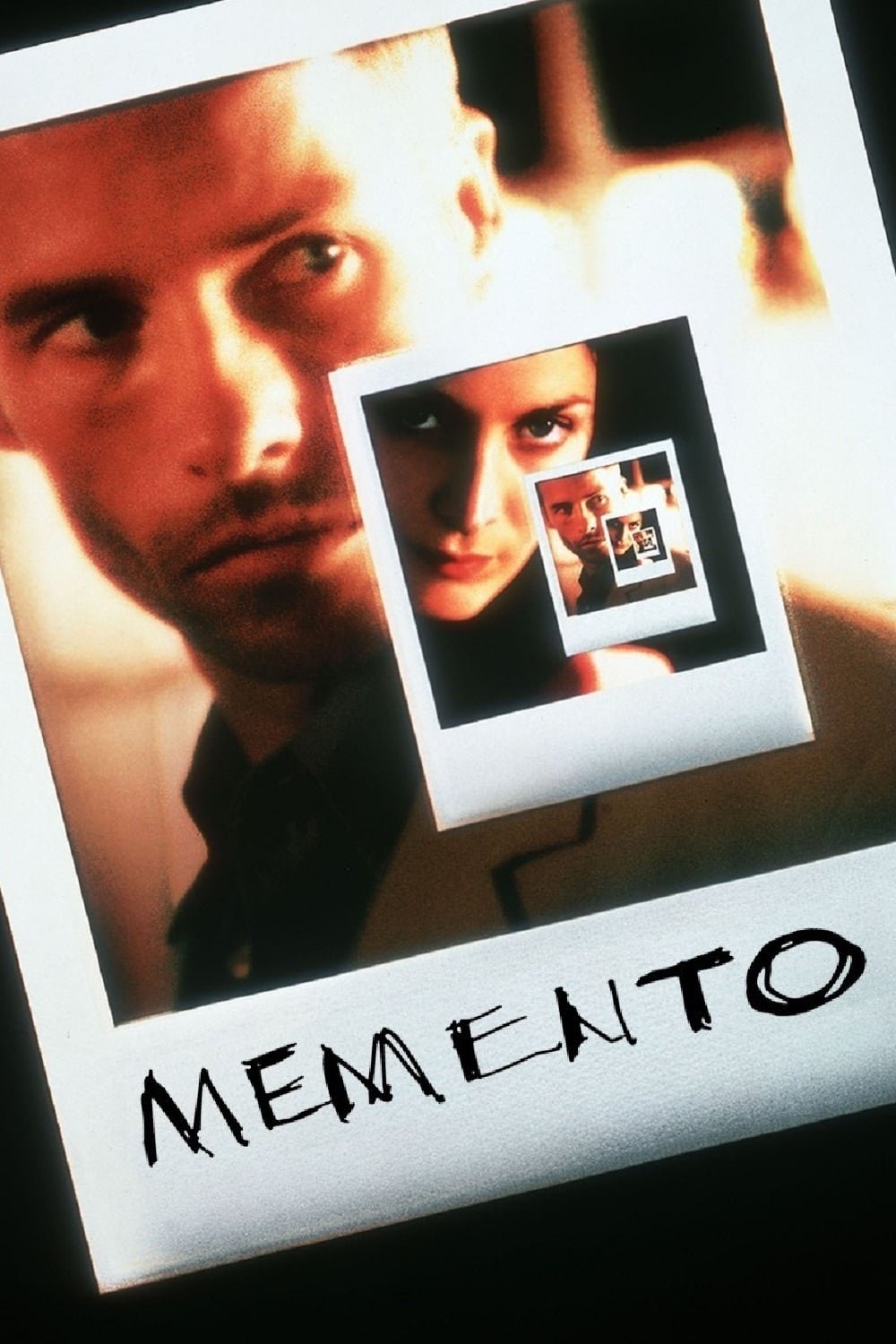
Memento

Half-Assed Internet Research

Development and financing; studio passes; Newmarket self-distribution; Weinstein buy attempt; chronological DVD; Nolan voicing 'you freak'

In the discussion (5)
Approx. transcript time · 00:54:34Read transcript
  • The brothers' idea took a couple of years to develop; Newmarket gave it a $4.5 million budget and screened it for studio heads in March 2000, who liked it but thought it too confusing. — Bill Simmons
  • After Soderbergh's championing, Newmarket distributed it themselves, reached 500 theaters, made $25 million domestic and sold international rights. — Bill Simmons
  • Harvey Weinstein, who had passed, tried and failed to buy it. — Bill Simmons
  • The limited-edition DVD lets you watch the movie chronologically. — Bill Simmons
  • Nolan felt Joey Pants did not nail 'you freak' and recorded the words himself. — Bill Simmons
Mr. Mom The Rewatchables
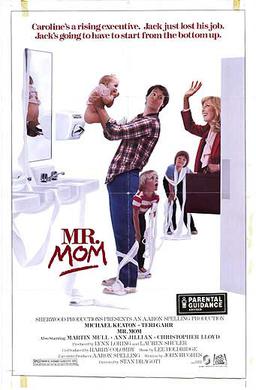
Mr. Mom

What’s Aged the Worst?

The hotel-room scene where Carolyn's boss makes his move and she punches him out

In the discussion (9)
Approx. transcript time · 00:32:22Read transcript
  • The trumpet-heavy theme song is very 81 to 83, as if a friend named Bob was asked to whip something up; the private plane with fur walls and tables confuses both hosts, who wonder whether it was private or an old first-class cabin.
  • The beard as a sloppy, life-falling-apart look has become the actual look for lots of people, so it aged both worst and best, and the hosts now kind of like the beard and suggest adding a baseball hat.
  • The early-80s punk babysitter with crazy makeup and purple hair; the kids' room posters of Rocky III and Eric Hipple, a really mediocre Lions quarterback from 82 and 83, arguably the worst-aged thing in any Rewatchables, explained as a Detroit local touch and compared to a Ty Detmer Eagles poster.
  • The ending is also aged worst, since the movie simply tells you to leave; the idea that a dad would know how to do nothing, not even plug in a vacuum, is different now that men know how to do laundry, which is read as an 80s exaggerate-everything trope.
  • The Me Too scene, seen in 2019 through the Harvey Weinstein stories of hotel rooms and ordered food: Carolyn reads the room, tells her boss to leave, punches him in the face when he will not, and then simply goes to tell her husband, which is very 80s and has not aged well, though women entering positions of power in the 80s made it common and every scene the two share telegraphs it.
  • The harassment plot and Joan's interest in the dad are not really needed; in 2019 the climax would be the couple fighting over parenting duties rather than fending off suitors, and 76-to-83 TV movie plots where everyone is trying to sleep with everyone are blamed; most people met at work in 1983, so the boss sizing her up reads as realistic.
  • The scene could not be done now, which is why it lands here; that the character knows exactly what to do is both depressing and impressive, navigating it like a quarterback reading a blitz and checking down, and 9 to 5, one of the biggest hits of 1980, with its boss pursuing Dolly Parton, is recalled as the precedent.
  • Earlier, stepping on the category during the scene discussion: the beard is supposed to signal Jack's life falling apart but most dads look like that now, and one host admits that a 35-year-old man with a patchy beard and an unwashed flannel shirt is what society has conditioned that host to find attractive.
  • Also earlier: Carolyn just stops being a mom for about an hour, completely uninterested in her kids, and the film does not examine it.
Good Will Hunting

Half-Assed Internet Research

The Public Garden bench is now a Robin Williams memorial; a gay sex scene was written into the script to test whether anyone read it; Williams insisted on the L Street bar and ad-libbed the wife story and 'Son of a bitch, he stole my line'; Sean was based on Damon's mother and Affleck's father; Gus Van Sant painted the painting in Sean's office; Skylar was based on Damon's Harvard ex; Damon and Minnie Driver dated through the shoot and the Oscars; Terrence Malick suggested the ending

In the discussion (8)
Approx. transcript time · 01:03:33Read transcript
  • The Boston Public Garden park bench where 3,000 people watched the scene is now a memorial to Robin Williams, after people put flowers there when he died; one host lived for ten years a six-minute walk from Bunker Hill Community College, where Sean taught.
  • For a while the screenplay contained a gay sex scene between Will and Sean in his office, written to see if anybody was actually reading the script during the year Castle Rock would not buy it and they feared it had become poison; nobody noticed until Harvey Weinstein, who told them to get rid of it.
  • Robin Williams insisted on the L Street bar after being mobbed scouting it and loving the energy, though his scene was not filmed there; he ad-libbed the story about his wife farting, which is why Matt Damon laughed so hard, and son of a bitch, he stole my line, which was supposed to be him reading the note and nodding; Williams was a genius with a complicated reputation because of bad movies.
  • Robin Williams's character was based on a mix of Damon's mom and Affleck's dad; Gus Van Sant painted the painting in Sean's office; Skyler is based on Damon's ex-girlfriend from Harvard; Damon and Minnie Driver dated from halfway through the movie through the Oscars and had a bad breakup two months later, he apparently dumping her; the hosts decline to discuss the two adjudicating each other on Twitter.
  • One host's wife called Minnie Driver bad, the reason the movie has not aged as well, and did not believe the relationship; the hosts disagree and think she is really good, though she rightfully did not become the huge star people expected; another host's wife came in for the middle and said the two have no chemistry even after hearing they dated a year in real life.
  • The hosts feel they are in love at that table; on a very small sample size women may see no chemistry where men do; the knick-knack store googly glasses moment, the Magic 8 ball scene with her NBA jokes, the organic chemistry scene and the piano speech all argue they are in love or amazing performers; she has not been in many movies, unlike a Gwyneth Paltrow with a 20-year history that would color it; one host claims she won the Oscar for this (she was in fact nominated), as evidence people felt that way at the time.
  • One more research bit: in the original script Will and Skylar leave town together; through a friend of the Affleck family Ben and Matt met Terrence Malick, who had read it and said Will should chase her, she is gone and he has to go find her, so Malick is the reason for the ending, one of many lucky notes and ad-libs that pushed the movie up levels.
  • Why did Rob Reiner, William Goldman and Terrence Malick want to help two unfamous guys when people struggle in Hollywood for 25 years, and this is the only movie Harvey Weinstein did not chop up as he saw fit; they had some success already, unlike Jon Favreau and Vince Vaughn, though Vaughn was in Rudy as Jamie O'Hara; the only guess is that people sensed they were headed somewhere and wanted to be thanked.
Good Will Hunting

Most Rewatchable Scene

The Red Sox Game Six story in Sean's office; the Harvard bar scene with Clark; the playground fight; Chucky's construction-site speech

In the discussion (13)
Approx. transcript time · 00:20:51Read transcript
  • The host could not narrow the categories to five or six because this is not just a great movie but the quintessential cable movie, on some channel for 20 years and constantly tested by people coming in partway; the nominees are the slow-motion playground fight, the battle with Ponytail Guy, the I Will End You scene, the park bench monologue, Pudge Fisk, the twelve-minute stretch from Will laying into Lambo through the baseball glove and the shepherd scene, the Chucky construction best-part-of-my-day scene, It's Not Your Fault, and Chucky realizing Will left.
  • The Red Sox story, the Pudge Fisk story, is the scene you stay for when you come in with five minutes: funny coming from a Philly fan, relatable, with a twist you know is coming; Damon cracking up and getting genuinely locked in shows the connection being made without talking about therapy, the physical acting Robin Williams does is great, and the filmmaking cuts in the game footage and the overhead shot of him reenacting the scene. — Chris Ryan
  • In the overhead shot the furniture is set up like the bases; the filmmakers were not sure they would get the baseball footage, having licensed nothing at that point, and Harvey Weinstein had to make it happen, because the scene would not work as well without the baseball.
  • The issue with the scene is that nobody who loves the Red Sox gives up a Game Six ticket at Fenway after only two World Series in 28 years, in 67 and 46, however much he likes the girl; it is the same problem as Fever Pitch, where Jimmy Fallon gives up fourth-row tickets for Drew Barrymore; this host would have been the friend saying there is no way you skip this game, and concludes Sean was an artsy-fartsy smart guy whose friends were like Jerry Lambeau and not real Red Sox fans, which the others call a take and a half and compare to a limousine liberal quoting Leo from The Departed.
  • The ponytail scene with Clark sets the movie in motion and is the only nominee that gives a bit of what makes every character great: Ben Affleck charming and funny without being threatening, Minnie Driver making her little comment to Clark that makes Matt Damon smile, Damon flexing for the first real time how much smarter he is, not wanting to do it and being forced into it to save his friend, and the quick Casey Affleck shot, boy, he's wicked smart; there is no way to skip past that scene. — Shea Serrano
  • The nitpick with the Clark scene is that Affleck and Cole Hauser would throw down with Ponytail Guy immediately, before it ever gets to the Will Hunting part, since these are guys who randomly drive by a playground and fight five guys; the hosts also ask why it matters that Casey is bouncing at a bar in Cambridge, concluding the Southie guys wanted to try a new bar, mix it up and make fun of people, and that it is a totally realistic Boston scene of people drifting from neighborhood to neighborhood.
  • Why a local group from Southie would want a Harvard bar: a different type of girl than they are used to, and they cut the line because the bouncer lets them in; yet inside it is not populated and is basically a sports bar with Papa Shot (as transcribed) and Bud Light, though Harvard Square had popular holes in the wall like Charlie's; one host recalls the townies-versus-college-kids separation in Huntsville, Texas, and those guys looking for conflict is the point, with Cole Hauser punching that guy in the face immediately.
  • An honorable mention is the Retainer scene, Ben Affleck flexing in front of the three guys; this was way more Ben Affleck's movie than remembered, so funny, charming and weird that it is a shame he is not this actor all the time; the scene responded to most is the fight, though it is so short it may not draw you in on cable, and it is the weirdest thing ever, since why are they fighting these guys. — Sean Fennessey
  • Will fights the guy because he got picked on in kindergarten; Will Hunting should be in prison for life, and when the judge, who is not Vonnegut but an actor who was a member of Whitey Bulger's Winter Hill gang, reads the rap sheet of assault, grand theft auto, larceny and mayhem, this guy clearly cannot be let out to clean hallways; a Gus Van Sant fight scene is not something that crosses your mind, and Casey Affleck's face as he falls to the punch is phenomenal.
  • One host's single favorite is the Chucky construction scene, when Chucky gets mad at Will for still being there and says before he knows it he will be 50 and still doing this: a Massachusetts thing of living and dying in your parents' house, with Chucky the perfect character whose friends are the most important thing to him, down to the casual mention of still watching Patriots games, nuances William Goldman never could have written; Affleck had been ready to do that scene for years and nailed it in the first take, doing two more takes but the first was used.
  • The construction speech is mostly shot over Affleck's shoulder going in on Damon across the hood of the car, not the usual framing for a memorable scene, so you expect Damon to have a big rebuttal and he does not; the clip is played, from 'it'd be an insult to us if you're still here in 20 years' through the best part of my day being the ten seconds hoping Will will not be there.
  • Part of the rewatch pleasure is the 20 years of history with Damon and Affleck, who are both obviously stars in this movie, like an NBA team with two future superstars; the script started with Damon at Harvard, based on his relationship with a woman named Skyler, before he brought it to Ben, and the movie forecasts the tension of what happens when one of them makes it and the other does not.
  • The last eight or nine minutes are as rewatchable as any movie's ending: Will saying goodbye to Sean, Sean and Lambeau getting a beer, Chucky going to pick him up and finding him gone, and the credits rolling over the car with Elliot Smith; the hosts cannot place the highway, which feels like the Mass Pike but was probably outside Toronto.
Displaying all 5 discussions