
Stats
- Episodes featuring their films
- 2
- Movies in this archive
- 2
Rewatchables episodes featuring Common’s films

Mentioned in discussions
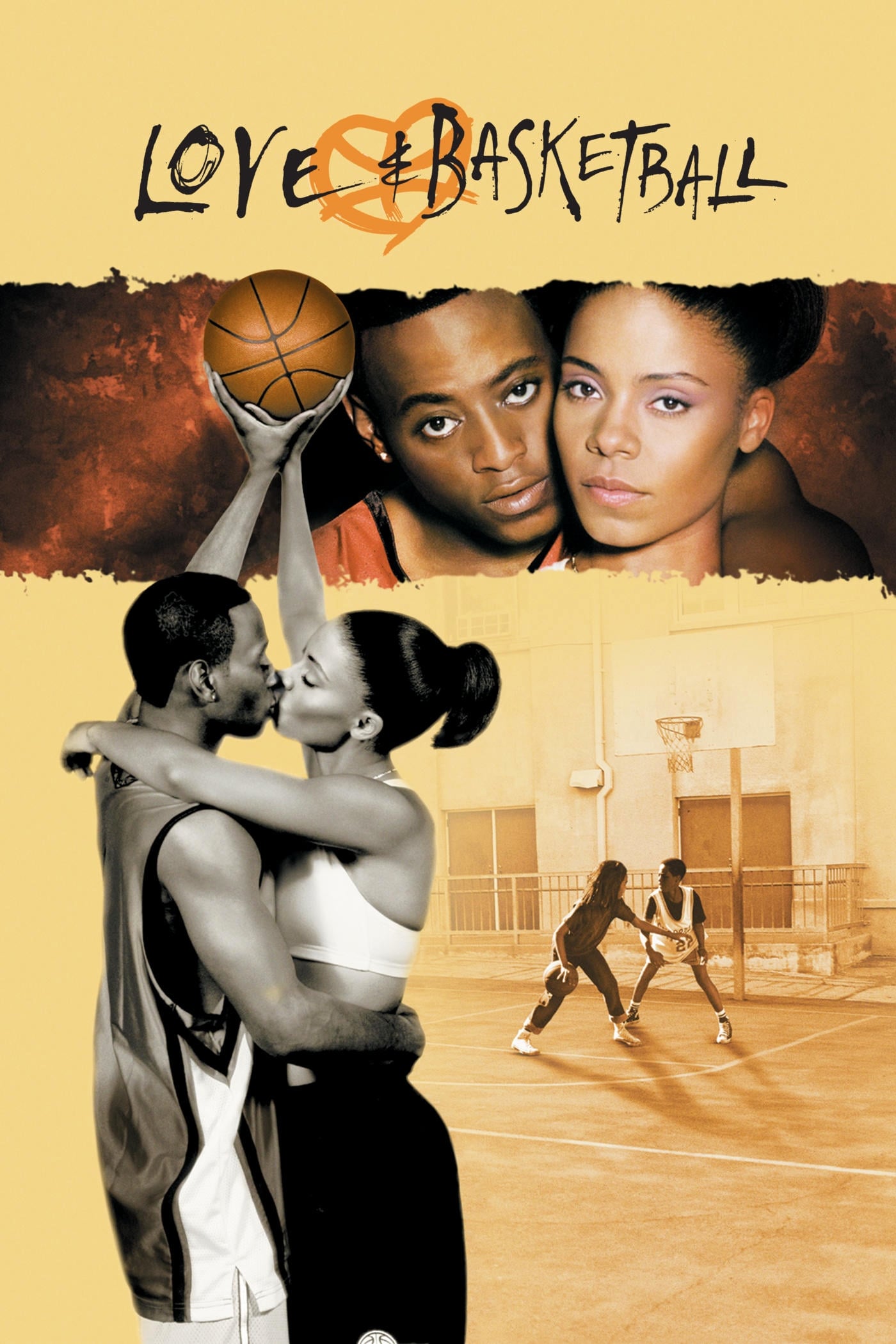

Most Rewatchable Scene
Last 10 minutes through the WNBA ending; going-pro argument; benching after the pull-up three; taking the charge
In the discussion (16)
- Six rewatchable scenes are offered, starting with the opening kids' game set to Candy Girl: the hat coming off, the boys' reaction, Quincy talking himself into playing, the foul and her touching the scar. — Bill Simmons
- The soundtrack is praised (New Edition, Maxwell, Guy, Roger Troutman and more); Black-movie soundtracks of the era were often better than the movies and people rushed to buy the CDs. — Jemele Hill
- The film opens with Al Green's Love and Happiness; Spotify playlists collect the soundtrack, including Simply Red's Holding Back the Years and the MTV Unplugged remake of This Woman's Work. — Bill Simmons
- Monica getting the USC letter and going through the window to Quincy is the second pick; the championship game is mentioned as a possible rewatch too. — Bill Simmons
- Monica taking the charge at USC to win the game and the locker-room and weightlifting scenes make the team feel real, compared to women's teams known at Holy Cross. — Bill Simmons
- The response adds that the scenes show how competitive women can be, as A League of Their Own did, with the tension between Monica and Sidra, the senior whose job she is after, as a nice subplot. — Jemele Hill
- The six-minute overseas stretch in Barcelona is a pick: it looks glamorous, but the underlying theme is that playing abroad with a coach yelling in Spanish was the only option for women's basketball; the other participant agrees it belongs. — Bill Simmons
- Sidra's line that the Italians love Black women is described by the hosts as a common topic among Black women traveling in Europe, dubbed the Josephine Baker syndrome, both truism and stereotype. — Jemele Hill
- The kitchen scene where Monica's mother slaps her is called probably the best-acted scene in the movie, paying off the mother character. — Bill Simmons
- The mother-daughter tension is praised as real and making the turnaround rewarding; mothers and daughters are joked to be natural enemies. — Jemele Hill
- The famous ending is the sixth pick: the one-on-one for his heart, Lathan's acting, Omar removing the brace, the You Make a Fool of Me song, the loss for Monica, and the jump to the WNBA game with her hyphenated jersey; called a great last 10 minutes. — Bill Simmons
- The final game is judged solid though not Ray Allen versus Denzel in He Got Game; they pulled it off. — Bill Simmons
- A beef on game point: Quincy shoves Monica down and dunks on her, called a microcosm of their relationship; the counterview is that he had hit rock bottom and needed a win, and in 2020 he would probably just shoot a three. — Jemele Hill
- The second participant picks the argument over Quincy going pro, capturing the pressure on successful women to choose between a relationship and a career. — Jemele Hill
- Monica being benched for showboating after the pull-up three is another pick, a teachable moment that starts her evolution as a teammate, along with her taking the charge, a selfless payoff. — Jemele Hill
- The final stated choice is the last 10 minutes, from the basketball game to the WNBA ending; the packed Staples Center crowd raises doubts that early WNBA games drew like that. — Jemele Hill

Half-Assed Internet Research
Verhoeven signing in autumn 1988; 500 crew, 45 sets and eight Mexico City sound stages; Rambo III as the costliest film; Stone's Playboy shoot; the VHS-cover setting date; the four-breasted mutant draft
In the discussion (6)
- The research segment was flagged early as the place to cover how the script kept falling through. — Bill Simmons
- The hosts say Verhoeven signed in autumn 1988, and 500 people built 45 sets on eight sound stages in Mexico City over six months. — Bill Simmons
- Correction: the most expensive film before this was Rambo 3, not Rambo 2. — Bill Simmons
- Sharon Stone posed nude for Playboy to coincide with the release, which the hosts recall was a common move then. — Bill Simmons
- The VHS cover gives the film's year, which the hosts say Verhoeven confirmed, though it is not stated in the movie. — Bill Simmons
- A favorite find: the three-breasted mutant Mary was originally meant to have four breasts, but producers thought it looked like a cow, leading to jokes about studio notes in Verhoeven's office. — Bill Simmons


What’s Aged the Worst?
The opening credits, dated sexual and technological moments, weak soundtrack, cartoonish extremists, and uneven acting
In the discussion (10)
- The opening credits are condemned as an inappropriate blaxploitation-style choice.
- The Deja and Malik sex scene is criticized for an unnecessary nipple-sucking detail, while the era's more explicit screen intimacy is discussed.
- Robin Givens's performance and career in Boomerang prompt a digression arguing that she deserved greater stardom.
- The impact of Taryn and Kristen kissing is said to have diminished since 1995 because same-sex intimacy became more common on screen. — Bill Simmons
- The film's email-pricing joke is identified as technologically dated.
- The soundtrack is criticized as weak for 1995, especially beside Above the Rim and other era-defining soundtracks.
- The surviving Taryn-Kristen relationship material is considered sufficient to establish trust and safety even though the studio reportedly cut more.
- The white supremacist characters are criticized as cartoons.
- The actor initially disputed as the player from The Program is subsequently confirmed as the same performer.
- The opening credits are ultimately selected as the clearest Aged Worst answer. — Bill Simmons

What’s Aged the Best?
Adele's theme song
In the discussion (8)
- Judi Dench literally has aged the best: seventy-seven when she gave a performance of just-enough British acting, with the stature and gravitas to make standing over six coffins feel important; Adele's song is an all-time jam.
- The locations are sensible rather than volcano-and-Tokyo Bond locations: Istanbul and London, very London-centric, like a board of tourism; the fiftieth anniversary of the series and the Broccoli family's hubbub may have driven the reminder that this is a British spy from Scotland, and M's garage line about the car not being ostentatious is a favorite Dench moment.
- Waning empire keeps waning, the ministers' hearings read as Brexit, and movies about washed-up middle-aged men are on trend for 2019; the cast has not a single error, and the Deakins photography would be cutting-edge if released today.
- Casting a prestige director for a franchise has aged well: Mendes had just bricked with Away We Go after American Beauty, Road to Perdition, Jarhead and Revolutionary Road and retreated to theater, with the New Yorker covering him and Jez Butterworth; the Bond films had been a schlocky volume play that needed re-engineering into an event, and the move leads to Ryan Coogler doing Creed and Black Panther.
- Tarantino was long rumored for a Bond film, Danny Boyle left the most recent one, and Nolan would be bank-breaking but only makes Warner Brothers movies; Mendes openly lifted the Dark Knight aesthetic, and Nolan's films are themselves a commentary on Bond, with the orphan avenging sins in common.
- Costumes have aged well: Ben Whishaw's climactic Dries sweater and museum parka, the cut of Craig's suits, Moneypenny's business casual, the barber jackets (as transcribed), the final Skyfall look with boots, and the wool-looking training tracksuit with low-top Adidas that only Craig could wear; everyone's sweatpants should fit like that rather than like the Ad Astra moon base.
- Albert Finney's last film performance has aged well: a perfect role for an actor of his age as a father figure to old Scotland, old England and Shakespearean movie acting.
- The song has the highest approval rating and is chosen; an Oscar winner.

What’s Aged the Worst?
Nick's personal-life scenes on repeat viewings; the stalled-traffic highway shootout plan; the unexplained Big Nick nickname; the shots that are obviously Atlanta rather than LA
In the discussion (6)
- Nick's five-something-in-the-morning text to his wife, with its odd capitalization, is exactly how Big Nick would text; she is entitled to date as fast as she likes, and he shows up at the dinner because he sets fire to everything he touches.
- Nick's personal life on repeat viewings is the thing that has aged worst, since he could simply have been served papers; a joke imagines his daughters dancing eleven years from now at the club he still frequents.
- The crew would have had a better plan at the end than fighting in stalled traffic; the offered explanation is that Donnie planned the whole heist and Merriman is never shown doing anything smart, so once Donnie is out of the picture everything falls apart.
- Donnie anticipates being picked up and carries a handcuff pick; common sense would be ramming the cars and leaving rather than a shootout among 130 cars, though telling the civilians to get behind an engine block is a cool detail.
- Why he is called Big Nick is never explained; he is six foot two, and a quick nod to a South Torrance nickname would have done it.
- Some scenes are obviously Atlanta, a complaint only an LA nerd would make, that now bothers one host who never noticed before; another host has nothing at all for what has aged worst.
What’s Aged the Worst?
The hotel-room scene where Carolyn's boss makes his move and she punches him out
In the discussion (9)
- The trumpet-heavy theme song is very 81 to 83, as if a friend named Bob was asked to whip something up; the private plane with fur walls and tables confuses both hosts, who wonder whether it was private or an old first-class cabin.
- The beard as a sloppy, life-falling-apart look has become the actual look for lots of people, so it aged both worst and best, and the hosts now kind of like the beard and suggest adding a baseball hat.
- The early-80s punk babysitter with crazy makeup and purple hair; the kids' room posters of Rocky III and Eric Hipple, a really mediocre Lions quarterback from 82 and 83, arguably the worst-aged thing in any Rewatchables, explained as a Detroit local touch and compared to a Ty Detmer Eagles poster.
- The ending is also aged worst, since the movie simply tells you to leave; the idea that a dad would know how to do nothing, not even plug in a vacuum, is different now that men know how to do laundry, which is read as an 80s exaggerate-everything trope.
- The Me Too scene, seen in 2019 through the Harvey Weinstein stories of hotel rooms and ordered food: Carolyn reads the room, tells her boss to leave, punches him in the face when he will not, and then simply goes to tell her husband, which is very 80s and has not aged well, though women entering positions of power in the 80s made it common and every scene the two share telegraphs it.
- The harassment plot and Joan's interest in the dad are not really needed; in 2019 the climax would be the couple fighting over parenting duties rather than fending off suitors, and 76-to-83 TV movie plots where everyone is trying to sleep with everyone are blamed; most people met at work in 1983, so the boss sizing her up reads as realistic.
- The scene could not be done now, which is why it lands here; that the character knows exactly what to do is both depressing and impressive, navigating it like a quarterback reading a blitz and checking down, and 9 to 5, one of the biggest hits of 1980, with its boss pursuing Dolly Parton, is recalled as the precedent.
- Earlier, stepping on the category during the scene discussion: the beard is supposed to signal Jack's life falling apart but most dads look like that now, and one host admits that a 35-year-old man with a patchy beard and an unwashed flannel shirt is what society has conditioned that host to find attractive.
- Also earlier: Carolyn just stops being a mom for about an hour, completely uninterested in her kids, and the film does not examine it.

What’s Aged the Best?
The narration, score, photography, timeless construction, fresh-fish pool, posters, prison dialogue, Tommy's dramatic function, and Morgan Freeman's performance
In the discussion (14)
- The film is treated as a rare case where narration is essential rather than a storytelling crutch.
- The Thomas Newman score is praised, while the trailer's use of the Miller's Crossing score prompts a discussion of temporary music. — Chris Ryan
- Music from St. Elmo's Fire and Terms of Endearment is recalled as similarly common accompaniment for emotional sports broadcasts.
- The overhead prison photography and restrained period markers let the story span decades without feeling trapped in period display. — Chris Ryan
- The fresh-fish cigarette pool remains a memorable piece of prison social life.
- Red's understated claim that Andy's first two years were his worst is darkly funny because of the brutality being summarized.
- Rita Hayworth, Marilyn Monroe, and Raquel Welch are endorsed as the right succession of cell-wall posters.
- Hadley's attack on Boggs is satisfying because it permanently ends the Sisters' abuse of Andy.
- Andy's observation that prison turned an honest banker into a crook is praised as durable dialogue.
- The warden's fixation on being called obtuse culminates in his threat to destroy the library and return Andy to abuse.
- Red's narration after the warden's death is singled out for its precise comic word choices.
- Morgan Freeman's performance is described as consistently perfect and among the best in the podcast's covered films.
- Tommy's arrival restores hope for Andy, so his murder becomes the act that finally changes Andy's course.
- Sophia Lauren is suggested as someone who could fit among the posters.

Half-Assed Internet Research
Hellstrom's King Kong theory is Tarantino's own from Fresh Air; the opening title card is Tarantino's handwriting; the screenplay sets Aldo's briefing in England and explains his neck scar as a survived lynching; Donny Donowitz is the father of True Romance's Lee Donowitz and Aldo is suggested as Floyd's great-grandfather; Eli Roth directed Nation's Pride; the marquee film is Clouzot's Le Corbeau; Zoller is based on Audie Murphy; Goebbels's Lilian Harvey tantrum reflects her 1939 flight from Germany; Landa's rat speech draws on The Eternal Jew; von Hammersmark is based partly on Zarah Leander; Tarantino said discovering Waltz gave him his movie; Hickox quotes Cole Porter and Villon
In the discussion (7)
- Hellstrom's King Kong theory is Tarantino's own from his Terry Gross interview, and the opening title card is in Tarantino's handwriting; the screenplay reveals that the 'I want my scalps' briefing takes place in England and that the ligature marks on Aldo's neck come from a survived lynching, a common punishment in the 20s and 30s, which also references Tuco in The Good, the Bad and the Ugly.
- Lee Donowitz and Donnie Donowitz are related, and Aldo is assumed or suggested to be the great-grandfather of Floyd from True Romance; Eli Roth, the horror director of Hostel, directed Nation's Pride, the film within the film.
- The movie Shoshana takes down off the marquee is Henri-Georges Clouseau's (as transcribed) Le Corbeau, a famous 40s French film with hidden anti-Nazi messages; the Audie Murphy basis for Zoller is a clever subversion of the American ideal of heroism applied to a German soldier.
- Goebbels throws a tantrum at Francesca's mention of Lillian Harvey because Harvey fled Nazi Germany in 1939 after helping the Jewish choreographer Jens Keith escape to Switzerland; Landa's rats speech to the farmer is influenced by The Eternal Jew, an SS propaganda film made in Poland that depicted Jews as disease-spreading rats; Hammersmark is based somewhat on Zara Leander (as transcribed), a Swedish actress said to have been a Russian spy; this is less half-assed research than World War II history.
- Tarantino has said that discovering Waltz gave him his movie, since he had come to fear the role was literally unplayable, and he was resistant to Leo speaking English with a German accent for two and a half hours.
- Hickox is literate and literary: 'Paris when it sizzles' is a lyric from a Cole Porter song, and 'like the snows of yesteryear' comes from a Villon poem (attributed in the episode to Jacques Villon), heady stuff for a Tarantino movie that still feels true to the character.
- Earlier, during the tavern discussion, a host borrows a piece of half-assed research: the King Kong scene is Tarantino's theory from Fresh Air, and his Top Gun theory would have been anachronistic.

Half-Assed Internet Research
The Yeats title, differences from the novel, McCarthy’s reaction, low shooting ratio, Fargo parallels, injuries, neighboring production, custom weaponry, and body count
In the discussion (8)
- The title comes from the opening of W. B. Yeats’s “Sailing to Byzantium.”
- Carla Jean reacts more strongly in the novel, and a young woman by the pool has a larger role that helps expose Llewelyn.
- Cormac McCarthy reportedly chuckled a few times at a screening, which the Coens accepted as approval. — Bill Simmons
- Roger Deakins said the production exposed roughly 250,000 feet of film rather than the 700,000 to one million common on less-planned shoots. — Bill Simmons
- The Coens minimized conscious Fargo parallels despite clear affinities with their earlier Texas crime film Blood Simple.
- Brolin broke his shoulder in a motorcycle accident after getting the role and concealed the severity; the character’s gunshot injury helped filming. — Bill Simmons
- There Will Be Blood’s oil-fire smoke once halted No Country nearby, and an unverified set anecdote has Daniel Day-Lewis biking through while shouting.
- Chigurh’s suppressed shotgun was constructed specially because that suppressor did not exist, and the estimated body count is 22. — Bill Simmons

In the discussion (5)
- Who won the movie cannot really be run because it is obviously Keanu, so the wrinkle is who won the movie that was not Keanu.
- Common is the non-Keanu winner: a big look and a big win, because he made Cassian seem like a cool, important character to the series, an iconic foe almost up to John's standards even though nothing is learned about him.
- An unexpected consequence: the speaker's father saw Common introduced as a rapper, maybe at a basketball game, and asked whether his son knew Common was a rapper. — Bill Simmons
- The father needs a copy of Like Water for Chocolate and The Sixth Sense produced by DJ Premier, having thought Common was a movie assassin or an AI spokesman; his Sonos played Coldplay for three years, and a 300-song 1998-2005 rap playlist would leave him super confused.
- Whether Cassian is dead is uncertain since he was never seen dying, so he could return in John Wick 3 or appear in the Starz show as a flashback set a couple of years before Chapter 2, rolling around the Continental.
Podcast choices
- Speaker not identified
- Keanu Reeves

Half-Assed Internet Research
Body count 116; Keanu trained three months in judo, Brazilian jiu-jitsu, marksmanship and driving and did 95% of the stunts; the Rome DJ is La Casovania (as transcribed), who scored both films; the back tattoo means fortune favors the brave; 'So I guess you have a choice' echoes the Matrix films; the dog is an American bully; Common has played a contract killer four times; the religious vocabulary; Winston's 11111 order matches JFK's executive order; the Bowery King as the Motel 6 to the Continental's five-star
In the discussion (6)
- The body count is put at 116, though it is unclear how anyone counts, since karate chops to the neck leave people down but not obviously dead; the working assumption is that everyone who comes into contact with him dies, which prompts a Game of Thrones aside about Jon Snow's Valyrian sword.
- Keanu trained for three months in judo, Brazilian jiu-jitsu, marksmanship and driving and did 95% of the stunts; the DJ at the Rome party is La Casovania (as transcribed), a favorite who wrote music for both films; the Latin tattooed on his back, 'fortis fortuna adio vet' (as transcribed), means fortune favors the brave, and Keanu's 'So I guess you have a choice' to Fishburne echoes a constant theme of their Matrix trilogy, which one host is not in on.
- The dog is an American bully, similar to the Staffordshire bull terrier; Common has played a contract killer four times, including Run All Night in 2015, Smoking Aces and Wanted.
- The film is full of religious and biblical terminology: Santino means the little saint, there is a stabbing of the devil in the back, a descent into hell and an excommunicado, and the assassins play like a chivalrous Knights Templar brotherhood.
- Winston's order of 11111 at the end is the same number as JFK's June 1963 executive order on obstructions of justice in Alabama, five months before his assassination, which leads to jokes about revealing who killed JFK on minute 48 of a John Wick pod and a request to finally do JFK, perhaps in season four.
- The director explained the homeless network as a sub-world: if the Continental is the five-star where rich assassins go, there had to be a Motel 6, which became Fishburne's people.

In the discussion (3)
- A lot of candidates; Peter Stormare's Tarasov is a great five minutes at the top, with reactions and everything, a guy who starts at 11 with no warm-up time; Michael Nyquist played Tarasov in the first film and Stormare plays his brother, both Russians played by Swedish actors.
- Gianna is one host's pick; Common, in only a couple of scenes, is still in it too much to be Dion, and Fishburne is slightly too much as well; Tarasov is called the definition of a Dion Waiters (transcribed 'demon later'), so over the top for five minutes.
- Franco Nero as Julius, manager of the Rome Continental, greets John as an old friend and immediately asks whether he is there to kill the Pope; a larger question is that Gianna's coronation as a mafia boss involves clergy high up in the Vatican, with a cardinal at the club.


