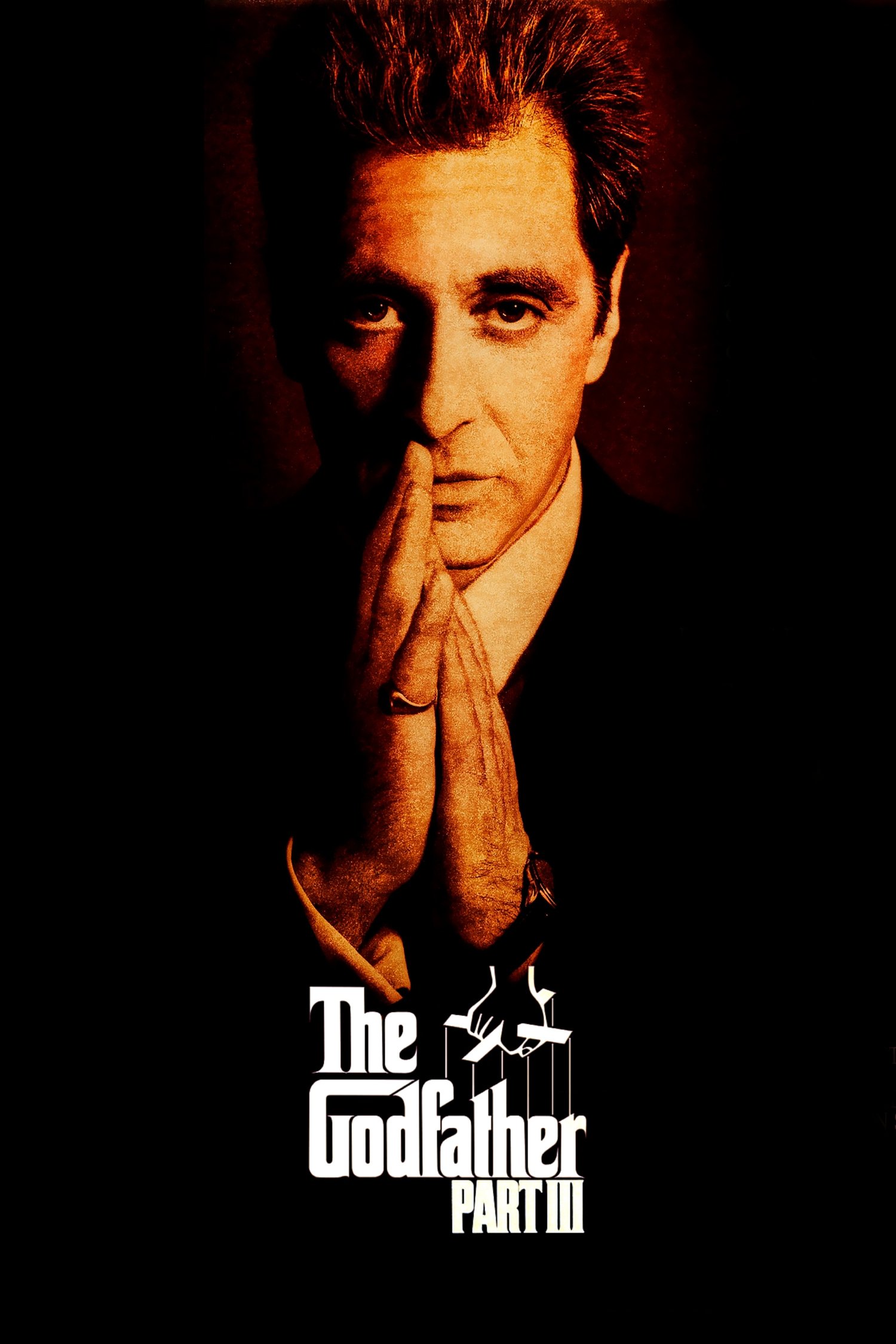
The Archbishop Gilday actor (transcribed "Donald Donnelly") is placed in both aged best and aged worst: bizarre, singular, acting from his tonsils; Albert Finney and Marcello Mastroianni were reportedly discussed for the part.
Andy Garcia and the bastard-son concept age best, because the son has something to prove. — Bill Simmons
Pacino's "I command this family, right or wrong... it was not what I wanted" followed by "understand" shows awareness of his own temper, unlike the later overacting.
Al Neri, Fredo's killer, is still kept around 20 years later. — Bill Simmons
Italy always ages best, and the Apollonia flashbacks are welcome as Michael's true love. — Bill Simmons
The award is introduced with Pacino impressions from Heat, after two very long Heat podcasts. — Chris Ryan
No one overdoes it here, since the film's point is that everyone underplays.
Albert Finney's red pants are questioned, and Jerry Wynetrabs / Wynetrobb (as transcribed) is offered as overdoing it without speaking; the pick is accepted.
Andy Garcia is proposed for Terry Benedict's speech to Virgil and Turk and for stabbing people with his cane; a tight field is debated. — Amanda Dobbins
Virgil's thank-you down the table is a favorite shot.
Eddie Izard (as transcribed) and Robbie Coltrane are raised but may be too famous.
Others agree on Willis; Jared Harris as Basher's engineer is praised as Soderbergh catching him years before Chernobyl, and Willis keeps the award.
Toe for Grace's (as transcribed) one scene is mentioned afterward as an overlooked nominee. — Chris Ryan
The award is temporarily renamed for a British character actor, the Denholm Elliot award; nominees are Rory Kinnear, in every good English television show, Helen McCrory, who goes on to play Polly Shelby in Peaky Blinders, as the minister questioning Judi Dench, Nicholas Woodison from the word-association evaluation, Albert Finney behind the beard, and Ola Rapace, Noomi Rapace's ex-husband and a well-known Swedish actor, as Patrice.
Helen McRory (as transcribed) is the pick, recognizable by voice even without a straight close-up. — Amanda Dobbins
Most humans would pick Rory Kinnear, known for the pig on Black Mirror, while the Anglophile hosts know his shows; the show South Cliff (as transcribed) is recommended.
Judi Dench literally has aged the best: seventy-seven when she gave a performance of just-enough British acting, with the stature and gravitas to make standing over six coffins feel important; Adele's song is an all-time jam.
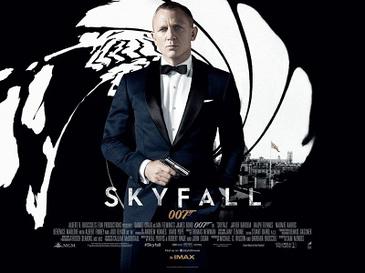
The locations are sensible rather than volcano-and-Tokyo Bond locations: Istanbul and London, very London-centric, like a board of tourism; the fiftieth anniversary of the series and the Broccoli family's hubbub may have driven the reminder that this is a British spy from Scotland, and M's garage line about the car not being ostentatious is a favorite Dench moment.
Waning empire keeps waning, the ministers' hearings read as Brexit, and movies about washed-up middle-aged men are on trend for 2019; the cast has not a single error, and the Deakins photography would be cutting-edge if released today.
Casting a prestige director for a franchise has aged well: Mendes had just bricked with Away We Go after American Beauty, Road to Perdition, Jarhead and Revolutionary Road and retreated to theater, with the New Yorker covering him and Jez Butterworth; the Bond films had been a schlocky volume play that needed re-engineering into an event, and the move leads to Ryan Coogler doing Creed and Black Panther.
Tarantino was long rumored for a Bond film, Danny Boyle left the most recent one, and Nolan would be bank-breaking but only makes Warner Brothers movies; Mendes openly lifted the Dark Knight aesthetic, and Nolan's films are themselves a commentary on Bond, with the orphan avenging sins in common.
Costumes have aged well: Ben Whishaw's climactic Dries sweater and museum parka, the cut of Craig's suits, Moneypenny's business casual, the barber jackets (as transcribed), the final Skyfall look with boots, and the wool-looking training tracksuit with low-top Adidas that only Craig could wear; everyone's sweatpants should fit like that rather than like the Ad Astra moon base.
Albert Finney's last film performance has aged well: a perfect role for an actor of his age as a father figure to old Scotland, old England and Shakespearean movie acting.
The song has the highest approval rating and is chosen; an Oscar winner.
Five candidates are laid out, with an effort to keep scene distinct from sequence: the Shanghai skyscraper shootout, the new MI6 introduction in Churchill's tunnels with word association and sit-ups while Rory Kinnear briefs him on the state of the world, Silva and Bond's first meeting with the William Tell scene, the tube chase, and the church scene at the end; a Shanghai versus Macau mix-up is corrected along the way.
Smaller stuff is what connects one host to the movie: the first meeting with Q in front of the Turner painting, talking in metaphor and at cross purposes in really well-written dialogue, with Wishaw great as Q; it is not a sequence where a train bursts through the ground.
M reading Tennyson at the inquiry, cut against Daniel Craig sprinting through London with Big Ben behind him, lays it on thick but is moving every time; Craig is called a fantastic movie runner, maybe number two behind Cruise, and the film came out months after the London Olympics, which Bond kicked off in the Danny Boyle opening with the queen.
Mallory and M's philosophical conversation about whether the enemy is in the shadows is a favorite dialogue scene, read as metaphor about waging a war on terror and the rights of a government to exceed its power, reflected later in the court scene; nothing in Quantum of Solace, written during the writer's strike, has that crispness.
Two more suggestions: the planning conversation at Skyfall with Albert Finney's Kincaid, including the line about men coming to kill us and killing them first, which is right out of Eastwood, and the fight on top of the train with the excavator and the sleeve adjustment; the Istanbul opening with Moneypenny feels like typical Bond until M orders her to take the shot, and the motorcycle chase on the narrow walkway is illogical but shot beautifully.
The pick is called a category of one: the Silva intro, shot by Mendes and Deakins from right behind Bond's shoulder as the villain comes down in an elevator and starts talking from forty feet away, his face withheld until the rats story nears its conclusion; the filmmakers knew what they had and let it play, and the episode plays the rat speech from the film.
The scene inverts the Bond convention of saving the villain's big speech for the end, as parodied by Austin Powers, by putting it at the close of the first act; it is playwriting, one long metaphor monologue, spiced with the question of whether Silva is sexually attracted to Bond or something fraternal, and the hosts wonder whether the unbuttoning was in the script.
Bardem is called the greatest Bond girl, lighting Craig up more than anyone since Eva Green; the villain tilts the movie on its axis, funny and destabilizing and more unsettling than other Bond villains, while the backstory with M is brushed aside in one line about Hong Kong.
Silva hacking Bond and MI6 in 2012 is seen as prescient, a technocracy story rather than the money-and-power plots of villains like Mads Mikkelsen's; the abandoned island, shot off Macau but based on one off Nagasaki, is a faded ghost town that parallels Bond's own enjoying-death stretch.
The scorpion scene is loved, with a nitpick that a British guy doing scorpion tricks in a Turkish bar while keeping a low profile would go viral; Silva mirrors Bond as a lone wolf with mommy issues operating to his own ends.
After the action discussion, the answer is the rats speech, the Silva intro.