
Stats
- Episodes featuring their films
- 2
- Movies in this archive
- 2
Rewatchables episodes featuring Common’s films


Mentioned in discussions

What’s Aged the Worst?
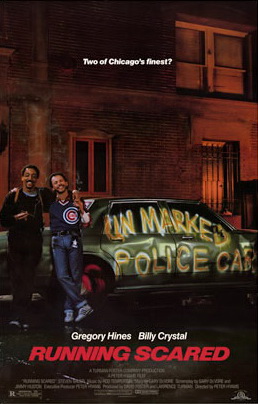
Reused title; uncontainable villains; Uzis; police abuse; scarf flourish; interrupted sex; repetitive final hour; soundtrack beyond Sweet Freedom; fake snow; underused R rating
In the discussion (10)
- The unrelated 2006 Running Scared creates title confusion on cable, streaming, search, and the episode title. — Bill Simmons
- Uzis are described as a once-common film prop that seems to have fallen out of fashion; the speakers remain unsure whether they still appear in newer action films. — Chris Ryan
- Constant police brutality and rule-breaking are identified as another dated genre convention. — Chris Ryan
- Crystal’s repeated scarf flip feels more like a performer bit than Danny Costanzo behavior. — Chris Ryan
- Walking into a friend’s bedroom during sex is described as something films rarely show now, while Hines’s character seems completely comfortable with the interruption. — Chris Ryan
- The last hour repeats confrontations with Julio and could lose roughly seven minutes, especially from the airport chase. — Bill Simmons
- Sweet Freedom carries an otherwise weak, loud, synth-heavy soundtrack. — Bill Simmons
- Some artificial Chicago snow looks cheap. — Bill Simmons
- The movie is rated R, but the hosts ask why it did not “earn the R” with the adult material it repeatedly approaches. — Bill Simmons
- A murderer being released immediately after an obvious public killing is offered as Aged Worst before the same trope is defended separately as Aged Best. — Bill Simmons

What’s Aged the Best?
Cop names; angry lieutenants; rival buddy cops; Steven Bauer’s look; uncontainable villains; unannounced visits; dead-body escalator; friendship; poster; company cars; croissant mockery; Chicago bars
In the discussion (10)
- Ray Hughes and Danny Costanzo are praised as archetypal cop names. — Bill Simmons
- Dan Hadea preserves the angry-lieutenant tradition and prompts a long Inspector Todd riff. — Bill Simmons
- A buddy-cop movie with rival buddy cops is admired even though the “young” rivals are the same age as Hines. — Bill Simmons
- Stephen Bauer’s layered clothes, beard, and unwashed energy are described as peak mid-1980s texture. — Bill Simmons
- A villain committing murder and immediately returning to the street is defended as an essential action-movie staple. — Bill Simmons
- Unannounced visits are remembered as common before cellphones; a recent personal doorstep visit shows the habit has not entirely vanished. — Bill Simmons
- A dead bad guy descending an escalator, “you are the detectives, go and detect,” and the poster are preserved as memorable images. — Bill Simmons
- Company cars, including the detectives’ unmarked car, prompt nostalgia for shared workplace vehicles. — Chris Ryan
- The period’s derision toward croissants is treated as a comic cultural marker. — Chris Ryan
- Chicago bars look unusually good on film and function as the characters’ living rooms. — Bill Simmons

The Butch’s Girlfriend Award for the Weakest Link in the Film
Closing kiss; Bill and Melissa’s relationship
In the discussion (2)
- The abrupt closing kiss feels emotionally unconvincing; a Dusty-and-Melissa return is jokingly proposed instead. — Bill Simmons
- Bill and Melissa’s lack of apparent common interests makes their relationship hard to understand.


Picking Nits
Unclear day job; Godfather crossover; ring experience; recovery; relationship pacing; eye makeup; post-fight respect
In the discussion (6)
- Nitpicks/unanswerable: Adonis’s financial-services job and work history are unclear, and weekend Tijuana boxing seems incompatible with managing clients’ money; Don Johnson is an appealing adviser-name joke.
- Nitpick: Donnie’s Godfather impression crosses fictional worlds because Talia Shire appears in both franchises. — Chris Ryan
- Nitpicks: Adonis has too little ring experience for this fight, despite a Ngannou comparison. Tijuana matchmaking is questioned; Van describes paid easy opponents as possible, but says he never did it. — Van Lathan
- Nitpicks: Rocky’s rapid cancer recovery and international travel, Bianca’s abrupt backstage intimacy, Conlan’s physique and vulnerability, and Donnie’s swollen-eye makeup. — Bill Simmons
- Changing Adonis’s maternal surname is challenged, then the objection is withdrawn when both Johnson and Creed are noted on the trunks. — Van Lathan
- Conlan’s warm post-fight respect seems abrupt after their hostility, though reconciliation is called common in boxing; the length of his British gun sentence prompts jokes.


Most Rewatchable Scene
Verheek murder/Riverwalk sequence; classroom scene; all Shepard scenes
In the discussion (14)
- The two judicial murders open the candidates; the first setting is corrected from a nursing home to a private home with a nurse. — Bill Simmons
- Darby researches the common ground between the justices and presents her theory to Callahan.
- Callahan’s car explodes after his remark that Michelle takes his breath away. — Bill Simmons
- Verheek’s murder and Khamel’s subsequent attempt on Darby form a favored sequence.
- Darby meets Gray in New York and explains that everyone she told about the brief is dead.
- The newsroom scenes reunite Washington and Lithgow. — Bill Simmons
- Coal warns the president in the limousine that the brief will not disappear. — Bill Simmons
- Retrieving the safe-deposit box leads to the parking-garage chase. — Bill Simmons
- The president finds Coal watching in the camera room. — Bill Simmons
- The farewell hug and Gray’s television interview conclude the story.
- The final meeting with Voyles feels like the most triumphant moment.
- The Riverwalk assassination is a final choice, especially the crowd scattering after the shooting. — Chris Ryan
- Callahan’s classroom scene is another final choice for its distinctly 1990s atmosphere.
- All of Shepard’s scenes together are the remaining final choice. — Bill Simmons

Producer review
Entertaining and grounded in history; Eastwood’s delivery too slow
In the discussion (6)
- The film is enjoyed, with a nearby listener’s reactions used as evidence of compelling scenes. — Craig Horlbeck
- The grounding in real history is praised. — Craig Horlbeck
- Major stars playing terrible people is praised as a less common contemporary practice.
- The immediate boat-scene opening is praised instead of a slow Washington montage.
- Eastwood’s slow delivery is criticized from a younger viewer’s perspective. — Craig Horlbeck
- Another view notes that this is relatively lively by Eastwood’s standards, while the complaint that he always seems too old remains. — Bill Simmons
What’s Aged the Best?
De Niro’s vulnerability; marriage; thunderbolt romance; Capra; refusing mob money; music; stickball; baseball; narration; cast; mob dialogue; interracial romance; persistent social codes
In the discussion (10)
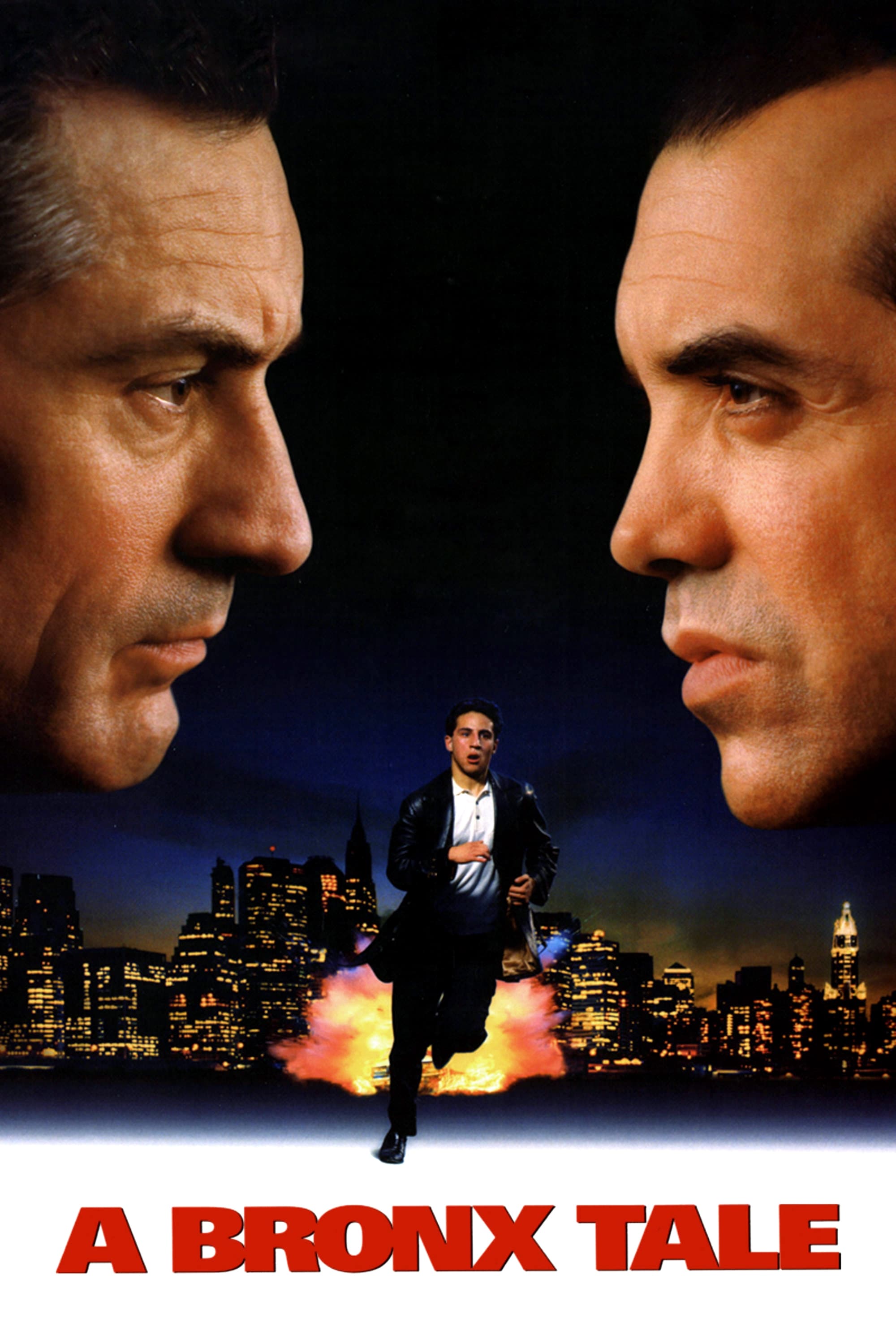
- De Niro’s varied early-1990 s work is praised, especially Lorenzo’s unusually vulnerable ordinary-man presence.
- Lorenzo’s marriage is unusually functional for a De Niro character.
- The sudden romantic thunderbolt is linked with The Godfather and Goodfellas. — Bill Simmons
- Young C’s hair and Francis Capra’s performance are praised, with his Veronica Mars work recalled. — Bill Simmons
- Good guys refusing mob offers of $150 a week to drop off numbers are admired. — Bill Simmons
- The Sinatra and doo-wop soundtrack and stickball montage are praised. — Bill Simmons
- Baseball nostalgia and the scale of historic records before today’s crowded sports landscape are appreciated. — Bill Simmons
- The narration works, Zero is a good nickname, Hicks is compelling and the young cast is strong.
- Mobsters telling people to get out remain reliably funny.
- The interracial relationship is contrasted with more common modern depictions; racism and anti-snitching codes remain recognizable. — Van Lathan
What’s Aged the Best?
Title and jokes; reruns; Deflategate reference; common ground; Mona Lisa’s styling
In the discussion (7)
- The spoken title is enjoyed, as is the convertible answer to the beans-and-flatulence joke. — Bill Simmons
- The Joey Callo name momentarily evokes Joey Gallo and his later baseball namesake. — Bill Simmons
- Bruce McGill’s anecdote about laughing at himself on an airplane illustrates the film’s durable rerun appeal; he is considered too established for That Guy eligibility. — Bill Simmons
- Belichick’s Mona Lisa Vito reference during Deflategate is selected as a particularly strong example of the movie’s cultural afterlife. — Bill Simmons
- The screenplay’s pattern of people underestimating one another before finding common ground remains satisfying and warm. — Chris Ryan
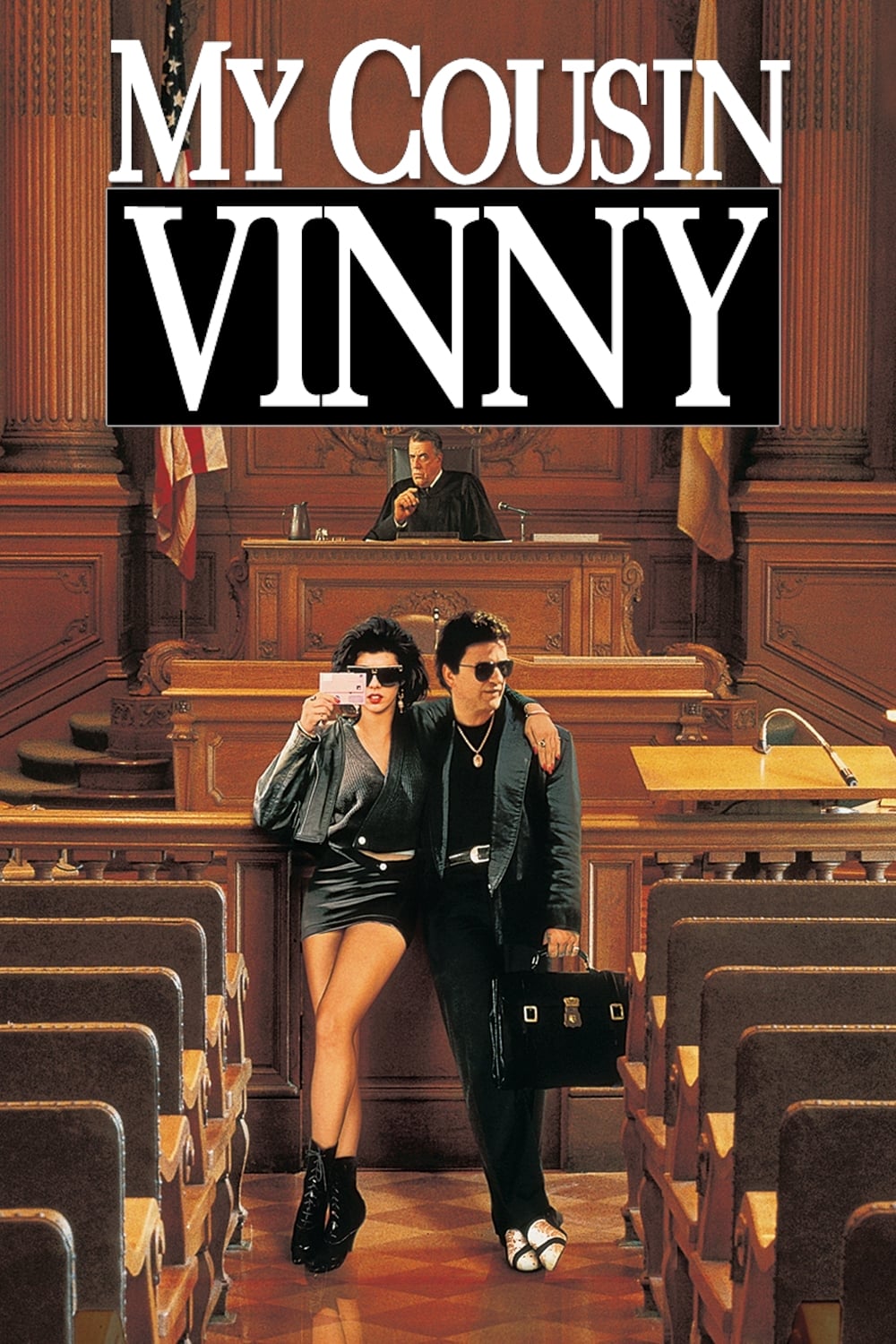
- Mona Lisa’s wardrobe, particularly the biological-clock jumpsuit, remains striking and is compared with The Nanny’s clothes.
- Mona Lisa’s styling includes shoulder pads, a black suit with purple trim and gold studs, and appealing unmade-up hotel-room moments. — Wesley Morris
Most Rewatchable Scene
Mona Lisa on the stand
In the discussion (12)
- The police-confession misunderstanding works as comedy despite the implausible delay in explaining the murder charge. — Bill Simmons
- Stan mistakes Vinny’s legal-services conversation for a prison-sex negotiation, with Pesci’s commitment making the sketch-like misunderstanding work.
- Vinny collecting the $200 and recognizing a counteroffer is nominated. — Bill Simmons
- Vinny fighting to retain the case and his cousin persuading Stan to keep him are praised. — Bill Simmons
- Mona Lisa’s reactions before and after the hunting trip, including her disclosure correction and reading the law book, are admired. — Bill Simmons
- The two youths exchange is among the nominated courtroom moments. — Wesley Morris
- The grits cross-examination is nominated as the point where Vinny’s courtroom work begins to click.
- Grits become common ground between Italian and Southern food cultures, paying off the breakfast setup. — Wesley Morris
- Asking how the witness cooks his grits establishes a fifteen-minute preparation time that exposes the timing contradiction. — Bill Simmons
- The thicker-glasses cross-examination with the tape measure is praised as effective theater. — Bill Simmons
- Mona Lisa on the stand is the chosen scene; Vinny’s movement and her gradual engagement are admired as choreography that works even without sound. — Chris Ryan
- The innocent opening convenience-store scene is belatedly nominated.


What Piece of Memorabilia Would You Want From This Movie?
The authentic Lincoln Jesus Shuttlesworth jersey
In the discussion (4)
- Jake's Air Jordan 13s are the first memorabilia choice.
- The matching rubber bands worn by father and son are considered. — Logan Murdock
- An authentic Lincoln Jesus Shuttlesworth jersey is selected over common replicas. — Bill Simmons
- The worn basketball from the ending is offered as a choice for the ending's defender.
In the discussion (4)
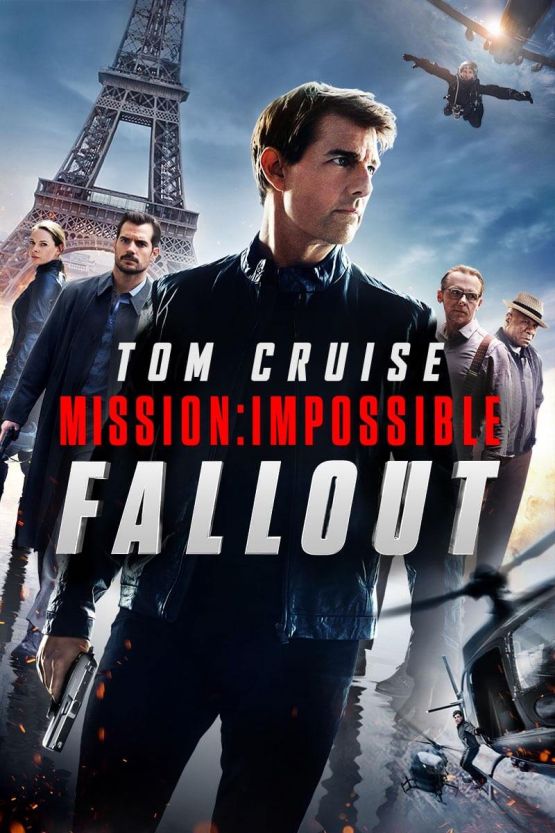
- Rogue Nation is proposed for continuity. — Bill Simmons
- John Wick: Chapter 2 is a pairing, with its challenge to Mission: Impossible disputed.
- Top Gun: Maverick is another pairing. — Chris Ryan
- Wick’s stunt-star challenge is acknowledged while mythology/spinoffs draw criticism. A defender rates the Common fight as equal to this film; another disagrees, though the subway shooting is cool. — Bill Simmons
Half-Assed Internet Research
Box office, television success and theater backgrounds
In the discussion (17)
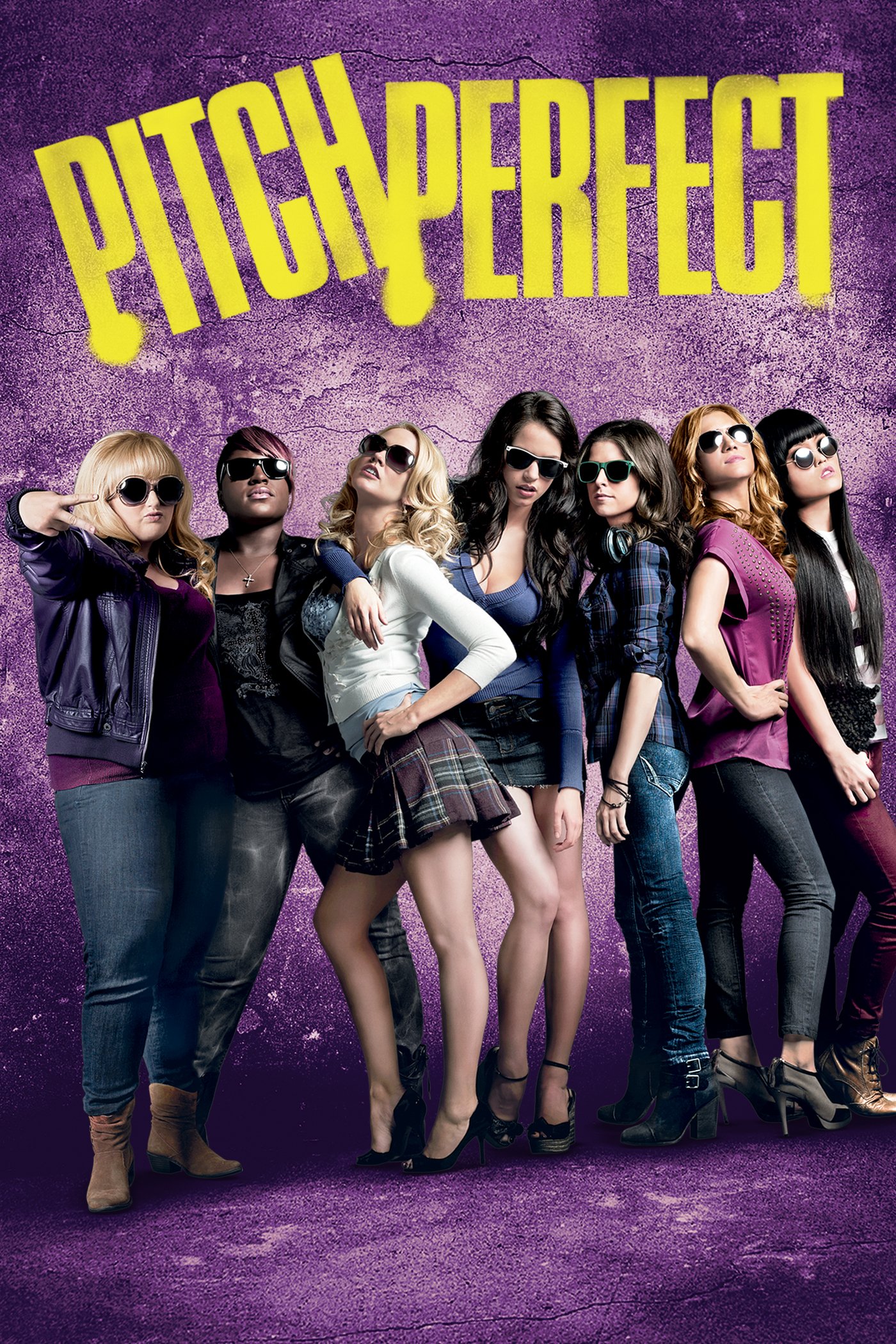
- The film reportedly surpassed School of Rock as the highest-grossing musical comedy. — Kate Halliwell
- The reported budget is $17 million and gross $115 million; it was HBO’s top-performing 2013 film, ahead of The Dark Knight Rises and Ted. — Juliet Litman
- Kendrick’s Tony nomination at twelve and musical-film background are recalled; an initial denial that she attended Stagedoor Manor is corrected when research places her there with Skylar Astin. — Juliet Litman
- The Twilight production reportedly accommodated Kendrick’s schedule for this film. — Juliet Litman
- Wilson’s reported age misrepresentation is recalled as an unfair controversy, given how common such practices are in Hollywood. — Juliet Litman
- The soundtrack’s reported number-one chart success and Cups’ thirty-two weeks on the charts are cited; movie and pop versions are distinguished. — Juliet Litman
- The shower scene was reportedly filmed naked, which the panel finds unnecessary. — Jodi Walker
- LSU is identified as the filming location, surprising a participant who liked the campus appearance.
- Lily’s actress reportedly auditioned with a Korean folk song, making her mostly inaudible role especially disappointing to the panel. — Kate Halliwell
- The film loosely adapts the book Pitch Perfect; Devine reportedly mistook the title for a baseball movie and arrived without a song prepared. — Jodi Walker
- Wilson and Devine’s improvised chemistry reportedly led to their relationship being added to the script. — Jodi Walker
- Dean co-wrote Rihanna’s S&M, performed in the film; her prolific songwriting and later coaching role on a songwriter competition are celebrated. — Juliet Litman
- Conflicting reports give Devine’s unprepared audition song as either the Full House or Family Matters theme; the uncertainty is retained. — Juliet Litman
- Jesse’s beloved movie was originally Say Anything rather than The Breakfast Club. — Juliet Litman
- Ace of Base was selected to sound lame to the Bellas; the choice is challenged because the original pop song is admired, although the film’s arrangement succeeds in making it grating. — Juliet Litman
- The Tufts Beelzebubs are described as a model for the Treblemakers and connected to the film through a consultant. — Juliet Litman
- The earlier uncertain Tufts consultant name is corrected explicitly to Deke Sharon. — Juliet Litman


