‹ All movies
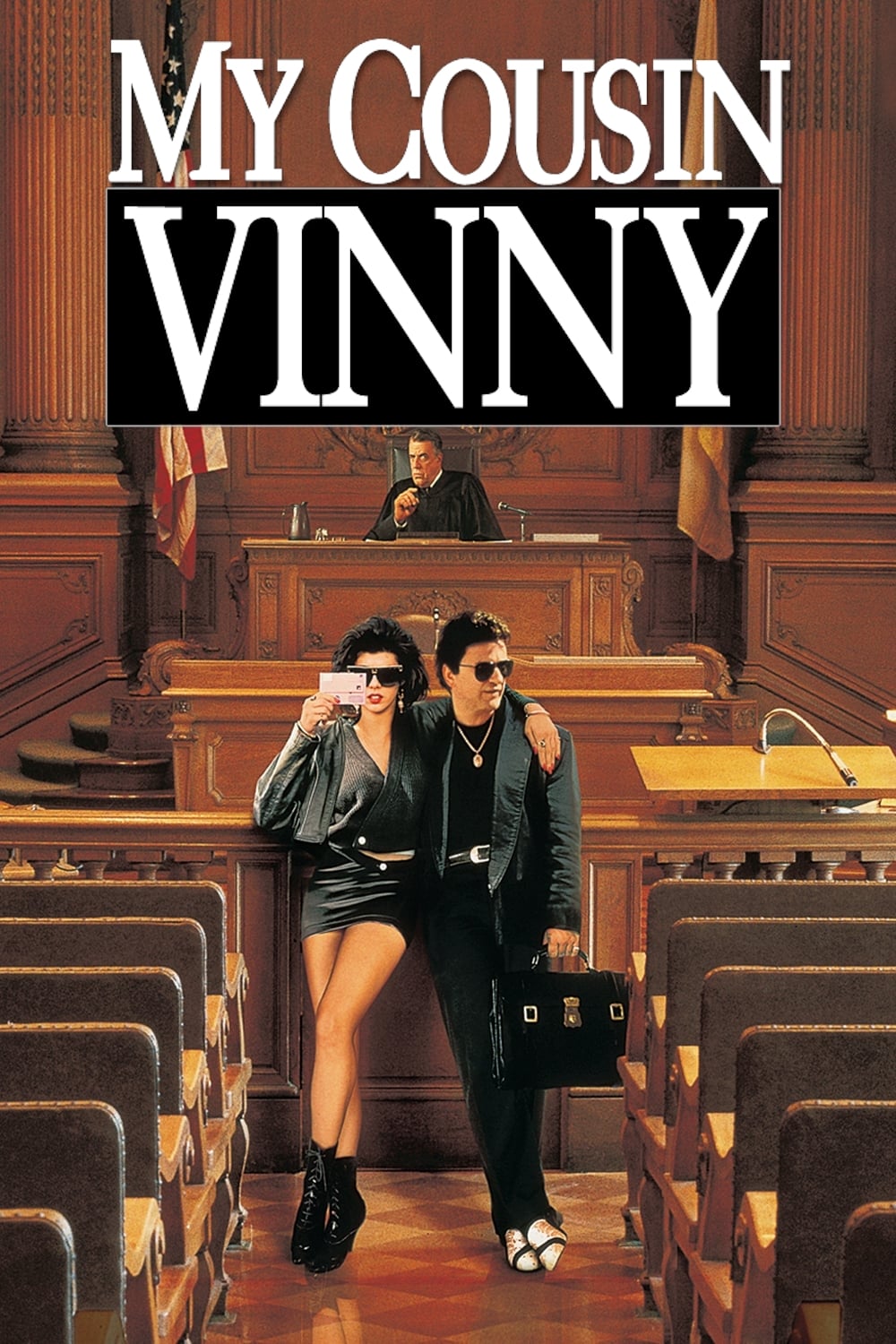
My Cousin Vinny poster

My Cousin Vinny

114 minutes

Cast

Selected cast credits · Film reference

Joe Pesci Vincent Vinny LaGuardia Gambini
Ralph Macchio William Bill Robert Gambini
Marisa Tomei Mona Lisa Vito
Mitchell Whitfield Stanley Stan Marcus Rothenstein
Lane Smith Jim Trotter III
Austin Pendleton John Gibbons
Maury Chaykin Sam Tipton
Bruce McGill Sheriff Farley
Fred Gwynne Judge Chamberlain Haller
Pauline Myers Constance Riley
Raynor Scheine Ernie Crane
James Rebhorn George Wilbur
Michael Simpson Neckbrace
Lou Walker Grits cook
Kenny Jones Jimmy Willis
Thomas Merdis Man in town square
J. Don Ferguson Guard #1
Michael Genevie Guard #2
Jeff Lewis Deputy #1
Ron Leggett Deputy #2
Aubrey J. Osteen Deputy #3
Larry Shuler Hotel clerk
Suzi Bass Woman
Michael Burgess Prison van driver
Bill Coates Bailiff
Jill Jane Clements Courtroom clerk
Muriel Moore Juror #1
Bob Penny Juror #2

My Cousin Vinny | The Rewatchables

Explore episodeClose episode

Half-Assed Internet Research

Mamet; Oscar field; ages; budget and gross; bar attempts; chessboard; tuna; ABA ranking; lounge album

In the discussion (9)
Approx. transcript time · 00:09:24Read transcript
  • David Mamet reportedly told the director this was the best American comedy ever written.
  • Tomei’s supporting-actress opponents were Vanessa Redgrave for Howards End, Miranda Richardson for Damage, Judy Davis for Husbands and Wives and Joan Plowright for Enchanted April.
  • Makeup and lighting reportedly minimized the stars’ age gap, provisionally estimated as Tomei in her twenties and Pesci in his late forties.
  • The budget is reported as $11 million and the gross as $64 million.
  • Launer reportedly built the idea from a lawyer who passed the bar on the thirteenth attempt and imagined what would happen if that lawyer represented someone.
  • Pesci accidentally knocking over the chessboard while explaining his name was reportedly retained in the film.
  • Macchio reportedly is asked to autograph tuna cans because the opening hinges on an inexpensive can.
  • The ABA Journal reportedly ranked the film third among 25 legal films; Jonathan Lynn’s law degree is connected with his attention to legal detail.
  • Pesci made a later lounge album as Vinny, recalled as Vincent LaGuardia Gambini Sings Just for You.

The Stephen A. Smith Hottest Take Award

Best American comedy ever written

In the discussion (1)
Approx. transcript time · 00:09:24Read transcript
  • Mamet’s reported best-American-comedy praise prompts a joking suggestion to rename the hottest-take award; no permanent rename is established.

Probably Unanswerable Questions

Pesci’s wigs; relationship future; Brooklyn law; death-penalty protest; missing press

In the discussion (5)
Approx. transcript time · 00:30:30Read transcript
  • Pesci is proposed as the greatest wig actor; the group cannot confidently identify his natural hair and briefly considers The Irishman.
  • Vinny and Lisa are predicted to stay together, with some hesitation; their promised marriage and affectionate banter support the optimistic reading.
  • Whether Vinny’s newly learned courtroom lessons translate to Brooklyn is questioned.
  • The capital-punishment protest and flippant electrocution jokes create an unresolved tonal contradiction.
  • The complete absence of journalists is questioned because even one reporter could challenge the arrests; regional-paper coverage seems plausible.

Roger Ebert's review

In the discussion (1)
Approx. transcript time · 00:34:57Read transcript
  • Ebert awarded 2.5 stars, describing a meandering start transformed by a late burst of brilliance and recommending it as a home-video rental rather than a theatrical trip.

Most Rewatchable Scene

Mona Lisa on the stand

In the discussion (12)
Approx. transcript time · 00:35:37Read transcript
  • The police-confession misunderstanding works as comedy despite the implausible delay in explaining the murder charge.
  • Stan mistakes Vinny’s legal-services conversation for a prison-sex negotiation, with Pesci’s commitment making the sketch-like misunderstanding work.
  • Vinny collecting the $200 and recognizing a counteroffer is nominated.
  • Vinny fighting to retain the case and his cousin persuading Stan to keep him are praised.
  • Mona Lisa’s reactions before and after the hunting trip, including her disclosure correction and reading the law book, are admired.
  • The two youths exchange is among the nominated courtroom moments.
  • The grits cross-examination is nominated as the point where Vinny’s courtroom work begins to click.
  • Grits become common ground between Italian and Southern food cultures, paying off the breakfast setup.
  • Asking how the witness cooks his grits establishes a fifteen-minute preparation time that exposes the timing contradiction.
  • The thicker-glasses cross-examination with the tape measure is praised as effective theater.
  • Mona Lisa on the stand is the chosen scene; Vinny’s movement and her gradual engagement are admired as choreography that works even without sound.
  • The innocent opening convenience-store scene is belatedly nominated.

What’s Aged the Best?

Title and jokes; reruns; Deflategate reference; common ground; Mona Lisa’s styling

In the discussion (7)
Approx. transcript time · 00:42:23Read transcript
  • The spoken title is enjoyed, as is the convertible answer to the beans-and-flatulence joke.
  • The Joey Callo name momentarily evokes Joey Gallo and his later baseball namesake.
  • Bruce McGill’s anecdote about laughing at himself on an airplane illustrates the film’s durable rerun appeal; he is considered too established for That Guy eligibility.
  • Belichick’s Mona Lisa Vito reference during Deflategate is selected as a particularly strong example of the movie’s cultural afterlife.
  • The screenplay’s pattern of people underestimating one another before finding common ground remains satisfying and warm.
  • Mona Lisa’s wardrobe, particularly the biological-clock jumpsuit, remains striking and is compared with The Nanny’s clothes.
  • Mona Lisa’s styling includes shoulder pads, a black suit with purple trim and gold studs, and appealing unmade-up hotel-room moments.

Picking Nits

Town attendance; calm defendant; sink manual; redundant cash confrontation

In the discussion (4)
Approx. transcript time · 00:49:42Read transcript
  • The apparently universal attendance at the trial raises the question of whether anything else happens in town.
  • Macchio seems insufficiently frightened by a murder arrest in Alabama, reinforcing the earlier argument that casting Smith would change the story.
  • The availability of a hotel-sink manual is questioned despite its purpose in establishing Mona Lisa’s technical competence.
  • The wad-of-cash confrontation is interpreted as redundant proof of the earlier claim that Vinny detects lies and wins arguments.

What’s Aged the Worst?

Macchio; prison uniforms; lost Munster surprise; Stan; stutter; vanished comedy market; off-set accounts; Ewing shoes, disputed; tuna prices

In the discussion (13)
Approx. transcript time · 00:51:46Read transcript
  • Macchio’s mustache and unconvincing basketball are criticized, with Scott Skiles and Tacko Fall comparisons for his play.
  • The striped prison uniforms are compared with Grease costumes.
  • The original surprise of seeing Herman Munster as the judge has faded as Gwynne’s role here became famous in its own right.
  • Mitchell Whitfield’s Stan performance prompts a wish for more casting auditions, alongside recognition of his later Friends role.
  • Pendleton reportedly regretted the stuttering-lawyer role after angry letters and believed it nearly ended his career.
  • The lawyer-switching subplot is considered unnecessary padding whose function is merely to send Stan back to Vinny.
  • The cast reportedly struggled not to laugh during the public-defender scenes.
  • The stutter is criticized as low comedy; another unexpected trait could have supplied the reversal without making stuttering the joke.
  • The disappearance of the adult-comedy market represented by Dale Launer’s Blind Date, Ruthless People and Dirty Rotten Scoundrels is treated as a bittersweet loss.
  • McGill’s oral-history description of Pesci monopolizing Tomei’s off-set time is treated as uncomfortable information about a reportedly Svengali-like working relationship.
  • McGill’s account of Pesci treating Jonathan Lynn harshly and storming off after the director laughed is received as an unwelcome glimpse behind the comedy.
  • Pesci’s bulky Patrick Ewing shoes divide opinion: dated even then for one response, stylish and useful for a short wearer for another.
  • A tuna can priced in pennies is treated as a vanished detail of everyday shopping.

The Stephen A. Smith Hottest Take Award

Haller wastes resources; film encourages misguided self-representation

In the discussion (2)
Approx. transcript time · 00:58:39Read transcript
  • Judge Haller wastes public time and money by repeatedly jailing Vinny for contempt rather than deciding whether to remove him from the case.
  • The movie is provocatively blamed for encouraging viewers to believe they can defend themselves in court; this remains speculative discussion rather than an established effect.

Casting What-Ifs

Dice Clay; Belushi, uncorroborated; Bracco; Davis; Will Smith

In the discussion (6)
Approx. transcript time · 01:01:49Read transcript
  • Andrew Dice Clay was reportedly the studio’s original preference until an offensive exchange with an executive removed him from consideration; the group doubts the film would work as well with him.
  • Jim Belushi reportedly regretted turning down Vinny, though the discussion questions whether anyone else corroborated an offer.
  • Lorraine Bracco reportedly passed on Mona Lisa.
  • Carol Davis reportedly passed on Mona Lisa; the name remains as transcribed.
  • Will Smith auditioned for Stan, prompting astonishment and initial enthusiasm about improving the performance.
  • A dissent argues that a Black man’s wrongful arrest in Alabama would fundamentally alter the film’s unusually gentle racial setting; colorblind casting as the Jewish character is jokingly proposed and rejected.

Recasting Couch

Wil Wheaton; unnamed young Henry Hill actor; Feldman, Downey and Phoenix questioned

In the discussion (2)
Approx. transcript time · 01:06:32Read transcript
  • Corey Feldman as Stan is considered too much; Downey is judged too established or difficult to fit at this point.
  • Wil Wheaton earns agreement; River Phoenix is probably too much, and the actor who played young Henry Hill is suggested without a name.

Apex Mountain

Pesci’s era, qualified; Tomei; grits; 1964 Buick Skylark convertible; tire tracks; mechanical intelligence

In the discussion (10)
Approx. transcript time · 01:09:16Read transcript
  • Pesci’s peak is located in this broader era, with this successful leading role possibly the exact point.
  • Tomei is an affirmative choice.
  • Italians are rejected here, with an early-2000s Sopranos/Godfather revival and earlier mob power debated as alternatives.
  • Macchio is rejected as an Apex here.
  • McGill is rejected here; The Insider is the favored performance and the1990s a possible broader peak.
  • New Jersey is rejected.
  • Grits receive emphatic agreement, with no better grits movie identified.
  • The1964 Buick Skylark convertible is accepted as an Apex.
  • Tire tracks receive a positive response.
  • Automotive and mechanical intelligence is selected because the explanation of axles and car design actually resolves the story.

More from the conversation

Courtroom month introduces Chris Ryan and Wesley Morris, followed by a trailer excerpt built around the two youths exchange.
Approx. transcript time · 00:01:15Read transcript
The success is contrasted with Pesci vehicles The Super and With Honors; Tomei’s Oscar, legal accuracy and the combination of courtroom, fish-out-of-water and underdog formulas frame the discussion.
Approx. transcript time · 00:02:25Read transcript
Courtroom films are compared with sports movies: the climactic trial is the big game for a washed-up veteran or untested rookie, with The Verdict and Hoosiers as comparisons.
Approx. transcript time · 00:03:38Read transcript
Repeated cable exposure gradually converted an initially mild reaction into affection; Tomei was already familiar from A Different World, while Italian relatives loved the film immediately.
Approx. transcript time · 00:04:51Read transcript
The gentle clash of Italians and the South is compared with Green Book, unfamiliar Rose Bowl opponents and The Sopranos’ Vito and college-visit episodes.
Approx. transcript time · 00:05:40Read transcript
Old-fashioned pacing and predictable stakes may repel younger viewers; screwball conception is distinguished from execution and from the Three’s Company tradition of sexual misunderstandings.
Approx. transcript time · 00:06:40Read transcript
The film is called an overlong but well-acted television-style comedy whose final half hour excels; sleep deprivation artificially extends Vinny’s incompetence.
Approx. transcript time · 00:08:35Read transcript
A David Mamet rename of the hottest-take award is jokingly proposed after his reported praise, without establishing a new recurring category.
Approx. transcript time · 00:09:24Read transcript
A Ralph Macchio anecdote about Coppola argues that time determines a film’s lasting stature; Apocalypse Now, The Godfather, On the Waterfront, West Side Story and Rocky are examples, with This Is the End, 21 Bridges and Triple Frontier discussed as later discoveries.
Approx. transcript time · 00:09:57Read transcript
Fragmented cable viewing makes the final courtroom surge especially rewatchable, even for someone who has not watched the whole film since release.
Approx. transcript time · 00:11:00Read transcript
Gwynne’s reactions and Tomei’s biological-clock, torque and blending-in lines are singled out as cable-viewing magnets.
Approx. transcript time · 00:11:25Read transcript
Tomei’s post-Oscar run is inventoried: Equinox, Chaplin, Untamed Heart, The Paper, Only You, The Perez Family, Four Rooms and Unhook the Stars; attempts to establish her as a leading star are distinguished from sustained success.
Approx. transcript time · 00:12:18Read transcript
Alfre Woodard in Passion Fish, Helena Bonham Carter in Howards End and Rosie Perez in White Men Can’t Jump are proposed as supporting-actress omissions, with Roxy in Basic Instinct added jokingly.
Approx. transcript time · 00:13:19Read transcript
Tomei’s courtroom performance is defended as a tour de force deserving the Oscar, aided by the film’s commercial momentum.
Approx. transcript time · 00:14:07Read transcript
The rumor that Jack Palance announced the wrong Oscar winner is discussed as an unfair cloud over Tomei; the win is defended as legitimate, while one participant leaves a small possibility of deliberate mischief.
Approx. transcript time · 00:14:58Read transcript
The era’s willingness to reward comic performances in Ghost and City Slickers is contrasted with later Oscar habits; the Moonlight/La La Land error complicates retrospective discussion of the rumor.
Approx. transcript time · 00:14:58Read transcript
Later nominations and fearless work in Before the Devil Knows You’re Dead, The Wrestler and In the Bedroom are used to vindicate Tomei’s talent beyond the early win.
Approx. transcript time · 00:17:15Read transcript
Only You is remembered as a darker project originally called Him whose polished fairy-tale treatment weakened it.
Approx. transcript time · 00:18:11Read transcript
Tomei’s Seinfeld appearance is proposed as her best-known exposure then, with Spider-Man the likely contemporary equivalent.
Approx. transcript time · 00:18:49Read transcript
A Sopranos role is wished for Tomei; Annabella Sciorra’s part is suggested while respecting the actual performance. Debi Mazar in Entourage and Cara Buono in Kicking and Screaming are compared with Mona Lisa’s influence.
Approx. transcript time · 00:19:01Read transcript
Tomei is imagined replacing Sofia Coppola in The Godfather Part III and playing the Rebecca De Mornay or Jennifer Jason Leigh roles in Backdraft, or an Amy Brenneman type of part.
Approx. transcript time · 00:19:41Read transcript
Backdraft and The Paper illustrate ensemble studio dramas sold by their trailers; Tomei’s Paper role is described as another version of Mona Lisa.
Approx. transcript time · 00:20:30Read transcript
Ethnically distinctive performers such as Tomei and Rosie Perez may be pigeonholed by defining roles; later understated work helped Tomei escape that restriction.
Approx. transcript time · 00:21:00Read transcript
Tomei’s one win and two further nominations lead into a dispute over Amy Adams’s six nominations.
Approx. transcript time · 00:21:52Read transcript
A prior Contact disagreement resurfaces briefly before the discussion returns to Tomei.
Approx. transcript time · 00:22:17Read transcript
Broad casting of Mediterranean and other ethnic identities in the 1990s is criticized, with Molina and Banderas examples; Tomei’s absence from Goodfellas, Spike Lee films and The Sopranos is considered alongside possible competition with Sciorra.
Approx. transcript time · 00:22:34Read transcript
Pesci’s 1989–1995 run is enumerated: Lethal Weapon2, Goodfellas, Home Alone, JFK, My Cousin Vinny, Home Alone 2, Casino, The Super, A Bronx Tale, Jimmy Hollywood and With Honors, followed by withdrawal from acting.
Approx. transcript time · 00:25:30Read transcript
The comic sidekick becomes the lead while the defendants receive limited screen time; the film avoids becoming a conventional story centered on the two young prisoners.
Approx. transcript time · 00:26:08Read transcript
Pesci’s willingness to commit to strange or unflattering parts is praised even when the performance is disputed; JFK’s David Ferrie and With Honors are compared with his frightening Home Alone presence.
Approx. transcript time · 00:27:21Read transcript
The earlier industry allowed performers to establish a type and then subvert it; Pesci combines gangster menace with physical comedy, unlike a simple modern hero-to-villain switch.
Approx. transcript time · 00:28:44Read transcript
The muddy fall and humiliating courtroom suit work because Pesci plays anger, resignation and confidence rather than openly acknowledging the joke.
Approx. transcript time · 00:29:36Read transcript
Aging and appearance lead to discussion of Pesci’s appeal opposite Tomei, with one participant finding him sexy despite the large age difference.
Approx. transcript time · 00:31:31Read transcript
Pesci’s short stature does not undermine his menace in the money confrontation; Pacino, Robinson, Cagney, Keaton, Chaplin and Cruise are compared as shorter stars.
Approx. transcript time · 00:32:19Read transcript
Pesci’s obvious hairpieces are treated as self-aware construction, contrasting with speculation about McConaughey’s hair and Ed Harris’s bald-versus-wig roles.
Approx. transcript time · 00:32:59Read transcript
The film is described as a sleeper against Fox’s Alien 3 and White Men Can’t Jump, with Wayne’s World and Basic Instinct also competing for attention.
Approx. transcript time · 00:34:34Read transcript
Jury reaction acting is praised, particularly the woman responding to the grits and Mona Lisa testimony; a personal jury-service story recalls writing an NBA column while appearing to take notes.
Approx. transcript time · 00:39:14Read transcript
Vinny and Mona Lisa’s chemistry makes the relationship convincing; their affectionate bickering prompts discussion of real couples whose private arguments spill into social dinners.
Approx. transcript time · 00:41:15Read transcript
A new category for movies speaking their own title is proposed, without an established award being declared.
Approx. transcript time · 00:42:47Read transcript
The Nanny is discussed as a Jewish sitcom whose Fran Drescher characterization and striking clothes echo Mona Lisa; streaming makes a complete rewatch possible.
Approx. transcript time · 00:44:35Read transcript
Fran Drescher’s attractiveness and comic intelligence generate a long, playful debate, including Saturday Night Fever and the possibility of a Vinny-like television series.
Approx. transcript time · 00:46:46Read transcript
A sidebar contrasts Edie Falco in Cop Land with awkward cinematic smoking by Sandra Bullock in A Time to Kill and Laura Linney in Primal Fear.
Approx. transcript time · 00:47:34Read transcript
The town’s warmly integrated community is admired in contrast with the racial conflict common to courtroom movies; the central friction here is Italians versus locals.
Approx. transcript time · 00:49:56Read transcript
Will Smith’s possible casting prompts a trade joke about Whitfield inheriting Bad Boys or Six Degrees of Separation, with the latter also judged a poor fit.
Approx. transcript time · 01:04:42Read transcript
A sequel was discussed but not made; remembered sequel material turns out to be a novelization, and the group appreciates leaving the original alone.
Approx. transcript time · 01:09:01Read transcript
A proposed addition of Joe Pesci to the recurring better-with list is accepted for the next episode, with concern that Wayne Jenkins has overshadowed the other alternatives.
Approx. transcript time · 01:15:02Read transcript
Drive-away endings divide opinion: Good Will Hunting and Thelma & Louise are invoked, Rain Man is corrected to a train ending, and this film’s affectionate in-car conversation receives a defense.
Approx. transcript time · 01:15:37Read transcript
Jury-selection scenes prompt a sidebar on Suspect, the failure of The Juror and a possible rewatch of Runaway Jury.
Approx. transcript time · 01:20:42Read transcript
Tomei’s arrival is praised as an extraordinary first major showcase, compared with Primal Fear and jokingly with Shannon Tweed in Hot Dog; Roxy recasting and her Empire appearance extend the discussion.
Approx. transcript time · 01:21:53Read transcript
Dark courtroom drama is preferred by some, while Legally Blonde’s comic trial is defended; a partially uncertain Mae West courtroom recollection illustrates both comic skill and troubling racial conventions.
Approx. transcript time · 01:23:48Read transcript
The grits reveal is compared with a dramatic courtroom confrontation, and the televised O.J. glove demonstration prompts the thought that real trials now surpass invented ones.
Approx. transcript time · 01:26:11Read transcript
Jessie Lopez is explicitly credited as producer; Craig Horlbeck is said to be away, and the closing returns to courtroom month and the Drescher joke.
Approx. transcript time · 01:26:35Read transcript