
‹ All movies
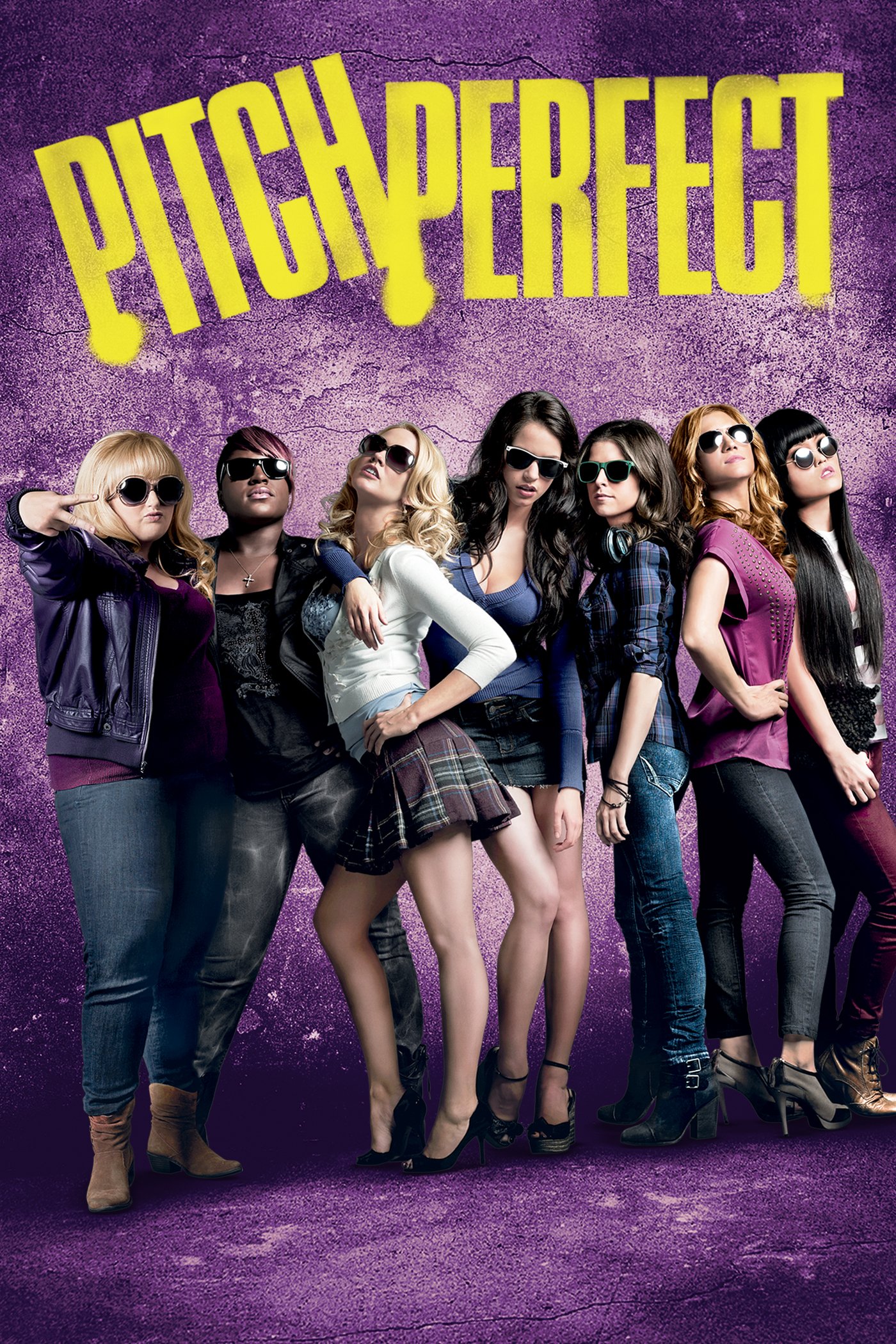
Pitch Perfect poster

Pitch Perfect

112 minutes

Cast

Selected cast credits · Film reference

Pitch Perfect | The Rewatchables

Explore episodeClose episode

Producer credits not yet identified.

Half-Assed Internet Research

Box office, television success and theater backgrounds

In the discussion (17)
Approx. transcript time · 00:03:58Read transcript
  • The film reportedly surpassed School of Rock as the highest-grossing musical comedy.
  • The reported budget is $17 million and gross $115 million; it was HBO’s top-performing 2013 film, ahead of The Dark Knight Rises and Ted.
  • Kendrick’s Tony nomination at twelve and musical-film background are recalled; an initial denial that she attended Stagedoor Manor is corrected when research places her there with Skylar Astin.
  • The Twilight production reportedly accommodated Kendrick’s schedule for this film.
  • Wilson’s reported age misrepresentation is recalled as an unfair controversy, given how common such practices are in Hollywood.
  • The soundtrack’s reported number-one chart success and Cups’ thirty-two weeks on the charts are cited; movie and pop versions are distinguished.
  • The shower scene was reportedly filmed naked, which the panel finds unnecessary.
  • LSU is identified as the filming location, surprising a participant who liked the campus appearance.
  • Lily’s actress reportedly auditioned with a Korean folk song, making her mostly inaudible role especially disappointing to the panel.
  • The film loosely adapts the book Pitch Perfect; Devine reportedly mistook the title for a baseball movie and arrived without a song prepared.
  • Wilson and Devine’s improvised chemistry reportedly led to their relationship being added to the script.
  • Dean co-wrote Rihanna’s S&M, performed in the film; her prolific songwriting and later coaching role on a songwriter competition are celebrated.
  • Conflicting reports give Devine’s unprepared audition song as either the Full House or Family Matters theme; the uncertainty is retained.
  • Jesse’s beloved movie was originally Say Anything rather than The Breakfast Club.
  • Ace of Base was selected to sound lame to the Bellas; the choice is challenged because the original pop song is admired, although the film’s arrangement succeeds in making it grating.
  • The Tufts Beelzebubs are described as a model for the Treblemakers and connected to the film through a consultant.
  • The earlier uncertain Tufts consultant name is corrected explicitly to Deke Sharon.

Roger Ebert's review

Rating not yet verified
In the discussion (1)
Approx. transcript time · 00:11:40Read transcript
  • Ebert’s praise for Kendrick and the precision of the Bellas’ choreography surprises the panel, which considers the choreography embarrassing; no numeric score is read.

What’s Aged the Worst?

Lily and prejudiced humor; vomiting; intrusive shower; Beca’s career plan; dated references

In the discussion (12)
Approx. transcript time · 00:17:11Read transcript
  • The treatment of Lily and Beca’s roommate, predatory-lesbian jokes and weight humor have aged poorly; apparent self-awareness does not rebut the insults, and Amy’s initial reclamation of fat gives way to punching down.
  • Kendrick’s No Diggity rap is considered awkward even at the original theatrical viewing.
  • Her delivery resembles spoken word rather than rapping; the singing improves it, and intended awkwardness provides a partial defense.
  • Chloe entering Beca’s shower and refusing to leave, with another naked observer joining, has aged badly.
  • Repeated vomiting is intolerable, especially the prolonged final fight and Lily’s snow angels; the brief opening shock receives a limited defense.
  • Lily’s silent, strange Asian stereotype is the worst-aged choice; the roommate at least has friends and an independent college life. Lily’s final beatboxing is a small relief.
  • Cynthia Rose is repeatedly othered as a queer woman, despite a welcome natural reference to her ex-girlfriend; the movie mocks characters who themselves are comfortable with their identities.
  • Dixie Chick serious is an absurd period line after the group’s name change.
  • Beca’s insistence that music requires leaving free college for Los Angeles is criticized as foolish.
  • Bumper leaving for a John Mayer CD dates both the physical format and Mayer’s perceived career role; an Adam Levine memory is explicitly corrected.
  • James Corden’s later scripted celebrity riff-offs diminish the original’s legacy.
  • Astin and Camp’s subsequent divorce is a rueful aged-worst nomination.

The Stephen A. Smith Hottest Take Award

Beca is the villain; women-only a cappella ranks last; Treblemakers should win; Platt’s voice divides

In the discussion (9)
Approx. transcript time · 00:20:48Read transcript
  • Aubrey is defended as focused rather than cruel, while Beca resists the leadership of a group she voluntarily joined; refusing the matching hairstyle and improvising mid-performance are cited as selfish.
  • Beca’s unplanned improvisation would derail real ensemble singers even if it sounds good in the movie.
  • Her contempt for movies, anger at Jesse calling her father for bail and dismissal of free college make her seem entitled.
  • The take receives agreement, but a counterargument sees believable college arrogance as the starting point for Beca’s growth into female friendship.
  • Litman ranks women-only a cappella below male and mixed groups for entertainment and vocal range; bass limitations are offered as the reason, with school-group memories supporting the preference.
  • One argument is that the Treblemakers should win the final: better charisma, dancing, vocals and pacing versus the Bellas’ overly busy medley; she repeatedly remembers them as the winners.
  • Litman dislikes Platt’s singing despite respecting his talent; another rewatch restores appreciation for his charm after later career backlash.
  • Platt’s vibrato is defended as working in the soft-to-loud final performance; Astin receives praise but is compared unfavorably with Jeremy Jordan’s vocal ability.
  • Ambudkar’s rap is the favored Treblemakers contribution for one speaker, lending credible coolness while the character remains nerdy.

Most Rewatchable Scene

Riff-off; finals dissent

In the discussion (13)
Approx. transcript time · 00:27:34Read transcript
  • The singing scenes are the clear attraction, with the pool riff-off singled out as a repeatedly watched favorite.
  • No Diggity is loved despite Kendrick’s rap; the Bellas would seem to win except for the it/its rule, while the Treblemakers receive a competing preference.
  • Astin’s Feels Like the First Time performance, showboating and jacket dancing are particularly appealing.
  • The riff-off receives agreement.
  • The Since U Been Gone audition medley is another favorite for its quick introduction to everyone, especially Astin and Dean.
  • Cups is considered the film’s most famous legacy rather than the favorite scene; its radio ubiquity and imitable cup routine provoked affectionate exhaustion.
  • Jesse showing Beca DVDs on the lawn is nominated as a sweet, earnest Dawson’s Creek-like moment.
  • A dissenting preference favors the polished finals performances over the riff-off’s awkward interruptions.
  • Both groups impress, and Aubrey visibly loosens up by taking down her hair and removing a blazer.
  • The Bellas’ final medley is diminished for one speaker by dislike of The Breakfast Club and Don’t You Forget About Me, strongly disputed by the others.
  • The Titanium shower duet combines comedy and music; the male onlooker’s compliment and lady-jam exchange are funny despite the intrusive staging.
  • Beca’s awed question about knowing David Guetta is an especially embarrassing joke.
  • The final scene answer returns to the riff-off, with the finals dissent acknowledged.

What’s Aged the Best?

College detail; Snow; Astin; music; commentary (qualified)

In the discussion (8)
Approx. transcript time · 00:40:02Read transcript
  • Dorm bathrooms and the mix of earnestness and self-protection capture college well; Jesse’s film lecture is both charming and an embarrassing recognizable male-college habit.
  • Snow looks outstanding as a redhead, especially wearing red near the ending.
  • Chloe is the kind, funny ensemble glue; her nodes and courageous-decision speeches and the implied attraction with Beca are enjoyed.
  • Jesse’s unjudgmental kindness toward Benji and broader charm have become more appealing with time.
  • Mashup enthusiasm captures the era, while the songs remain familiar enough to feel durable; Pitbull is singled out.
  • Banks and Higgins’s commentator comedy is praised as funny and more knowingly satirical, though another response still finds half of it offensively directed at eighteen-year-olds.
  • The Bellas’ women-performers-only song policy is appreciated as comparatively progressive, then jokingly criticized for being abandoned at the finale.
  • Lasting friendships among the women are a positive legacy; Kendrick’s seeming distance is questioned rather than established, and her supportive comment to Snow supplies contrary evidence.

The Slow Ride / Kid Cudi – Pursuit of Happiness Award for Best Needle Drop

Since U Been Gone; Party in the U.S.A.; Blame It on the Boogie; Don’t You Forget About Me (disputed)

In the discussion (4)
Approx. transcript time · 00:48:56Read transcript
  • Since U Been Gone is praised as timeless pop; the audition medley succeeds through minor and one-off singers, including the operatic candidate.
  • Party in the U.S.A. is an exciting bus singalong because Beca finally joins in.
  • Blame It on the Boogie by the rival Black college group is another standout; disqualification for a high-school singer feels unfair.
  • Don’t You Forget About Me is a soaring, narratively earned surprise for two participants; Jesse’s raised fist conveys forgiveness, while Litman finds it lame and dislikes the song.

Picking Nits

Sightlines; costumes; Luke subplot; Beca spelling; riff-off rules; Benji’s job; tote bag; DJ gear

In the discussion (10)
Approx. transcript time · 00:52:35Read transcript
  • Proper stage lighting at Alice Tully Hall would prevent Beca from seeing Jesse in the audience.
  • The Treblemakers’ clothes look too casual for national competitors, though the final velvet blazers correct the initial hoodie complaint; real competition videos look better dressed.
  • Benji’s badly fitting jeans remain awkward under his velvet blazer, possibly deliberately expressing the character.
  • Luke and the radio-station plot seem cut down beyond coherence; Jesse and Beca need to bond, but the setting or boss could be replaced.
  • Beca’s one-C spelling is mocked as a pretentious college reinvention.
  • The riff-off’s word-matching disqualification rules are explained too briefly to follow clearly.
  • The nationals costumes still seem raggedy compared with real groups, despite some a cappella traditions of strange coordinated jackets.
  • Benji inexplicably works at a distant event and pursues Beca despite no established friendship, merely to uncover the high-school singer.
  • The singer’s mother should hide the identifying tote bag if concealing his age; his early departure is also unexplained.
  • Beca’s conspicuous public production equipment and awed David Guetta reference make her music hobby needlessly embarrassing.

The Big Kahuna Burger Award for Best Use of Food and Drink

Thrown burrito (notable, disliked); Jesse’s popcorn

In the discussion (2)
Approx. transcript time · 00:52:59Read transcript
  • The burrito thrown at Amy is the most conspicuous food moment but is disliked as a turning point into overt weight-based cruelty.
  • The popcorn Beca smells outside Jesse’s room suggests a personal familiarity rarely shown elsewhere and is a sweeter alternative.

The Den of Thieves Benihana Award for Scene-Stealing Location

Empty riff-off pool; cement amphitheater

In the discussion (2)
Approx. transcript time · 00:54:11Read transcript
  • The empty pool is a memorable location despite being unattractive, with its surrounding ledges and imagined acoustics suiting a riff-off.
  • The cement amphitheater offers another distinctive gathering place, though the film is not considered especially cinematic.

The Great Shot Gordo Award for Most Cinematic Shot

Riff-off pool; downward amphitheater view

In the discussion (2)
Approx. transcript time · 00:54:11Read transcript
  • The pool is nominated for both location and shot, using performers below and spectators along its edges.
  • The downward view of the a cappella groups on the bulky cement bleachers is another nominated image.

Recasting Couch

Cameron or Zendaya as Beca; Rapp; Steinfeld; Fisher as Jesse; Rodrigo (tentative)

In the discussion (6)
Approx. transcript time · 01:01:42Read transcript
  • Jeremy Jordan was considered as a Jesse replacement for his singing, then withdrawn because Astin is already great.
  • Dove Cameron and Zendaya are proposed for Beca, with Zendaya’s fame acknowledged as a practical obstacle.
  • Reneé Rapp could play Aubrey, Beca or Chloe.
  • Steinfeld deserves a new role after being poorly served by the sequels; she is praised as talented and plausibly willing despite her fame.
  • Jordan Fisher is suggested as Jesse, with age concerns softened by his youthful appearance.
  • Olivia Rodrigo is floated under the same fame exception as Zendaya; younger Disney performers need college rather than high-school vehicles.

The Joey Pants “That Guy” Award

Faison; Mintz-Plasse; Wysocki; Stroma; Ambudkar

In the discussion (4)
Approx. transcript time · 01:01:42Read transcript
  • Faison is suggested through Clueless and Scrubs familiarity.
  • Mintz-Plasse and Wysocki are welcome familiar faces; the former’s tiny part seems surprising and possibly reduced by editing.
  • Stroma is chosen for his many recognizable television and film appearances, including Bridgerton, Harry Potter, Game of Thrones, Unreal and a Cinderella film.
  • Ambudkar is another recurring familiar face whose recent visibility is welcomed.

The Ron Burgundy Flute Award for the Best Time for a Pee Break

Post-regionals fight and bail; Luke’s radio scenes; vomit scenes

In the discussion (3)
Approx. transcript time · 01:03:57Read transcript
  • The post-regionals fight through the father collecting Beca is expendable, with Donald Faison’s cameo seeming disconnected from a possibly cut subplot.
  • Beca and Luke’s radio-station exchanges suggest a missing love triangle and offer brief phone-check or bathroom moments.
  • Any vomit sequence, especially the final puke fight, is a skip-worthy interruption.

Casting What-Ifs

Wiig or Poehler as Gail; Larson’s audition, role uncertain

In the discussion (2)
Approx. transcript time · 01:15:35Read transcript
  • Gail was written for Kristen Wiig, with Amy Poehler also considered; both possibilities interest the panel, but Banks and her chemistry with Higgins are strongly supported.
  • Brie Larson reportedly auditioned; Beca is inferred rather than confirmed, with Aubrey also suggested. Her Scott Pilgrim coolness, try-hard quality and pop-singing background make her possible but not clearly preferable.

The Ruffalo / Hanna / Rubinek / Partridge Overacting Award

Wilson or Devine (qualified); Platt (disputed)

In the discussion (3)
Approx. transcript time · 01:17:23Read transcript
  • Wilson and Devine are the shared possibilities, qualified because exaggerated performances are their intended function.
  • One choice is Platt’s dorm-room magic bit; the others defend it as funny and charming and suggest later opinions of the actor are coloring the criticism.
  • Platt’s age-appropriate, unusually different performance is defended; Litman likes the stage-manager moments but continues to reject the magic routine.

The Butch’s Girlfriend Award for the Weakest Link in the Film

Camp (reluctant); Stacie’s writing; Beca’s father

In the discussion (3)
Approx. transcript time · 01:19:31Read transcript
  • Camp is a reluctant choice because many actors could play Aubrey, though her work is considered fine.
  • Stacie’s characterization rather than Knapp’s performance is criticized for unfunny sexual shaming and an unnatural confession.
  • Beca’s professor father lacks a convincing relationship or developed identity and mainly supplies a plot device.
In the discussion (3)
Approx. transcript time · 01:22:48Read transcript
  • Devine is chosen; Beca, Jesse, Aubrey, Amy and Chloe are explicitly ruled ineligible as main characters.
  • Banks and Platt are additional choices; Platt’s dorm scenes, audition, cheering and final spotlight support the nomination, which Litman rejects.
  • Devine’s limited screen time and wild chemistry with Wilson strengthen his case and remain a pleasure even in the sequels.

Apex Mountain

Kendrick; Banks (qualified); Wilson; Astin (probable); Tufts Beelzebubs

In the discussion (5)
Approx. transcript time · 01:30:38Read transcript
  • Kendrick’s post-film year is the agreed peak of her leverage after Twilight and Up in the Air; subsequent films often failed to fit her talent, while Love Life is praised as a better fit.
  • Banks has a persuasive peak case around Hunger Games, 30 Rock and expanding producing/directing power, qualified by greater fame after this film and later flops.
  • Wilson’s Bridesmaids breakout is consolidated here; later work is judged less successful at using her rare comic talent.
  • Astin is a probable peak choice because this suggests a major musical-film future.
  • The Tufts Beelzebubs are a curveball peak choice, linked to The Sing-Off and influence on the Treblemakers; the consultant’s initially misremembered name is corrected later.

Hall of Fame Plaque

Astin; Wilson; Camp

In the discussion (2)
Approx. transcript time · 01:36:39Read transcript
  • Astin and Wilson receive Hall of Fame movie choices; Bridesmaids is considered for Wilson but its smaller role is less representative of her full talent.
  • Camp is another choice, with the Astin–Camp divorce jokingly complicating their attachment; Kendrick has other plausible signature films.

Best Race Horse Name from This Movie

Sockapella; No Diggity; Blame It on the Boogie

In the discussion (1)
Approx. transcript time · 01:37:47Read transcript
  • Sockapella and the song titles No Diggity and Blame It on the Boogie are proposed; another speaker has no firm answer after considering Beelzebubs.

The Neil McCauley “A Book about Metals” Award for Best Line from the Movie

“It doesn’t get better for everyone after high school”; “Nothing makes a woman feel more like a girl than a man who sings like a boy”; toner exchange

In the discussion (3)
Approx. transcript time · 01:38:18Read transcript
  • Higgins’s line about life not improving after high school is the strongest standalone nugget.
  • Gail’s line about a man singing like a boy making a woman feel like a girl summarizes their college a cappella fandom.
  • The visible-toner joke and blunt reply about a penis are another favorite exchange.

Sequel, Prequel, Limited Series, or All-Black Remake

Follow the Black rival group rebuilding after disqualification

In the discussion (2)
Approx. transcript time · 01:43:33Read transcript
  • Existing sequels are acknowledged and Bumper in Berlin’s unexpected cast and premise draw skepticism; the film is not untouchable.
  • A Black-cast reset following the rival group after its high-school-singer scandal could modernize the premise and reduce the offensive material.

Is This Movie Better With…?

Kathryn Hahn as Gail, alumna or mother

In the discussion (1)
Approx. transcript time · 01:44:48Read transcript
  • Hahn fits naturally as Gail, an advising Bellas alumna or Beca’s mother replacing the dull father.

Just One Oscar

Music supervisors; Ester Dean (honorary wish)

In the discussion (2)
Approx. transcript time · 01:45:19Read transcript
  • The music supervisors Julianne Jordan and Julia Michels are chosen for selection and licensing that define the film.
  • Dean receives a broader wish for an eventual original-song Oscar or recognition for her talent, while actual eligibility here is uncertain.

Probably Unanswerable Questions

Classes; Chloe’s shower; vomit-room rehearsal; audio setup; chair callback; improv versus a cappella

In the discussion (6)
Approx. transcript time · 01:46:10Read transcript
  • The students’ apparent lack of classes and Chloe’s presence in freshman showers are questioned.
  • Chloe’s upperclassman presence in the freshman showers may be explained by a hookup, but the nearly empty large dorm bathroom remains implausible.
  • Continuing to rehearse and bond in the vomit-covered room is disgusting and unexplained.
  • Beca sets up excessive audio equipment implausibly quickly; constant public practice is the joking explanation.
  • Dragging the chair is explained as recalling an earlier humiliating dismissal, resolving that question.
  • College improv is judged more awkward to attend than a cappella, despite potentially more practical skills; former improvisers’ tendency to keep mentioning it is teased, with absent Craig as the target.

Best Double Feature

Glee pilot; Neighbors; The Breakfast Club; Bring It On

In the discussion (3)
Approx. transcript time · 01:50:03Read transcript
  • The Glee pilot pairs naturally with the riff-off wheel’s songs-ruined-by-Glee category.
  • Pitch Perfect 2 is explicitly rejected as a sharp decline; Neighbors is a preferred college-comedy option, and The Breakfast Club provides a direct musical connection.
  • Bring It On offers competition, good music and similar energy; its newcomer actually follows team rules, unlike Beca.

The Andy and Red – Zihuatanejo Award for What Happens the Next Day?

Selection-party hookup; Bumper’s Mayer job; sequels

In the discussion (2)
Approx. transcript time · 01:51:33Read transcript
  • The sequels supply one answer; an imagined new selection party unites the groups in a mass hookup, despite a cappella’s comparatively chaste aura.
  • Another preference checks on Bumper’s backup-singing job for John Mayer.

What Piece of Memorabilia Would You Want From This Movie?

Spiky earrings; yellow Bellas scarf; headphones

In the discussion (3)
Approx. transcript time · 01:52:31Read transcript
  • Beca’s spiky earrings are one choice.
  • The yellow Bellas scarf is wanted as a wrist tie or headband, with many styling options.
  • Beca’s headphones would be immediately useful for podcasting and are jokingly the most expensive choice.

The Coach Finstock Award for Best Life Lesson

Make friends; music production is a career; play to strengths

In the discussion (3)
Approx. transcript time · 01:53:40Read transcript
  • Seek friends and enjoy the people around you.
  • Music and sound production are attainable careers with educational paths, unlike the film’s dismissive initial framing.
  • Aubrey turning bossiness into a career illustrates playing to one’s strengths.
In the discussion (2)
Approx. transcript time · 01:54:45Read transcript
  • Wilson is the explicit choice followed by two agreements, praised as entertaining, fun and able to sing.
  • Rewatching restores appreciation after fatigue with her public persona; her skill and comic performance unite the panel.
Podcast choices
Speaker not identified
Rebel Wilson
Speaker not identified
Rebel Wilson
Speaker not identified
Rebel Wilson

More from the conversation

Litman, Hallowell and Walker mark the tenth anniversary; the film caps the Glee/Sing-Off era and evokes show-choir participation.
Approx. transcript time · 00:02:24Read transcript
The film combines theater, a cappella, college radio and amateur mashup culture; Girl Talk and Glee recall a particular period of music fandom.
Approx. transcript time · 00:04:52Read transcript
Its college clubs, orientation staff and self-important social groups feel recognizable, balancing earnestness with self-awareness more naturally than Glee. Rape-whistle jokes feel historically familiar despite poor taste.
Approx. transcript time · 00:07:17Read transcript
Repeated theatrical viewing, word of mouth and Howard Stern’s endorsement helped the film spread beyond teenage girls.
Approx. transcript time · 00:11:17Read transcript
Kendrick’s charm in Twilight and Up in the Air contrasts with Beca’s forced alternative styling; her try-hard freshman performance is defended as deliberately learning to embrace other women.
Approx. transcript time · 00:12:27Read transcript
The ensemble includes Snow, Banks, Platt, Astin and Higgins; Dean’s songwriting success illustrates how much talent the film gathered.
Approx. transcript time · 00:16:06Read transcript
Wilson’s confident performance makes Fat Amy work despite the problematic writing; a rewatch changes one participant’s memory of finding her annoying.
Approx. transcript time · 00:20:00Read transcript
Do Revenge and its Camila Mendes–Maya Hawke pairing are praised as a more friendship-centered comparison.
Approx. transcript time · 00:23:13Read transcript
The Robin-song home-instrument cover and YouTube mashup era provide context for Cups; radio work, babysitting demands and camp memories illustrate its ubiquity.
Approx. transcript time · 00:33:12Read transcript
Snow’s red hair and subsequent styling are admired, with concern about her recent separation and a cross-podcast campaign of support.
Approx. transcript time · 00:41:35Read transcript
Astin deserves more leading romantic comedies; his wrestling fandom and later musical television work are recalled.
Approx. transcript time · 00:44:57Read transcript
Ambudkar’s rapping, singing and beatboxing connect to Freestyle Love Supreme; Never Have I Ever and Ghosts mark a long-building career, and his appeal inspires a decade-long crush.
Approx. transcript time · 01:02:45Read transcript
Kendrick’s public persona prompts uncertainty: a cool retrospective interview and unverified workplace rumors are balanced against an affectionate message to Snow, without resolving her real relationships.
Approx. transcript time · 01:13:18Read transcript
The close promotes Ringer Dish and reality-TV coverage; the machine-rendered producer surname is unclear.
Approx. transcript time · 01:55:32Read transcript