
Stats
- Episodes featuring their films
- 9
- Movies in this archive
- 9
Rewatchables episodes featuring Tony Scott’s films
Mentioned in discussions


What’s Aged the Worst?
Small-screen viewing; Lillo Brancato as the radio fixer; Ramsey's gun threats; Ramsey's late overt racism
In the discussion (6)
- It was an awesome big-screen movie that is not the same on any TV; a planned anniversary theater re-release was lost when the pandemic hit, and Jurassic Park is similar. — Bill Simmons
- A Tarantino-hosted Tony Scott marathon at the New Beverly is proposed for when theaters reopen. — Bill Simmons
- The man fixing the radio to save the world is the Bronx Tale actor Lillo Brancato, whose real life did not work out as well. — Bill Simmons
- Hackman pulling a gun on Viggo, then switching targets once he remembers only Viggo knows the code, never sat right and should have come up in the report with Robards; the others seem fine with it. — Bill Simmons
- Hackman going overtly racist at the tail end is questioned as a choice, especially with Black sailors aboard. — Bill Simmons
- Gandolfini's Dougherty is probably egging him on; Gandolfini plays a greased-up scumbag in every Tony Scott movie, like a wrestling character. — Chris Ryan

What’s Aged the Best?
Sub-descent montage; Denzel's lines; real-time final hour; Jason Robards cameo; EAMs; opening and closing title cards
In the discussion (10)
- Tony Scott makes a two-minute montage of the sub slowly descending riveting with Hans Zimmer's score; only Spielberg or McTiernan, who made Hunt for Red October, might have pulled it off. — Bill Simmons
- Denzel's line 'in the nuclear world, the true enemy is war itself' is one of about seven such Denzel lines. — Bill Simmons
- Viggo lights a cigarette when he decides to refuse the launch, and many sailors smoke Marlboro Reds underwater with no smoking section. — Bill Simmons
- George Dzundza's IMDb highlights include The Deer Hunter, No Way Out, Basic Instinct and Law & Order; a lowlight is co-leading the 1985 TV movie The Rape of Richard Beck with Richard Crenna. — Bill Simmons
- The Richard Beck plot summary is read, a 35th-anniversary episode is joked about, and early-80s cocaine is blamed for bad decisions. — Bill Simmons
- The last 60 minutes play basically in real time, with Weps doing the clock; it may have inspired Snake Eyes. — Bill Simmons
- Jason Robards, uncredited, comes flying in off the top rope for about 90 seconds. — Bill Simmons
- The EAMs are cinematically great, with messages three people must read aloud and confirm and run down the hallway; it is also disturbing that nuclear war hinged on them. — Chris Ryan
- The opening title card names the three most powerful people in the world, including a nuclear submarine captain, and the closing card says captains lost launch authority on January 1, 1996; Bruckheimer pitches the card almost word for word in a featurette. — Sean Fennessey
- Don Simpson is joked to be number four; David Stern would belong in the top three. — Sean Fennessey

Most Rewatchable Scene
Final confrontation; first mutiny
In the discussion (22)
- Choosing is hard because the whole movie is rewatchable. — Bill Simmons
- The first Hackman-Denzel meeting, where Hackman compares horses to high school girls, has the two feeling each other out; Denzel realizes he needs to keep his guard up with this guy. — Bill Simmons
- The semi-confrontation after the kitchen fire and the missile drill is where the sparring really begins, with Ramsey's speech about the unified chain of command and not questioning each other in front of the crew.
- Calling a missile drill during a fire is joked to be a Bill Simmons move, like a 7 a.m. text or an emergency pod after an earthquake; the reply is that sometimes you have to run the missile drill.
- The Silver Surfer argument with Danny Nucci's sailor is called clearly a Tarantino pop-culture scene; a little dated and not fully understood, but enjoyable. — Bill Simmons
- The blow-up where Denzel relieves Hackman is praised for its overlapping speeches; the hosts say Lieutenant Zimmer was named as an homage to Hans Zimmer.
- Hackman is guessed at 5-11; camera tricks sometimes make him look taller than Denzel, which is joked to be a Top Gun habit of Tony Scott's. — Bill Simmons
- Quick cuts show the crew paralyzed watching; on rewatch, Hunter starts questioning the captain in public as soon as the fire happens. — Bill Simmons
- A 'coming up next' take argues Hunter was in the wrong: in the military chain of command you never question the lead dog with other people around, so he loses Hackman from that point. — Bill Simmons
- A counter-question asks whether Ramsey deliberately draws out Hunter's defiance; Hunter keeps asking why, echoing the Clausewitz exchange.
- Because Ramsey hired Hunter, an early scene showing Hunter was not his choice would explain the testing; the counterpoint is that time was short while Radchenko fueled his missiles. — Bill Simmons
- The torpedo attack, with the sub hit, water coming in and depths called out, is a hacky but necessary submarine-movie beat; from around there the last hour plays nearly in real time. — Bill Simmons
- The bilge-bay 'Seal the bay' scene has Rick Schroder really going for it, joked to be how he got NYPD Blue.
- Viggo, very young and baby-faced, is great and pivotal, though his accent pops with little Dutch-like flourishes.
- 'You don't put on a condom unless you want to fuck' is called Chris's favorite line, prompting HR and WordPress jokes.
- Other lines include the one about only two sides to a mutiny, and Denzel gets several yearbook-ready lines. — Bill Simmons
- Matt Craven and Rocky Carroll are perfect as the officers running envelopes down hallways; Carroll was known as Joey from Rock on Fox, and both later spent years on NCIS.
- Hackman taking the boat back includes Denzel's extra second-and-a-half stare at Viggo. — Bill Simmons
- One pick is the final confrontation: Hackman hitting him, the 'God help you if you're wrong' exchange, the three-minute wait for the radio, and the final message reveal, called seven unassailable minutes. — Bill Simmons
- Another pick is the first mutiny, for the overlapping dialogue while the missiles are fueled; the stallions scene is acknowledged as the famous one.
- A further voice agrees the first mutiny is the favorite part and the turning point, starting when Ramsey yells 'Mr. Hunter, I've made a decision... shut the fuck up!' — Sean Fennessey
- The line is joked about for Zoom meetings; NBA owners most likely to yell it include Tillman Fertitta and Mickey Arison. — Sean Fennessey
In the discussion (8)
- Lisa Bonet’s screen presence, beauty, and chemistry with Will Smith are the emphatic leading answer.
- Jason Lee’s late-1990s run and sarcastic screen persona are praised.
- Barry Pepper’s ability to look menacing while sprinting is singled out. — Bill Simmons
- The exceptional supporting cast and the foresight of casting then-young performers are nominated, with the cast ranked second by one participant.
- Brill’s practical surveillance-avoidance tricks are praised. — Bill Simmons
- Tony Scott’s disorienting chase editing is argued to put the viewer in Clayton’s position.
- Washington, D.C. and the surrounding region are praised as an action-thriller setting.
- The premise that government technology can invade ordinary life is offered as the most consequential answer. — Sean Fennessey

Most Rewatchable Scene
Brill’s getaway-lair escape (two preferences); Jason Lee pursuit (one)
In the discussion (6)
- The Jason Lee apartment break-in, rooftop pursuit, shop exits, bicycle escape, and collision are nominated as one extended Tony Scott chase showcase.
- Brill meeting Robert Clayton, identifying the trackers on him, and immediately controlling the situation is nominated.
- Clayton’s hotel escape across balconies, the closet fire, and the ambulance exit are nominated. — Bill Simmons
- Clayton’s first visit to Brill’s getaway lair, its destruction, their escape by car, and the train pursuit are nominated; two panelists ultimately prefer this sequence. — Bill Simmons
- Clayton crashing the mafia dinner is nominated for the confrontation and Tom Sizemore’s committed spaghetti eating.
- The opening park-bench exchange between Hammersley and Reynolds and Hammersley’s murder are added as a nomination.

In the discussion (5)
- Tony Scott is the pick.
- A case is made for the train, 777, while conceding it is probably Tony: it becomes a King Kong-like monster, keeps beating all comers, and has its own theme.
- As the train keeps winning, the officials sound silly; Denzel respects it, and viewers come to want it stopped rather than derailed or destroyed.
- Judd's derailed engine shows what happens if the train blows up.
- The final answer is Tony Scott. — Bill Simmons
Podcast choices

In the discussion (4)
- The Dion Waiters Award is a category of one this time and could be renamed the Ned Award; T.J. Miller is raised but passed over.
- Ned gets three scenes, including the most important moment and a funny diner moment; Lew Temple crushes the role.
- It is a Tony Scott motif: a minor character grows and saves the day, as Vossler fixing the radio does in Crimson Tide.
- Ned's mission is kept hidden; viewers see only cutaways of him driving until they realize he is racing to outrun the train.

Casting What-Ifs
Denzel Washington briefly dropping out; Martin Campbell almost directing
In the discussion (3)
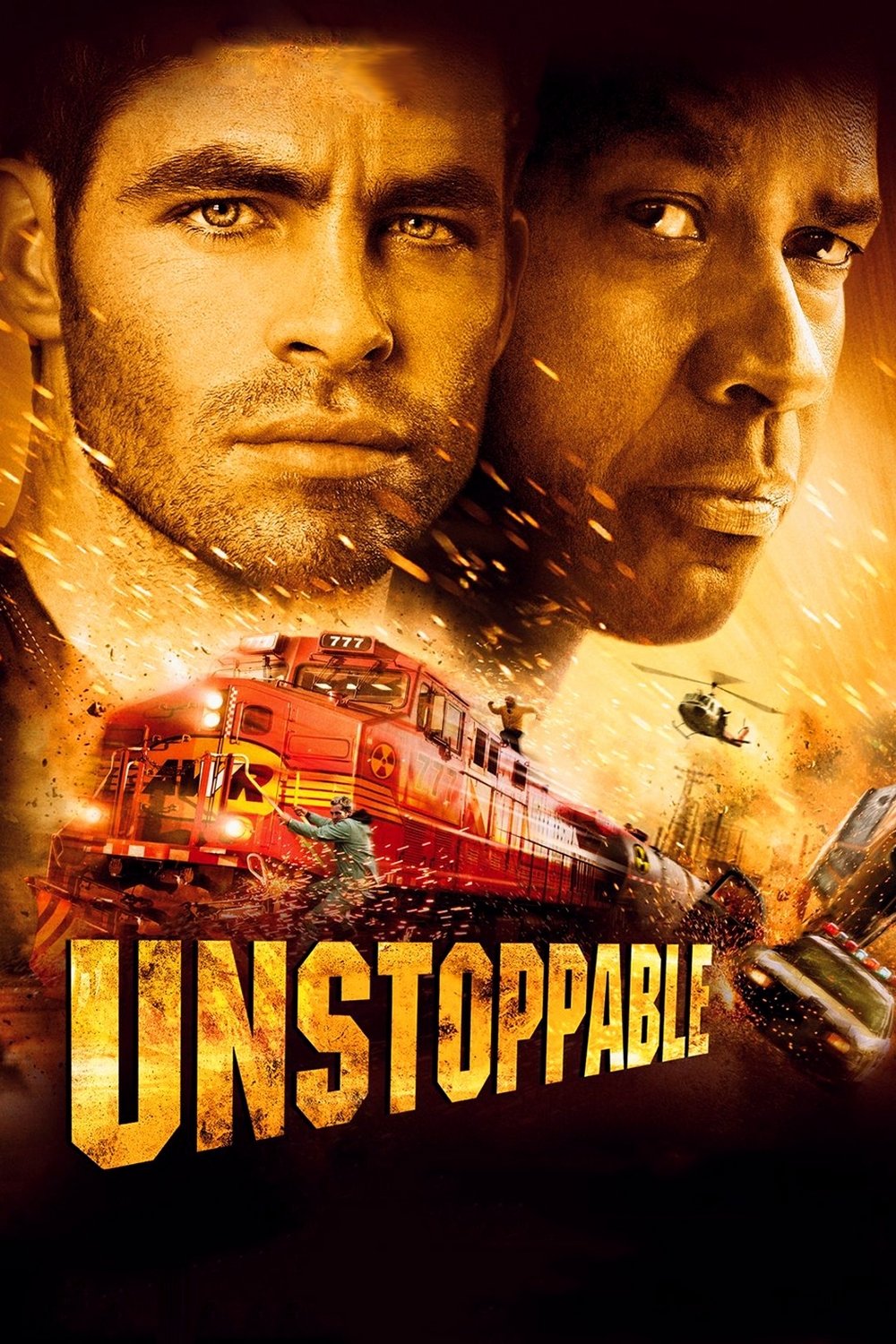
- There was little casting information: Denzel dropped out for a few minutes and came back, and Martin Campbell almost directed it. — Bill Simmons
- Tony Scott used real newscasters as much as possible for authenticity. — Bill Simmons
- The huge cast has no weak note, even Darcy and the helicopter newscaster; each is a vibrant tile in the mosaic.
What’s Aged the Best?
Bald know-it-all Denzel; Ethan Suplee and T.J. Miller as the screwups; railroad executives on the golf course; the wage-and-retirement conflict; authentic dialogue between the leads; nuanced family characterizations; Denzel's one rule; the mission-control structure; Tony Scott's mastery
In the discussion (14)
- Bald Denzel as a slightly condescending know-it-all works because only Denzel can pull it off. — Bill Simmons
- Dewey and T.J. Miller's character are great as the screwups; Miller is unrecognizable without his long hair and mustache. — Bill Simmons
- The evil executives seen briefly on a golf course are a highlight. — Bill Simmons
- The labor politics have aged best: the company wants to retire expensive veterans and replace them with cheaply paid rookies, which hits harder now; a Saturday Night Live trailer parody mocked the expected old-versus-young cliche.
- The reveal that Frank has already been pushed out is handled without a corny countdown scene, letting the wage dynamic emerge mid-movie.
- Character-bonding scenes usually fail in action movies, but every line between the leads feels authentic, including "Ask your wife what she thinks".
- Compared with the dialogue-driven Taking of Pelham 1 2 3, none of whose versions has a working ending, the dialogue here is functional and good, and the train jargon sells it.
- Characterizations are nuanced: Denzel's daughters just work at Hooters through college rather than resenting him, and Pine's marriage is complicated. — Chris Ryan
- Denzel's one rule speech to his conductor is cited as not the worst rule in the world. — Chris Ryan
- It is a mission-control movie in the vein of Apollo 13, Armageddon, The Hunt for Red October and War Games, with Rosario Dawson's scenes a favorite; the Tony Scott version is looser, letting Kevin Corrigan's outsider interject. — Chris Ryan
- Tony Scott's mastery, an answer the speaker also gave for Dunkirk, gets better on every viewing; it being his last movie adds weight.
- Great last movies are rare; examples include Phil Carlson's Framed with Joe Don Baker and a director's final Japanese-set film that he narrates himself.
- Christopher Nolan reportedly screened Unstoppable while planning Dunkirk, and Tony Scott appears to have drawn on Apocalypse Now's rule that helicopters must fly through every shot to keep the energy alive.
- The same idea was applied to the ranch scenes in Once Upon a Time in Hollywood, keeping dogs crossing in the background of every shot; the scene was not the hardest to shoot.
Most Rewatchable Scene
Will jumping back onto the train; helicopter attempt to stop the train; Ned arriving in his red truck at the end
In the discussion (17)
- Dewey losing the train is a first pick: he cannot catch it, falls, and is the kind of idiot a real person would be rather than a movie idiot. — Bill Simmons
- Tony Scott gives fringe characters room, as with the surveillance guys in Enemy of the State, who almost steal that movie. — Bill Simmons
- The train nearly hitting the horses is unreal; the audience knows the children are safe but the horse might not be, and the shot from inside the horse trailer amazes.
- Made around 1990 the horse would have gone down; you do not kill a dog unless you are John Wick.
- Planting a car in front of the train goes badly and it derails and explodes, the first sign it could take out a town. — Bill Simmons
- Galvin's plan is never explained: the film cross-cuts between his boardroom and Rosario Dawson's people, and the audience watches the plan take shape without being told.
- Information flows well: viewers see the broadcasts and everyone involved, while the men on the train keep being caught unaware.
- Will falling while trying to couple the cars feels real with no CGI, making a participant nervous for Chris Pine; the foot injury looks like it hurts. — Bill Simmons
- Denzel's line that Will is "different" when asked if he is okay is singled out as brutal.
- The train heading into the big curve beside storage tanks is joked about as the worst city planning; a defense is promised for Picking Nits.
- The curve sequence works because of the cross-cutting to everyone watching on TV: the engineers, Rosario Dawson's team, Denzel's daughters at Hooters, Pine's wife and son, and the bars, which makes it emotional.
- Tilting trains are believable because nobody knows enough about trains, unlike buses taking a ramp at 55.
- Will jumping out and back onto the train is chosen as the most rewatchable scene; it leads to Denzel standing on top of the train with his arms up. — Bill Simmons
- Fast and Furious has desensitized viewers to jumping between moving vehicles; Dewey's run shows how hard it really is. — Bill Simmons
- Runaway Train with Eric Roberts and Voight influenced Tony Scott; it is a cynical convict movie where the train is not a character, but Denzel atop the train echoes Voight's ending.
- The helicopter attempt to stop the train with a man hanging out is picked; one shot holds two trains, three choppers and a fleet of emergency vehicles. — Chris Ryan
- Favorite shot is the grain explosion while Pine works on the coupling, with the helicopter flying parallel through the cornstorm, likened to Days of Heaven and Apocalypse Now; the most rewatchable scene is Ned arriving at the end in his red truck and getting Chris Pine to the front. — Quentin Tarantino
What’s Aged the Best?
Lisa Eilbacher as Jenny Summers (disputed); Jenny's red Mercedes convertible; the title; Harold Faltermeyer's score and the soundtrack; the Mumford Phys Ed t-shirt and cropped sweatshirts; Taggart and Rosewood; Murphy's early run of good directors; the rival cop duo
In the discussion (11)
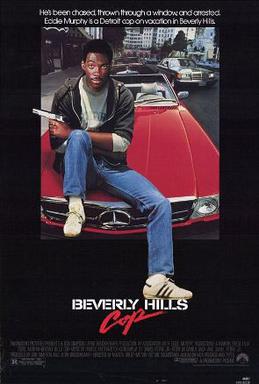
- One host is still in love with Jenny Summers, played by Lisa Eilbach (as transcribed); the objection is not to the actress but to Hollywood casting interchangeable blondes with the same Kate Capshaw haircut, and another did not recognize her at all; what one host wants from the token female character in an Eddie Murphy movie is to dress well, laugh at his jokes and look great.
- She is not a love interest for either man, though she tried with Eddie, which is saved for later; she is serious about her career and it costs her nothing, and her damselification is believable because she insists on driving to the warehouse; 'great character' is countered with 'definitely not a great character' since nothing motivates her, she works at a coke lord's art gallery, and the Jenny, Tandino and Axel triangle of friendship makes no sense.
- Jenny is called a TV actress annihilated by everyone else on screen who did nothing afterward because she cannot hold the screen; a joke pitch imagines a Jenny Summers sequel in Don Simpson's office; she may be the first female gallerist in a movie.
- The defense of Jenny Summers is framed as a 15-year-old's crush recalled in the past tense. — Bill Simmons
- Jenny Summers' red Mercedes-Benz convertible is a dope car you cannot see anymore and is hard to keep in shape; in Beverly Hills they just take whatever car is closest; the little back seat is the Mikey spot.
- The title is great, as if they came up with it before they had a script; Harold Faltemeyer's run through Top Gun and Fletch is admired, the score fit an era of synth musicians like Howard Jones and Wang Chung.
- Faltermeyer is credited alongside Hans Zimmer on Top Gun Maverick, presumably because they use his themes; the soundtrack with The Heat Is On, Neutron Dance, Stir It Up and Nasty Girl is strong.
- Martin Brest draws 'the less said the better' from one host and a Midnight Run defense from another, who calls it a perfect movie and credits Brest with two of the best comedies of all time, alongside Gigi (as transcribed) and Son of a Woman (as transcribed); it is hard to know how much credit he gets here beyond being smart enough to let Eddie ad-lib, and Midnight Run also does not work without its two stars.
- The Mumford Phys Ed t-shirts were really a thing in the mid 80s with no internet to buy them, and the high school was flooded with requests; the Lions jacket in Cop 2 was intentional merchandising; the cropped sweatshirts, like the Josh Brolin Goonies look, are almost as iconic, and the hosts tease one of them about adopting cropped sweats.
- Taggart and Rosewood have aged best because this lays the groundwork for two heroic performances in Beverly Hills Cop 2 that could have been nominated; a key to Murphy is that, apart from Brest, he mostly worked with good directors early: Walter Hill, Tony Scott, Robert Townsend, John Landis, even Michael Ritchie on The Golden Child; Cop 3 is best left unmentioned.
- The 'not gonna fall for the banana in the tailpipe' guy is enjoyed for setting it up earlier with the first team insult for Taggart, and the hosts miss the mid-80s cop movie rivalry duo with sarcastic comments; Eilbacher is put back in by a second and declared a law, with 'Eilbacher Mountain' floated.

Probably Unanswerable Questions
What is happening in Gardena? Is this a better movie if we see the heist? Did Mr. Pink survive? What would Tony Scott's Reservoir Dogs have been?
In the discussion (7)
- What is happening in Gardenia (as transcribed), where the crew meets with Nice Guy Eddie and Joe, also a huge location for Den of Thieves; is it a Mos Eisley spaceport where all the armed robbers live? A road trip in black suits is proposed.
- Is this a better movie if we see the heist? No: as No Country for Old Men shows, Mr. White confronting Mr. Blonde and slowly unfurling what happened is more effective; the devil's-advocate case is that watching these actors rob a bank would be fun, and Tarantino might have shot it with money.
- The heist is already given through Mr. Orange's account to Mr. White and the car-ride plan; one host loves bank scenes more than anyone in the room and would have liked to know who took it too far, probably Madsen.
- Asked whether he has mapped out a bank robbery, one host recalls pitching an amusement park called Felony Land seven years ago with Wilds, which the others say predicted Westworld; he insists Westworld ripped off Felony Land despite the seventies movie and the Michael Creighton (as transcribed) book, and it is no bachelor party pitch.
- Did Mr. Pink die, and does anybody live? Tarantino is quoted saying Pink survived while Orange and White die, and with the volume up he can be heard yelling not to shoot; a present-day Mr. Pink movie is imagined, though the 1992 LAPD would not have gently cuffed a man who shot eleven cops.
- What Tony Scott's Reservoir Dogs would have been is also filed as an unanswerable question.
- Earlier, during nitpicks, the very last shot at the end was flagged as an unanswerable question to be held for later.
Films in the archive

Beverly Hills Cop II
1987


Crimson Tide
1995

Days of Thunder
1990

Enemy of the State
1998

Man on Fire
2004
The Last Boy Scout
1991

Top Gun
1986
True Romance
1993
Unstoppable
2010