
Stats
- Episodes featuring their films
- 5
- Movies in this archive
- 8
Rewatchables episodes featuring Michael Keaton’s films
Mentioned in discussions

What’s Aged the Worst?
Dated effects; darkness; Vicki Vale framing; Keaton-Basinger romance; casting uproar; Prince soundtrack; Gotham Globe newspaper; Keaton’s hair; wasted Billy Dee Williams; Pat Hingle; Robert Wuhl as Knox
In the discussion (12)
- The framing of Vicki Vale is flagged as weird and reserved for this category. — Bill Simmons
- Some special effects, like the bat plane flight, feel very 1989. — Bill Simmons
- The film is too dark and literally hard to see in places; The Batman is said to be darker still. — Bill Simmons
- The Keaton-Basinger scenes feel rough; a defense says they convey chemistry and that the Joker is crude and after her. — Sean Fennessey
- Keaton’s Bruce is an odd, untraumatized weirdo, so the romance raises the question of why she likes him beyond his money; he is compared to a tech billionaire with a Steve Jobs look, though he had great chemistry with Michelle Pfeiffer in the sequel. — Sean Fennessey
- The uproar over casting Keaton, with a reported 50,000 protest letters, is hard to explain today and is contrasted with modern tweet-based hate. — Chris Ryan
- The Prince soundtrack is named, while Trust and Party Man are defended as good songs.
- The importance of the Gotham Globe newspaper has dated; the setting feels like both 1989 and 1948, and Gotham is a composite of many cities.
- Keaton’s hair sometimes looks like a wig. — Bill Simmons
- Billy Dee Williams is wasted as Harvey Dent and was later replaced by Tommy Lee Jones; Morgan Freeman is floated but his fit as Two-Face is debated.
- Pat Hingle as Commissioner Gordon would be recast; William Hootkins as the lieutenant is defended. — Bill Simmons
- Robert Wuhl as Knox is the worst part: he is in too many scenes after Bull Durham, which is called the most unfortunate part of the movie. — Bill Simmons

What’s Aged the Best?
Keaton’s lower Batman voice; Kim Basinger; Nicholson as the Joker; the Batcave; the rushed Christmas teaser; making a Batman movie; Burton gamble; low angst; Bruce’s armor room
In the discussion (9)
- Keaton using a lower voice for Batman than for Bruce Wayne was smart and widely copied. — Bill Simmons
- Kim Basinger’s looks are singled out, while her acting is not evaluated. — Bill Simmons
- Nicholson as the Joker, framed as Jack Torrance playing the Joker, is called probably the favorite thing about the movie. — Bill Simmons
- The Batcave is praised. — Bill Simmons
- Peters reportedly rushed out a trailer played in theaters around Christmas after reading of fan anger over Keaton; it created huge excitement and is still on YouTube. — Bill Simmons
- The role as an exclamation point on Nicholson’s pop-culture career is added. — Bill Simmons
- Making a Batman movie at all, and taking a chance on Burton, look smart given how many followed. — Chris Ryan
- The relative lack of angst compared with the Nolan, Snyder, and Reeves films is praised. — Chris Ryan
- Bruce’s office and armor display room are added, prompting a joke about needing one at home.

Most Rewatchable Scene
Drive into the Batcave; Party Man museum scene
In the discussion (10)
- The opening rooftop introduction with “I'm Batman” is nominated; Keaton reportedly wrote that line. — Bill Simmons
- Knox and Vicki visiting Bruce Wayne’s office and Batman foiling the Joker’s gang ahead of the fall into the vat are listed. — Bill Simmons
- “Wait till they get a load of me” is offered as the film’s most famous line, with the rhubarb line as a jokey rival.
- The first Batmobile sequence and the drive into the Batcave, with Vicki fearing she will be killed, is called a favorite part of the movie and impressive for 1989. — Bill Simmons
- The flashback revealing that the Joker killed Bruce’s parents is called well done. — Bill Simmons
- The newscasts, the Smilex ad, and the parade with the poison gas are nominated; the parade is called completely bonkers but effectively the climax. — Bill Simmons
- The Vicki-Joker scenes are grouped: the museum date, the “let’s get nuts” showdown, and the bell tower, whose violent Joker fall was traumatizing as a child.
- The bell tower was left off because it is long, inexplicable, and geometrically confusing. — Bill Simmons
- Final pick: driving into the Batcave. — Bill Simmons
- Final pick: the Party Man scene where the Joker dances and defaces the museum art. — Sean Fennessey
In the discussion (7)
- Roger Ebert gave the film two stars. — Bill Simmons
- Excerpts praise the Gotham City design as distinctive and atmospheric but regret that nothing more memorable happens there. — Bill Simmons
- The review calls the Joker the most important character in impact and screen time and finds Keaton’s Batman and Bruce Wayne so monosyllabic and impenetrable that viewers must remind themselves to cheer. — Bill Simmons
- The review calls it a hostile, mean-spirited movie about ugly, evil people, lacking the euphoria of Superman or Indiana Jones, and not for kids despite its rating. — Bill Simmons
- The review feels like one and a half stars, likely bumped to two for the look; Ebert also disliked the sequel. — Sean Fennessey
- A rebuttal says Ebert missed the point about design and character psychology, and that a nighttime parade whose giant balloons poison the city is memorable. — Bill Simmons
- Ebert is described as a plot and story guy, and the story comes and goes here. — Bill Simmons

In the discussion (8)
- Hoffman would have been the pick years ago, but Cruise wins the movie, and not as a contrarian zag. — Bill Simmons
- Another voice agrees and adds that the movie is Cruise's story of transformation, his first real adult part, pointing toward the rest of his career. — Bill Simmons
- Barry Levinson is floated: Best Picture, Best Director and the number one movie, though nothing he made after is as good; he is rejected because people see it as a Hoffman-Cruise movie. — Sean Fennessey
- Removing the film would barely change how Hoffman and Cruise are viewed, but Cruise is said to need it more. — Bill Simmons
- Asked who from the last 20 years could pull off Charlie, Leo, Damon, Affleck, Chris Evans, Brad Pitt, E. McGregor, Michael Keaton and others are floated; Hanks would not be believable as a chain-smoking dick. — Bill Simmons
- A spoken tally lists two Cruise votes and one Levinson vote. — Bill Simmons
- Pressed, the answer is Hoffman: Raymond became an iconic figure, won Best Actor and launched a wave of imitators; Hoffman is the not-overthinking-it answer, Levinson the overthinking one, and Cruise the smart answer. — Sean Fennessey
- A voice says it really wants Cruise to win and feels bad; a reply says he'll be okay and jokes that he can't win the Oscar or Who Won the Movie. The count is not restated. — Sean Fennessey
Podcast choices
- Speaker not identified
- Tom Cruise
Most Rewatchable Scene
Hotel bar scene; trunk scene
In the discussion (28)
- The trunk scene is introduced as the candidate that is going to win. — Bill Simmons
- Snoopy's prison shakedown of Albert Brooks's Ripley, ending with the goldfish killing, is praised as an amazing four-minute scene with a beginning, middle and end. — Bill Simmons
- The ending is loved for being so mean: Clooney's character gives Ripley a prison education in being a mark, and the price rises from two grand to three. — Ryen Russillo
- Killing the fish is a signpost that the character is truly bad, like Dennis Freena threatening Charles Groden in Midnight Run, and it gives the movie jeopardy. — Bill Lawrence
- The earlier kidney shank after a thrown fight felt like 'just prison'; only the goldfish made him the bad guy. — Bill Simmons
- Albert Brooks plays the shakedown like a pawn-shop haggle, and the Bauschen Lom mispronunciation is great comedy.
- Michael Keaton's one scene is a candidate that won't win; Tarantino allowed his Jackie Brown character in the movie as a crossover, and Lopez wears a Marino jersey. — Bill Simmons
- A speaker who puts actors from earlier shows on the next one recalls a Cougar Town and Community crossover with Danny Poody working as an extra. — Bill Lawrence
- Keaton reportedly took no money and liked that viewers might see the character as a real cop; Tarantino had to clear the cameo across two studios. — Bill Lawrence
- Keaton's uncomfortable laugh when Dennis Farina confronts him only lands if you have seen Jackie Brown; it may be the only movie with two Batmen. — Bill Lawrence
- Asked for a favorite crossover, the answer recalls a Facts of Life and Different Strokes connection. — Ryen Russillo
- The favorite crossover offered is Coolidge from The White Shadow appearing as a janitor on St. Elsewhere and greeting Salami in an elevator. — Bill Simmons
- Next candidate: the hotel bar scene, which cuts between the sex scene and its foreplay like Don't Look Now and ends with Clooney's "what if" speech, called as good as an actor's monologue gets. — Bill Simmons
- Detroit glows in the background, and the uninteresting guys from New York City who hit on her set up Clooney as the hero. — Ryen Russillo
- Parts come straight from the book; the lines are not written to show off, and the stranger-connection idea is relatable because people just keep walking. — Ryen Russillo
- The scene is not awkward or uncomfortable, and on rewatch there is nothing in it that could not be shown in a PG movie, yet it is still one of the sexiest love scenes. — Ryen Russillo
- Free-pass anecdote: the speaker's wife, Krista, named George Clooney as her free pass and was later found sitting beside him on the Warner Brothers lot, where the Drew Carey and ER stages were next to each other; she still finds this scene sexy. — Bill Lawrence
- Bottle Rocket's hotel scene under the sheet is named a favorite sex scene for its restraint; a Requiem for a Dream answer is a joke. — Ryen Russillo
- The aftermath, where Lopez's character walks out angry at Clooney out of shame, plays like an actual couple. — Bill Lawrence
- The trunk is the famous scene, but the hotel bar chemistry between the two actors is rare. — Bill Simmons
- Candidate: the ending at Albert Brooks's house with double staircases, White Boy Bob accidentally killing himself and Lopez debating whether to shoot Clooney, a very 90s 15-minute stretch. — Bill Simmons
- Candidate: the Sam Jackson cameo and the realization of why she put them in the car together. — Bill Simmons
- The trunk scene was shot 45 times but none of those takes were used because a test audience disliked one long take, so it was reshot. — Bill Simmons
- One speaker thinks the hotel bar scene is better while the trunk is more important for its uniqueness, and personally goes with the hotel bar scene.
- The trunk sets up the hotel bar by forcing a conversation that would never happen otherwise, so it is probably more important; the changing distance between the actors in the hotel bar shots is questioned as a trick or bad editing. — Ryen Russillo
- Asked 'Bill, trunk or hotel bar?', the reply goes trunk, starting from Clooney emerging from the escape hole and the chaotic shootout seen from Lopez's point of view. — Bill Lawrence
- The Three Days of the Condor exchange in the trunk becomes clever on rewatch, since she doubts a quick romance and then does it herself. — Bill Lawrence
- Clooney's character misquotes Network, and she is annoyed but doesn't call it out because they just met. — Bill Simmons
In the discussion (6)
- 'Justice' is suggested and ruled ineligible; Keaton is the first pick for keeping the tempo and tone. — Chris Ryan
- A second participant also had Keaton. — Ryen Russillo
- Ruffalo is argued as the winner: annoying at every turn in the best way and single-minded; the reply is still Keaton. — Ryen Russillo
- Ruffalo has the best part and Keaton the hardest, with a restrained accent that improves after the opening. — Bill Simmons
- Ruffalo's speech pattern and facial expressions were modeled on the real reporter. — Bill Simmons
- The show's producer, invited in, also picks Keaton and calls Ruffalo borderline too much; another host leans toward that view but says the role required it.
Podcast choices
- Speaker not identified
- Michael Keaton
- Speaker not identified
- Michael Keaton
- Speaker not identified
- Michael Keaton
In the discussion (7)
- McCarthy played the disgraced journalist Scott Templeton in The Wire, then wrote and directed this film; the speaker calls it ironic that, as he puts it, a Globe writer he names as Kevin Cullen was later suspended over allegedly made-up details in his Boston Marathon bombing coverage. — Ryen Russillo
- Templeton is called a defensible character about using the newspaper as a launching pad; hating an actor for a role means they did a great job.
- Keaton and Hanks traded blows in the 1980s, Hanks took control in the 1990s, and Keaton is judged the winner of the last nine years after Hanks's weaker 2010s list. — Bill Simmons
- A counterargument holds that Hanks's 2010s is better, with Captain Phillips, Sully and Bridge of Spies.
- The speaker did not like Bridge of Spies, though did not hate it, having gone in with too-high expectations. — Ryen Russillo
- Hanks's last 15 years are called disappointing, from Catch Me If You Can on, including three Da Vinci Code movies; Charlie Wilson's War is still liked.
- A joke Castaway 2 plot has Hanks's character become a serial killer. — Bill Simmons
Most Rewatchable Scene
Marty's closing newsroom speech; speakerphone call revealing 90 priests; Joe Crowley's interview
In the discussion (12)
- Baron's first staff meeting, where he asks whether Spotlight would consider picking this story, is singled out. — Bill Simmons
- The survivor Saviano (first misnamed Josh Saviano, then corrected) explaining that the abuse is spiritual as well as physical is really good and important. — Bill Simmons
- The second Crudup meeting is a cat-and-mouse scene about private mediations that left no court records. — Bill Simmons
- The speakerphone call, voiced by Richard Jenkins, with the pull-back across the office, is when the stakes rise from a few priests to about 90.
- Baron telling them to go after the system rather than individual priests is an incredible journalism lesson, set against Ruffalo's fear of being scooped by the Herald. — Bill Simmons
- McAdams's character visiting the priest who matter-of-factly describes his conduct, before his sister intervenes and a school bus appears, is highlighted.
- Many of these scenes are not technically rewatchable; Ruffalo getting the documents, the cab ride and his 'They knew' speech is called iconic, with All the President's Men DNA in the copier bit.
- Keaton visiting Jim the lawyer at home, with the cheerful wife and the cold husband, ends with 'you and everyone else'; the Red Sox complaints about the 2001 season are a nice touch.
- Robbie admitting he had the story in 1993, followed by Marty's speech, is chosen as the favorite scene.
- Another set of favorites includes the Red Sox game banter, hauling directories out of a basement with a dead rat, and Crudup's character snapping 'I sent you the names' (the sick-leave code realization is filed under What's Aged the Best); the speakerphone scene is the pick because it reveals the magnitude. — Chris Ryan
- McAdams's interview with Joe Crowley, intercut with Ruffalo's, is added for explaining the victim's side, including 'Who, a priest?' with a church beside a playground. — Ryen Russillo
- The Crowley sequence was also listed under What's Aged the Best; small details such as his nerves, the muffins and the Dorchester-to-Back-Bay remark avoid handholding. — Ryen Russillo


Half-Assed Internet Research
Groundhog bites and rabies shots; the groundhog-lair idea; good Phil or bad Phil; stopped diner clocks; Woodstock, Illinois filming; script origins; 25 takes of the ending; religious readings
In the discussion (13)
- Bill Murray was reportedly bitten by the groundhog two or three times and needed anti-rabies injections after a bad bite right after the groundhog-stealing scene. — Bill Simmons
- Bill Murray and groundhogs are called the greatest actor-animal connection, across two iconic groundhog movies; Turner and Hooch is offered as a rebuttal. — Bill Simmons
- Research is cited that, either in the movie shoot or the original script, the kidnapping went further, with him entering the groundhog's lair to blow it up, which was realized to be too close to the earlier Murray groundhog material. — Bill Simmons
- According to Ramis, Murray would ask only "good Phil or bad Phil"; the research also says the diner clocks are all stopped and the film was shot in Woodstock, Illinois, about 50 miles from Murray's hometown, with plaques for the puddle curb and Ned's corner. — Bill Simmons
- The hosts say the original script opened with Phil already mid-loop and that Ramis changed it, which is judged the right call. — Bill Simmons
- The hosts say writer Danny Rubin's big break came from reading Interview with the Vampire and thinking about living forever. — Bill Simmons
- Tobolowsky is quoted that it was a mediocre Bill Murray movie until shooting turned it into a classic. — Bill Simmons
- The hosts say they shot 25 takes of the closing wake-up and Ramis polled cast and crew, who voted to keep them in their clothes; one host would rather have implied sex, calling the movie chaste apart from the Nancy Taylor love scene. — Bill Simmons
- The woman dressed as a maid at the movies with the man-with-no-name costume is questioned as a possible call girl who is simply dropped. — Sean Fennessey
- The hosts say Buddhists, Hindus, Jews and Christians all found significance: mitzvahs before returning to earth, and purgatory with winning Andy McDowell's character's love as heaven. — Bill Simmons
- Such interpretation is rare for a popular comedy; the filmmakers likely did not expect religions to claim it, similar to The Big Lebowski. — Bill Simmons
- Ramis's earlier films were direct comedies, while Multiplicity reflects a man in crisis; the film may have tripped a wire for its makers. — Sean Fennessey
- Multiplicity is called polarizing: a mid-90s roommate named Ricky loved it, and it resembles the mediocre Bill Murray movie Tobolowski described, starring Michael Keaton. — Bill Simmons
Casting What-Ifs
Tom Hanks and Michael Keaton as Phil; Tori Amos as Rita
In the discussion (10)
- The hosts say Ramis originally wanted Tom Hanks rather than Bill Murray but decided Hanks was too nice; Eddie Murphy is guessed first, and Hanks would have been great. — Bill Simmons
- Michael Keaton is said to have turned it down as too confusing, regretted it, and ended up in Multiplicity with Ramis and Andy McDowell. — Bill Simmons
- Eddie Murphy would have wanted the part in the mid-to-late 80s but not by 1993 after Boomerang; a circa-1990 Murphy would have been really good, Keaton also would have been good, but Bill Murray ended up perfect. — Bill Simmons
- The hosts say Andy McDowell almost did not get the role because it was going to Tori Amos, amid a groundswell, before they played it safe; Sex, Lies, and Videotape is named as her breakthrough. — Bill Simmons
- Asked who instead, the answer is not Tori Amos but Susan Sarandon. — Sean Fennessey
- The Sarandon case: more mustard on the fastball playing off Bill Murray, the right age, and believable as an ambitious TV producer. — Sean Fennessey
- The Sarandon idea draws pushback that she always feels older and was probably too old in 1993. — Sean Fennessey
- Meg Ryan is floated and described as very sweet and so blonde. — Issa Rae
- If Eddie Murphy were the lead, Whitney Houston is floated; the early 90s are called a tough era for actresses, Sandra Bullock too young though great, and Julia too big a star; the role is called a prop. — Bill Simmons
- After the break, the guest's Eddie Murphy idea is revisited as an awesome 80s Eddie Murphy, with doubt he pulls it off in the 90s. — Bill Simmons
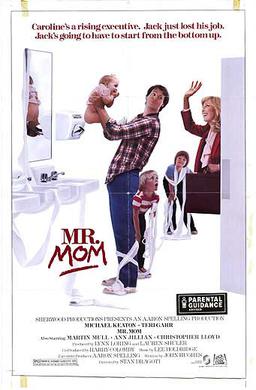
In the discussion (3)
- Not Terry Garr, both agree; Michael Keaton won the movie, which is not a controversial take: he is very likable and skates through a premise that could go wrong with total charm.
- The hosts miss having a 2019 version of this era's Keaton, a funny, likable, approachable and unpredictable guy in his late twenties; Chris Evans tried to be that person but is not funny, is too obviously hot and is a bit of a jerk.
- Keaton is handsome in an approachable, attainable way, confident without being a jerk or edgy; famous people now need a thing, while Keaton and Tom Hanks were in the running for so long because both were everymen, and nobody fills that role now despite many trying.
Podcast choices
- Speaker not identified
- Michael Keaton
- Speaker not identified
- Michael Keaton
Films in the archive
Batman
1989


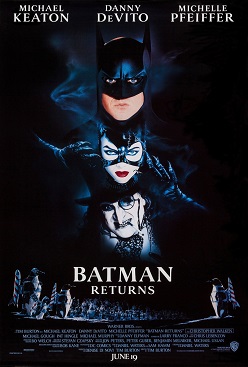
Batman Returns
1992


Jackie Brown
1997

Night Shift
1982
Out of Sight
1998
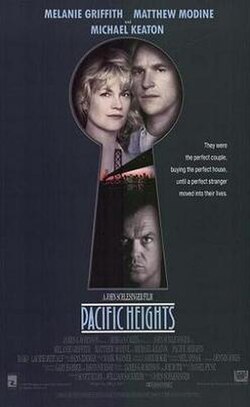
Pacific Heights
1990
Spotlight
2015
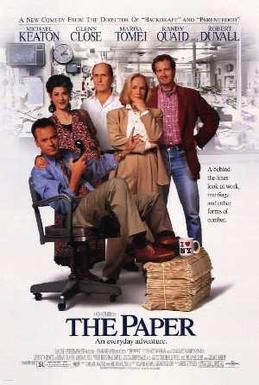
The Paper
1994