
‹ All movies

The Mark Hanna lunch with McConaughey

Before the category begins, the McConaughey sequence meeting Mark Hanna is flagged as the thesis statement of the movie: you are here to rob people and do cocaine while you do it; the body is a vessel for making money, jerking off and coke, and a wide-eyed 22-year-old from Queens with two accountant parents watching Hanna hoover martinis on a Monday morning could decide that is the lifestyle he wants.

The purpose of the Hanna sequence is pinned to the moment Leo's character offers that everybody wins if the clients make money and Hanna's answer is simply no: every warrior for himself, the thesis in the second paragraph.

"I myself jerk off at least twice a day"

About 1200 words of quotes were pasted but it will not go on too long; the entire McConaughey jerking-off speech is the quote, played as a clip, 'feed the geese' and 'mustard shit' included; it is loved because it is a fake Robert Downey Jr. performance, free-associative, hyper-intelligent but completely illogical word vomit.

The film

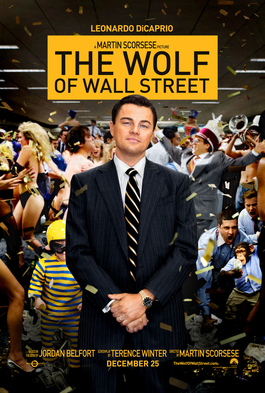
The Wolf of Wall Street (2013)

Directed by Martin Scorsese · Drama

179 minutes

Cast

Selected cast credits · Film reference

Leonardo DiCaprio Jordan Belfort
Jonah Hill Donnie Azoff [ a ]
Margot Robbie Naomi Lapaglia [ b ]
Matthew McConaughey Mark Hanna
Kyle Chandler FBI Agent Patrick Denham
Rob Reiner Max Belfort
Jon Bernthal Brad Bodnick
Jon Favreau Manny Riskin [ c ]
Jean Dujardin Jean-Jacques Saurel
Joanna Lumley Aunt Emma
Cristin Milioti Teresa Petrillo [ d ]
Christine Ebersole Leah Belfort
Shea Whigham Captain Ted Beecham
Katarina Čas Chantalle
P. J. Byrne Nicky Koskoff ("Rugrat")
Kenneth Choi Chester Ming ("Depraved Chinaman")
Brian Sacca Robbie Feinberg ("Pinhead")
Henry Zebrowski Alden Kupferberg ("Sea Otter")
Ethan Suplee Toby Welch
Sandra Nelson Aliyah Farran ( Forbes Reporter)
Aya Cash Janet

Everything from the episode

In the order the hosts got to it. Open a row for the discussion.

27:24

Most Rewatchable Scene

The Mark Hanna lunch with McConaughey

The Mark Hanna lunch with McConaughey

In the discussion (20)
Approx. transcript time · 00:27:24Read transcript
  • Before the category begins, the McConaughey sequence meeting Mark Hanna is flagged as the thesis statement of the movie: you are here to rob people and do cocaine while you do it; the body is a vessel for making money, jerking off and coke, and a wide-eyed 22-year-old from Queens with two accountant parents watching Hanna hoover martinis on a Monday morning could decide that is the lifestyle he wants.
  • The purpose of the Hanna sequence is pinned to the moment Leo's character offers that everybody wins if the clients make money and Hanna's answer is simply no: every warrior for himself, the thesis in the second paragraph.
  • The opening, the life of Jordan Belfort with the unreliable narrator, the $49 million a year line and the car flipping from red to white in real time, shows a character at the prime of his life right as the fall is about to come, with Scorsese breaking his own rules; the fourth-wall breaks are never used in a moral way and the film never slows down to judge the characters or let the audience feel better than them.
  • The Mark Hanna lunch clip is played; McConaughey's four minutes are called the reconnaissance for his comeback between Dallas Buyers Club and True Detective, with the Hanna character and the hair having as much to do with it as the dialogue, which is so eighties and unbelievably bad; an ESPN-era interview anecdote recalls him answering a question about Interstellar by saying he needs a little freedom to do what needs to be done; the chest-beating was his warm-up that Scorsese and DiCaprio told him to keep, and it is good that the character never returns because it is unsustainable.
  • McConaughey is an amazing physical actor here, throwing his arms down in a thrust before lunch and peering in like a college football coach racing down the sideline; you can imagine him giving the masturbation speech at a bar in real life, and the 'all mustard up here' line gets quoted.
  • Donnie Azoff in the diner, 'show me a pay stub for $72,000' and quitting his job on the phone, reads as very Long Island, a wealthy guy weirdly having breakfast at a diner; the early run of back-to-back scenes, Donnie, Hanna, Spike Jonze, is remarkable in itself.
  • Jonah introduces the grotesque with the capped teeth and the shirt patterns, trading his life for a pay stub; the character should not work, marrying his cousin, selling children's furniture, smoking crack days after meeting someone, yet the bond between two weird animals is bought; the objection that DiCaprio would never hang out with him is answered with the cousin Greg Succession theory, that he should not be in the room but every Greg scene is funny, and these are guys who make bad decisions, like Charles Schwab needing a guy for the garage.
  • Meeting the Duchess of Bay Ridge: Margot Robbie was a lightning bolt, an Australian reportedly 23 at the time with some dispute about her real age, introduced as Jordan's dream girl coming out of the beach-house party with the douchebag boyfriend Blair and the jet-ski comeback.
  • The smokestack lightning bacchanalia, the office party with the marching band, throwing the little people, the head shaving and the strippers, is one of the most ecstatic pieces of filmmaking ever; then an old blues song with echo comes in, the lighting goes dark and strobe, and you realize they have created hell on earth and are demons who love it; the camera moves in on a despairing DiCaprio walking off the stage, a subtle moment beside the later aside about the man who married the woman they double-teamed and killed himself; the first impression was that it was too much, Braveheart lines of strippers advancing.
  • The research indicates the party combines things that did not all happen at once, and the absurdity is the point; a nitpick is raised that the film is over-scored, with too much music and a blues-to-eighties-to-Foo-Fighters run whose years do not add up; the defense is that the soundtrack runs the whole arc of pop music out of chronological order, with Robbie Robertson in Scorsese's ear, so that the music is about overconsumption like the movie, and its radio-dial flipping feels true to a coked-out perception, as opposed to the perfectly aligned Talking Heads cue in Wall Street.
  • The Steve Madden IPO speech, 'my killers, my warriors, my telephone terrorists', with Madden bombing and being thrown out; Madden is played by Jake Hoffman, Dustin Hoffman's son; the bachelor party and wedding dance is now a famous GIF and Leo is a genuinely impressive dancer, which drifts into public Leo with the dad bod, super soakers, the Vans and calf socks and the choice of college hat.
  • 'Daddy doesn't get to touch mommy' is a good scene nobody puts on YouTube, and it apparently really happened, including Rocco watching; after the movie came out every NBA player followed Robbie on Instagram, the entire Central Division, with Hibbert still in the game, a pivot from the Christina Hendricks era.
  • Jordan invites the FBI onto his yacht, then 'I'm not leaving' is the clubhouse favorite, one of the more rewatchable scenes in any movie of the last decade, simultaneously disgusting and beautiful; the mid-speech realization that he cannot leave is the most honest part of the movie; it is the Field of Dreams heartstring moment that is also the most self-aggrandizing garbage of all time, since he forces Kimmy Belzer to tell a room of screaming dudes how much money he gave her; Aya Cash's snapping character is not meant to be liked, like nobody in the film.
  • The Lemon Quaaludes are still aging and have lost their potency; the hosts wonder whether a thriving lude community exists on the dark web, compare the finite supply to Honus Wagner cards and ask whether Gretzky has one.
  • The Naomi yacht capsizing is arguably the best scene, really fun and also true, as is the plane crash; 'I will not die sober' and getting the ludes while the boat goes down; the ultimate wake-up call compared to a country-club DUI; then the sober-at-the-pool scene with Donnie and the ankle bracelet and the O'Doul's exchange, some of the funniest writing in the movie, with 'it sucks, man' played as a clip.
  • Spike Jonze at the investor center selling AeroTine (as transcribed), two brothers making radar detectors or maybe microwaves out of a garage in Dubuque with their mom Dorothy answering the main line, six cents a share, and the cutaway to the shed.
  • The Stratton Oakmont cold-call script with Moby Dick and the harpoon, and everyone yelling about who Captain Ahab is, played as a clip; right before the boat leaves, finding out Aunt Emma is dead while freaking out about his money is loved too.
  • The Spike Jonze scene is perfectly executed: he gets the company name wrong, does not know whether it is microwaves or radar, knows what a clown he is, and the 'if you sell ten thousand dollars of stock I'll blow you' line; DiCaprio's reaction shows the difference between a good and a great actor; dudes eat pizza, a guy screams in a sweatsuit and the bathroom opens straight into the office; the cross-cutting between brokers delivering Jordan's script, his gestures on the answering machine, the 'vice president of Stratton Oakmont' walk-throughs and the later SEC interrogation montage are also singled out.
  • A correction for the sticklers: the plane that came to pick him up exploded a couple of days later, not in the same moment, and the real sinking is even crazier than the movie; listeners should tweet thanks to Russillo for getting it right.
  • The final pick: one host argues McConaughey should be ineligible like Shack (as transcribed) in early fantasy basketball because the Hanna lunch is the clear runaway; another narrows it to the lunch, the Lemon Ludes and 'I'm not leaving' and goes with 'I'm not leaving'; a third goes with McConaughey after watching the scene fifteen times that week, so the Hanna lunch takes it two to one.
57:10

What’s Aged the Best?

The theme of wealth as an incurable pox; the narrated asides; the idea that not having wealth is also unacceptable; t...

The theme of wealth as an incurable pox; the narrated asides; the idea that not having wealth is also unacceptable; the soundtrack (disputed); the unreliable narration and fourth-wall breaking; Margot Robbie

In the discussion (10)
Approx. transcript time · 00:57:10Read transcript
  • The serious opener: the theme of wealth as an incurable pox that destroys life from the inside out, or at least that being motivated only by money is aging well.
  • The asides age best: the man who married the girl they had all had their way with and then killed himself; Brad's heart attack at 35, just like Mozart; the financial explanations Jordan yada-yadas because you don't give a shit, which recalls the way Trump talks, with a bragging flourish at the end telling you that you are too stupid to need to know, an attitude that has clearly resonated.
  • Related is the idea that not having wealth is also unacceptable, seen when Kyle Chandler sits on the subway at the end after getting his man; Scorsese and DiCaprio are wealthy and know life is easier with money, so the theme is how you get it and whether you are happy with what you chose, more nuanced than these guys suck.
  • The film feeds the appetite for lots of characters and actors; Favreau is good at these side roles; the investigation took ten years and Belfort could have just paid a fine and stepped down from Stratton Oakmont, the Favreau and Reiner scene where he tells them what they want to hear while clearly not caring, and when a rich man goes to prison he does not really go to prison.
  • The last scenes with Robbie's character are played starker to show how evil he is, he beats up his wife, and he still gets white-collar jail, tennis and speaking fees; there is an amazing dissonance between Belfort being all about this movie, even cropping up in the cameo, and the conclusion portraying him as an awful violent person.
  • What is real is debated since he has denied things; Belfort and the ex-wife both live in Manhattan Beach, where a host jogged past his house; the fines he was supposed to pay are debatable; the ending may be a way to remind you this guy did awful shit, whereas the international flight where he wakes up seatbelted is played as a carnival montage; the end is the crash, with a stock metaphor about risk, bad decisions and hurting people, precise while feeling loose.
  • The soundtrack is written down as aging best but the dissenter, named on air, holds that it never aged for him; the unreliable narrator and talking-to-camera device, usually considered a crutch, is essential here to be inside his brain, like Rounders without Matt Damon; The Office comparison is floated and doubted; the Lamborghini and the head-on-the-Expressway sell of the rule-breaking early is impressive writing.
  • 'Did you guys see that?' after the plane crash brings the audience in and questions his perception without making a show of it, and the film moves on immediately.
  • Margot Robbie's discovery and where she now sits in the Hollywood firmament; the 'we're not going to be friends' line puts her in control of the courtship; she handles emotional desperation and goes toe to toe, 'who are you, a fucking owl'; the Venice fight with the water thrown in his face while he shimmies about his body is forgotten for the scene category, and the 'stop flexing your muscles' clip is played.
  • The tryout story: an unknown reading with DiCaprio, told to kiss him after the screaming, she slapped him and screamed fuck you instead, and Scorsese's reaction was that's the one; she wanted to take a risk, though the story may not be true.
1:08:19

What’s Aged the Worst?

The takes that the film celebrates wealth; the runtime (disputed); the Jonah and Bernthal arrest scene

The takes that the film celebrates wealth; the runtime (disputed); the Jonah and Bernthal arrest scene

In the discussion (3)
Approx. transcript time · 01:08:19Read transcript
  • The takes that this was a celebration of wealth were bad takes; the take economy around it was a precursor to now, with a limited idea that art is either a moral judgment on bad people or a celebration of good ones; let someone tell a story that does not end in the usual formula; there is nothing normal about a film that starts in the third act of Goodfellas and stays there, where time and reality are hard to discern; Richard Corliss in Time asked why you would spend three hours with these people, which is called hiding your head in the sand about the parts of you that respond to them; liking to read about terrible people does not mean wanting to hang out with them.
  • The 2013 context: the start of the second Obama term, Breaking Bad culture, out of the financial crisis, a safer time to put a character like this on screen; some will always say fuck these guys; the Joker worry is that in ten years guys quote it as a way to live; if you don't like it fine, but saying such movies should not be made is pointless.
  • The runtime is proposed as having aged worst and disputed: the excess of the soundtrack, writing and camera demands a maximalist length; Thelma Schoonmaker reportedly could have gotten it shorter but did not want to cut the performances; the scene where Jonah and Bernthal get arrested is one a host has never liked, since it could be an aside, though it is how one of the real guys got arrested because Jonah's character combines several people, and another keeps it for the Nassau County police car he grew up seeing in a cop's household.
1:14:52

Casting What-Ifs

Brad Pitt and Paramount lost the 2007 rights bidding war to DiCaprio and Warner Brothers; Chris Evans and Joseph Gord...

Brad Pitt and Paramount lost the 2007 rights bidding war to DiCaprio and Warner Brothers; Chris Evans and Joseph Gordon-Levitt auditioned; Jonah Hill took $60,000; Blake Lively, Rosie Huntington-Whitley, Teresa Palmer, Amber Heard and Olivia Wilde were in the mix for Naomi; Julie Andrews was considered for Aunt Emma; Ridley Scott was wanted to direct

In the discussion (9)
Approx. transcript time · 01:14:52Read transcript
  • In 2007 Leonardo DiCaprio and Warner Brothers won a bidding war against Brad Pitt and Paramount for the rights to Belfort's memoir, and Belfort made a million dollars on the rights.
  • Does it work with Pitt: absolutely for some, since Pitt is better at the darker thing and a less attractive, rougher guy might let you hate Jordan more, there being moments when DiCaprio looks too great on screen; the counter is that DiCaprio uses his handsomeness as a tool to push further, as in Django, while Damon plays relatable, and Jordan's looks explain why anyone would let him sell them anything; the telephone-terrorists speech, banging the microphone on his head, is a place Pitt may not be able to go.
  • Many Pitt and DiCaprio roles would be interchangeable, though The Aviator is hard to see with Pitt for one host while another could see Pitt there more than in this; both were circling The Departed at the same time; Pitt in California, twenty years earlier, and Fight Club show a weird dark gear.
  • Chris Evans and Joseph Gordon-Levitt auditioned for an unspecified role, presumably Donnie, which does not seem right for Evans; Jonah took about sixty grand per his Howard Stern interview, while Leo had box-office points; he was already Moneyball-nominated and in Superbad, flew to see DiCaprio, joked that Leo should kill anyone else cast, and practiced with the capped teeth and phone calls.
  • Moneyball was essentially playing Paul De Podesta (as transcribed), so it is hard to believe he was nominated for that and did not win for this, strong, unique and weird even if some scenes are too much; the cousin exchange, she grew up hot and if anyone is going to fuck my cousin it's going to be me out of respect, and the 'you're free' scene are things only Jonah could have done.
  • Asked for his Blake Lively thoughts, the addressed host would have been fine with her as Naomi. — Ryen Russillo
  • Blake Lively and Rosie Huntington-Whitley were considered and Teresa Palmer and Amber Heard auditioned for Naomi before Robbie; her being unknown helped, and Lively at the height of her post-Town moment could have nailed it but could not have reached the Robbie phenomenon; Robbie is doing Marissa Tomei in My Cousin Vinny, the voice and Buick Skylock (as transcribed), and the daughter is even named Skylar.
  • Olivia Wilde auditioned for Naomi but was deemed too old to play DiCaprio's wife even though he is ten years older, a tough beat; Julie Andrews was considered for Aunt Emma before Joanna Lumley but was convalescing from a titanium ankle implant, probably for the best given the Mary Poppins crowd; the Emma scene is sneaky extra evidence that Belfort is a bad guy.
  • People wanted Ridley Scott to direct for a time: his version is forty minutes shorter with a four-and-a-half-hour director's cut and less chaotic; Scorsese related to the addiction and throwing-your-life-away-for-cocaine material, which he discussed on the promo circuit, whereas Scott would bring less dialogue, longer driving scenes and a lude scene more like Kingdom of Heaven.
1:23:25

The Dion Waiters Award for Best Heat Check Performance

Matthew McConaughey

Matthew McConaughey

In the discussion (8)
Approx. transcript time · 01:23:25Read transcript
  • Possibly the hardest one ever done, ranked least to greatest: Bo Dietl as Bo Dietl, with an 'are you fucking high' impression; he was a recurring in-studio character on a New York radio show, New York's top cop turned PI turned conservative pundit praising Rudy, an object of obsession for Scorsese and Spike Lee as a New York institution, like Curtis Sola (as transcribed) commenting on crime; a New York One regular; he is good in it and has a prominent mob-boss role in The Irishman.
  • Kristen Milioti (as transcribed) as the first wife may be the most likable and only innocent character; Jake Hoffman as Steve Madden is a purposeful cold check, like Mikhail Bridges (as transcribed); Shea Wiggum (as transcribed) as Captain Ted Beecham making a little chop; Joanna Lumley as Aunt Emma, with nobody admitting to being an AbFab guy.
  • Rob Reiner as Max Belfort is amazing: the Equalizer phone tirade, the weird British accent he affects as soon as he answers, and the seemingly improvised 'sides cure cancer' exchange with Jonah while explaining marriage to his son.
  • Jon Bernthal as Brad, the Quaalude King of Bayside, has not been discussed enough: the diner performance, asking for the ketchup, 'tell your sister I was asking about her'; visually incongruous with these guys, he is the one animal every crew of normal guys had, the one with the Adderall; a guy still in his hometown asking younger dudes to hang out is a red flag, yet Belfort likes him most as the guy who gets it; a human wrecking ball who is a classically trained, thoughtful actor kept getting cast as violent meatheads after The Walking Dead and The Punisher, and is now a jacked Lee Ayacocca (as transcribed) in Ford versus Fari (as transcribed).
  • A tangent on Craig Kilbourne (as transcribed): his 'old man Ferrari' Instagram videos, made with his old writing crew, are ten times funnier than expected, awaited like Christmas morning, and he is floated as the new Robert Evans.
  • Spike Jonze as Dwayne the investment center leader, blotchy skin, bad shirt, uneven mustache; Spike Jonze is only ever great in movies, Three Kings, Moneyball and this; a host's wife found him cute, prompting a re-evaluation.
  • Jean Dujardin as Jean-Jacques Sorrel is doing a lot; for anyone not alive in 2013, he starred in The Artist, which won best picture and won him best actor during the Benigni run of handing Europeans best actor, compared to the late-nineties NBA draft and Jan Vesely; a host has still not watched or returned the DVD; he is in a different movie and takes one host's overacting award.
  • Number one is McConaughey with one scene; the only other name to throw in is PJ Byrne as Rugrat, who is in much of the movie but whom one host did not like, preferring Cuthbert and Sea Otter, who sold meat and weed; those guys go in the That Guy award.
1:33:33

Half-Assed Internet Research

McConaughey's scenes were shot in the second week and his chest-beating was his warm-up; the film was financed with m...

McConaughey's scenes were shot in the second week and his chest-beating was his warm-up; the film was financed with money allegedly stolen from Malaysia's 1MDB fund and Red Granite paid $60 million to settle; 400 to 450 VFX shots, shot digitally; a Guinness record 506 F-words; the actors snorted crushed B vitamins; Christina McDowell's open letter about the victims; Robbie's paper cuts on the bed of cash; Spielberg spent a day on set during the Steve Madden speech; Belfort coached DiCaprio on quaaludes; 27 takes for the Joanna Lumley kiss; the drug scenes are edited oddly on purpose

In the discussion (14)
Approx. transcript time · 01:33:33Read transcript
  • McConaughey's scenes were shot in the second week of filming; the chest-beating and humming were improvised from his pre-acting warm-up; the brief shot of Leo looking uneasily away from the camera was him looking to Scorsese for approval, and DiCaprio pushed to keep it in and later said it set the tone for the film, a pretty good sliding-doors moment.
  • The Malaysian Anti-Corruption Commission alleged the film was financed with money stolen from the One Malaysia Development Berhad sovereign wealth fund by producer Riza Aziz, who pled not guilty to charges in July 2019; 2016 Department of Justice civil complaints named it as having provided a trust account through which hundreds of millions were siphoned; Red Granite Pictures paid $60 million to settle with no admission of wrongdoing.
  • The story is part of Billion Dollar Whale by Bradley Hope and Tom Right (as transcribed): Joe Low (as transcribed), a well-off Malaysian kid at Pen among generational wealth, became a networker who threw parties without paying, went home to start a fund with Aziz, the prime minister's stepson, pulled in Middle East money and Goldman Sachs, took Paris Hilton on ski trips, bought Lindsay Lohan 23 bottles of champagne, bought part of EMI, sent Marlon Brando's Oscar to DiCaprio, who gave it back, and made a $43 million art purchase.
  • DiCaprio and Scorsese saw guys offering total control and endless money after Scorsese had wasted half a year in development; in a poetic twist the financing is a testament to the reality the film depicts, money at your fingertips making you throw away principles; the money is still being chased, Low is thought to be under Chinese protection, DiCaprio and others gave back everything gifted, and whether anyone actually liked the guy is an open question; the movie is a lot different without a kid from Malaysia stealing money.
  • The budget was needed partly for 400 to 450 VFX shots, uncommon for Scorsese outside Hugo; the film was shot digitally after he had been one of the last bastions of film, and without it there is probably no Irishman.
  • The film set a Guinness World Record with 506 uses of the F word, 2.81 per minute, beating Casino at 422 and the 1997 British film Null by Mouth (as transcribed) at 428; CinemaScore audiences gave it a C, the lowest of anything in theaters that week, which is why America is not to be trusted.
  • The actors snorted crushed B vitamins for the cocaine scenes and Jonah Hill ended up hospitalized with bronchitis; the film also commits the consistent Scorsese error of a character throwing the head back after a line as if hooked by the neck, which nobody does in real life.
  • Christina McDowell, daughter of Tom Prusalis, who worked with Belfort at Stratton Oakmont, wrote an open letter criticizing the film for not portraying the victims; the response is that Boiler Room did have the family-guy victim, that this is like replying to a tweet with the seven things it left out, and that nobody would have seen a movie about the victims, which they made as 99 Homes with Andrew Garfield; the popularity of a movie like this is itself the point, which is where the final shot out into the audience lands: you thought this was fun, think about it.
  • Margot Robbie reported the sex scene on a bed of fake cash was uncomfortable because the sharp paper bills gave her multiple paper cuts on her back.
  • Asked for takes on the sex scenes, the addressed host declines to vamp for twenty minutes about them. — Chris Ryan
  • The last sex scene is disturbing and awesome, such a fuck you and the ultimate turn; she deserves exactly what he has done to everyone else, and it should be an awful heartbreaking moment for him, the rock-bottom guy finally seeing the woman who had his back and not deserving to get her back; the sequence up to the freak-out and the kidnapping is the Scorsese of Raging Bull and Taxi Driver, dread, fear and violence, the eggs out of her hands.
  • On a routine visit Steven Spielberg spent a day on set watching the Steve Madden speech and, per Scorsese, essentially co-directed it, advising actors and suggesting angles; that shows Scorsese's confidence, where anyone a tier below would say scram, like a host in the background wanting quicker questions when Simmons had Damon in studio; two cinematic geniuses might just agree there is a right way to tell a scene.
  • Belfort coached DiCaprio's behavior, especially how he reacted to quaaludes and the dope-induced confrontation with Danny Porish (as transcribed), the character Jonah plays; a weird conversation that nonetheless makes sense since we are out of ludes and cannot know, something like trying to stay up on Ambien but much harder.
  • DiCaprio was so nervous about the kissing scene with Joanna Lumley that it took a reported 27 takes; Scorsese has confirmed the editing is odd on purpose, with continuity issues after every scene where Jordan takes drugs; DiCaprio's dance was done on the spot but learned over decades, a real bar mitzvah robot he presumably did after a few sarsaparillas, in another smashed-up sequence with three songs in a minute and a half.
1:48:23

Recasting Couch

Jennifer Lawrence as Naomi; Carl Weathers in the Jonah Hill role

Jennifer Lawrence as Naomi; Carl Weathers in the Jonah Hill role

In the discussion (1)
Approx. transcript time · 01:48:23Read transcript
  • Would anyone be recast: Jennifer Lawrence as Naomi is suggested and rejected; Carl Weathers in the Jonah Hill part gives 'smoke crack with me' a different valence and is not considered impossible, to be reconsidered tomorrow.
1:48:23

The Joey Pants “That Guy” Award

Thomas Middleditch; Ethan Supley (as transcribed)

Thomas Middleditch; Ethan Supley (as transcribed)

In the discussion (5)
Approx. transcript time · 01:48:23Read transcript
  • The list: Bo Dietl, Ethan Supley (as transcribed), Stephanie Kurtzuba as Kimmy Belzer, Christine Ebersole as Leah Belfort with little screen time, Kenneth Choi as Chester Ming, who is great, PJ Byrne as Rugrat, Shea Wiggum (as transcribed) as the captain, Aya Cash as Janet, close to being known but still in contention, Thomas Middleditch as the Stratton broker with the fishbowl, Fran Leibovitz (as transcribed) as the judge, the real Jordan Belfort introducing Jordan Belfort, and Stephen Kunkin (as transcribed), Ari from Billions, as the man under Mark Hanna.
  • Belfort had a weird time with his cameo: unique energy, like someone off the street trying to act or an emcee at a bad comedy club, while Leo is weird with the pen; maybe all the drugs changed his brain chemistry or he was just nervous with Marty, Leo and possibly Spielberg; it is choppy and takes you out of it at the end, though he acted every day of his life for his telephone terrorists.
  • Selections: one host goes Middleditch, from the very beginning of Silicon Valley; another was going to go Belfort, a pick retracted shortly after, and adds that Ethan Supley (as transcribed) is doing good work.
  • A Kevin Smith tangent: not a big Kevin Smith guy, liked Clerks and Mallrats but Dogma bummed him out, which gets him thrown off the Dogma rewatchables.
  • The Joey Pants award is clarified as more of a list of people who wound up in lots of other stuff, so the Belfort pick, a man in nothing else, is conceded as wrong and withdrawn; still, the guy in the back is Belfort, who has spent ten years getting rich training salespeople, prompting a life-coaching joke.
1:51:46

The Ruffalo / Hanna / Rubinek / Partridge Overacting Award

Rob Reiner

Rob Reiner

In the discussion (3)
Approx. transcript time · 01:51:46Read transcript
  • The award is introduced as the Linda Partridge, don't call me lady, award for overacting and immediately derailed by confusion over the Joey Pants award.
  • Reiner, not even a question: he is nuts in this movie and screams the entire time; the award, formerly the Saul Rubinek 'they stab me in the heart' and before that the Mark Ruffalo, is not a critique and Rob Reiner is not canceled, he just yells for five minutes, delivered like Rob Manfred ruling on sign stealing with Jim Crane and a couple of cops; no case for McConaughey, and Kimmy a little bit.
  • Earlier, during the heat check, Dujardin is one host's overacting pick for being in a different movie.
1:53:17

Picking Nits

The wall-to-wall soundtrack; Bernthal's mugshot height

The wall-to-wall soundtrack; Bernthal's mugshot height

In the discussion (3)
Approx. transcript time · 01:53:17Read transcript
  • Asked for nits, nothing is written down, and the producer Craig had been asked for help on the shared document; the music complaint has already been made and will not be beaten further.
  • The earlier nit: the way the movie is scored is one host's biggest beef, way too much music, blues into an eighties song into Foo Fighters with the years not adding up, Scorsese putting in every CD he loves with nobody able to tell him no, from the same guy who thought The Wire should have been all hip-hop instead of the Tom Waits open; the others defend it as the arc of pop music and a conscious statement about excess.
  • A little nitpick: Bernthal's mugshot lists him over six feet, but he is listed at 5'11' and a host who stood next to him doubts it, with a joke about NBA.com roster heights versus combine measurements in shoes or flats.
1:53:32

Apex Mountain

Jon Bernthal

Jon Bernthal

In the discussion (3)
Approx. transcript time · 01:53:32Read transcript
  • Is it Leo's: Django is a hell of a lot darker than being a shithead on Wall Street and arguably more impressive; The Revenant was a make-good after people were angry he had no Oscar, great for its natural-light shooting as much as for him; there is not enough separation between the roles to call this his peak, and Titanic is arguably the apex since he was the most popular person in the world, though one host has still never seen it.
  • The Aviator is incredible, but apex is also about what he can do in the business; the run is listed, Body of Lies, Catch Me If You Can, Gangs of New York, which one host would fight for every day while wishing for a version without Cameron Diaz, a take judged too hot, then The Departed, Blood Diamond, Revolutionary Road, Shutter Island, Inception, J. Edgar as the only true dud in an old-man suit, Django and Gatsby, with every performance preferable to The Revenant, the classic Oscar thing.
  • So it is not Leo's and not Scorsese's; Bernthal gets a personal yes from one host, and it only might be Jonah's, which stops short of a yes.
1:56:36

The Neil McCauley “A Book about Metals” Award for Best Line from the Movie

"I myself jerk off at least twice a day"; "There's no nobility in poverty"; "Sell me this pen"; "Pick up the phone an...

"I myself jerk off at least twice a day"; "There's no nobility in poverty"; "Sell me this pen"; "Pick up the phone and start dialing"; "Fun coupons"; "I ask them to judge me on my losers because I have so few"; "I'm never eating at Benny Hanna again"; "You had to deal with the golf course people too"; "Risk is what keeps us young"; "Telephone fucking terrorists"

In the discussion (7)
Approx. transcript time · 01:56:36Read transcript
  • About 1200 words of quotes were pasted but it will not go on too long; the entire McConaughey jerking-off speech is the quote, played as a clip, 'feed the geese' and 'mustard shit' included; it is loved because it is a fake Robert Downey Jr. performance, free-associative, hyper-intelligent but completely illogical word vomit.
  • Not every scumbag line needs repeating, but 'there's no nobility in poverty', a pull from Wall Street, and 'I have been a rich man and I have been a poor man and I choose rich every fucking time' are the kind of lines weaponized by the movie; the opening lines about the middle class, two accountants in Bayside and $49 million being three shy of a million a week are read.
  • 'Sell me this pen' is the famous one; the 'are you behind on your credit card bills, good, pick up the phone and start dialing' speech and 'deal with your problems by becoming rich'.
  • Leo's 'lions and tigers and bears' after the hit of crack; 'fun coupons' thrown at Kyle Chandler, who has not been repped much; that scene has the moment where you want him to stop making it worse, and fun coupons itself is a little over the top.
  • The AeroTine (as transcribed) pitch in the Long Island office, 'I never ask my clients to judge me on my winners, I ask them to judge me on my losers because I have so few', is a favorite because it finally shows the character being great at the thing he is supposedly great at, the kid with the lemonade stand marking up candy, with the hand gestures and everyone in the background mattering as much as DiCaprio.
  • 'I'm never eating at Benny Hanna again' (as transcribed), the golf-course-people and Greek-tragedy rant with 'you had to pay them in cash with your hands' and the wine connoisseur turned landscape architect played as a clip; 'show me a pay stub for $72,000'; Aunt Emma's 'risk is what keeps us young' as a tidy tagline for the movie; 'you'd be telephone fucking terrorists'.
  • Asked for more, the addressed host adds the massive heart attack at 35, same age Mozart died, the Sea Otter who sold meat and weed introduction, 'you're free now, run free', 'I'm not gonna let someone else fuck my cousin', and the O'Doul's and baking-powder exchange that ends with 'it sucks, man'. — Chris Ryan
2:03:31

Sequel, Prequel, Limited Series, or All-Black Remake

No

No

In the discussion (1)
Approx. transcript time · 02:03:31Read transcript
  • Not at this clip: the manic energy could not be sustained over ten episodes; a first instinct of yes given the built-in IP gives way to asking where thirty episodes come from and what the arc is after season one of fucking over clients; it could be told from Naomi's or the FBI agent's perspective with more plots, but the wonder of the movie is being in Jordan's mind, and a pitch built on the two less interesting storylines would be dismissed in seconds; Billions and Succession give some lineage, but a fever dream is hard to sustain beyond a single sitting.
2:06:34

Probably Unanswerable Questions

Were the victims properly portrayed? Should the film be judged by who likes it or by who understands it? What in the ...

Were the victims properly portrayed? Should the film be judged by who likes it or by who understands it? What in the movie is real? Why would Naomi stick around? What is the gateway activity that makes a man throw everything away?

In the discussion (4)
Approx. transcript time · 02:06:34Read transcript
  • The tricky thematic questions have already been explored: whether the victims and what they lost were properly portrayed, and whether to judge by who likes the movie versus who understands it; Danny Porish (as transcribed), the real Donnie Azoff, rejected the film as a dishonest account and had his name removed, which is why the character is Donnie.
  • The real-life machinations prompt questions about what is real versus not, the car turning from red to white, the plane crash, waking up strapped to the airplane seat or finding cops in the house after driving home, the debauched good time from his perspective versus the havoc around him; whether Naomi would stick around is answered by Margot Robbie's own comment that she was not equipped to deal with an addict and was protecting her family, a dynamic familiar from real people; and for older men who were not rich young, what is the gateway activity, texting, last call, that leads to risking family and everything.
  • Asked, in jest, whether he killed a guy, the addressed host answers no and notes that, not being married, he is not confessing anything; his point is that five years after the first thing that seemed like no big deal, guys end up with two families in two states. — Ryen Russillo
  • This is a very lucrative version of a familiar American tale: people get away with as much as they can afford, and he could afford a divorce, cover-ups and refurbishing the 27th floor of the Mirage, so there are no consequences; no woman starts out fine with prostitutes, but the arguments creep in, and coming home to find the butler having an orgy is a different playground.
2:11:20

Who Won the Movie?

Leonardo DiCaprio; Matthew McConaughey; Martin Scorsese

Leonardo DiCaprio; Matthew McConaughey; Martin Scorsese

In the discussion (3)
Approx. transcript time · 02:11:20Read transcript
  • Three different answers come back at once, Leo, McConaughey and Scorsese; the Scorsese case is that the director is the author of the whole project and that this was a reminder he was not done yet, which gets mocked as auteur theory delivered like John Wayne.
  • Hugo, the film before this, is probably the host's least favorite Scorsese, him trying something different late in life, whereas this is him being who he is and firing the shotgun at the biggest caliber, every move in his book purposefully overdone to show people pushing limits without realizing it; McConaughey and Leo are nonetheless called incredible.
  • A closing joke asks whether the Malaysian financier won the movie, with a shout-out to Red Granite; the firm answer is that they did not.
Podcast choices
Speaker not identified
Leonardo DiCaprio
Speaker not identified
Matthew McConaughey
Speaker not identified
Martin Scorsese

More from the conversation

This is the first podcast the three have done together; after a Ken Griffey Jr. sweatshirt aside, the show starts with first impressions: the film came with huge expectation as DiCaprio reuniting with Scorsese about a Wall Street scumbag, with everything in quotation marks, and the trailer created a frenzy.
Approx. transcript time · 00:01:35Read transcript
In the run-up the question was how many NBA games a three-plus-hour movie would cost, so it was a solo sneak-away; the host remembers the Brookline bookstore where he read the first chapter of the book and hated it, assuming the guy would just talk about how awesome he is, which is odd for someone who loves every deviant-behavior book.
Approx. transcript time · 00:02:20Read transcript
Seen at the Vista in LA, the movie felt like a drug trip: an hour and a half of knowing what you are watching is bad while it feels good, Scorsese putting a flourish in every shot, slow-mo, Howlin' Wolf, voiceover and fourth-wall breaks, then the midway 'this is still going' and the hungover, empty feeling at the end; it has since become a rewatchable via cable, a digital library and YouTube scenes, and on this week's rewatch it may be the funniest movie the host has ever seen, a three-hour stand-up comedy from two people you do not associate with funny.
Approx. transcript time · 00:03:23Read transcript
Having read about the debauchery, the host did not want a muted version; these guys got to do whatever they wanted, and the backlash resembles the Joker backlash; fact-checking Belfort's version of his story, a lot of it checks out, and the hosts promise a later conversation about the anxiety over who is enjoying the movie, the same fear as incels liking Joker, while the film straddles a nuanced line of making horrible things entertaining.
Approx. transcript time · 00:04:37Read transcript
Data points: directed by Scorsese, written by longtime Sopranos writer Terrence Winter, starring Leo, Jonah Hill, Margot Robbie for the first time, McConaughey, Kyle Chandler, Jon Bernthal, Rob Reiner, Jon Favreau and Joanna Lumley, shot by Rodrigo Prieto, edited by Thelma Schoonmaker, released but not financed by Paramount on Christmas Day 2013 on a $100 million budget, earning $392 million as by far Scorsese's biggest hit, five Oscar nominations with no wins, and a 79 percent on Rotten Tomatoes that is called bullshit.
Approx. transcript time · 00:06:58Read transcript
The length was held against it, a host's wife's first takeaway on this week's rewatch being that it is too long, but why want less Leo and Scorsese, and with pruning scissors it is hard to find what to cut, not even the boat to Monaco.
Approx. transcript time · 00:08:02Read transcript
Wesley Morris, naming it his second favorite film of 2013 at Grantland, wrote that Scorsese and Winter built Goodfellas around a financial douchebag's memoir but played its glorifications as epic farce, a circus of lawless clowns with DiCaprio doing his most gonzo acting, the funniest American movie of the year and Scorsese's most dangerous in two decades, the wolf being Big Bad Marty.
Approx. transcript time · 00:08:36Read transcript
Scorsese is absolutely a guy for the guest, who has read The Irishman and was struck by a clip of Scorsese directing the Goodfellas pizza-shop shooting; the film sits in a top five and has only grown since release, as his most free movie, chaotic visually, intellectually and comedically.
Approx. transcript time · 00:09:12Read transcript
The making-of on YouTube shows one scripted take then playing around, which helps explain the length; casting comic improvisers like Jonah, who made his bones on Apatow movies, gives it a different energy from the precise, contained Scorsese movies; Winter's genius is making it funny so the audience has someone to root for even though you do not want Leo to get away with it; Favreau's quote that there are aspirational stories and cautionary tales and this is a cautionary tale about aspiration; it is essentially a movie about addiction, with Hanna's line about never letting clients cash out because they are addicted as the main line, and it is fine to portray heinous acts without moralizing if the film is aware of its morality.
Approx. transcript time · 00:11:01Read transcript
The host's family is from Queens and Long Island and the movie is in the Queens-Long Island hall of fame: the people he knew growing up, monsters and lovely people who all want to be rich, eat drugs, marry a beautiful woman and drive a white Lamborghini; the film is not just aspirational but replicative, and Leo, a golden god of California, turns into a dickhead from Queens impressively.
Approx. transcript time · 00:14:33Read transcript
Can DiCaprio push a character too far and lose the audience: he has the movie-star essence, like Matt Damon walking into a room the other day, so a host would root for him to go any route even if people invested in loving him would be bummed; the drug-chart clip is played, and the prescription routine is not exaggerated from what Belfort was doing.
Approx. transcript time · 00:15:04Read transcript
Why it took so long for the true deviant Wall Street movie: Wall Street and Gordon Gecko (as transcribed) were about power, the financial-crisis films like Margin Call and The Big Short were about procedure, and Boiler Room was closer but over the top in the wrong places; consuming glorified mob, western and South Central LA stories is something we clearly love, and guys with Wall Street friends had heard the stories of staying out until four and still trading the next day.
Approx. transcript time · 00:17:51Read transcript
Asked jokingly about his five years as a broker, the host notes the story crucially starts after Black Monday, at the end of an era when brokers were still seen as masters of the universe; the film dissuades you of any notion that they are needed, they are pirates, and it must be watched as a mobster or piracy movie with no audience avatars, Naomi kept at arm's length through Jordan's eyes unlike Karen in Goodfellas or the Soprano family; almost every person is a scumbag, a rare choice.
Approx. transcript time · 00:20:38Read transcript
The Hanna lunch describes the market in minutes, we don't create anything, and the reinvest clip is played; it recalls Michael Lewis's Liars Poker, where he admitted nobody was that impressive and graduates still asked him for jobs, plus the Icelandic chapter of Boomerang where smart people argued Icelandic lineage explained markets; being negative about the whole thing is bullshit, as when Belfort's exposure brought kids lining up.
Approx. transcript time · 00:22:23Read transcript
Closing thoughts: it is hard to believe people were still telling Scorsese what he could and could not do in a movie, and what version of this would exist without a Malaysian kid stealing billions; next week is a special episode with a special guest on Happy Gilmore.
Approx. transcript time · 02:12:21Read transcript