
‹ All movies
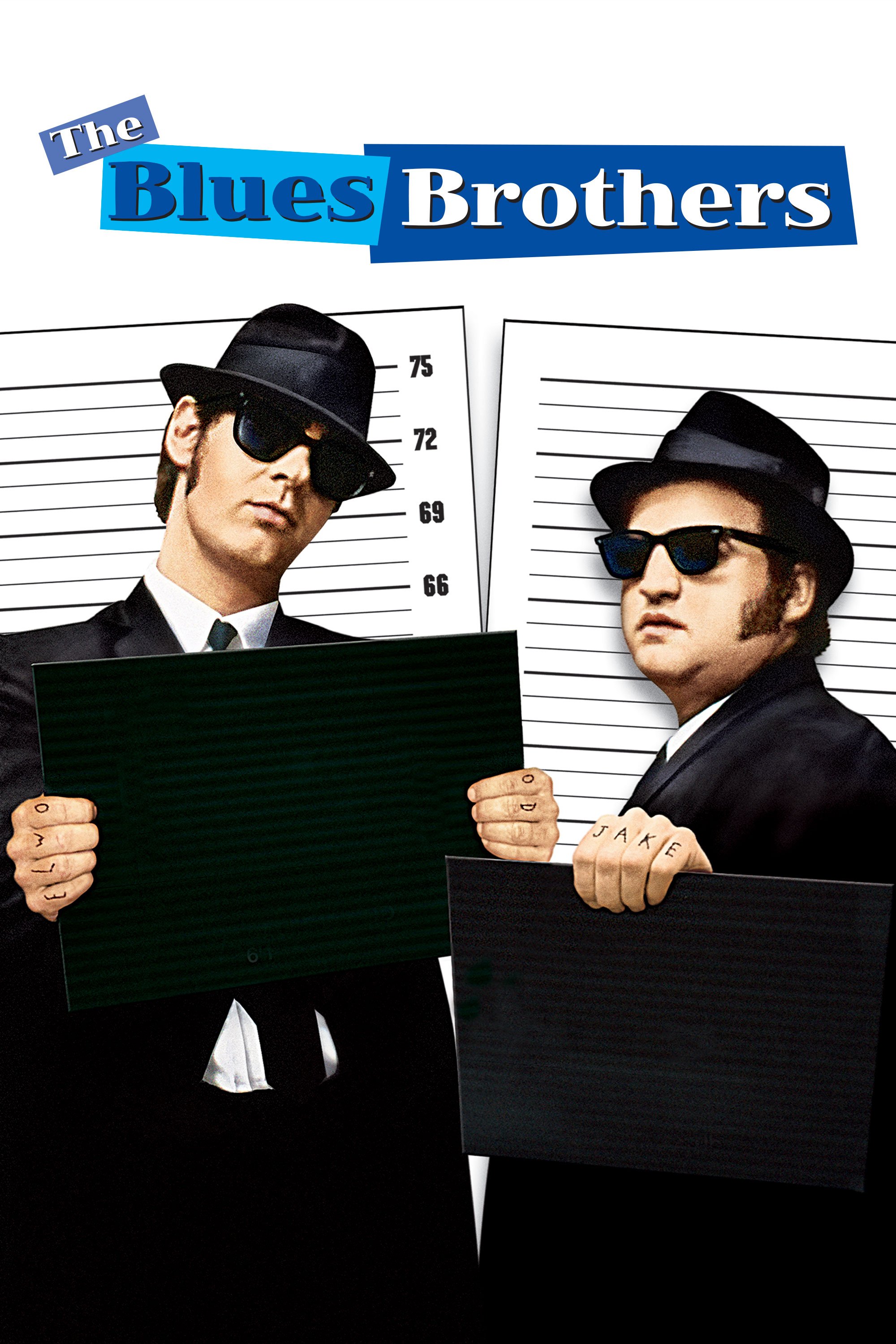
The Blues Brothers poster

The Blues Brothers

133 minutes

Cast

Selected cast credits · Film reference

John Belushi Joliet Jake Blues
Dan Aykroyd Elwood Blues
James Brown Reverend Cleophus James
Cab Calloway Curtis
Aretha Franklin Mrs. Matt Murphy
Carrie Fisher Mystery Woman
Henry Gibson Head Nazi
John Candy Burton Mercer
Kathleen Freeman Sister Mary Stigmata
Steve Lawrence Maury Sline
Paul Reubens Waiter
DeVoreaux White Young guitar thief
Steven Spielberg Cook County clerk

The Blues Brothers | The Rewatchables

Explore episodeClose episode

Producer credits not yet identified.

Half-Assed Internet Research

SNL origins; sprawling script; troubled production; stunts and release

In the discussion (18)
Approx. transcript time · 00:15:47Read transcript
  • The Blues Brothers began as a warm-up act, appeared as musical guests with Steve Martin and Carrie Fisher in 1978, then toured and released the hit album amid Belushi’s rapid rise.
  • The film is placed near the start of a Chicago filmmaking revival and praised as a major city love letter preceding Ferris Bueller. The discussion’s mayor identification is not independently verified.
  • Aykroyd reportedly delivered an unwieldy 324-page first script filled with digressions despite never having written or read a screenplay.
  • The troubled production reportedly included a $3.5 million downtown scene, budgeted cocaine, an on-set private bar and an eventual $27.5 million budget that angered executives.
  • The film is reported to have grossed $115.2 million, ranked tenth for 1980 and sixth among musicals, and launched alongside a concert tour; the claimed same-day Empire release is retained only as a podcast claim.
  • Mixed contemporary reviews and criticism of excess are contrasted with enthusiasm from Siskel and Ebert.
  • The original script reportedly contained separate recruitment plots for eight band members, compressed because they would not make a workable movie.
  • Aretha reportedly struggled with lip syncing; Hooker is said to be the only singer recorded live.
  • The Colleen Camp poster in Elwood’s apartment prompts a reported Apocalypse Now history: Lynda Carter’s original casting, storm interruption, Wonder Woman conflict and replacement poster recreating her original pose.
  • Thirteen Bluesmobiles were reportedly bought at auction, plus sixty police cars at $400 each.
  • Forty stunt drivers and more than five hundred extras reportedly worked on the climax; a Pinto was dropped from a helicopter at 1,200 feet with special FAA permission.
  • A Vanity Fair account describes a daily chain of executive anger over spending, eventually reaching Aykroyd as the person responsible for getting Belushi to work.
  • Woodward’s Wired is described as controversial and drug-focused, supplying much production history later reused; Belushi disappearing into nearby homes makes the making-of seem filmworthy.
  • The film reportedly destroyed 103 cars, a record later surpassed by The Matrix Reloaded’s 300.
  • Belushi’s skateboarding injury reportedly required an urgently summoned orthopedic surgeon to keep his knee usable for filming.
  • The Hollywood Palladium reportedly doubled for Chicago; enthusiastic concert crowds are praised, although their initial indifference to the first song is questioned.
  • Aykroyd is quoted as blaming racist Southern theater refusals for suppressing box-office potential.
  • Elwood’s freeze-framed record lists 116 parking and 56 moving violations with orders to arrest him and impound the vehicle.


Roger Ebert's review

In the discussion (1)
Approx. transcript time · 00:29:17Read transcript
  • Ebert gives three stars and praises Landis for organizing chaos while preserving humor, grace and whimsy; the interpretation of the brothers as hard-boiled cynics is questioned. No denominator is spoken.

What’s Aged the Worst?

Manual steering; missing Shaffer and cameos; sequel; racist theater bookings

In the discussion (7)
Approx. transcript time · 00:31:08Read transcript
  • Enormous car pileups are questioned as a dated appeal, but escalating absurdity eventually turns initially tedious chases into impressive comic invention.
  • Manual steering ages poorly; a remembered failed test drive of a cheap late-1960s Mustang illustrates the difficulty.
  • Paul Shaffer’s absence disappoints; his competing Gilda Live commitment reportedly enraged Belushi and cost him his band place.
  • Howard Shore suggesting the Blues Brothers name without continuing involvement is raised, though his later career went well.
  • More SNL-related cameos, such as Murray, Martin or Laraine Newman, are desired; Hartman’s later cameo work illustrates the appeal.
  • Blues Brothers 2000 is called a poor sequel.
  • Landis’s account of Ted Mann restricting bookings to avoid Black audiences is condemned as racist and as harming the film’s release, despite its eventual success.

Really Fun Deleted Scenes

Gas-station explosion

In the discussion (1)
Approx. transcript time · 00:31:47Read transcript
  • A deleted scene has Belushi’s discarded cigarette blow up the gas station after Twiggy leaves; its exclusion is questioned amid the retained destruction.

Perfect Age to See This Movie

16; alternatives 10 and 18–19

In the discussion (4)
Approx. transcript time · 00:32:24Read transcript
  • Late teens, around eighteen or nineteen, are the initial ideal viewing age.
  • A formative sixteenth-birthday trip to the Blues Brothers 2000 premiere and party led to repeated original-film viewings and a desire to move to Los Angeles; sixteen is the resulting age choice.
  • Sixteen suits discovering soul music while enjoying crashes; ten is also defended through childhood affection.
  • Enduring quoted lines connect the film with Stripes and Caddyshack; a first viewing after thirty might miss its impact.

Most Rewatchable Scene

Ray’s Music Exchange; Chez Paul; mall chase

In the discussion (11)
Approx. transcript time · 00:36:54Read transcript
  • Jake’s release, the brothers’ reunion, police-car pickup and bridge jump provide a strong opening.
  • James Brown’s church performance and Jake’s epiphany are nominated as iconic, with a stunt double inferred for the handsprings.
  • The Dixie Square Mall chase is loved for escalating destruction, deadpan shopping remarks and its period mall atmosphere.
  • Chez Paul is a favorite and the funniest scene, unleashing Belushi through food and outrageous demands; more similarly unrestrained scenes are desired.
  • The Soul Food Cafe sequence combines John Lee Hooker, dry toast and four fried chickens, and Aretha’s Think; Murphy’s stiff acting contrasts with her performance.
  • Ray’s Music Exchange is praised as the best musical number for its outdoor choreography, compared with Ferris Bueller’s Twist and Shout dancing.
  • Bob’s Country Bunker, Rawhide and Stand by Your Man are nominated; its chicken wire inspires a joke about live television recaps.
  • Minnie the Moocher, the Palace Hotel performances and Carrie Fisher’s tunnel confrontation are listed among candidates.
  • The 106-miles-to-Chicago exchange is an iconic launch into the final chase.
  • The Nazis’ prolonged falling Pinto, the Bluesmobile collapsing and the surrounding guns are final-chase highlights.
  • Ray’s Music Exchange is explicitly selected for Charles’s timing, the song and dance, and its necessary place in getting instruments; another response favors Chez Paul or the mall.

The most "year the movie came out" thing

Police cars; $10 suit; celebrity album; R&B car-chase musical

In the discussion (3)
Approx. transcript time · 00:43:48Read transcript
  • Destroyed 1970s police cars and an expensive suit costing ten dollars mark the era.
  • Don Simpson reportedly sought the project for Paramount, inspiring a joke about an even more drug-heavy production.
  • Fame enabling an album and an R&B car-chase musical about two white felons on a divine mission feel characteristic of 1980.

What’s Aged the Best?

Lead duo; anti-Nazi humor; Fisher; Chicago; soul music

In the discussion (8)
Approx. transcript time · 00:44:43Read transcript
  • Belushi and Aykroyd, and Elwood’s tiny apartment with its detailed furnishings, hold up.
  • Mocking white supremacists and calling the head nun the Penguin hold up.
  • Carrie Fisher’s Curl Up and Dye salon and determined weapons-based revenge are admired, especially beside her Empire role.
  • A cinema marquee offering Escape from Alcatraz, The Warriors and Up in Smoke is praised as an extraordinary triple bill.
  • Ray-Bans are connected with the lasting impact of this film and Risky Business.
  • Chicago’s extensive use and the sauna meeting revealing the entire band are praised.
  • The making-of stories may surpass the film, and its path from SNL characters to feature films holds up.
  • The 1960s soul and R&B music is considered timeless and among America’s finest.

What Piece of Memorabilia Would You Want From This Movie?

Colleen Camp poster; hats, glasses, briefcase and harmonica

In the discussion (4)
Approx. transcript time · 00:47:12Read transcript
  • The rare original Lynda Carter centerfold is an attractive memorabilia choice; a discovered sale listing gives no available price.
  • Jake and Elwood’s hats and Ray-Bans are desirable, recalling souvenir gear at the sequel premiere; a reported five hundred lost glasses makes an original pair hard to identify.
  • Elwood’s briefcase and the collapsed car are alternatives, but the Colleen Camp poster is the preferred object because of its film history.
  • The harmonica from the major performance is another choice.

The Great Shot Gordo Award for Most Cinematic Shot

Prison footsteps; final surrounding guns; car entering truck

In the discussion (2)
Approx. transcript time · 00:49:46Read transcript
  • Low-angle prison footsteps and the final pullback revealing hundreds of guns are nominated.
  • The police car entering a truck is another shot choice.

When I Would Have Died

Hotel explosion or mall collision

Flex pick · Chris Ryan

In the discussion (1)
Approx. transcript time · 00:50:37Read transcript
  • The explicitly invited CR flex chooses either the hotel explosion and collapsing room or being hit by an Oldsmobile while shopping in the mall.

The Vincent Chase Award: Are We Sure This Character Is Actually Good at Their Job?

Record executive; Blues Brothers’ blues credentials; parole officer; Penguin

In the discussion (3)
Approx. transcript time · 00:51:18Read transcript
  • The Clarion Records executive hands over $10,000 after one song and helps wanted felons escape.
  • The Blues Brothers’ actual blues credentials are questioned because they mostly perform R&B, dance and speeches; their entertainment ability is defended.
  • Parole officer Burton Mercer and the Penguin’s inability to cover the tax bill are additional candidates, leading to a joke that nobody does their job well.

The Stephen A. Smith Hottest Take Award

Cut Fisher’s subplot; sequel harms SNL ranking; cocaine’s cultural impact

In the discussion (3)
Approx. transcript time · 00:57:50Read transcript
  • Cutting Carrie Fisher’s largely detached revenge plot might have controlled the budget, though her explosions serve as transitions; Jake’s long engagement is also questioned.
  • The bad sequel weakens the franchise’s claim to best SNL-related movie because both Wayne’s World films work; MacGruber is also in contention.
  • Cocaine is provocatively called an underrated cultural force behind improbable creative choices, while its destructive effects are explicitly acknowledged and personal-use jokes follow.

Casting What-Ifs

Olivia Newton-John unavailable; studio wanted younger musicians

In the discussion (2)
Approx. transcript time · 01:00:54Read transcript
  • Olivia Newton-John reportedly could not take the probable Twiggy role because of Xanadu; the part’s celebrity appeal is compared with contemporary famous personalities.
  • The studio reportedly wanted younger musical acts, including Rose Royce, instead of the older soul legends; this is criticized as misunderstanding the project.

The Joey Pants “That Guy” Award

Henry Gibson; young guitar thief; Kathleen Freeman; Napier disputed

In the discussion (3)
Approx. transcript time · 01:01:52Read transcript
  • Charles Napier is considered overqualified after repeated wins, with his scream compared with the moment Lecter attacks him; Henry Gibson is a leading alternative despite cinephile familiarity.
  • The child attempting to steal at Ray’s shop is recognized as the later Die Hard chauffeur; the first name is recalled uncertainly, so no new full identity is asserted.
  • Kathleen Freeman as the Penguin is another choice.

Probably Unanswerable Questions

Spielberg’s career; Bob’s pursuit; smell; Belushi’s future; SNL film control

In the discussion (8)
Approx. transcript time · 01:04:22Read transcript
  • If Spielberg followed 1941 with this runaway production, would he still direct Raiders? A Poltergeist follow-up is explicitly framed as a joke at Hooper’s expense.
  • Why Bob abandons his business to pursue the brothers over $200 is questioned; humiliation is offered as motivation.
  • The country bar seems far removed culturally from Chicago, though nearby Indiana could explain it.
  • The scarcity of explicit cocaine use in apparently drug-fueled period movies is questioned, with Cruising a disputed example involving uncertain substances.
  • How badly the brothers smell is questioned given unwashed clothes, sewer travel and restaurant patrons objecting even amid smoking.
  • The Colleen Camp poster raises a playful shared-universe question with Apocalypse Now and an imagined veteran attending the band.
  • Belushi’s potential future is debated between more blockbuster comedies and serious acting; an imagined America’s Guest script illustrates spontaneous early-1980s filmmaking.
  • Whether this production encouraged Lorne Michaels to gain more control of SNL adaptations is asked; later contractual participation and power are discussed with explicit uncertainty.

Apex Mountain

Blues Brothers band; prison-property returns; mall stores; Illinois Nazis; Oldsmobiles

In the discussion (12)
Approx. transcript time · 01:10:53Read transcript
  • Belushi’s official peak is placed in 1978 with Animal House and SNL, though his Chicago citywide popularity is considered another kind of apex.
  • Aykroyd is rejected in favor of Ghostbusters.
  • The prison-property-return scene is an apex candidate and a template, compared with Rounders and 48 Hrs.; an imagined heist-movie version becomes a joke.
  • Chicago as a film location is rejected in favor of Ferris Bueller or The Fugitive, with Thief an emotional alternative.
  • The blues is rejected; Elvis in Vegas is preferred for bushy sideburns.
  • Fisher’s simultaneous Star Wars-era prominence supports her case, though Jedi is proposed as a stronger character moment and sparks disagreement about the trilogy.
  • J. C. Penney and especially Pier 1 benefit from the mall scene at an already strong historical moment for the stores.
  • Illinois Nazis are accepted; Rawhide’s theme is placed at the television show’s height instead. Orange Whips prompt uncertainty about the drink itself.
  • Scarface and Richard Pryor are alternatives for cocaine’s cultural peak, with a joking basketball-stat line also imagined.
  • New Oldsmobiles are accepted and James Brown rejected; Elwood’s awful apartment is compared with Se7en’s sloth-victim apartment.
  • The Blues Brothers as a band are accepted here over their platinum album and SNL appearances.
  • Vengeful ex-girlfriends lose to Fatal Attraction; Landis’s peak is debated between Coming to America and Animal House rather than this film.

Cruise or Hanks?

Hanks as Elwood

In the discussion (1)
Approx. transcript time · 01:17:20Read transcript
  • An initial both answer gives way to Hanks as Elwood; Cruise’s handspring skill is raised but does not change the final Hanks preference.

Jennifer Roulette

Coolidge as Penguin; Lawrence or Lopez as Fisher

The panel proposes a new category here.

In the discussion (2)
Approx. transcript time · 01:18:03Read transcript
  • Jennifer Lawrence is the initial choice for Fisher’s role, with doubt that the listed alternatives fit.
  • Young Jennifer Lopez is another Fisher suggestion, but moving Jennifer Coolidge to the Penguin wins the comparison.

Call Russillo for an Unprepared Take

No answer

The panel proposes a new category here.

In the discussion (1)
Approx. transcript time · 01:18:30Read transcript
  • The live call goes unanswered again, leaving the experiment zero for two; enthusiasm from a listener and imagined voicemail are discussed.

Did This Movie Need a Random Sports Scene?

Pickup basketball recruiting a band member

In the discussion (2)
Approx. transcript time · 01:19:09Read transcript
  • The Cubs or Walter Payton are proposed as additions to the Chicago setting.
  • A preferred pickup-basketball recruitment scene would locate a band member amid local-player cameos, with Aguirre and Magic offered before clarifying Chicago connections.

Picking Nits

Thin plot; instruments IOU; orphanage taxes; uninjured shoppers; beer bill; missing hours

In the discussion (10)
Approx. transcript time · 01:19:59Read transcript
  • Removing the chases and music would leave little plot; the objection is countered as removing the essential ingredients of the film.
  • Ray’s $1,400 instrument IOU seems generous; wildly high modern-dollar conversions are explicitly uncertain rather than verified values.
  • Closing a church-owned orphanage over $5,000 property taxes seems implausible because it might be tax-exempt.
  • Nobody being struck in the crowded mall chase is questioned; the real filming location is distinguished as an already closed mall staffed with extras.
  • Fisher’s access to a rocket launcher is questioned, prompting arms-dealing jokes.
  • The Soul Food Cafe appears full of health violations, with an unattended live grill and a saxophone on the counter.
  • The Good Old Boys arrive hours late to their own gig; road closures from the chases are a comic explanation.
  • The $200 beer bill seems enormous at imagined fifty-cent prices, implying about four hundred beers for the band.
  • Twiggy waiting at a motel for the odd stranger after paying him $94 seems implausible, with his magnetism offered as the defense.
  • The nighttime post-concert escape becomes a morning downtown arrival, leaving many hours unexplained.

Is This Movie Better With…?

Daniel Plainview introducing the band; Tony Romo chase commentary

In the discussion (2)
Approx. transcript time · 01:24:03Read transcript
  • Daniel Plainview as a third Blues Brother introducing the Palace Hotel performance is imagined.
  • Tony Romo commentary on the falling Nazis and Fisher’s missile launcher is proposed.

Just One Oscar

Belushi acting; Aykroyd’s inspiration

In the discussion (2)
Approx. transcript time · 01:25:05Read transcript
  • Soundtrack and Aykroyd are considered; Belushi is chosen for irreplaceable acting, while Aykroyd’s inspiration or story receives a separate preference rather than screenplay.
  • Belushi’s actual awards competition is considered formidable, with replacing Jack Lemmon’s Tribute nomination a possibility but beating De Niro unlikely.

Does Cocaine Make This Movie Make More Sense?

Does cocaine make this movie make more sense?

The panel proposes a new category here.

In the discussion (1)
Approx. transcript time · 01:25:37Read transcript
  • A proposed category asks whether cocaine makes the movie make more sense; it emerges from a joking invented Oscar category.

The Coach Finstock Award for Best Life Lesson

Mission from God; pay tickets; mend mistakes; do not abandon your bride

In the discussion (3)
Approx. transcript time · 01:33:41Read transcript
  • A mission from God can override everything else.
  • Pay parking tickets to avoid trouble; the prison’s Never Too Late to Mend sign supplies another lesson.
  • Do not abandon a girlfriend at the altar, especially if she has access to weapons.
In the discussion (3)
Approx. transcript time · 01:34:09Read transcript
  • Animal House, Wayne’s World, Old Boyfriends and Continental Divide are floated; an apparent Leopard attribution is joking or confused and remains unresolved.
  • Crossroads is recommended for its Robert Johnson history and treatment of the blues.
  • The Commitments is a final double-feature choice about Irish youths forming a 1960s soul band.

More from the conversation

The episode is timed to SNL’s fiftieth-anniversary week; a childhood Chicago screening ended with the real Daley Plaza outside, intensifying the experience.
Approx. transcript time · 00:00:00Read transcript
Belushi fandom began through prime-time SNL reruns and occasional late-night viewing; the show’s enormous season-four audience is recalled.
Approx. transcript time · 00:02:03Read transcript
Belushi’s approachable party legend, departure from SNL, exhausting 1941 schedule and small filmography shape the discussion; Neighbors disappointed after the leads switched comic roles.
Approx. transcript time · 00:03:15Read transcript
Belushi’s physicality, theatrical skill and charisma are compared with Farley, Jack Black and Ferrell.
Approx. transcript time · 00:05:19Read transcript
Belushi’s 1978 combination of hit film, television and album is treated as an exceptional peak, alongside the Steve Martin tour and multimillion-selling live record.
Approx. transcript time · 00:06:02Read transcript
Aykroyd’s sincere musical interests and straight-man generosity are credited with a film that seems unlikely to work yet captures major performers at a unique moment.
Approx. transcript time · 00:07:28Read transcript
The cameo-filled musical-and-car-chase structure is connected with 1970s variety entertainments and stunt comedies, while its extravagance anticipates the 1980s.
Approx. transcript time · 00:08:32Read transcript
Favorite musicals include The Blues Brothers, Singin’ in the Rain, The Wizard of Oz and All That Jazz; the film is described as a musical in camouflage rather than characters singing exposition.
Approx. transcript time · 00:09:39Read transcript
Belushi’s originality and ordinary-person appeal are recalled through early sketches, bar stories and the shock of his death after a short career.
Approx. transcript time · 00:10:35Read transcript
The iconic wild-man image understates Belushi’s seriousness; his deadpan commitment resembles Ferrell more than Farley, and his Kirk sketch demonstrates range.
Approx. transcript time · 00:13:01Read transcript
The unmade career is imagined through the About Last Night role later played by Jim Belushi, possible supporting and dramatic roles, and the serious side of Old Boyfriends.
Approx. transcript time · 00:13:56Read transcript
A reported late-night swimming anecdote has Aykroyd calling tireless Belushi Albanian oak; this vitality is connected with the performance despite the difficult production.
Approx. transcript time · 00:14:59Read transcript
The act is understood through early SNL’s variety-show and cool-club identity: sincere blues enthusiasm, stage business and superb musicians rather than conventional sketch punchlines.
Approx. transcript time · 00:16:53Read transcript
Aykroyd and Belushi are imagined making many more films together; comedy partnerships and their vaudeville/variety origins are compared with later teams.
Approx. transcript time · 00:18:57Read transcript
The film opened a path for SNL adaptations; Wayne’s World is considered funnier and more coherent even by someone preferring The Blues Brothers overall.
Approx. transcript time · 00:20:22Read transcript
The 4K transfer is praised, but another view favors VHS grime as especially appropriate for Landis and Trading Places.
Approx. transcript time · 00:21:12Read transcript
Musical legends and eclectic cameos are celebrated, with a wish for more directors appearing briefly in others’ films.
Approx. transcript time · 00:23:04Read transcript
Aykroyd’s unusual interests, appeal, bar ownership, writing ability, impressions and generosity as a partner are compared with later SNL performers Hartman and Hader.
Approx. transcript time · 00:24:03Read transcript
Landis’s run from Kentucky Fried Movie through later comedies is praised for comic set pieces and performances, while the Twilight Zone deaths alter how his career is viewed.
Approx. transcript time · 00:29:54Read transcript
The musical legends matter not merely as cameos but as story characters—a reverend, waitress and shopkeeper—during a less dominant phase of their careers.
Approx. transcript time · 00:35:57Read transcript
The Carter memorabilia tangent expands into admiration for a Philippine Shakey’s shirt photograph.
Approx. transcript time · 00:47:45Read transcript
Steve Lawrence prompts memories of Hartman’s Sinatra Group sketch and a wish for a Hartman-sketch Rewatchables.
Approx. transcript time · 00:49:05Read transcript
Blues is suggested as the title of a hypothetical making-of film, rather than a replacement title for the original.
Approx. transcript time · 01:08:36Read transcript
A remembered near-license-loss ticket hearing and a fast Vegas–Burbank drive lead to teasing about driving style and seatbelts.
Approx. transcript time · 01:09:45Read transcript
A tangent about expensive 4K releases, waiting for sales and compulsive collecting becomes a joke about filming the shopping process.
Approx. transcript time · 01:27:19Read transcript
Historical body odor, westerns, sensory adaptation and sports locker rooms are discussed, followed by a reported Napoleon anecdote whose joking retelling is not independently verified.
Approx. transcript time · 01:28:47Read transcript
Belushi was reportedly intended for Aykroyd’s early Ghostbusters concept, perhaps in the later Murray role; the film’s rewatchability and widescreen restoration are praised.
Approx. transcript time · 01:35:52Read transcript
Jack is thanked with a surname transcribed Sainers; Craig is explicitly absent at the Super Bowl, so no first-hand producer review is supplied.
Approx. transcript time · 01:36:45Read transcript
The close promotes mailbag and video coverage and discusses uncertain Oscar predictions, scandals, CODA’s past odds and preferential voting.
Approx. transcript time · 01:37:02Read transcript