‹ All movies
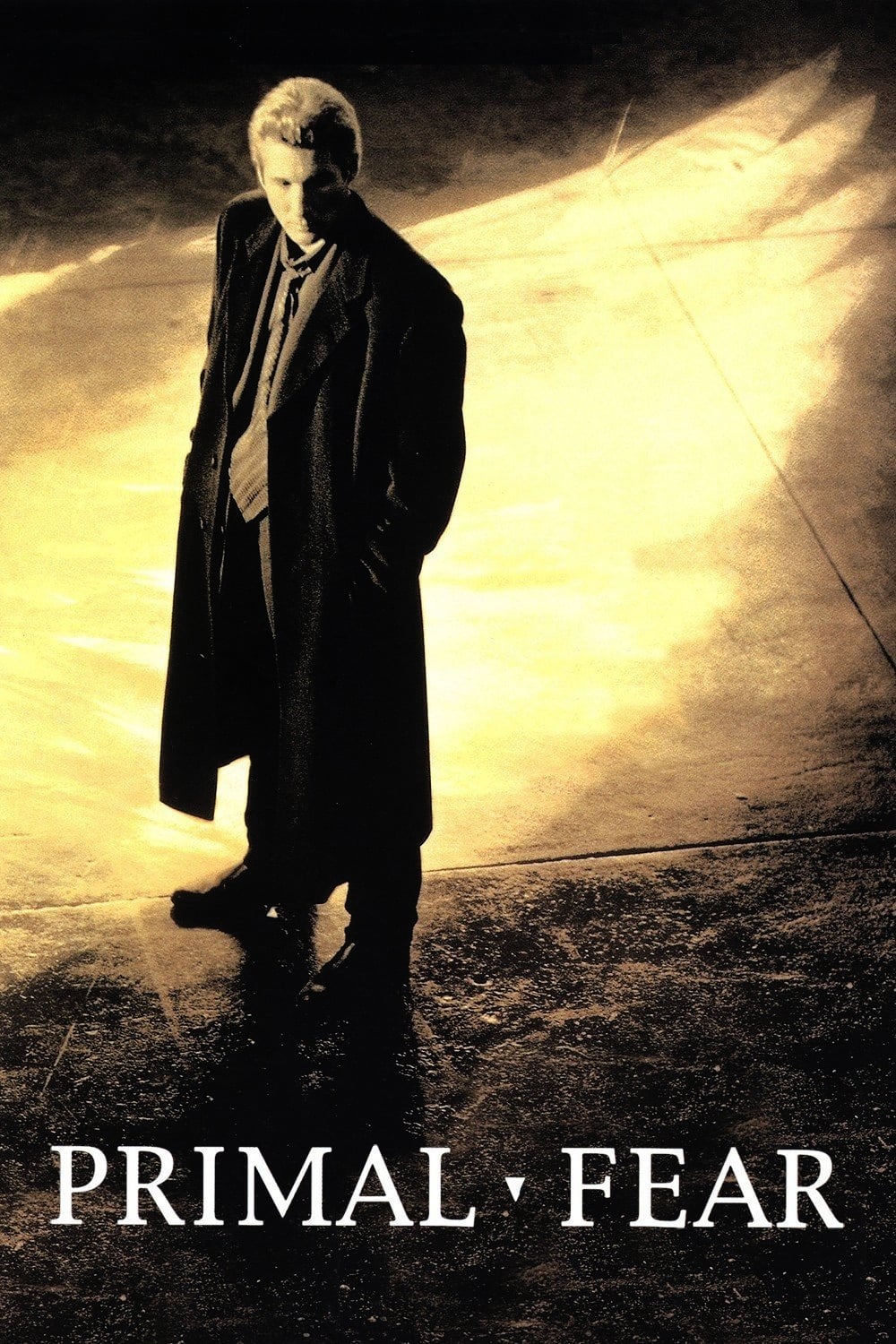
Primal Fear poster

Primal Fear

126 minutes

Cast

Selected cast credits · Film reference

Richard Gere Martin Vail
Laura Linney Janet Venable
Edward Norton Aaron / Roy Stampler
John Mahoney Shaughnessy
Andre Braugher Goodman
Steven Bauer Pinero
Joe Spano Stenner
Tony Plana Martinez
Jon Seda Alex
Reg Rogers Connerman
Brian Reddy Woodside
Sigrid K. Zahner Vail's Secretary
Diann Burns WLS Anchor
Linda Yu WLS Anchor
Andy Shaw WLS Location Reporter
Mary Ann Childers WBBM Anchor
Lester Holt WBBM Anchor
Sylvia Gomez WBBM Location Reporter
Jon Duncanson WBBN Location Reporter
David Eckert WGN Anchor
Robert Jordan WGN Anchor
Joanie Lum WGN Location Reporter
Randy Salerno WGN Location Reporter
Randall Slavin Young Boy
Mike Bacarella Sergeant
Turk Muller Precinct Jailer
Lenny Wilson Bartender
Peter Schreiner Bailiff
Joseph R. Ryan Old Man
Wayne Wright Court Clerk
Tony Fitzpatrick Duty Officer
Clarence Williams, Jr. Arresting Cop
Rosalie V. Lewis Stenographer
Dwight Brad Dyer Prison Guard
Greg Bronson Banquet Patron (uncredited)

Primal Fear | The Rewatchables

Explore episodeClose episode

Half-Assed Internet Research

Rewrites; endings; auditions; stutter and improvisation; Oscar field; budget and gross; locations

In the discussion (15)
Approx. transcript time · 00:14:03Read transcript
  • Gere and Norton reportedly reshaped the roles through rehearsal, with producers emphasizing Gere’s character preferences.
  • Norton recalled rejected endings in which the lawyer punched the client, trapped him with a recorder or otherwise regained the upper hand.
  • Gere reportedly insisted the final image show his defeated lawyer with sagging shoulders, rather than a redemptive victory.
  • The coveted young-actor role reportedly attracted 2,100 auditions, compared with School Ties and Scent of a Woman opportunities.
  • Connie Britton reportedly encouraged Norton to audition after he had encouraged her to try The Brothers McMullen; she was reading for the Maura Tierney role.
  • Norton added the stutter to distinguish his audition.
  • Norton said the widely circulated audition tape secured his Woody Allen and Larry Flynt roles before Primal Fear opened; he compared its fame to a Nirvana demo.
  • Norton’s supporting-actor Oscar rivals were Woods in Ghosts of Mississippi, Mueller-Stahl in Shine, Macy in Fargo and winner Gooding in Jerry Maguire.
  • The reported budget was $30 million and gross $102 million.
  • Hoblit reportedly insisted on stage actress Linney for the part.
  • The original cut reportedly exceeded three hours before being shortened.
  • The stutter was absent from both book and script.
  • Norton reportedly improvised shoving Gere against the cell, producing genuine surprise.
  • Norton reportedly improvised the slow clap.
  • The police-station exterior was also used for Hill Street Blues, on which Hoblit worked.

The Stephen A. Smith Hottest Take Award

Norton’s debut; Vail’s competence and motives; Aaron’s artificial persona; Gere’s limited casting range

In the discussion (7)
Approx. transcript time · 00:22:41Read transcript
  • Norton’s debut is proposed as possibly the greatest first-part announcement apart from Orson Welles in Citizen Kane.
  • Vail may not be a great lawyer: he invents a third-man defense and then blames assistants for not producing a third man.
  • The benefit of taking an apparently open-and-shut case is unclear; belief in helping Aaron only seems convincing later.
  • Norton’s deliberately constructed Aaron may be intentionally hammy; repeat viewing makes the persona’s plausibility uncertain.
  • Gere may simply have lacked the right roles, but his strong established persona limits whether he could play Field of Dreams, Maverick or the Sleepless in Seattle father.
  • Philadelphia’s Hanks role divides opinion because Gere may lack native empathy; the Denzel role seems a better match.
  • Norton’s possibly unmatched debut is reiterated.

Roger Ebert's review

In the discussion (1)
Approx. transcript time · 00:32:23Read transcript
  • Ebert gave 3.5 stars, praising the crime plot and three-dimensional characters.

Most Rewatchable Scene

Final reveal: there never was an Aaron

In the discussion (15)
Approx. transcript time · 00:36:16Read transcript
  • The opening credits and banquet effectively establish the film, including Norton in the boys’ choir.
  • Linney’s first cigarette and the six-month one-night-stand line establish the former relationship.
  • The opening banquet establishes Vail’s arrogance and expectation that the former lover will come home with him.
  • The post-murder chase and train crossing are effective; jumping aboard the train is proposed as an escape, then questioned because Aaron may want to be caught.
  • The recurring Gere–Linney exchanges are admired as a group.
  • Vail briefing Tommy and Naomi works as a classic legal-team scene, especially his distinction between stealing the ring and possessing it.
  • The recurring McDormand interviews are praised, especially Norton’s momentary face change when she rattles him.
  • Finding the sex tape is nominated.
  • Linney’s late-night bar negotiation with Vail is the preferred encounter between them and signals her strength as a performer.
  • Aaron’s transformation into Roy is a major moment.
  • Braugher on the stand and his tense confrontation with Vail are nominated.
  • Vail provoking Mahoney on the stand over South River, using Pinero’s death as his reason to go rogue, is a favorite.
  • Shaughnessy eating Chinese food while explaining how the city works is another Mahoney highlight.
  • Aaron/Roy choking the prosecutor on the stand remains effective even when the transformation is anticipated.
  • The final revelation that Aaron never existed is the chosen scene; the delayed neck apology overturns the apparent resolution.

What’s Aged the Worst?

Janet’s graphic testimony; Mahoney as villain, disputed; workplace sexual remark

In the discussion (4)
Approx. transcript time · 00:46:49Read transcript
  • The prosecutor’s graphic hypothetical description of how she would kill the victim seems implausible in open court.
  • Janet’s graphic imagined killing during cross-examination is again criticized as excessive.
  • Mahoney playing a villain is emotionally unwelcome to one participant even though his performance is acknowledged as convincing.
  • Shaughnessy’s sexual remark about Janet and Marty is an HR violation, and the dated expression is unwelcome.

What’s Aged the Best?

Clerical-abuse plot; ensemble; Good Will Hunting connection; surprise witness; Hawthorne quote; final shot; Biderman rewrite; Faulkner clue

In the discussion (10)
Approx. transcript time · 00:50:35Read transcript
  • The clerical sexual-abuse cover-up plot is considered ahead of later public revelations.
  • The archbishop’s lawyer-and-confession joke at the banquet is enjoyed.
  • Bauer’s charm includes the first-kiss/pregnancy line and giving Vail the CD containing the song he liked.
  • Linney and Tierney’s enduring careers are strengths of the casting.
  • Damon’s failure to get this role is credited with helping motivate Good Will Hunting.
  • The surprise abuse complainant in the audience works like Airman O’Malley in A Few Good Men, unsettling the opposing side.
  • The Hawthorne quote applies to multiple characters.
  • The final shot is considered one of the great endings.
  • Gere reportedly pushed for Ann Biderman’s rewrite after her NYPD Blue work; her later Southland and Ray Donovan success reinforces that early judgment.
  • Absalom, Absalom! on the nightstand is noticed as a possible clue that Aaron is more sophisticated than he appears.

Recasting Couch

Reporter: Wheeler-Nicholson, Paymer, Buscemi, Pollak, Cusack or Scott; Britton for Tierney, disputed

In the discussion (7)
Approx. transcript time · 01:00:27Read transcript
  • Dana Wheeler-Nicholson is suggested as a more distinctive reporter, with more diverse casting also proposed.
  • David Paymer is proposed as a more memorable reporter.
  • Buscemi is proposed as a more memorable reporter.
  • Kevin Pollak is proposed after an initially mistaken surname.
  • John Cusack is proposed for the reporter, then challenged as oversized casting for a small role.
  • Campbell Scott is another reporter alternative.
  • Connie Britton is considered for Tierney’s small role, though Tierney is also defended.

Picking Nits

The usual as Bud Light, disputed; missing insanity defense; cigarette holding; absent altar-boy witnesses; tape discovery

In the discussion (5)
Approx. transcript time · 01:02:52Read transcript
  • Finding the correct abuse videotape depends on a label visible only by freeze-frame, leaving the selection and fast-forwarding apparently implausible.
  • Ordering the usual and receiving a Bud Light divides opinion: critics want a distinctive cocktail, while the defense says it simply establishes a frequent customer and ordinary civil servant.
  • The elaborate third-man strategy is questioned when an insanity defense seems available from the violent facts; the counterargument is that Roy had not yet been discovered.
  • Linney spends too much time holding and shaking a cigarette rather than smoking it, despite a counterexample at the beginning.
  • The absence of other altar-boy witnesses is questioned; fear of Aaron and Alex’s wish to disappear are possible explanations.

Is There a Better Title for This Movie?

Butcher Boy; The Man with Two Faces; original also defended

In the discussion (3)
Approx. transcript time · 01:03:49Read transcript
  • Primal Fear has a defender as the title.
  • Butcher Boy is proposed, then noted as another film title.
  • The Man with Two Faces is another suggested title associated with an existing movie.

Probably Unanswerable Questions

Aaron’s earlier persona and plan; Norton’s multiple-personality roles; Worm substitution; Podcast Roy

In the discussion (5)
Approx. transcript time · 01:08:04Read transcript
  • How Aaron behaved before the arrest is unclear; other altar boys should have exposed a previously different personality.
  • Roy’s plan, previous killings and whether he is a serial killer or an abused person retaliating remain unresolved.
  • Norton is proposed as the greatest multiple-personality actor through this film, Fight Club and The Hulk.
  • Replacing Roy with Worm would turn the film into Rounders whenever the other persona appears, highlighting Norton’s range.
  • A joking Podcast Roy persona would erupt under repeated sports questions.

Casting What-Ifs

DiCaprio declined Aaron/Roy

In the discussion (1)
Approx. transcript time · 01:12:28Read transcript
  • DiCaprio was reportedly the first choice for Aaron/Roy but declined because the screenplay was a mess; Norton says he initially shared that assessment before revisions.
In the discussion (3)
Approx. transcript time · 01:15:28Read transcript
  • Bauer is the primary choice for three scenes; Braugher is considered too substantial to qualify.
  • Linda, the girl on the sex tape, receives a joking alternative choice.
  • Terry O’Quinn’s threat that Janet should find another job makes him another candidate, with his later Lost role recalled.

Apex Mountain

Mahoney; sordid VHS sex tapes; this slow clap, disputed

In the discussion (7)
Approx. transcript time · 01:17:35Read transcript
  • Slow claps prompt a dispute between this reveal, Brubaker’s pioneering prison-wide clap and Can’t Buy Me Love.
  • Gere receives no.
  • Linney receives no.
  • Braugher is a possibility because Homicide is airing, with uncertainty over his Emmy history.
  • Mahoney is an affirmative candidate through concurrent Frasier and She’s the One work.
  • Multiple-personality murderers or disorder are proposed, then Psycho undercuts the claim after Sybil is mentioned.
  • Sordid VHS sex tapes receive agreement, with the Pamela-and-Tommy tape as same-era context.

Sequel, Prequel, Limited Series, or All-Black Remake

Short prestige miniseries; Young Aaron sitcom joke

In the discussion (2)
Approx. transcript time · 01:27:20Read transcript
  • A short prestige miniseries could expand the real-estate and Bauer subplots, though protecting the twist from advance viewers would be difficult.
  • Young Aaron is a joking Kentucky prequel sitcom proposal.

Is This Movie Better With…?

Wayne Jenkins lawyer impression

In the discussion (1)
Approx. transcript time · 01:28:15Read transcript
  • A Wayne Jenkins lawyer impression addresses Roy as a supervillain and imagines discussing the 1996 Kentucky basketball team with him.

The Coach Finstock Award for Best Life Lesson

Court aphorism; invented personality; avoid heinous

In the discussion (3)
Approx. transcript time · 01:33:38Read transcript
  • The whorehouse-versus-court aphorism is selected but considered on the nose.
  • Inventing another personality to escape punishment is a dark joking lesson.
  • Avoid the word heinous in court because jurors may not understand it.

Producer review

Vail’s motive unconvincing; twist good, slow clap hackneyed

In the discussion (2)
Approx. transcript time · 01:36:04Read transcript
  • The invited review values courtroom scenes highly but finds Vail’s motive unconvincing, weakening the film; a response attributes his choice to wanting attention and fame.
  • The invited review likes the surprise but finds the slow clap hackneyed; the others strongly disagree.

Ranked the Ensemble

Proposed ensemble ranking; McBride first in This Is the End example

The panel proposes a new category here.

In the discussion (1)
Approx. transcript time · 01:38:45Read transcript
  • A proposed Ben Simmons Ranked the Ensemble category would rank actors in ensemble films; This Is the End is the example, with McBride suggested first, while Primal Fear is considered unsuitable.

More from the conversation

Opening updates cover the Harrison Ford Hall of Fame challenge, James Harden, The Bear and continuing enthusiasm for The Idol.
Approx. transcript time · 00:01:37Read transcript
July is announced as courtroom month with six films; a courtroom only needs to be materially involved.
Approx. transcript time · 00:02:24Read transcript
Courtroom storytelling is thought to have migrated to television, with The Night Of and Riz Ahmed’s breakthrough as the comparison.
Approx. transcript time · 00:03:34Read transcript
Oversupply, O.J. Simpson, Court TV and later true-crime documentaries and podcasts are offered as explanations for the courtroom boom and decline.
Approx. transcript time · 00:04:15Read transcript
Scott Turow’s Presumed Innocent and Grisham adaptations are credited with modernizing the courtroom genre.
Approx. transcript time · 00:05:08Read transcript
The boom is illustrated by A Few Good Men, JFK, My Cousin Vinny, The Firm, The Pelican Brief, The Client, Just Cause, Primal Fear, A Time to Kill, The Devil’s Advocate, The Rainmaker and Liar Liar.
Approx. transcript time · 00:05:23Read transcript
A seven-film year is enumerated as Primal Fear, The Crucible, Sleepers, Before and After, Ghosts of Mississippi, Night Falls on Manhattan and The People vs. Larry Flynt; genre boundaries are debated.
Approx. transcript time · 00:05:59Read transcript
Lawyers are ideal star roles because they combine theatrical speeches with the detective work of solving the case.
Approx. transcript time · 00:06:14Read transcript
A brief personal law-school discussion considers becoming a sports agent, then the grades and reading discipline the profession requires.
Approx. transcript time · 00:07:04Read transcript
The Verdict and A Few Good Men had already been covered; the latter is recalled as the inaugural named Rewatchables episode.
Approx. transcript time · 00:07:43Read transcript
The Verdict’s jury question and the judge looking upward is a favorite courtroom moment.
Approx. transcript time · 00:07:54Read transcript
Recurring tropes include mutual respect between opposing lawyers, former relationships, fear of an unexpectedly formidable defense lawyer, intimidating witnesses and judicial warnings.
Approx. transcript time · 00:08:15Read transcript
Other recurring beats include a call announcing a death, a complicated investment subplot, private client meetings, pleas for cooperation and a witness destroyed on cross-examination.
Approx. transcript time · 00:09:32Read transcript
The South River Project is compared with The Firm’s financial subplot as a secondary mystery adding texture rather than driving the ultimate resolution.
Approx. transcript time · 00:10:16Read transcript
Lawyer protagonists range from a scummy ladies’ man to a newcomer learning through a first case or an exhausted veteran receiving one last chance.
Approx. transcript time · 00:11:10Read transcript
Even A Time to Kill is treated as a morality tale about the lawyer learning racial realities; the contrast with the genre’s sleazy appeal is enjoyed.
Approx. transcript time · 00:11:37Read transcript
Previous Gere episodes include American Gigolo, Unfaithful and Pretty Woman; Internal Affairs remains conspicuously uncovered and is admired for its immorality.
Approx. transcript time · 00:12:12Read transcript
Gere’s career alternates major heat after An Officer and a Gentleman and Pretty Woman with severe droughts; William Goldman’s account of his low casting priority for Pretty Woman is recalled.
Approx. transcript time · 00:13:00Read transcript
The post-Pretty Woman disappointments are Final Analysis, Sommersby, Mr. Jones, Intersection and First Knight; And the Band Played On is praised as the period’s strongest performance.
Approx. transcript time · 00:14:31Read transcript
Gere is defended as a good movie star whose familiar smug, beautiful persona is often exactly what a film needs, with Days of Heaven an exception.
Approx. transcript time · 00:15:01Read transcript
Internal Affairs’ outright villain is a favorite Gere mode; Breathless is compared, Martin Vail is preferred by another response, and An Officer and a Gentleman is considered his best character arc.
Approx. transcript time · 00:15:37Read transcript
Gere’s willingness to be decisively defeated makes the ending memorable; imagined Cruise or Hanks versions would insist on a way to defeat the client or sacrifice the legal career.
Approx. transcript time · 00:16:26Read transcript
The Brothers McMullen and She’s the One prompt a sidebar about Irish-American Long Island identification and the latter’s cast.
Approx. transcript time · 00:20:46Read transcript
Norton’s sudden arrival and carefully obscured biography created generational-star mythology; a teenage viewer expected a new Pacino or De Niro.
Approx. transcript time · 00:22:41Read transcript
Norton’s opening run is enumerated as Primal Fear, Everyone Says I Love You, The People vs. Larry Flynt, American History X, Rounders and Fight Club, with the first two release order corrected and the Allen film judged the weak one.
Approx. transcript time · 00:23:54Read transcript
Norton’s intense involvement in writing and editing may complicate projects, while his small Wes Anderson parts demonstrate he can still be excellent without dominating a film.
Approx. transcript time · 00:24:35Read transcript
The later career is assessed through Keeping the Faith, The Score, Death to Smoochy, Frida, Red Dragon, 25th Hour, The Italian Job, The Illusionist, Down in the Valley and The Painted Veil; 25th Hour, American History X and Fight Club compete as his best performance.
Approx. transcript time · 00:25:43Read transcript
Birdman and The Bourne Legacy show Norton periodically reminding viewers of his ability, but Hollywood offers fewer complex 1970s-style character roles.
Approx. transcript time · 00:26:40Read transcript
Damon’s greater commercial success and Bourne safety net are contrasted with Norton’s perceived acting stature.
Approx. transcript time · 00:27:08Read transcript
Birdman is recalled as failing to match initial expectations of an Oscar sweep despite Best Picture, substantial box office and nominations; its rewatchability is disputed.
Approx. transcript time · 00:27:28Read transcript
Aaron/Roy, Derek, Worm and the Fight Club narrator remain four distinct iconic early Norton characters.
Approx. transcript time · 00:28:25Read transcript
The Bear’s Rounders poster and revival of its closing song on Spotify are celebrated, followed by joking exclusion from television text threads.
Approx. transcript time · 00:28:40Read transcript
Gooding’s Jerry Maguire win is accepted on reconsideration, while Cruise losing lead actor to Shine remains a grievance.
Approx. transcript time · 00:30:11Read transcript
The ensemble is admired, including Linney, Braugher, McDormand, Tierney, O’Quinn, Mahoney and Woodard; McDormand’s Fargo Oscar year is noted.
Approx. transcript time · 00:30:58Read transcript
A personal anecdote describes one date with Maura Tierney’s sister at a Celtics game, ending compatibility hopes when she thought halftime meant the game was over.
Approx. transcript time · 00:31:26Read transcript
Ebert’s review and the marketing are praised for protecting Norton’s performance and the twist, making word of mouth unusually important.
Approx. transcript time · 00:32:39Read transcript
The two-faces tagline appears to describe Gere but applies to both lead characters; Vail moves from arrogant opportunist toward sincerity.
Approx. transcript time · 00:33:14Read transcript
Hoblit’s television background and unfussy helicopter-heavy style suit a legal thriller, especially the suspect chase.
Approx. transcript time · 00:37:23Read transcript
Braugher’s consistency prompts debate about the film career he should have had, with Homicide’s Pembleton placed alongside prestige television’s later great characters.
Approx. transcript time · 00:41:08Read transcript
Vance and Elba illustrate racial limits on earlier casting; routinely making the judge Black is criticized as token diversity rather than offering major lead roles.
Approx. transcript time · 00:42:09Read transcript
Woodard is praised, and Braugher’s long Homicide and Brooklyn Nine-Nine careers qualify the claim he was underused; Glory and Yaphet Kotto’s Midnight Run role supply comparisons.
Approx. transcript time · 00:42:52Read transcript
A powerful city official conducting business over Chinese food is enjoyed as a familiar shorthand for political corruption.
Approx. transcript time · 00:44:56Read transcript
The final thirty to forty minutes have no dull stretches, with the courtroom confrontation leading directly into the reversal.
Approx. transcript time · 00:47:05Read transcript
The judge’s chambers scene appears to resolve the case, lowering expectations before the delayed goodbye exposes the deception.
Approx. transcript time · 00:49:02Read transcript
The Crying Game, The Usual Suspects, The Sixth Sense and The Blair Witch Project mark an era when major movie surprises could still be protected.
Approx. transcript time · 00:50:19Read transcript
Bauer’s appeal is discussed through Thief of Hearts, Running Scared, De Palma work and later Breaking Bad and Better Call Saul; his position between character actor and leading man is regretted.
Approx. transcript time · 00:51:23Read transcript
A hypothetical longer Miami Vice run would add Bauer and change supporting characters while retaining Crockett and Tubbs, following Cheers’ renewal through new characters.
Approx. transcript time · 00:52:32Read transcript
Linney and Tierney’s later careers are revisited through Liar Liar, The Affair, ER, NewsRadio, Congo, Ozark, The Truman Show and You Can Count on Me.
Approx. transcript time · 00:53:30Read transcript
You Can Count on Me prompts joking proposed themes: Linney, damaged siblings, emotional destruction or Lonergan, with Manchester by the Sea and Margaret mentioned.
Approx. transcript time · 00:54:32Read transcript
Norton reportedly chose American History X after discussing The Rainmaker with Coppola, leaving the latter to Damon; Damon also had Courage Under Fire that year.
Approx. transcript time · 00:55:19Read transcript
Barleycorn’s is checked and found to have been real but now closed.
Approx. transcript time · 00:58:46Read transcript
Discomfort with Mahoney playing villains leads to a Frasier debate; its admirers see the sitcom as his peak, while another response never connected with its leads.
Approx. transcript time · 01:01:23Read transcript
A joke hot take about Rodgers and the Jets detours into baseball spending and sports injury arguments.
Approx. transcript time · 01:08:48Read transcript
Gere’s movie-star identity is compared with an excellent scorer who accumulated a great career without reaching the highest playoffs; Chicago is cited against treating him as a failure.
Approx. transcript time · 01:11:23Read transcript
Norton’s low billing and unknown status protect the surprise in a way a recognizable DiCaprio might not.
Approx. transcript time · 01:12:43Read transcript
The follow-up Fallen receives qualified praise, especially Goodman and Koteas.
Approx. transcript time · 01:18:30Read transcript
A running argument about recent bad takes and threatened podcast retirement is interrupted by praise for the insanity-defense objection.
Approx. transcript time · 01:23:05Read transcript
Screen smoking is compared with Cruise, De Niro in Goodfellas and Falco in Cop Land; whether most actors themselves smoke is debated.
Approx. transcript time · 01:25:53Read transcript
The Idol’s smoking choice and whether its creators understand the joke prompt a final sidebar before the unseen finale.
Approx. transcript time · 01:32:59Read transcript
Gere in Braveheart, Jack Ryan or Vincent Vega is debated, with the last rejected but a Tarantino collaboration considered intriguing.
Approx. transcript time · 01:34:16Read transcript
Clooney is proposed to have displaced Gere in roles such as Ocean’s and Out of Sight, followed by disagreement over Clooney’s overall film and directing career.
Approx. transcript time · 01:35:20Read transcript
Juror Number 2 is anticipated as a rare new theatrical courtroom drama; release and production comments reflect the episode date.
Approx. transcript time · 01:37:28Read transcript
Good for you, Marty is recalled as a recurring workplace joke.
Approx. transcript time · 01:38:20Read transcript
Family listening habits and a child’s feedback on This Is the End prompt a suggestion to rank ensemble actors rather than use Apex Mountain.
Approx. transcript time · 01:38:45Read transcript
The closing credits Craig Horlbeck and promises another 1990s courtroom movie.
Approx. transcript time · 01:40:35Read transcript