
Stats
- Episodes featuring their films
- 9
- Movies in this archive
- 12
Rewatchables episodes featuring Robert Redford’s films
Butch Cassidy and the Sundance Kid
1969 film
Bill Simmons · Aaron Sorkin · Sean Fennessey
Aired September 2, 2019
Mentioned in discussions


What’s Aged the Worst?
Redford’s age mismatch, the seduction scene, and Whistler’s dancing; Scrabble’s datedness is disputed.
In the discussion (4)
- Redford’s age does not fit the character’s implied timeline. — Joanna Robinson
- The panel debates whether Scrabble feels dated, while others defend its continuing appeal. — Bill Simmons
- The office seduction is criticized for briefly becoming too broad. — Bill Simmons
- Whistler’s dancing is considered an overly stereotyped performance choice. — Joanna Robinson

Recasting Couch
William Hurt, Jon Voight, and Willem Dafoe as Cosmo; Kevin Costner as Marty.
In the discussion (6)
- William Hurt is proposed as Cosmo.
- Jon Voight is proposed, although his energy might be equally unhinged.
- William Hurt is rejected as too normal for Cosmo. — Joanna Robinson
- Willem Dafoe is proposed and warmly received. — Bill Simmons
- Kevin Costner is proposed for the lead for his humor, charm, and younger age; others still value Redford taking this role.
- The formal Recasting Couch prompt is treated as already covered. — Bill Simmons

The Butch’s Girlfriend Award for the Weakest Link in the Film
The magical black box and Ben Kingsley’s performance divide the panel.
In the discussion (8)
- Selects the unexplained black box and questions how it could decrypt everything. — Kyle Brandt
- Ben Kingsley is selected as the weak link for seeming to perform in a different movie. — Bill Simmons
- Cosmo’s awkward short run is mocked as especially unconvincing beside Redford’s athleticism. — Bill Simmons
- Kingsley’s intensely serious account of Cosmo is contrasted with the rest of the cast’s lighthearted caper. — Joanna Robinson
- The panel reads Cosmo’s plea for Marty to stay as possible romantic attachment. — Kyle Brandt
- Doubts about Kingsley’s choices are tempered by praise for his Sopranos appearance. — Bill Simmons
- Finds it funny that a brief run is being treated as the film’s weak link. — Joanna Robinson
- Cosmo’s inconsistent accent is criticized.

What’s Aged the Best?
Information-age paranoia, Redford’s car, comic dialogue, and James Horner’s score
In the discussion (12)
- The political jabs are reconsidered in the context of 2025.
- The information-age paranoia and unstable Silicon Valley power figures feel prescient.
- Giving an antagonist the name Dick creates a reliable insult in the dialogue. — Kyle Brandt
- Crease’s stumble and the familiar aging-action-hero complaint are praised as a comic stunt. — Bill Simmons
- Mother’s conspiracy theories are compared with Aykroyd’s own public persona, despite his reported attribution to his brother. — Joanna Robinson
- The Kennedy conspiracy exchange and the Desert Storm friend joke are praised.
- Marty’s orange car is admired; it is identified as a 1967 Volkswagen Karmann Ghia rather than a Porsche. — Joanna Robinson
- Crease rapidly reversing his refusal to shoot his friend is praised.
- Cosmo’s repeated immediate threat over the box is praised for its direct wording. — Kyle Brandt
- Crease’s silent reaction to Carl’s camouflage face paint is praised. — Joanna Robinson
- Poitier’s unexpected profanity and response to a racist guard are praised for their force.
- Horner’s distinctive mix of saxophone, voices, and piano is praised; the panel cites Nicholas Britell’s admiration for the score.

The most 1992 thing
Redford’s clothes, computer dating, answering machines, car phones, and the Bay Area setting
In the discussion (9)
- Redford’s light-wash straight-leg jeans are nominated.
- His baseball jacket is nominated and compared with The Natural; the claim that it is the exact same jacket is disputed. — Joanna Robinson
- Mary McDonnell’s feathered hair is nominated.
- The team affording an Oakland theater and finding easy street parking feel specific to the earlier Bay Area. — Joanna Robinson
- Hacker graphics and manipulating a computer-dating service are nominated. — Bill Simmons
- The assumption that computer dating could not produce a bad match is challenged.
- An answering machine hiding place and a car-phone plot point are nominated. — Kyle Brandt
- Siskel billing Timothy Busfield ahead of other stars is selected as a striking sign of thirtysomething’s contemporary prominence. — Kyle Brandt
- The ending’s choice of charities for the redistributed money feels characteristic of 1992. — Bill Simmons

Most Rewatchable Scene
The sound-based route reconstruction leads the choices; Kyle prefers the final fortress heist, with Joanna also praising the Scrabble decoding.
In the discussion (16)
- The 1969 prologue divides the panel: one participant would omit it, while the casting of the younger leads earns praise.
- The supposed NSA agents confronting Marty is nominated.
- The password-surveillance scene is nominated for Carl and Crease both wanting a look at the seduction.
- Marty getting caught in the mathematician’s office is preferred to the preceding surveillance gag. — Bill Simmons
- The Scrabble-code breakthrough is nominated. — Bill Simmons
- Cosmo’s return and his financial-equality monologue are nominated.
- Redford’s restrained reactions make an effective counterpoint to Kingsley’s large performance.
- The discussion questions why the film treats Cosmo’s equality rhetoric as madness and compares its aging radicals with other films. — Bill Simmons
- Reconstructing Marty’s journey through remembered sounds is selected for its suspense. — Bill Simmons
- The sound deductions are enjoyed despite doubts about concussion and implausible memory; the apparent missing Bay Area bridge is defended geographically.
- Cosmo addressing Marty over the intercom and revealing Liz as a hostage is nominated. — Bill Simmons
- James Earl Jones’s surprise arrival gives the ending an extra burst of excitement.
- The team’s requests for rewards make the final negotiation especially funny. — Bill Simmons
- Praises the entire Warner Brandes operation, from identifying him to the restaurant ruse. — Kyle Brandt
- Chooses the final fortress heist as his most rewatchable sequence. — Kyle Brandt
- Chooses the cocktail-party sound reconstruction and also praises the simultaneous Scrabble decoding and box testing. — Joanna Robinson

Half-Assed Internet Research
Utah locations, Pollack’s financial commitment, severe cold, Del Gue’s behavior, Cannes premiere, and illnesses
In the discussion (7)
- The film reportedly used nearly one hundred Utah locations. — Bill Simmons
- Sydney Pollack reportedly mortgaged his home when the production was running out of money. — Bill Simmons
- The cold reportedly made second takes difficult and left the crew miserable. — Bill Simmons
- Del talking to himself is explained as a tactic to be regarded as touched and left alone. — Bill Simmons
- The film was the first Western accepted at Cannes. — Bill Simmons
- Redford listed cases of frostbite, strep throat, and pneumonia during production. — Bill Simmons
- The filmmakers accepted less money in order to shoot in Utah rather than relocate.

In the discussion (1)
- Robert Redford is selected for the single Oscar. — Bill Simmons

In the discussion (1)
- Robert Redford is chosen directly and emphatically. — Bill Simmons
Podcast choices
In the discussion (4)
- Lee Marvin was originally intended for Jeremiah and is rejected by the panel. — Bill Simmons
- A Clint Eastwood version directed by Sam Peckinpah reportedly collapsed when they did not get along. — Bill Simmons
- Steve McQueen is considered capable of the physical role but still inferior to Redford. — Bill’s Dad
- Redford’s real attachment to nature and Utah is cited as making him uniquely suited. — Bill’s Dad
What’s Aged the Best?
The final nod; John Milius dialogue; voiceover and music; facial hair; Crow memorial; Redford’s unique catalog entry.
In the discussion (7)
- The final nod of approval is the immediate aged-best choice. — Chris Ryan
- John Milius’s sparse dialogue is praised as memorable. — Chris Ryan
- The voiceover and music work despite one speaker’s usual dislike of both devices. — Bill Simmons
- Redford’s changing beard is proposed as an exceptional facial-hair performance; a beard-extension conspiracy is raised jokingly and rejected. — Bill Simmons
- The Crow statue honoring Jeremiah’s kills is praised. — Bill Simmons
- The patient survival routines and mountain setting are praised. — Bill Simmons
- The film is called unique in Redford’s catalog and identified as his favorite. — Bill Simmons

Half-Assed Internet Research
Period streets and cars; an accidental drink spill; the diner set; Redford’s broken thumb and lateness; the adapted score; Julia Phillips’s producing milestone.
In the discussion (11)
- George Roy Hill reportedly copied the sparse extras of 1930s gangster films, creating empty-looking streets. — Bill Simmons
- Many cars were authentic period vehicles sourced by producer Tony Bill.
- Snyder pouring the rejected drink onto Billie’s hand was an accident retained in the film. — Bill Simmons
- The diner set later appeared in Back to the Future. — Bill Simmons
- Redford worked around a broken thumb from a skiing accident. — Bill Simmons
- Robert Shaw recalled people recognizing Newman more than Redford; the hosts question whether he was teasing Redford. — Bill Simmons
- The adapted-score Oscar recognized Marvin Hamlisch’s arrangement of Scott Joplin music, a category whose rules later changed. — Sean Fennessey
- The discussion contrasts a proposed 1930s Chicago blues soundtrack with Hill’s preference for older ragtime music. — Sean Fennessey
- Julia Phillips became the first woman to win Best Picture as a producer. — Chris Ryan
- Julia Phillips recalled that the producers had not negotiated their credit lettering, leaving their names looking less prominent. — Chris Ryan
- Phillips reported that Newman confronted Redford about arriving late, after which Redford reduced his lateness. — Bill Simmons
Films in the archive
All the President’s Men
1976



Butch Cassidy and the Sundance Kid
1969

Downhill Racer
1969
Indecent Proposal
1993
Jeremiah Johnson
1972
Ordinary People
1980

Quiz Show
1994
Sneakers
1992

The Great Gatsby
1974

The Natural
1984
The Sting
1973
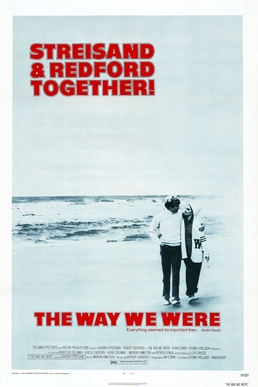
The Way We Were
1973