
‹ All movies
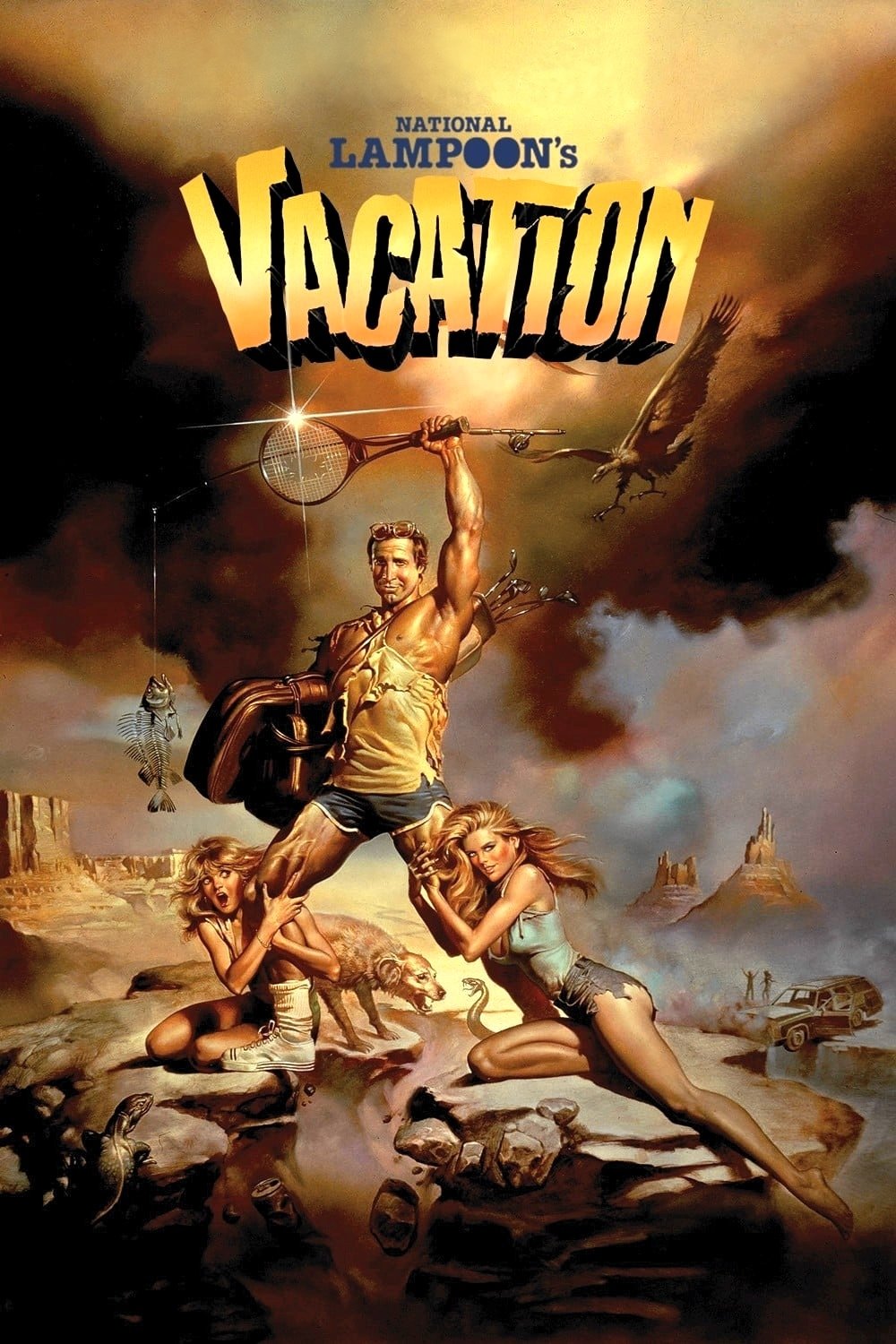
National Lampoon’s Vacation poster

National Lampoon’s Vacation

98 minutes

Cast

Selected cast credits · Film reference

Chevy Chase Clark Griswold
Beverly D’Angelo Ellen Griswold
Imogene Coca Aunt Edna
Randy Quaid Cousin Eddie
Anthony Michael Hall Rusty Griswold
Dana Barron Audrey Griswold
John Candy Lasky
Christie Brinkley Girl in the red Ferrari
Eugene Levy Car salesman
Jane Krakowski Cousin Vicki
Eddie Bracken Roy Walley
Brian Doyle-Murray Kamp Komfort clerk
Miriam Flynn Cousin Catherine
James Keach Motorcycle cop
Frank McRae Grover
John Navin Cousin Dale
Nathan Cook Man giving directions
Mickey Jones Mechanic
John Diehl Assistant mechanic
Jeannie Dimter Barton Dodge City cashier
Randolph Dreyfuss Wyatt Earp
Gerry Black Davenport
James Staley Motel desk clerk
Adelaide Wilder Car hop
Tessa Richarde Motel guest
Fritz Ford Neighbor
Eric Stacey, Jr. Neighbor
Scott Perry SWAT leader
Dennis Freeman Policeman
John Craigmile Camel rider

National Lampoon’s Vacation | The Rewatchables

Explore episodeClose episode

The Stephen A. Smith Hottest Take Award

Hall as greatest teen actor, disputed; salesman was right; Clark’s infidelity defended, disputed

In the discussion (9)
Approx. transcript time · 00:20:02Read transcript
  • Anthony Michael Hall is proposed as the greatest teenage actor based on Vacation, Sixteen Candles, The Breakfast Club, and Weird Science within three years.
  • River Phoenix and Leonardo DiCaprio are preferred by an opposing view; Robert Downey Jr., Jon Cryer, and Molly Ringwald are also raised, with Ringwald criticized as less varied.
  • DiCaprio’s This Boy’s Life, What’s Eating Gilbert Grape, Romeo + Juliet, Growing Pains, and The Basketball Diaries are compared, with uncertainty about whether some fall within his teenage years.
  • Phoenix’s case includes Stand by Me, The Mosquito Coast, Running on Empty, The Last Crusade, My Own Private Idaho, and Little Nikita.
  • The Hall claim is softened toward most successful or beloved rather than best; his consistently welcome presence remains the defense.
  • Hall’s teenage SNL membership underscores his stature, while later Vacation-series child casting is criticized as inferior.
  • The salesman was right about the family truckster because it completes the trip and survives an enormous crash.
  • Clark’s attempted infidelity is provocatively defended as a response to repeated rejection; the claim of a sexless marriage is disputed and the pool-waitress excuse remains indefensible.
  • Hall’s characters in Vacation, Sixteen Candles, The Breakfast Club and Weird Science are defended as distinct, and he can serve as Chase’s straight man.

Half-Assed Internet Research

Story adaptation; rejected script; alternative endings; reshoot fee; production incidents; car design; chart position

In the discussion (26)
Approx. transcript time · 00:26:52Read transcript
  • Hughes’s National Lampoon short story Vacation 58 used Rusty’s perspective; Ramis and Chase shifted the screenplay toward the father.
  • Brinkley’s role reportedly began as a thirteen-year-old Rusty love interest, possibly imagined; the precise original framing is uncertain.
  • Jeffrey Katzenberg reportedly rejected the script at Paramount as too episodic before Warner Bros. took it.
  • The gross is reported as $61.4 million; the budget is transcribed as $50 million, but that figure is uncertain.
  • Chase’s DVD commentary reportedly says Hall put his feet up spontaneously and the exchange was partly improvised.
  • Ramis reportedly called St.Louis one of his most politically incorrect sequences and said it demonized everyone involved.
  • The dead-dog scene reportedly required repeated attempts because the performers could not stop laughing.
  • The beer container was reportedly empty, so Hall did not actually drink the beer during the father–son scene.
  • Ramis’s daughter Violet played Eddie’s child born without a tongue.
  • The original ending reportedly had Clark hold Roy Wally and others hostage at home and force them to perform theme songs before arrest; a later wrong-plane gag ended in hijacking.
  • A rumor that Brinkley’s character was Wally’s daughter is explicitly described as debunked.
  • Test audiences reportedly stopped laughing because the original ending denied the promised arrival at Wally World, prompting the new park ending.
  • Candy reportedly received$1 million for three days of reshoots, a striking sum nevertheless judged well spent.
  • Wally World and Marty Moose reportedly avoided Disney legal issues while Roy Wally retained a Disney-like appearance.
  • The park sequence reportedly used a location in Arcadia and Six Flags in Valencia; the first location name is garbled in the transcript.
  • The family truckster was built for the film based on a 1979 Ford LTD Country Squire.
  • Holiday Road reportedly peaked at number 82 on the Billboard Hot 100.
  • Hall recalled Chase embarrassing him by pointing out his sudden puberty-related growth and acne.
  • Barron recalled gaining weight through constant craft-service meals while Hall grew taller.
  • Repeated amusement rides reportedly made the performers sick during the park shoot.
  • Coca reportedly suffered what was believed to be a stroke during production, went to hospital, relearned her lines, and completed the film.
  • A crew bet concerned whether the truckster could jump fifty feet; the assistant director reportedly won.
  • A deleted gag had Brian Doyle-Murray’s character enter the tent in a moose costume; the dog was judged funnier.
  • A rescue involving two Native Americans and a camel rider was cut because the camel material failed, leaving the rider’s identity unexplained.
  • Hall reportedly suffered heat stroke during the race toward the park entrance and went to hospital.
  • Chase reportedly threw a suitcase at Ramis during a hot shoot; Ramis shouted back and the dispute passed.

Roger Ebert's review

Rating not yet verified
In the discussion (1)
Approx. transcript time · 00:29:42Read transcript
  • No written Ebert review is found, but a television discussion with Siskel is recalled: Ebert preferred the first half and seemed relatively dismissive; no numerical score is stated.

Most Rewatchable Scene

Cousin Eddie visit; Dodge City shootout

In the discussion (23)
Approx. transcript time · 00:31:41Read transcript
  • Buying the station wagon from Eugene Levy’s salesman is nominated, especially the sales pitch and the promise that driving it will make Clark hate it more.
  • The trip’s beginning is nominated for Mockingbird, the Wally World anthem, family singing, and the recurring complaint about Russ’s feet.
  • Clark falling asleep at the wheel is nominated.
  • The St.Louis scene is nominated despite recognition of overt racial stereotypes; its direction-request joke remained memorable through the era before navigation apps.
  • The St.Louis stereotypes are acknowledged, including the basketball, stolen hubcaps, paid directions, and the family’s comments; Clark’s later theft and hostage-taking complicate the film’s moral contrast.
  • The local man admitting it is not even his neighborhood remains a favorite joke, with another performer apparently breaking into laughter.
  • Ellen’s stuck head, the children peering over the seat, and Clark’s potential sexual distraction make the driving sequence funny and startling.
  • Dodge City is called an underrated and possibly funniest scene: Clark taunts the performer, gets shot with a prop gun, and reassures everyone that he is fine.
  • Meeting Eddie’s family is a favorite stretch, starting with the child who has no tongue but can whistle.
  • The cousins’ French-kissing and masturbation discussions are singled out as outrageous jokes.
  • The pregnancy and multiple-night-jobs line, Hamburger Helper, ketchup, and hand-stirred Kool-Aid make the family visit densely funny.
  • The worm-farm invitation and the daughter’s lasting comic impression are celebrated.
  • The dead-dog traffic stop is nominated, especially the officer not knowing the penalty and imagining the dog keeping up for the first mile.
  • The dead-dog gag still receives strong comic approval despite acknowledged distress from dog lovers and changed attitudes toward pets.
  • Clark and Russ’s beer-sharing talk before the desert walk is nominated as part of their consistently successful father–son exchanges.
  • Discovering Aunt Edna’s death is nominated, including the child’s alarm about a dead person breathing on them.
  • Clark’s furious refusal to abandon the journey is nominated.
  • Clark’s quest-for-fun rant is compared with the Christmas Vacation outburst and judged equally excellent rather than given a clear winner.
  • Kidnapping the John Candy character is nominated, including Ellen warning the children their father may go away and Clark denying proof that he killed Edna.
  • Meeting Cousin Eddie is an explicit final preference, with the dog scene a tempting alternative.
  • Dodge City receives another final choice, praising Chase’s pratfall and polite recovery after being shot.
  • Clark cruising the hotel bar and approaching Brinkley is added, including the claim that he used to work for the CIA.
  • Clark’s improvised funeral prayer is belatedly praised for its confused religious references and admission that he is not a minister.
In the discussion (3)
Approx. transcript time · 00:41:27Read transcript
  • Cousin Eddie is an all-time heat check and obvious winner, with a suggestion that the award could be named for him; the white-shoes gift is remembered fondly.
  • Randy Quaid as Eddie is the clear heat-check winner; John Candy’s challenge is rejected.
  • Cousin Dale, Eugene Levy, Dinky, John Candy and young Jane receive honorable mentions; Levy’s performance earns additional praise.

Probably Unanswerable Questions

Family relationship; Brinkley’s journey; park location; D’Angelo’s career; surviving marriage; Wally and police response

In the discussion (6)
Approx. transcript time · 00:42:08Read transcript
  • The exact family relationship between Ellen, Eddie’s household, and Aunt Edna is debated; cousin relationships are inferred but not firmly resolved.
  • Brinkley’s destination and repeated appearances remain unexplained; the fantasy interpretation fails once she appears in the pool.
  • Wally World’s implied proximity to Santa Monica and the coast does not fit an identifiable realistic location, with El Segundo only a guess.
  • D’Angelo’s limited later career is attributed to scarce roles for women and competition, with Pfeiffer, Barkin, and Capshaw as comparisons.
  • How Clark and Ellen remain married after the pool incident is questioned, with therapy imagined and his continued behavior in sequels noted.
  • Wally personally responding to the hostage crisis is questioned, as is Clark walking freely while his children are handcuffed.

What’s Aged the Best?

Opening credits;1980 s looseness; good-talk line; Brinkley; D’Angelo; Krakowski; travel details; Dinky; marijuana; marital antics; Chase physical comedy; I’m So Excited

In the discussion (17)
Approx. transcript time · 00:48:10Read transcript
  • The opening postcards with Lindsey Buckingham’s Holiday Road immediately create a happy mood.
  • The early 1980 s comedy-production atmosphere is celebrated as loose, fast, and willing to move past strange incidents without overthinking.
  • Good talk, son remains a reusable parent–child line.
  • Brinkley’s 1983 appeal is celebrated in the lineage of Cheryl Tiegs and Farrah Fawcett.
  • Beverly D’Angelo is nominated for what aged best.
  • Young Jane Krakowski is nominated.
  • Brief exchanges such as the St. Louis arch joke are nominated.
  • Period travel details such as Kamp Komfort and the station wagon are enjoyed, with minivans seen as the wagon’s later replacement.
  • Dinky is praised as excellent dog casting.
  • “Roll them up” and the vibrating bed are also nominated.
  • The daughter’s marijuana-growing operation and attempt to hand Edna her bag when police arrive are enjoyed.
  • The marital sexual antics remain funny, including increased desire on vacation, the panties on Clark’s finger, and his persistence despite the supposed wolf.
  • Clark drying dirty dishes and returning them to the cabinet is praised as uniquely funny Chase business.
  • Accidentally throwing the license plate while searching for the fuel cap is another admired Chase gesture.
  • “It’s living history, Ellen” is considered uniquely funny in Chase’s delivery.
  • Walking through the desert with jeans on his head is another distinctly funny Chase image.
  • I’m So Excited is praised for spanning Vacation, Beverly Hills Cop, Miami Vice, an NBA commercial, and Saved by the Bell within several years.

The Big Kahuna Burger Award for Best Use of Food and Drink

Meatless Hamburger Helper; lost lunch; dog-soiled sandwiches; hand-stirred Kool-Aid; Russ’s beer

In the discussion (4)
Approx. transcript time · 00:56:41Read transcript
  • Hamburger Helper without hamburger is a leading choice, provoking a discussion of what the product actually contains.
  • The full lunch falling off the car because Clark protects the new interior is another choice.
  • The dog-soiled sandwiches are nominated, including Clark using one to attract Brinkley, spitting it out, and Edna continuing to eat.
  • Hand-stirred Kool-Aid and Russ drinking the beer reinforce a claim that this may be the best comedy for food and drink business.

What’s Aged the Worst?

Nudity expectations; shower nudity; computer; Chariots of Fire reference; VHS freeze-framing; Hall’s height continuity

In the discussion (6)
Approx. transcript time · 00:59:42Read transcript
  • Brinkley reportedly refused requested nudity and negotiated a bra-and-panties pool entrance; the category framing is deliberately ambiguous.
  • D’Angelo’s shower nudity is called unnecessary and characteristic of the era.
  • The home computer looks extremely dated.
  • The Chariots of Fire references may not connect with younger viewers who know the music but have not seen the film.
  • Trying to freeze-frame the pool scene on VHS is recalled as a dated adolescent habit.
  • Hall’s height changes conspicuously in the reshot Wally World ending, leaving him taller than D’Angelo.

Is There a Better Title for This Movie?

Road Trip; The Griswolds

In the discussion (1)
Approx. transcript time · 01:02:21Read transcript
  • Road Trip and The Griswolds are considered, with The Griswolds and National Lampoon’s recalled as informal names already used for the film.

The Neil McCauley “A Book about Metals” Award for Best Line from the Movie

“Is this your idea of a good meal? Dog killer!”; “This is crazy”; “She’s a pool waitress. I was ordering some fish for you and Audrey.”

In the discussion (2)
Approx. transcript time · 01:02:34Read transcript
  • Edna calling Clark a dog killer and the repeated This is crazy are nominated.
  • Clark’s pool-waitress excuse, including claiming to order fish for the family, is singled out as exceptionally funny.

Casting What-Ifs

Kim Cattrall as Ellen; John Landis directing

In the discussion (2)
Approx. transcript time · 01:05:49Read transcript
  • Kim Cattrall was allegedly the original choice for Ellen; the possibility interests the panel, but D’Angelo remains preferred.
  • John Landis reportedly could not direct because he was making An American Werewolf in London.

Recasting Couch

Regina Hall as Clark; Sterling K. Brown as Ellen; Grown-ish children; J.B. Smoove as Eddie

In the discussion (4)
Approx. transcript time · 01:11:22Read transcript
  • For an all-Black 2023 cast, Kevin Hart is rejected; Jay Pharoah and Jerrod Carmichael are considered, with Nicole Beharie as a wife option.
  • A gender-swapped version puts Regina Hall in Clark’s role and Sterling K.Brown in Ellen’s, with Grown-ish performers suggested for the children.
  • A Carmichael-led gay-couple version remains acceptable but is considered more difficult.
  • J.B.Smoove is proposed as Cousin Eddie, drawing on his similar function in Curb Your Enthusiasm.

Apex Mountain

D’Angelo; family-vacation films; Ferrari 308 GTS; Brinkley; dead aunts (tentative); white privilege

In the discussion (13)
Approx. transcript time · 01:16:49Read transcript
  • Chase’s apex is disputed between this film and Fletch, with Clark’s popular recognition and the later Christmas film’s longevity supporting Vacation.
  • D’Angelo receives an affirmative apex selection.
  • Hall is rejected in favor of The Breakfast Club or Weird Science; his Dark Knight role is raised as another comparison.
  • Family vacation films receive agreement.
  • The Ferrari 308 GTS receives an affirmative Apex choice.
  • Brinkley receives an affirmative choice, with the near-contemporary Uptown Girl video considered as an alternative.
  • John Diehl is rejected as not yet at his peak; a later television death is suggested, and Madhouse is recalled as another strong appearance.
  • Holiday Road prompts a debate about purpose-written 1980 s opening-credit songs: The Power of Love and Danger Zone are favored alternatives, while Purple Rain and Call Me raise eligibility questions.
  • The Power of Love is distinguished as perhaps the strongest standalone song, while Danger Zone and Holiday Road are praised for immediately establishing their films’ moods.
  • Candy is rejected for Apex here.
  • Roller-coaster films are initially affirmed, then withdrawn after Fear and Final Destination are mentioned.
  • Dead aunts receive a tentative number-one claim without a competing example.
  • Clark repeatedly escaping consequences is belatedly labeled an apex of white privilege.

Picking Nits

Two-week closure; mismatched spouses; reaction to Edna’s death; abandoned body; crash survival; desert clothing

In the discussion (6)
Approx. transcript time · 01:21:18Read transcript
  • A major theme park closing entirely for two weeks is considered implausible; individual ride closures would make more sense.
  • Clark attracting such a beautiful wife is questioned.
  • The children seem insufficiently upset by Edna’s death.
  • Leaving Edna’s body outside a home is considered unacceptable.
  • The wreck seems too severe for the car to survive or be repaired by the roadside mechanics.
  • Clark’s desert jacket is questioned and defended as sun protection; the trousers on his head are praised, with later continuity noted.

Is This Movie Better With…?

Kathryn Hahn as Eddie’s wife; Wayne Jenkins as officer or St.Louis local

In the discussion (2)
Approx. transcript time · 01:23:29Read transcript
  • The existing cast is considered difficult to improve; Kathryn Hahn as Eddie’s wife is the main substitution.
  • Wayne Jenkins is imagined as the police officer or a St.Louis local, with an impression adapting the neighborhood joke.

What Piece of Memorabilia Would You Want From This Movie?

BB gun; Dodge City gun; Ferrari license plate; truckster; Eddie’s shoes; magazine joke

In the discussion (2)
Approx. transcript time · 01:29:21Read transcript
  • The BB gun or the Dodge City double-barreled gun are desired; the Ferrari is ruled out as cheating.
  • The Ferrari’s license plate, family truckster, and Eddie’s shoes are nominated; Cousin Dale’s magazine is a low-ranked joke option.

Producer review

Funnier to discuss than watch now; pacing and generational familiarity debated

In the discussion (3)
Approx. transcript time · 01:31:03Read transcript
  • The producer’s response acknowledges the film’s past humor but finds the discussion funnier than watching it now, comparing its afterlife to memes from I Think You Should Leave. — Craig Horlbeck
  • The counterargument emphasizes accumulated rewatches and Chase’s now-uncommon comic style rather than a dated cultural moment; familiarity from childhood remains debated.
  • Odd pacing and 1980 s editing may explain the muted response; a later rewatch is suggested, while the producer remains puzzled that recounting the scenes is funnier.

More from the conversation

Hijack’s potential future seasons prompt jokes about repeatedly hijacking Idris Elba on different transport, with Die Hard sequels as a comparison.
Approx. transcript time · 00:01:34Read transcript
This is the 300 th Rewatchables film and Vacation’s 40 thanniversary; choosing 300 for the milestone was rejected as a one-joke premise for a disliked movie.
Approx. transcript time · 00:02:02Read transcript
Vacation prepares the way for a Christmas Vacation episode, with a European Vacation trip also entertained.
Approx. transcript time · 00:03:19Read transcript
The film is a personal top-twenty choice and praised for constant, dense comedy; Christmas Vacation is watched more through holiday tradition and called the best Christmas movie.
Approx. transcript time · 00:03:47Read transcript
Repeated viewing of 1980 s comedies such as Stripes, Summer Rental, Volunteers, and Summer School reveals new details; Chase’s performance here is praised for subtle gestures and fake crying.
Approx. transcript time · 00:04:56Read transcript
The Griswold name became shorthand for a relative’s family vacations and for any family whose carefully planned trip unravels.
Approx. transcript time · 00:05:21Read transcript
A 1980 baseball-park trip with a father mixed flights and driving and included the Astrodome.
Approx. transcript time · 00:06:23Read transcript
Two Louisiana-to-West-Coast family trips are recalled, including a father entering traffic to retrieve an expensive item that fell from a moving truck while the family feared for him.
Approx. transcript time · 00:06:41Read transcript
The film’s mishaps evoke a Vermont trip beginning with luggage stolen from an open trunk and later food poisoning at a Howard Johnson’s.
Approx. transcript time · 00:07:36Read transcript
Missing a cross-country trip with college friends Rob Stone and Jim Grady remains a major regret; younger listeners are urged to travel before career and family obligations grow.
Approx. transcript time · 00:08:09Read transcript
Yellowstone inspires interest in driving to Montana; a 2013 travel-column assignment for Rembert is recalled as partly motivated by a missed personal trip.
Approx. transcript time · 00:08:45Read transcript
Phones might make travel easier but undermine engagement; a proposed no-phone rule contrasts with the film’s headphones and children’s likely resistance.
Approx. transcript time · 00:09:39Read transcript
Long-distance driving creates a trance-like surrender, while detours to tourist attractions prolong a journey that could otherwise take only a few days.
Approx. transcript time · 00:09:57Read transcript
Family visits to the Alamo and Grand Canyon are remembered as one-time experiences that briefly restore energy before more driving; modern playlists and podcasts would ease the trip.
Approx. transcript time · 00:10:45Read transcript
Clark identifies the St. Louis arch’s elevator but immediately refuses Russ’s request to visit, exemplifying a perfect throwaway driving joke.
Approx. transcript time · 00:10:58Read transcript
Chase’s rise from Saturday Night Live to Foul Play, Oh Heavenly Dog, Caddyshack, and Seems Like Old Times is outlined; the last receives particular affection.
Approx. transcript time · 00:11:46Read transcript
A mistaken Dyan Cannon attribution to Seems Like Old Times is corrected to Heaven Can Wait during the cast reminiscence.
Approx. transcript time · 00:12:11Read transcript
Under the Rainbow and Modern Problems are described as 1981 career setbacks before Vacation redirected Chase into a successful older, self-mocking persona.
Approx. transcript time · 00:12:27Read transcript
The subsequent run names Best Defense with reservations, Fletch, European Vacation, Spies Like Us, and Three Amigos, followed by affection for Funny Farm.
Approx. transcript time · 00:13:00Read transcript
Chase’s family and Americana comedy is distinguished from other SNL alumni; Murray’s Meatballs, Stripes, and impending Ghostbusters success are viewed as competition for his star position.
Approx. transcript time · 00:13:53Read transcript
Research suggests Chase behaved well on this shoot despite a difficult reputation, while extreme heat and a traveling crew moving through motels made production resemble the story.
Approx. transcript time · 00:14:43Read transcript
Actual changing locations give the journey a regional feel and comic possibilities that stage-based or substitute-city filming would lack.
Approx. transcript time · 00:15:18Read transcript
The film epitomizes casual rewatchability: individual scenes pull viewers in without needing to remember the full order of events.
Approx. transcript time · 00:16:10Read transcript
Identification changes with age from the children to Clark or Ellen, with Aunt Edna imagined as a later stage.
Approx. transcript time · 00:16:48Read transcript
D’Angelo’s earlier work includes Coal Miner’s Daughter as Patsy Cline and Hair; Paternity with Burt Reynolds is recalled favorably as a neglected romance about a surrogate and an MSG event manager.
Approx. transcript time · 00:16:48Read transcript
Ellen’s youth and beauty relative to Clark are questioned as a familiar sitcom-style mismatch; her casting remains admired.
Approx. transcript time · 00:17:51Read transcript
D’Angelo is compared favorably with Brinkley as sultry and relatable rather than wholesomely idealized, with Pacific Heights and Ellen Barkin invoked as comparisons.
Approx. transcript time · 00:18:58Read transcript
Ramis’s directing trio of Caddyshack, Vacation, and Groundhog Day is celebrated alongside writing credits for Animal House, Meatballs, Caddyshack, Stripes, Ghostbusters, and Back to School.
Approx. transcript time · 00:23:25Read transcript
Ramis, Landis, Hughes, and Lorne Michaels shaped the panel’s childhood comic sensibilities; Apatow and McBride are proposed for younger generations, while a clear equivalent for current teenagers is uncertain.
Approx. transcript time · 00:23:42Read transcript
The older comedies are praised for engaging stories beyond a premise, with Stripes and this road trip contrasted against less developed contemporary concepts; Knocked Up is acknowledged as a good counterexample.
Approx. transcript time · 00:24:44Read transcript
Children once absorbed adult-oriented comedies rather than narrowly age-targeted entertainment; Saved by the Bell and The Summer I Turned Pretty illustrate later segmentation.
Approx. transcript time · 00:25:32Read transcript
A verbal mix-up between John Hughes and John Holmes leads to screenwriting jokes.
Approx. transcript time · 00:26:28Read transcript
The five sequels are enumerated as European Vacation, Christmas Vacation, Vegas Vacation, the Ed Helms Vacation, and the television Christmas Vacation 2.
Approx. transcript time · 00:27:19Read transcript
We’re the Millers is described as an unofficial remake with promising elements that fail to fully land; its familiar-cable status and cast are discussed.
Approx. transcript time · 00:27:49Read transcript
Johnson Family Vacation and Are We There Yet? are treated as related road-trip descendants rather than formal sequels, with a Die Hard/Under Siege analogy.
Approx. transcript time · 00:28:29Read transcript
Adjacent family-travel comedies include Summer Rental, Little Miss Sunshine, and Captain Ron; the latter is explained through Martin Short’s family and Kurt Russell’s irreverent captain.
Approx. transcript time · 00:29:03Read transcript
The original versus revised ending is deferred for later discussion.
Approx. transcript time · 00:29:25Read transcript
Clark losing his sanity is the preferred source of comedy for one response to Ebert’s first-half preference.
Approx. transcript time · 00:29:59Read transcript
The parents’ singing evokes personal memories of a mother harmonizing to Joni Mitchell and Billy Joel and another singing a Christian song called Redeem.
Approx. transcript time · 00:32:43Read transcript
A New Orleans date illustrates how residents recognize outsiders: driving over a noisy loose manhole marked the visitor as unfamiliar, explaining part of the St.Louis scene’s social dynamic.
Approx. transcript time · 00:36:34Read transcript
Jane Krakowski’s later success was initially difficult to separate from her memorable childhood role here, even during 30 Rock.
Approx. transcript time · 00:40:54Read transcript
The opening-weekend chart gives Vacation first, Jaws 3 second, Return of the Jedi third and Krull fourth, followed in order by Staying Alive, Private School, Trading Places, Class (corrected from “Clash”), Snow White and the Seven Dwarfs, WarGames, Octopussy and Flashdance.
Approx. transcript time · 00:48:49Read transcript
Brinkley marrying Billy Joel is compared to Ric Ocasek and Paulina Porizkova as a celebrity pairing that provoked disbelief.
Approx. transcript time · 00:49:46Read transcript
Aykroyd, Grodin, and later-era Hanks are considered possible Clark alternatives, but Chase’s necessary sarcastic edge distinguishes him from more lovable performers.
Approx. transcript time · 00:53:06Read transcript
Clark’s sincere desire for family connection coexists with self-centeredness: he tries to repair his own childhood without recognizing that others are miserable.
Approx. transcript time · 00:53:31Read transcript
The Pointer Sisters’ omnipresence inspires a documentary joke and a discussion of Slow Hand as yacht rock, including the genre’s relationship to Black musical traditions.
Approx. transcript time · 00:55:16Read transcript
The yacht-rock discussion adds On My Own, Patti LaBelle with an incompletely named Michael, George Benson, and James Ingram’s One Hundred Ways.
Approx. transcript time · 00:56:03Read transcript
Roller coasters’ late 1970 s/early 1980 s popularity and Magic Mountain as the filming location are recalled.
Approx. transcript time · 00:58:59Read transcript
Hall reportedly flirted with D’Angelo during production; the panel jokes about the youthful crush and age difference.
Approx. transcript time · 01:01:26Read transcript
Candy’s reshoot salary is put in context through Stripes, SCTV, the absence of Belushi, production desperation, and a comparison with Jennifer Lopez’s later million-dollar milestone.
Approx. transcript time · 01:08:06Read transcript
Coca’s Brady Bunch role is recalled through Jan fearing she would grow up to resemble an older relative.
Approx. transcript time · 01:10:00Read transcript
The modern cast brainstorming considers a breadwinning mother leading the trip and uses Honk for Jesus as a model for the Hall–Brown pairing.
Approx. transcript time · 01:11:59Read transcript
Holiday Road was long mistaken for a Kenny Loggins song by one participant.
Approx. transcript time · 01:14:10Read transcript
Extreme heat at Magic Mountain prompts a personal memory of nearly fainting after a ride and advice about choosing a cooler season.
Approx. transcript time · 01:16:37Read transcript
Christmas Vacation’s long annual viewing season is contrasted with the original’s importance and European Vacation’s earlyPG-13 nudity appeal.
Approx. transcript time · 01:17:11Read transcript
Clark’s rapid gun purchase and likely flight home with it are viewed through changed gun rules.
Approx. transcript time · 01:25:22Read transcript
The coastal location raises the simpler question of why the family does not just enjoy Santa Monica rather than continue the quest.
Approx. transcript time · 01:25:36Read transcript
A correction to an earlier adult-film reference becomes a brief tangent, with the exact title still inconsistently transcribed.
Approx. transcript time · 01:26:52Read transcript
Summer Rental’s limited recognition is blamed on the crowded comedy marketplace, comparing the problem with the abundant films of the late 1990 s.
Approx. transcript time · 01:27:22Read transcript
Repeated laughter during private rewatches irritated or intrigued family members nearby, illustrating the film’s continued effect on the panel.
Approx. transcript time · 01:29:44Read transcript
The producer’s lack of similar long road trips and constant access to phone navigation are raised as generational differences before his review.
Approx. transcript time · 01:30:44Read transcript
A prior disagreement on The Town podcast is clarified as being about Vacation, not about the film The Town.
Approx. transcript time · 01:33:56Read transcript
The 300 th-episode close promotes returning 1999 episodes and a December Christmas Vacation discussion, then gives a full producer credit to Craig Horlbeck.
Approx. transcript time · 01:34:20Read transcript