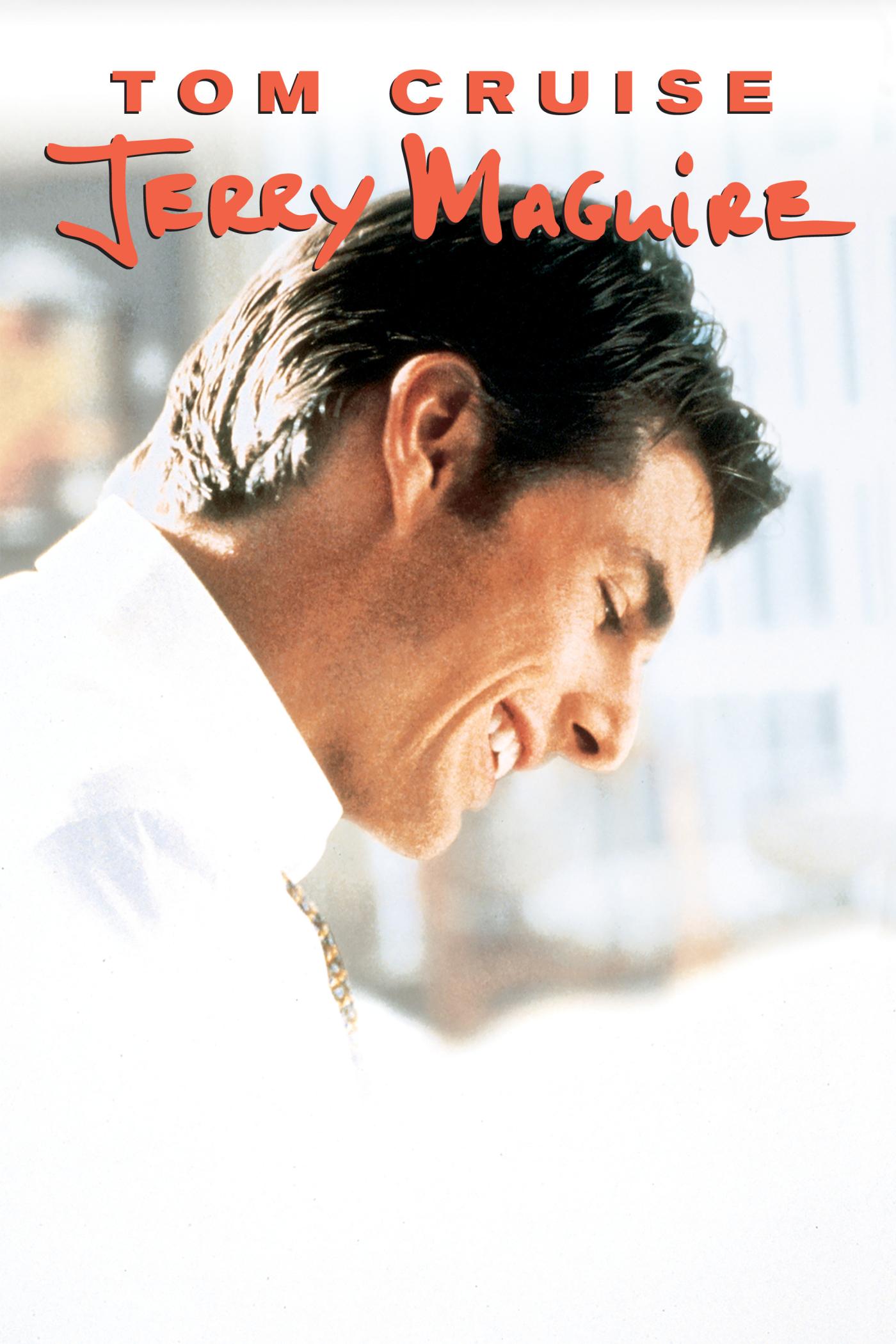
Cruise is the lead-role choice through All the Right Moves and Risky Business comparisons; Hanks might fit D-Bob or a coach, but those are not lead-role answers. — Bill Simmons
Cruise’s short stature might discourage taking Rudy, while an alternative casts his aggressive Taps persona as Frank. — Bill Simmons
Cruise receives the final winner agreement; Gooding and Crowe alternatives are raised but rejected, and Cruise's willingness to play his star strengths is praised. — Bill Simmons
Cruise is chosen for the single Oscar instead of repeating Gooding's win; Zellweger and King also now having Oscars makes his lack of one striking. — Bill Simmons
Cruise is the emphatic Cruise-or-Hanks choice despite Hanks originally being sought; Hanks is considered too old and insufficiently slick for Jerry, with Bonfire of the Vanities a cautionary comparison.
Apex choices explicitly affirm Gooding, Crowe, Bonnie Hunt, the Gifford–Michaels–Dierdorf trio, Zellweger and Lipnicki. Crowe versus Almost Famous is debated before the larger hit and creative leverage prevail. Zellweger first faces a Bridget Jones alternative but is later confirmed yes. Jerry O'Connell is only raised, while Mohr gets a tentative maybe.
Cruise's 1996 Mission:Impossible/Jerry Maguire combination is affirmed as career Apex despite the objection that audiences chiefly associate him with Maverick. The film demonstrates pure star power through talking, running and emotion rather than an action concept.
Mission statements lose to the Unabomber manifesto; sports-agent Apex remains a discussion of Falk/Jordan and Boras rather than a settled Jerry Maguire win.
Cruise laughing during sex is proposed without a clear ruling; bass-fishing accidents receive a yes. The Arizona Cardinals are proposed but their later near-Super-Bowl win challenges it. Sad Springsteen needle drops lose to Philadelphia.
Twenty script drafts are credited with deepening characters; Rod's brother saying he was too small for the NFL while he lies injured is praised as painfully accurate envy within a family.
Crowe is praised for lingering on faces, including Dorothy during the Springsteen cue and her concealed delight at Jerry's breakup; the latter drew a large theatrical response, but Sean's wife still rejected the desperation.
James L. Brooks reportedly supplied a Gary Wichard/Brian Bosworth photo as an inspiration. The discussion links Leigh Steinberg’s departing partner to the agent rivalry, naming an agent rendered “Drew Rosenbaum” in the transcript; that identity is unresolved. — Bill Simmons
The mission statement reportedly drew on Jeffrey Katzenberg's 1991 Disney memo; DreamWorks is jokingly compared with Rod as the successful aftermath. — Bill Simmons
Crowe, Brooks and cinematographer Janusz Kamiński are credited; a childhood classroom photo essay by Kamiński is recalled. The film received five Oscar nominations and Gooding won supporting actor. — Bill Simmons
Rod's touchdown, dance and postgame press conference are nominated. Cruise reportedly supplied one script note asking where Jerry was during the celebration so he could build toward the ending, leading to his run onto the field. — Bill Simmons
Jerry's return and the You complete me/You had me at hello exchange introduce the final scene nominee. — Bill Simmons
A deleted four-minute Mohr telephone sequence is praised as a near-continuous performance across numerous clients, though too long for the finished film. — Bill Simmons
Aimee Mann's Wise Up was reportedly recorded for Jerry Maguire but judged not to fit, then used in Magnolia. — Bill Simmons
The film is described as the biggest-selling non-Disney VHS title, with over three million copies in its first week. — Bill Simmons
Lipnicki reportedly arrived on set with the human-head fact, which Crowe added to the film. — Bill Simmons
Rod's knockout hit reportedly required 29 takes and three stunt performers; Regina King was reportedly pregnant during filming. — Bill Simmons
Crowe reportedly regarded agents' disbelief at Jerry finding a conscience as confirmation that the story's theme was right. — Bill Simmons
Two 2017 mockumentaries reportedly imagined Cushman retiring after four years with athlete's foot, Rod rejecting a richer deal without quan, and adult Ray opening a boxing gym. The real 1995 Christmas Cardinals–Cowboys game ended Dallas 37–13, with Dave Krieg interceptions and Aikman passing for 350 yards recalled. — Bill Simmons
Gooding reportedly auditioned early and remained the benchmark despite later auditions including Jamie Foxx. His voluntary decision to undress for an audition scene is corrected after a misunderstanding that he was required to. — Bill Simmons
Gooding receiving his Oscar from Mira Sorvino is noted because she reportedly lost Dorothy when her agents requested too much money. — Bill Simmons
Crowe reportedly wrote for Hanks and Winona Ryder; Hanks passed after the long writing process to make That Thing You Do!, and Ryder with Cruise seemed too sibling-like. Woody Harrelson reportedly rejected an offer because audiences would not care about an agent; his hypothetical casting is considered inferior to Cruise. — Bill Simmons
Jennifer Lopez auditioned, but Connie Britton was reportedly the final alternative to Zellweger. Britton's height theory and reportedly disastrous screen test are discussed without settling the reason. — Bill Simmons
Jamie Foxx's Rod audition is revisited as a plausible different version of the role, with Willie Beamen later giving him a sports-film showcase. — Bill Simmons
Janet Jackson reportedly auditioned and accepted Marcee before the deal fell through; Regina King replaced her and the film helped move her toward major Hollywood roles. — Bill Simmons
Diane Lane as Avery is an uncorroborated casting rumor that excites interest; Preston's death is distinguished from Lane, who is alive.
The shower confrontation is praised for both actors at their best, screaming and Help me help you. Cruise is proposed for overacting but defended as effective because Jerry loses the control established at the start; Kelly Preston is another personal overacting answer. Rod's athlete-not-entertainer stance is considered distinctly of its era.
The bachelor-party video feels like a joyless gathering of former partners criticizing Jerry in front of his new fiancée; Cruise's excited arrival is nevertheless praised as overacting.
Kelly Preston is the explicit overacting choice while still praised as effective. Cruise singing Free Fallin' is his strongest competing scene; Gooding's heightened work is considered genuine rather than overacting, and Zellweger is comparatively restrained.
Great-shot nominees include Cruise on the dark airport moving walkway, the sweating water glass during the firing, the frozen office wide shot as Jerry and Dorothy leave, the backlit patio kiss and Jerry running through the tunnel toward Rod.