
‹ All movies
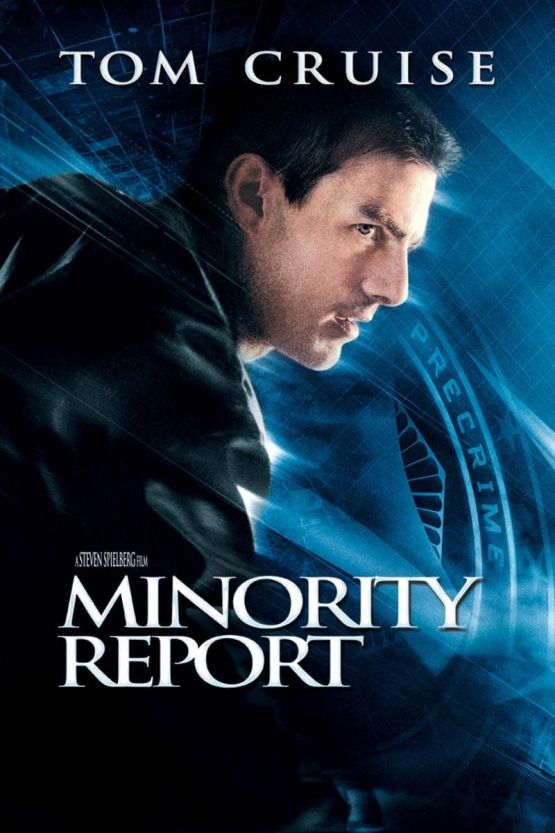
Minority Report poster

Minority Report

146 minutes

Cast

Selected cast credits · Film reference

Tom Cruise Officer John Anderton
Colin Farrell Danny Witwer
Max von Sydow Director Lamar Burgess
Lois Smith Dr. Iris Hineman

Minority Report | The Rewatchables

Explore episodeClose episode

Producer credits not yet identified.

Half-Assed Internet Research

Expert-led 2054 design; production history; noir and Hitchcock influences; Fugitive parallels

In the discussion (8)
Approx. transcript time · 00:13:58Read transcript
  • Spielberg reportedly convened fifteen experts for three days and developed an eighty-page 2054 guide; his predictions of personalized advertising and privacy loss are considered prescient.
  • The first CruiseSpielberg collaboration reportedly began development in 1997 but was delayed by Mission: Impossible 2 and AI; several production companies were involved.
  • Cruise and Spielberg reportedly took fifteen percent of gross to hold the budget below one hundred million dollars.
  • The reported budget is $102 million and worldwide gross $354 million.
  • Diaz, Crowe and Anderson reportedly make uncredited subway appearances; the literary Anderton is described as older, bald and out of shape.
  • The literary ending is tentatively recalled as exile to another planet; the original pre-cogs differ markedly, while Spielberg’s noir viewing and deliberate overlighting shaped the film.
  • The car-factory scene reportedly draws on an unfilmed North by Northwest sequence described to Truffaut.
  • Parallels with The Fugitive include a framed protagonist, subway recognition, trusted-colleague betrayal, appearance changes, risky escape jumps and a ceremonial public exposure.

What’s Aged the Best?

Seamless world-building; hand-operated displays; Agatha; real-time countdown; adult themes

In the discussion (7)
Approx. transcript time · 00:15:22Read transcript
  • Future technology is embedded in action without exposition; personalized ads establish the surveillance obstacle that leads naturally to the disturbing eye replacement.
  • Damaged noir characters, including the blind drug dealer, disgraced surgeon and wheelchair-using prison supervisor, preserve Philip K. Dick’s distinctive world.
  • Cruise manipulating pre-crime images with his hands holds up better than Disclosure; modern headset use and possible movement training are discussed.
  • Morton’s unsettling Agatha is praised despite being difficult company; her victimhood deliberately interrupts the action and humanizes the film.
  • The stated remaining time of 51 minutes 30 seconds reportedly matches the time left in the film.
  • Ordinary domestic routines interrupted by action and Cruise saying the film’s title are praised.
  • Sex, adultery, drugs and murder represent adult Spielberg, although his apparent discomfort with sex is joked about.

Roger Ebert's review

In the discussion (2)
Approx. transcript time · 00:36:24Read transcript
  • After guesses and a joking four-and-a-half, the stated Ebert score is four stars; no denominator is spoken in this passage.
  • The quoted review praises technology serving story and character and the film’s technical virtuosity; four-and-a-half stars is subsequent hyperbole.

Most Rewatchable Scene

Fifteen-minute escape and factory sequence

In the discussion (20)
Approx. transcript time · 00:37:10Read transcript
  • The Howard Marks intervention introduces pre-crime and red-ball urgency efficiently; the film is praised for sequences that flow across individual scenes.
  • The moving-hands analysis revealing a merry-go-round is a scene highlight.
  • Discovering himself in the Leo Crow murder prediction and hiding the ball showcases rapidly changing emotions conveyed through Cruise’s face.
  • The fifteen-minute escape from Wally’s warning through the completed car is praised as sustained action comparable to John Wick’s nightclub run.
  • The elevator encounter, apparent refuge with the older mentor and jumping across futuristic cars are escape-sequence highlights.
  • The jetpack chase, midair grab and intrusions into ordinary apartments are admired.
  • The crane fight and car assembly climax sustain the chase; autonomous machinery enclosing the fugitive reinforces the film’s technological threat, alongside Lexus placement.
  • The swimming-pool flashback to the missing child is praised for breath-holding foreshadowing.
  • The spider search and overhead view across apartments are admired; occupants briefly pause everyday activity for scans, and visual links to The Matrix and John Wick 4 are noted.
  • The futuristic pleasure club is a scene candidate, compared with Total Recall’s imaginative nightlife.
  • The confrontation where Cruise is told he still has a choice about killing Leo Crow is nominated.
  • Agatha’s intensity during the Leo Crow scene is criticized as unpleasant company, then defended as the consequence of her captivity; exploiting her gift for sports wagers is joked about.
  • Exposing Burgess during an honoring banquet is compared with The Fugitive and admired as an ideal public reveal.
  • The fifteen-minute escape sequence receives an explicit favorite-scene selection.
  • The greenhouse is nominated for its odd tonal shift and explanatory role; the kiss reportedly surprised Cruise during filming.
  • The disgraced eye surgeon and unsettling nurse are nominated as a creepy Philip K. Dick-style encounter.
  • The first Farrell–Cruise meeting is nominated for the ball-catching demonstration and clashing views on pre-crime.
  • The fifteen-minute escape receives another explicit favorite-scene selection.
  • The spider search is praised for suspense and for showing residents treating invasive scans as the price of a murder-free society.
  • An invited additional response agrees with the factory action sequence as the most entertaining portion.

Picking Nits

Eye-transplant recovery; retinal access; abandoned witness; prediction paradox; Burgess’s slip and ending

In the discussion (7)
Approx. transcript time · 00:41:55Read transcript
  • The fire escape appears nine stories high, but the ensuing drop looks closer to fifty.
  • Rapid recovery from an eyeball transplant is considered implausible even with future technology.
  • Quickly encountering Ann Lively’s drowning is questioned, then explained as Agatha deliberately drawing attention to her mother.
  • Burgess’s revealing slip is revisited and his simple self-shooting finale is criticized as unimaginative after the film’s elaborate action.
  • Anderton’s retained retinal security access after becoming a fugitive is criticized; even his wife can use the old eyes to enter.
  • Police leaving the rescued woman alone by the lake enables Burgess to murder her; taking a statement or remaining with her would disrupt the plot.
  • Anderton learning about Crow through the prediction creates a causal paradox; the objection is defended as central to the premise and Agatha’s effort to solve her mother’s death.

The most "year the movie came out" thing

Cops in 2054; physical media; absent social media; surveillance anxiety

In the discussion (4)
Approx. transcript time · 00:53:48Read transcript
  • Cruise’s pre-controversy persona, absent social media and a futuristic USA Today reflect 2002 assumptions.
  • Young mustached Farrell and physical memory discs rather than streaming are period details.
  • Cops continuing into 2054 is offered as the strongest period-detail selection.
  • Post-September 11 concerns about unconditional government surveillance are another period marker.

Only Tom Cruise Would Do This Award

Eyes held open with metal instruments

The panel proposes a new category here.

In the discussion (1)
Approx. transcript time · 00:57:52Read transcript
  • Holding his eyes open with metal instruments is favored over learning the oxygen-bubble trick or shaving his head; actually replacing his eyes is a joke.
In the discussion (3)
Approx. transcript time · 01:01:28Read transcript
  • The overhead spider search across apartments is the favored shot; the lobby composition aligning Agatha with Anderton is an alternative.
  • The Washington Monument composition and a camera move placing McDonough’s head between opposed characters are additional admired shots.
  • Camera movement incorporates several conversational perspectives into one continuous shot instead of conventional separate setups.
In the discussion (2)
Approx. transcript time · 01:07:01Read transcript
  • No weak link is initially offered; Lara’s limited characterization is considered, with resistance to defaulting to a female character.
  • Burgess accidentally revealing knowledge that the woman drowned is the favored weak link because it contradicts his elaborate cunning.

What’s Aged the Worst?

Missing phones; physical discs; highway CGI; mid-film slowdown; eye and food disgust

In the discussion (4)
Approx. transcript time · 01:07:53Read transcript
  • Missing mobile phones, unconvincing highway-jump CGI and fragile physical data slides are criticized; the cloud would remove a useful physical chase object.
  • The Dr. Iris-to-eye-surgeon stretch is criticized as a long slowdown and tonal departure, then defended as a deliberate passage into fantasy.
  • The failed 2015 television series is recalled, alongside the fictional explanation tying pre-cog abilities to prenatal drug exposure.
  • Eye procedures and spoiled food remain hard to watch; the car-jump effects are compared unfavorably with subsequent advances.

Best Dick Ever: Best Philip K. Dick Movie Adaptations

Blade Runner best; Total Recall most rewatchable

The panel proposes a new category here.

In the discussion (2)
Approx. transcript time · 01:11:03Read transcript
  • An invited flex asks for the best Philip K. Dick adaptations: Minority Report, Total Recall, A Scanner Darkly, Blade Runner and The Adjustment Bureau are nominated. One ordering begins Blade Runner and Total Recall; another specifies Blade Runner, Minority Report and Total Recall, while Scanner is especially faithful in spirit.
  • The Adjustment Bureau is defended by its proposer but rejected by two responses. Blade Runner is agreed to be best, whereas Total Recall is preferred for desert-island entertainment and rewatchability.

The Stephen A. Smith Hottest Take Award

Pre-cogs for gambling; prevent the affair first; restore pre-crime despite errors

In the discussion (3)
Approx. transcript time · 01:13:24Read transcript
  • The pre-cogs are proposed as cinema’s ultimate gambling tool; exploiting markets or taking Agatha to a casino is imagined instead of using the gift only to prevent murder.
  • Preventing the triggering affair rather than waiting to interrupt murder is proposed from Howard’s perspective, while ordinary emotional freedom complicates that argument.
  • An explicitly invited Craig flex becomes a hottest take defending restoration of pre-crime despite a proposed two-percent error rate; civil-liberty costs and utilitarian reasoning are debated.

Casting What-Ifs

Damon or Bardem; Streep; McKellen; Blanchett; Elfman

In the discussion (3)
Approx. transcript time · 01:15:48Read transcript
  • Development reportedly began as a Schwarzenegger Total Recall sequel, changed after Carolco’s bankruptcy and later involved Jan de Bont.
  • Reported offers included Damon or Bardem for Witwer, Streep for Iris, McKellen for Burgess, Blanchett for Agatha and Elfman for Lara; Streep declined and scheduling affected Damon and McKellen.
  • Bardem reportedly declined because he did not want to chase Cruise through an entire film; his upcoming F1 appearance invites a joke.
In the discussion (3)
Approx. transcript time · 01:17:30Read transcript
  • Stormare is considered too recognizable and better suited to Dion Waiters; Patrick Kilpatrick and Steve Harris are candidates, with Harris’s television recognition qualified.
  • Arye Gross is considered recognizable in his own right; The Experts prompts an enthusiastic recommendation.
  • Steve Harris receives an explicit choice; his relationship to Wood Harris inspires an imagined role in The Wire.

Recasting Couch

Retain D.C.; alternate old cities; Pinkett or Blanchett as Agatha; Berry as Lara

In the discussion (4)
Approx. transcript time · 01:18:57Read transcript
  • Washington is defended as fitting; Boston, New Orleans and Philadelphia are alternative settings.
  • Miami is judged too cheerful; an old dense city rebuilt for the future is preferred, with London and Chicago suggested.
  • Jada Pinkett is proposed as Agatha; Blanchett is praised and Portman’s age is debated.
  • Halle Berry is proposed as a pre-cog but considered too prominent, then redirected to Lara.

Apex Mountain

Nokia Wave; CruiseSpielberg collaborations; Spielbergian techno-noir; Samantha Morton; pre-cogs and pre-crime

In the discussion (7)
Approx. transcript time · 01:24:33Read transcript
  • Minority Report is called the apex of Nokia Wave: tactile near-future technology, paranoia and state surveillance, with GoldenEye, Bourne, Ronin and related thrillers offered as context.
  • Apex claims for the two individual careers are rejected, but their collaboration is affirmed over War of the Worlds; that film is still defended.
  • Spielbergian techno-noir is an affirmative Apex subject, with this film preferred to AI.
  • Evil von Sydow roles are not considered at their peak here; Strange Brew and Victory are discussed.
  • Samantha Morton is affirmed at a career peak around this film and Morvern Callar.
  • McDonough is rejected as a single-film peak because of a long run of recognizable roles.
  • Pre-cogs and pre-crime departments are affirmed; Washington films and Philip K. Dick adaptations are not.
In the discussion (2)
Approx. transcript time · 01:28:17Read transcript
  • Hoffman as Witwer is proposed as less glamorous and more irritating, with concern about the fight and running despite acknowledged athletic ability.
  • The eye doctor and Gideon are alternatives; the short Dweezil Zappa role is favored as a brief favor to Cruise.
In the discussion (2)
Approx. transcript time · 01:34:33Read transcript
  • Prestige television is favored, potentially as an Apple-style cerebral adaptation; a limited Anderton story or ongoing pre-crime series are alternatives.
  • A first-arrest prequel, multiple minority reports and a cheap Law & Order: Pre-Crime procedural are additional possibilities.

Is This Movie Better With…?

Doris Burke; Ryan Ruocco

In the discussion (2)
Approx. transcript time · 01:35:39Read transcript
  • A Doris Burke-style speech praising Agatha is performed; the recurring impression is acknowledged as becoming its own character.
  • A Ryan Ruocco call of Burgess’s suicide is proposed.

Just One Oscar

Janusz Kaminski’s cinematography

In the discussion (1)
Approx. transcript time · 01:36:25Read transcript
  • Kaminski’s distinctive cinematography is the Oscar choice; continued study of the film is praised despite limited awards recognition.

Probably Unanswerable Questions

Affair and murder; disguises; crane-fight odds; pre-cog search joke

In the discussion (5)
Approx. transcript time · 01:37:11Read transcript
  • A provocative question about the wife’s affair and Howard’s reaction is raised, with the lover’s haste mocked rather than resolved.
  • The response explicitly rejects that the wife deserved death, while criticizing the lover for pressing to use the marital bed.
  • Cruise’s repeated disguises are compared across films; injecting a facial paralytic seems pointless when he is promptly recognized.
  • Farrell is favored in a real crane fight because of age, size and apparent experience; proposed odds move from roughly three-to-one toward a shorter price.
  • A teasing question about searching for pre-cog pornography receives a denial.

The Coach Finstock Award for Best Life Lesson

Digging up the past gets you dirty; Everybody Runs

In the discussion (2)
Approx. transcript time · 01:40:27Read transcript
  • The warning that digging up the past only gets one dirty is offered as a life lesson.
  • Everybody Runs is another life-lesson choice, with agreement.

Producer review

Does not click; overlong; cold visuals and uneven early CGI

In the discussion (3)
Approx. transcript time · 01:41:04Read transcript
  • The invited response says the film does not click on a second viewing despite recognizing Spielberg’s intended achievement.
  • The runtime is criticized as about half an hour too long and dragging, with two-and-a-half-hour blockbusters considered less usual then.
  • Cold bleached visuals and uneven early digital effects are disliked; consistently stylized older films are considered less distracting than mixed convincing and weak CGI.

More from the conversation

The film is introduced as the seventeenth Tom Cruise movie covered on the show.
Approx. transcript time · 00:01:53Read transcript
The film is regarded primarily as Spielberg’s, with Cruise indispensable; inventive camera movement, speed and tension exemplify directorial command.
Approx. transcript time · 00:03:08Read transcript
The film is placed within a prolific stretch spanning heavier historical films, AI, Catch Me If You Can, The Terminal and War of the Worlds.
Approx. transcript time · 00:04:37Read transcript
The bleached look is admired as unusually creative; Spielberg reportedly requested his ugliest-looking movie.
Approx. transcript time · 00:05:34Read transcript
Wacky visual moments soften the darkness; a Fincher version is imagined and possible competitive inspiration from younger directors is speculated about.
Approx. transcript time · 00:06:02Read transcript
Audience openness to grime and dystopia after The Matrix and September 11 is proposed as context for the film’s darker futurism.
Approx. transcript time · 00:07:20Read transcript
Seven overlapping identities include Spielberg, Cruise, futuristic thriller, police, fugitive, psychic foresight and free will versus determination.
Approx. transcript time · 00:08:30Read transcript
Hitchcock’s wrong-man chases and Philip K. Dick’s surveillance, device dependence and drug use add further influences; a later Dick category is promised.
Approx. transcript time · 00:09:03Read transcript
The 2054 setting prompts doubts about achieving its transportation system within thirty years, despite autonomous taxis.
Approx. transcript time · 00:10:00Read transcript
Driverless taxis inspire curiosity and jokes about testing them; their caution is described as both safer and frustrating in mixed traffic.
Approx. transcript time · 00:10:41Read transcript
Autonomous cars and instantly changing phone content are imagined as startling to older generations.
Approx. transcript time · 00:11:49Read transcript
An invited response describes friends embracing cheaper driverless rides while admitting no personal ride; a son’s early adoption alarms his parent.
Approx. transcript time · 00:12:36Read transcript
Jokes about sexual activity, surveillance and vandalism inside driverless taxis extend the technology tangent.
Approx. transcript time · 00:13:09Read transcript
Familiar Washington landmarks anchor the future world; police helicopters and biometric entry are compared with contemporary arena access.
Approx. transcript time · 00:17:11Read transcript
The numbing hallucinogenic drug is compared with fentanyl and with recurring drug-created realities in Philip K. Dick’s fiction.
Approx. transcript time · 00:18:20Read transcript
Video calls, clear screens, integrated highways and targeted advertising are compared with present-day devices and airport advertising saturation.
Approx. transcript time · 00:19:04Read transcript
Automated surveillance raises the stakes of human contact; Agatha’s mystical gift offers help against manufactured technology.
Approx. transcript time · 00:20:05Read transcript
Back-end participation is contrasted with modern upfront compensation and accusations of studio accounting reducing reported profits.
Approx. transcript time · 00:22:02Read transcript
Working with major directors is praised as Cruise’s career blueprint, contrasted with his later franchise emphasis and anticipated return to another auteur film.
Approx. transcript time · 00:22:46Read transcript
The discussion places this film before Cruise’s mid-2000s public-image disruption; a friendly MTV interview is contrasted with later talk-show appearances.
Approx. transcript time · 00:24:11Read transcript
Mission: Impossible III is defended, but Knight and Day is considered the sharpest career drop before renewed franchise success.
Approx. transcript time · 00:25:50Read transcript
Edge of Tomorrow is praised despite its muted reception, compared with an excellent album from a rapper audiences have moved past; confusing alternate titles are considered a problem.
Approx. transcript time · 00:26:23Read transcript
The Oprah couch appearance, Matt Lauer confrontation and Scientology video are recalled as an unusually strange cluster of celebrity moments.
Approx. transcript time · 00:28:00Read transcript
Top Gun: Maverick and demanding practical stunts are credited with restoring goodwill; the move from auteur drama into increasingly risky action reverses the expected aging-star trajectory.
Approx. transcript time · 00:29:17Read transcript
Farrell’s emerging-star supporting role is compared with Russell Crowe’s rise and Jude Law in Gattaca.
Approx. transcript time · 00:32:00Read transcript
A Just One of the Guys tangent praises Billy Jacoby and recalls surprise at its climactic reveal.
Approx. transcript time · 00:32:39Read transcript
Supporting performers and the Williams, Kaminski and Scott Frank contributions are acknowledged; McDonough’s prolific villain work is admired.
Approx. transcript time · 00:33:41Read transcript
The sole sound-editing Oscar nomination is considered insufficient; comparison with the nominated films is disputed, with a larger Best Picture field proposed as a route to inclusion.
Approx. transcript time · 00:34:07Read transcript
Spielberg’s frequent excellence is likened to dominant athletes competing against their own standards when awards are considered.
Approx. transcript time · 00:35:37Read transcript
A brief question about Rich Paul’s comfort on a sports program is abandoned.
Approx. transcript time · 00:36:10Read transcript
Jack Sanders is named while joking about which colleague would grant a two-minute escape warning; the comparison with Wally’s behavior is challenged.
Approx. transcript time · 00:40:19Read transcript
A secondhand stunt anecdote jokes that an obstructive safety adviser was replaced; the storyteller’s identity is uncertain.
Approx. transcript time · 00:45:51Read transcript
A leaked COVID-era on-set reprimand is recalled as increasing admiration for Cruise’s commitment rather than damaging it.
Approx. transcript time · 00:46:07Read transcript
Continuing a take after breaking an ankle is cited as extreme commitment.
Approx. transcript time · 00:46:37Read transcript
An incomplete blind-scene Mount Rushmore names this film, Bloodsport’s fight and Scent of a Woman’s dance, leaving a fourth slot open for suggestions.
Approx. transcript time · 00:46:55Read transcript
Hypothetical virtual experiences include playing LSU quarterback and finally recording a Hunt for Red October episode.
Approx. transcript time · 00:48:10Read transcript
Leo Crow’s performer prompts uncertainty about name pronunciation, criticism of The Mind of the Married Man and discussion of Indian Summer and a Costner–Joan Allen film.
Approx. transcript time · 00:48:47Read transcript
Behind-the-scenes footage reportedly shows Spielberg rapidly assembling the practical wire-based jetpack chase; his ability to visualize and execute it is called genius.
Approx. transcript time · 00:55:23Read transcript
A proposed podcast would distinguish innate directorial genius from excellent craftsmanship.
Approx. transcript time · 00:56:15Read transcript
A request for branded can sleeves interrupts the camera analysis, prompting teasing about hosting and unintentionally advertising LaCroix.
Approx. transcript time · 01:03:23Read transcript
Lamar Burgess is jokingly imagined as a football prospect with a draft profile.
Approx. transcript time · 01:05:13Read transcript
A five-level That Guy Hall of Fame pyramid is proposed, with Stormare immediately placed in its discussion.
Approx. transcript time · 01:06:27Read transcript
An uncertain recollection of a later Jake LaMotta film prompts disbelief about revisiting material after Raging Bull.
Approx. transcript time · 01:13:01Read transcript
The F1 trailer is welcomed as Days of Thunder with Formula One cars, though its premise is questioned.
Approx. transcript time · 01:17:06Read transcript
The F1 trailer’s older-versus-younger racer setup is familiar but still enticing.
Approx. transcript time · 01:17:20Read transcript
A school-parent anecdote recalls Kaminski producing unusually beautiful class-event photographs.
Approx. transcript time · 01:22:13Read transcript
Craig Horbeck is the transcript’s spoken full-name form in a joke about restoring the pre-cogs; identity spelling requires official corroboration.
Approx. transcript time · 01:32:53Read transcript
A basketball draft counterfactual and the author’s drug use are joked about while discussing the paradox.
Approx. transcript time · 01:34:12Read transcript
The Thing’s practical imagery is praised as aging better; a 1991 Total Recall sequel is imagined as visually preferable, while Minority Report’s successful effects are acknowledged.
Approx. transcript time · 01:43:36Read transcript
The Thing is discussed as an influence on Sinners, with an explicit response reporting Coogler’s acknowledgment; the blood-test sequence is admired.
Approx. transcript time · 01:44:46Read transcript
A recent Kurt RussellKeith David reunion is recalled as emotionally moving.
Approx. transcript time · 01:45:24Read transcript
Carpenter favorites diverge across Halloween, Big Trouble in Little China, They Live and Vampires; They Live receives emphatic praise.
Approx. transcript time · 01:45:43Read transcript
The closing thanks Craig and Jack alongside the panel and promotes YouTube and Spotify viewing.
Approx. transcript time · 01:46:12Read transcript