‹ All people

Film credit

Chevy Chase

Stats

Episodes featuring their films
5
Movies in this archive
5

Rewatchables episodes featuring Chevy Chase’s films

Dirty Work

1998 film

Bill Simmons · Sean Fennessey

Aired September 21, 2021

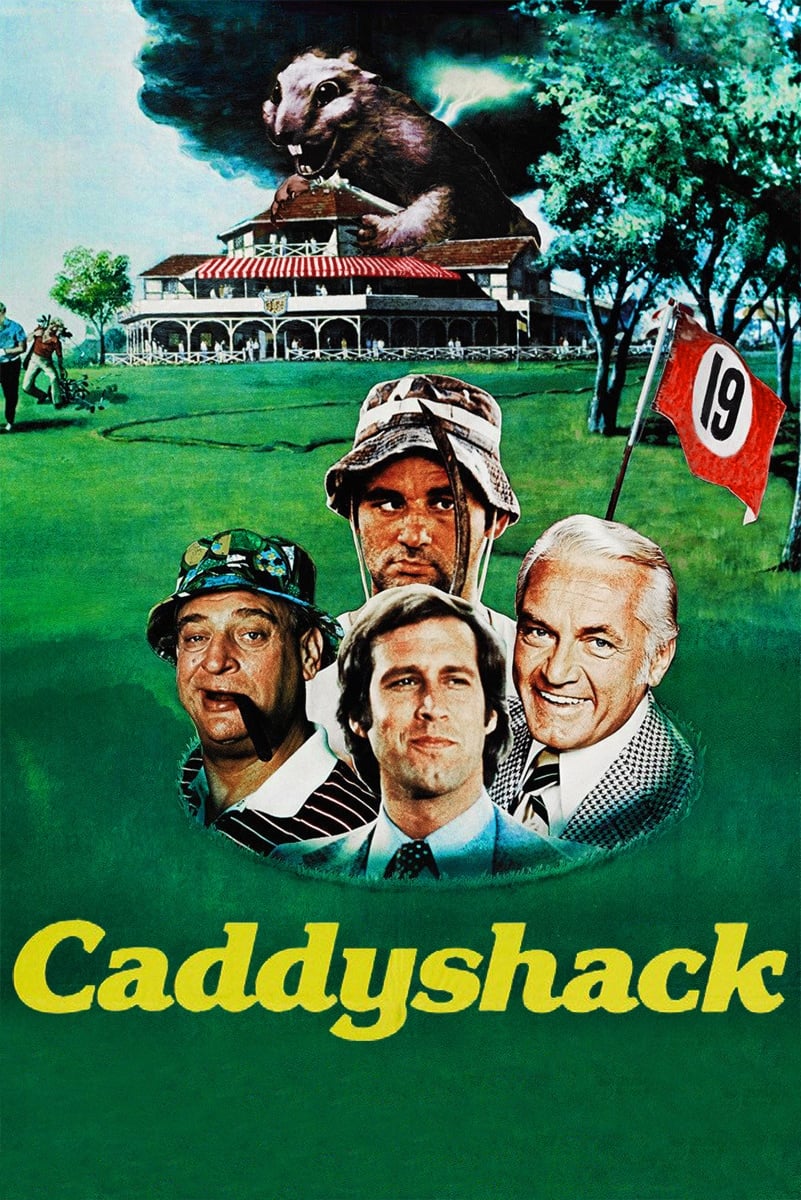
Caddyshack

1980 film

Bill Simmons · Sean Fennessey

Aired August 18, 2020

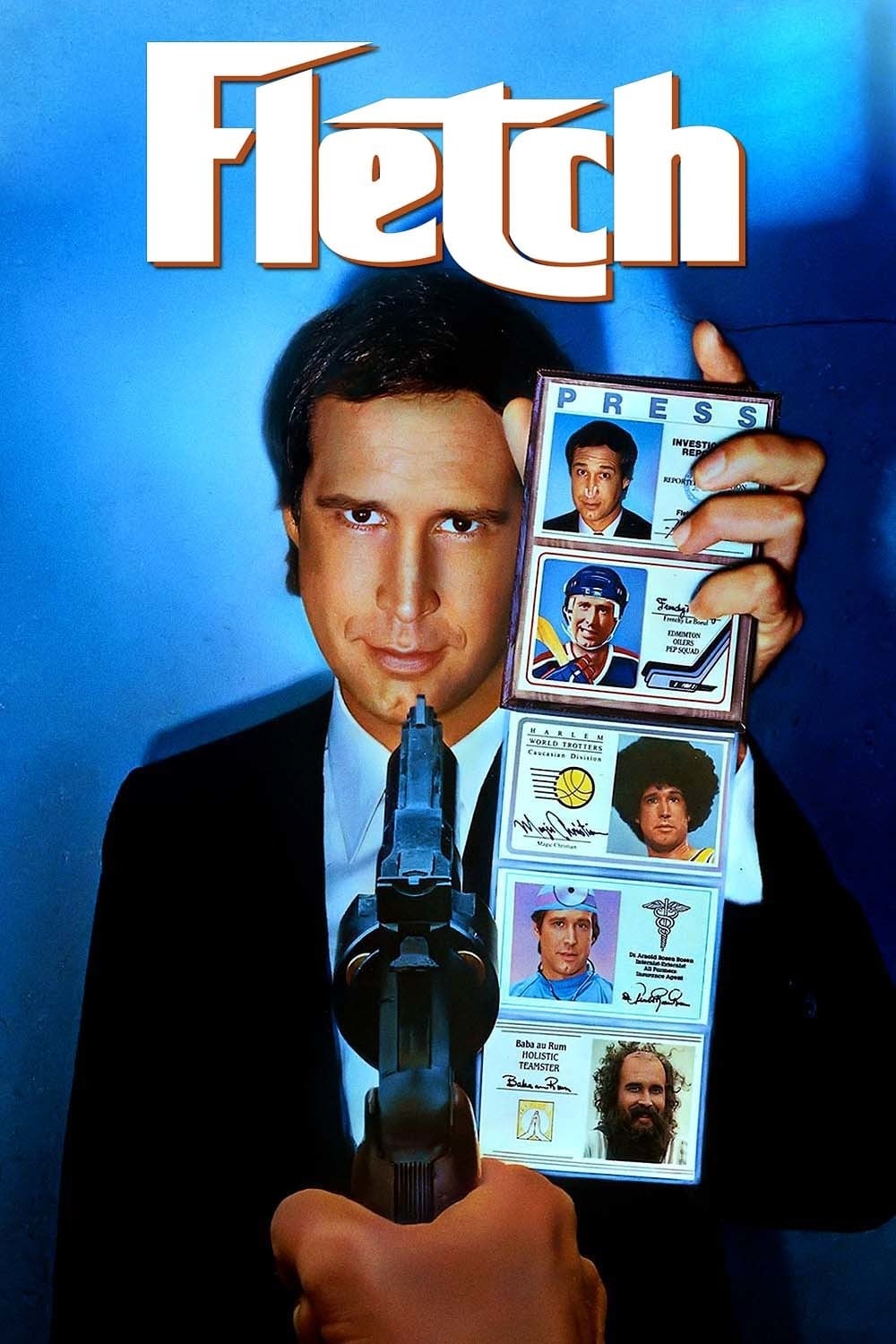
Fletch

1985 film

Bill Simmons · Sean Fennessey · Chris Ryan

Aired June 16, 2020

Displaying all 5 episodes

Mentioned in discussions

In the discussion (5)
Approx. transcript time · 01:10:16Read transcript
  • The choices offered are Linklater, McConaughey or Martha Washington, who took a big win; Don Dawson is floated and dismissed, since within the story Wooderson won, the way Chevy Chase won Fletch with his name atop the poster and Harrison Ford won Indiana Jones.
  • The case for Linklater is that this launched a 25-year career and made him a two-track filmmaker rather than just an experimental director emerging from the indie scene.
  • The case against McConaughey is that his career cratered in the early 2000s into bad Wooderson-impersonation rom-coms, as one host's 2001 movie-quotes column had jabbed, before the McConaissance.
  • Linklater is one of the nine most important directors since 1990; this is the first Linklater Rewatchables, and the Before films have been discussed, imagined as the hosts and their wives crying through the five-hour trilogy.
  • Linklater is the answer: every film he makes is interesting even when not his best, he has had a great career, and this is a masterpiece that Tarantino has had in his ten best films; alongside Pulp Fiction it emerges from that era as the standalone masterpiece and is the definition of a rewatchable.
Podcast choices
Speaker not identified
Richard Linklater
In the discussion (7)
Approx. transcript time · 00:33:42Read transcript
  • Opening nominations are McConaughey, the 70s music, the cars, the cast and the high school hierarchy, with others invited to add their own.
  • The limited temporal narrative structure, with everything taking place over one day, never gets old and feels like a full day, recalling how the social part of a school day started after the last class, ran through practice or a game and then seven to ten hours of hanging out; the action is the juice.
  • It is hard not to say the cast: McConaughey's first movie, Affleck, a golden generation, plus indelible characters for people who went on to have no careers; even though there was no tape on McConaughey in 1993, like drafting a player with no tape, he reads as a movie star, having done only one Miller Lite commercial.
  • Around 1996, with Lone Star and A Time to Kill, McConaughey was pushed as a star on Premier and Vanity Fair covers, and that is when the film's cult-classic status grew because people saw him as Wooderson; in a making-of documentary he recounts being nobody on the Friday and famous, stopped on the street, by the Monday after A Time to Kill opened.
  • A Time to Kill is far less remembered than Dazed and Confused, which is a more generationally beloved movie, though it is defended as good; Grisham was the MCU of the era, with real excitement for The Firm and The Client.
  • The answer offered is the combination of McConaughey and the cast, with the pleasure of seeing McConaughey at that point of his career.
  • Late additions: count how many times Don gets into a car, about 15, since apart from two school scenes he is in a car the whole time; Tim Lincecum looking like an adult Mitch Kramer became a running joke through the 2000s; and the nerds' theory in the car that President Ford's football concussions were affecting the economy now reads as a CTE subplot, which Chevy Chase's portrayal would support.
In the discussion (2)
Approx. transcript time · 01:23:46Read transcript
  • Vaughn at the peak of his powers, a virtuoso performance including the constant eating, the breakfast plate and his immaculate bullshit, up there with Stripes and the great Bill Murray performances and Fletch and the great Chevy Chase performances.
  • There is little to add: lines like built for speed or comfort are really funny, he is great and agreed upon, the motorboating exchange is played, and with competition from Wilson and Ferrell this is called his apex mountain slash best movie, with kudos to Vince Vaughn.
Podcast choices
Speaker not identified
Vince Vaughn
Speaker not identified
Vince Vaughn
Midnight Run

Casting What-Ifs

Paramount lined up Harrison Ford as Jack Walsh and Chevy Chase as the Duke; Chase had a conflict and Ford dropped out; De Niro came aboard only after being turned down for Big; Albert Brooks turned down the Duke; Paramount wanted Cher, then Robin Williams, as the Duke; Brest insisted on Grodin and Paramount sold the film to Universal; Ron Perlman, Dennis Hopper, Harvey Keitel, Ray Liotta and Alec Baldwin were considered for Serrano

In the discussion (8)
Approx. transcript time · 00:39:20Read transcript
  • Called a pantheon casting what-if: Paramount obtained the script and lined up Harrison Ford as Jack Walsh and Chevy Chase as the Duke around 1986-87, post-Fletch, which would have been a pretty good backup movie, although Ford, basically in his Blade Runner outfit, might be too handsome and has rarely been heard cursing that much; Chase had a conflict with Funny Farm and another film, and Ford dropped out.
  • De Niro opted in only after being turned down for Big; Albert Brooks was then offered the Duke and turned it down, which would also have been incredible, since Brooks and Grodin could have swapped parts for fifteen years and Brooks probably wins head to head.
  • Paramount then decided Cher should play the Duke, which is unimaginable, during a brief three-year peak of Cher as a top-tier actress; the research came from a piece written five years earlier, with a shout-out to Alan Seppinwall (as transcribed) as one of the few listeners.
  • Paramount pushed for Robin Williams, who wanted to audition, the same year as Good Morning Vietnam; Brest refused and wanted Charles Grodin, so Paramount sold the rights to Universal with Grodin and De Niro attached, and Universal had a major success.
  • Better or worse with 1988 Robin Williams: a sliding-doors note that doing it before or after Good Morning Vietnam might have affected Dead Poets Society; one view is that Williams would have done bits throughout and turned it into a comedy, while Grodin's measured, deadpan complaining plays perfectly off De Niro; the counter is a mellow Garp or Dead Poets Williams could have done it, and the endless takes might have driven him to become Robin Williams anyway.
  • Williams is judged the better actor but Grodin played it better; Williams only grew into his body by Good Will Hunting and was still slight in the eighties, so nobody but Grodin can be pictured in the part, with Grodin the safer pick though Williams playing it correctly would have been great; a crude aside recalls an anatomical revelation from the HBO Williams documentary.
  • The only other what-if is Jimmy Serrano, played by the late Dennis Farina: Ron Perlman, Dennis Hopper, Harvey Keitel, Ray Liotta and Alec Baldwin were all considered; late-eighties Baldwin would have been interesting, Liotta a little too young, and nobody could be better than Farina.
  • Earlier aside: De Niro wanted the lead in Big to show a lighter side, the studio said no and went to Tom Hanks, who was nominated, while De Niro settled for Midnight Run and was not; which was the better career choice is left open, but De Niro as Josh Baskin, a thirteen-year-old at the piano with Robert Loggia, would have been creepy, so the studio made the right move.
Forrest Gump

Casting What-Ifs

Harry Anderson was Zemeckis's first choice for Forrest; Bill Murray, John Travolta and Chevy Chase turned it down; David Alan Greer (as transcribed), Dave Chappelle and Ice Cube turned down Bubba and Tupac auditioned; Jodie Foster, Nicole Kidman and Demi Moore turned down Jenny; Terry Gilliam and Barry Sonnenfield (as transcribed) turned down directing
In the discussion (6)
Approx. transcript time · 00:33:52Read transcript
  • Robert Zemeckis's first choice for the title role was Harry Anderson, who was unavailable because of a commitment to Dave's World on CBS. — Sean Fennessey
  • The late Harry Anderson as Forrest Gump is dumbfounding; it might have been good but a different, smaller movie, and Anderson was not that famous even then.
  • Bill Murray, John Travolta and Chevy Chase turned down Forrest; Travolta has called it one of the biggest regrets of his career. The hosts think Travolta would have been terrible, that he kind of played Forrest Gump in Phenomenon, which one still rides for, and that Michael was him trying to get back to that moment.
  • David Alan Greer (as transcribed), Dave Chappelle and Ice Cube turned down Bubba. Ice Cube refused to play an idiot and is literally too smart for the part; Chappelle thought the movie would bomb, regretted it and worked with Hanks four years later on You Got Mail (as transcribed); Tupac auditioned for Bubba, which would not have worked. Bubba's name is Buford Blue.
  • Jodie Foster and Nicole Kidman turned down Jenny and both could have been good; Demi Moore also turned it down and would have been too old to pull off the high school and college stretch that Robin Wright managed, with a tangent on when Striptease came out.
  • Terry Gilliam and Barry Sonnenfield (as transcribed) turned down directing; Gilliam's version would have been amazing and a lot different. Hanks was probably not the first choice because he was unavailable. Bill Murray would not work: he only played dumb as Carl in Caddyshack, for comedy, and What About Bob is the craziest he has gone.
Displaying discussions 25 - 29 of 29 in total

Films in the archive