Stats
- Episodes featuring their films
- 3
- Movies in this archive
- 5
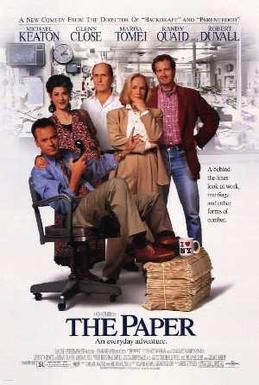
Rewatchables episodes featuring Glenn Close’s films

Mentioned in discussions

In the discussion (1)
- Quincy is nominated before two emphatic choices for Close.
Podcast choices
- Speaker not identified
- Quincy
- Speaker not identified
- Glenn Close
- Speaker not identified
- Glenn Close
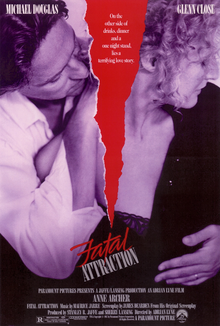

Picking Nits
Unsafe home; abandoned knife; unnoticed pursuit; fast leak; sleeping child; clock, broker and tape continuity; self-cutting
In the discussion (8)
- Beth staying is defended as reclaiming her homemaker identity but challenged as practically unsafe. — Wesley Morris
- Dan leaves a knife within reach and exits too slowly after being attacked; shock is offered as an explanation. — Mallory Rubin
- Alex follows the entire long commute without Dan noticing, although the tape distracts him. — Mallory Rubin
- Water leaks through the floor too quickly; Quincy drinks it rather than helping, with his poor diet offered in defense.
- Ellen sleeping through screaming, breaking glass and a gunshot is questioned; another participant says young children sleep that deeply. — Mallory Rubin
- An afternoon dinner clock, no real-estate broker and inconsistent tape wording are questioned, with repetition a possible explanation for the tape. — Mallory Rubin
- Dan asking whether Alex lives in the apartment after already visiting it may be an editing error or failed flirtation. — Wesley Morris
- Alex cutting her dress and herself in the reshot climax is rejected as unconvincing; Close reportedly kept the knife.
Casting What-Ifs
Jennifer Jason Leigh (reported rumor)
In the discussion (1)
- Leigh is another rumored Alex candidate; the expanding list reinforces the panel’s belief that Close was uniquely right. — Wesley Morris

Apex Mountain
Michael Douglas; Glenn Close commercially; Anne Archer; Bedford; Adrian Lyne; gated elevators
In the discussion (5)
- Douglas’s combination of this film, Wall Street and an Oscar is endorsed as his career peak. — Bill Simmons
- Close’s commercial peak is distinguished from her best acting, with Dangerous Liaisons favored for performance and its Oscar loss lamented. — Wesley Morris
- Archer is endorsed for her performance and appeal; swapping her and Close would undermine the film.
- Bedford receives a yes. Female thriller villains are considered through the film’s influence, with concern about less sophisticated successors. — Wesley Morris
- Lyne is endorsed for his best film, director nomination and proximity to Nine 1/2 Weeks; gated elevators win over Unfaithful.
Half-Assed Internet Research
Marriage-saving reactions; Year of the Rabbit; Diversion title; Close’s injuries and pregnancy; overlapping Wall Street filming
In the discussion (3)
- Close reportedly still hears that she frightened men or saved marriages; the release year coincided with the Year of the Rabbit, and Diversion was an earlier title. — Bill Simmons
- Repeated underwater takes reportedly caused infections; a reshoot concussion led to a hospital visit and discovery of Close’s pregnancy.
- The panel condemns the treatment of Close and the rabbit, then discusses a report that Douglas alternated filming days with Wall Street.

What’s Aged the Worst?
Dan’s animal care and accountability; smoking; fertility deadline; school pickup security; outdated technology; Play Misty for Me similarities; Alex’s characterization
In the discussion (7)
- Dan leaves Quincy alone too long, takes him to the affair, feeds him discarded spaghetti and meatballs to conceal his absence, and places the rabbit beside acid fumes. — Bill Simmons
- The rabbit’s death is upsetting, though visible blood suggests it was killed before boiling. — Mallory Rubin
- Office smoking and Close’s smoking performance are criticized; stopping may reflect pregnancy. Alex’s age-based reproductive deadline feels dated.
- The school casually releasing Ellen to an unfamiliar woman is criticized, including the role of presumed trust in a white woman.
- Landlines and information operators date the story; cameras and digital messages would change evidence and secrecy. — Mallory Rubin
- The premise is criticized as borrowing heavily from Play Misty for Me, though the earlier film lacks this movie’s contemporary 1980s pleasures. — Bill Simmons
- Dan’s limited accountability and the incomplete account of Alex’s life remain central objections. — Mallory Rubin
Casting What-Ifs
Glenn Close’s casting challenge; Sharon Stone and other Alex candidates; Christopher Reeve; Andie MacDowell; Brian De Palma; John Carpenter
In the discussion (6)
- The producers doubted Close’s sexual suitability until her hair and chemistry with Douglas helped establish the role. — Bill Simmons
- Stone auditioned and was passed over; the panel argues Alex should be Douglas’s contemporary. Field, Alley and Thompson are reported as considered, with uncertainty. — Bill Simmons
- Elisabeth Shue’s candidacy is doubted because of her age; Carrie Fisher is mentioned, and Field’s ability to play Alex is debated through Sybil.
- Reeve reportedly declined Dan; the panel doubts his fit for spontaneous moral compromise. MacDowell was considered for Beth. — Wesley Morris
- MacDowell is described as a later market replacement for Archer, with hypothetical Archer roles in Sex, Lies, and Videotape, Groundhog Day and Short Cuts.
- De Palma reportedly wanted Douglas replaced; Carpenter then declined over similarities to Play Misty for Me and objections to the original ending. — Wesley Morris

Most Rewatchable Scene
The kitchen-sink sex scene
In the discussion (8)
- The kitchen sequence is called the obvious winner: the water, dirty dishes, Douglas’s reactions and Close’s physical control are praised alongside the elevator scene.
- The restaurant conversation rationally establishes a supposedly consequence-free affair, creating later tension.
- The wet blouse, movement to the bed and relieved post-coital response are discussed as sexual spectacle and validation. — Mallory Rubin
- The progression through running, sex, dancing and the elevator conveys Alex’s appetite for life; both endings are criticized for diminishing that quality. — Wesley Morris
- The park date brings Dan’s dog and ordinary life into the affair; physical play, a faked heart attack and Alex’s contradictory account of her father are examined. — Bill Simmons
- Possessiveness and self-harm mark a frightening tonal turn, but the abruptness and incomplete psychological explanation are challenged.
- Alex’s real-estate visit builds palpable tension, and the subsequent confrontation demands that Dan take her seriously.
- The boiled-rabbit reveal is memorable and expertly constructed but explicitly rejected as rewatchable by one participant; a real dead rabbit was reportedly used.

Apex Mountain
No affirmative selection
In the discussion (4)
- Redford, Glenn Close and Duval (as transcribed) are all no, and it might be no one; Darren McGavin might have been at his apex here if he had been credited.
- A small case for Kim Basinger is rejected since LA Confidential, where she was nominated and the hosts are unsure whether she won, came at the tail end of her career, although this film moved her career to the next level.
- A case is made for Brimley, which would stab Chris Ryan through the heart given The Firm; the hosts settle jokingly on his chest hair being an Apex Mountain.
- Screenwriter Roger Towne is floated and met with 'didn't do much else', drawing only a 'sure, that was the best I could do'; Batboy Bobby is floated as a joke; Levinson's apex is Rain Man or Diner, and Redford's was judged All the President's Men in that earlier episode, though he won a directing Oscar for Ordinary People.
Half-Assed Internet Research
Darren McGavin went uncredited over billing; Randy Newman's theme; the clock homer was inspired by Bama Roel of the Braves; a six-minute-longer director's cut; the 'little boy in you' quote was Ray Campanella's; filmed at Buffalo's War Memorial Stadium; the Parkside Candy Store is real; 3,000 extras at $3.35 an hour plus cardboard cutouts; no one has hit the cover off a ball; the Savoy Special bat is at Cooperstown; Hobbs modeled on Ted Williams; the 1939 Pirates went 68-85; Bret Hart's catchphrase; the halo shot was real; Bobby the Batboy was found at a produce stand; Levinson voiced the radio announcer; the $20,000 bribe is $366,000 today
In the discussion (10)
- Darren McGavin was cast late and would have received lesser billing than the other stars, so he chose to go uncredited; the hosts call it idiotic pride over practicality, since his IMDB is Love Boat, Fantasy Island and Rockford Files.
- Randy Newman wrote the theme, the I Love L.A. guy whose song lives on at Laker games; Hobbs breaking the scoreboard clock was inspired by Bama Roel (as transcribed) of the Boston Braves showering Dixie Walker with glass at Ebbets Field on May 30, 1946, and the Wrigley clock was not introduced until 1941.
- A director's cut six minutes longer trims the Redford and Close opening and adds Bump Bailey and Gus scenes; one host would not have minded more Bump given his sudden death and the Memo factor; a tangent on Bump as a nickname lands on calling Jason Gallagher Bump.
- Roy's line that a big leaguer needs a lot of little boy in him was a Ray Campanella (as transcribed) quote; the film was shot in Buffalo at War Memorial Stadium, built in 1937 and demolished in 1988, whose short right field limited wide shots, and TriStar spent $500,000 aging it; the hosts protest the demolition and note Buffalo was good enough for the film but not Antonio Brown.
- The lemonade shop where Glenn Close takes Roy is the real Parkside Candy Store at 3208 Main Street in Buffalo, serving ice cream, homemade candy and sandwiches; this leads to a wife who judges places by their signs and an old-school milkshake spot near Pasadena.
- About 3,000 extras were recruited at the $3.35 minimum wage and cardboard people in straw boater hats filled the rest of the stands; the Hall of Fame has no record of anyone hitting the cover off a ball; the Savoy Special was a 1930s beer brand, and the bat and the bloody uniform are at Cooperstown.
- Whether Roy would really bleed through a 20-pound fire-retardant uniform is parked for a later category; Hobbs was loosely modeled on Ted Williams, lefty number nine, who wanted to be the greatest hitter who ever lived.
- The real 1939 Pirates finished 68-85 and the Reds won the pennant at 97-57; Brett the Hitman Heart (as transcribed) took 'the best there is, the best there was, the best there ever will be' from this movie; the Glenn Close halo shot was timed to the setting sun, not CGI.
- Bobby the Batboy was played by George Wilcoz (as transcribed), discovered at his parents' produce stand in Buffalo for his only movie, and he lingers two seconds too long after handing Roy the bat; Ruth Ann Steinhagen inspired Harriet; Barry Levinson did uncredited voice work as the Knights' radio play-by-play man.
- The $20,000 bribe is about $366,000 in today's money; the hosts wonder what a stake in a 1939 team was worth to justify bribing everybody in sight, guessing the gambling money was worth nearly as much since there was no TV money.
What’s Aged the Worst?
Robert Redford's age playing the teenage Roy Hobbs in the first 20 minutes
In the discussion (8)
- Redford should not be in the first 20 minutes: he and Glenn Close are 20 years older than their characters, the weird lighting does not hide it, the train shots of young and older Roy look identical, and the Pittsburgh lefty or the boy who plays his son could have been 18-year-old Roy.
- Nothing is worse than someone who cannot throw in a baseball movie: Roy's son is in the finals with Costner's dad in Field of Dreams for worst throwing motion, Tim Robbins gets a half pass for a torn rotator cuff, and the kid carries his glove around the living room yet cannot throw or catch.
- Bump Bailey dying by running through a wall is ludicrous, recalling Fred Lynn hitting the Fenway wall in the 1975 World Series before padding went up; the death is explained by the Greek mythology and the need to remove him from Memo, plays 100% comedic with the ashes scattering, and Roy shows no emotional response.
- Women are either destroyers or saviors, like the current Damien Chazelle experience; the Iris and Hobbs scenes are awkward and stilted with little chemistry, while he has more chemistry with Memo, with whom he has sex in a glass phone booth in a hotel lobby.
- The stretch from the poisoning to 'suit up' is about 20 minutes of maternity ward with no mystery that Roy will play, like the hospital flaw in Rocky 2; it could be done in 10 minutes.
- Nobody can figure out who Roy is without baseball reference or the internet, even though he was in an attempted murder and suicide with three other murders and Max, who prides himself on encyclopedic knowledge, literally met him; the same actor playing both ages makes it worse.
- Ballpark security letting the note through, the ball and strike calls with no pitch framing, and the complete lack of diversity, set before Jackie Robinson, are also raised; one host asks why the 1984 film had to be set in 1939 rather than moved forward, the other likes the railroads and the Shoeless Joe hangover.
- The final pick is how old Robert Redford is, with the son's throwing motion a good second, and the other host agrees Redford is too old for the first 20 minutes.

What’s Aged the Best?
Red and Pop (Farnsworth and Brimley), or the Randy Newman score
In the discussion (10)
- The incredible cast: three Oscar winners in Redford, Duvall and Basinger, nominees Glenn Close, Barbara Hershey and Richard Farnsworth, plus Robert Prosky, Michael Madsen and Joe Don Baker; Madsen was never one host's thing, though a college friend stuck by him through his problems and still mourns Bump.
- Basinger is in the final eight of a most-beautiful-woman-in-a-movie bracket, and her constant lip licking raises whether it is deliberate or just her essence; Diane Lane in Unfaithful is a similar case.
- Brimley and Farnsworth as Pop and Red are perfect and some of the best stuff in the movie; it is sobering that Brimley was the same age as one host is now yet seems 78, and only about two years older than Redford in real life.
- Hobbs played semi-pro ball for the Hebrew Oilers, prompting a hunt for t-shirts on Cafe Press or Redbubble; the Randy Newman score was Oscar-nominated, is instantly associated with the film, and gets yanked for NBA and World Series montages.
- Basinger is named again, with a nod to Alec Baldwin and their handsome couple; Max Mercy, who never played sports but makes it more fun to watch, is a model for sports media, and the hosts imagine him resisting digital media at the New York Daily News, still drawing cartoons, before being wooed by Sirius for Mad Dog Radio or a podcast.
- John Rhodes, the Pittsburgh lefty who is a Roy Hobbs spitting image with a good throwing motion, is great casting, and the slow-motion shot of the guys flying out of the dugout after the homer is an all-time favorite.
- Roy Hobbs is a three-true-outcomes player for the modern era, homering, striking out or walking, like 2003 Bonds or a nine-WAR player with a 184 wRC+, though his defensive value would be poor since he is slow and unwieldy and his side hurts every time he reaches for a ball.
- The old-school baseball fashion and aesthetics, especially the Cubs uniforms, have aged wonderfully, even though the heavy fire-retardant uniforms look as warm as wildling furs.
- Iris as an independent spirit and trailblazing feminist: Roy gets her pregnant in the barn, proposes romantic bullshit and never returns, and she raises the boy alone in Chicago with a nice apartment, a job and a drugstore where they know her name, can get an usher to deliver a note, and still gets the guy at the end.
- The final pick is Red and Pop, with a wish for 30 minutes of deleted dugout ad-libs or a mic'd-up game, or else the iconic score.