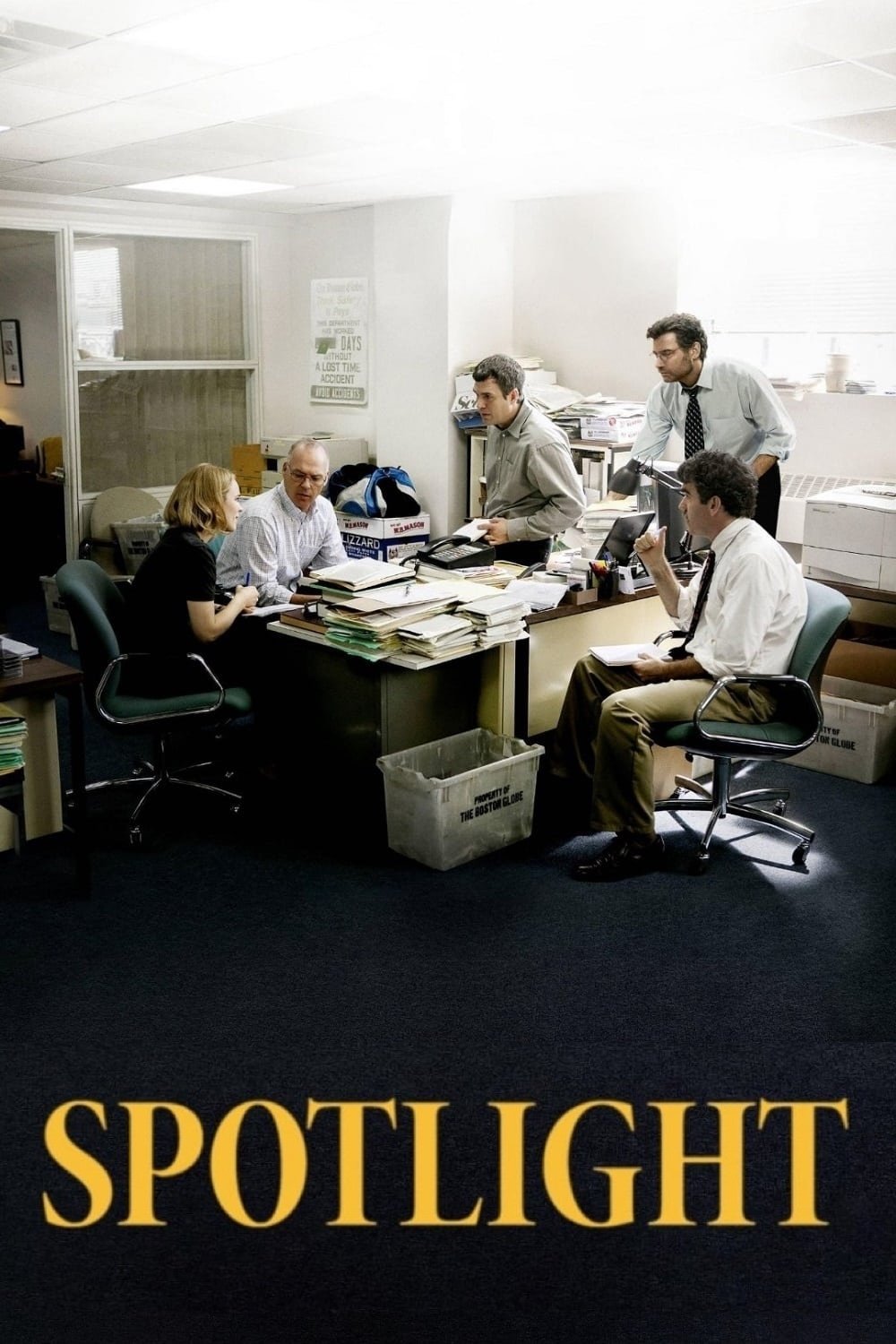
Baron's first staff meeting, where he asks whether Spotlight would consider picking this story, is singled out. — Bill Simmons
The survivor Saviano (first misnamed Josh Saviano, then corrected) explaining that the abuse is spiritual as well as physical is really good and important. — Bill Simmons
The second Crudup meeting is a cat-and-mouse scene about private mediations that left no court records. — Bill Simmons
The speakerphone call, voiced by Richard Jenkins, with the pull-back across the office, is when the stakes rise from a few priests to about 90.
Baron telling them to go after the system rather than individual priests is an incredible journalism lesson, set against Ruffalo's fear of being scooped by the Herald. — Bill Simmons
McAdams's character visiting the priest who matter-of-factly describes his conduct, before his sister intervenes and a school bus appears, is highlighted.
Many of these scenes are not technically rewatchable; Ruffalo getting the documents, the cab ride and his 'They knew' speech is called iconic, with All the President's Men DNA in the copier bit.
Keaton visiting Jim the lawyer at home, with the cheerful wife and the cold husband, ends with 'you and everyone else'; the Red Sox complaints about the 2001 season are a nice touch.
Robbie admitting he had the story in 1993, followed by Marty's speech, is chosen as the favorite scene.
Another set of favorites includes the Red Sox game banter, hauling directories out of a basement with a dead rat, and Crudup's character snapping 'I sent you the names' (the sick-leave code realization is filed under What's Aged the Best); the speakerphone scene is the pick because it reveals the magnitude. — Chris Ryan
McAdams's interview with Joe Crowley, intercut with Ruffalo's, is added for explaining the victim's side, including 'Who, a priest?' with a church beside a playground. — Ryen Russillo
The Crowley sequence was also listed under What's Aged the Best; small details such as his nerves, the muffins and the Dorchester-to-Back-Bay remark avoid handholding. — Ryen Russillo
The overacting award is renamed for Vincent Hanna ("Give me all you got") after earlier names including Mark Ruffalo and Linda Partridge. — Bill Simmons
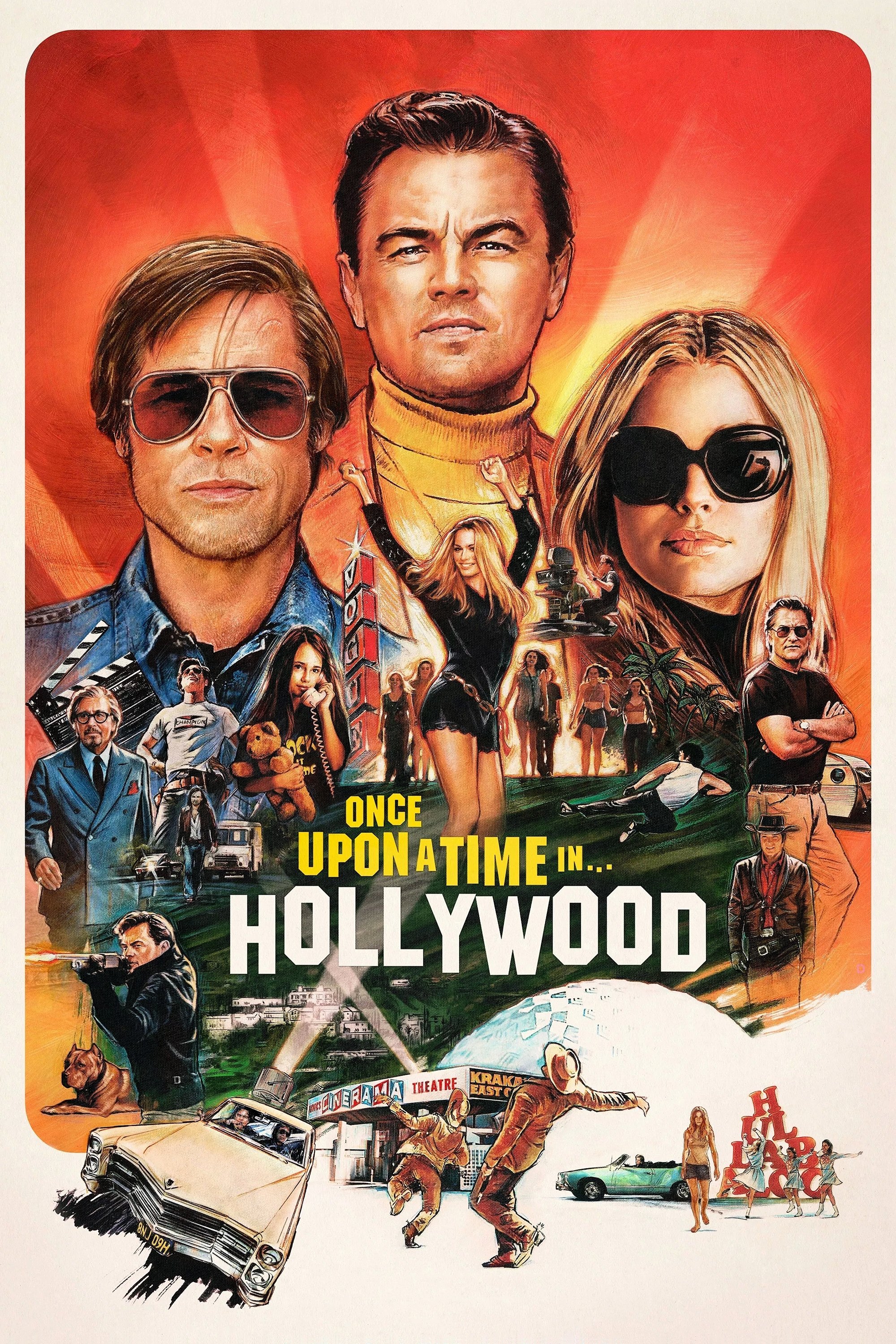
Nominees: the actor playing Bruce Lee for dialing it up, or the Manson family woman after her face is smashed. — Bill Simmons
A counterpoint says her flamethrower scene did not read as overacting. — Chris Ryan
Her real overacting is said to be in the car rant; it is then suggested to give it to her anyway. — Sean Fennessey
DiCaprio's trailer scene is ruled out; Zoe's character screaming at Pitt is called a little hard, with shades of Robert Shaw in Jaws.
The award is introduced as the Linda Partridge, don't call me lady, award for overacting and immediately derailed by confusion over the Joey Pants award.
Reiner, not even a question: he is nuts in this movie and screams the entire time; the award, formerly the Saul Rubinek 'they stab me in the heart' and before that the Mark Ruffalo, is not a critique and Rob Reiner is not canceled, he just yells for five minutes, delivered like Rob Manfred ruling on sign stealing with Jim Crane and a couple of cops; no case for McConaughey, and Kimmy a little bit.
Earlier, during the heat check, Dujardin is one host's overacting pick for being in a different movie.
The award is now the Linda Partridge 'don't call me lady' award after Julianne Moore in Magnolia, having passed from Ruffalo to Saul Rubineck (as transcribed); the first answer is that nobody is overacting and Bardem is acting just right.
The award was named after Mark Ruffalo despite Zodiac and You Can Count on Me, so it is not a positive award, and the Bardem performance is called the performance of the decade; the boat captain who sticks his head in to say they should push off is offered instead.
The counter-case is that overacting is a skill, that Bardem seems outsized because everyone else is muted, and that he is doing a lot without ruining the movie; the Bardem voter admits being outvoted as always, and the award goes to the boat captain so everyone stays friends.
The opening cab ride combines Groove Armada, an implausibly empty 105, chemistry, and a rare narcotic feeling of effortless Los Angeles motion. — Bill Simmons
The corpse falling onto the cab is a terrifying first-viewing shock, followed by Cruise’s calm calculation, Max’s panic, and the darkly comic distinction that the fall killed him. — Bill Simmons
Vincent’s rapid two-chest-one-head recovery of his briefcase establishes his practiced violence. — Bill Simmons
Daniel’s Miles Davis story lets Max briefly forget his peril before Vincent kills Daniel, with Barry Shabaka Henley’s expression selling the reversal. — Bill Simmons
Bardem controls a tiny role as Felix, while Max implausibly but compellingly learns to impersonate Vincent under pressure. — Bill Simmons
The Fever sequence uses hundreds of repeating extras, physical choreography, and Ruffalo’s abrupt death to produce the clear final choice. — Bill Simmons
Annie’s dark office pursuit and the subway death use darkness and sound to complete Mann’s preferred confrontation between paired professionals. — Bill Simmons
The Mark Ruffalo category is now the Saul Rubinick (as transcribed), renamed on the True Romance podcast, and Zach, absent last time, hears the new name live for the first time.
Delivers the renamed award's line, 'I treated you like a son and you stabbed me in the heart.' — Chris Ryan
Affleck is the guess and then one host's vote: he turns it up nine notches when the paint goes on him, and his furious screaming clip is played; another view is that it is a bit in the movie that O'Banion takes this stuff so seriously, he played it correctly and should not be blamed.
Ben Affleck squealing like a pig is one of the most disturbing sounds in modern times and very committed; squeal-like-a-pig, the Deliverance reference to Ned Beatty's assault, was a big 80s and 90s joke that nobody under 30 in the Ringer office would recognize now, an example of a movie humor bit dying with time.
A new category named for Mark Ruffalo dialing it up in Spotlight; there is said to be only one obvious nominee, the 'I don't want your life' scene, and the clip is played.
The Texas accents are very tough; Paul Walker's is super thick in his first scene telling Billy Bob he has a dream and by the end he is in Fast and the Furious.
Two hosts perform the father-son exchange, one as the dad and one as Dawson; the reading runs well past the promised two lines, with an admission of getting caught up and being unable to stop, and a quip about being the father of a starting quarterback.
A dad debate follows: he is called both a great, supportive dad and a terrible one; the billboard was built by boosters, whoever Buddy Garrity is for the Coyotes; the one mark against him is answering the free Brown acceptance with the Friday game plan, defended as what a dad saving $300,000 would do, since he knows your life in West Canaan is ruined if you play badly.
Mox's dad looks like Ed Werder of ESPN and Paul Walker's dad like Chris Cooper, as if the film could not afford the real ones; a second nomination for the overacting award is the scene of the dads making the boys throw the ball, deciding the best quarterback in Texas by a three-yard throw.
A new category suggested by a reader, whose name the host cannot remember: the Mark Ruffalo They Knew overacting moment of the movie; watching for the first recipient, there is no overacting in this movie, and the only case, which the host does not agree with, is Chucky going in to do the job interview for Will, a comic relief scene everyone likes.
Devil's advocate: does Damon broadcast the cracking in it's not your fault, or is it just familiarity after 25 years; it is one of the only times Robin Williams blows Damon off the screen, and if you look closely the crinkled-up face when he starts to cry is kind of bad until the hug hides him, which is why people have picked on the scene over the years; the rebuttal asks how else he should play a man melting down and trying not to.
Given the final say, the answer is that Damon does a good job in that scene; also, Mark Ruffalo's they knew line is the best part of Spotlight. — Shea Serrano
The others love the Spotlight moment too, having waited Ruffalo's whole career for him to raise his voice in a movie of people reading phone books for two hours; the category is tweaked to the overacting scene they also love to death, achievement in overacting, and given to Clark with the ponytail, exactly over the top perfect, even his ponytail a little frazzled.
Agreement that Clark is the pick, given his look. — Chris Ryan
Shout-out: the Clark actor became more famous in Oz as Ryan O'Reilly's brain-damaged brother, and is Dean Winters's real-life brother; Ryan O'Reilly is a forgotten all-time great TV character, and Winters is now the beeper guy from 30 Rock and the insurance ads.