The soundtrack's obviousness; the CGI, especially John Lennon's mouth; Forrest's mother sleeping with the principal; the three-and-a-half-year run; Bubba; Jenny's journey, defended; Sally Field being only ten years older than Hanks
The CGI was groundbreaking in 1994 but the Ringer office could do better now, and Jurassic Park a year earlier had much better CGI. John Lennon talking with his mouth moving to different words looks like the Ringer's social videos such as Bill Belichick as Scarface; the ping pong ball, by contrast, looks great.
Zemeckis and Hanks made a great deal of money from this film and Zemeckis also made Back to the Future, so the hosts ask him to spend 1.5 million on the CGI for a 25th anniversary home release; George Lucas did that with the original Star Wars trilogy and people flipped out, and Star Wars fans are called lunatics, with the producer asked to cut the remark and then told not to.
Forrest's mother sleeping with the school principal is a delightful scene that has probably aged badly in certain corners.
Forrest ran for three years, two months, fourteen days and sixteen hours, from July 5, 1976 to September 19, 1979.
Somebody running for three and a half years is absurd: who was getting his checks from the shrimp company, who ran the bank, who mowed his lawn; the defense is that he was a simple man who did not need possessions. The scene is called absolutely idiotic, nine months would have been fine, no decade exists where anyone would do that, and he does it in the same pair of Nike Cortez.
The movie is meant to be a parable, but the run is more than ridiculous, one of the few parts that should not make sense on screen. One thing to like is that he breaks out the Castaway beard as foreshadowing, though the makeup is not good; in Castaway it was real, and the lesson was learned.
Bubba has not aged well, too broad as a character, a second superhero with the same power; the counter is that two undereducated guys with sweethearts underscores the friendship of dumbass soulmates.
Jenny's journey is a tough thirty-year stretch of a rough home, bad men, coke and heroin, but the film showed many young people the effects of child abuse, an honest if not raw attempt; it is a little facile that everything in her life traces back to her childhood, and unfortunate that everything that happens to Forrest is great and everything that happens to Jenny is bad, yet Robin Wright is so empathetic that the character works and it has not aged poorly.
Sally Field is only ten years older than Tom Hanks and they co-starred in Punchline ten years earlier, which is obvious when Forrest comes home from Vietnam and she is aged up; it looks like someone twenty years old cancelled at the last second and they had to audible.
One host has no questions beyond not knowing enough about PCP; what is Jake's tomorrow is floated as another sequel, the day after Training Day, whether he is still a cop.
A likely trajectory: like Edmund Exley, the Guy Pearce character in LA Confidential, a straight arrow who sees the dark side and wants to rise, Jake would try to make lieutenant very young and climb the ranks, with the wise men asking what it takes to keep him quiet.
Asked directly, one host has no other unanswerable questions; the closing question is whether watching this ever made anyone want to try PCP or wonder how long it takes to wear off.
Nobody wanted to try it, but it gave pause about laced pot, something to look out for; the possibility of accidentally smoking dust and ending up in a situation like this had not really landed before for a guy working at record stores.
One host recounts being in the Bahamas with his wife, wanting pot they had not brought, going downtown to a shady part of town, and his wife saying she had it and going off alone, the alpha dog in these situations, Alonzo in that moment. — Bill Simmons
The others call it one of the all-time great what-ifs, how Bill did not get murdered buying drugs in a foreign country, note it was good he did not bring pot to the Bahamas, and ask the statute of limitations on a crime committed 17 years ago.
Ethan Hawke gets an initial no; the alternative apex offered is Before Sunset, the second one, which came after Training Day, with Before Midnight and Before Sunrise also liked, Reality Bites arguable as his movie-star apex, and Boyhood, where he is amazing but not on screen much.
Whether who you are married to counts prompts the ruling, deferred to the person who invented the show and the category, that it is only about performance, not life; still, the case for 2001 is made, a hot celebrity couple and a respected actor newly proven in action, and one host switches their pick to 01 while another stays with Before Sunset.
Hawke's turn in Fuqua's Brooklyn's Finest, basically playing Alonzo, gets a shout-out as an idea hatched at 2:30 in the morning after eight beers.
Antoine Fuqua is a yes: a good career, but how do you top directing Denzel at his peak performance, something to tell your grandkids; The Equalizer 2 is the most anticipated movie of the year for one host's father, Dr. Bill, who loves Denzel and The Equalizer and should have been on the episode, and of the four Denzel-Fuqua movies this is by far the best.
Eva Mendes and the other supporting people are not at their peaks here; Scott Glenn's apex is The Right Stuff, when in the 80s he looked like a potential top-tier actor.
Denzel gets a yes from one host; others answer Malcolm X, a movie about one man featuring three primary characters played by the same actor, a 19-year-old gangster, a 25-year-old militant and a 30-year-old spiritual leader; the Training Day case is that Denzel, already America's most beloved actor with a unanimous approval rating, lacked an Oscar and a Michael Jordan 1992 Finals moment and then played a part nobody else could in a movie that should not have worked; it is called neck and neck, a total coin flip.
Favorite recent Denzel: Flight is growing on one host, the two Travolta movies are liked and Unstoppable is called better with a fun Chris Pine; Denzel inhabits characters for better and worse, probably smoking for three months here and drinking through Flight, and he struggles only when he tries something smaller that recesses from essential Denzel-ness, as with Roman J. Israel.
On the phone, the acting apex is Malcolm X for a single performance, but the cultural apex, the Denzel moment, is Training Day for sure: everyone followed along waiting for the Oscar, Halle won the same year right before him, and his two-birds-with-one-stone comment played out perfectly.
The Andre Ward cameo, when Adonis climbs in the ring to take on the whole gym and Ward knocks him out, is offered first. — Bill Simmons
Three great scenes are named: the two-round fight with Leo filmed in one shot, the seven-minute cancer-revival training sequence ending with the ATVs outside Rocky's house, and the 11th and 12th rounds of the final fight. — Bill Simmons
The one-shot fight is called an all-time how-did-they-do-this scene, with the camera cutting to Jordan and Stallone and whirling back around. — Bill Simmons
The cinematographer Alberti, who also shot The Wrestler, is praised, and Creed is called a much better-shot movie than The Wrestler. — Wesley Morris
The ATV training sequence is a genuine stand-up-in-your-seat moment, an urban 2015 version of the Rocky run 40 years later. — Bill Simmons
The final fight's 11th and 12th rounds, with the towel nearly thrown and the line about proving he is not a mistake, are called a great, stressful five minutes. — Bill Simmons
The two-round one-shot match is called the best boxing scene ever seen and gets a vote. — Bill Simmons
A second vote for the one-shot fight: beyond technical mastery it tells a story, as the trainer's tip in the ring leads to the knockout a minute later, building their bond, followed by the 'you didn't tell me you had hands like that' moment. — Sean Fennessey
Bianca's hands line prompts a joke about what it implies about sleeping with him.
Asked about the ATV scene, a panelist loves it and adds the warm-up before the last fight, rocking back and forth while being talked into it, and receiving the gloves and trunks.
Bianca's Philly slang 'John' (jawn) would have worked better with the accent; one panelist saw the movie in Philadelphia with a sleepy crowd. — Wesley Morris
Another answer agrees on the one-shot fight and adds the scene where the vomiting in the ring reveals Rocky's illness, a painterly, Renaissance-lit presentation, later tied to Adonis saying he will fight if Rocky fights. — Wesley Morris
Many things are needlessly beautiful: the first kiss shot upside down and the booth framing on their first date.
Rashad's performance in the first scene, with its spacing and sense of history, gave complete confidence in the movie.
The juvenile detention tracking shot, the long deep-focus shot with the supervisor watching in the background, and Leo's dad eyeing Rocky at the gym are cited as touches of a good filmmaker. — Wesley Morris
Another pick is the two-round match while also riding with the ATV scene, which gains context from the Eagles' Super Bowl and the Meek Mill song; kids who find Rocky slow like Creed. — Bill Simmons
The ATV scene honors Bill Conti's score, going slow motion and quiet mid-song, and the theme hits as the final round begins. — Bill Simmons
A late addition: the jail scene where an angry Adonis tells Rocky off and Stallone slow-plays it is called really good acting. — Bill Simmons
Betty Gabriel chosen for discovery and showing psychological premise through one face.
Jordan Peel chosen in explicitly addressed reply for leap to highly anticipated filmmaker; another says same answer. — Sean Fennessey
America chosen with sustained audience-impact rationale: movie could have failed commercially, but audience support and mutual respect create confidence for filmmakers and studios. — Wesley Morris
Jordan Peel chosen in directly addressed final reply while other answers appreciated; earlier anonymous same-answer response may be a reaffirmation. — Bill Simmons
Why did Cage get the less fun part? Who signed on first? Who got paid more? Did Cage's acting get worse or was he always like this? Why not kill Castor once he wakes up faceless?
Why did they give Nick Cage the less fun part, since Travolta becoming evil is so much more fun than Cage becoming the nice guy trapped in Cage's body; the counter is that Cage gets the first 40 minutes to be evil and had more fun in this movie, so his was the better role.
They did not direct Nick Cage, Nick Cage directed this movie, or freebase cocaine directed Nick Cage; you needed Cage because he is very good at being crazy and had to have trouble processing being another person, which Travolta could not do.
Who signed on first? Cage, the hosts decide, since he would look at the roles and want the one who kills a kid and assaults a teenager in the first 40 seconds. Who got paid more? Split between Travolta, fresh off Greece (as transcribed), and Cage, coming off the Oscar, The Rock and Con Air; the joke is that Travolta was told 15 and Cage got 20, or was paid in Chiclets.
Was Cage's acting just as bad here as it would be for the next 20 years, bad in a good way, or straight up great and the same as in all his movies? One host threatens to walk off the stage if the panel decides he was bad in this movie, and the choice narrows to good versus good-bad.
Does not know that he has seen a Nick Cage movie since this one, though he did see 8mm. — Chris Ryan
The audience is polled and says good-bad; a clip of Cage's interview about the role is played in which he says he meditated on the idea of wearing the face of the man who killed his son, literally not metaphorically, offered as proof that he was a good actor fully in it; the hosts guarantee Cage would still insist today that he took his face off and wore it.
Asked how he would explain to his wife that it is really him wearing someone else's face, says he would come home freaking out, laughing and crying, wearing Neil's face. — Shea Serrano
In the movie the only reason she believes him is that he names his blood type, O negative or so, and talks about the son's bed; one host would try to come up with memories he has not tweeted about so she would know he was serious, though there is no way it is happening either way.
An audience member adds an unanswerable question: when Castor wakes up bandaged after the switch, why not just kill him; the hosts call it a strong point they had not thought of and joke about the Geneva Convention, the Bill of Rights and the rule of law keeping this from being a dictatorship, since removing his face in an office park is already the act of human rights here while he still has the sanctity of life.
Dr. Walsh makes the surgery sound routine; the secret off-the-books hospital; Archer tells nobody, not even his wife; prison guards killed rather than informed; Castor never tells Dietrich; a prison fight five minutes after surgery; the hasty reverse surgery and the added love handles; nobody guarding Cage in the coma; Time's Man of the Year for one bomb; helicopters giving up and a 40-mile swim; holding a 250-pound man by a gun barrel; shooting a guard in the toe; Travolta's chin cleft and Cage's teeth glossed over
Dr. Walsh spends two minutes on the surgery as if Travolta were getting his hamstring fixed: with the new anti-inflammatories healing takes days not weeks, then they simply connect the muscles, tear ducts and nerve endings; the hosts do not think it is that easy, though he sold it well enough that one would trade faces with a fellow host for a week.
This is not a hospital but an illegal secret one, like in the Palisades; why could Travolta not tell his wife or anybody he worked with? Only CCH Pounder and Robert Wisdom knew, it was totally off the books, and the three people who knew were burned alive; still, one host would definitely tell his wife the night before that he was switching faces with the guy who killed their son, hard as that conversation would be.
Why could they not tell the prison guards instead of killing them, when those guys are all on the take? And why did Castor not tell Dietrich, the bald guy, when other people in his life knew?
Could Travolta as Cage have survived the prison fight with a new face, punched five minutes after surgery when he was told not to get hit, his face itching as he scratches it; way more attention went into putting Cage's face on Travolta, while Travolta's face on Cage was a hasty shotgun job done under threat of immolation, yet afterwards it is the carefully made face that itches while the wearer of the rushed one loves his new face with no itching or side effects.
They explained how they would get rid of Travolta's love handles, so how did they add love handles, especially with a gun to the head? And why was nobody watching Cage in the coma, a feared independent terrorist who has taken out 20 people, with his face in a bowl under a spotlight ten feet away?
Once Cage's character, wearing Travolta's face, foils his own bomb to become the hero, the film casually drops that Sean Archer was Time Magazine's Man of the Year, and his boss even cites it; would you win Man of the Year for foiling one bomb, and who did he beat in 97, Michael Jordan, Bill Gates, Bill Clinton?
Castor escapes the Catalina prison with a 70-foot jump into the water, and the circling helicopters give up at once, the action-movie rule that once you land in the water the helicopter flies away; does he survive the leap and the bullets, swimming 40 miles underwater to L.A., presumably like a dolphin coming up every once in a while?
One nitpick maybe nobody notices: as Cage and the prisoner called Machine or Sabaka (as transcribed) escape, murdering guards, Sabaka falls over the rail and Cage holds this 250-pound man up by the barrel of his gun, which would take years on the machines; the hero cannot kill a guard or he would be bad, so Sabaka does the killing while he shoots a guard in the toe from 40 feet; both men shoot well until they shoot at each other at close range and dodge bullets.
Earlier, while on what aged worst, a host who hates to nitpick this movie notes that Travolta's big chin cleft and Cage's rat-like teeth were just glossed over, though the film does joke about the chin.
What did Lecter say to make Miggs kill himself?; Is it okay to root for Hannibal Lecter?; Did Catherine Martin keep Precious?; Would you watch a 1997 Buffalo Bill prequel with Ted Levine?; Should Jodie Foster have done the Hannibal sequel?; Was Jodie Foster good in this movie?
Is it okay to root for Lecter: he is one of the five worst people the hosts have rooted for, they cheer when he attacks Charles Napier's character, Clarice tells her FBI roommate he would not come after her because he would find it rude, and he seems to attack only people he has a grudge against.
Did Catherine Martin keep Precious: she carries the dog out at the end after the bone-and-bucket Hail Mary, and the host thinks she kept it.
Would they watch a Buffalo Bill prequel with Ted Levine in 1997: yes, though the investigation of serial killers interests one host more than their origins; should Foster have done the Hannibal sequel: no, she knew to leave well enough alone.
Was Foster good: one host thinks she is great; the other, since learning Michelle Pfeiffer had turned the role down, watches imagining Pfeiffer, would be more scared and more convinced, and thinks Pfeiffer the better actress, perhaps a year or two old for it.
The rebuttal is that Clarice's background as a rural West Virginia sheriff's daughter fits Foster, while Pfeiffer seems like a Tequila Sunrise, Fabulous Baker Boys person; the accent is still judged not good enough, with the claim that Hopkins knew it, and the advice is never to do an accent unless you are Daniel Day Lewis.
The Pfeiffer backer, calling her a favorite actress, adds that Castaway would be better with her in the Helen Hunt part and admits to simply not being a big Jodie Foster fan; another voice asked for an opinion praises her rookie vulnerability, Julia Roberts is rejected as too much of a megastar against Foster's diminutive presence, and there were few great actress options at the time.
Earlier, during the nits, what Lecter told Miggs over six hours to make him kill himself was parked for this segment.
Nominees: Chris Isaac's (as transcribed) three-second cameo getting out of the van with one line; Charles Napier's reaction on realizing he is handcuffed just before he is clubbed; and Catherine Martin shouting a profane insult at Clarice, the person trying to rescue her.
Buffalo Bill's dance scene is judged more disturbing than funny, and the lotion-in-the-basket lines are called an iconic thing to say.
Miggs is nominated; the reply is that Miggs is on the nominator's Mount Rushmore of references and the most disturbing over-the-top performance, but not unintentional comedy; the case is then made that nobody toned down his crude act toward Clarice.
Relaying Jim Cunningham's question about what became of the actor, the hosts name him as Stewart Rudin (as transcribed); a high-school friend's joking college-era question about the prop used in the scene is recalled, and a search for how it was made turned up nothing.
The lotion-in-the-basket scene takes the cake over Miggs; the host reads Gumm's five lines in the scene in order.
The host recalls seeing the film in a packed Worcester, Massachusetts theater in college and laughing through the lotion scene while people turned around and shushed the host, then doing Gumm impersonations with roommates for a decade before the internet showed everyone found it funny, while acknowledging the scene is about a man torturing a captive in a pit.
The hosts say they know who wins and there is no argument, but read the nominees anyway: Anthony healed (as transcribed) as Dr. Frederick Chilton, a classic 'that guy'; Charles Napier as Lieutenant Boyle with his great death scene; Chris Isaac (as transcribed) at his peak; and Ted Levine as Buffalo Bill.
Levine is called robbed of a supporting actor nomination; one host has rooted for him ever since and, seeing him as a detective in Heat in 1995, expected him to do something creepy, though the role probably pigeonholed him.
No one has won the award more convincingly: in the basketball metaphor he takes eight shots, all threes from 25 feet or more, makes them all, and is plus 38 in 12 minutes.
The face-eating serial killer concept; the James Gumm name; the Lecter mask and stretcher; the elevator-and-ambulance escape; night goggles as a murder aid; the first murder being someone the killer covets; the music; the two endings; the behavioral-science investigation; Jonathan Demme's direct-to-camera close-ups
The concept of a face-eating serial killer still works in 2017; Buffalo Bill's real name, James Gumm (as transcribed), is a favorite, with jokes about interviewing someone named James for a Ringer job.
The Lecter mask and stretcher is called magnificent and underrated 26 years later, prompting an Artest melee joke, and the lamb chop, elevator and ambulance stretch is called outrageous.
Night goggles as a murder aid are the most prominent in any Hollywood film, with Manhunter's dark scene, Patriot Games and Zero Dark 30 (as transcribed) as comparisons; a host who rewatched the last half hour expected it to be dated and found nothing dated except the lack of cell phones.
The idea that a killer's first victim is someone he covets has aged well and changes how one host thinks about murder investigations.
The music is praised: a Bernard Herman (as transcribed) Hitchcock-style score and the song choices, especially Catherine Martin singing along to Tom Petty's American Girl, which establishes her in 20 seconds; the lesson never to help a stranger move furniture into a van is compared with The Vanishing, and the film's two endings, Clarice killing Gumm and then Lecter's call about having an old friend for dinner, both work.
One pick is the music, as a tribute to Demme's use of music and for the creepy, haunting score.
The other pick is the concept of the film's two serial killers, a genius psychiatrist who kills and eats people among them, which many films have gotten wrong.
The behavioral-science investigation feels authentic: the viewer learns alongside Clarice, as when she profiles the killer in the back seat on the drive to West Virginia, unlike older cop films such as The French Connection or Dirty Harry, or Dr. Loomis in Halloween; the covet realization in her scene with Cassie Lemons's (as transcribed) character is an earned light-bulb moment.
Demme is added to the list for making this film and then Philadelphia; the hosts say he won best director for both, which rarely happens.
Demme's actors deliver lines straight into the camera; he did not invent it, with French New Wave precedents, but it makes the viewer feel like Clarice in the cell and the FBI offices, and he reserves it for a few characters, never James Gumm, Catherine Martin or the victims.
Lecter appears 11 minutes and 50 seconds in, right after a credit sequence that follows Clarice through Quantico with men turning to look at her, setting up the sense that she is being watched before Lecter's question about her perfume; she is part of an early-90s run of strong female characters with Thelma and Louise and Sharon Stone in Basic Instinct.
The invited top-five flex ranks Joe Clark confronting Sams on the Lean on Me roof fifth, with the dangerous method questioned.
Fourth is Rocky beating Tommy Gunn, whose provocation is said to justify the confrontation. — Van Lathan
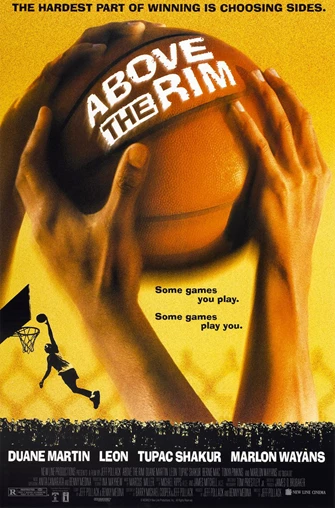
Third is Shep beating Kyle Watson one-on-one in Above the Rim; the deceased-friend subplot prompts a tangent. — Van Lathan
Second is a tie between Yoda teaching Luke at Dagobah and Obi-Wan defeating Anakin in Revenge of the Sith. — Van Lathan
After the rank is clarified as second rather than first, the top slot goes to the park-bench speech in Good Will Hunting, contrasting experience with intelligence. — Van Lathan
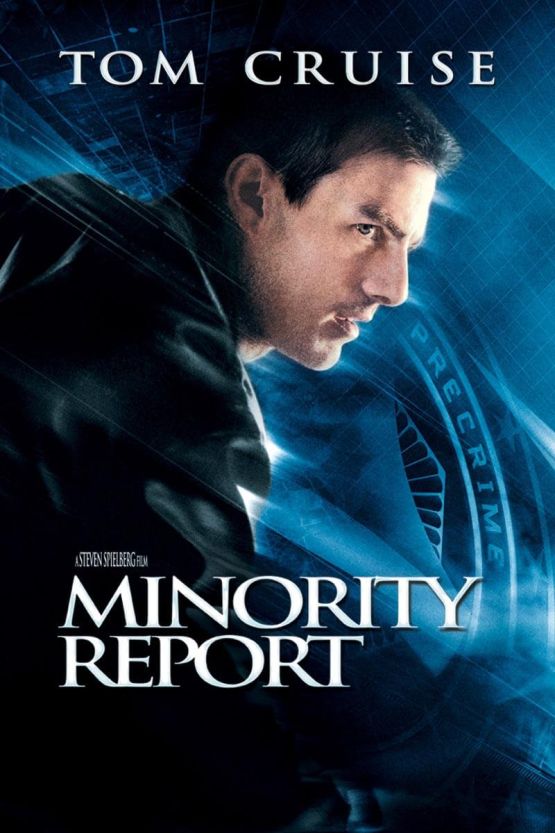
An invited flex asks for the best Philip K. Dick adaptations: Minority Report, Total Recall, A Scanner Darkly, Blade Runner and The Adjustment Bureau are nominated. One ordering begins Blade Runner and Total Recall; another specifies Blade Runner, Minority Report and Total Recall, while Scanner is especially faithful in spirit. — Bill Simmons
The Adjustment Bureau is defended by its proposer but rejected by two responses. Blade Runner is agreed to be best, whereas Total Recall is preferred for desert-island entertainment and rewatchability.
Craig’s flex compares Pete berating the team at halftime to San Diego State’s coach against UNC; the ensuing discussion says SDSU lost by 27 after trailing by about 38. — Bill Simmons
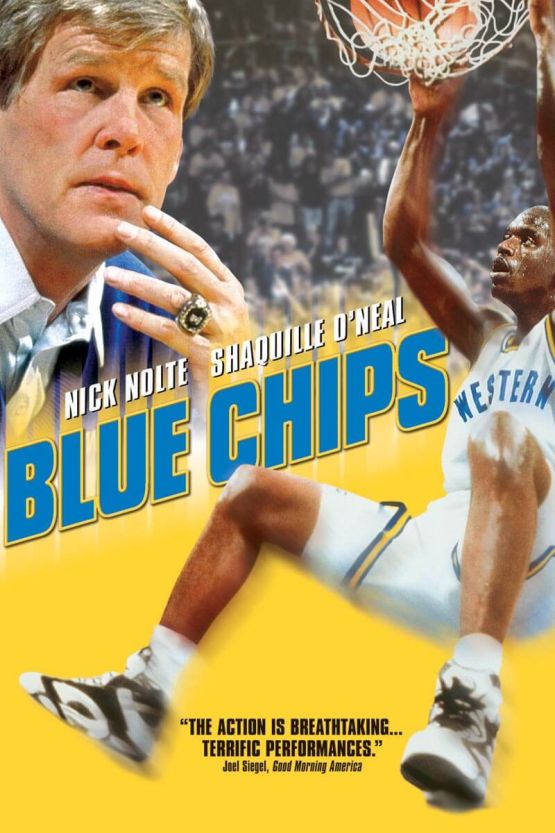
The flex asks for the best starting five from the actual basketball players appearing in the film, clarifying that the players rather than their fictional characters are eligible. — Bill Simmons
An initial lineup includes Shaq, Penny, Bobby Hurley and Calbert Cheaney; Allan Houston joins the core. Pre-accident Hurley is praised, but wanting Penny to handle the ball pushes Hurley out.
The final proposed five is George Lynch, Allan Houston, Penny, Shaq and Calbert Cheaney, with Hurley as sixth man. The lack of a conventional power forward is defended because Shaq anchors the team. — Van Lathan
Ricky is suggested as a floor-spacing reserve; the lineup is criticized for insufficient shooting without Hurley, and Ricky is jokingly called a locker-room liability.
Steven Seagal Hard to Kill Award for needing better intimacy coordinator: first kiss feels mauling, Adrian trapped, phone request refused; saying going to kiss not sufficient freedom to decline.
Zane’s World is reported as an existing parody, featuring Biff Malibu, Tom Byron, Madison and Trixie Tyler. — Bill Simmons
A fourteen-minute plot-only edit with the sex removed is described as unexpectedly entertaining; the Peter North casting question is a joke rather than a reported credit. — Bill Simmons