
‹ All movies
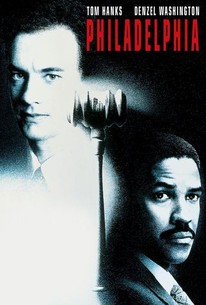
Philadelphia poster

Philadelphia

126 minutes

Cast

Selected cast credits · Film reference

Tom Hanks Andrew Beckett
Denzel Washington Joe Miller
Jason Robards Charles Wheeler
Antonio Banderas Miguel Alvarez
Joanne Woodward Sarah Beckett
Mary Steenburgen Belinda Conine
Ron Vawter Bob Seidman
Robert Ridgely Walter Kenton
Charles Napier Judge Garnett
Roger Corman Mr. Laird
John Bedford Lloyd Matt Beckett
Anna Deavere Smith Anthea Burton
Tracey Walter Librarian
Kathryn Witt Melissa Benedict
Bradley Whitford Jamey Collins
Roberta Maxwell Judge Tate

Philadelphia | The Rewatchables

Explore episodeClose episode
In the discussion (2)
Approx. transcript time · 00:21:50Read transcript
  • Joe’s questions about witnesses’ sexuality are considered provocative and potentially dated. Wesley sees the legal tactic as more daring than the film’s sparse account of Andy’s private life, which mostly gives Miguel caregiving and a past sexual encounter; AIDS discrimination and homophobia become intertwined trial subjects.
  • Weak link: Joe’s aggressive sexuality questions may go too far. His courtroom-world retort prompts a debate over his most characteristic line, with Training Day’s Kong and Malcolm X’s Plymouth Rock alternatives.

Half-Assed Internet Research

Real cases; weight loss; role discomfort; Vawter; military ban; Demme’s friend

In the discussion (2)
Approx. transcript time · 00:28:38Read transcript
  • The film’s 26 million budget, 206.7 million gross and ninth-place 1993 ranking contradict Kramer’s prediction of commercial failure.
  • Research: the story draws on two attorneys’ discrimination cases; Hanks lost 30 pounds; Steenburgen’s personal dislike of the role became a line; Ron Vawter’s HIV status caused insurance difficulty; the party’s military costume references the service ban; a friend’s AIDS diagnosis motivated Demme.

Roger Ebert's review

In the discussion (1)
Approx. transcript time · 00:54:30Read transcript
  • Ebert awarded three-and-a-half stars, praising Hanks and the film’s importance in breaking Hollywood’s silence.

Most Rewatchable Scene

Joe’s family conversation; Andy’s promotion; Dr. J cameo

In the discussion (15)
Approx. transcript time · 00:54:46Read transcript
  • Most Rewatchable Scene: the opening Philadelphia montage and Springsteen song, with documentary-like camera interaction. Chris calls it a possible opening-credits Apex; Bill ranks the song among Springsteen’s best, and Wesley compares the montage to local Action News.
  • The opening direct-to-camera Hanks–Washington confrontation is recalled as a scene nominee.
  • Andy’s brief call to his mother is praised for efficiently revealing illness, severity, openness and her suppressed grief.
  • The senior-associate promotion scene contrasts the old-boys celebration with scrutiny of Andy’s forehead lesion.
  • Andy asking Joe to represent him is praised for Joe’s fearful reaction and attention to touched objects, the firing flashback, and Andy’s devastated stillness after rejection. One host calls it his favorite.
  • The library discrimination scene, with Tracey Walter’s librarian and Joe joining Andy’s legal research, is nominated.
  • Dr.J’s cameo and the partners’ subsequent villainous strategy conversation are nominated; Robards’s full commitment is admired despite caricature.
  • Opening arguments and the courtroom material are praised, especially Steenburgen’s repeated fact formulation and Denzel’s speech.
  • The Maria Callas opera scene is nominated and initially awarded Great Shot Gordo for the overhead camera and red lighting. Wesley objects to red’s association with hell for a gay character; Bill reads passion for life instead.
  • Andy’s testimony about excellent lawyering and justice, the flashback to office jokes, and the attack on his sexual history build to the lesion reveal.
  • The lesion scene is considered manipulative but effective: Wesley weighs its audience and warning function, while Chris sees a strong courtroom tactic. Wheeler’s testimony is another nominee.
  • The hospital farewell, the oxygen-mask gesture, individual family goodbyes and Neil Young ending are praised as exceptionally sad final minutes.
  • Wesley chooses Joe’s private conversation with his wife about gay acquaintances. His confident tirade, apron, bottle and food feel lived-in, and learning his attractive aunt is lesbian punctures his certainty.
  • Chris chooses Andy’s promotion scene for Demme’s unsettling head-on framing and authentic wood-paneled club culture, compared with Trading Places’ banquet sequence.
  • Bill chooses Dr.J’s cameo, with Andy asking Joe to take the case as runner-up.

Apex Mountain

Jonathan Demme; direct-to-camera dialogue; Springsteen in film; evil Robards

In the discussion (4)
Approx. transcript time · 00:54:46Read transcript
  • Most Rewatchable Scene: the opening Philadelphia montage and Springsteen song, with documentary-like camera interaction. Chris calls it a possible opening-credits Apex; Bill ranks the song among Springsteen’s best, and Wesley compares the montage to local Action News.
  • The opening direct-to-camera Hanks–Washington confrontation is recalled as a scene nominee.
  • Apex: Denzel rejected; Hanks’s adjacent early 1990s plateau is discussed with Forrest Gump preferred. Demme is affirmed after comparison with Silence of the Lambs; Banderas’s earlier Spanish/art-house career is preferred.
  • Apex affirms direct-to-camera dialogue, Springsteen’s use in film and evil Robards. Gay 1990s films and Philadelphia films are rejected; cartoon homophobia faces a Talented Mr. Ripley alternative, and the fictional Stallion Showcase prompts a joke rather than a clear award.

The Great Shot Gordo Award for Most Cinematic Shot

Opera scene’s overhead red lighting, disputed

In the discussion (1)
Approx. transcript time · 01:00:44Read transcript
  • The Maria Callas opera scene is nominated and initially awarded Great Shot Gordo for the overhead camera and red lighting. Wesley objects to red’s association with hell for a gay character; Bill reads passion for life instead.

What’s Aged the Best?

Hanks/Banderas; speech; opera aftermath; family; period detail; jury; supporting cast

In the discussion (8)
Approx. transcript time · 01:07:47Read transcript
  • Chris chooses Andy’s promotion scene for Demme’s unsettling head-on framing and authentic wood-paneled club culture, compared with Trading Places’ banquet sequence. Chris Ryan
  • Aged best: Hanks and Banderas’s authentic relationship scenes despite the thin Miguel role; Hanks’s Oscar speech inspiring In & Out.
  • Aged best: the awkward aftermath of the opera scene as Joe leaves rather than a sentimental fade. Wesley questions how much Andy’s solitude is actually shown, again connecting the perspective to Joe.
  • Joe’s hesitation on the stairs after leaving Andy is praised as an actorly moment; possible concern for his vulnerability is offered, while Wesley explicitly denies suggesting a sexual return.
  • Aged best: the family, the reuse of Demme actors such as Charles Napier, Philadelphia’s wealthy-club culture, period fear of lesions, and Andy briefly glimpsing his possible future in a dying patient.
  • Andy’s theater mustache and stubbled baseball-cap appearance prompt appreciation of Hanks’s looks and a teasing callback to Wesley’s earlier celebrity attractiveness opinion.
  • Aged best: jury deliberations reverse expectations about the apparent conservative juror, and the verdict reactions work. Robards’s villain and Joanne Woodward’s mother are praised.
  • Aged best: Springsteen’s award sweep is compared with Carly Simon’s Working Girl song; Robert Ridgely’s presence inevitably recalls his Boogie Nights character.

What’s Aged the Worst?

Excess homophobia scenes; missing relationship/case detail; paralegal testimony

In the discussion (3)
Approx. transcript time · 01:18:49Read transcript
  • Aged worst: three Joe homophobia scenes may be too many; the bar scene is the suggested cut. The pharmacy confrontation is defended as containing lived truth despite the screenplay’s contrivance.
  • Aged worst: cutting Andy–Miguel scenes leaves their relationship thin. The missing-file sabotage and partners’ firing decision are underexplained, weakening the courtroom mechanics even if the broader argument works.
  • Anna Deavere Smith’s paralegal testimony raises racial workplace discomfort but shuts the issue down too quickly; Wesley imagines the fuller response a contemporary playwright could give her.

Casting What-Ifs

Day-Lewis; Keaton; Murray; Williams; Leguizamo; Woods

In the discussion (2)
Approx. transcript time · 01:24:19Read transcript

Picking Nits

Rejected case; theater evidence; thin relationship; perfect family; secretary

In the discussion (3)
Approx. transcript time · 01:30:57Read transcript
  • Nitpicks: why would so many lawyers reject a strong discrimination case, and how did investigators discover Andy’s specific theater visits?
  • Nitpicks: Andy and Miguel lack individual relationship detail; the film seeks tolerance rather than their self-defined humanity. Wesley compares the mechanism with Green Book while distinguishing Philadelphia’s contemporary purpose. The uniformly supportive family lacks tension.
  • Nitpick: Andy’s secretary reacts too casually to locating a crucial document.

Sequel, Prequel, Limited Series, or All-Black Remake

Miguel’s sports bar; Joe Miller legal series

In the discussion (1)
Approx. transcript time · 01:34:21Read transcript
  • Sequel ideas: Miguel uses the award to open a gay sports bar, leading into It’s Always Sunny; more Joe Miller legal cases or a television series are appealing, but reinforce the film’s focus on Joe over Andy.

Probably Unanswerable Questions

November 18, 1992 Sixers–Magic game; Dr. J’s script awareness

In the discussion (2)
Approx. transcript time · 01:36:43Read transcript
  • Unanswerable answered: Bill identifies the filmed Sixers–Magic game as November 18, 1992 by Tim Perry, Greg Kite’s appearances and the halftime scoreboard. Barkley-trade and team-history tangents support his detective work; Wheeler’s enthusiasm for a weak Sixers team remains puzzling.
  • Next day: Joe may become a major Philadelphia lawyer or represent Dr.J. The cameo raises an unanswerable question about whether Erving understood he was seated with villains; Rendell is another local cameo.

More from the conversation

The hosts promote episode videos and a future cold-weather tour; Philadelphia itself is this studio episode’s subject, not a live-tour recording. Chris Ryan and Wesley Morris are introduced as Philadelphia natives.
Approx. transcript time · 00:01:17Read transcript
The 1993 film’s wider 1994 release and Wesley’s return after courtroom month introduce contemporary Premiere and Larry Kramer arguments that Hollywood put unfair commercial responsibility on this rare AIDS film.
Approx. transcript time · 00:03:10Read transcript
Wesley compares praise for Hanks’s supposed bravery playing gay with later reception of Maestro, where acting and artistic choices can be discussed without that same framing.
Approx. transcript time · 00:04:30Read transcript
The film remains unexpectedly rewatchable because of its stars, period specificity and Demme’s direction. Chris recalls intense local excitement around location filming.
Approx. transcript time · 00:06:05Read transcript
Imagined John Waters or Clint Eastwood versions illuminate Demme’s warmth and generosity; Robards’s villain is jokingly compared with Buffalo Bill.
Approx. transcript time · 00:07:42Read transcript
The party atmosphere and direct-to-camera dialogue exemplify Demme’s style. Hanks and Washington’s opening opposing-counsel scene is praised as thrilling movie-star sparring.
Approx. transcript time · 00:09:15Read transcript
The panel wonders whether younger viewers can accept Joe Miller’s transformation despite his initial bigotry. Hanks’s contemporary interview frames the film as a truthful record of America’s 1993 mental habits rather than timeless exemplary behavior.
Approx. transcript time · 00:10:29Read transcript
Bill traces changing representation through Longtime Companion, Magic Johnson’s HIV disclosure, The Crying Game, Philadelphia, And the Band Played On, k.d.lang’s Vanity Fair cover, Six Degrees of Separation, Pedro on The Real World, edited television kisses, Friends, Priscilla and Ellen’s coming out. The chronology is a panel recollection, not independently verified history.
Approx. transcript time · 00:12:54Read transcript
Wesley adds Truth or Dare, independent queer filmmakers, Angels in America and Rent; he especially praises Angels as literature, theater and politics, and brings in Marlon Riggs and Isaac Julien.
Approx. transcript time · 00:14:42Read transcript
House music, RuPaul, Madonna, Mapplethorpe and culture-war debates broaden the early 1990 scontext; the panel criticizes the prior administration’s AIDS response and Hollywood’s delay in making a mainstream film.
Approx. transcript time · 00:15:54Read transcript
Philadelphia is interpreted partly as Demme’s response to Silence of the Lambs criticism and as a commercial version of an already rich queer arts movement. Andy is a mainstream corporate lawyer, not a radical activist, and is open privately while not out at work.
Approx. transcript time · 00:17:44Read transcript
Bill values seeing an ordinary gay relationship represented through Andy and Miguel, which offered him access to a world he had rarely seen onscreen.
Approx. transcript time · 00:19:20Read transcript
Chris places the film alongside local Philadelphia production excitement and digestible mainstream political art. A courtroom drama packages a difficult subject through familiar stars and puts prejudice itself on trial.
Approx. transcript time · 00:20:19Read transcript
A contemporary Premiere story about Six Degrees of Separation quotes Will Smith describing Denzel’s advice to avoid onscreen physical intimacy with men. The panel criticizes that advice and the evasive kiss edit while discussing the era’s career pressures.
Approx. transcript time · 00:25:02Read transcript
Hanks’s later comments about straight actors playing gay roles are quoted; Larry Kramer and Out’s hostile reactions are discussed, including disagreement with factual details in Kramer’s piece.
Approx. transcript time · 00:27:27Read transcript
Wesley contextualizes Kramer’s fury through AIDS activism, ACT UP, his writing and urgent demands for government treatment research; How to Survive a Plague is introduced as a definitive documentary.
Approx. transcript time · 00:28:59Read transcript
Wesley endorses Kramer’s substantive criticism: straight antagonists have fuller personalities than Andy, Miguel and his mother, and makeup can substitute for characterization. His anger is situated in lived activism.
Approx. transcript time · 00:30:26Read transcript
Demme’s eclectic career leads to two defining early 1990 sfilms. The screenwriter’s Terms of Endearment comparison explains seeking a relationship story beyond disease; Bill especially values the family scenes and Chris links their authentic warmth to Rachel Getting Married.
Approx. transcript time · 00:32:53Read transcript
The panel wishes Demme made more films and discusses his influence on Paul Thomas Anderson. Wesley finds Rachel Getting Married too soft and less psychologically complex than it could be, but loves The Truth About Charlie’s playful, international caper approach.
Approx. transcript time · 00:34:49Read transcript
Wesley praises Thandiwe Newton and Kimberly Elise in Beloved and Demme’s actor direction. He wanted more culturally expansive reinterpretations like The Truth About Charlie, while finding Rachel’s multicultural gathering too ornamental.
Approx. transcript time · 00:37:41Read transcript
Bill answers the favorite-Demme question with Silence of the Lambs impressions.
Approx. transcript time · 00:39:26Read transcript
Hanks’s nine-year run from A League of Their Own through Cast Away is celebrated. Sleepless in Seattle plus Philadelphia marks a crucial romantic/commercial and dramatic breakthrough, followed by consecutive Oscars.
Approx. transcript time · 00:39:43Read transcript
Hanks’s star power is seen as essential to financing the film. The era’s conspicuous awards-seeking performances are discussed through Nell, I Am Sam and Tropic Thunder; Jodie Foster’s current television work gets a separate defense.
Approx. transcript time · 00:40:39Read transcript
A League of Their Own is identified as Hanks’s necessary rebound after Bonfire. His imagined rivalry with Michael Keaton prompts disagreement over Pacific Heights and a future Rewatchables joke.
Approx. transcript time · 00:41:57Read transcript
Denzel’s Malcolm X-to-Training Day run is celebrated. Pairing with Roberts in The Pelican Brief and Hanks here is a star-building strategy; the panel then agrees Joe is actually Philadelphia’s lead, as Clarice is in Silence of the Lambs.
Approx. transcript time · 00:43:16Read transcript
Wesley argues the accessible film sincerely helped shift attitudes alongside radical art and other 1990 scultural events. It makes loving a gay son emotionally possible for mainstream audiences, contrasted with Heathers’ satirical treatment.
Approx. transcript time · 00:44:42Read transcript
Joe’s journey offers straight viewers an entry point; Springsteen, the stars and courtroom genre collectively ask them to try understanding. Andy has less independent story, reinforcing Joe as protagonist.
Approx. transcript time · 00:48:10Read transcript
Denzel’s contemporary interview is more cautious: Joe changes only slightly and a movie alone will not transform the world, though he hopes it helps.
Approx. transcript time · 00:50:13Read transcript
Hanks’s Oscar speech is praised for recognizing Denzel’s perceived career risk and partnership; the speech’s influence on In & Out is noted.
Approx. transcript time · 00:50:58Read transcript
Robards’s character Hall of Fame names Ben Bradlee, Charles Wheeler, Howard Hughes, Frank Buckman and Earl Partridge. His authority across patriarchs, editors and villains is celebrated, alongside his stage work and youthful looks.
Approx. transcript time · 00:51:31Read transcript
The panel accepts the strong Best Picture slate but questions Altman’s director nomination over Demme. Hanks and Springsteen’s wins plus screenplay, Neil Young song and makeup nominations are recalled.
Approx. transcript time · 00:53:47Read transcript
Philadelphia-versus-Boston film coverage prompts an informal city-film list and discussion of future live shows and local excitement during Blown Away filming.
Approx. transcript time · 01:42:55Read transcript
Closing plugs mention Wesley’s book and The Watch recaps. Full production credit names Jessie Lopez and Craig Horlbeck; Craig is explicitly absent at Sundance. The cold-weather tour is still upcoming.
Approx. transcript time · 01:44:23Read transcript