
‹ All movies
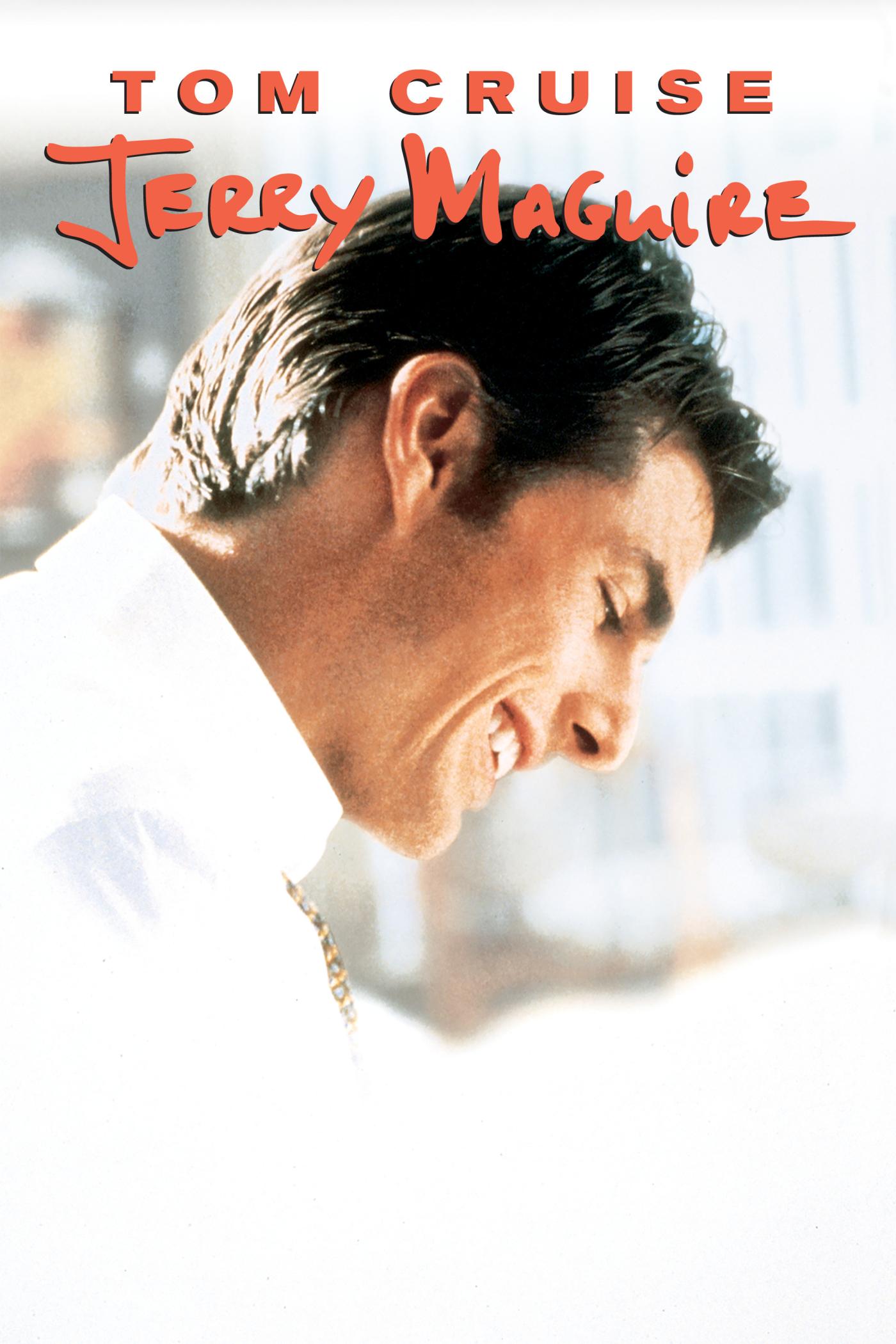
Jerry Maguire poster

Jerry Maguire

135 minutes

Cast

Selected cast credits · Film reference

Tom Cruise Jerry Maguire
Cuba Gooding Jr. Rod Tidwell
Renée Zellweger Dorothy Boyd
Kelly Preston Avery Bishop
Jerry O’Connell Frank Cushman
Jay Mohr Bob Sugar
Regina King Marcee Tidwell
Bonnie Hunt Laurel Boyd
Todd Louiso Chad the nanny

Jerry Maguire | The Rewatchables

Explore episodeClose episode

The Stephen A. Smith Hottest Take Award

Fire Jerry; Sugar is right; cut Dicky Fox; hypothetical threesome and divorce

In the discussion (5)
Approx. transcript time · 00:22:20Read transcript
  • A spouse's hot take rejects Dorothy as implausibly obsessed with a loser; the morning-after declaration of love supplies the example.
  • Reading the full mission statement on Crowe's site produces a hot take that Jerry deserved firing: it offers manic idealism but no practical solutions.
  • A related hot take says Bob Sugar is right because sports agents work in a ruthless business, though the injured athlete's child complicates that defense.
  • Cutting all Dicky Fox scenes is proposed, with objections that his unusual testimonial role is distinctively Crowe; a similar unused Moneyball device is recalled.
  • A speculative hottest take imagines Jerry, Dorothy and Avery having a later threesome that ends the marriage, with seven years proposed as its duration; it is explicitly a hypothetical continuation.

Most Rewatchable Scene

Client-saving phone calls / shower confrontation

In the discussion (13)
Approx. transcript time · 00:44:26Read transcript
  • Jerry's firing lunch and the ensuing fight to save his clients is the first rewatchable-scene nominee; Sugar's confrontation is also proposed for the toe-to-toe award.
  • The competing client calls culminate in Show me the money; Cruise's progression from reluctant participant to desperate commitment is praised as his other lines disappear.
  • Jerry's office exit is treated as a separate scene, including the goldfish, Dorothy joining him and the signed You complete me in the elevator.
  • Jerry discovering that Cush has signed with Sugar is a favorite among the initial nominees; Cruise's restrained anguish, legal pad and inability to say Sugar's name are praised.
  • Jerry getting drunk with Rod at the airport and on the plane is another nominee, before the sunglasses visit to Dorothy. The cloak-of-failure line, the child, Bonnie Hunt and Clarence Thomas joke are highlighted.
  • The shower confrontation is praised for both actors at their best, screaming and Help me help you. Cruise is proposed for overacting but defended as effective because Jerry loses the control established at the start; Kelly Preston is another personal overacting answer. Rod's athlete-not-entertainer stance is considered distinctly of its era.
  • Jerry arriving for the date, the women's group, Dorothy's dress and the Secret Garden hug are scene nominees. Needle-drop choices divide Free Fallin' and Secret Garden, with one vote changing to the latter on seeing the scene.
  • Bonnie Hunt is praised but may appear too much for Dion Waiters. The wedding scene highlights Rod singing Marvin Gaye, Jerry's visibly unhappy video face and Bonnie's warning.
  • The confrontation about Rod playing with his head rather than heart is another scene nominee, ending in I'm all heart; Gooding is praised for going toe to toe with Cruise.
  • Rod's touchdown, dance and postgame press conference are nominated. Cruise reportedly supplied one script note asking where Jerry was during the celebration so he could build toward the ending, leading to his run onto the field.
  • Jerry's return and the You complete me/You had me at hello exchange introduce the final scene nominee.
  • The final reconciliation is proposed for the Rick Dalton best-acting award; Cruise in the shower is another best-acting preference.
  • Final rewatchable-scene votes mostly favor the client-saving phone sequence including Show me the money, with one shower-scene preference. The firing lunch is included in another vote for the client struggle.
In the discussion (3)
Approx. transcript time · 00:49:27Read transcript
  • The shower confrontation is praised for both actors at their best, screaming and Help me help you. Cruise is proposed for overacting but defended as effective because Jerry loses the control established at the start; Kelly Preston is another personal overacting answer. Rod's athlete-not-entertainer stance is considered distinctly of its era.
  • The bachelor-party video feels like a joyless gathering of former partners criticizing Jerry in front of his new fiancée; Cruise's excited arrival is nevertheless praised as overacting.
  • Kelly Preston is the explicit overacting choice while still praised as effective. Cruise singing Free Fallin' is his strongest competing scene; Gooding's heightened work is considered genuine rather than overacting, and Zellweger is comparatively restrained.

What’s Aged the Best?

Character name; human details; NFL economics; quan; soundtrack

In the discussion (11)
Approx. transcript time · 00:58:04Read transcript
  • Jerry Maguire is praised as an excellent character name and title; naming films for protagonists prompts debate about laziness versus the weakness of generic alternatives such as The Fixer or Show Me the Money.
  • Gooding receiving his Oscar from Mira Sorvino is noted because she reportedly lost Dorothy when her agents requested too much money.
  • Ray's Go ahead and go farewell became a long-running family joke; the film's small moments showing mother and son wanting a father figure are praised.
  • Jerry's 1993 Suns–Sonics conference-finals shirt is an aged-best choice and desired item unsuccessfully sought online.
  • Cruise subtly realizing he is being fired when Marcy mentions Sugar calling is an aged-best detail.
  • Starting Jerry's breakdown within six minutes rather than spending a long time showing him as an unpleasant super-agent is praised for creating immediate sympathy while still establishing his commodifying perspective. His voiceover was reportedly recorded during Eyes Wide Shut, sparking uncertainty about late structural changes.
  • A top draft pick controlling his destination and ruthless NFL career-length economics are aged-best choices, with the movie ahead of wider awareness of those issues. Cruise as an intimacy-troubled obsessive also endures.
  • Smaller receivers later succeeding supports Rod's physique; age 35 as a personal reckoning resonates with an anecdote about being told it was time to decide a career.
  • Modern concussion protocols are praised in contrast with the inadequate response to Rod's unconsciousness, including no neck brace and teammates trying to clap him awake.
  • The quan—family, community, money, respect—is an aged-best concept Crowe reportedly expected to dominate the film's legacy. The lightly used divorced-women's group and The Things We Think and Do Not Say memo title are also praised.
  • Rod's family dialogue and game-watching scenes work well. Roy Firestone's tear-inducing interview persona counts as both aged-best and aged-worst, and his show’s role in the old ESPN schedule is recalled. The soundtrack is praised generally.

The Great Shot Gordo Award for Most Cinematic Shot

Airport walkway; water glass; office exit; patio kiss; tunnel run

In the discussion (1)
Approx. transcript time · 01:05:51Read transcript
  • Great-shot nominees include Cruise on the dark airport moving walkway, the sweating water glass during the firing, the frozen office wide shot as Jerry and Dorothy leave, the backlit patio kiss and Jerry running through the tunnel toward Rod.

The Butch’s Girlfriend Award for the Weakest Link in the Film

Rod’s difficulty getting a contract despite elite statistics

In the discussion (2)
Approx. transcript time · 01:10:50Read transcript
  • The difficulty obtaining Rod a contract is the agreed weak link; an alternative plot could distinguish slot work from his desire to play outside and avoid punishing middle-field hits.
  • The casual treatment of concussions is an aged-worst choice, reflecting a 1990s sports culture exemplified by Lindros being expected to return immediately.

What’s Aged the Worst?

Concussions; workplace romance; violence; dated references; sports inaccuracies

In the discussion (13)
Approx. transcript time · 01:11:36Read transcript
  • The casual treatment of concussions is an aged-worst choice, reflecting a 1990s sports culture exemplified by Lindros being expected to return immediately.
  • Dating an employee and waterbed endorsements are aged-worst candidates.
  • Gooding's more recent personal/career history is an aged-worst nomination without specific allegations detailed here.
  • A lengthy mission statement now seems incompatible with short attention spans, although bound printed packets are nostalgically missed.
  • Avery beating Jerry is rejected as domestic violence rather than acceptable comedy.
  • The prohibition on relationships with single mothers is considered outdated, with their agency emphasized.
  • Rod's statistics, the career-ending injury threat in a contract year, and an agent representing athletes across many sports are further dated elements; modern medicine and greater agent specialization are contrasted.
  • Ray's final baseball throw is criticized as physically unconvincing despite the reactions of Jerry and other children.
  • Cushman's throwing mechanics do not resemble an elite quarterback. A Varsity Blues coaching anecdote shows how actors could learn, and his NFL status conflicts with college-branded scouts in Odessa.
  • The bachelor-party video feels like a joyless gathering of former partners criticizing Jerry in front of his new fiancée; Cruise's excited arrival is nevertheless praised as overacting.
  • Mistaking Rod for Hootie and busy telephone lines are aged-worst details. Preston's strong performance is jokingly blamed for her later casting in For Love of the Game, which one speaker dislikes.
  • Rod's brother's jealousy is an aged-worst candidate despite the character's effectiveness; his flooded Arizona room and everyone's non-wheeled luggage are also questioned.
  • An alternate zoo ending is considered poor; the film's eight-pound human-head fact is challenged with an eleven-pound assertion.

Apex Mountain

Gooding; Zellweger; Crowe; Hunt; broadcast trio; Lipnicki; Cruise; bass-fishing accidents

In the discussion (4)
Approx. transcript time · 01:39:32Read transcript
  • Apex choices explicitly affirm Gooding, Crowe, Bonnie Hunt, the Gifford–Michaels–Dierdorf trio, Zellweger and Lipnicki. Crowe versus Almost Famous is debated before the larger hit and creative leverage prevail. Zellweger first faces a Bridget Jones alternative but is later confirmed yes. Jerry O'Connell is only raised, while Mohr gets a tentative maybe.
  • Cruise's 1996 Mission:Impossible/Jerry Maguire combination is affirmed as career Apex despite the objection that audiences chiefly associate him with Maverick. The film demonstrates pure star power through talking, running and emotion rather than an action concept.
  • Mission statements lose to the Unabomber manifesto; sports-agent Apex remains a discussion of Falk/Jordan and Boras rather than a settled Jerry Maguire win.
  • Cruise laughing during sex is proposed without a clear ruling; bass-fishing accidents receive a yes. The Arizona Cardinals are proposed but their later near-Super-Bowl win challenges it. Sad Springsteen needle drops lose to Philadelphia.
In the discussion (1)
Approx. transcript time · 01:44:21Read transcript
  • Cruise is the emphatic Cruise-or-Hanks choice despite Hanks originally being sought; Hanks is considered too old and insufficiently slick for Jerry, with Bonfire of the Vanities a cautionary comparison.

Sequel, Prequel, Limited Series, or All-Black Remake

Tidwells spinoff; Barry Maguire prequel; The Agency sequel

In the discussion (3)
Approx. transcript time · 01:51:32Read transcript
  • Crowe reportedly said in 2021 a continuation should center on Rod and Marcee. A missed late 1990s HBO Tidwells series is proposed as a strong spinoff.
  • A Barry Maguire family-drama prequel would explore Jerry's father and end with his death; another prequel would follow Jerry as a super-agent.
  • The Agency sequel imagines Jerry's renewed ambition, Ray as his protégé, a battle with Sugar for Shohei Ohtani, and a joking twist that Ray has stolen money.
In the discussion (1)
Approx. transcript time · 01:53:54Read transcript
  • Cruise is chosen for the single Oscar instead of repeating Gooding's win; Zellweger and King also now having Oscars makes his lack of one striking.

The Coach Finstock Award for Best Life Lesson

It’s not show friends, it’s show business

In the discussion (1)
Approx. transcript time · 01:59:04Read transcript
  • The life lesson is It's not show friends, it's show business, qualified as practical advice for an agent rather than the movie's broader moral.

Jerry Maguire | The Rewatchables

Explore episodeClose episode

Producer credits not yet identified.

Apex Mountain

Cameron Crowe; Tom Cruise’s movie and 1996 career year; Kelly Preston; Renée Zellweger; Cuba Gooding Jr.; Jonathan Lipnicki; Bonnie Hunt; the performer observed as Jay Moore (probable); Roy Firestone; Jerry O’Connell; Beau Bridges; the Michaels–Deerdorf–Gifford trio; Wayne Fontes

In the discussion (12)
Approx. transcript time · 00:08:29Read transcript
  • Cameron Crow is proposed as peaking here; Almost Famous is countered as his life story and therefore easier material to assemble.
  • This film is proposed as Tom Cruise’s best movie and as the complete Cruise experience; 1996 is accepted as a career year because it also included Mission: Impossible.
  • Kelly Preston, Renee Zellweger, Cuba Gooding Jr., Jonathan Lipnicki, and Bonnie Hunt are all named as peaks.
  • The performer rendered as Jay Moore is treated as a probable peak, with a later agent television show recalled but not named.
  • The performer rendered as Glenn Fry is initially placed above the Eagles and his Miami Vice appearance, then removed after the Miami Vice comparison wins out.
  • Roy Firestone’s Rod Tidwell interview is called his peak.
  • Jerry O'Connell is proposed as peaking here; Stand By Me is raised, but the response prefers his Cush role.
  • The Springsteen soundtrack is nominated over Philadelphia, while the Philadelphia lawyer-office scene is offered as a strong counterexample.
  • Beau Bridges is added as a late-career peak.
  • The Michaels-Deerdorf-Gifford broadcast trio, using the transcript’s observed spelling, and Wayne Fontes’s lobby appearance are added as peaks.
  • Regina King is explicitly rejected as a peak because of better later work.
  • The publisher cameo is considered against the person’s Almost Famous and Perfect appearances without a settled conclusion.

Recasting Couch

Brad Pitt, Kevin Costner, Robert Downey Jr., and an uncertain Frazier reference are considered as alternate Jerry Maguires, with several reservations.

In the discussion (5)
Approx. transcript time · 00:12:27Read transcript
  • The prompt argues that few actors from the prior twenty-five years could have supplied all of Jerry Maguire’s layers.
  • Brad Pitt is considered possible at the time, though the resulting movie would be different and slicker.
  • Kevin Costner is rejected as ultimately too wholesome.
  • Robert Downey Jr. is considered potentially very good in the role, but too effective in the opening and insufficiently wholesome for the ending.
  • The transcript’s uncertain Frazier reference is jokingly considered for Jerry, then preferred as Cush.

Picking Nits

Concussion bookends, Cush’s destination, Rod Tidwell’s contract despite elite statistics, and the Tidwell family’s finances

In the discussion (7)
Approx. transcript time · 00:15:33Read transcript
  • The concussion material is treated as a bookend: the opening hockey player has repeated concussions and Rod Tidwell’s later hit inspires a dark dementia-sequel pitch.
  • Cush’s father wanting Denver is questioned because John Elway remained entrenched, while Arizona is also rejected and Dallas is proposed instead.
  • Rod Tidwell’s requested four-year, ten-million-dollar deal is considered surprisingly small.
  • Tidwell’s stated 1,550 yards and 110 catches are placed between Michael Irvin and Robert Brooks, fifth among the 1995 receiving leaders discussed.
  • A receiver with 110 catches is said to be unlikely to avoid the middle and is described as fitting a short slot-receiver role.
  • Tidwell’s fifth-place statistical comparison makes his inability to secure a contract seem implausible and prompts criticism of Jerry as his agent.
  • The waterbed endorsement, ant-filled house, and seven-person household are cited as signs that Jerry has not secured enough money for Tidwell.

Picking Nits

Jonathan Lipnicki’s throw and Rod Tidwell’s climactic celebration are challenged as implausible sports details.

In the discussion (3)
Approx. transcript time · 00:22:01Read transcript
  • The child’s final throw is described as mechanically terrible despite Jerry treating it as evidence of athletic promise; Tom Cruise’s later throwing form is offered as an explanation.
  • The hallway embrace after a regular-season touchdown is judged disproportionately momentous, even after allowing for a great catch and fear of paralysis.
  • Tidwell’s extended celebration is joked to merit roughly seventy-five yards of penalties, while the concussion is offered as an explanation for his behavior.

Picking Nits

A step-by-step Arizona-to-Los Angeles timeline concludes that Jerry could not reach Dorothy before roughly 1:45 a.m., when the divorce group implausibly remains awake and sober.

In the discussion (3)
Approx. transcript time · 00:30:31Read transcript
  • A 9 p.m. Eastern Monday Night Football start is converted to 7 p.m. in Arizona, followed by the game, interviews, changing, and Jerry and Rod’s exchange.
  • Stadium-to-airport travel, buying a ticket, the flight, and leaving LAX are estimated to put Jerry at Dorothy’s home no earlier than about 1:45 a.m.
  • The divorce group still being awake, sober, and calmly gathered at that hour is called a major problem; dawn or a late Sunday game is suggested as a repair.
In the discussion (5)
Approx. transcript time · 00:48:17Read transcript
  • Jennifer Love Hewitt is proposed and immediately challenged as too young.
  • It is called a very 90s answer.
  • Helen Hunt and a candidate rendered by the transcript as ‘Elizabeth’s true’ are proposed and rejected.
  • Sandra Bullock is strongly endorsed, with Speed and While You Were Sleeping cited as making the timing feel natural.
  • An objection says Dorothy is too small a role for an established movie star and uses Julia Roberts as an example of someone who would not have taken it.

More from the conversation

The archive wrapper says Bill Simmons and Chris Ryan recorded this for the Sports Movie Hall of Fame, calls Jerry Maguire unquestionable for that hall, and reports enough staff votes to place it in the Rewatchables Hall of Fame feed.
Approx. transcript time · 00:00:04Read transcript
The discussion marks the film’s twentieth anniversary and treats it as an early sports-business movie that departs from a traditional Rocky structure.
Approx. transcript time · 00:01:01Read transcript
Jerry Maguire is classified as probably a romantic comedy, while its sports framing, fall from grace, climactic play, and chill scene are used to justify Sports Movie Hall of Fame inclusion.
Approx. transcript time · 00:02:01Read transcript
Replacing Rod Tidwell with a rapper or actor client is proposed as leaving the same basic story, supporting the argument that the sports setting does not determine the plot.
Approx. transcript time · 00:02:27Read transcript
Rod Tidwell is placed on a short list of great sports-movie characters alongside Apollo Creed, Paul Newman’s Slapshot character, Paul Crewe, Crash Davis, and Roy McAvoy.
Approx. transcript time · 00:03:06Read transcript
Cuba Gooding Jr. is praised for going toe-to-toe with Tom Cruise and making their competing energy electrify the film rather than distract from it.
Approx. transcript time · 00:03:42Read transcript
Possible television spinoffs include the Tidwell family, Rod Tidwell alone, Jerry Maguire’s agency world, and the rise and fall of Bob Sugar.
Approx. transcript time · 00:04:25Read transcript
The speakers recall Lee Steinberg as the model for Jerry Maguire, say he was followed around, and mention his later personal problems.
Approx. transcript time · 00:04:52Read transcript
Rod Tidwell is praised as unusual among earlier largely white sports-film heroes and for embodying late-1990s arguments about athlete authenticity, entertainment, hot takes, and hip-hop culture.
Approx. transcript time · 00:04:52Read transcript
Rod’s wife and resentful brother are praised as supporting characters with clearly established identities despite limited screen time.
Approx. transcript time · 00:06:27Read transcript
Cameron Crow’s ability to distinguish small characters is linked to Say Anything..., Singles, Jerry Maguire, and Almost Famous, with Vanilla Sky marking the next turn in his run.
Approx. transcript time · 00:06:33Read transcript
Kelly Preston is praised for looks and performance, while her earlier difficulty finding the right role and the film’s effect on her later career are discussed.
Approx. transcript time · 00:07:07Read transcript
Tom Cruise’s loss to Geoffrey Rush for Shine is described as perhaps his best Oscar chance; Born on the Fourth of July and Magnolia are also considered stronger award performances.
Approx. transcript time · 00:11:40Read transcript
The panel disagrees over whether Cruise sells Jerry’s rock bottom, then argues that he may draw on private demons while remaining unconvincing at playing drunk.
Approx. transcript time · 00:12:27Read transcript
The speakers trace Cruise from A Few Good Men and The Firm through Interview with the Vampire, describe a perceived three-year absence, and compare his Jerry Maguire return to Brad Pitt choosing a star vehicle in Moneyball.
Approx. transcript time · 00:13:46Read transcript
Cush is praised as a memorable minor character, including his self-loathing line and the repeated ‘Cush-lash’ bit.
Approx. transcript time · 00:15:02Read transcript
The opening montage’s supposedly elite young point guard playing outdoors in jeans is called a sign of Cameron Crow’s weak sports knowledge.
Approx. transcript time · 00:15:12Read transcript
Competing futures for Rod Tidwell include divorce, bankruptcy, living with his brother, avoiding Outside the Lines, or instead working on Sunday Countdown and discussing the Cardinals on sports television.
Approx. transcript time · 00:16:01Read transcript
The Michaels–Dierdorf–Gifford broadcast and Wayne Fontes’s appearance are celebrated as unusually memorable cameos.
Approx. transcript time · 00:21:01Read transcript
Jonathan Lipnicki’s performance is praised through the panelists’ children’s reactions, and the possibility that the role expanded after casting is raised.
Approx. transcript time · 00:21:31Read transcript
Lipnicki’s later muscular appearance and MMA interest lead to a tangent about adopting combat sports as a midlife hobby.
Approx. transcript time · 00:22:50Read transcript
Jerry hugging Ray before the date is praised as a compact Crow moment, especially for Renée Zellweger’s reaction and the Springsteen cue.
Approx. transcript time · 00:23:46Read transcript
The film is described as full of crying or near-crying, with Cruise’s locker-room emotion after Tidwell’s catch used as an example.
Approx. transcript time · 00:24:10Read transcript
‘Show me the money’ and ‘you had me at hello’ are remembered as unusually durable 1990s lines, contrasted with the perceived scarcity of recent quotable movie dialogue and the migration of catchphrases to television.
Approx. transcript time · 00:26:11Read transcript
The extended ‘show me the money’ exchange is replayed and praised as funny, energetic, and accessible to children.
Approx. transcript time · 00:27:27Read transcript
The speakers correct their memory: the elevator exchange anticipates the finale, but ‘you complete me’ is Jerry’s line that leads to Dorothy’s ‘you had me at hello.’
Approx. transcript time · 00:29:26Read transcript
A Few Good Men and The Color of Money are preferred when the film is tested as Cruise’s best; Jerry Maguire is still called his best romantic performance, while Eyes Wide Shut is also praised.
Approx. transcript time · 00:34:31Read transcript
The Color of Money is praised for Cruise’s charisma, Paul Newman’s performance, and Richard Price’s screenplay, while its refusal to show the climactic result is a distinct objection.
Approx. transcript time · 00:34:46Read transcript
An Eyes Wide Shut podcast is proposed, then paired jokingly with The Ice Storm.
Approx. transcript time · 00:35:39Read transcript
One four-film Cruise primer consists of A Few Good Men, Jerry Maguire, Top Gun, and Cocktail.
Approx. transcript time · 00:36:30Read transcript
A competing primer begins with The Color of Money, A Few Good Men, and Jerry Maguire, then settles on The Firm; Mission: Impossible, Edge of Tomorrow, and War of the Worlds are discussed as alternatives.
Approx. transcript time · 00:37:15Read transcript
The Firm is praised despite its length and piano score, with its large cast—Wilford Brimley, Hal Holbrook, Gary Busey, Holly Hunter, Gene Hackman, David Strathairn, and Ed Harris—used to illustrate a prestige studio package.
Approx. transcript time · 00:37:42Read transcript
The Firm’s book phenomenon, already-known twist, mafia tax scheme, chase, and the actress rendered as Gene Chirpohorn later appearing on Big Love are discussed.
Approx. transcript time · 00:38:39Read transcript
Risky Business is later preferred to Top Gun as the fourth film in a Cruise primer.
Approx. transcript time · 00:39:35Read transcript
Risky Business is preferred over Top Gun by one speaker, followed by a joke that Cruise was replaced after his earlier, more sexual and nuanced performances.
Approx. transcript time · 00:39:35Read transcript
Asked what Cruise would name as his own best or most entertaining movie, The Last Samurai, Days of Thunder, and A Few Good Men are proposed.
Approx. transcript time · 00:40:45Read transcript
Cruise is praised as an Aaron Sorkin actor, and casting him as Steve Jobs is proposed as an unrealized hypothetical.
Approx. transcript time · 00:41:07Read transcript
A Few Good Men is described as a courtroom drama structured like a sports movie, with Kevin Bacon’s basketball departure preferred among the Noel Wiley, Kiefer Sutherland, and Bacon supporting appearances.
Approx. transcript time · 00:41:38Read transcript
Cruise’s drunk acting is criticized, with his handling of whiskey in A Few Good Men described as especially unconvincing.
Approx. transcript time · 00:41:49Read transcript
A separate survey asks whether Cruise’s characters smoke, use drugs, or drink; Magnolia, Cocktail, Risky Business, and The Color of Money are considered with explicit uncertainty and corrections.
Approx. transcript time · 00:43:15Read transcript
Cruise’s screen running, near-crying technique, and recurring dangerous airplane situations are surveyed across Top Gun, Mission: Impossible, and The Mummy.
Approx. transcript time · 00:43:59Read transcript
Top Gun is challenged for leaving its enemy and geography vague, then Tom Skerritt is preferred to Michael Ironside and discussed as a surrogate father.
Approx. transcript time · 00:44:37Read transcript
Dickie Fox is identified as Jerry’s surrogate-father figure, and Billy Wilder is recalled as Crow’s mentor and intended casting choice.
Approx. transcript time · 00:45:36Read transcript
Jerry Maguire and the film rendered as Tim Cup are linked to a modern sports-film era enabled by the earlier baseball film rendered as Boulderham and Ron Shelton’s other films.
Approx. transcript time · 00:45:50Read transcript
White Men Can’t Jump is called an unquestionable Hall of Fame candidate and an underappreciated best-sports-movie contender, drawing strong disagreement over Wesley Snipes’s basketball ability.
Approx. transcript time · 00:46:10Read transcript
Juliet Litman explicitly joins after the White Men Can’t Jump tangent, and the prior speakers say they saved the Renée Zellweger and romantic-comedy discussion for her.
Approx. transcript time · 00:46:26Read transcript
Dorothy Boyd is placed in a personal top five of romantic-comedy characters; Sally from When Harry Met Sally and Sandra Bullock in While You Were Sleeping are also preferred candidates.
Approx. transcript time · 00:47:22Read transcript
Elizabethtown is cited as a film with the wrong leads, though one speaker doubts it would have been good anyway; the speakers first wonder whether Ashton Kutcher backed out, then settle on the recollection that Cameron Crowe fired him and conclude in retrospect that Crowe perhaps should have kept Kutcher.
Approx. transcript time · 00:47:48Read transcript
Dorothy Boyd’s role is defended through her secret-garden reaction, kitchen declaration, proposal, breakup, and wide range of relationship emotions.
Approx. transcript time · 00:49:31Read transcript
The wedding-video scene and Jerry’s alarmed expression lead to personal stories about the speakers’ own wedding-day appearances and physical discomfort.
Approx. transcript time · 00:50:14Read transcript
The completed wedding video being watched on the wedding night is called implausible.
Approx. transcript time · 00:50:31Read transcript
The divorce group is described as a strange device, with jokes that its members should be drunk, asleep, hostile to Jerry, or warning Dorothy away from him.
Approx. transcript time · 00:51:16Read transcript
The male nanny’s jazz monologue is called extraneous but effective, and the actor is loosely recalled from John Cusack films including High Fidelity.
Approx. transcript time · 00:51:52Read transcript
Cruise is compared to Bruno Mars as a romantic lead whose relationship rhetoric does not feel threatening or emotionally embodied.
Approx. transcript time · 00:52:06Read transcript
Jerry’s eye contact and two-handed handshakes are praised as agent skills, while his mission statement is judged likely to cause a slow workplace exit rather than immediate firing.
Approx. transcript time · 00:53:20Read transcript
The Jerry-Dorothy relationship is judged short on chemistry despite the script acknowledging its speed; Jerry’s relationship with the woman rendered by the transcript as Kelly Price is considered more believable and physically charged.
Approx. transcript time · 00:54:09Read transcript
A present-day series is rejected, then possible continuations involving the established couple’s agency, Rod’s finances and concussions, or an adult Ray breaking an agent’s heart are floated and mostly dismissed.
Approx. transcript time · 00:55:15Read transcript
The final genre vote begins with separate romantic-comedy and sports-movie positions, then accepts that the film can be both; one formulation calls the central romance Jerry and Rod’s.
Approx. transcript time · 00:56:08Read transcript
The romantic-comedy case relies on Rod’s family life: favorite Rod moments involve Marcy, her watching his recovery supplies the emotion, and Rod advises Jerry to tell Dorothy he loves her.
Approx. transcript time · 00:56:19Read transcript
The episode closes by welcoming the film to the Hall of Fame and thanking Chris Ryan and Juliet Litman by name.
Approx. transcript time · 00:57:01Read transcript