‹ All people

Film credit

Jim Carrey

Also referred to as Carrey

Stats

Episodes featuring their films
3
Movies in this archive
3

Rewatchables episodes featuring Jim Carrey’s films

The Truman Show

1998 film

Bill Simmons · Glen Powell · Chris Ryan

Aired November 4, 2025

Dumb and Dumber

1994 film

Bill Simmons · Jennifer Lawrence

Aired June 9, 2023

Displaying all 3 episodes

Mentioned in discussions

The Truman Show

Casting What-Ifs

Jim Carrey took a discount; Samuel L. Jackson was discussed; alternate directors and leads considered.
In the discussion (3)
Approx. transcript time · 01:12:01Read transcript
  • Jim Carrey’s quick acceptance and reduced fee are discussed. — Bill Simmons
  • Samuel L. Jackson is mentioned as someone considered, but the panel doubts the fit. — Bill Simmons
  • The film’s development through other directors and possible stars is discussed as casting history.
Meet the Parents

Half-Assed Internet Research

Original indie film; box office and video; Oscar song; home movies; smoking; De Niro role choice; polygraph; DeHuff; cats; Focker name; set behavior; ratings rule; Litter Kwitter; Polo bankruptcy

In the discussion (18)
Approx. transcript time · 00:24:56Read transcript
  • The film originated with a low-budget 1992 version by Greg Glienna; Universal’s rights purchase reportedly allowed it to suppress that earlier film, which intermittently reappears online. — Bill Simmons
  • Randy Newman’s A Fool in Love received an Original Song Oscar nomination. — Bill Simmons
  • A $55 million budget and roughly $330 million gross are reported; it beat Remember the Titans on opening weekend. — Bill Simmons
  • The film is reported as the seventh-biggest release of 2000; the sequels earned $522.7 million and $310.7 million respectively. — Bill Simmons
  • Video sales reportedly added $200 million in 2001, illustrating the lucrative home-video era. — Bill Simmons
  • Polo’s husband’s home movies were reportedly inserted after test audiences disliked Pam, making her more appealing as a romantic partner. — Bill Simmons
  • Stiller reportedly was not a smoker and felt uncomfortable smoking beside De Niro, whose screen technique he admired. — Bill Simmons
  • Claims that the bomb dialogue was removed from airplane screenings conflict with a recent personal flight viewing that retained it. — Bill Simmons
  • De Niro reportedly turned down Any Given Sunday to make this film. — Bill Simmons
  • De Niro reportedly suggested the polygraph scene. — Bill Simmons
  • Nicole DeHuff, who played Pam’s sister, died at 30 after pneumonia; the diagnosis and sequel timing are discussed with uncertainty. — Bill Simmons
  • Two Himalayan cats, Bailey and Misha, played Jinx, with Misha doing most scenes. — Bill Simmons
  • Jim Carrey reportedly devised the Focker surname. — Bill Simmons
  • De Niro reportedly enjoyed the cat between takes and encouraged more scenes with it. — Bill Simmons
  • De Niro reportedly kept his distance from Stiller to sustain their characters’ unease; Stiller later acknowledged he was not especially nice. — Kyle Brandt
  • The ratings body reportedly required proof of a real Focker surname before permitting it. — Bill Simmons
  • The movie reportedly inspired the successful Litter Kwitter cat toilet-training product. — Bill Simmons
  • Polo’s 2014 bankruptcy filing is mentioned without an explanation. — Bill Simmons
Meet the Parents

Casting What-Ifs

Soderbergh; Spielberg with Carrey and possible Pacino; Myers uncertain; Watts; Walken backup

In the discussion (7)
Approx. transcript time · 00:21:41Read transcript
In the discussion (3)
Approx. transcript time · 00:34:18Read transcript
  • Jim Carrey reportedly passed on Dr. Evil in the original film, prompting a question about why Carvey was not approached and speculation about the pair's relationship. — Bill Simmons
  • Colin Quinn reportedly turned down Scott Evil in the original film; the missed opportunity is noted alongside the earlier Carrey story. — Bill Simmons
  • Rob Lowe reportedly obtained the young Number Two role after doing a Robert Wagner impression while golfing with Myers; knowing Wagner through dating his daughter is offered as background. — Bill Simmons
In the discussion (6)
Approx. transcript time · 00:52:21Read transcript
Dumb and Dumber

Half-Assed Internet Research

Carrey’s tooth, filming sites, ghost story, alternate ending, Eastwood anecdote, improvisation, and watch gag
In the discussion (10)
Approx. transcript time · 00:43:16Read transcript
  • Jim Carrey reportedly removed a cap to expose his childhood-chipped tooth — Bill Simmons
  • The Aspen material was filmed in Breckenridge, Colorado, and Park City, Utah — Bill Simmons
  • The hotel exterior was the Stanley Hotel associated with The Shining — Bill Simmons
  • The haunted hotel room is numbered 217 in the book and 237 in the film — Bill Simmons
  • Carrey reportedly fled room 217 after three hours and has not explained why — Bill Simmons
  • The alternate bikini-model-bus ending is rejected as the wrong ending — Bill Simmons
  • Carrey reportedly refused an alternate ending in which the pair board the bikini-model bus — Bill Simmons
  • Jeff Daniels reportedly learned Clint Eastwood had experienced a similar bathroom-date disaster — Bill Simmons
  • The big gulfs exchange reportedly used nonactors and was improvised — Bill Simmons
  • Lloyd’s watch displays a fake Casino brand rather than Casio — Bill Simmons
Austin Powers: International Man of Mystery

Casting What-Ifs

Jim Carrey as Dr. Evil; Rhea Perlman as Frau Farbissina; Colin Quinn as Scott Evil
In the discussion (5)
Approx. transcript time · 00:20:57Read transcript
  • The hosts report that Myers wanted Jim Carrey to play Dr. Evil, but Carrey was busy finishing Liar Liar, so Myers played it himself. — Sean Fennessey
  • A host reports that Rhea Perlman was in talks to play Frau Farbissina but had scheduling conflicts. — Bill Simmons
  • A host reports that Colin Quinn turned down Scott Evil and has had a lot of regrets since. — Bill Simmons
  • It is hard to imagine Colin Quinn as a young Scott Evil like Seth Green, though his Larry Sanders turn as Artie's disastrous intern son would have fit. — Bill Simmons
  • A host recalls reading an interview, possibly the oral history, with Seth Green describing being in a play when the call for this role came. — Bill Simmons
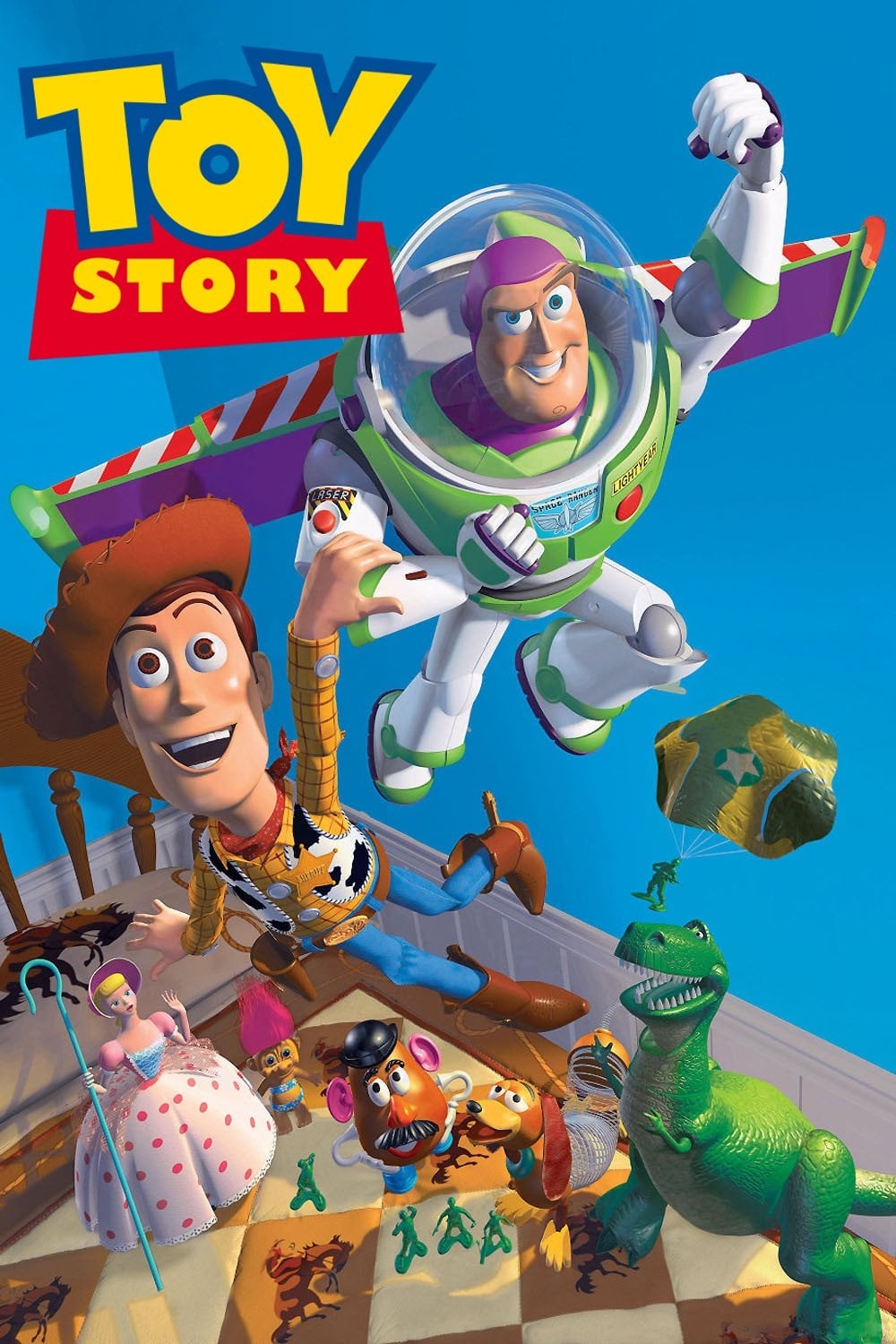
Toy Story The Rewatchables
In the discussion (4)
Approx. transcript time · 01:07:29Read transcript
Toy Story The Rewatchables
In the discussion (12)
Approx. transcript time · 01:01:03Read transcript
Rounders The Rewatchables
Rounders

What’s Aged the Best?

The 'spot the sucker' opening line; the Billions DNA; the Mike McD face; the throwaway poker lingo; Damon and Norton at fun points of their careers; the look and the New York setting; Russians as villains; Teddy KGB's accent; the World Series of Poker ending

In the discussion (14)
Approx. transcript time · 00:25:53Read transcript
  • The first line, 'if you can't spot the sucker in your first half hour at the table then you are the sucker', may not be the greatest opening line in movie history but is one of the most memorable; the hosts want to see that list, which must exist on the internet, and float it as a vacation column.
  • There is Billions DNA in the film: watching Rounders is like watching Tracy McGrady on the Raptors, and the pop culture throwaways such as Buckner going into Shea became signatures of Billions, which also brought in Malkovich in season three.
  • The face Mike McD makes after losing the 30K is one of the best acting moments of Damon's career: the face everyone makes when destroyed in poker or blackjack, the life sinking out of your body; the sports-fan equivalent is the Marco Bellinelli corner three or the Case Keenum pass.
  • Having a big hand cracked while deluded with euphoria is called the most crushing unimportant thing that can happen in life; all the throwaway poker lines have aged beautifully and one host understands the lingo partly because of this movie.
  • Damon and Norton at fun points in their careers: Norton arrives with Primal Fiction (as transcribed), American History X, one of the most interesting performances of the last 25 years, then Rounders and Fight Club; 25th Hour mixes that guy with Worm; also Everyone Says I Love You, a terrible Woody Allen musical, and The People vs. Larry Flint, which has not aged well.
  • The Larry Flint writers, Larry Krasuski and Scott Alexander (as transcribed), also wrote the OJ Ryan Murphy show and Ed Wood and set the template for the clever, controversial biopic, like Man in the Moon, a style that now lives on TV in 13-episode runs.
  • The late-nineties talent cluster: in a fantasy draft Leo, Damon and Norton are the top three or in the top five, with Brad Pitt, Affleck gravitating to popcorn movies, feeder films like School Ties and Dazed and Confused, and Vince Vaughn; weirdly no black actors went to the stratosphere, Halle Berry aside.
  • Clooney, Matthew Perry twenty years ago, Wahlberg after Boogie Nights, Will Smith and Jim Carrey round out one of the best clusters, all 35 and under, compared with the Godfather generation around Brando; these people get credit as movie stars rather than actors, in the era when the Entertainment Weekly cover mattered and Carrey got $20 million a movie.
  • Norton took a left turn after the mid-nineties string: directing Keeping the Faith, which Juliette Littman likes, The Score with De Niro, Death to Smoochie, then 25th Hour, probably his best of the 2000s, and The Illusionist; he never had the Pacino or Gene Hackman career one host wanted, though he may still.
  • Worm is a character unique to Norton, out of the John Cazale 1970s: the lovable scumbag you root for without knowing why, with a little Fredo in him.
  • The movie looks surprisingly cool and undated for 1998 and is a good New York movie that still looks like the New York the hosts remember; the Chesterfield is based on a club called the Mayfair, and one host once played in a private room like it, the film's room being a slightly nicer red leather version of his, with that seedy but exciting feeling.
  • Russians as villains has aged the best: in 1998 the Cold War had ended eight years earlier and Russia was in free fall, but twenty years on Roman, Maurice, Teddy KGB and the underground network are far more believable villains.
  • Forgotten from aged best: Teddy KGB's accent, ridiculous in 1998 and loved in 2018 largely from familiarity; in the theater it was the movie's biggest flaw, a completely unnatural choice in a natural film, but twenty years later it works, is distinct, fun to imitate and almost a parody of bad Russian accents.
  • The ending of Mike McD heading to Vegas and the World Series of Poker makes far more sense now, since within five years that became the dream of basically everyone who played; it could have been aged best too.
Displaying discussions 13 - 24 of 25 in total

Films in the archive