
Film credit
Kurt Russell
Also referred to as Russell, Caruso, Kurt
Stats
- Episodes featuring their films
- 6
- Movies in this archive
- 6
Rewatchables episodes featuring Kurt Russell’s films
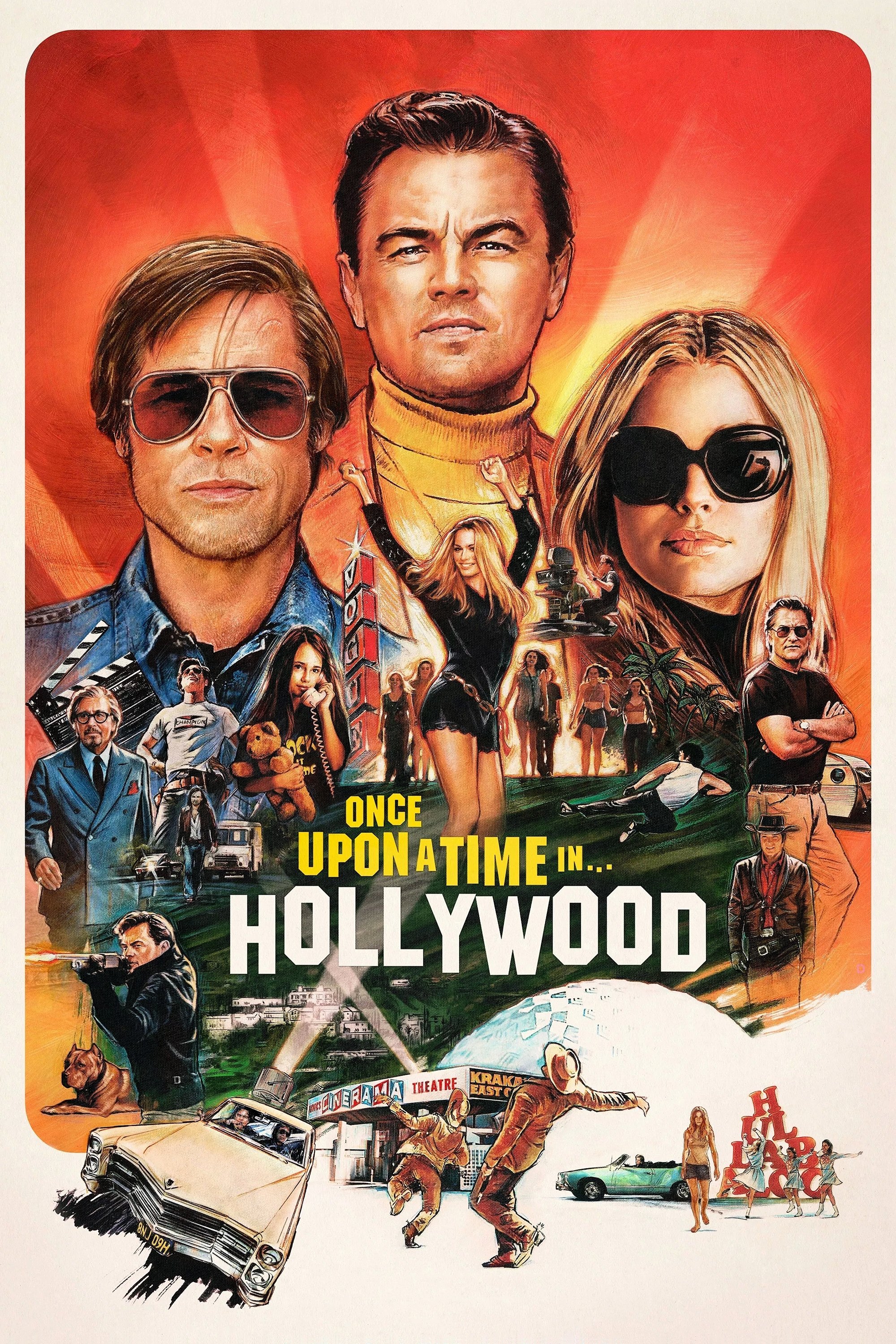
Once Upon a Time in Hollywood
2019 film
Bill Simmons · Sean Fennessey · Chris Ryan
Aired February 6, 2020
Mentioned in discussions


The Neil McCauley “A Book about Metals” Award for Best Line from the Movie
"I never saw a rich man that didn't have a guilty conscience. I already have a guilty conscience. I might as well have the money too"; "I don't think I'll let you arrest us today, B-Han"; "Make no mistake. It's not revenge. she's after. It's the Reckoning"; "Johnny, I apologize. I forgot you were there. You may go now"; "I'm your Huckleberry"
In the discussion (2)
- Nominated: 'I never saw a rich man that didn't have a guilty conscience. I already have a guilty conscience. I might as well have the money too'; the way Kurt Russell tells the sheriff he does not think he will let him arrest them today (the sheriff's name is garbled in the transcript); and 'Make no mistake. It's not revenge. she's after. It's the Reckoning' (as transcribed), which one host applied to a colleague after Grantland was blown away.
- Kilmer's exchange when asked what he is doing this for, answering that Wyatt is his friend, and to 'I got lots of friends' replying 'I don't' as he looks away, is loved; virtually every Kilmer line is good, including 'Johnny, I apologize. I forgot you were there. You may go now', the 'daisy' line (garbled in the transcript) and 'I'm your Huckleberry'.

In the discussion (13)
- Kurt Russell first, with the reminder that the question is the highest point of his career, not the favorite: one case is The Thing in 1982, after Escape from New York and with Silkwood, Swing Shift and Big Trouble in Little China coming; a no is cast because Escape from New York was only later a cult hit, raising whether apex is judged at the time or on reflection.
- Reading about Tombstone makes it sound like Russell was able to finance the movie coming off Backdraft, a relatively big hit he starred in, likened to LeBron in the 2018 Finals; a controversial case is made for Tango and Cash, when after the well-liked Tequila Sunrise with Michelle Pfeiffer a hit with Stallone, an absolutely ridiculous movie only those two could pull off, left him looking like an A plus list star.
- Tango and Cash was not a huge hit, costing $55 million and making $66 million, though $55 million in 1988 is like $160 million today, and it is not that good; the counter is that it opened up Backdraft and his ability to finance Tombstone; the actual answer may be that there was no apex at all, a range of rolling hills, which is what is cool about his career.
- Russell was nominated for Best Supporting Actor for Silkwood, which is why his Apex Mountain is around The Thing in 1982 or 1983, when Escape from New York was becoming a cult movie. — Sean Fennessey
- Whether Russell was ever Oscar-nominated is disputed, Miracle floated and rejected, until the Silkwood nomination is recalled; the host who forgot it concedes, a 180 the others tease.
- Russell could have had a different career as a serious dramatic actor rather than leaning into the masculine hero; he and Harrison Ford are cut from the same cloth, smart throwbacks to Paul Newman charisma, but Ford got two franchises while Russell alternates three good films and three bad; he is also just a good-looking dude, at his most handsome here, a man who should be on a poster.
- Val Kilmer: a no, with Top Gun imagined as his apex, since coming out of it people saw him neck and neck with the star, though another calls that the star's movie and goes Heat, where as De Niro's wingman in the biggest mid-90s movie he is the next wave; his pre-Batman run is traced through True Romance, Tombstone, The Real McCoy, Thunderheart and The Doors.
- 1987 right after Top Gun is floated, when Willow was hopefully going to be his Han Solo and did not work out; one host's personal apex for him is The Doors, where he was out of control, and a Doors rewatchable is wanted, though JFK would have to come first among the Oliver Stone movies.
- Jason Priestley is a thousand-percent yes: 90210 was never bigger, he is in a movie with Kurt Russell and Val Kilmer and has a couple of heat-check scenes, the steepest mountain of all time, very high with a precipitous drop on either side; a caution that a later show (transcribed 'Natuna') was big for three and a half years does not change the view that this literally was his Apex Mountain and his first dabbling in movies.
- Dana Delaney's apex has to be China Beach, which was probably already gone by this point, so she is not a yes; nobody else is proposed except George Cosmatos as ghost director, already covered, with the joke of a Ringer video secretly directed by someone else.
- The late Bill Paxton: this is not a Mount Rushmore Paxton performance next to Aliens, Near Dark, One False Move, Weird Science, True Lies and Twister, though it may be his sweetest spot while figuring out how to be Bill Paxton; in Aliens Sigourney Weaver is the hero but Paxton and Biehn would in any other world have been the stars, and One False Move is incredible though arguably Billy Bob's movie too.
- Twister was Hollywood's first concerted effort to make Paxton a major star, marketed with Helen Hunt and Philip Seymour Hoffman as people who were going to be stars rather than actual stars; the shift from needing a movie star to needing a tornado, meteor or alien invasion is traced to Speed, where Keanu was the guy and Sandra Bullock turned out to be one of the biggest stars of the next twenty years.
- Paxton is one of the all-time great number two or three guys: here he sets picks and makes a couple of corner threes, telling Wyatt he is the one, spits a lot, works the scorer's-table handshakes at the start, and gets the 'hey' when Doc responds to Wyatt's description of his new wife with 'pure as the driven snow'.

Casting What-Ifs
Kevin Costner was to be Wyatt Earp before leaving for Lawrence Kasdan's Wyatt Earp; Richard Gere as Wyatt Earp and Willem Dafoe as Doc Holliday were nearly cast, with Buena Vista vetoing Dafoe over The Last Temptation of Christ; Mickey Rourke turned down Johnny Ringo
In the discussion (4)
- Costner was supposed to be Wyatt Earp; according to Kurt Russell the film was nearly cast with Richard Gere as Wyatt and Willem Dafoe as Doc Holliday, but Buena Vista refused Dafoe as blowback from The Last Temptation of Christ five years earlier; thank God, since Dafoe is a great actor but not Doc Holliday.
- Mickey Rourke was almost cast as Johnny Ringo and turned it down; as good as Biehn is, one host thinks it would have been a cool Rourke role, while another thinks that with Cosmatos coming in amid the turmoil it would have been one too many cooks, Rourke deciding he was really directing the movie and going full iso ball like Carmelo in OKC.
- Production history: Costner was originally involved but disagreed with Kevin Jarr (as transcribed) over the focus, believing the emphasis belonged on Wyatt Earp rather than the many characters; he bowed out and teamed with a then red-hot Lawrence Kasdan on a competing film, Jarr proved a disaster, and this still ended up the better movie.
- Costner was the biggest star in the world then, coming off Dances with Wolves; in a True West magazine interview Russell told of Costner giving his blessing, the host thinking that was because Jarr had written Dances with Wolves, yet blocking any deal except with Disney's adult label Buena Vista, which then had its own say over who could be cast, Costner throwing his weight around.

What’s Aged the Best?
The real mustaches; the loaded cast; Dana Delaney; the 1880s Wild West world-building; the closing credits; the Val Kilmer era; what the film shows of tuberculosis; Joanna Pacula; Billy Bob Thornton
In the discussion (15)
- The mustaches, all real and magnificent: an hour and a half in, one host wonders why nobody wears hats and mustaches now and says producer Craig should have one right now; another cannot grow one, Kurt Russell can grow incredible facial hair, and a Christmas challenge is set to grow a Tombstone mustache or goatee for the fans.
- Powers Booth and Val Kilmer actually have a soul patch with a mustache rather than goatees; the challenged host is in, even though a mustache makes him look like a dirtbag cop from 1974, which is when the challenger feels most like his friend, like being friends with Gene Hackman.
- The crazy loaded cast, already discussed, and Dana Delaney, whose good career felt like it could have been better; a China Beach fan likens her to Carla Gugino, first said as 'Carlo Gugino' and mocked as a Fellini actor and the Godfather toll-booth gunman, as a why-aren't-you-a-bigger-star actress, asking why Demi Moore was so much bigger.
- Delaney had a bigger career than Gugino, whom everyone loves, but should have been an A list star; this was the one time a big movie made her the female lead, Exit to Eden being the joke about where it went wrong, and she remains one host's second-favorite actress in the film.
- The 1880s Wild Wild West world-building: liquor, brothels, gambling, hats and mustaches; the Godfather tone Russell talked about shows in Wyatt moving in, taking over the faro game (transcribed 'Pharaoh') at the Oriental and winning the deeds to mines, a man who stands for law and order screwing people out of things because fame left the Earps with nothing to show for it.
- The film is called the bridge from John Ford Westerns to Deadwood, one of the first Westerns full of people cursing each other out and then shooting somebody in the head; the blood in the Bill Paxton scene and Sam Elliott being told he will never use his arm again were new and intense for a Western.
- The closing credits, four solid minutes of the cast walking in their outfits for no reason like a Vanity Fair photo shoot, are unintentionally funny but cool, compared to a Countdown segment one host once shot with Jalen.
- That era of Val Kilmer, all the way through Heat, is savored like old Fab Five tapes from Michigan: it did not totally work out, but if you could bottle this there was something special, and he really should have been a bigger star.
- Why the film is special: you can watch the other actors recognize what Kilmer is doing and change their performances to elevate his, making themselves more buttoned-down and austere, solid American oak, while he is free jazz, a coughing, sweating, feverish, green Byron or Shelley figure; the Kansas Earps versus Georgia Doc contrast is credited, with colleague Amanda Dobbins invoked as the poetic Georgian, and tuberculosis explaining the rest.
- Kurt Russell's Wyatt is looking for a wife who gets him and stokes his soul, but the real partner is Holliday, from the first 'how the hell are you' line; the friendship is the love story at the center of the movie, an amazing portrayal of it.
- Revisiting the 1993 Best Supporting Actor field (Tommy Lee Jones, DiCaprio, Ralph Fiennes, Malkovich, Pete Postlewaite), it is amazing Kilmer was not nominated, though the category was stacked; Malkovich is good in In the Line of Fire but not as memorable, and with the wished-for five-year Oscar delay Kilmer gets nominated.
- The film was a modest hit that took on a new life: one host is not sure he saw it in theaters despite seeing everything then, another definitely did over Christmas break when movies were the only thing to do, and another watched it maybe 25 times in a friend's basement because it was always on TV.
- The tuberculosis vaccine has aged best, in the sense that the film shows how much having tuberculosis sucked: Doc turns green, coughs blood, is insulted as a 'lunger' by everyone, and keeps smoking and drinking whiskey around the clock until the doctor orders no more whiskey, cigarettes, sex or gambling.
- Joanna Pacula, whose name nobody can pronounce, is the last pick: she was around for a while as a why-not-bigger actress and then just never made it, her credits being Marked for Death (transcribed 'Mark for Death') with Steven Seagal, Tombstone and My Giant; while her credits are looked up, Kilmer's 'I have not even begun to defile myself' is performed, his accent likened to Yosemite Sam reading Oscar Wilde, ridiculous but perfect.
- Asked again later, Billy Bob Thornton is one host's answer; another sticks with the mustaches.

Most Rewatchable Scene
The 'hell's coming with me' scene followed by the killing montage; Wyatt Earp confronting Billy Bob Thornton at the card table; or the stretch from Wyatt Earp, on his horse after Bill Paxton's death, seeing Powers Booth through to the creek
In the discussion (10)
- The nominated choices open with Wyatt Earp confronting a heavier Billy Bob Thornton near the beginning, the 'skin that smoke wagon' exchange played as a clip; Earp completely emasculates him and then tells the bartender he is taking 25% of the house; Thornton's grumbling just before, about playing cards with his brother's kids, is also loved and called a good heat check.
- More nominees: the first OK Corral shootout and Kurt Russell's 'hell's coming with me' speech, played as a clip and followed by a montage of them killing people; the creek shootout, Russell's version of Larry Bird walking on water in the 1987 playoffs; and Kilmer versus Michael Biehn, one-on-one at the end.
- Also proposed, the 'turn your head into a canoe' scene: after the character the hosts call Ben Johnson is killed, Kurt Russell comes out and pistol-whips the shooter, Thomas Hayden Church and the others surround Russell, and Val Kilmer shows up with 'you music lover' and 'I got two guns, one for each of you'.
- The first 'I'm your Huckleberry' is nominated with a clip: Michael Biehn is drunk, some of his buddies already killed, and is trying to challenge Earp when Doc comes from the shadows of the saloon and delivers the famous line; beyond Kilmer, Biehn is called really good, against type, a great villain and a great Johnny Ringo, the real-life figure.
- Biehn is so good that one host went online to research why his career was not bigger: The Terminator, this, Aliens and The Abyss, where he plays one of the crazy Navy SEALs, and then not much, partly because he stopped working with James Cameron, who makes few movies; it is argued he and Michael Rooker have switched parts, since 99 times out of 100 Rooker would play Ringo and Biehn the good guy you are not sure you trust, Rooker playing a lunatic in every movie.
- One favorite is the 'hell's coming with me' scene and the killing montage that follows.
- Asked whether anything else belongs in the pool, the answer is no, those are the big five. — Sean Fennessey
- Another host does add one: the scene at the very beginning when the brothers and their three women get off the train and look at each other in the mirror; nobody goes for the twelve-minute theater sequence, which they would have told George to cut.
- From a channel-flipping standpoint, if the film is on after Bill Paxton dies, with Kurt Russell on his horse pretending to leave and then seeing Powers Booth, one host watches from that point on, knowing he is going to stay and kill everybody and end it in the creek; that is called that host's favorite part.
- Another host's favorite is the Billy Bob scene, and Thornton reportedly improvised all his dialogue, as Kurt Russell told the hosts, though with Thornton that is hard to verify.
In the discussion (4)
- Ebert gave it three stars and really liked it, singling out Val Kilmer's (transcribed 'Valcomer') portrayal as the definitive saloon cowboy of our time; years later he felt a little agonized that he had not fought harder for Tombstone, and Siskel gave it a thumbs down.
- In his review of Kurt Russell's Dark Blue, Ebert wrote that every time he sees Russell or Val Kilmer in a role he is reminded of Tombstone, which got lost in the year-end holiday shuffle and never got the recognition it deserved.
- Ebert is declared to be making a big comeback on the show, lights out over the last eight movies and the greatest pop movie critic in the history of the medium; another voice objects that he was never an underdog and that this framing of him is unfair and weird.
- A further remark concedes Ebert had some bad takes.

Half-Assed Internet Research
Hanks took percentage points instead of a salary and made over $40 million; Jim Hanks doubled in the running scenes; Eric Roth's 2001 sequel script from Gump and Company was dropped after 9/11; what Forrest says when the rally microphone cuts out; Jenny's tombstone birthday is the day of the Trinity test; the run was inspired by Louis Michael Figueroa's 1982 run; the Savannah bench went to the Smithsonian; Bubba Gump has 33 locations; Kurt Russell voiced Elvis; Warner Brothers traded the rights for Executive Decision; a cut scene of Forrest distracting dogs attacking Martin Luther King; Jenny's gift shoes were 1974 Nike Cortez; six Doors songs
In the discussion (10)
- Tom Hanks was not paid for the film but took percentage points and made over 40 million dollars; the film is based on the 1986 novel; Hanks's younger brother Jim Hanks doubled for him in the running scenes, and nobody has heard of Jim Hanks, prompting a joke about parents giving every son a three-letter name.
- Eric Roth wrote a sequel screenplay in 2001 based on Winston Groom's follow-up novel Gump and Company, opening with Forrest on a bench waiting for his son to return from school; after the September 11 attacks, Roth, Zemeckis and Hanks decided the story was no longer relevant. The hosts are glad there is no extended universe and agree a Forrest Gump 2 would have been a big mistake.
- When the microphone cuts out at the Vietnam rally, the lost lines are that sometimes people who go to Vietnam go home to their mamas without any legs, sometimes they don't go home at all, that's a bad thing, and that's all there is to say about that.
- Jenny's birthday on her tombstone, July 16, 1945, is the same day as the Trinity test, the first atomic bomb detonation; whether it was purposeful is left uncertain, someone is working hard on connections, and joke that Jenny was the atomic bomb of Forrest's life.
- The running was inspired by a real event: in 1982 Louis Michael Figueroa, aged sixteen, ran from New Jersey to San Francisco for the American Cancer Society, somehow stretched into three and a half years. The park bench was in Savannah's Chippewa Square and was sent to the Smithsonian; Bubba Gump now has 33 locations including the Santa Monica pier, where one host has never eaten and the other says he is not missing much; Kurt Russell voiced Elvis and famously played Elvis in a John Carpenter movie, and Val Kilmer was the Elvis in True Romance.
- In 1988 Warner Brothers gave up the rights to the film in exchange for the rights to Executive Decision, released in 1996, because the studio felt the project had lost commercial promise after Rain Man; the hosts call it the Harden trade for movies and joke that Steven Adams was thrown in.
- A planned effects shot had Forrest running into Martin Luther King and his supporters and distracting the dogs attacking them by playing fetch; cutting it was a strong edit that probably saved the movie. The hosts also note that Forrest is literally a descendant of the Ku Klux Klan, with the sheet-pulling scene, which would not make a 2018 version, and agree nobody wants Woke Gump.
- The shoes Jenny gives Forrest were Nike's 1974 Cortez running shoes.
- Is wearing replicas of the Cortez shoes right now. — Bill Simmons
- The six Doors songs are Soul Kitchen, Hello I Love You, People Are Strange, Break On Through, Peace Frog and Love Her Madly; Soul Kitchen is liked but the use is obvious, especially in Vietnam. One host is accused of destroying Zemeckis for obvious musical taste while giving Scorsese a pass for Gimme Shelter in seven movies; the reply is that Scorsese's reuse of the same nine Stones songs is annoying but not literal, whereas the songs chosen by Zemeckis are literally about the feeling being conveyed.
Films in the archive

Escape From New York
1981


Furious 7
2015
Miracle
2004
Once Upon a Time in Hollywood
2019

Tango & Cash
1989
Tombstone
1993