
Stats
- Episodes featuring their films
- 12
- Movies in this archive
- 16
Rewatchables episodes featuring Tom Hanks’s films
Forrest Gump
1994 film
Bill Simmons · Chris Ryan · Sean Fennessey · Mallory Rubin
Aired February 13, 2024
Sleepless in Seattle
1993 film
Bill Simmons · Juliet Litman · Amanda Dobbins
Aired February 14, 2023
Mentioned in discussions


Recasting Couch
Matt Damon, too smart; Brad Pitt, who has played the part in seven movies but may be too handsome; Ryan Reynolds, too handsome; a non-jacked Chris Pratt
In the discussion (2)
- Matt Damon would go for it but is too smart and it would not work. Brad Pitt has basically done this part in seven movies and is Forrest Gump, which one host kind of likes, though he might be too handsome and would need a bad haircut; crew-cut Brad Pitt is not as handsome as blonde-haired Brad Pitt.
- Who is the ordinary-guy movie star of the 2000s, since Hanks is the embodiment of the everyman and easier to relate to? Ryan Reynolds is too handsome; Hanks is a regular guy rather than ugly and knows his regular-guy appeal; Chris Pratt has it but is jacked, so a non-jacked Chris Pratt would work. Hanks got skinny for Philadelphia, a good career move.

In the discussion (3)
- Tom Hanks, with no other answer. From a piece one host wrote about Hanks seven years ago: he is in almost every scene and has to play a dimwit in a blatantly manipulative movie without crossing into the Robin Williams zone; Robin Williams as Gump in a Terry Gilliam movie would probably be too funny, and it is interesting he was not considered.
- Hanks has to pull off a crazy accent that should not have worked and is so annoying neither host attempted it; one take is that he does not pull it off and it does not matter. According to the internet research he did not want to go too southern and was pushed to go further, and normal Tom Hanks voice slips out when he finishes assembling his rifle in boot camp and shouts for the drill sergeant.
- He has to pull off the terrible cross-country sequence without making you turn on the movie, make you believe Jenny would want to sleep with him, and believably be a football player, soldier, Vietnam vet, shrimp boat owner and jogger with a heart and soul who is slightly smarter than he lets on, all while you buy the 70 IQ.
Podcast choices
- Speaker not identified
- Tom Hanks
Probably Unanswerable Questions
Why didn't Forrest go pro? Why didn't Forrest catch Jenny's illness? Did Jenny die of AIDS or hepatitis? How many sexual partners did Jenny and Forrest have? Where did the followers go when Forrest stopped running? What does the feather mean?
In the discussion (8)
- Why didn't Forrest Gump go pro? Out of college around 1964 as an all-American kick returner with both the NFL and AFL in business, he got no offer, and he sounds like the perfect Jet a year after they signed Joe Namath. Maybe he was not a good teammate, selfish without knowing better; a scene of teammates taping him to the goalpost is wished for; the leg braces give him a checkered injury history like Michael Porter Jr.; and he joined the military because it sounded like a good idea, so going pro may never have occurred to him.
- Why didn't Forrest catch whatever Jenny had? Maybe they had no sex life when they got back together; the hosts assume she contracted HIV.
- Did Jenny die of AIDS or hepatitis B or C? One host had answered this years ago as a mailbag question: she died in March 1982, nine months after the first recorded AIDS case in the United States, so she would have caught it around 1980 or 1981 while raising her son as a cocktail waitress and presumably off drugs; the film never approaches how.
- A controversial take: she did not have AIDS, she was just sick, probably hepatitis leading to liver cancer; the other buys it, noting she only says 'I'm sick, Forrest' and uses the word virus. Or the filmmakers botched the timeline and should have had her die in 1984. The implied message that drug use and promiscuity lead to AIDS is a weirdly moralizing note in a film that is not otherwise moralizing; the hosts assume an AIDS death is what we are meant to believe and joke about calling Winston Groom.
- How many sexual partners did Jenny Gump have? One host will not put a number on it. Forrest had one, since Jenny was his girl, even as an all-American at Alabama.
- Where did everyone go after Forrest stopped running in Montana or Utah with 150 people behind him, far from a Greyhound station? One thing to respect is that when interviewed he does not invent a reason, he just felt like running, and people follow anyway; LeBron would have played up the narrative.
- Feather interpretations found online: the unbearable lightness of being, which is overreading; Forrest's impaired intellect; the randomness of experience, which one host subscribes to; Hanks interpreted it as destiny defined by how we deal with the chance elements of life, the thing that can land anywhere landing at your feet, with theological implications and the question of planned versus chance. Both hosts settle on that reading.
- Earlier, while listing the American touchstones Forrest brushes against, AIDS is included with the caveat that it cannot be confirmed and is an unanswerable question.

Apex Mountain
Tom Hanks; Gary Sinise; Robin Wright; Michael T. Williamson (as transcribed)
In the discussion (5)
- Tom Hanks with back-to-back Oscars makes the case. One host wonders whether it should be Castaway; the other argues this is his most commercial movie, won his second Oscar and cemented him as the alpha dog in Hollywood, the most bankable actor, who could make any movie he wanted, and it is probably his most iconic performance. A League of Their Own is preferred as funnier but conceded not to be an apex since he had not won an Oscar yet.
- Gary Sinise did ten seasons of CSI New York, and whether this can be topped is left as an open question. One host was never a giant Sinise fan, though he is really good here and creepy in Ransom in a way that made him dislike the man; he is also in The Green Mile, without many great performances, and the verdict is that this is definitely his Apex Mountain.
- Zemeckis is not a yes: Back to the Future, a hundred out of a hundred times. One host had forgotten Zemeckis made Back to the Future and calls himself a dumbass; Who Framed Roger Rabbit is loved and What Lies Beneath is underrated, though not in one household.
- Robin Wright is called her most complete performance with the most to do, unlike The Princess Bride where she is beautiful but barely on screen, and her career apex; the rejoinder is that she did not win the Oscar.
- Michael T. Williamson (as transcribed) is an absolute yes; he had a good hoop show on Showtime, and Chris Ryan only wanted to be on this episode to talk about his performance in Heat.
Half-Assed Internet Research
Hanks took percentage points instead of a salary and made over $40 million; Jim Hanks doubled in the running scenes; Eric Roth's 2001 sequel script from Gump and Company was dropped after 9/11; what Forrest says when the rally microphone cuts out; Jenny's tombstone birthday is the day of the Trinity test; the run was inspired by Louis Michael Figueroa's 1982 run; the Savannah bench went to the Smithsonian; Bubba Gump has 33 locations; Kurt Russell voiced Elvis; Warner Brothers traded the rights for Executive Decision; a cut scene of Forrest distracting dogs attacking Martin Luther King; Jenny's gift shoes were 1974 Nike Cortez; six Doors songs
In the discussion (10)
- Tom Hanks was not paid for the film but took percentage points and made over 40 million dollars; the film is based on the 1986 novel; Hanks's younger brother Jim Hanks doubled for him in the running scenes, and nobody has heard of Jim Hanks, prompting a joke about parents giving every son a three-letter name.
- Eric Roth wrote a sequel screenplay in 2001 based on Winston Groom's follow-up novel Gump and Company, opening with Forrest on a bench waiting for his son to return from school; after the September 11 attacks, Roth, Zemeckis and Hanks decided the story was no longer relevant. The hosts are glad there is no extended universe and agree a Forrest Gump 2 would have been a big mistake.
- When the microphone cuts out at the Vietnam rally, the lost lines are that sometimes people who go to Vietnam go home to their mamas without any legs, sometimes they don't go home at all, that's a bad thing, and that's all there is to say about that.
- Jenny's birthday on her tombstone, July 16, 1945, is the same day as the Trinity test, the first atomic bomb detonation; whether it was purposeful is left uncertain, someone is working hard on connections, and joke that Jenny was the atomic bomb of Forrest's life.
- The running was inspired by a real event: in 1982 Louis Michael Figueroa, aged sixteen, ran from New Jersey to San Francisco for the American Cancer Society, somehow stretched into three and a half years. The park bench was in Savannah's Chippewa Square and was sent to the Smithsonian; Bubba Gump now has 33 locations including the Santa Monica pier, where one host has never eaten and the other says he is not missing much; Kurt Russell voiced Elvis and famously played Elvis in a John Carpenter movie, and Val Kilmer was the Elvis in True Romance.
- In 1988 Warner Brothers gave up the rights to the film in exchange for the rights to Executive Decision, released in 1996, because the studio felt the project had lost commercial promise after Rain Man; the hosts call it the Harden trade for movies and joke that Steven Adams was thrown in.
- A planned effects shot had Forrest running into Martin Luther King and his supporters and distracting the dogs attacking them by playing fetch; cutting it was a strong edit that probably saved the movie. The hosts also note that Forrest is literally a descendant of the Ku Klux Klan, with the sheet-pulling scene, which would not make a 2018 version, and agree nobody wants Woke Gump.
- The shoes Jenny gives Forrest were Nike's 1974 Cortez running shoes.
- Is wearing replicas of the Cortez shoes right now. — Bill Simmons
- The six Doors songs are Soul Kitchen, Hello I Love You, People Are Strange, Break On Through, Peace Frog and Love Her Madly; Soul Kitchen is liked but the use is obvious, especially in Vietnam. One host is accused of destroying Zemeckis for obvious musical taste while giving Scorsese a pass for Gimme Shelter in seven movies; the reply is that Scorsese's reuse of the same nine Stones songs is annoying but not literal, whereas the songs chosen by Zemeckis are literally about the feeling being conveyed.
Casting What-Ifs
Harry Anderson was Zemeckis's first choice for Forrest; Bill Murray, John Travolta and Chevy Chase turned it down; David Alan Greer (as transcribed), Dave Chappelle and Ice Cube turned down Bubba and Tupac auditioned; Jodie Foster, Nicole Kidman and Demi Moore turned down Jenny; Terry Gilliam and Barry Sonnenfield (as transcribed) turned down directing
In the discussion (6)
- Robert Zemeckis's first choice for the title role was Harry Anderson, who was unavailable because of a commitment to Dave's World on CBS. — Sean Fennessey
- The late Harry Anderson as Forrest Gump is dumbfounding; it might have been good but a different, smaller movie, and Anderson was not that famous even then.
- Bill Murray, John Travolta and Chevy Chase turned down Forrest; Travolta has called it one of the biggest regrets of his career. The hosts think Travolta would have been terrible, that he kind of played Forrest Gump in Phenomenon, which one still rides for, and that Michael was him trying to get back to that moment.
- David Alan Greer (as transcribed), Dave Chappelle and Ice Cube turned down Bubba. Ice Cube refused to play an idiot and is literally too smart for the part; Chappelle thought the movie would bomb, regretted it and worked with Hanks four years later on You Got Mail (as transcribed); Tupac auditioned for Bubba, which would not have worked. Bubba's name is Buford Blue.
- Jodie Foster and Nicole Kidman turned down Jenny and both could have been good; Demi Moore also turned it down and would have been too old to pull off the high school and college stretch that Robin Wright managed, with a tangent on when Striptease came out.
- Terry Gilliam and Barry Sonnenfield (as transcribed) turned down directing; Gilliam's version would have been amazing and a lot different. Hanks was probably not the first choice because he was unavailable. Bill Murray would not work: he only played dumb as Carl in Caddyshack, for comedy, and What About Bob is the craziest he has gone.

What’s Aged the Worst?
The soundtrack's obviousness; the CGI, especially John Lennon's mouth; Forrest's mother sleeping with the principal; the three-and-a-half-year run; Bubba; Jenny's journey, defended; Sally Field being only ten years older than Hanks
In the discussion (9)
- The CGI was groundbreaking in 1994 but the Ringer office could do better now, and Jurassic Park a year earlier had much better CGI. John Lennon talking with his mouth moving to different words looks like the Ringer's social videos such as Bill Belichick as Scarface; the ping pong ball, by contrast, looks great.
- Zemeckis and Hanks made a great deal of money from this film and Zemeckis also made Back to the Future, so the hosts ask him to spend 1.5 million on the CGI for a 25th anniversary home release; George Lucas did that with the original Star Wars trilogy and people flipped out, and Star Wars fans are called lunatics, with the producer asked to cut the remark and then told not to.
- Forrest's mother sleeping with the school principal is a delightful scene that has probably aged badly in certain corners.
- Forrest ran for three years, two months, fourteen days and sixteen hours, from July 5, 1976 to September 19, 1979.
- Somebody running for three and a half years is absurd: who was getting his checks from the shrimp company, who ran the bank, who mowed his lawn; the defense is that he was a simple man who did not need possessions. The scene is called absolutely idiotic, nine months would have been fine, no decade exists where anyone would do that, and he does it in the same pair of Nike Cortez.
- The movie is meant to be a parable, but the run is more than ridiculous, one of the few parts that should not make sense on screen. One thing to like is that he breaks out the Castaway beard as foreshadowing, though the makeup is not good; in Castaway it was real, and the lesson was learned.
- Bubba has not aged well, too broad as a character, a second superhero with the same power; the counter is that two undereducated guys with sweethearts underscores the friendship of dumbass soulmates.
- Jenny's journey is a tough thirty-year stretch of a rough home, bad men, coke and heroin, but the film showed many young people the effects of child abuse, an honest if not raw attempt; it is a little facile that everything in her life traces back to her childhood, and unfortunate that everything that happens to Forrest is great and everything that happens to Jenny is bad, yet Robin Wright is so empathetic that the character works and it has not aged poorly.
- Sally Field is only ten years older than Tom Hanks and they co-starred in Punchline ten years earlier, which is obvious when Forrest comes home from Vietnam and she is aged up; it looks like someone twenty years old cancelled at the last second and they had to audible.
In the discussion (2)
- Amanda gives the win to Hanks for an effortless, likable performance that demonstrates his unique appeal even outside his top dramatic tier. — Juliet Litman
- The other ballot says 'I go McRyan' and praises her as winning and charming. — Juliet Litman
Podcast choices


Unintentional Comedy Award
The repeated houseboats and swaggering book-mogul family
In the discussion (4)
- The movie's deliberate humor initially leaves the panel unable to identify unintentional comedy, even in Greg Kinnear's performance. — Juliet Litman
- The father's wife leaving him for the nanny is praised as an intentional joke and explicitly excluded from the award. — Juliet Litman
- The inexplicable recurrence of houseboats in a Tom Hanks–Nora Ephron movie becomes the clearest unintentional-comedy choice. — Amanda Dobbins
- Three book executives behaving like supervillain moguls with matching boats are also treated as ridiculous. — Amanda Dobbins
Apex Mountain
Meg Ryan: yes for one participant; disputed
In the discussion (6)
- Tom Hanks is denied the apex here, although his 1990s streak and the effortlessness of this performance are treated as extraordinary. — Amanda Dobbins
- Nora Ephron is also denied a film apex because When Harry Met Sally had greater impact, even though You've Got Mail is one participant's personal peak and most-quoted Ephron film. — Amanda Dobbins
- Heartburn receives a side case as an underrated Ephron film with funny performances. — Amanda Dobbins
- One participant declares this Meg Ryan's apex because of the drop in her later filmography and how inseparable her performance is from the movie. — Juliet Litman
- The other participant gives Meg Ryan's apex to When Harry Met Sally, favoring its diner-ordering performance as less cutesy and more honest. — Amanda Dobbins
- Carrie Fisher’s performance in When Harry Met Sally is raised as a final apex-side observation. — Juliet Litman

In the discussion (13)
- Dave Chappelle is the first supporting-role candidate. — Juliet Litman
- Parker Posey is presented as a supporting-role candidate. — Amanda Dobbins
- Greg Kinnear is presented as a supporting-role candidate. — Amanda Dobbins
- Heather Burns is presented as a supporting-role candidate. — Juliet Litman
- Steve Zon is presented as a supporting-role candidate. — Juliet Litman
- Dabney Coleman is praised as a supporting-role candidate. — Juliet Litman
- Jean Stapleton is presented as a supporting-role candidate. — Juliet Litman
- Heather Burns is praised in her first film role as an early version of the durable rom-com best-friend performer. — Juliet Litman
- Jean Stapleton's cybersex busy-signal joke is identified as an improvised line. — Juliet Litman
- Parker Posey receives one final pick for making a large impact in limited time and embodying the glamorous 1990s book-editor fantasy. — Juliet Litman
- Posey's sleeping-pill advice at the publishing party is singled out as a perfectly timed supporting moment. — Amanda Dobbins
- Steve Zon receives the other final pick for his sad, unlucky-in-love bookstore employee and the contrast with his role in That Thing You Do. — Amanda Dobbins
- The panel speculates that Hanks and Ephron's working relationship may have helped connect Steve Zon to the earlier Hanks-directed film, but does not establish the casting chain as fact. — Juliet Litman
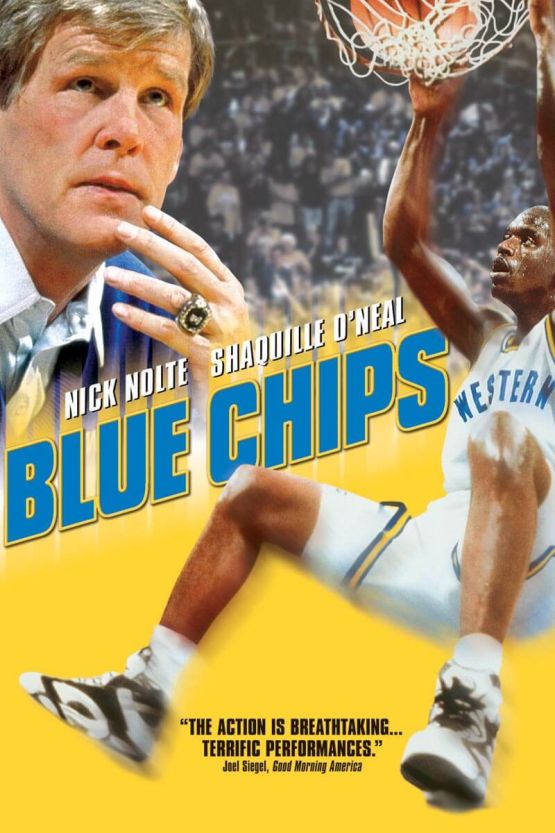

Sequel, Prequel, Limited Series, or All-Black Remake
A contemporary Blue Chips is developed as a streaming series with modern recruiting and booster plots.
In the discussion (8)
- The reboot is proposed as a streaming series that could recruit current young basketball players, including an observed Emmanuel Moodye example, for roles.
- One participant volunteers to play a token white player imagined as Ricky Roe's son.
- Rick Fox's ability to combine basketball, acting, and later television work is treated as a model for current players seeking a second public career.
- A younger coach and an AAU subplot are proposed, with Jamie Foxx as a Shaka Smart-type lead. The scenario is compared to Andy Enfield at U.S.C. and to Shaka Smart moving from VCU to Texas and confronting booster pressure as results worsen.
- A Duke and Olympic-team coaching model is outlined, and Jack Nicholson is separately joked about as Jerry Colangelo.
- A successful Olympic coach who uses those connections in recruiting, hires a previously sanctioned assistant, and has a persistent retirement drama is outlined as another model.
- An uncertain observed Koster or Costa candidate is rejected as insufficiently morally compromised. Alec Baldwin and Michael Douglas follow, but Baldwin is rejected because anything he appears in is said to turn into a sketch rather than a credible performance.
- Paul Giamatti receives a positive response followed by a joking demand to stop selling him. Tom Hanks is proposed as Pete Bell and judged capable of making it a different movie, with A League of Their Own identified as the comparable prior role.
Films in the archive

A League of Their Own
1992



Apollo 13
1995

Bachelor Party
1984

Big
1988
Captain Phillips
2013

Cast Away
2000
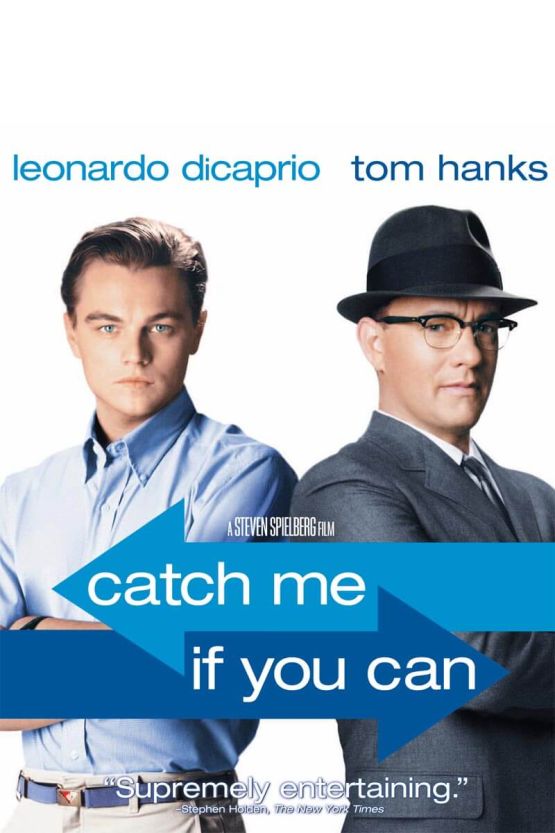
Catch Me If You Can
2002
Forrest Gump
1994
Philadelphia
1993
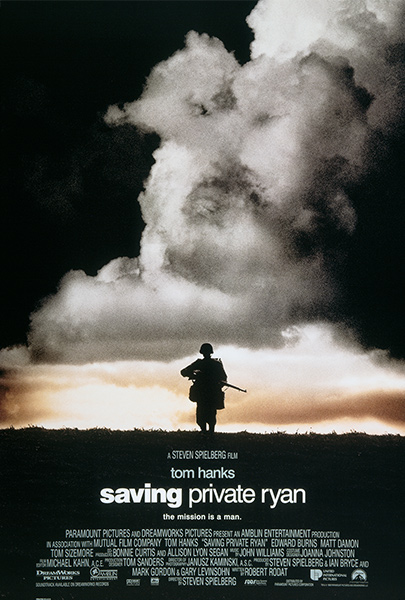
Saving Private Ryan
1998
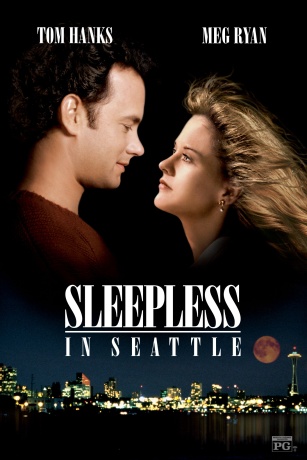
Sleepless in Seattle
1993

Splash
1984