
Film credit
Matt Damon
Also referred to as Damon, Matt David
Stats
- Episodes featuring their films
- 13
- Movies in this archive
- 10
Rewatchables episodes featuring Matt Damon’s films
Mentioned in discussions


What’s Aged the Worst?
Opening background montage; the final rat; Gimme Shelter reuse; blind pocket texting; microprocessors plot device; cocaine opera scene; bad Boston accents; Nicholson's race monologue, dildo and Red Sox hat refusal; confusing final shootout; New York standing in for Boston; nonexistent State House view
In the discussion (19)
- The opening background montage is held for this category: it does not work, feels like a different movie, and could be cut from a two-and-a-half-hour film since a later line does the work. — Bill Simmons
- Nicholson is saved for last; Nicholson running has aged both best and worst.
- The rat is disliked, and the body on the floor in the reverse shot is not Damon; nobody told Scorsese no in 2006, likened to their own Miami Vice pod.
- A requested defense of the rat, not fully believed: in a maximalist movie it is the final maximalist note, meaning corruption rises to the top and betrayal lives on in institutions; the reply is that a cool crime movie does not need a grand statement. — Sean Fennessey
- Flip phones as a central character are listed, but also called a nice time capsule. — Bill Simmons
- Walberg's hair: joking speculation that this was the last movie before he found a hair guy, with a Tom Brady comparison, explicitly labeled speculation; a defense of Irish hair becoming a bouffant applies to the character, not Walberg. — Bill Simmons
- Gimme Shelter used a third time after Goodfellas and Casino, looped three times here; it is defended as an intentional sonic-barrage motif as in Wolf, but his earlier uses were more precise and the song became a cliche and crutch.
- Damon texting blind in his pocket on T9 would never happen with an iPhone.
- The microprocessors plot device is questioned; it should have been a drugs and guns movie, though it may exist to justify FBI interest, as in early The Wire.
- The cocaine opera scene is bonkers with no explanation, possibly Nicholson wanting to have fun, or showing Costello as Satan and a pure hedonist.
- Bad Boston accents: Leo is okay, Baldwin is a Long Island-Boston hybrid; the bad ones include Vera, who abandons hers after an hour, and Martin Sheen, whose lifer character needed it.
- Nicholson items: the race monologue should have been cut, the porn theater dildo is inexplicable, and he refused to wear a Red Sox hat and banned them on set in a Boston gangster movie despite killing people onscreen. — Bill Simmons
- Whether Whitey Bulger wore a Red Sox hat is questioned; Nicholson may wear a Yankee hat in one scene; a joke that someone in Costello's crew would shoot him over it. — Bill Simmons
- Found a photo of Whitey Bulger wearing a Red Sox hat. — Craig Horlbeck
- The shootout that kills Costello is spatially confusing, and some cutting misfires, such as blood exploding from Sheen before he hits the ground. — Chris Ryan
- It is not really Boston: they shot only a couple weeks there, and the Chinatown chase is obviously New York.
- Costello's scheme to confirm Billy is not the rat is unimpressive, a plot flaw. — Sean Fennessey
- John Lennon's "Well Well Well" plays and then Nicholson opens a John Lennon speech, called ridiculous though entertaining. — Sean Fennessey
- The State House view from the condo in the last shot does not exist, since Beacon Hill is surrounded by buildings and trees; tied to an old Blown Away complaint about bastardized Boston geography. — Bill Simmons
In the discussion (10)
- Leo versus Damon as generational rivals, like LeBron and Durant, with Walberg compared to James Hardin and then Anthony Davis; the movie catches both at their peaks. — Bill Simmons
- Leo and Damon reportedly barely saw each other during production, shooting nights and days respectively, like Heat.
- Damon's performance is called underrated: an effortless, unlikable, insecure villain; many of his best roles (School Ties, Ripley, The Informant, early Good Will Hunting) are good jerks.
- Damon versus Walberg for the goat Boston accent in a movie, and Damon wins: here it is the accent of someone trying to hide it while climbing, slipping out in the wrong spots; one participant says he knows nothing about the Boston accent. — Bill Simmons
- Damon's real contempt for firemen, and the credits arriving 18 minutes in. — Bill Simmons
- Baldwin and Wahlberg running SIU with no HR department; questions about why it is state troopers rather than Boston PD, perhaps speaking to trooper incompetence; Baldwin's "go fuck yourself" is great.
- The Nicholson death scene is really good, prompting an impromptu best Nicholson death scene: Cuckoo's Nest, The Shining and Batman join The Departed as a Mount Rushmore; Witches of Eastwick is pitched; The Shining maze death is preferred by one participant. — Bill Simmons
- His shirt reading Irish in the death scene; Nicholson's own choices (the dildo, the cocaine, the opera) suggest he had carte blanche.
- Scorsese officially breaks the record for characters hitting another character over the head with a highball glass, and no bar scene ever works out in a Scorsese movie. — Bill Simmons
- The line to Anthony Anderson that as a black guy in Boston he does not need help to be completely fucked is called a subtle, smart Boston touch. — Bill Simmons

In the discussion (18)
- The first pod handled this category loosely; this time they are doing it correctly, likened to the third Seinfeld plot when they had figured out how to incorporate Elaine, but not really.
- First pick: Walberg's Dignam, with Baldwin, grilling Leo ("lace curtain motherfucker", "double kid", different accents), treated as one long scene that could be watched on YouTube for hours.
- Walberg is really good here even if he dials it up; it is called the second best use of him after Dirk Diggler, and his character makes no sense, which the movie turns into a trick that pays off in the last shot; James Badge Dale's character works similarly.
- The cranberry juice scene, missing from the last episode: Ray Winstone's "guys you can hit" monologue, the bar patron's "natural diuretic" line, and the later Nicholson callback; the sarcastic reaction is called exactly what would happen in a Boston bar. — Bill Simmons
- Borderline pick: Damon's first date with Vera, well written and acted. — Bill Simmons
- Leo meets Costello in the bar: a favorite character introduction via the two middle-aged ladies and "Mr. French", like Satan or Michael Myers arriving, then the back-room scene where the undercover cop's pushback leaves Costello wondering what is wrong with this kid.
- The "spilled guineas" line is called a weird line that got greenlit and the first 35 minutes pretty racist.
- DiCaprio called filming a one-on-one scene with Jack one of the most memorable moments of his life; it is unclear whether he meant the bar scene or the table scene with the drawing and rat noises, which feels improvised.
- The Chinese surveillance scene, picked for Walberg's "I'm the guy who does his job. You must be the other guy," called one of the great movie lines, plus Baldwin fired up about the Patriot Act as a snapshot of the time.
- The driving range scene: Baldwin's theory on marriage and Damon's "working overtime"; the golf swing is bad; the scene is nearly shot for shot from Infernal Affairs, which had no humor.
- The porn theater scene is well constructed, with Nicholson's dildo, leading into the "I got this rat" scene.
- 344 Washington: Sheen falling to his death was shocking in the theater; the van drives over the body and blood spatters Leo; it leads straight to Walberg quitting ("two weeks with pay") and Boggs as Delahunt. — Bill Simmons
- Also listed: Damon calling a dead man's phone, Costello's death scene with Jack running, Mr. French killing himself just before the car blows up, and Leo versus Damon. — Bill Simmons
- Adds the random French and Frank scene about who is reliable, with the cutaway to Frank murdering his wife called anachronistic. — Chris Ryan
- Adds two Madeline and Billy scenes: the first session ("two pills... give me a bottle of scotch and a handgun") and the Comfortably Numb sex scene, one of the very few good love scenes in a Scorsese movie. — Chris Ryan
- Another answer: the movie is most fun when Wahlberg or Baldwin gives someone shit, especially the first Walberg sequence with Leo and Baldwin on the driving range; the rooftop confrontation, triple cross and elevator is the best executed sequence. — Sean Fennessey
- Favorite: Frank meets Billy with the Stones' "Let It Loose" playing; the most enjoyed combination is Sheen falling to his death followed by Walberg quitting.
- The triple shooting is among the best action Scorsese has shot, shock after shock from Anthony Anderson to Barrigan, forcing viewers to reprocess Barrigan as a Costello mole; seeing it next to Tarantino would be even more fun. — Bill Simmons
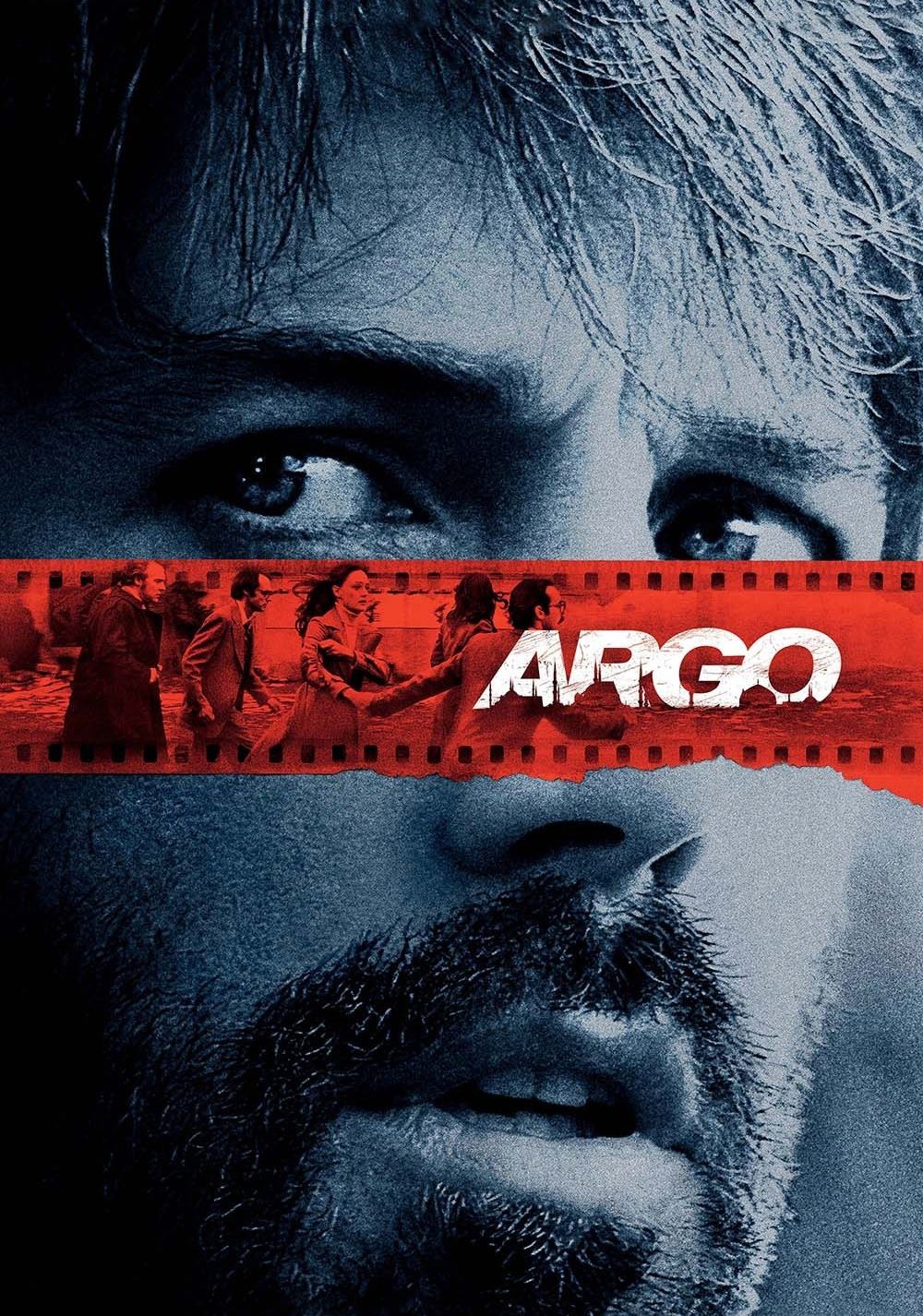

Recasting Couch
Matt Damon, Casey Affleck and Cole Hauser among the Argo Six
In the discussion (4)
- Damon, Casey Affleck and Cole Houser could all have been among the Argo Six regardless of resemblance: Casey Affleck in Denham's spot, Houser with a goofy mustache, and Damon while keeping Scoot McNary. — Bill Simmons
- A sarcastic reply asks why not add Walberg and DiCaprio and the whole Departing cast. — Bill Simmons
- The idea was about the Good Will Hunting crew; at minimum Casey Affleck should have been slid in as one of the six. — Bill Simmons
- Asked "are you with me on that recasting couch," the answer is yes, it is very fun. — Bill Simmons

Casting What-Ifs
Matt Damon or Sean Penn as the narrator; Russell Crowe as Tyler; Janeane Garofalo, Sarah Michelle Gellar, Reese Witherspoon or Courtney Love as Marla; Radiohead score
In the discussion (13)
- The studio wanted Matt Damon or Sean Penn for the narrator while Fincher wanted Norton; Norton was also up for The Talented Mr. Ripley, Man on the Moon and Runaway Jury in a casting merry-go-round. — Bill Simmons
- An alternate universe where Damon does Fight Club and Norton does The Talented Mr. Ripley is fun to imagine, though Damon's Ripley is one of his best roles. — Bill Simmons
- Norton and Damon competed for The Rainmaker, Coppola steered Norton to American History X, and Damon has said he was devastated to miss Primal Fear; Scent of a Woman went to Chris O'Donnell. — Chris Ryan
- Damon brings relatability and Norton a cerebral quality; Damon could have played either part, Pitt only Tyler, and Norton not Tyler. — Chris Ryan
- Leo was a little young post-Titanic but this would have been his dream part a few years later; Pitt's casting works because he is who guys daydreamed of being. — Chris Ryan
- David O. Russell was approached to direct and declined; one producer wanted Russell Crowe as Tyler, but senior producer Linson wanted Pitt. — Bill Simmons
- Crowe was about to go on his Gladiator-Insider-Beautiful Mind run and would have crushed the part with an Aussie hooligan authenticity, though Pitt is still preferred. — Bill Simmons
- Fincher's first choice for Marla was Janine Garofalo; she reportedly accepted, then was dropped as not right for the role at Norton's urging, framed as the birth of the behind-the-scenes Norton monster. — Bill Simmons
- Per Variety, Sarah Michelle Geller was sought but was doing Buffy; the studio wanted Reese Witherspoon, whom Fincher thought too young, and then Courtney Love, who was dating Norton, before landing on Bonham Carter. — Bill Simmons
- Marla is said to have Courtney Love meets Joan Crawford energy, leading to a tangent about loving the band's 90s songs. — Bill Simmons
- Fincher wanted Radiohead to score the film; it would have been eerier and more somber than the Dust Brothers' electronic score, not necessarily better, though the movie needs the Dust Brothers' energy. — Chris Ryan
- Norton worked 129 days on the film, over four months. — Bill Simmons
- Julie Louis Dreyfus and Winona Ryder as Marla candidates from the research are doubted as made-up IMDb trivia. — Bill Simmons

In the discussion (3)
- The first winner response is Matt Damon. — Chris Ryan
- The second participant immediately agrees with Matt Damon. — Chris Ryan
- The panel calls the choice easy and closes after saying the film is a good and great movie. — Chris Ryan
Podcast choices
- Speaker not identified
- Matt Damon
- Speaker not identified
- Matt Damon

Probably Unanswerable Questions
Marie’s hair lengths; Josh Hamilton’s character as Grover from Kicking and Screaming; Matt Damon’s delivery of the profane line
In the discussion (5)
- Both participants prefer Marie's longer hair, although the shorter style is also praised. — Chris Ryan
- The panel asks whether the movie is more fun if Josh Hamilton's character is secretly Grover from Kicking and Screaming. — Chris Ryan
- The imagined story has Grover stay in Europe after heartbreak and take a data-entry job that leads to Conklin. — Chris Ryan
- A later question asks whether Damon is the greatest actor at delivering the words 'fuck it.' — Bill Simmons
- Examples from Rounders and this film lead the panel to answer that Damon probably is the best at that delivery. — Bill Simmons

Apex Mountain
Franka Potente; amnesia; small-car chases; Matt Damon (a qualified case among multiple career peaks)
In the discussion (7)
- The film has a plausible Matt Damon apex case because it turns him into a global action star and supports the next twenty years of his career. — Chris Ryan
- Good Will Hunting and The Martian are acknowledged as competing Damon peaks. — Chris Ryan
- Damon is ultimately described as having multiple Apex Mountains. — Chris Ryan
- Franco Patente receives an unqualified positive verdict. — Bill Simmons
- Amnesia receives a strong case when the forgotten identity turns out to be an elite assassin rather than an ordinary person. — Chris Ryan
- Mekinos receives a direct no verdict. — Chris Ryan
- Small-car chases receive an apex case, with The Italian Job offered as another nominee. — Bill Simmons
Half-Assed Internet Research
Damon's stunts and combat training, the red bag, the death count, Liman's family history, Prague locations, Swiss-bank tropes, and Tony Gilroy's later scripts
In the discussion (13)
- Damon performed many stunts after three months of weapons, boxing, and martial-arts training. — Chris Ryan
- He performed the hand-to-hand combat and climbed the safe-house walls. — Chris Ryan
- The red bag later appears as a hanging planter in Marie's scooter-rental shop. — Chris Ryan
- The panel counts eight deaths in the film. — Chris Ryan
- Liman's father served as chief counsel during the Iran-Contra hearings. — Chris Ryan
- Chris Cooper's character was allegedly modeled on Oliver North because Liman's father interrogated him. — Chris Ryan
- Much of the film was shot in Prague while representing Switzerland and Paris. — Chris Ryan
- The panel questions whether Swiss banks are as anonymous and permissive as movie convention suggests. — Chris Ryan
- Tony Gilroy made a one-draft, no-notes, no-rewrites deal for the third film and was paid an amount Damon called exorbitant. — Chris Ryan
- Damon publicly called that draft unreadable and embarrassing while blaming the studio for accepting the deal. — Chris Ryan
- Gilroy later directed the non-Damon franchise entry. — Bill Simmons
- The panel speculates that making the non-Damon entry helped prompt Damon and Greengrass to return for Jason Bourne. — Bill Simmons
- One participant ranks Identity above Supremacy, Legacy, and Ultimatum despite calling Supremacy technically better made. — Bill Simmons
Recasting Couch
Cole Hauser or Casey Affleck in Clive Owen’s role; Amy Adams or the transcript-observed “Chloe 70” in Julia Stiles’s role; Al Pacino as Conklin
In the discussion (7)
- Cole Houser is proposed as a Damon-connected replacement for Clive Owen. — Chris Ryan
- Casey Affleck is another proposal for Clive Owen's role. — Chris Ryan
- Amy Adams is proposed as a replacement for Julia Stiles. — Chris Ryan
- The Julia Stiles role is described as thankless, which makes it suitable for a stronger alternate performer. — Chris Ryan
- Chloe 70 is the observed transcript form of the preferred alternate for Julia Stiles because the role seems perfect for her. — Chris Ryan
- Al Pacino is proposed as Conklin during the period when his style was becoming self-parody. — Chris Ryan
- Pacino's ability to tackle Henry Rollins in Heat is used to answer concerns about him physically challenging Bourne. — Chris Ryan
Casting What-Ifs
Burt Reynolds was attached to an earlier version; Liman later approached Brad Pitt, Russell Crowe, Arnold Schwarzenegger, Tom Cruise, Sylvester Stallone, and Sarah Polley before the final casting.
This discussion recalls a choice from an earlier episode.
In the discussion (10)
- Universal planned a 1983 version starring Bert Reynolds, but schedule conflicts stalled it. — Chris Ryan
- Doug Liman pursued Brad Pitt, who chose Spy Game instead. — Chris Ryan
- The panel calls Pitt's decision a missed franchise opportunity while acknowledging that his later life and career worked out. — Chris Ryan
- Russell Crowe was approached after Gladiator. — Chris Ryan
- The panel prefers Damon's everyman quality to Crowe's post-Gladiator superhero stature for Bourne. — Chris Ryan
- Arnold Schwarzenegger was approached. — Chris Ryan
- The panel finds Schwarzenegger hard to imagine in the role because of his age. — Chris Ryan
- Tom Cruise declined because he already played Ethan Hunt. — Chris Ryan
- Sylvester Stallone was reportedly considered because the book version of Bourne is older. — Chris Ryan
- Sarah Polley was Liman's preferred female lead, but her career choices favored smaller work and directing over a-list fame. — Chris Ryan

What’s Aged the Best?
Amnesia, the soundtrack, the European setting, preserving Bourne for sequels, and the authentic Bourne-Marie romance
In the discussion (11)
- The implanted safe-deposit number and Marseille fishing-boat rescue remain instantly compelling spy-story devices. — Chris Ryan
- The panel says amnesia always works and is still waiting for an amnesia movie that fails to use it well. — Chris Ryan
- The soundtrack is liked even while being recognized as strongly tied to the late-1990s and early-2000s period. — Chris Ryan
- Moby's closing song is treated as a crucial period action-movie choice. — Chris Ryan
- Mykonos is praised as a beautiful final destination that makes viewers imagine living there. — Chris Ryan
- Damon and Liman deciding not to kill Bourne is praised because it made four later sequels possible. — Chris Ryan
- The romance between Bourne and Marie is considered a central strength of the film. — Bill Simmons
- The hair-dyeing scene feels specific and lived-in enough to make the relationship authentic. — Bill Simmons
- Marie repeatedly looks at Bourne with visible but understated affection. — Bill Simmons
- Her decision not to leave when Bourne offers an exit shows that she has chosen to help him. — Bill Simmons
- Bourne tells Marie he will take her wherever she wants to go, but it has to be together. — Bill Simmons
Films in the archive
Contagion
2011



Good Will Hunting
1997

Ocean's Twelve
2004
Rounders
1998
Saving Private Ryan
1998
School Ties
1992
The Bourne Identity
2002
The Departed
2006

The Martian
2015
The Talented Mr. Ripley
1999