
‹ All movies

The Mark Hanna lunch with McConaughey

Before the category begins, the McConaughey sequence meeting Mark Hanna is flagged as the thesis statement of the movie: you are here to rob people and do cocaine while you do it; the body is a vessel for making money, jerking off and coke, and a wide-eyed 22-year-old from Queens with two accountant parents watching Hanna hoover martinis on a Monday morning could decide that is the lifestyle he wants.

The purpose of the Hanna sequence is pinned to the moment Leo's character offers that everybody wins if the clients make money and Hanna's answer is simply no: every warrior for himself, the thesis in the second paragraph.

"I myself jerk off at least twice a day"

About 1200 words of quotes were pasted but it will not go on too long; the entire McConaughey jerking-off speech is the quote, played as a clip, 'feed the geese' and 'mustard shit' included; it is loved because it is a fake Robert Downey Jr. performance, free-associative, hyper-intelligent but completely illogical word vomit.

The film

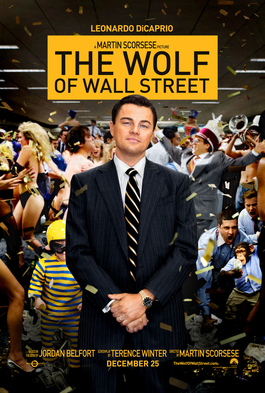
The Wolf of Wall Street (2013)

Directed by Martin Scorsese · Drama

179 minutes

Cast

Selected cast credits · Film reference

Leonardo DiCaprio Jordan Belfort
Jonah Hill Donnie Azoff [ a ]
Margot Robbie Naomi Lapaglia [ b ]
Matthew McConaughey Mark Hanna
Kyle Chandler FBI Agent Patrick Denham
Rob Reiner Max Belfort
Jon Bernthal Brad Bodnick
Jon Favreau Manny Riskin [ c ]
Jean Dujardin Jean-Jacques Saurel
Joanna Lumley Aunt Emma
Cristin Milioti Teresa Petrillo [ d ]
Christine Ebersole Leah Belfort
Shea Whigham Captain Ted Beecham
Katarina Čas Chantalle
P. J. Byrne Nicky Koskoff ("Rugrat")
Kenneth Choi Chester Ming ("Depraved Chinaman")
Brian Sacca Robbie Feinberg ("Pinhead")
Henry Zebrowski Alden Kupferberg ("Sea Otter")
Ethan Suplee Toby Welch
Sandra Nelson Aliyah Farran ( Forbes Reporter)
Aya Cash Janet

Everything from the episode

In the order the hosts got to it. Open a row for the discussion.

27:24

Most Rewatchable Scene

The Mark Hanna lunch with McConaughey

The Mark Hanna lunch with McConaughey

In the discussion (20)
Approx. transcript time · 00:27:24Read transcript
  • Before the category begins, the McConaughey sequence meeting Mark Hanna is flagged as the thesis statement of the movie: you are here to rob people and do cocaine while you do it; the body is a vessel for making money, jerking off and coke, and a wide-eyed 22-year-old from Queens with two accountant parents watching Hanna hoover martinis on a Monday morning could decide that is the lifestyle he wants.
  • The purpose of the Hanna sequence is pinned to the moment Leo's character offers that everybody wins if the clients make money and Hanna's answer is simply no: every warrior for himself, the thesis in the second paragraph.
  • The opening, the life of Jordan Belfort with the unreliable narrator, the $49 million a year line and the car flipping from red to white in real time, shows a character at the prime of his life right as the fall is about to come, with Scorsese breaking his own rules; the fourth-wall breaks are never used in a moral way and the film never slows down to judge the characters or let the audience feel better than them.
  • The Mark Hanna lunch clip is played; McConaughey's four minutes are called the reconnaissance for his comeback between Dallas Buyers Club and True Detective, with the Hanna character and the hair having as much to do with it as the dialogue, which is so eighties and unbelievably bad; an ESPN-era interview anecdote recalls him answering a question about Interstellar by saying he needs a little freedom to do what needs to be done; the chest-beating was his warm-up that Scorsese and DiCaprio told him to keep, and it is good that the character never returns because it is unsustainable.
  • McConaughey is an amazing physical actor here, throwing his arms down in a thrust before lunch and peering in like a college football coach racing down the sideline; you can imagine him giving the masturbation speech at a bar in real life, and the 'all mustard up here' line gets quoted.
  • Donnie Azoff in the diner, 'show me a pay stub for $72,000' and quitting his job on the phone, reads as very Long Island, a wealthy guy weirdly having breakfast at a diner; the early run of back-to-back scenes, Donnie, Hanna, Spike Jonze, is remarkable in itself.
  • Jonah introduces the grotesque with the capped teeth and the shirt patterns, trading his life for a pay stub; the character should not work, marrying his cousin, selling children's furniture, smoking crack days after meeting someone, yet the bond between two weird animals is bought; the objection that DiCaprio would never hang out with him is answered with the cousin Greg Succession theory, that he should not be in the room but every Greg scene is funny, and these are guys who make bad decisions, like Charles Schwab needing a guy for the garage.
  • Meeting the Duchess of Bay Ridge: Margot Robbie was a lightning bolt, an Australian reportedly 23 at the time with some dispute about her real age, introduced as Jordan's dream girl coming out of the beach-house party with the douchebag boyfriend Blair and the jet-ski comeback.
  • The smokestack lightning bacchanalia, the office party with the marching band, throwing the little people, the head shaving and the strippers, is one of the most ecstatic pieces of filmmaking ever; then an old blues song with echo comes in, the lighting goes dark and strobe, and you realize they have created hell on earth and are demons who love it; the camera moves in on a despairing DiCaprio walking off the stage, a subtle moment beside the later aside about the man who married the woman they double-teamed and killed himself; the first impression was that it was too much, Braveheart lines of strippers advancing.
  • The research indicates the party combines things that did not all happen at once, and the absurdity is the point; a nitpick is raised that the film is over-scored, with too much music and a blues-to-eighties-to-Foo-Fighters run whose years do not add up; the defense is that the soundtrack runs the whole arc of pop music out of chronological order, with Robbie Robertson in Scorsese's ear, so that the music is about overconsumption like the movie, and its radio-dial flipping feels true to a coked-out perception, as opposed to the perfectly aligned Talking Heads cue in Wall Street.
  • The Steve Madden IPO speech, 'my killers, my warriors, my telephone terrorists', with Madden bombing and being thrown out; Madden is played by Jake Hoffman, Dustin Hoffman's son; the bachelor party and wedding dance is now a famous GIF and Leo is a genuinely impressive dancer, which drifts into public Leo with the dad bod, super soakers, the Vans and calf socks and the choice of college hat.
  • 'Daddy doesn't get to touch mommy' is a good scene nobody puts on YouTube, and it apparently really happened, including Rocco watching; after the movie came out every NBA player followed Robbie on Instagram, the entire Central Division, with Hibbert still in the game, a pivot from the Christina Hendricks era.
  • Jordan invites the FBI onto his yacht, then 'I'm not leaving' is the clubhouse favorite, one of the more rewatchable scenes in any movie of the last decade, simultaneously disgusting and beautiful; the mid-speech realization that he cannot leave is the most honest part of the movie; it is the Field of Dreams heartstring moment that is also the most self-aggrandizing garbage of all time, since he forces Kimmy Belzer to tell a room of screaming dudes how much money he gave her; Aya Cash's snapping character is not meant to be liked, like nobody in the film.
  • The Lemon Quaaludes are still aging and have lost their potency; the hosts wonder whether a thriving lude community exists on the dark web, compare the finite supply to Honus Wagner cards and ask whether Gretzky has one.
  • The Naomi yacht capsizing is arguably the best scene, really fun and also true, as is the plane crash; 'I will not die sober' and getting the ludes while the boat goes down; the ultimate wake-up call compared to a country-club DUI; then the sober-at-the-pool scene with Donnie and the ankle bracelet and the O'Doul's exchange, some of the funniest writing in the movie, with 'it sucks, man' played as a clip.
  • Spike Jonze at the investor center selling AeroTine (as transcribed), two brothers making radar detectors or maybe microwaves out of a garage in Dubuque with their mom Dorothy answering the main line, six cents a share, and the cutaway to the shed.
  • The Stratton Oakmont cold-call script with Moby Dick and the harpoon, and everyone yelling about who Captain Ahab is, played as a clip; right before the boat leaves, finding out Aunt Emma is dead while freaking out about his money is loved too.
  • The Spike Jonze scene is perfectly executed: he gets the company name wrong, does not know whether it is microwaves or radar, knows what a clown he is, and the 'if you sell ten thousand dollars of stock I'll blow you' line; DiCaprio's reaction shows the difference between a good and a great actor; dudes eat pizza, a guy screams in a sweatsuit and the bathroom opens straight into the office; the cross-cutting between brokers delivering Jordan's script, his gestures on the answering machine, the 'vice president of Stratton Oakmont' walk-throughs and the later SEC interrogation montage are also singled out.
  • A correction for the sticklers: the plane that came to pick him up exploded a couple of days later, not in the same moment, and the real sinking is even crazier than the movie; listeners should tweet thanks to Russillo for getting it right.
  • The final pick: one host argues McConaughey should be ineligible like Shack (as transcribed) in early fantasy basketball because the Hanna lunch is the clear runaway; another narrows it to the lunch, the Lemon Ludes and 'I'm not leaving' and goes with 'I'm not leaving'; a third goes with McConaughey after watching the scene fifteen times that week, so the Hanna lunch takes it two to one.
57:10

What’s Aged the Best?

The theme of wealth as an incurable pox; the narrated asides; the idea that not having wealth is also unacceptable; t...

The theme of wealth as an incurable pox; the narrated asides; the idea that not having wealth is also unacceptable; the soundtrack (disputed); the unreliable narration and fourth-wall breaking; Margot Robbie

In the discussion (10)
Approx. transcript time · 00:57:10Read transcript
  • The serious opener: the theme of wealth as an incurable pox that destroys life from the inside out, or at least that being motivated only by money is aging well.
  • The asides age best: the man who married the girl they had all had their way with and then killed himself; Brad's heart attack at 35, just like Mozart; the financial explanations Jordan yada-yadas because you don't give a shit, which recalls the way Trump talks, with a bragging flourish at the end telling you that you are too stupid to need to know, an attitude that has clearly resonated.
  • Related is the idea that not having wealth is also unacceptable, seen when Kyle Chandler sits on the subway at the end after getting his man; Scorsese and DiCaprio are wealthy and know life is easier with money, so the theme is how you get it and whether you are happy with what you chose, more nuanced than these guys suck.
  • The film feeds the appetite for lots of characters and actors; Favreau is good at these side roles; the investigation took ten years and Belfort could have just paid a fine and stepped down from Stratton Oakmont, the Favreau and Reiner scene where he tells them what they want to hear while clearly not caring, and when a rich man goes to prison he does not really go to prison.
  • The last scenes with Robbie's character are played starker to show how evil he is, he beats up his wife, and he still gets white-collar jail, tennis and speaking fees; there is an amazing dissonance between Belfort being all about this movie, even cropping up in the cameo, and the conclusion portraying him as an awful violent person.
  • What is real is debated since he has denied things; Belfort and the ex-wife both live in Manhattan Beach, where a host jogged past his house; the fines he was supposed to pay are debatable; the ending may be a way to remind you this guy did awful shit, whereas the international flight where he wakes up seatbelted is played as a carnival montage; the end is the crash, with a stock metaphor about risk, bad decisions and hurting people, precise while feeling loose.
  • The soundtrack is written down as aging best but the dissenter, named on air, holds that it never aged for him; the unreliable narrator and talking-to-camera device, usually considered a crutch, is essential here to be inside his brain, like Rounders without Matt Damon; The Office comparison is floated and doubted; the Lamborghini and the head-on-the-Expressway sell of the rule-breaking early is impressive writing.
  • 'Did you guys see that?' after the plane crash brings the audience in and questions his perception without making a show of it, and the film moves on immediately.
  • Margot Robbie's discovery and where she now sits in the Hollywood firmament; the 'we're not going to be friends' line puts her in control of the courtship; she handles emotional desperation and goes toe to toe, 'who are you, a fucking owl'; the Venice fight with the water thrown in his face while he shimmies about his body is forgotten for the scene category, and the 'stop flexing your muscles' clip is played.
  • The tryout story: an unknown reading with DiCaprio, told to kiss him after the screaming, she slapped him and screamed fuck you instead, and Scorsese's reaction was that's the one; she wanted to take a risk, though the story may not be true.
1:08:19

What’s Aged the Worst?

The takes that the film celebrates wealth; the runtime (disputed); the Jonah and Bernthal arrest scene

The takes that the film celebrates wealth; the runtime (disputed); the Jonah and Bernthal arrest scene

In the discussion (3)
Approx. transcript time · 01:08:19Read transcript
  • The takes that this was a celebration of wealth were bad takes; the take economy around it was a precursor to now, with a limited idea that art is either a moral judgment on bad people or a celebration of good ones; let someone tell a story that does not end in the usual formula; there is nothing normal about a film that starts in the third act of Goodfellas and stays there, where time and reality are hard to discern; Richard Corliss in Time asked why you would spend three hours with these people, which is called hiding your head in the sand about the parts of you that respond to them; liking to read about terrible people does not mean wanting to hang out with them.
  • The 2013 context: the start of the second Obama term, Breaking Bad culture, out of the financial crisis, a safer time to put a character like this on screen; some will always say fuck these guys; the Joker worry is that in ten years guys quote it as a way to live; if you don't like it fine, but saying such movies should not be made is pointless.
  • The runtime is proposed as having aged worst and disputed: the excess of the soundtrack, writing and camera demands a maximalist length; Thelma Schoonmaker reportedly could have gotten it shorter but did not want to cut the performances; the scene where Jonah and Bernthal get arrested is one a host has never liked, since it could be an aside, though it is how one of the real guys got arrested because Jonah's character combines several people, and another keeps it for the Nassau County police car he grew up seeing in a cop's household.
1:23:25

The Dion Waiters Award for Best Heat Check Performance

Matthew McConaughey

Matthew McConaughey

In the discussion (8)
Approx. transcript time · 01:23:25Read transcript
  • Possibly the hardest one ever done, ranked least to greatest: Bo Dietl as Bo Dietl, with an 'are you fucking high' impression; he was a recurring in-studio character on a New York radio show, New York's top cop turned PI turned conservative pundit praising Rudy, an object of obsession for Scorsese and Spike Lee as a New York institution, like Curtis Sola (as transcribed) commenting on crime; a New York One regular; he is good in it and has a prominent mob-boss role in The Irishman.
  • Kristen Milioti (as transcribed) as the first wife may be the most likable and only innocent character; Jake Hoffman as Steve Madden is a purposeful cold check, like Mikhail Bridges (as transcribed); Shea Wiggum (as transcribed) as Captain Ted Beecham making a little chop; Joanna Lumley as Aunt Emma, with nobody admitting to being an AbFab guy.
  • Rob Reiner as Max Belfort is amazing: the Equalizer phone tirade, the weird British accent he affects as soon as he answers, and the seemingly improvised 'sides cure cancer' exchange with Jonah while explaining marriage to his son.
  • Jon Bernthal as Brad, the Quaalude King of Bayside, has not been discussed enough: the diner performance, asking for the ketchup, 'tell your sister I was asking about her'; visually incongruous with these guys, he is the one animal every crew of normal guys had, the one with the Adderall; a guy still in his hometown asking younger dudes to hang out is a red flag, yet Belfort likes him most as the guy who gets it; a human wrecking ball who is a classically trained, thoughtful actor kept getting cast as violent meatheads after The Walking Dead and The Punisher, and is now a jacked Lee Ayacocca (as transcribed) in Ford versus Fari (as transcribed).
  • A tangent on Craig Kilbourne (as transcribed): his 'old man Ferrari' Instagram videos, made with his old writing crew, are ten times funnier than expected, awaited like Christmas morning, and he is floated as the new Robert Evans.
  • Spike Jonze as Dwayne the investment center leader, blotchy skin, bad shirt, uneven mustache; Spike Jonze is only ever great in movies, Three Kings, Moneyball and this; a host's wife found him cute, prompting a re-evaluation.
  • Jean Dujardin as Jean-Jacques Sorrel is doing a lot; for anyone not alive in 2013, he starred in The Artist, which won best picture and won him best actor during the Benigni run of handing Europeans best actor, compared to the late-nineties NBA draft and Jan Vesely; a host has still not watched or returned the DVD; he is in a different movie and takes one host's overacting award.
  • Number one is McConaughey with one scene; the only other name to throw in is PJ Byrne as Rugrat, who is in much of the movie but whom one host did not like, preferring Cuthbert and Sea Otter, who sold meat and weed; those guys go in the That Guy award.
1:48:23

The Joey Pants “That Guy” Award

Thomas Middleditch; Ethan Supley (as transcribed)

Thomas Middleditch; Ethan Supley (as transcribed)

In the discussion (5)
Approx. transcript time · 01:48:23Read transcript
  • The list: Bo Dietl, Ethan Supley (as transcribed), Stephanie Kurtzuba as Kimmy Belzer, Christine Ebersole as Leah Belfort with little screen time, Kenneth Choi as Chester Ming, who is great, PJ Byrne as Rugrat, Shea Wiggum (as transcribed) as the captain, Aya Cash as Janet, close to being known but still in contention, Thomas Middleditch as the Stratton broker with the fishbowl, Fran Leibovitz (as transcribed) as the judge, the real Jordan Belfort introducing Jordan Belfort, and Stephen Kunkin (as transcribed), Ari from Billions, as the man under Mark Hanna.
  • Belfort had a weird time with his cameo: unique energy, like someone off the street trying to act or an emcee at a bad comedy club, while Leo is weird with the pen; maybe all the drugs changed his brain chemistry or he was just nervous with Marty, Leo and possibly Spielberg; it is choppy and takes you out of it at the end, though he acted every day of his life for his telephone terrorists.
  • Selections: one host goes Middleditch, from the very beginning of Silicon Valley; another was going to go Belfort, a pick retracted shortly after, and adds that Ethan Supley (as transcribed) is doing good work.
  • A Kevin Smith tangent: not a big Kevin Smith guy, liked Clerks and Mallrats but Dogma bummed him out, which gets him thrown off the Dogma rewatchables.
  • The Joey Pants award is clarified as more of a list of people who wound up in lots of other stuff, so the Belfort pick, a man in nothing else, is conceded as wrong and withdrawn; still, the guy in the back is Belfort, who has spent ten years getting rich training salespeople, prompting a life-coaching joke.
1:51:46

The Ruffalo / Hanna / Rubinek / Partridge Overacting Award

Rob Reiner

Rob Reiner

In the discussion (3)
Approx. transcript time · 01:51:46Read transcript
  • The award is introduced as the Linda Partridge, don't call me lady, award for overacting and immediately derailed by confusion over the Joey Pants award.
  • Reiner, not even a question: he is nuts in this movie and screams the entire time; the award, formerly the Saul Rubinek 'they stab me in the heart' and before that the Mark Ruffalo, is not a critique and Rob Reiner is not canceled, he just yells for five minutes, delivered like Rob Manfred ruling on sign stealing with Jim Crane and a couple of cops; no case for McConaughey, and Kimmy a little bit.
  • Earlier, during the heat check, Dujardin is one host's overacting pick for being in a different movie.
1:53:32

Apex Mountain

Jon Bernthal

Jon Bernthal

In the discussion (3)
Approx. transcript time · 01:53:32Read transcript
  • Is it Leo's: Django is a hell of a lot darker than being a shithead on Wall Street and arguably more impressive; The Revenant was a make-good after people were angry he had no Oscar, great for its natural-light shooting as much as for him; there is not enough separation between the roles to call this his peak, and Titanic is arguably the apex since he was the most popular person in the world, though one host has still never seen it.
  • The Aviator is incredible, but apex is also about what he can do in the business; the run is listed, Body of Lies, Catch Me If You Can, Gangs of New York, which one host would fight for every day while wishing for a version without Cameron Diaz, a take judged too hot, then The Departed, Blood Diamond, Revolutionary Road, Shutter Island, Inception, J. Edgar as the only true dud in an old-man suit, Django and Gatsby, with every performance preferable to The Revenant, the classic Oscar thing.
  • So it is not Leo's and not Scorsese's; Bernthal gets a personal yes from one host, and it only might be Jonah's, which stops short of a yes.
2:03:31

Sequel, Prequel, Limited Series, or All-Black Remake

No

No

In the discussion (1)
Approx. transcript time · 02:03:31Read transcript
  • Not at this clip: the manic energy could not be sustained over ten episodes; a first instinct of yes given the built-in IP gives way to asking where thirty episodes come from and what the arc is after season one of fucking over clients; it could be told from Naomi's or the FBI agent's perspective with more plots, but the wonder of the movie is being in Jordan's mind, and a pitch built on the two less interesting storylines would be dismissed in seconds; Billions and Succession give some lineage, but a fever dream is hard to sustain beyond a single sitting.
2:11:20

Who Won the Movie?

Leonardo DiCaprio; Matthew McConaughey; Martin Scorsese

Leonardo DiCaprio; Matthew McConaughey; Martin Scorsese

In the discussion (3)
Approx. transcript time · 02:11:20Read transcript
  • Three different answers come back at once, Leo, McConaughey and Scorsese; the Scorsese case is that the director is the author of the whole project and that this was a reminder he was not done yet, which gets mocked as auteur theory delivered like John Wayne.
  • Hugo, the film before this, is probably the host's least favorite Scorsese, him trying something different late in life, whereas this is him being who he is and firing the shotgun at the biggest caliber, every move in his book purposefully overdone to show people pushing limits without realizing it; McConaughey and Leo are nonetheless called incredible.
  • A closing joke asks whether the Malaysian financier won the movie, with a shout-out to Red Granite; the firm answer is that they did not.
Podcast choices
Speaker not identified
Leonardo DiCaprio
Speaker not identified
Matthew McConaughey
Speaker not identified
Martin Scorsese