‹ All movies
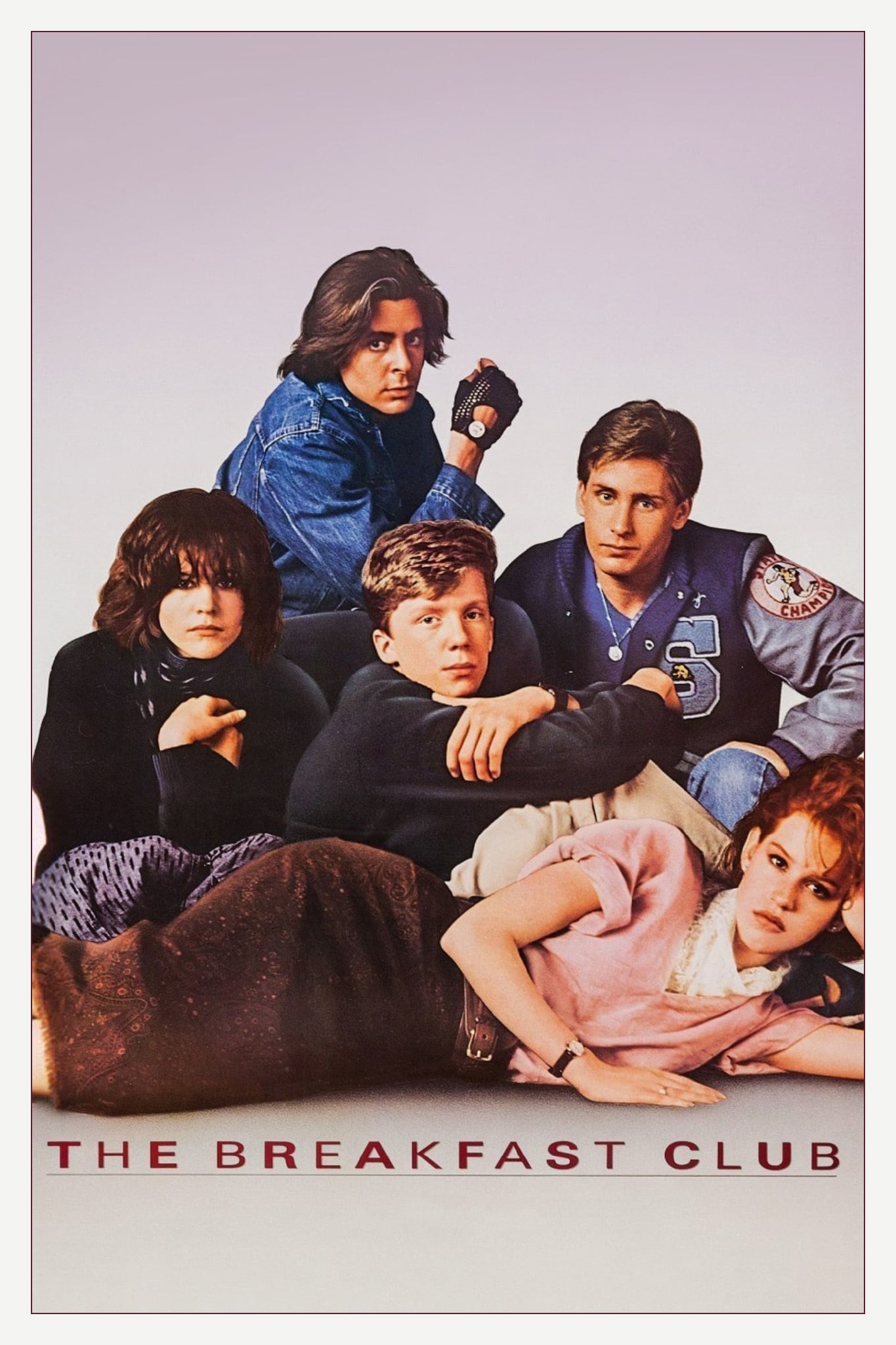
The Breakfast Club poster

The Breakfast Club

97 minutes

Cast

Selected cast credits · Film reference

Emilio Estevez Andrew Clark
Paul Gleason Richard Vernon
Anthony Michael Hall Brian Johnson
John Kapelos Carl Reed
Judd Nelson John Bender
Molly Ringwald Claire Standish
Ally Sheedy Allison Reynolds
Ron Dean Mr. Clark
John Hughes Mr. Johnson (uncredited cameo)

The Breakfast Club | The Rewatchables

Explore episodeClose episode

Producer credits not yet identified.

Roger Ebert's review

In the discussion (2)
Approx. transcript time · 00:29:21Read transcript
  • Roger Ebert gave it three stars and called the performances 'wonderful'.
  • A host recalls Siskel and Ebert both liking it, with the clip shown being Sheedy and Estevez discussing what their parents do to them.

Most Rewatchable Scene

The group-confession stretch from the Larry Lester speech to Sheedy's character's admission

In the discussion (18)
Approx. transcript time · 00:35:08Read transcript
  • The whole movie is rewatchable and is essentially one scene, so it is more about moments.
  • Nominated: Bender stealing the screw and racking up detentions with Vernon ('Eat my shorts', 'You're mine, Bender. Two months').
  • Nominated: Bender versus Andrew, with 'if you weren't in school right now, I'd waste you' and the 'two hits' line, quoted for years with high school friends; the stretch is called a fight-cliche machine with unintentional comedy.
  • The 'I don't want to get into this with you, man' line is a favorite, recalling kids avoiding fights by citing juvie.
  • The 'can you hear this' middle-finger bit led to years of jokes in class.
  • Bender's 'I'd kill you and your parents would sue me' line is quoted, and 'neo maxi zoom dweebie' is set aside for later.
  • Nominated: Bender's impressions of Brian's home life and of his own father, with Nelson thought to be going for an Oscar.
  • Nelson's many jackets (flannel, jean jacket, trench coat) are noted, and the time of year is debated as after Christmas or early November.
  • Nominated: Bender versus Vernon, leading to the closet threat, which is called intense and seems to break Bender.
  • The closet moment is a reminder these are teenagers; an adult getting serious and violent with you is jarring, like a friend's father yelling.
  • The meanest line is Vernon telling the others to visit John Bender in five years.
  • Cutaways and stolen glances build cross-group relationships, such as Andy laughing at the crustless-sandwich jab and then noticing Brian is hurt.
  • An objection that Bender does all the talking for 40 minutes as a one-note character is redirected to the aged-worst category.
  • Nominated: everyone getting high, with Anthony Michael Hall called genuinely funny, as in Sixteen Candles and Vacation.
  • The pick is the stretch from the Larry Lester speech through Brian's confession, the lipstick trick, Bender railing at Claire, Brian asking if they'll still be friends, everyone turning on Claire, Brian on pressure and Sheedy's character admitting she had nothing better to do, called one of the best 15-minute stretches of any 80s movie.
  • The characters switch sides repeatedly in the sequence; ad-libbing and many script drafts are mentioned.
  • Estevez's Lester speech and the humiliation are praised, and the sequence features one of the film's few moving camera shots.
  • Highlights include Brian not liking what he sees, the heart-dies line, Bender's harsh words to Claire and 'you don't think I understand pressure', after which another voice calls it definitely the best scene of the movie.

What’s Aged the Best?

Fist-pump freeze frame; Niagara Falls girlfriend joke; soundtrack; Bender's slang; Claire's sushi lunch; Vernon's toilet paper; stoned trio; Sheedy's post-makeover entrance; the five archetypes

In the discussion (10)
Approx. transcript time · 00:54:12Read transcript
  • The closing fist pump, said to be improvised by Nelson, matched to the song, is called one of the most memorable 80s freeze frames, with Rambo and Mr. Miyagi at the end compared.
  • The soundtrack, with the Simple Minds song and Wang Chung's 'Fire in the Twilight', ages well, though the latter seems unlike Bender's taste.
  • Brian's hat-covered erection, 'hot beef injection' and 'neo maxi zoom dweebie' are favorites.
  • Brian's girlfriend 'in the Niagara Falls area' became a running joke for 10 to 15 years.
  • Claire's sushi and the lunches in general are praised.
  • Vernon declaring he won't be made a fool of with toilet paper hanging from his pants, and Estevez's reaction during the 'what do they do to you' parents exchange, are praised.
  • The stoned Estevez, Anthony Michael Hall and Sheedy trio, Sheedy's character dumping her bag and 'you never know when you might have to jam' are favorites; 'jam' became a verb for the hosts.
  • Anthony Michael Hall's character asking Andy to weigh in on her 'deeply unsatisfying' home life is praised.
  • Sheedy's post-makeover entrance and Anthony Michael Hall's stunned reaction are a nice moment.
  • The archetypes still feel real even if unrelated to modern high school; one final answer is the fist pump or Niagara Falls.

What’s Aged the Worst?

Bowie opening quote; Bender joining the dance; Bender's crotch move; Bender's bullying and locker slur; thin writing for Claire and Allison; Allison's nymphomaniac lie; boredom

In the discussion (10)
Approx. transcript time · 00:58:33Read transcript
  • The David Bowie opening quote is offered, with one host admitting it was his yearbook quote; another doesn't recall having one.
  • The window-breaking scene is raised, with a claim that Hughes called it his biggest regret, but deferred to later.
  • Bender would not join the dance under any circumstances; the hosts say Ringwald was supposed to dance alone and felt uncomfortable, so the group choreography was added.
  • Bender trying to stick his head in Claire's crotch would not fly in 2020.
  • Bender is called genuinely mean, even a sociopath, with a homophobic slur written on his locker among the first images.
  • A remake would scale Bender back or strengthen Claire and Allison, whose writing is thin; Allison doesn't speak until about 45 minutes in.
  • The made-up nymphomaniac claim is unrealistic, though teen lies were unprovable then, as in jokes about hanging out with Dwight Gooden or Walter Payton before Instagram.
  • Ringwald's New Yorker piece is recommended as a thoughtful look at showing the film to her kids, her relationship to Hughes, and what to do with flawed work, including jokes the hosts describe as racist and sexist.
  • Sixteen Candles is called more problematic; one host watched these with his kids and says they must be judged in the context of the decade, wanting his daughter to see what 1985 was like.
  • Boredom has aged worst: the kids could just pick up a book in a library, and the only book they touch is the Moliere they destroy.

Casting What-Ifs

Ringwald originally for Allison; Robin Wright, Jodie Foster and Laura Dern for Claire; Estevez, Nicolas Cage and John Cusack for Bender; Tom Cruise for Andrew; Rick Moranis for Carl; Anthony Michael Hall offered Full Metal Jacket

In the discussion (8)
Approx. transcript time · 01:05:09Read transcript
  • The hosts say Ringwald was meant to play Allison but wanted Claire, and Hughes initially resisted because it was close to her Sixteen Candles role; switching would have broken her persona.
  • Robin Wright, Foster and Laura Dern are named as auditioning for Claire; Wright is judged too beautiful for the part.
  • As the hosts relay Ringwald's account, Hughes wrote Sixteen Candles around her headshot, and their mentor relationship changed after she began dating Anthony Michael Hall during this film.
  • Estevez was originally to be Bender but switched when Hughes couldn't find an Andrew; Tom Cruise was unavailable and is called perfect for it.
  • Nicolas Cage was considered for Bender and is judged too much.
  • John Cusack was originally cast as Bender and replaced by Nelson for not being threatening enough; it would be a totally different, more sensitive film.
  • Rick Moranis was originally cast as the janitor and left over creative differences.
  • Anthony Michael Hall was offered the lead in Full Metal Jacket before Matthew Modine and withdrew after negotiations with the director.

Recasting Couch

No recasting; Edward James Olmos as Vernon

In the discussion (3)
Approx. transcript time · 01:16:11Read transcript
  • No part needs recasting, though the Cusack version would be interesting to see.
  • Tom Cruise in the Estevez role is floated, drawing an objection that he is too old, countered that they are the same age; Estevez is said to be as close as possible to a high school wrestler.
  • An actor transcribed as 'Edward James Almost' is nominated for the role of Vernon, which would make the movie go very differently.

Half-Assed Internet Research

Maine North High School location; built library set; shared Ferris Bueller location; 150-minute director's cut; deleted scenes; Hall's growth spurt; Don't You Forget About Me origin; Parmesan-cheese dandruff; Carl as Man of the Year

In the discussion (13)
Approx. transcript time · 01:18:42Read transcript
  • Filming took place at Maine North High School in Illinois, already closed, with the library built as a set.
  • The research says Bender's flinch at Vernon's fake punch was genuine.
  • The same location served Ferris Bueller's Day Off, and the research says Hughes shot the two concurrently to save time and money.
  • As read on air, Hughes was disappointed that Nelson stayed in character and tormented Ringwald off camera, and considered firing him until other cast members intervened.
  • At a 25th-anniversary reunion Sheedy is said to have revealed a 150-minute director's cut, held by Hughes's widow, with deleted scenes including a dream sequence where Sheedy falls asleep and a steamier Claire-Bender scene; the hosts call them good cuts.
  • Vernon is said to be based on a teacher and wrestling coach Hughes had in high school.
  • Anthony Michael Hall reportedly grew about two inches during the in-sequence shoot.
  • A scripted scene of Vernon and Carl spying on a teacher swimming naked was cut after Ringwald pushed to remove it.
  • The songwriter approached for the soundtrack wrote 'Don't You Forget About Me' inspired by Brian's will-we-still-be-friends question; Bryan Ferry was approached before Simple Minds recorded it, and it became their most famous song, unlike their other work.
  • The hosts relay a story that the actor playing Carl clashed with Estevez after a remark about Martin Sheen's heart attack while Estevez and Nelson tried to make him laugh.
  • Allison's dandruff was Parmesan cheese.
  • The flare-gun damage is visible on Brian's locker early on, and Carl appears as Man of the Year.
  • A deleted Carl scene predicted the five kids' futures 30 years on, and was cut.
In the discussion (6)
Approx. transcript time · 01:26:03Read transcript
  • Molly Ringwald gets a yes.
  • Judd Nelson gets a yes.
  • Anthony Michael Hall first gets a no, withdrawn ('let me rephrase that') for a yes - it is his Apex Mountain because it leads to Weird Science - with the Full Metal Jacket missed chance noted.
  • For Sheedy, St. Elmo's Fire is named as the peak for her and Estevez, though she is good in High Art and Bad Boys.
  • Hughes's peak is Ferris Bueller; Gleason's Trading Places is called pretty strong.
  • Ringwald's three Hughes films are seen as one work and her stardom as brief but important; Fresh Horses cost her momentum, while Betsy's Wedding is said to hold up.

Picking Nits

Unpunished library damage; undetected pot smoke; Vernon's lax supervision; lunch meat on the statue; Estevez's dance solo

In the discussion (8)
Approx. transcript time · 01:28:04Read transcript
  • They would be expelled for what they did to the library and school property.
  • They hotbox half the school and nobody smells the weed, though their parents would.
  • The damage list: shattered glass, lunch meat on a statue, a collapsed ceiling, a ripped Moliere, a broken library door.
  • Vernon would be fired for letting it happen 15 feet away, joking that he was downstairs having beers with Carl.
  • The lunch meat on the statue is unnecessary.
  • Vernon checks on them too rarely and could have moved them to another room.
  • All five going to Bender's locker is questioned, then defended as the kind of pointless errand friends go on together.
  • Estevez's dance solo, with the library shelves used as a pommel horse, would not have been cool in 1985; Footloose and MTV are floated as possible influences, while Top Gun's montages are compared but placed after it (86).

The Neil McCauley “A Book about Metals” Award for Best Line from the Movie

"Does Barry Manilow know that you raid his wardrobe?"; "We're all pretty bizarre. Some of us are just better at hiding it, that's all."

In the discussion (3)
Approx. transcript time · 01:32:32Read transcript
  • Bender's wardrobe jab at Vernon is enjoyed, along with Vernon's comeback.
  • 'Social, demented and sad, but social' is quoted.
  • 'We're all pretty bizarre' is called another good high school yearbook quote.
In the discussion (4)
Approx. transcript time · 01:33:24Read transcript
  • The first answer to a 10-episode Netflix remake is no.
  • A series about the day after, when they are expelled and get jobs, would be interesting.
  • Unscripted reality TV with five new kids in detention each week, like group therapy, is proposed, compared with an HBO hotel-room anthology.
  • It couldn't be scripted, but the first episode would get a look.

Probably Unanswerable Questions

Flare gun; Claire's taste in men; the kiss in front of her dad; Bender's blonde joke; college destinations; a 2020 version

In the discussion (6)
Approx. transcript time · 01:34:43Read transcript
  • What was Brian's intent with the flare gun? It is read as a cry for help, though it would get him kicked out.
  • Is this the start of Claire's bad choices in men, imagined as a thrice-divorced adult?
  • Claire and Bender make out in front of her father; Brian writes the essay while the others pair off, and Bender is nearly hit by Allison's car early on.
  • Asked for the ending of Bender's blonde joke, the answer is that it apparently has none, after looking for one.
  • Where does everyone go to college? Bender none or jail; Brian Northwestern or Berkeley; Andrew a wrestling scholarship at Purdue or Michigan State; Claire somewhere southern such as Elon, Vanderbilt or Miami, or a legacy elite school; Sheedy's character RISD, Evergreen, Antioch or Kenyon.
  • What would the film look like in 2020? Suggestions include an all non-white or single-group cast in a Midwestern city, playing with gender such as a lady Bender; one voice predicts it would go badly, another says that would be bad writing; phones would be confiscated.
In the discussion (5)
Approx. transcript time · 01:41:17Read transcript
  • The first answer is Anthony Michael Hall, repeated, 'on rewatch, for sure'.
  • 'I'm voting Judd Nelson' draws 'I knew you would.'
  • Nelson's 'smoke up, Johnny' routine is quoted and called over the top.
  • Ringwald is loved in the film but not offered as a vote.
  • Asked 'What about you?', the remaining answer is 'I'll give it a tie'.
Podcast choices
Speaker not identified
Anthony Michael Hall
Speaker not identified
Judd Nelson

More from the conversation

A State Farm ad and a Ringer plug (Oscars and NBA trade deadline that just happened, The Big Picture) precede a teaser for the 35th anniversary and a trailer cold open.
Approx. transcript time · 00:00:00Read transcript
The episode is framed as the 35th anniversary of one of the three movies the host has seen the most; Chris Ryan and Wesley Morris are introduced, and the film is said to hold up on about the 120th viewing.
Approx. transcript time · 00:01:51Read transcript
Asked for his reaction, the reply is that the characters recall friends' older siblings from that era and that almost all of it was remembered; the film is described as basically a play set in one place.
Approx. transcript time · 00:02:32Read transcript
The library is praised as a fantasy library that was a built set, not a real one.
Approx. transcript time · 00:03:23Read transcript
Asked for his favorite 'black character', the answer is the Richard Pryor impression Anthony Michael Hall does while stoned; he says he may never have seen the film in full, having caught it in pieces on cable after it came out when he was nine.
Approx. transcript time · 00:03:48Read transcript
The film is called an ultimate cable movie that needs no cuts because it is set in one place; the TV dubbing ('freak you') is recalled.
Approx. transcript time · 00:04:16Read transcript
Remembered bits include 'you can't blaze up in here' and the dandruff-snowflake drawing; the music-video montages are favorites because they make '1985 sense', with the kids seemingly aware of the camera.
Approx. transcript time · 00:05:02Read transcript
Bender is repeatedly called out for performing, as when Andy says his parent routine is just part of his image.
Approx. transcript time · 00:06:23Read transcript
A host who saw it in theaters at the characters' age identified most with Brian, and argues the five archetypes are the buckets any version must hit, adding that a modern version would need more diverse characters.
Approx. transcript time · 00:06:41Read transcript
Cable kept the film on constantly for years, making it a definitional rewatchable you can join anywhere; Molly Ringwald is called the defining high school actress of the decade and this her best movie, with a jab at Fresh Horses.
Approx. transcript time · 00:07:42Read transcript
The teen-movie boom is traced from Fast Times in 1982 through 1984-85 titles such as Karate Kid, Teen Wolf, Goonies, Back to the Future and Vision Quest, plus 1983's Class, All the Right Moves and Risky Business; teen spending power, the Reagan-era economy and mall theaters are offered as reasons.
Approx. transcript time · 00:08:28Read transcript
Fast Times is framed as adults turning teen life into a comic book; the hosts cite Ringwald's own article as contrasting it with Breakfast Club, which felt written with its cast and neither condescends to nor mythologizes the kids.
Approx. transcript time · 00:09:58Read transcript
The film knows its archetypes and steadily argues for their humanity; the essay framing device and the David Bowie opening quote are read as a statement of teenage defiance.
Approx. transcript time · 00:10:38Read transcript
The roughly 15-minute floor-sitting conversation after the pot scene is what made it a favorite movie: teenagers having a sophisticated talk about why they were messed up.
Approx. transcript time · 00:12:05Read transcript
The 'when you grow up, your heart dies' line is called one of the best lines but sounds written by an adult; at least three of the kids are said to be responding to their parents' disappointment.
Approx. transcript time · 00:12:31Read transcript
All five kids have unsatisfying relationships with their parents; the principal resents aging, and the janitor's line that the kids haven't changed but Vernon has is tied to the theme that something bad happens to adults.
Approx. transcript time · 00:13:35Read transcript
That theme is said to have gone much further in the Lady Bird era, but was new in 1985; the conceit is that all five are in detention because their parents don't give them enough attention.
Approx. transcript time · 00:14:21Read transcript
A logistics question: at a small school, a wrestler beating someone as badly as Andy did would be a huge deal; in 1985 the coach would likely smooth it over.
Approx. transcript time · 00:14:51Read transcript
The hosts trade stories of having a 'benevolent bender' at school, burnouts who might have your back in a fight, and a 'lady bender'.
Approx. transcript time · 00:15:57Read transcript
The opening essay letter to Mr. Vernon (Saturday, March 24, 1984) is read aloud, ending with the brain, athlete, basket case, princess and criminal labels.
Approx. transcript time · 00:16:28Read transcript
John Hughes's run is listed - Vacation, Sixteen Candles, Breakfast Club, Weird Science, Ferris Bueller, Pretty in Pink, Some Kind of Wonderful, Planes Trains and Automobiles, The Great Outdoors, Uncle Buck, She's Having a Baby and writing Home Alone - in under 10 years, before he largely stepped away while living in Chicago; he is called one of the MVPs of the decade.
Approx. transcript time · 00:17:49Read transcript
Hughes's films are called hangout movies where little happens (they smoke pot, eat lunch, dance, break a window by screaming), unlike goal-driven modern storytelling, though the stakes are the highest possible for the kids.
Approx. transcript time · 00:18:49Read transcript
One host wishes even less happened: the two surreptitious romances, including Claire and Bender, feel artificial and fantastical to a grown man, though the appeal to teenagers is understood.
Approx. transcript time · 00:20:14Read transcript
The film is credited with inventing a teenage genre rather than adding teens to a genre movie; Hughes always has a character change, as Clark Griswold does in Vacation.
Approx. transcript time · 00:21:01Read transcript
Whether Hughes movies have darkness: Cameron in Ferris Bueller's Day Off is called one of the great characters, given all the dramatic writing, with the art-gallery scene cited and Ferris called a narcissistically good friend.
Approx. transcript time · 00:21:32Read transcript
Asked for Hughes's worst, She's Having a Baby is called not that bad; Some Kind of Wonderful is called a pretty weak but well-cast movie whose tomboy would have more wrinkles today.
Approx. transcript time · 00:22:55Read transcript
Some Kind of Wonderful felt false to one host as an 11-year-old, like adults pretending to be teens.
Approx. transcript time · 00:23:32Read transcript
A Hughes flaw is casting actors in their mid-20s as teenagers; Judd Nelson and Emilio Estevez are said to have been 22 for Breakfast Club.
Approx. transcript time · 00:23:58Read transcript
The hosts say the Brat Pack label came from a New York magazine cover story by David Blum, published after this film but before St. Elmo's Fire, after a night out with Rob Lowe and Estevez; they describe Estevez coming off poorly over club entry and not paying to see Ladyhawke, and the actors sensing the label would hurt them.
Approx. transcript time · 00:24:18Read transcript
Magazines no longer have that narrative power; the hosts say Ally Sheedy later described the article as ruining something nice, and that actors left off the cover such as John Cusack and Nicolas Cage may have had better careers for it.
Approx. transcript time · 00:25:08Read transcript
St. Elmo's Fire is discussed as reusing several of these actors in different roles, including Estevez stalking Andie MacDowell's character; one host is down on Joel Schumacher in all capacities but credits the music.
Approx. transcript time · 00:25:47Read transcript
Wisdom is described as Estevez's writing and directing debut, made around age 26, in which he and Demi Moore become Bonnie-and-Clyde figures helping people with mortgages; the hosts recall that it bombed.
Approx. transcript time · 00:27:06Read transcript
Being Martin Sheen's son is said to have helped Estevez and Charlie Sheen get chances, though Estevez is credited with genuine charisma, and Young Guns is recalled as a big deal.
Approx. transcript time · 00:28:19Read transcript
The film's budget is given as $1 million with $54 million in grosses and only 10 speaking parts.
Approx. transcript time · 00:29:21Read transcript
Pauline Kael is said to have reviewed the film as a bogus teen-angst movie; 'What was Pauline Kael's take' is floated as a possible Rewatchables category, with the caveat she would be wrong 80% of the time; the reply joke is that her heart died when she got old.
Approx. transcript time · 00:30:07Read transcript
Against Kael, being a teenager means feeling everything for the first time; her point, as relayed, compared the film unfavorably with Rebel Without a Cause, which had a national malaise and suffering parents.
Approx. transcript time · 00:30:55Read transcript
The janitor is called the most sophisticated adult in the film; the Carl and Vernon scenes break the kids' point of view, which Kael is said to have found unfair, using the principal as a straw man for parental villainy.
Approx. transcript time · 00:31:36Read transcript
Ad break: Peroni and SimpliSafe.
Approx. transcript time · 00:32:48Read transcript
Judd Nelson should have been a bigger star; New Jack City and St. Elmo's Fire come up, and one host jokes that Nelson's roles build toward New Jack City, citing the voice he does on the 'scholarship' line in the gym scene.
Approx. transcript time · 00:36:22Read transcript
The film is described as structured like a war movie: the kids in their bunker, Bender taking one for the squad in the gym escape, and the whistled Bridge on the River Kwai theme.
Approx. transcript time · 00:36:39Read transcript
Nelson is defended through a David Caruso comparison: taking it up notches without losing control, and knowingly self-parodic in St. Elmo's Fire ('moving up, Kirbo').
Approx. transcript time · 00:38:40Read transcript
The hosts recall reports that Nelson was hard to work with, particularly on this set, citing the New York magazine piece.
Approx. transcript time · 00:39:21Read transcript
The 1980s are called the only modern era when being Republican was cool, because of Reagan, with Michael J. Fox's Family Ties character as an icon; the hosts recall no visible left in high school, naming Mondale and Dukakis.
Approx. transcript time · 00:39:35Read transcript
Estevez's work is praised as identifiably liberal, with Men at Work called not bad and Elmore Leonard-like and his Showtime movie about the Mitchell brothers called good; he is called secretly talented.
Approx. transcript time · 00:40:04Read transcript
Stakeout is shouted out as a good movie, now complicated because it is a lot of watching Madeleine Stowe; it was successful enough for a sequel.
Approx. transcript time · 00:42:05Read transcript
Anthony Michael Hall is called the actor you would most want to see more of, and Ringwald the one who is a movie star.
Approx. transcript time · 01:08:35Read transcript
Hall fought nerd typecasting with a year on Saturday Night Live alongside Downey, Johnny Be Good and Out of Bounds, then was good later in Six Degrees of Separation and the Dead Zone series.
Approx. transcript time · 01:08:59Read transcript
Hall is said to have lost decades and may have been the most talented of the five; Sheedy was a favorite at the time, with High Art and Short Circuit cited, and fame at that age is called rough on people.
Approx. transcript time · 01:10:35Read transcript
Oxford Blues is called flat-out a good movie.
Approx. transcript time · 01:11:40Read transcript
The hosts believe David Caruso played Judd Nelson's father in Blue City (1986), a movie called terrible.
Approx. transcript time · 01:11:50Read transcript
Ad break: Sonos and Pepsi, with the host's mute-the-announcers basketball routine.
Approx. transcript time · 01:12:17Read transcript
Everyone in the film is white, as in every Hughes movie; whiteness is framed as a predicament, Bender's unspecified ethnicity is said to matter in Chicago, and the lovable mid-80s blowhard sidekick is compared with Jim Belushi in About Last Night and Paul Riser (as transcribed) in Beverly Hills Cop.
Approx. transcript time · 01:16:49Read transcript
The hosts say Annie Leibovitz shot the poster, which looks like an album cover; a host recounts trying Hughes-style teen angst on his father and losing HBO for it.
Approx. transcript time · 01:22:19Read transcript
The cinematographer (named as Thomas Del Ruth) mostly shot TV; the simple photography gives each actor iconic close-ups, and editor Dede Allen's cuts are credited for the reaction shots.
Approx. transcript time · 01:23:32Read transcript
Sign-off thanking Chris Ryan and Wesley Morris, closing Sonos and Pepsi ads, and an announcement that the next eight episodes will be a Flawed Rewatchables series.
Approx. transcript time · 01:41:49Read transcript