‹ All movies
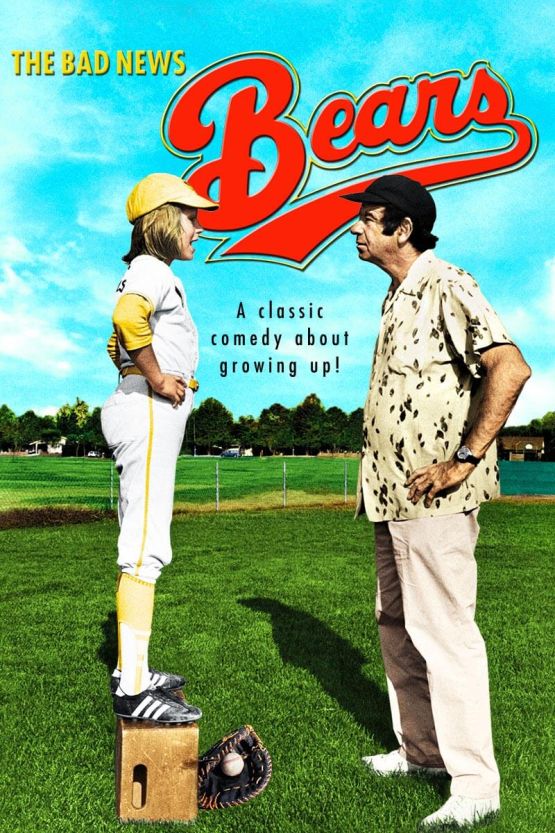
The Bad News Bears poster

The Bad News Bears

102 minutes

Cast

Selected cast credits · Film reference

Walter Matthau Coach Morris Buttermaker
Tatum O’Neal Amanda Whurlizer
Vic Morrow Roy Turner
Joyce Van Patten Miss Cleveland
Ben Piazza Bob Whitewood
Jackie Earle Haley Kelly Leak
Chris Barnes Tanner Boyle
Erin Blunt Ahmad Abdul Rahim
Gary Lee Cavagnaro Engelberg
Jaime Escobedo Jose Agilar
Scott Firestone Regi Tower
George Gonzales Miguel Agilar
Brett Marx Jimmy Feldman
David Pollock Rudi Stein
Quinn Smith Timmy Lupus
David Stambaugh Toby Whitewood
Brandon Cruz Joey Turner
Timothy Blake Mrs. Lupus
Bill Sorrells Mr. Tower
Shari Summers Mrs. Turner
Joe Brooks Umpire
George Wyner White Sox manager
David Lazarus Yankee
Charles Matthau Athletic
Maurice Marks Announcer

The Bad News Bears | The Rewatchables

Explore episodeClose episode

Half-Assed Internet Research

Origins; box office; salaries; child actors’ ages; language coaching

In the discussion (8)
Approx. transcript time · 00:06:32Read transcript
  • The film is described as the first sports comedy centered on children and an early critique of overbearing youth-sports parents.
  • Matthau’s Tony, supporting Oscar, two lead nominations and ten Lemmon collaborations are recalled.
  • O’Neal reportedly recalled Tarantino’s first fan letter and an uncomfortable later request to wear her childhood Bears uniform.
  • A 9 million budget,43 million gross and tenth-place 1976 ranking are reported, alongside Rocky’s success as a sports-film turning point.
  • The child actors’ ages are listed: Lupus six, Miguel eight, Tanner ten, Ahmad, Amanda and Engelberg twelve, Ogilvie thirteen, and Toby, Kelly and Rudy fourteen.
  • The Aguilar actors reportedly did not speak Spanish and were taught their lines, despite playing boys who could not speak English.
  • Reported compensation was $750,000 plus ten percent of theatrical box office for Matthau and $350,000 plus a profit percentage for O’Neal.
  • Bill Lancaster reportedly based the film on his father, Burt Lancaster; his three screenplays are identified as this film, The Bad News Bears Go to Japan and The Thing.

Probably Unanswerable Questions

Absent parents; Kelly’s family and talent; Joey’s title share; Mrs. Turner; free agency; Ogilvie’s future

In the discussion (9)
Approx. transcript time · 00:17:35Read transcript
  • Amanda’s absent mother and Kelly’s unsupervised smoking and motorcycle riding raise parental questions.
  • Kelly’s family life is questioned.
  • Kelly’s unexplained resources and lack of supervision inspire alternatives involving wealth, an absent working parent or an overwhelmed large family.
  • Kelly Leak is praised as an elite sports-character name, alongside Jimmy Chitwood and Paul Crewe.
  • Whether Joey received a championship ring or share after quitting is questioned.
  • The appeal of Turner’s wife and her now-fashionable 1970 s clothes becomes a playful question.
  • Recruiting Amanda and Kelly is jokingly proposed as inventing baseball free agency.
  • Ogilvie is imagined working for Bill James and later building a major-league pitching dynasty.
  • Kelly’s revealing throw is compared with A League of Their Own, Jerry Maguire and Remember the Titans as a demonstration of athletic talent.

What’s Aged the Best?

Subtle character growth; Breaking Training; Kentucky Fried Chicken; Kelly; Tanner; Ahmad; Engelberg; Los Angeles; poster; youth sports; beer; pitching; Carmen; baseball analytics

In the discussion (19)
Approx. transcript time · 00:29:30Read transcript
  • Buttermaker’s changes unfold subtly without explanatory speeches; reconnecting with Ahmad in the tree is a rare visible turning point.
  • Breaking Training is praised as a rare naturally satisfying sports sequel, featuring the unsupervised drive to Houston and the Astrodome.
  • Lying to children while parenting is praised.
  • The Kentucky Fried Chicken bucket looks unusually appetizing; the full name is considered more evocative than KFC and compared with Popeyes.
  • Kelly’s believable age, motorcycle, smoking, jacket and coordination make him an archetypal cool troubled kid; Bender and a doomed soldier are comparisons.
  • Tanner is compared with Culkin crossed with Bill Burr.
  • Ahmad is appreciated as a then-uncommon Black child character with distinct sibling insecurity, Hank Aaron admiration and a successful bunt.
  • Ahmad subverts the assumption that the Black child must be the best athlete, with sibling comparisons and Muslim identity adding individuality.
  • Engelberg’s comedy, hitting and trash talk are praised, including the flood-the-valley pool joke; the sequel actor and Sandlot analogue are compared.
  • Mid 1970 s Los Angeles and Jack Davis’s illustrated poster are appreciated.
  • A parental lawsuit creating a team for excluded players anticipates later youth-sports entitlement and feels specifically Los Angeles.
  • Chico’s Bail Bonds is described as a real business incorporated into the film.
  • Turner’s intentional walks anticipate analytical strategy.
  • Cheap Igloo coolers, removable beer tabs and large cans evoke the era; unbelted convertible rides are recalled with ironic affection.
  • Turner’s overbearing youth-coach behavior feels increasingly relevant as private training and parental pressure grow.
  • Real beer brands are praised over invented labels; the spoken list includes Coors, Lucky Lager, Mickey’s, Pabst, Schlitz, a garbled brand, Miller High Life and Budweiser while claiming seven.
  • O’Neal’s pitching is convincing; she reportedly trained for weeks and performed most throws with occasional doubling.
  • Bizet’s Carmen music is considered central to the film.
  • Ogilvie’s statistics, walks and defensive shifts anticipate Bill James and Moneyball; the Joey-Engelberg rivalry is also praised.

Roger Ebert's review

In the discussion (1)
Approx. transcript time · 00:32:17Read transcript
  • Ebert gave three stars and praised the film’s critique of American competition; a higher score is thought deserved.

Most Rewatchable Scene

The final Yankees–Bears game

In the discussion (13)
Approx. transcript time · 00:33:04Read transcript
  • The opening credits efficiently introduce Buttermaker, Toby, Kelly and Turner while establishing the coach’s drinking.
  • The first practice establishes the misfits’ incompetence through bunting confusion and chocolate on the ball; Necessary Roughness is compared as an heir.
  • The Yankees’ first-game rout includes Tanner throwing his glove and Turner encouraging withdrawal.
  • The attempted team resignation follows Tanner fighting the seventh grade and prompts Buttermaker’s quitting-is-a-hard-habit lesson.
  • Amanda loses air hockey to Kelly, walks out defeated and argues with Buttermaker about the resulting Rolling Stones date.
  • Kelly monopolizing the game exposes the cost of relying on one star and reflects a familiar youth-sports temptation.
  • Kelly’s winning hit receives little celebration after his teammates resent his monopoly.
  • The final game’s brawl and Engelberg-Turner rivalry lead to Turner striking his son and Joey deliberately allowing a run; the slap would create a modern public scandal.
  • Buttermaker chooses to play everyone and Lupus makes the emotional catch, establishing a much-reused weakest-player-comes-through trope.
  • The final rally ends with Kelly reaching across an intentional walk, being called out at home and Tanner rejecting the trophy; Kelly is thought visibly safe.
  • The entire final game is the agreed most-rewatchable sequence, with Joey holding the ball a pinpoint choice.
  • The Ahmad tree conversation is a separate personal favorite: an invented Hank Aaron 42-error story restores belief and shows Buttermaker’s coaching instincts.
  • The ballet-window visit is recalled as an omitted favorite: Engelberg eats chicken, Kelly flirts and Amanda is embarrassed.

The Butch’s Girlfriend Award for the Weakest Link in the Film

Buttermaker’s cruelty to Amanda; councilman father

In the discussion (2)
Approx. transcript time · 01:04:37Read transcript
  • Buttermaker’s cruel rejection of Amanda in the dugout is considered too harsh toward an 11-year-old.
  • The councilman father is another choice because his convincingly cynical politics are unpleasant, not because of poor acting.

What’s Aged the Worst?

Lost contemporary context; offensive language; no mercy rule; uninterrupted brawl; pitching overuse; Brandon Cruz’s diminished fame

In the discussion (6)
Approx. transcript time · 01:05:53Read transcript
  • O’Neal’s contemporary stardom and the novelty of a girl pitching are less legible to later audiences.
  • Offensive language is acknowledged without extended discussion.
  • No mercy rule allows a 26–0 first-inning rout; modern thresholds are debated rather than settled.
  • The game continuing after a bench-clearing brawl is contrasted with a modern investigation.
  • Amanda pitching every game several times a week raises an overuse objection.
  • Brandon Cruz’s contemporary fame from The Courtship of Eddie’s Father is less apparent to later audiences.

Picking Nits

Kelly’s slide and safe call; pitching; batting order; field positions; motorcycle crash; league eligibility; chemistry; Yankees recruitment; Rudy’s athleticism

In the discussion (11)
Approx. transcript time · 01:08:52Read transcript
  • Kelly should have slid headfirst to score; his exceptional hitting makes the unsuccessful slide frustrating.
  • Rudy’s size prompts the argument that he should hit for power and could beat up Kelly.
  • Repeated slow-motion viewing supports the claim that Kelly scored, prompting a joking theory that Turner bribed the hostile umpires.
  • Kelly should pitch, especially the final inning, because the best young athlete normally pitches; losing him in center field is considered an acceptable trade.
  • Rudy should not bat between Kelly and Engelberg; an alternative order puts Kelly first, Engelberg second and Rudy third to maximize Kelly’s appearances.
  • Ahmad is wasted in right field; left or center field is proposed despite his desire to imitate Hank Aaron.
  • Kelly should play shortstop and Tanner should move to second base.
  • Kelly inexplicably rides his motorcycle into a wall after vandalizing the field.
  • Kelly is permitted to join the league despite his earlier vandalism.
  • Kelly’s sudden lack of chemistry problems is questioned, with a defense that others feared him without knowing him.
  • The Yankees should already have recruited Kelly given his obvious ability.
In the discussion (2)
Approx. transcript time · 01:13:44Read transcript
  • Tanner’s fighting is criticized as unconvincing grappling rather than the wild punches expected from children.
  • The fighting is defended as Tanner holding on to avoid getting hurt, with a joke about his burrito.

Casting What-Ifs

Warren Beatty; Steve McQueen; Jodie Foster; Kristy McNichol

In the discussion (2)
Approx. transcript time · 01:16:33Read transcript
  • Warren Beatty and Steve McQueen reportedly declined Buttermaker before Matthau; their glamour and coolness are considered wrong for the role, though a down-on-his-luck Beatty might work.
  • Jodie Foster reportedly left Amanda for Taxi Driver, and Kristy McNichol was offered the role before O’Neal.

Recasting Couch

Original director and Los Angeles

In the discussion (1)
Approx. transcript time · 01:18:21Read transcript
  • The director and Los Angeles setting are considered untouchable.

Apex Mountain

1975 Harley-Davidson Z-90; air hockey; children’s sports movies; Little League baseball; Carmen; inappropriate Archie Bunker-like children; Pizza Hut in movies; children pouring beer on one another

In the discussion (12)
Approx. transcript time · 01:21:19Read transcript
  • Matthau’s peak is assigned to The Odd Couple.
  • O’Neal is disputed: Paper Moon supplied her Oscar and career opportunities, while this film is defended as her acting career highlight.
  • Kelly’s 1975 Harley-Davidson Z-90 is accepted.
  • Catfish Hunter references are nominated, with recognition of the film’s reference.
  • Haley’s peak is proposed as Breaking Training, with his later Little Children character-actor resurgence raised as an alternative.
  • Air hockey is accepted; The Toy is considered an inferior comparison.
  • Children’s sports movies and Little League baseball are accepted.
  • Carmen is accepted.
  • The 1964 Cadillac DeVille convertible is nominated.
  • Inappropriate Archie Bunker-like child characters are accepted.
  • Pizza Hut in movies is accepted, prompting nostalgia for the restaurant before its early-1990 s change.
  • Children pouring beer on one another is accepted.
In the discussion (2)
Approx. transcript time · 01:24:11Read transcript
  • Hanks is preferred for having effectively played the role in A League of Their Own; Cruise is defended as an interesting washed-up former player.
  • The tiebreaker goes to Hanks, moving the running tally to seven versus six.
In the discussion (2)
Approx. transcript time · 01:40:10Read transcript
  • The Bears are emphatically selected as a team.
  • Walter Matthau is selected; O’Neal is defended as an acceptable alternative because her believable performance makes the film work.
Podcast choices
Speaker not identified
The Bears
Speaker not identified
Walter Matthau

Producer review

The Sandlot’s childhood appeal and youthful perspective

In the discussion (1)
Approx. transcript time · 01:47:10Read transcript
  • The Sandlot is preferred through childhood attachment and its youthful, mystical perspective; The Bad News Bears feels like an adult film that children wanted to see.

More from the conversation

The episode explicitly closes 1970 s sports-movie theme month; future 1999 rereleases are separately announced.
Approx. transcript time · 00:02:28Read transcript
The 1976 film is praised as an enduring, emotionally affecting children’s sports movie, especially when viewed after parenting.
Approx. transcript time · 00:04:41Read transcript
A father’s intense fielding drills and critical assessment of children’s athletic potential are recalled.
Approx. transcript time · 00:07:21Read transcript
A youth-soccer parent’s anger over playing time culminated in removing his child permanently, recalling Joey Turner’s mound confrontation.
Approx. transcript time · 00:08:27Read transcript
The central question is whether youth sports serve children’s growth or adults’ need to win; the Bears morally win by choosing the children.
Approx. transcript time · 00:09:37Read transcript
Coach Turner’s celebration amid family collapse embodies an adult compensating for frustration by controlling young players.
Approx. transcript time · 00:10:46Read transcript
Buttermaker and Amanda’s ambiguous father-figure relationship permits unusually candid conversations.
Approx. transcript time · 00:12:04Read transcript
Losing-the-title endings are compared with Tin Cup, Rocky, The Color of Money and A League of Their Own; the approach works here because gains outside the score are convincing.
Approx. transcript time · 00:12:23Read transcript
Above the Rim provides the opposite preference for tournament victory, followed by a double-shootout joke.
Approx. transcript time · 00:14:07Read transcript
The possibility that a chain-smoking alcoholic can coach a team to the finals is jokingly treated as a lesson.
Approx. transcript time · 00:14:47Read transcript
The original’s blunt child stereotypes are considered more natural than the remake’s self-conscious inclusivity.
Approx. transcript time · 00:15:15Read transcript
The ensemble is defended as observed youth-baseball culture rather than assembled archetypes; Little Giants, Sandlot, Rookie of the Year and Mighty Ducks inherit its formula.
Approx. transcript time · 00:16:03Read transcript
Drinking while driving unbelted children and beer celebrations seem shocking now but recall a freer, rougher childhood, including truck-bed rides to games.
Approx. transcript time · 00:18:31Read transcript
Matthau is considered the supreme likable curmudgeon, making even Cactus Flower’s objectionable character charming; Buttermaker may outlast his other roles as an archetype.
Approx. transcript time · 00:20:42Read transcript
A modern Matthau might be confined to supporting roles; Thornton and Tommy Lee Jones are compared but not considered exact equivalents.
Approx. transcript time · 00:23:05Read transcript
Ritchie’s eight cited films are Downhill Racer, The Candidate, The Bad News Bears, Semi-Tough, Fletch, Wildcats, The Golden Child and Diggstown. His work is praised for letting characters and scenes breathe; the top-eight phrase is career praise, not an ordered ranking.
Approx. transcript time · 00:24:45Read transcript
O’Neal and Haley are considered far ahead of the other child actors, with her confident first scene essential to the story.
Approx. transcript time · 00:26:17Read transcript
O’Neal’s Paper Moon Oscar, youthful popularity and later difficulties are compared with Lohan’s trajectory; this performance merits inclusion among great child roles.
Approx. transcript time · 00:27:24Read transcript
A reported Majors-Fawcett-O’Neal romantic-betrayal anecdote is introduced as a Pulp Fiction-like situation.
Approx. transcript time · 00:28:38Read transcript
Tanner is remembered as a breakout who seemed destined for stardom, a child Archie Bunker whose offensive bluster coexists with loyalty.
Approx. transcript time · 00:35:31Read transcript
Buttermaker’s limited baseball backstory suggests he once quit himself, explaining his resistance to the children giving up.
Approx. transcript time · 00:38:53Read transcript
A dominant childhood teammate and deliberately selecting selfish pickup stars illustrate sacrificing participation to keep winning.
Approx. transcript time · 00:41:08Read transcript
Warrior Strong is identified as a recent disliked example recycling the reluctant overweight player’s winning shot.
Approx. transcript time · 00:45:35Read transcript
Yankees congratulating Kelly during his home-run trot is tentatively attributed to a friendlier youth-baseball era.
Approx. transcript time · 01:04:20Read transcript
Matthau was 56 during filming; the conversation contrasts how middle-aged people looked then and now.
Approx. transcript time · 01:07:29Read transcript
The unsuccessful television adaptation prompts comparisons with Clueless, Friday Night Lights and Parenthood.
Approx. transcript time · 01:09:21Read transcript
Vic Morrow’s death during Twilight Zone filming and his relationship to Jennifer Jason Leigh are discussed alongside his performance.
Approx. transcript time · 01:11:31Read transcript
Foster’s later career is compared with the trajectory once expected for O’Neal.
Approx. transcript time · 01:17:33Read transcript
The Japan sequel is condemned, followed by an anecdote about a son wanting to watch it after enjoying the first two films.
Approx. transcript time · 01:19:46Read transcript
The son who insisted on watching the Japan sequel disliked it and complained that he had not been warned.
Approx. transcript time · 01:20:37Read transcript
Kip Pardue’s grip and throw are cited as evidence of real quarterback experience.
Approx. transcript time · 01:39:20Read transcript
The original is preferred to the remake for its less cartoonish Buttermaker, stronger relationships and better children.
Approx. transcript time · 01:41:07Read transcript
Lupus’s devastated expression at the snack stand makes Tanner’s burrito retaliation satisfying.
Approx. transcript time · 01:41:32Read transcript
Turner’s behavior recalls youth-baseball coaching and parental interference, including being made to pitch with a sore elbow.
Approx. transcript time · 01:41:48Read transcript
O’Neal is praised as an exceptional child actor after prior familiarity with Paper Moon.
Approx. transcript time · 01:42:54Read transcript
Kelly’s delinquent-athlete combination is disputed through differing personal experiences and possible generational differences.
Approx. transcript time · 01:43:05Read transcript
The remake’s similar ending and the original’s enduring pace prompt the argument that an entirely watchable film did not need remaking.
Approx. transcript time · 01:44:52Read transcript
The remake initially seemed promising because of Linklater and Thornton, but is now viewed as part of an unsuccessful remake wave.
Approx. transcript time · 01:45:51Read transcript
Elaborately silly insults prompt debate over genuine period speech versus a movie convention.
Approx. transcript time · 01:46:15Read transcript
The closing credits name Craig Horlbeck and thank Jack Sanders; the current 1970 s sports month ends and future 1999 episodes are announced.
Approx. transcript time · 01:49:04Read transcript