
‹ All movies
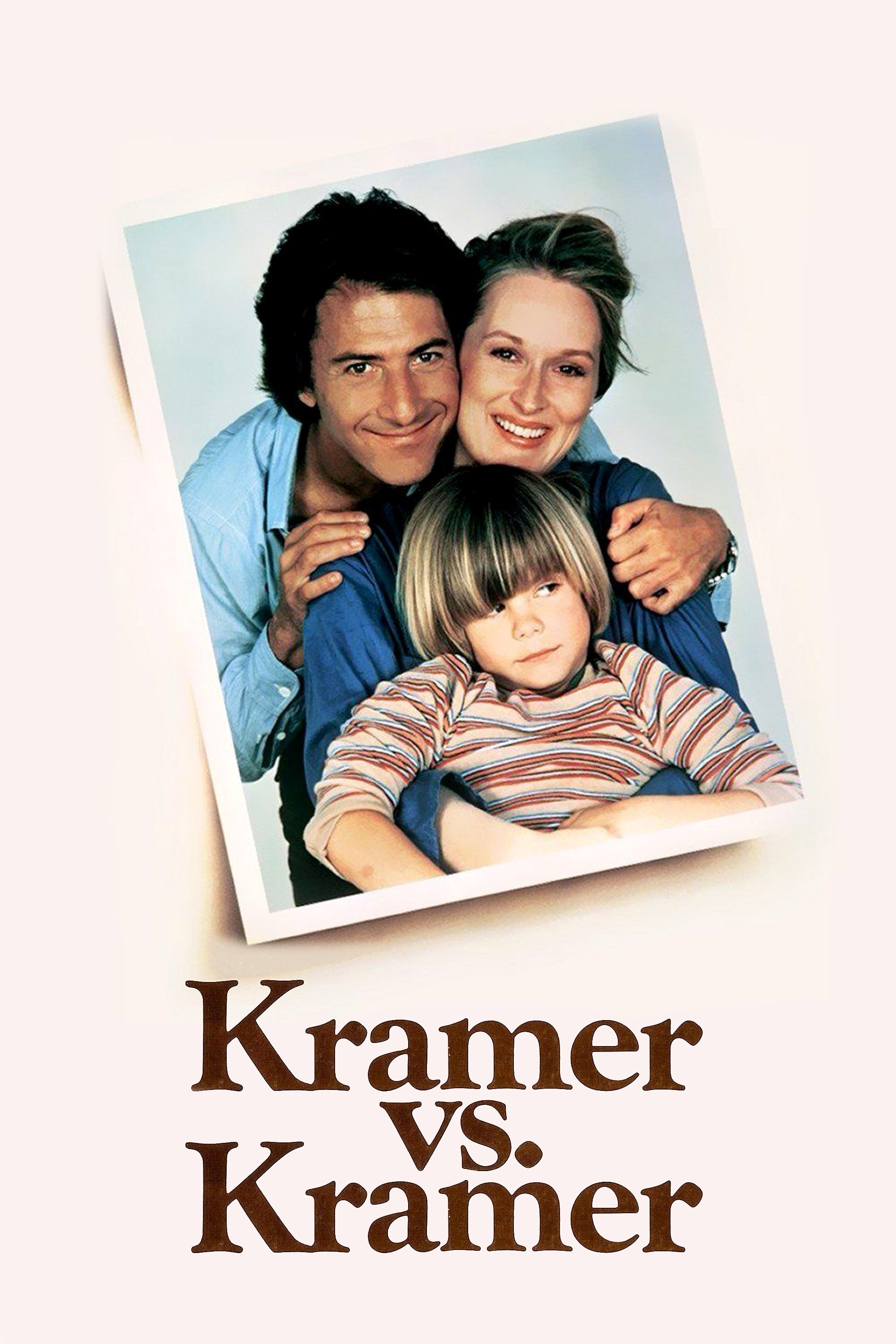
Kramer vs. Kramer poster

Kramer vs. Kramer

105 minutes

Cast

Selected cast credits · Film reference

Dustin Hoffman Ted Kramer
Meryl Streep Joanna Kramer
Justin Henry Billy Kramer
Jane Alexander Margaret Phelps
Howard Duff John Shaunessy
George Coe Jim O'Connor
JoBeth Williams Phyllis Bernard

Kramer vs. Kramer | The Rewatchables

Explore episodeClose episode

Top Ten List

1979 box-office top ten, led by Kramer vs. Kramer

In the discussion (3)
Approx. transcript time · 00:03:31Read transcript
  • The 1979 box-office chart is read as a countdown from number ten: The Muppet Movie, Moonraker, The Jerk, 10, Apocalypse Now, Alien, Star Trek: The Motion Picture, Rocky II and The Amityville Horror at number two.
  • Kramer vs. Kramer was number one, reportedly earning at least $20 million more than every other film on the list.
  • The list is used to argue that a quiet domestic drama outgrossing an iconic war movie, horror movie, comedy and sports sequel is astonishing; a guess of eleventh to twentieth place would have seemed more plausible.

Roger Ebert's review

In the discussion (3)
Approx. transcript time · 00:56:46Read transcript
  • The review is reported as four stars.
  • The quoted review says the film is touching because personalities seem to change and decisions seem to be made as viewers watch; it is described as a long, glowing review.
  • The critic is joked to be on a run of positive takes across recent Rewatchables episodes.

Most Rewatchable Scene

The two courtroom testimony scenes

In the discussion (11)
Approx. transcript time · 00:58:09Read transcript
  • Many candidate scenes are called too painful to be rewatchable, and a separate label like the one used for Ordinary People is suggested.
  • Joanna leaving is nominated: Ted is too absorbed in work to hear her, and the elevator-door line that she no longer loves him lands almost as an afterthought.
  • The first French toast scene is nominated as a generous portrait of how hard it is to be a mom, building toward the silent breakfast routine; the breakfast scene is considered good but not rewatchable.
  • The ice cream confrontation and the late-night talk that follows are called among the best scenes, though not rewatchable; parts were reportedly improvised.
  • The restaurant confrontation with the thrown wine glass is praised for Ted moving from hopeful to enraged within two minutes, but not something to rewatch repeatedly.
  • Ted forcing a same-day hiring decision at the Christmas party is called well constructed and shows why he is good at business.
  • Streep on the stand is called one of the best-acted sequences of her career, and the switch between the rehearsed direct examination and the hostile cross-examination, mirrored in Hoffman's testimony, is loved.
  • The pick is declared as the courtroom stretch with the two courtroom scenes, and another participant agrees it is the pick.
  • For the record, Ted reading Joanna's letter to Billy, the run to the hospital and the ice cream scene with its aftermath are named as scenes thought about most often. — Mallory Rubin
  • The trial is again called the probable pick among many pantheon scenes, with a joke that Ted should have read the letter before reading it aloud.
  • The bicycle scene blew this participant away, with new-kid energy from just having a kid. — Sean Fennessey

What’s Aged the Best?

Young Meryl Streep; the title; the poster; the opening score; JoBeth Williams nude scene; Justin Henry; Halloween play; Billy picking the Celtics; Billy reading comics

In the discussion (7)
Approx. transcript time · 01:25:47Read transcript
  • Young Streep, with three 1979 films, is praised as leaving the 1970s on a high.
  • The title, the moment it is spoken, the happy-family poster and the opening score with guitar players are all praised.
  • Another item is a talk-show shag-marry-kill game about Redford, De Niro and Hoffman, in which the Streep answer reportedly kills Hoffman.
  • The JoBeth Williams nude scene is called one of the funnier nude scenes, though staging it with a child would draw objections today.
  • Justin Henry is noted as the youngest Oscar nominee ever, at eight, and his performance is argued to be the best in the film because of its degree of difficulty; his haircut and the Halloween play are also praised.
  • The divorce genre itself is mentioned as a fertile subject.
  • Billy choosing the Celtics over the Knicks and reading comics at breakfast are added as items that aged well.

What’s Aged the Worst?

All-white cast; a movie like this never again topping the box office; kitchen and bathroom hygiene; bell bottoms; milk at every meal; Shaunessy's courtroom cruelty; Jim O'Connor's treatment of Ted; one-day hiring process

In the discussion (7)
Approx. transcript time · 01:29:09Read transcript
  • Beyond the on-set conduct already discussed, the film has zero minorities, not even a Black judge, which probably occurred to no one making it in 1979.
  • The fact that a simple, sincere, small film like this will never again be the biggest movie in the culture is lamented; around 1984 is proposed as the turning point toward blockbusters. — Sean Fennessey
  • The appalling bathroom and kitchen hygiene, with no flushing or hand-washing before making breakfast, is the first of several items. — Mallory Rubin
  • Bell bottoms and milk at every meal are added as relics of another age. — Mallory Rubin
  • John Shaunessy's harsh legal approach is named.
  • Jim O'Connor's consistently unsympathetic response to Ted as a single parent, from suggesting relatives take Billy to firing him, is called authentic to 1979 but tough to watch.
  • The one-day hiring with a two-minute interview is mocked; in 2022 kissing a stranger at the Christmas party would get him fired immediately.

Casting What-Ifs

James Caan, Al Pacino and Jon Voight for Ted; Kate Jackson, Faye Dunaway and Jane Fonda for Joanna; Gail Strickland as Margaret

In the discussion (9)
Approx. transcript time · 01:34:24Read transcript
  • Hoffman initially did not want the role, and James Caan reportedly declined over fears the film would flop.
  • Al Pacino reportedly turned it down as not right for him; seeing him in the role would have been welcome.
  • Jon Voight reportedly declined because he was already in The Champ, another divorced-parent story whose ending is called one of the saddest.
  • Hoffman changed his mind after meeting Jaffe and Benton in a London hotel.
  • By her own claim, Kate Jackson was offered Joanna but could not take it because of Charlie's Angels; the story is treated as only mostly true.
  • Faye Dunaway was reportedly offered the role and did The Champ instead; Jane Fonda, earlier said to have been talked about for the role, is mentioned again; Ali MacGraw is named only with the judgment that she would have butchered it, without saying she was considered.
  • Streep was originally meant for the JoBeth Williams role before being cast as Joanna.
  • Gail Strickland was cast as Margaret but reportedly fired after Hoffman taunted her on set, and Jane Alexander replaced her.
  • Earlier, a Kate Jackson version of Joanna is dismissed as unable to reach Streep's level, with casting what-ifs promised for later.
In the discussion (3)
Approx. transcript time · 01:39:07Read transcript
  • The answer has to be George Coe, who plays Ted's boss and appeared in first-season SNL sketches when older actors were needed; he is also remembered as the judge in The Mighty Ducks.
  • Craig is cited as always saying the category gets really tough when they go this late for a movie.
  • Howard Duff is floated as an alternative and praised for one of the great voices; a possible Dallas run is raised but not confirmed.

Recasting Couch

Burt Lancaster or George C. Scott in Howard Duff's lawyer role

In the discussion (2)
Approx. transcript time · 01:41:05Read transcript
  • The lawyers are the one place the film could have cast bigger; James Mason as in The Verdict is floated as possible double duty for Joanna's side.
  • Howard Duff is described as a discount Burt Lancaster, so Lancaster himself, a barrel-chested, deep-voiced courtroom presence, is proposed; George C. Scott is another option.

Half-Assed Internet Research

Avery Corman novel; darkened nude scene; Justin Henry improvising at seven; Library of Congress omission; J.G. Melon location; Streep pregnant during filming

In the discussion (6)
Approx. transcript time · 01:41:43Read transcript
  • The source novel was by Avery Corman, and Jaffe and Benton bought it.
  • The JoBeth Williams nude scene was optically darkened to avoid an R rating.
  • Justin Henry was seven when filming began and improvised a lot with Hoffman, who was reportedly nice to him.
  • As of 2020 it was reportedly the only 1970s Best Picture winner not selected by the Library of Congress for preservation, which puzzles the hosts.
  • The wine-glass scene was filmed at J.G. Melon on East 74th Street and Third Avenue, which displays a framed photo from the film.
  • Streep was reportedly pregnant during filming, hidden by a raincoat, having met the sculptor Gummer shortly after John Cazale died.

Apex Mountain

Dustin Hoffman; Justin Henry; Entenmann's; divorce movies; French toast; jungle gym accidents

In the discussion (9)
Approx. transcript time · 01:42:58Read transcript
  • Hoffman gets a yes over Tootsie: for about a year he takes the belt from Pacino and De Niro with the number one movie and an Oscar sweep; the same conclusion is recalled from the Rain Man episode.
  • Streep is a no, called possibly ineligible because she has been on the mountain for 40 years.
  • Justin Henry is a definite yes.
  • Entenmann's is a yes, with the film showing the height of grocery-store baked-goods breakfasts; crumb cake and powdered donuts are recalled fondly.
  • Divorce movies get a yes, with this film on the genre's Mount Rushmore and likely number one; The Squid and the Whale, Marriage Story, Irreconcilable Differences and Bye Bye Love are also named in an informal three-or-four-film list.
  • Jane Alexander is a no, with All the President's Men probably her apex.
  • French toast is at its apex given its starring role in several key scenes, although the missing cinnamon is previewed as a nitpick.
  • Jungle gym accidents are definitely at apex.
  • Benton is raised, with two Oscars and the number one film of the year called pretty good, without an explicit yes.

Picking Nits

Ted not knowing Billy's grade; unattended jungle gym; Christmas firing; cross-examination attacking Ted's career; Joanna watching from the cafe window; Ted not recognizing Joanna's voice; Billy sleeping through fights; French toast without cinnamon

In the discussion (10)
Approx. transcript time · 01:47:31Read transcript
  • Ted not knowing what grade his son is in is called the dumbest, most ludicrous moment, even as a signal of self-absorption.
  • Any parent would get a child down once he climbs the jungle gym holding an object.
  • Firing Ted just before Christmas is hard to buy; a company would not do that rather than wait until mid-January.
  • Anything else is declined, but several scenes, especially the firing, seem designed to create narrative tension in a way that strains belief. — Sean Fennessey
  • The cafe would likely ask Joanna to stop pressing against its window, and Ted failing to recognize his former wife's voice on the phone is called insane.
  • The biggest nit is how Billy sleeps through every shouting match in the apartment; this is rebutted as realistic because young children, unlike babies, sleep through anything.
  • The cross-examination is called the film's fatal flaw: attacking Ted's career when he struggles because he is caring for his son would be a merit in family court, and it strains credulity.
  • Ted never angrily points out on the stand that Joanna left and he cared for Billy for 15 months; a devil's advocate reply says the unfairness is the emotional point.
  • Jane Alexander's character is blamed for letting Billy fall from the jungle gym while telling her story, and joked to be a plant for Joanna.
  • The French toast has no cinnamon or vanilla.
In the discussion (3)
Approx. transcript time · 01:51:04Read transcript
  • The answer moves from no to yes, and the series is called potentially intriguing, with Scenes from a Marriage cited as a recent example of the same material.
  • A modernizing twist is expected, such as making both parents women.
  • Joking episode ideas include a whole episode of Ted working on his big campaign and Joanna's California awakening.

Probably Unanswerable Questions

What was first on Ted's list; did Ted and Phyllis have dinner; Billy's future with fried chicken; Norman's future; Ted's actual job; how long until Joanna changed her mind again

In the discussion (8)
Approx. transcript time · 01:52:11Read transcript
  • The first item on Ted's pro-con list is hidden by his pen but visible in another shot as money; the pro column is empty because Billy himself is the pro.
  • Jokes follow about extra cons in a director's cut and about Phyllis walking into the hallway naked.
  • Whether Ted and Phyllis actually had dinner is questioned, given the ashtray and flat wine by the bed.
  • Whether Billy's future romances all revolved around fried chicken after meeting Phyllis is asked.
  • Norman's future after being put on the big account is imagined as bright.
  • What Ted actually does is unclear, creative director or vice president; his portfolio suggests a Don Draper-type role.
  • How long until Joanna changed her mind again, perhaps by the time she got upstairs, is previewed as an unanswerable question.
  • Whether Jane Alexander's character was really a good friend is noted as another unanswered question.

What Piece of Memorabilia Would You Want From This Movie?

Framed to-do list; the eye Billy lost; rescue chopper toy or one of Billy's drawings

In the discussion (3)
Approx. transcript time · 01:56:41Read transcript
  • A framed copy of Ted's list is proposed.
  • The eye Billy supposedly lost falling off the jungle gym is requested as a joke.
  • From the same list-writing scene, the toy rescue chopper or one of the drawings on Billy's wall, which shows his growth, is chosen.
In the discussion (4)
Approx. transcript time · 01:58:03Read transcript
  • Hoffman is framed as hard not to say, because viewers leave rooting for him having won his son, unaware of the on-set conduct.
  • Hoffman is conceded as the obvious answer, but over the years Streep is picked because the film falls apart if her character does not work.
  • The same case is made for Billy, since a bad child performance would sink the film.
  • Streep's case is supported: she had little film work before, appeared in only about five scenes and was excellent in all of them.
Podcast choices
Speaker not identified
Meryl Streep

More from the conversation

Cold-open trailer audio for Kramer vs. Kramer precedes the introduction.
Approx. transcript time · 00:01:40Read transcript
The episode is introduced as the fourth installment of a family-themed February run; all three participants are children of divorce, and an absent colleague who recently had a baby is called the unofficial fourth.
Approx. transcript time · 00:02:02Read transcript
The film won five of nine Oscar nominations, including Best Picture, Director, Actor, Supporting Actress and Adapted Screenplay; it is called Hoffman's career peak and Streep's breakthrough.
Approx. transcript time · 00:02:30Read transcript
Its success is attributed to the universal subject of family and to the toll divorce takes on everyone involved.
Approx. transcript time · 00:05:22Read transcript
The film is praised as well acted and focused, with wordless scenes advancing the story; only the first 25 minutes might move faster.
Approx. transcript time · 00:06:04Read transcript
The episode's producer, referred to only by first name, reportedly thought the kid won the movie.
Approx. transcript time · 00:06:31Read transcript
One host's parents separated in December 1978 when he was nine, so a film about a boy named Billy arriving the next year felt uncomfortably close; the film captures a child's belief that the divorce is his fault.
Approx. transcript time · 00:07:13Read transcript
The film grows with viewers: first watched as a child of divorce, it later plays differently to a married viewer; the two French toast scenes and parallel routines are cited as quiet shorthand.
Approx. transcript time · 00:09:54Read transcript
A participant whose parents split when she was about three first watched the film with her mother.
Approx. transcript time · 00:11:47Read transcript
Earlier divorce-related films are surveyed, including Shoot the Moon, Irreconcilable Differences, Ordinary People, Making Love and Looking for Mr. Goodbar.
Approx. transcript time · 00:13:32Read transcript
The film loads sympathy toward Ted, having been made largely by men, but its ethical question of family versus self-fulfilment keeps it from being clean; Billy's perspective is contrasted with the children in Scenes from a Marriage.
Approx. transcript time · 00:15:32Read transcript
Ted begins as self-involved and career-obsessed, able to pursue his own success in a way Joanna could not; Billy's pain and perspective are called essential to the film's alchemy.
Approx. transcript time · 00:18:54Read transcript
Joanna, once seen as nearly evil, is now understood as someone who felt she might die if she stayed, although abandoning a child is still judged unforgivable.
Approx. transcript time · 00:20:20Read transcript
Streep's performance is credited with lifting the story above a TV movie built around Hoffman; the film makes viewers fall for the father-son pair so that Joanna's return plays like a horror-movie villain's.
Approx. transcript time · 00:20:53Read transcript
The ending is flagged as debatable and likely to be concluded differently if the film were made today.
Approx. transcript time · 00:23:03Read transcript
A host whose parents split, reunited and split again recalls both sit-down conversations as his most vivid childhood memories and says the experience makes children of divorce both more sensitive and more calloused.
Approx. transcript time · 00:23:27Read transcript
Jane Alexander's testimony that Joanna should see Ted and Billy together is singled out as a tearjerker; the father and son have become a team the returning mother threatens to break up.
Approx. transcript time · 00:24:37Read transcript
Billy running to his mother with a surging score, and Ted abandoning his appeal once told Billy would have to testify, are highlighted as agonizing moments.
Approx. transcript time · 00:26:40Read transcript
Personal accounts cover balancing loyalty between parents, time spent with a father every other weekend, and a mother's resentment that the father dominated a writer's columns.
Approx. transcript time · 00:27:54Read transcript
The every-other-weekend and half-holidays arrangement at the film's end matched a host's own childhood; the film is said to show how destructive the legal arena is, though not an accurate depiction of family court.
Approx. transcript time · 00:30:53Read transcript
Divorce's three painful stages are outlined: the breakup, the court fight in which private moments are weaponized, and the child caught between the parents.
Approx. transcript time · 00:31:57Read transcript
Living alone with a father in a similar apartment during sixth and seventh grade, and losing a fifth of one's social life to weekend visits, are recalled.
Approx. transcript time · 00:34:00Read transcript
Streep's pre-Kramer career is traced through John Cazale, The Deer Hunter, The Seduction of Joe Tynan (recently released on Blu-ray) and Manhattan.
Approx. transcript time · 00:36:50Read transcript
Accounts of Hoffman's conduct toward Streep on set are introduced, citing a 2016 Vanity Fair piece by Michael Schulman and a 2017 New York Times article: a slap, an unannounced shattered wine glass, and invoking Cazale's death between takes.
Approx. transcript time · 00:38:40Read transcript
Streep's 1979 Time interview account of Hoffman groping her at their first meeting is added; Hoffman is described as an intense method actor whose difficult reputation is especially alarming, and such conduct would be a major Hollywood crisis today.
Approx. transcript time · 00:40:25Read transcript
Streep's 2018 New York Times account of being slapped on her first take is quoted; the resulting take is not remembered as appearing in the film.
Approx. transcript time · 00:41:53Read transcript
Director Robert Benton and producer Stanley Jaffe reportedly described Streep as hyper-professional throughout, remarkable for a relatively inexperienced film actor.
Approx. transcript time · 00:42:33Read transcript
Hoffman's 1976 of All the President's Men and Marathon Man is proposed as a best-year example; his late-1970s run leads to a three-year gap and Tootsie, while Streep moves through The French Lieutenant's Woman, Still of the Night, Sophie's Choice, Silkwood, Out of Africa and Heartburn.
Approx. transcript time · 00:43:07Read transcript
The film reportedly cost $8 million and grossed $173 million.
Approx. transcript time · 00:45:11Read transcript
The theory that the film is an unofficial sequel to The Graduate is judged a stretch in character terms, though it is granted a spiritual end-of-decade logic; Ted and Joanna never seem to have been deeply in love.
Approx. transcript time · 00:45:11Read transcript
The role was reportedly written specifically for Hoffman.
Approx. transcript time · 00:46:15Read transcript
The film is tied to late-1970s social upheaval; Streep was 29 during filming, implying Joanna had Billy young, which frames her sacrificed career, her Smith education and Ted's claim she could not earn enough to cover a babysitter.
Approx. transcript time · 00:48:21Read transcript
Streep pushed to make Joanna less villainous than in the book and was allowed to rewrite the courtroom speech, called a near-perfect two-minute monologue.
Approx. transcript time · 00:51:49Read transcript
The 1980 Oscars are reviewed: Best Picture over All That Jazz, Apocalypse Now, Breaking Away and Norma Rae (Alien is argued to deserve a slot), Streep over Jane Alexander, Barbara Barrie, Candice Bergen and Mariel Hemingway, and Hoffman over Jack Lemmon, Al Pacino, Roy Scheider and Peter Sellers, with Scheider called the big loser.
Approx. transcript time · 00:52:56Read transcript
Benton's Best Director win over Coppola for Apocalypse Now is called shocking, though Benton is praised as a major screenwriter and for the jungle-gym and running sequences shot by Nestor Almendros.
Approx. transcript time · 00:55:00Read transcript
The ending's choice to have Joanna leave Billy with Ted is debated: one view finds it authentic and a first genuinely good maternal act, another says it undercuts the film's empathy for Joanna and makes her seem subject to whim.
Approx. transcript time · 01:18:40Read transcript
Realistic joint custody in the same city is contrasted with the verdict of alternate weekends plus a weekday; legal scholars reportedly consider the verdict implausible.
Approx. transcript time · 01:21:50Read transcript
Jane Alexander, brought in after Gail Strickland was fired, is called the best actress not considered among the best, a stage actor nominated four times in the 1970s; her later HBO series Tell Me You Love Me prompts a mock prestige-TV rewatch idea and an Adam Scott anecdote.
Approx. transcript time · 01:37:13Read transcript
Streep's best performance is debated as this one or The Devil Wears Prada; a points-based magazine case for her as the greatest actor is recalled, along with her 1977-86 run and rare misfires such as The Post.
Approx. transcript time · 02:00:29Read transcript
The closing credits the producer by full name, jokes about his upcoming wedding, promotes the hosts' other shows and announces The Ice Storm next week as the themed month ends.
Approx. transcript time · 02:03:41Read transcript